REVIEW · OLD TOWN SQUARE PRAGUE
Prague: Old Town and Classical Concert Tour
Book on GetYourGuide →Operated by Supreme Prague · Bookable on GetYourGuide
Prague moves fast when you have the right guide. This tour pairs a guided walk through the UNESCO Old Town area with an included classical concert recital in a historic Baroque setting. I like that you get both sides of the city: street-level landmarks plus a music stop that turns the evening’s atmosphere into something calmer and more focused.
What makes it especially appealing is the human factor. You’re walking with a Czech local who shares stories of the past and the present, and you’re also hearing familiar composers like Bach and Mozart (plus Czech touchpoints like Dvořák and Smetana) in a single, easy-to-digest hour. One possible drawback: you’ll still be on your feet moving through central sights at a steady pace, so it’s not ideal if you want lots of solo wandering time or extra photo stops.
In This Review
- Key things I think you’ll care about most
- Why this Old Town walk plus classical recital fits Prague time-crunch reality
- Getting oriented in Old Town Square without playing guessing games
- UNESCO Old Town and the best kind of “history you can walk through”
- Old Town Square, Powder Tower, and the landmarks that help you map the city
- Wenceslas Square: where your Prague story shifts tone
- Estates Theater, Municipal House, and what you gain from seeing them with a guide
- The Jewish Quarter stop: a respectful, story-led way to understand the area
- The concert in a Baroque church (or palace): what to expect in the final hour
- The program: familiar names with a Czech highlight
- Winter comfort note you should actually plan for
- How the guide style shapes your experience (Eva, Lenka, and the overall vibe)
- Price and value: what $117 buys you here
- Who should book this tour—and who might want a different format
- Quick practical tips so your day goes smoothly
- Should you book the Prague Old Town and Classical Concert Tour?
- FAQ
- Where is the meeting point?
- How long is the tour?
- What’s included in the price?
- Which languages are available for the live guide?
- What will I see during the walking portion?
- Where does the classical concert take place?
- Which composers might be on the recital program?
- What should I bring?
- Are luggage or large bags allowed?
- Is the tour wheelchair accessible?
Key things I think you’ll care about most
- Old Town + Jewish Quarter in one route without needing to plan connections on the spot
- Concert ticket included so you’re not hunting for seats or add-on costs
- A local Czech storytelling style that explains what you’re seeing, not just naming it
- A real recital setting in a heated Baroque church in winter (or a palace on some days)
- Famous composers, short program with Bach, Dvořák, Mozart, Smetana, and Vivaldi depending on the day
Why this Old Town walk plus classical recital fits Prague time-crunch reality
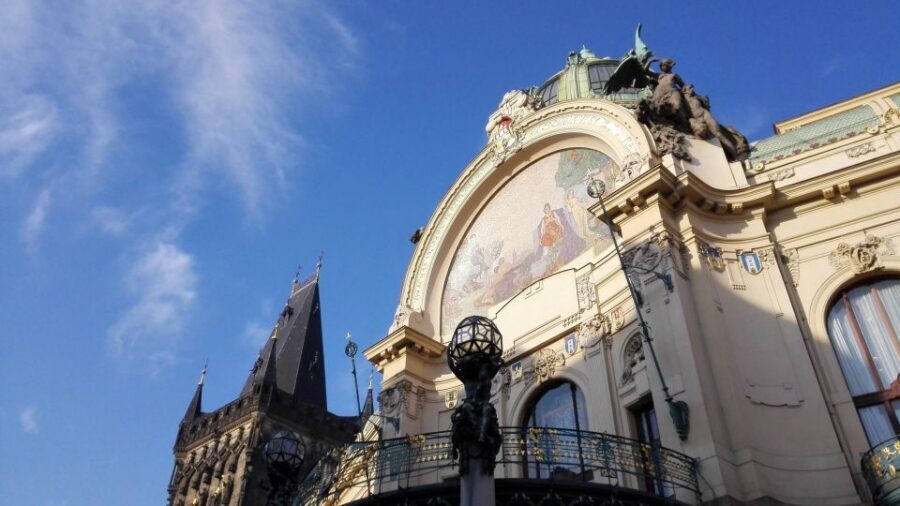
Prague can eat your schedule. Streets, squares, viewpoints, museums, food stops—one turn leads to another. This experience is designed to give you structure: about two hours of walking with a guide, then an included one-hour classical recital right where you’ve already been sightseeing.
For value, the key is that the price bundles two things that usually cost separately: a guided overview and a concert ticket. At $117 per person, you’re paying for time saved and context delivered, not just for getting into a building at the end.
And you get a nice emotional shift. Walking Old Town is detail-heavy and lively; then the concert gives you a reset. If you enjoy classical music, it feels like your Prague day ends with a period, not just a location change.
You can also read our reviews of more tours and experiences in Old Town Square Prague.

Getting oriented in Old Town Square without playing guessing games
You start in a very specific place: in front of the Cartier shop at Old Town Square, where the guide holds a sign with your name on it. That matters more than it sounds. Prague is full of “meet here” points that don’t look like much until you’re standing there. This one is concrete, and it reduces that awkward five-minute scavenger hunt.
From the start, your route is built around central landmarks and recognizably major stops. You’ll pass through the historical district and spend time in Old Town, with an additional focus on the Jewish Quarter and the city center route that ties the sights together.
One practical point: if you’re traveling with anything bulky, plan to travel light. Luggage or large bags aren’t allowed, so this is better if you’re already doing the typical light-day plan in Prague.
UNESCO Old Town and the best kind of “history you can walk through”
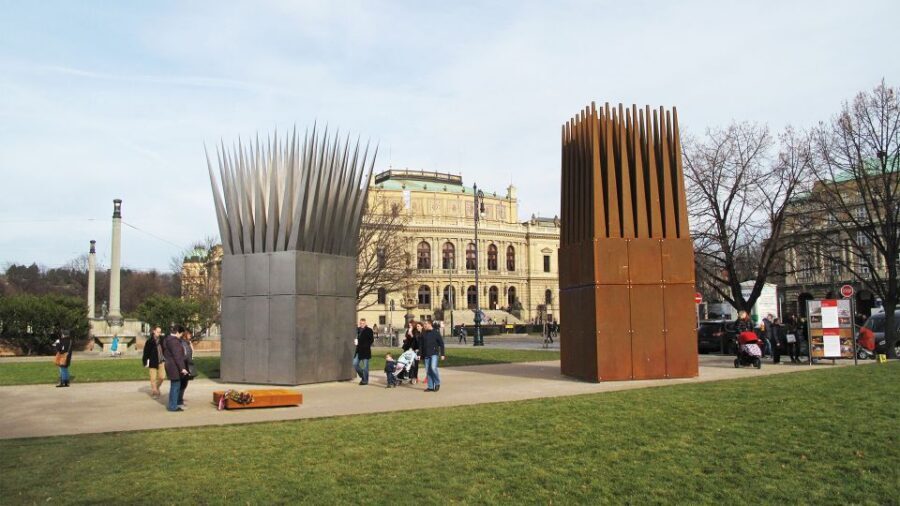
The walking portion is where the guide storytelling really earns its keep. You’re not just sightseeing from a distance—you’re getting a thread that connects what you see: Prague’s past alongside what’s still there now.
The route is designed to move efficiently through top attractions, including Estates Theater, Municipal House, and key public spaces like Old Town Square, plus other well-known landmarks such as Powder Tower and Wenceslas Square. The benefit for you is timing. In a short window, you see a lot, but it’s not a random grab bag. The guide’s job is to make the route feel like one story.
If you’ve ever walked through a historic district and left feeling like you only absorbed the scenery, this is the opposite style. You’re given explanations as you go, so your brain keeps attaching meaning to the street corners. It also helps you pick up practical cues for later self-exploration—like what to revisit and what to treat as a “check the box” photo moment.
Old Town Square, Powder Tower, and the landmarks that help you map the city
Some places are worth seeing because they’re important. Others are worth seeing because they help you understand where you are. Old Town Square and nearby landmarks do both jobs.
As you walk, you’ll also get Powder Tower on the route. Even if you don’t know every detail beforehand, it’s the kind of landmark that gives you a mental anchor: now you can picture distances, align streets in your head, and later follow your own instincts without constantly checking your phone.
This is where pacing matters. A tour like this usually works best if you keep your phone ready for reference but don’t let it replace the guide’s explanations. When the guide is doing a good job, you can treat photos as a byproduct rather than the whole event.
Wenceslas Square: where your Prague story shifts tone
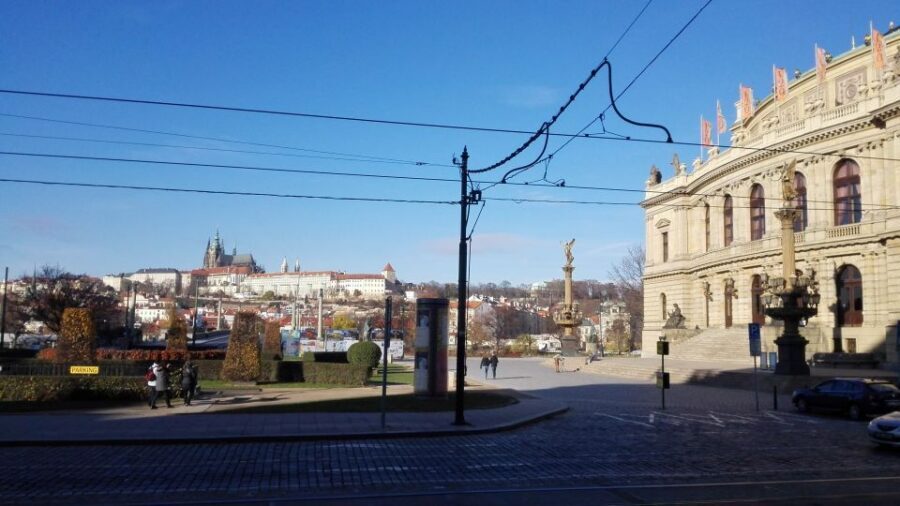
Wenceslas Square is a major stop on this route, and it helps break up the Old Town feel. Even with a short walking day, you get a contrast between the historical center mood and a more modern, public-square energy.
If you’re the kind of traveler who likes to understand a city as a living place—not just a museum—this is useful. You’re not only collecting pretty views. You’re seeing the bones of Prague in different eras, and your guide’s stories are meant to connect the past to the present.
The drawback to keep in mind is simple: major squares attract crowds. This doesn’t mean the tour is ruined—just plan for a bit of busier sidewalk energy and expect to move with the group.
Estates Theater, Municipal House, and what you gain from seeing them with a guide
Two of the standout stops in the route description are Estates Theater and Municipal House. These aren’t just “pretty exteriors” stops. They’re the kind of buildings that make sense when someone puts them into context—why they matter, and how they fit into Prague’s cultural identity.
That’s the real advantage of touring with a local. A guide can explain what you’re looking at in plain language and tie it back to the Czech story you’ve been hearing all walk long. The result is that these buildings become more than backdrops.
It’s also one reason music fits so well at the end of the tour. After seeing prominent venues and civic landmarks earlier, the recital later feels like part of the same cultural thread instead of a random add-on.
The Jewish Quarter stop: a respectful, story-led way to understand the area
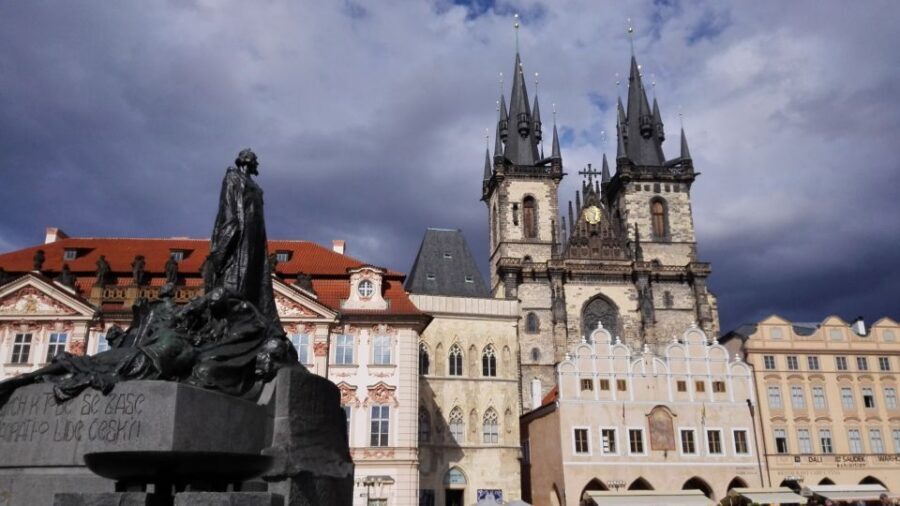
The walk includes time in the Jewish Quarter as part of the Old Town and city-center route. When you have only a few hours, this matters. You can either wander with a vague sense of where things are, or you can get a guide to shape your understanding.
The tour’s emphasis is on stories of past and present. That approach is particularly helpful in historic areas where details matter and where context changes how you perceive the streets.
The practical takeaway for you: treat this portion like a cultural learning moment, not just a photo sprint. Keep your questions ready, and listen for how your guide frames what you’re seeing.
The concert in a Baroque church (or palace): what to expect in the final hour
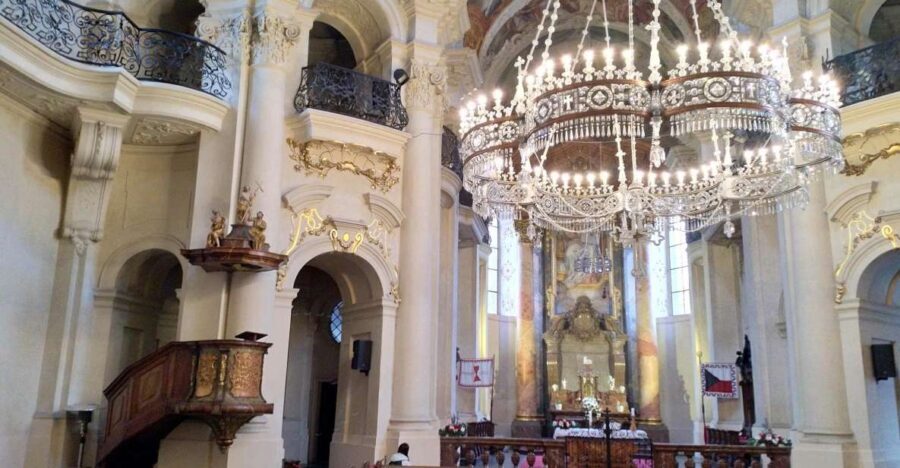
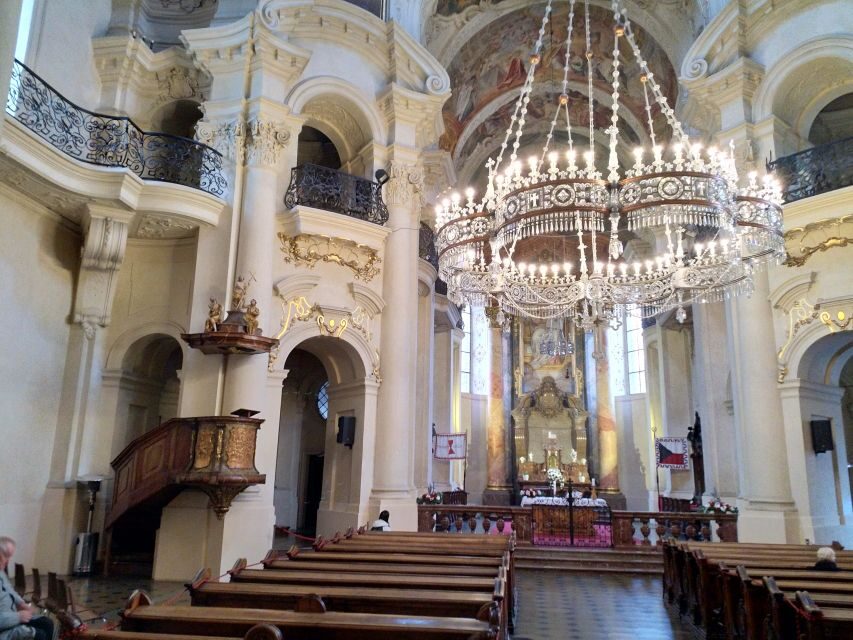
After the walking portion, you shift to a quieter setting: a seat for a one-hour classical music recital. The performance happens in a historic Baroque church in the city center, though it can be a palace depending on the day’s concert program.
This end section is especially important if you’re the type who likes your travel days to close cleanly. You’ve already learned a bit about Prague and Czech life; now you hear that culture expressed through music.
The program: familiar names with a Czech highlight
The concert program can include works by Bach, Dvořák, Mozart, Smetana, and Vivaldi, depending on the day. From a listener’s perspective, this is a strong mix:
- You’ll likely recognize at least a few composers immediately.
- You get a Czech connection through Dvořák and Smetana, which makes the recital feel less generic and more “this place” specific.
Winter comfort note you should actually plan for
The church is heated in winter, which is a real comfort detail. Still, you’ll likely be outside beforehand walking through central areas. Bring layers you can manage, and plan to let your body cool down less before you settle into the recital.
How the guide style shapes your experience (Eva, Lenka, and the overall vibe)
This tour’s guiding strength shows up in how guests describe the people leading it. In the provided feedback, guides such as Eva and Lenka come through as engaging and story-driven. The consistent theme is that you get explanations and you also get room for questions.
That matters because Prague is complicated. Even the simplest walk includes layers: different eras, different influences, and cultural references that you’d miss if you only skim facts in an app. A good guide helps you build a mental map quickly.
It also helps when the guide adapts. In the feedback you shared, guests mention that the guide can adjust to circumstances, keeping the experience feeling smooth rather than rigid.
If you care about conversation—asking what something means or why it mattered—you’ll likely enjoy this format more than a strict, head-down lecture tour.
Price and value: what $117 buys you here
Let’s do the math in human terms.
You’re paying for:
- A guided walk through central UNESCO-listed Old Town areas and major landmarks
- A local Czech guide’s storytelling (the context you’d otherwise work hard to find)
- A concert ticket included in the package
So you’re not just paying for entry to a venue. You’re paying for someone to compress your learning into a few hours and hand you a concert seat at the end.
If your budget is tight, the price can feel steep compared with self-guided walking. But if you value context and you want the concert without additional searching or booking stress, $117 starts to look like a fair trade for your time.
Who should book this tour—and who might want a different format
This tour fits best if you:
- Want a guided Old Town overview without juggling multiple ticketed experiences
- Like classical music, especially if you recognize composers like Mozart and Bach
- Enjoy travel days that combine learning with a satisfying ending
You might skip it if you:
- Prefer long, slow wandering where you set your own pace the whole time
- Are hoping the walking portion will feel like a museum tour with extended stops (it’s only a few hours)
- Don’t really care about the music recital portion, since the concert is a core part of the package
Quick practical tips so your day goes smoothly
- Travel light. No luggage or large bags keeps things smoother at meeting points and through the church/palace transition.
- Bring a passport or ID card. If you’re a student, keep your student card with you as well.
- Dress for outdoor time plus one seated indoor segment. Even though the church is heated in winter, you’ll still have street time first.
- If you have a must-hear composer, don’t assume the program. The concert is built around a list of possible composers, but it can vary by day.
Should you book the Prague Old Town and Classical Concert Tour?
I’d book it if you want a well-structured Prague day that ends with music, not another round of walking until you’re tired. The package makes sense because it combines major central sights, a local storytelling approach, and an included one-hour recital with recognizable composers.
Skip it if you mainly want free time, deep museum-style pacing, or you’re not interested in a concert at the end. Also keep in mind that the experience is designed to run smoothly on a set schedule, so it’s not the best fit for people who want to wander completely solo.
FAQ
Where is the meeting point?
Meet your guide in front of the Cartier shop at Old Town Square, and the guide will hold a sign with your name.
How long is the tour?
The duration is 3 hours.
What’s included in the price?
You get a guide and a concert ticket.
Which languages are available for the live guide?
The tour is offered with a live guide in English, French, and German.
What will I see during the walking portion?
You’ll visit Prague’s UNESCO–listed Old Town area and city center highlights, including Estates Theater, Municipal House, Old Town Square, Powder Tower, and Wenceslas Square, plus the Jewish Quarter.
Where does the classical concert take place?
The concert is held in a historic Baroque church in the city center, or sometimes in a palace, depending on the day’s performances.
Which composers might be on the recital program?
The program can include works by Bach, Dvořák, Mozart, Smetana, and Vivaldi, depending on the day.
What should I bring?
Bring a passport or ID card. A student card is also noted as something to have.
Are luggage or large bags allowed?
No—luggage or large bags are not allowed.
Is the tour wheelchair accessible?
Yes, the tour is wheelchair accessible.