REVIEW · CESKY KRUMLOV
Český Krumlov 20th century tour
Book on Viator →Operated by Wiseman Free Tour · Bookable on Viator
Twentieth-century Europe has a new voice here. On this Český Krumlov 20th century history walk, I love how the guide links World War II to later shocks like 1968 while keeping you moving along real streets. The pace feels designed for understanding, not just sightseeing, with stories that connect people, places, and choices.
I also love the private group setup, limited to your own party (up to 15), which makes questions easy and the mood more human. And the tour leans hard into black-and-white photographs, using them to make the town’s past feel specific instead of abstract.
One consideration: it is an outdoor route that needs good weather, and the timeline moves quickly across a handful of stops in about two hours. If you want slow museum-style reading, you may need to pair this with extra time on your own.
In This Review
- Key points worth knowing
- Getting oriented at the Historic Center: the 20th century timeline starts here
- The synagogue stop: Jewish history you can actually see in the streets
- Hitler’s arrival: a brief stop with a heavy weight
- Český Krumlov Castle: the second-biggest castle story in the Czech Republic
- Budějovická Gate and the 1938 battle: history in the town’s edges
- Why the black-and-white photographs hit differently
- Price and value: $90.76 per group for a private history walk
- Meeting points: start near Info Český Krumlov, end at Budějovická Gate
- Who this tour suits best in Český Krumlov
- Booking advice: should you take the Český Krumlov 20th century tour?
- FAQ
- How long is the Český Krumlov 20th century tour?
- Is this tour private or shared?
- Where do you meet and where does the tour end?
- Do I need to pay entrance fees at the stops?
- What ticket do I get?
- What if the weather is bad?
- What is the cancellation policy?
Key points worth knowing
- A WWII-to-1968 storyline you can follow on foot across central streets and landmark sites
- Photo-based storytelling with black-and-white images that show what was happening nearby
- Český Krumlov Castle as a 20th-century turning point, tied to resistance and fear
- A focused synagogue stop that helps you understand Jewish history in the town
- Budějovická Gate connects the geography to 1938 conflict, not just architecture
- Private tour for your group with a 2-hour walking format and a mobile ticket
Getting oriented at the Historic Center: the 20th century timeline starts here
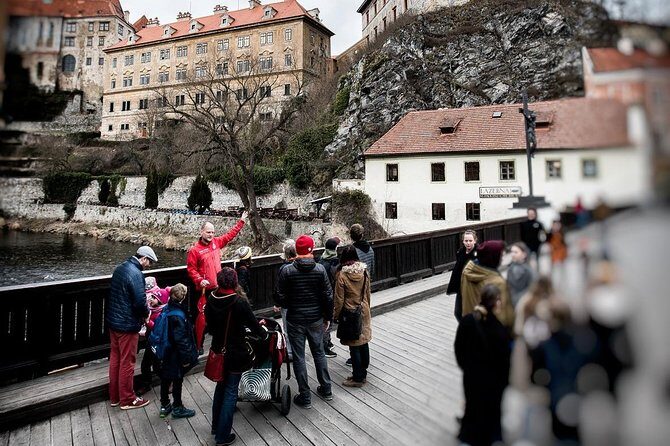
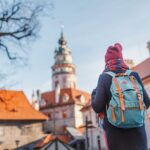
Most tours in Český Krumlov zoom in on medieval streets and call it a day. This one does the opposite. You begin in the historic center area around Info Český Krumlov (Svornosti 2) and immediately get the modern-history framework. It works well because the town is visually dramatic, so it is easy to forget that the 20th century also left marks right on these same corners.
This first stop is about 40 minutes, and it acts like a map for what comes next. You’ll hear how Český Krumlov’s position and reputation fed into 1930s tension, then how that pressure turned into war-era occupation and later political control. The guide threads in major moments you can recognize from European history: World War II and, later, the Soviet invasion in 1968. Even if you know those dates, hearing them anchored to one town helps your brain stick to the story.
What I like most here is the tone. The guide keeps it grounded: people lived here, decisions were made here, and the town’s important buildings mattered because they were part of how power moved. If you like history that feels local, not textbook-only, this start is a strong foundation.
Practical tip: plan for walking on uneven medieval surfaces. Even if the tour is short, your feet do real work.
You can also read our reviews of more tours and experiences in Cesky Krumlov.
The synagogue stop: Jewish history you can actually see in the streets
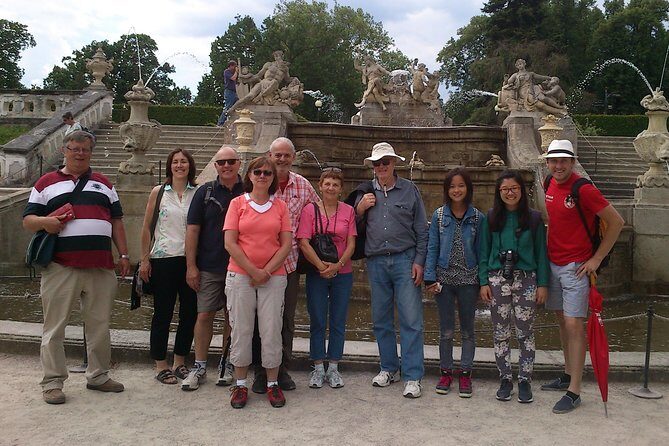
Next comes the Synagogue of Český Krumlov, with about 15 minutes at the site. This is the kind of stop that can change how you read the town. When people think Český Krumlov, they usually think castles and rulers. This stop shifts the spotlight to Jewish life and to what happened to communities across the 20th century.
You get a history-focused approach rather than a quick exterior glance. The tour includes photographs of the synagogue, which helps you connect the building to events and changes over time. That matters because a synagogue is more than architecture. It’s a marker of presence, identity, and community, and the tour uses that idea to keep the story human.
A drawback to consider: this segment is short. It gives you a meaningful starting point, but it is not meant to be a full religious history lesson or a long museum visit. If synagogue history is a major interest for you, I’d plan extra time afterward to read more on your own.
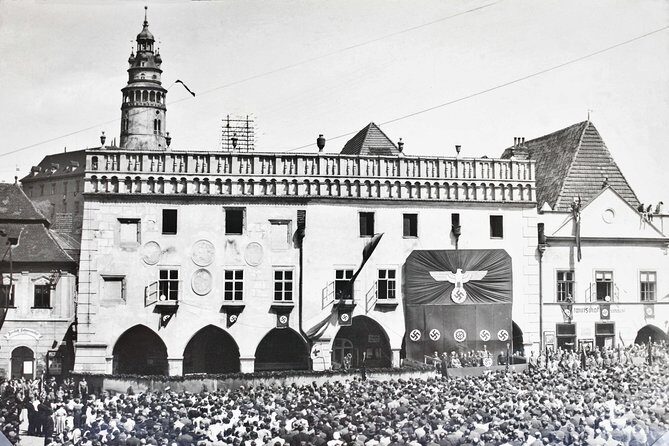
Hitler’s arrival: a brief stop with a heavy weight
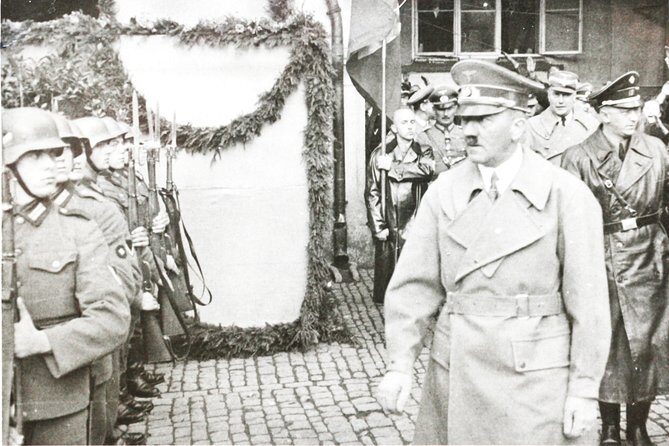
The tour then moves into one of the most striking storylines: Adolf Hitler’s arrival to Český Krumlov before the war. This part is around 10 minutes, so it is brief by design.
The value of this stop is not that you’ll get a long lecture in one spot. It is that the guide places a key historical reference point inside the town’s geography. When you hear about political visits and looming threats, it helps to stand in the area where those movements became real for local people.
Because this is a short segment, it works best if you come with at least some background curiosity. If the 1930s feel foggy to you, you might still leave with a clear sense of why this visit mattered, but you may want to do a bit of reading later to deepen the context.
Český Krumlov Castle: the second-biggest castle story in the Czech Republic
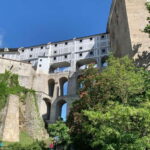
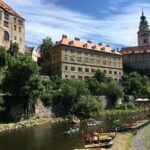
Then you hit the big one: Český Krumlov Castle, about 20 minutes. The castle is known as the second biggest castle in the Czech Republic, and it makes sense you’d spend time here. It is huge, visually commanding, and easy to feel small next to it. That contrast is useful for history, because the tour ties the castle to power, fear, and survival.
Here, the storytelling turns personal. You’ll hear about the last lord of the town and his struggle against Nazis. That focus helps the 20th-century narrative stop being only political and start being about real pressure on real people. You get a sense of what resistance or cooperation could look like under extreme conditions, without turning it into a simple good-versus-bad poster story.
This is also a great stop for understanding why the rest of the route matters. The castle is not just a view. It is an anchor point for how authority worked, how rumors spread, and how the town’s most significant structures were part of the wider European storm.
Practical tip: expect steps, uneven ground, and stair climbs depending on where you end up inside the castle area. Wear supportive shoes. If you have mobility concerns, pace yourself and consider asking the guide about the easiest walking paths on-site.
Budějovická Gate and the 1938 battle: history in the town’s edges
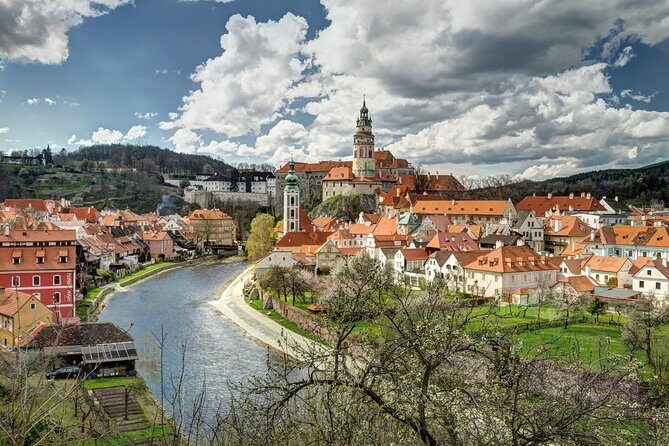
Your final storytelling stop is Budějovická Gate (Budějovická Gate), with about 15 minutes at the area. Gates like this are easy to treat as scenery, but the tour connects the structure to conflict and strategy during World War II-era tension, including the battle of Český Krumlov in 1938.
What I like here is the way it turns architecture into evidence. A gate isn’t just pretty stone. It’s a choke point. It’s where movement becomes controlled. It’s where you can imagine what civilians heard, what travelers feared, and what locals saw when the world tightened around them.
This stop also helps you finish with a sense of closure. Earlier stops introduce major moments. This one ties them back to the town’s layout and its defensive realities. You end near the gate area (the tour finishes at Latrán 106), so you’ll have a natural place to continue exploring without feeling abruptly dropped off.
Why the black-and-white photographs hit differently
A lot of tours say they use photos. This one makes the photos feel like part of the guide’s method. The black-and-white images are used to show events unfolding and to remind you what the town looked like during key moments.
Here’s what that does to your understanding:
- It reduces the distance between your present-day walk and the past.
- It helps you notice details you might otherwise ignore at a stop.
- It gives the guide a way to explain complex history quickly, since the picture does some of the work.
It also fits the tour’s length. With a 2-hour format, you do not have time for slow, museum-length immersion. Photos become a shortcut to comprehension, and the guide uses them thoughtfully rather than as decoration.
If you’re the type who gets more from visual cues than from timelines, you’ll likely enjoy how the tour turns images into story beats.
Price and value: $90.76 per group for a private history walk
The price is $90.76 per group, with up to 15 people. That pricing matters because the experience is private for your group rather than shared with strangers. For families, friends, or small teams, this can feel like good value because you can ask questions and set your own group pace within the tour’s overall structure.
Also, many of the stops are listed as admission ticket free. That helps your budget stay predictable. You’re paying for guided context and focused route time, not a pile of entrance fees.
Duration is about 2 hours. For a town like Český Krumlov, that timing is practical. You can fit this early in the day to get historical grounding, then spend the rest of your time enjoying the medieval charm with new eyes.
You’ll also get a mobile ticket, which is convenient. And the tour is near public transportation, so getting to the meeting area is usually straightforward.
Meeting points: start near Info Český Krumlov, end at Budějovická Gate
You start at Info Český Krumlov at Svornosti 2, and you end at Budějovická Gate in Latrán (Latrán 106). That matters because it creates an easy flow: you begin near an information hub and finish near a major landmark that works well for continuing your sightseeing.
The route also makes sense for first-time visitors. You aren’t forced to do complicated backtracking. Instead, you move through the town with stops that gradually shift from general modern context to specific sites tied to Jewish history, Nazi-era attention, castle power, and 1938 conflict.
Small practical note: because the tour is a walking format, wear comfortable shoes even if you think you’ll stay light. Medieval streets can be slower than modern ones.
Who this tour suits best in Český Krumlov
This is a strong choice if you want 20th-century history with local anchors. You’ll get WWII and the Soviet invasion in 1968 referenced as part of the story arc, and you’ll see how major historical pressures connect to specific places.
It is especially good for:
- People who like guided context and visual aids (those black-and-white photos are a big plus)
- Visitors who want a private experience without splitting attention among a large group
- Travelers who enjoy walking tours but want something more than general sightseeing
It may be less ideal if:
- You want a long, slow, indoor history experience
- You dislike outdoor walking or you are traveling in weather that is unpredictable
- You prefer deep subject coverage that requires longer time at each site
Booking advice: should you take the Český Krumlov 20th century tour?
If you care about how Europe’s darkest chapters played out in real towns, and you want that story tied to buildings you can stand next to, I’d book this tour. The private group format makes it feel personal, the photo-based storytelling helps you absorb a lot in a short time, and the route is built around key sites that explain why Český Krumlov mattered in the 20th century.
Just make sure you can handle the pacing and the walking. It is not a slow museum day. It is a focused, moving lesson, designed for about two hours of attention.
If the weather is good and your group wants history that feels specific to this town, this is one of the more meaningful ways to see Český Krumlov beyond its postcard look.
FAQ
How long is the Český Krumlov 20th century tour?
It runs for approximately 2 hours.
Is this tour private or shared?
It is private. Only your group participates.
Where do you meet and where does the tour end?
You start at Info Český Krumlov (Svornosti 2, 381 01 Český Krumlov) and end at Budějovická Gate (Latrán 106, Latrán, 381 01 Český Krumlov).
Do I need to pay entrance fees at the stops?
The tour information lists admission ticket free for the stops.
What ticket do I get?
You receive a mobile ticket.
What if the weather is bad?
The tour requires good weather. If it’s canceled due to poor weather, you’ll be offered a different date or a full refund.
What is the cancellation policy?
You can cancel for a full refund if you cancel up to 24 hours in advance of the experience start time. If you cancel less than 24 hours before, the amount paid is not refunded.