REVIEW · BRNO
Trip to the Austerlitz Battlefield near BRNO in the Czech Republic
Book on Viator →Operated by BRNOguide · Bookable on Viator
Austerlitz makes history feel painfully physical. This private day around Brno strings together the big Napoleon moments, from command hills to museum dioramas, with English guiding and convenient pickup.
You’ll love how the sites are timed so you see more than plaques. You’ll also like the way the guide connects what you’re standing on with what happened there—so the 1805 battle stops sounding like a textbook.
One consideration: the Pratzen Heights museum isn’t included, and you’ll need tickets for about €10 per person.
In This Review
- Quick hits
- Austerlitz near Brno: why this battlefield still hits
- The pacing: how a 7-hour day stays manageable
- Brno pickup and the calm logistics that make the day work
- Stop 1: Zamek Slavkov-Austerlitz and the Napoleon-afterglow
- Stop 2: Pratzen Heights museum and the Peace Cairn
- Stop 3: ŽUráň, Napoleon’s command post point
- Stop 4: Kostel Sv. Mikulase and the French left-flank trench story
- Stop 5: Sokolnice village, chateau grounds, and a lunch-friendly break
- Stop 6: Tvarožná (Bosenitz) and the view from SANTON hilltop
- Stop 7: Telnice ponds and the southern edge of the field
- What the guide actually adds (beyond facts on a sign)
- Price and value: why $216 per person can make sense
- Who should book this tour
- Should you book this Austerlitz battlefield day?
- FAQ
- How long is the tour?
- What language is the tour offered in?
- Is pickup offered in Brno?
- Are museum and site tickets included?
- Is lunch included?
- What fitness level do I need?
Quick hits
- Door-to-door pickup in Brno: you choose where you start and where you want to end inside Brno or near it.
- Napoleon’s key ground, not random stops: command points, trench areas, and vantage hills are built into the route.
- Practical mix of museums and on-the-ground views: you’ll see dioramas, replicas, and monuments, then look out over the same terrain.
- A short uphill moment near Tvarožná: plan for a hike up SANTON hilltop with a moderate fitness level.
- Very smooth for visitors in the region: it’s set up for people coming by train from Prague or Vienna, too.
Austerlitz near Brno: why this battlefield still hits
Austerlitz is one of those rare places where the geography stays legible. The battlefield covers an area roughly described as about 12 km by 8 km, stitched with villages and slopes. When you stand on the right high ground and then move a few minutes to the next position, the story changes fast.
What I like most is that this isn’t a drive-by. You move between points tied to the battle’s turning phases: where forces were positioned, where trenches were dug, and where commanders needed sightlines. And because this is private, you don’t waste time shuttling yourself between sites that are easy to misread.
You can also read our reviews of more tours and experiences in Brno.
The pacing: how a 7-hour day stays manageable
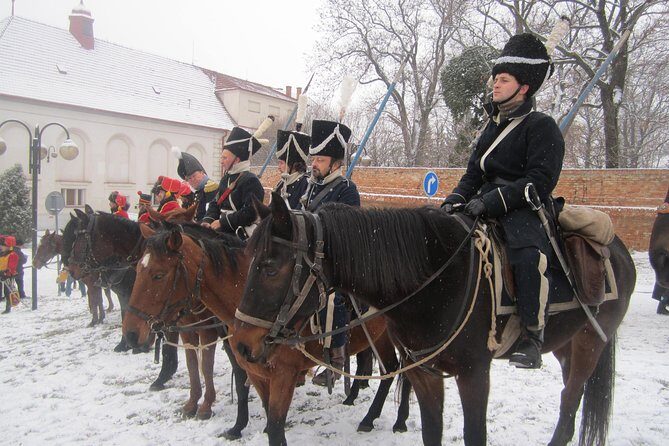
The tour runs about 7 hours total. On paper, the stops look spread out; in practice, it works because each location is short and purposeful. Most stops are around 10–50 minutes, with a longer stretch for the village-chateau area where you can handle lunch plans.
Here’s what to expect on your schedule:
- Lots of short stops, so you never feel stuck in one place too long.
- A terrain-focused day, meaning you’ll do some walking and occasional uphill steps.
- Time built in for photos and for the guide to point out what matters at each spot.
If you’re the type who hates slow tours, this style is a good fit. If you want to sit and read for hours, you’ll still have museum time—but you’ll also spend more of the day outside than at a desk.
Brno pickup and the calm logistics that make the day work
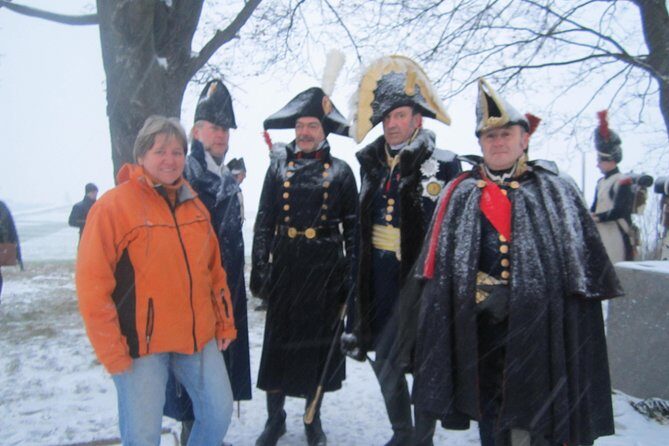
This is designed to be easy from Brno. You can be picked up from any location in Brno or near Brno, and you’ll be dropped off at your preferred spot in the city. That flexibility matters because Austerlitz isn’t a quick tram ride from downtown.
The tour also runs with an air-conditioned vehicle. Even in shoulder seasons, you’ll appreciate the comfort between points. You also get a mobile ticket, which saves time when you’re matching bookings to entrances.
One detail I’m glad you’ll have: it’s private, meaning only your group participates. That usually turns into one big advantage—less waiting and fewer stop-and-start moments while someone hunts down their map.
Stop 1: Zamek Slavkov-Austerlitz and the Napoleon-afterglow
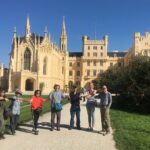
Your first stop is Zamek Slavkov-Austerlitz, a chateau with a park where Napoleon spent time after the Battle of Austerlitz. The visit is short—about 20 minutes—and the entry ticket here is free.
Why this stop is worth it: it sets the tone. Many battlefield tours go straight into the chaos. This one briefly brings you back to the quiet aftermath—Napoleon as a figure who moves on, not just a commander captured in one moment. Even if you’re not a chateau person, the setting helps you understand how the day’s drama had an echo in everyday routines.
Stop 2: Pratzen Heights museum and the Peace Cairn
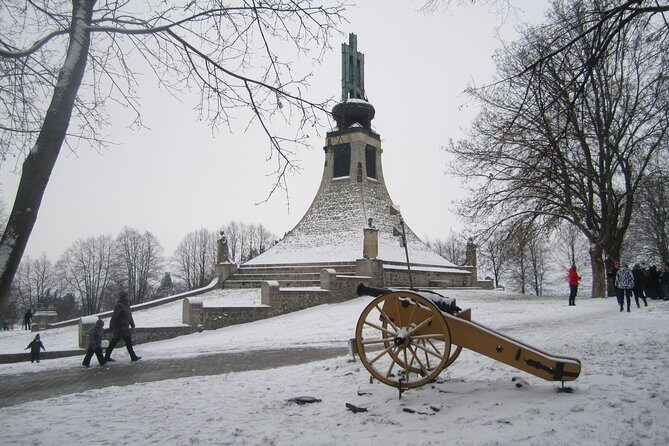
Next comes the Pratzen Heights, a focal point in the battle’s action. You’ll visit the museum on the Battle of the Three Emperors and also see the Monument Cairn of Peace, a chapel-style monument.
Plan around 50 minutes here. The museum admission is not included; you’ll need about €10 per person.
What you get from this stop is context you can’t get from terrain alone. When you later look out over hills and fields, you’ll be able to label what you’re seeing. That’s the real value of a museum stop on a battlefield day: it gives your feet a map your eyes can follow.
If you hate buying tickets on the fly, consider bringing a way to pay for the Pratzen Heights admission in advance so this part stays smooth.

Stop 3: ŽUráň, Napoleon’s command post point
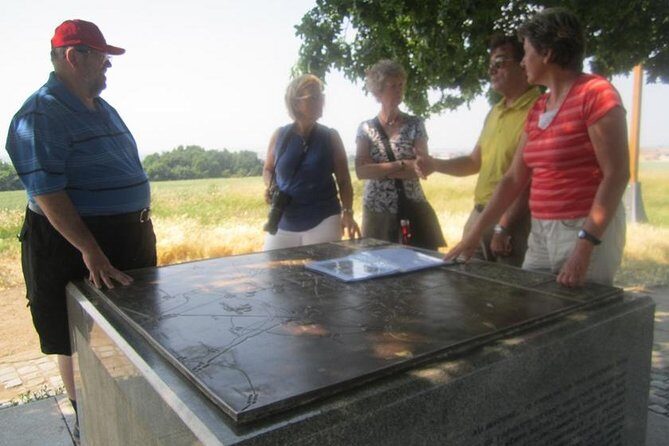
Then you move to a hilltop area connected to Napoleon’s command during the battle. The site is referred to as Napoléon’s commande post, tied to ŽUráň, described as a hilltop from where Napoleon commanded the battle on 2 December 1805.
This stop is quick—about 10 minutes—and entry is free.
This is one of the spots that makes battlefield tours feel like a real story instead of a list of locations. From a command point, the terrain becomes a tool: sightlines, movement routes, and the logic of pushing or holding. Even a short stop works here because the explanation is tied directly to what you can look for with your own eyes.
Stop 4: Kostel Sv. Mikulase and the French left-flank trench story
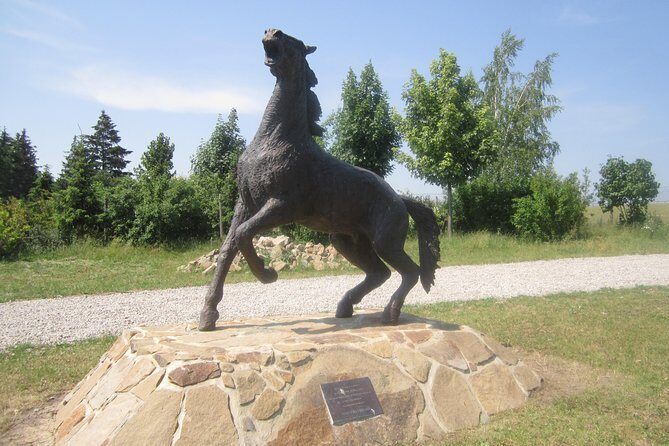
Near the village of Tvarožná, you’ll visit Kostel Sv. Mikulase. The key detail here is SANTON hill, described as the French left flank. This is where the French dug trenches for 19 cannons.
Time is around 15 minutes, and entry is free.
This is a good example of why the guide matters. On your own, a church might feel like just another stop. With the right explanation, it becomes a marker for a specific battle function—one side setting up artillery positions, one slope becoming a machine for movement and firepower.
If you’re more interested in the tactical side than the politics of 1805, this is one of your most rewarding stops.
Stop 5: Sokolnice village, chateau grounds, and a lunch-friendly break
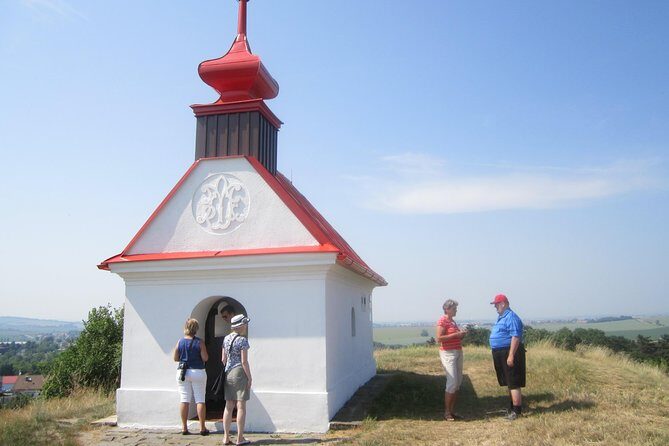
Next is Sokolnice, which is set up as a natural lunch break. You’ll spend around 1 hour here, and admissions for the listed sights are free.
In the Sokolnice area, you’ll see things like the Sokolnice chateau, plus a granary and a pheasantry. The stop is long enough for you to reset, eat, and avoid feeling like the day is one constant rush of moving.
If you like practical travel habits, this part is smart. You’re in the middle of a battlefield day, and the route gives you time to handle food without stress.
Stop 6: Tvarožná (Bosenitz) and the view from SANTON hilltop
Now comes the more active moment. Near Tvarožná—also referenced as Bosenitz—this area is described as the French left flank again. Here, you’ll walk up to the SANTON hilltop for views over much of the battlefield.
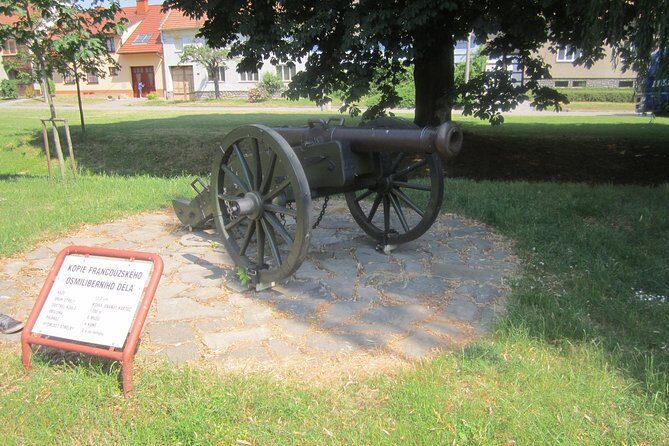
The stop runs about 30 minutes, entry is free, and this is the part that connects your eyes to the battle plan. You’ll also see a replica of a French cannon and a diorama with 1,500 soldiers in the village area.
This is where the tour shifts from “history explained” to “history understood.” A diorama can show scale, but the hilltop shows why that scale mattered. You’ll also feel the realism of the terrain—how slopes and positions shape what a force can do.
You should have moderate physical fitness for this hike. It’s not described as extreme, but it does include uphill walking.
Stop 7: Telnice ponds and the southern edge of the field
Your final battlefield-side stop is Telnice (Telnitz) in the very south of the battlefield. You’ll spend about 15 minutes and entry is free.
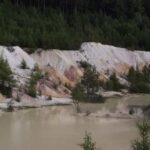
Here the guide shows where ponds used to be, and the focus is on how the south edge of the battlefield functioned in the wider movement. There’s also a chance to visit the local church/parish area, described as the center of old Sokolnice (if time and conditions allow).
Why this stop works: it rounds out the day. Many Austerlitz routes emphasize only the most famous points. This one also pushes you toward the less-highlighted edges, so the battle feels like a whole system rather than a few dramatic scenes.
What the guide actually adds (beyond facts on a sign)
The difference with this kind of tour is that someone helps you read the ground. A good guide doesn’t just recite dates. They point out why one position matters, then connect it to what came next.
From the experience as described, the guide offers:
- Clear English explanations, with a friendly, easy pace.
- A balance between battle history and local context, so the day doesn’t feel like it’s only about war.
- Attention to “hidden” spots that would be hard to find without help.
A bonus that shows up in the real-world feel: the guide’s dog, Marco Polo, is described as charming and part of the day’s tone. If you’re traveling with animals in mind, this is also the kind of small detail that makes the whole thing feel personal rather than robotic.
Price and value: why $216 per person can make sense
At $216.04 per person for an approximately 7-hour private tour, this isn’t a budget museum ticket. You’re paying for transportation, guiding in English, and access to multiple sites across one concentrated battlefield area.
Here’s where the value comes from:
- You’re not driving yourself between scattered points.
- You’re getting interpretation at each site, including command positions and trench-related ground.
- You’re getting flexible pickup/drop-off in Brno, which is often where costs get ugly if you have to hire separate transport.
One extra cost to remember: €10 per person for the Pratzen Heights museum. Lunch is excluded, so you’ll handle food yourself (Sokolnice is where the day expects you to take that meal).
If you’re coming from further away—like a train from Vienna or Prague—a pickup-based private day can be especially efficient. You’re not trying to piece together multiple public-transport routes for a day in the countryside.
Who should book this tour
This is a strong match for:
- Napoleon fans who want specific locations, not only broad overviews.
- Travelers who like photos but also want to understand what they’re photographing.
- People who value private guiding so the day can move efficiently.
It’s less ideal if:
- You want mostly indoor time and long museum wandering.
- You dislike any walking at all. This day includes a hike up SANTON hilltop, and it fits best with moderate physical fitness.
Should you book this Austerlitz battlefield day?
I think you should book it if your goal is a well-paced day where the battlefield becomes readable. With English guiding, purposeful stops, and pickup/drop-off in Brno, you’ll spend your energy looking at the land instead of figuring out how to reach it.
If you’re deciding between doing it on your own and paying for a guide, the big tipping point is simple: Austerlitz is easier to understand with someone who can translate terrain into battle movement. Add the short, staged museum visits and the free admissions at most stops, and the day becomes practical, not just impressive.
FAQ
How long is the tour?
The tour is listed as about 7 hours (approx.).
What language is the tour offered in?
The guiding is offered in English.
Is pickup offered in Brno?
Yes. The guide will pick you up from any location in Brno or near Brno, and you’ll also be dropped off at your preferred location in Brno.
Are museum and site tickets included?
The museum on top of the Pratzen Hills is not included and costs about €10 per person. Other listed admissions are shown as free for the stops described.
Is lunch included?
No. Lunch is excluded. The route includes Sokolnice as a place where lunch is typically handled.
What fitness level do I need?
You should have a moderate physical fitness level. The day includes a hike up SANTON hilltop near Tvarožná.