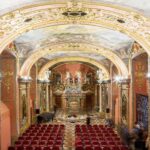
A locked-room challenge in Prague, with a countdown feel. The Alchemist’s Chamber ticket at MindMaze Prague turns a classic escape idea into a story built around Michael Sendivogius and the Philosopher’s Stone, with puzzles that aim to keep you thinking fast. I like that it’s timed tightly (60 minutes) but still structured for real teamwork, and I also like that you can pick from different time slots across the day so you’re not stuck bending your sightseeing schedule.
One thing to consider: it’s not built for little kids. The game is not recommended for children under 6, and the room can be mentally tough if your group wants something effortless.
In This Review
- Key things to know before you go
- Alchemist’s Chamber at MindMaze Prague: what the ticket actually buys you
- Getting to the venue and planning your time in Prague
- The story hook: Sendivogius, Rudolf II, and the Philosopher’s Stone
- The 60-minute format: why the timer changes everything
- Puzzles, padlocks, and technical tricks: what you’ll be doing in the room
- Team size, competition, and group dynamics up to five
- The game master experience: hints, tone, and names you might meet
- Value and pricing: is $70 a fair deal?
- Where this fits best on your Prague day
- Who should book Alchemist’s Chamber, and who should skip it
- FAQ
- How long is the Alchemist’s Chamber escape game?
- Where does the experience take place?
- Do I need hotel pick-up or can I go on my own?
- Is food or drinks included?
- What’s included with the ticket price?
- How many people can play?
- Is there a mobile ticket?
- Is it suitable for children?
- Can the room work for limited mobility?
- Is free cancellation available?
Key things to know before you go
- Prebook a time slot so you can plan Prague without waiting around
- 60 minutes of gameplay focused on codes, clues, and padlocks
- Mobile ticket makes check-in simpler once you arrive
- Team sizes up to five with flexibility across the day
- Private group format so it’s only your group in the room
- Game masters provide hints when you’re stuck, not just a hard wall
Alchemist’s Chamber at MindMaze Prague: what the ticket actually buys you
For $70, you’re buying a timed entry to one escape game: the Alchemist’s Chamber at MindMaze Prague. That matters, because the value here is less about a long “tour” feeling and more about a concentrated hour where your group has to think, test ideas, and work the room together. If you like activities where the minutes move and the pressure stays friendly, this format fits.
The ticket includes your 60-minute escape room session. You’re not paying extra for a guided bus ride, and you’re not paying for meals inside the building. In practical terms, that means you’ll want to handle your own food timing before or after, especially if you’re pairing this with Prague sightseeing in the same day.
One more value point: this is sold with multiple time slots across the day, so you can choose a start time that matches your energy. Late afternoon often works well for puzzle games, but you can just as easily do it earlier and keep your evening open.
A few more Prague tours and experiences worth a look



Getting to the venue and planning your time in Prague
This activity uses an independent approach. You travel on your own to the venue when your slot starts. That’s good if you like control. Prague is easy to navigate with public transit and on foot, but you do want to be disciplined with arrival time because the game is timed.
A mobile ticket helps here. You don’t need paper shuffling. You also get a confirmation at booking time, which usually keeps things smooth at check-in.
Since it’s a private tour/activity format, you’re not mixing with random strangers in the room. Only your group plays together. That can be a real quality upgrade, especially if you’re celebrating something or you’re trying to keep a consistent team vibe.
If you need flexibility, prebooking is the key. Prague can be busy, and escape rooms run on tight schedules. Locking in your slot in advance saves you from the stress of last-minute planning.
The story hook: Sendivogius, Rudolf II, and the Philosopher’s Stone
The game starts with a strong narrative frame. In 16th-century Prague, Michael Sendivogius is linked to an emperor named Rudolf II, and the story places alchemists as the big “scientists” of their era. That’s a fun twist because it treats their quests as real research paths—physics, chemistry, math, botany, astrology, and even the occult.
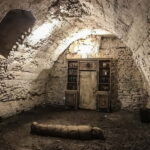
Then the plot gets personal and urgent: Sendivogius hides the Philosopher’s Stone in a secret chamber. The chamber is protected by puzzles and mysteries, and the only way through is to solve everything before the time runs out. The game’s tone stays focused on the deadline, so every moment feels like part of the same mission.
If you enjoy escape rooms with a clear theme (not just lock-and-key puzzles), this one gives you a storyline that ties the room together. And the historical names give you something memorable even after the session ends.
The 60-minute format: why the timer changes everything
You get 60 minutes. That hour is not a casual wander. It’s a sprint where you’ll constantly switch between searching, testing, and checking what you already found.
This pacing is one reason the experience tends to satisfy different group types. Some people love the competitive edge of racing against the clock. Others like it because the timer prevents overthinking. In a room like this, you learn fast. You try. It doesn’t work. You adjust.
The “clock ticks down” setup also means the hints matter. When you’re stuck, you don’t want to feel abandoned. The game is designed to move you forward rather than reset you. In feedback, the game masters are described as helpful and responsive, and several people mention getting explanations when they hit tricky points.
One small caution: if your group prefers slow, low-pressure games, the one-hour structure can feel intense. You’ll get more value if you’re there for teamwork and problem-solving, not just casual entertainment.
Puzzles, padlocks, and technical tricks: what you’ll be doing in the room
This is an escape room built around classic mechanisms: locks, codes, clues, and padlocks. But it isn’t just repeating the same puzzle type in different rooms. The experience is described as imaginative, with unconventional solutions and technical tricks that keep you from solving everything in one predictable way.
That balance is important. Too many escape rooms either feel too easy (you breeze through) or too confusing (you spend the whole time waiting for a hint). Here, the challenge is often described as medium—enough to feel rewarding, not so hard that your group never regains momentum.
You’ll also want to expect “multi-step” thinking. Most clues in these games don’t solve themselves. You find an element, connect it to another, and only then get the next action. When it works, it feels satisfying because each solve gives you a new piece of the story.
A fun extra detail from the experience: the atmosphere leans into the theme, but a few people feel it could use more theatrics or music. So if your group is very sensitive to production value, go in expecting “puzzle-first.” The host and the room design do the heavy lifting.



Team size, competition, and group dynamics up to five
The ticket supports up to five players, and you’ll see that the room works well for groups that want to collaborate closely. Some sessions are described as couples playing together, others are competitive formats like 2v2 team play, and there are also mentions of school group matchups.
If you’re coming with friends, the room structure tends to encourage swapping roles. One person might scan for patterns. Another might focus on physical components like locks. Others can run through possible code combinations. In other words, you don’t need everyone to be strong at the same thing.
If you’re doing it for colleagues or for a team event, it’s also a great way to break the ice because it turns conversation into a shared mission. You’ll naturally talk more than you would on a normal sightseeing day.
The strongest fit is any group that likes puzzles and can handle a little frustration without turning on each other. If your team can laugh while you fail a code the first time, you’ll have a better hour.
The game master experience: hints, tone, and names you might meet
Game masters play a big role in the quality of an escape room. Here, the support is repeatedly described as kind, responsive, and helpful. People also mention that explanations are clear when you’re stuck, and the host often guides you without taking the fun away.
Several names show up in feedback: Táňa, Ondra, Mark, and Adam. If you get one of these hosts, you can reasonably expect a friendly style and a willingness to help you move forward.
There’s also a nice detail: in at least one case, a host helped a group finish even though they were slightly over the time slot. That doesn’t mean you should plan for extra time. It does mean the staff are paying attention to customer satisfaction and not treating the hour like a cold stopwatch with a hard stop.
Value and pricing: is $70 a fair deal?
At $70, the question isn’t just the cost. It’s what the hour is worth for your group.
You’re paying for:
- a structured 60-minute game
- a themed narrative around Sendivogius and the Philosopher’s Stone
- private group play (only your group in the room)
- puzzle design that includes codes, clues, padlocks, and technical elements
Compared to many tourist activities in Prague, the value here comes from “time well spent.” You’re not just looking at things. You’re doing something together right now, and you’ll leave with a shared story to tell.
If you’re comparing it to a city walking tour, think of this as “short and intense” rather than “long and educational.” If that matches your style, it’s good value.
If your group hates competitive pressure or wants a relaxing hour with minimal mental effort, then $70 can feel steep for a game you won’t fully enjoy. Choose based on your group’s personality.
Where this fits best on your Prague day
This is a smart slot for days when you want a break from walking but still want an active plan. It also works well as a rainy-day option. Since it’s inside and time-based, weather won’t ruin your schedule.
To make it easy:
- Pick a start time when you’re not rushing from one major stop to the next.
- Give yourself a little buffer for getting to the venue on time.
- Eat beforehand, because food and drinks are not included.
If you’re staying central, you’ll likely find it easier to reach by transit or walking than if you were out on the edges of the city. And because there are multiple start times, you can usually match it to your energy level rather than cramming it into a tight itinerary.
Who should book Alchemist’s Chamber, and who should skip it
Book it if you:
- want a fun, problem-solving activity in Prague
- like escape rooms with a coherent story theme
- enjoy teamwork, whether you’re a couple, friends, or a small group up to five
- want to spend an hour on something interactive rather than another museum stop
Consider skipping it if you:
- are traveling with very young kids (it’s not recommended under 6)
- have a group that gets stressed by deadlines
- want high levels of theatrical production as the main event (a few people felt the music/theatrics could be stronger)
Should you book this ticket?
If your group enjoys puzzles, teamwork, and a tight hour where you’ll actually stay busy, this is an excellent buy. The combination of themed storytelling, responsive game masters, and escape-room mechanics that aim for a medium challenge creates a good balance. I’d book it for couples, friends, and work groups who want a shared win—even if the wins come with a few frantic code attempts along the way.
FAQ
How long is the Alchemist’s Chamber escape game?
It runs for about 60 minutes.
Where does the experience take place?
The game takes place at MindMaze Prague in Prague, Czech Republic.
Do I need hotel pick-up or can I go on my own?
There is no hotel pick-up or drop-off. You travel independently to the venue.
Is food or drinks included?
No. Food and drinks are not included.
What’s included with the ticket price?
Your ticket includes admission to the 60 Minutes Escape Room.
How many people can play?
The experience supports up to five players, with time slots available throughout the day.
Is there a mobile ticket?
Yes. The experience uses a mobile ticket.
Is it suitable for children?
It is not recommended for children under 6.
Can the room work for limited mobility?
One review states the room was super accommodating for someone with limited mobility.
Is free cancellation available?
Yes. You can cancel up to 24 hours in advance for a full refund. If you cancel within 24 hours, you don’t get a refund.