REVIEW · PRAGUE
Prague: Castle Tour with Local Guide and Entry Ticket
Book on GetYourGuide →Operated by Fun in Prague · Bookable on GetYourGuide
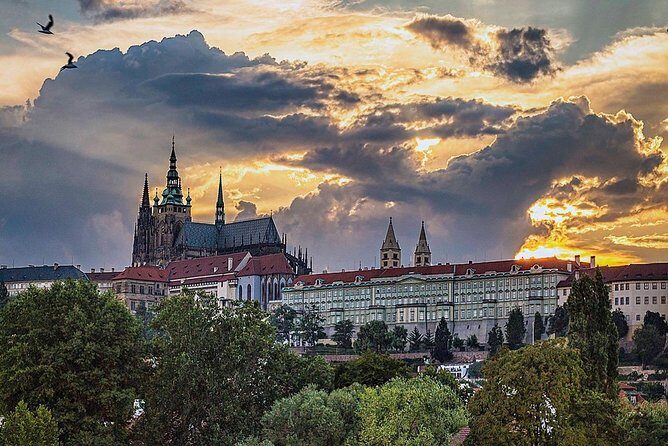
Prague Castle feels like you stepped into a storybook. This guided experience is built to help you move fast, see the big icons, and still understand what you’re looking at as you walk from St. Vitus Cathedral to Golden Lane. I especially like the headset setup and the fact that you get handled through the trickiest parts, including skipping the ticket line and using the short security line.
Two things I really like: first, the guide’s live commentary through headphones makes crowded stops much easier, so you don’t end up craning your neck over other people. Second, the tour’s stop list hits the places that most first-timers feel overwhelmed by, but you get context for each one. It’s also nice that you can choose a small-group or private format depending on how personal you want the pacing to feel.
One possible drawback: Prague Castle can close areas on short notice due to official regulations. Your guide will do their best to adjust, but it’s smart to keep flexibility in mind, especially if you’re visiting in peak season or in winter when a lot of time can be spent on cold outdoor paths.
In This Review
- Key Things You Should Know Before You Go
- Entering Prague Castle Without the Usual Stress
- Meeting at Malostranská and Riding Up by Tram
- St. Vitus Cathedral: Stained Glass, Gargoyles, and the Last Judgment
- Tombs and Chapels: St. Wenceslas, Charles IV, and Nepomuk
- The Old Royal Palace and Vladislav Hall’s Massive Vaulting
- The Defenestration Moment and the Thirty Years War Trigger
- St. George’s Basilica: A Softer Counterpoint to the Main Cathedral
- Golden Lane: Sharpshooters, Goldsmiths, and Kafka’s Prague
- Headphones Make Crowds Work for You
- Small-Group vs Private: Choose the Day You Want
- Price and Value: What $61 Gets You in Prague Castle Time
- Timing, Shoes, and the Winter Reality
- Should You Book This Prague Castle Tour?
- FAQ
- Where is the meeting point?
- How do I get there from the metro?
- How long is the tour?
- What’s included in the ticket?
- Can I choose a small-group or private experience?
- Which languages are available?
- What should I bring?
- What if part of Prague Castle is closed?
Key Things You Should Know Before You Go
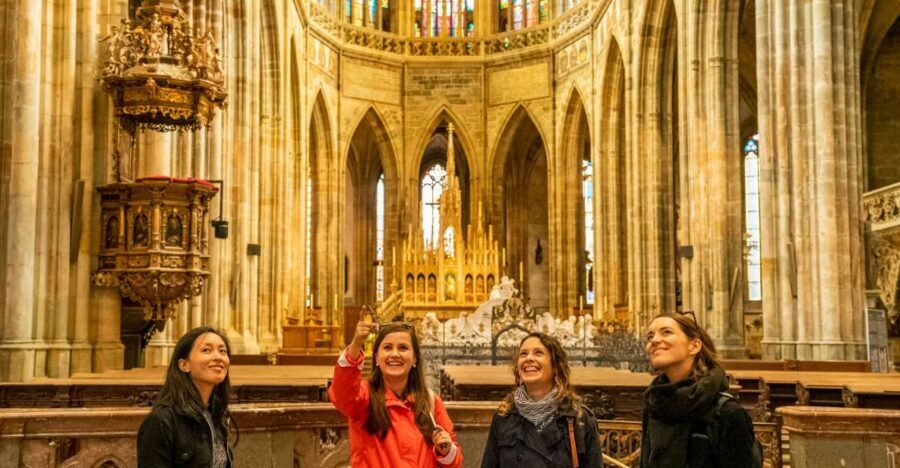
- Headphones for live commentary: You’ll hear the guide clearly even in the busiest cathedral and palace sections.
- Skip the ticket line + short security line: Less waiting time means more time inside the key sights.
- St. Vitus highlights that are easy to miss: Gargoyles outside, plus the Alfons Mucha stained glass and the mosaic of the Last Judgment.
- Tombs and chapels with a clear storyline: St. Wenceslas and Charles IV, plus St. John of Nepomuk’s baroque tomb.
- Vladislav Hall and the defenestration moment: You get the backstory of the room tied to the Thirty Years War.
- Golden Lane’s working-person perspective: From sharpshooters to goldsmiths, plus the Kafka connection and reconstructed workshops.
Entering Prague Castle Without the Usual Stress
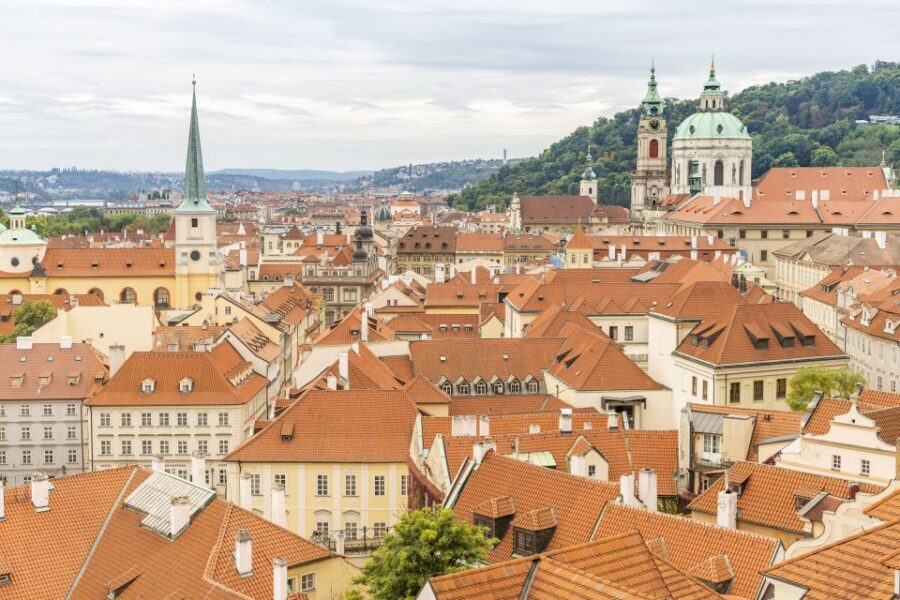
If Prague Castle is on your must-do list, this tour tackles the two things that usually slow people down: logistics and interpretation. You start with a tram ride to the castle district and you’re guided on-site, so you’re not spending your energy figuring out where to go next.
The value here isn’t only that entry is included. It’s that you’re not left to skim your way through major spaces while the group moves on. With live commentary in your headset, you can absorb what matters—why the cathedral looks the way it does, what the tombs symbolize, and what happened in the palace rooms that shaped Czech history.
A few more Prague tours and experiences worth a look


Meeting at Malostranská and Riding Up by Tram
Your day starts at the Malostranská metro station. Meet directly in front of the exit, near the small water fountain (note: it’s covered during winter). You’ll see a brown and white sign that says Meeting Point, and you should look for a guide holding an orange umbrella.
If you’re using the metro, one practical tip: after the second escalator from the subway, go left. When you’re coming up by tram, get off at Malostranská, cross the street, and head toward the subway stop Malostranská.
This start matters because the castle is uphill and spread out. Getting to the right entrance area with a guide plan helps you avoid the “we’ll just wander and see” trap that can turn into wasted time.
St. Vitus Cathedral: Stained Glass, Gargoyles, and the Last Judgment
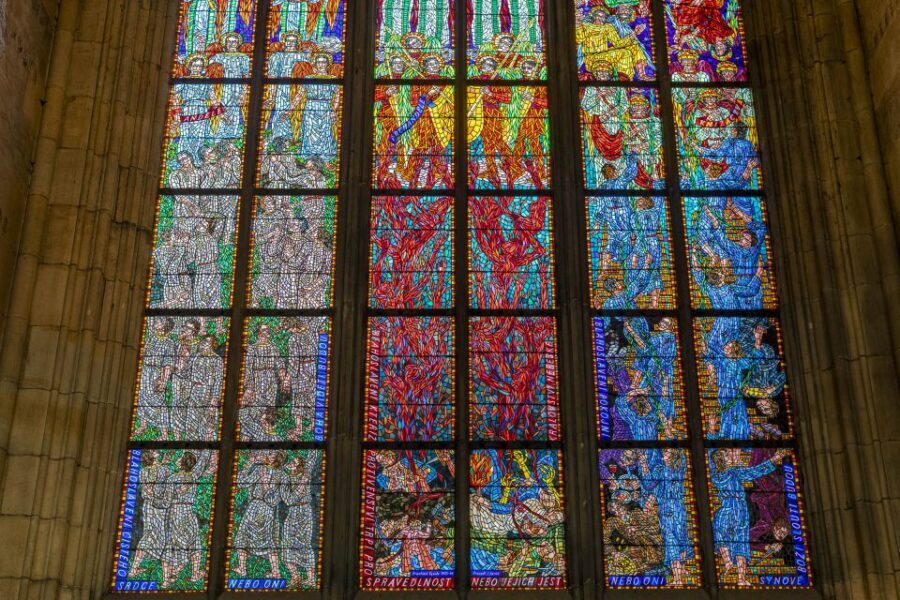
St. Vitus Cathedral is the kind of place that can feel overwhelming on your own, because it’s built for attention from every angle. With a guide, you’re not just walking through impressive space—you’re learning how to look.
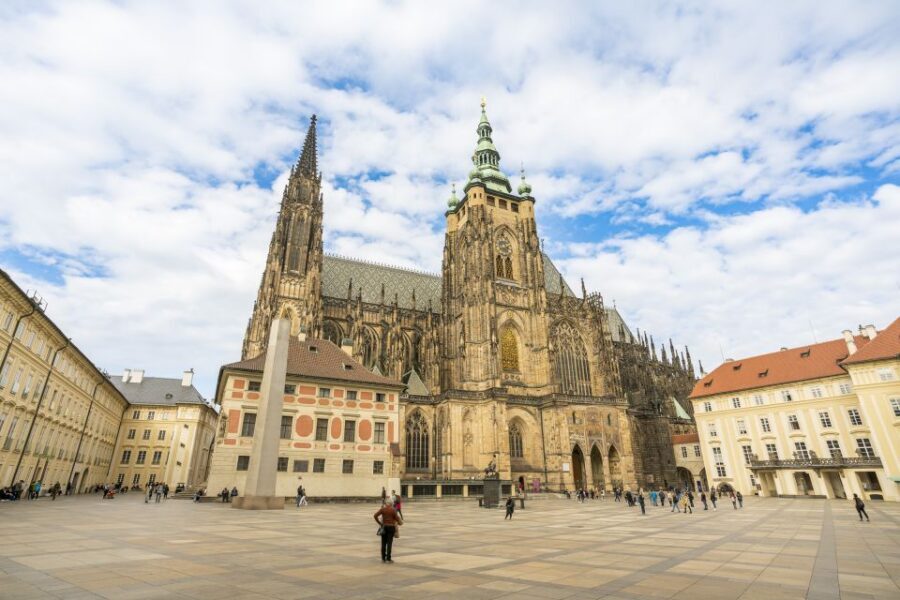
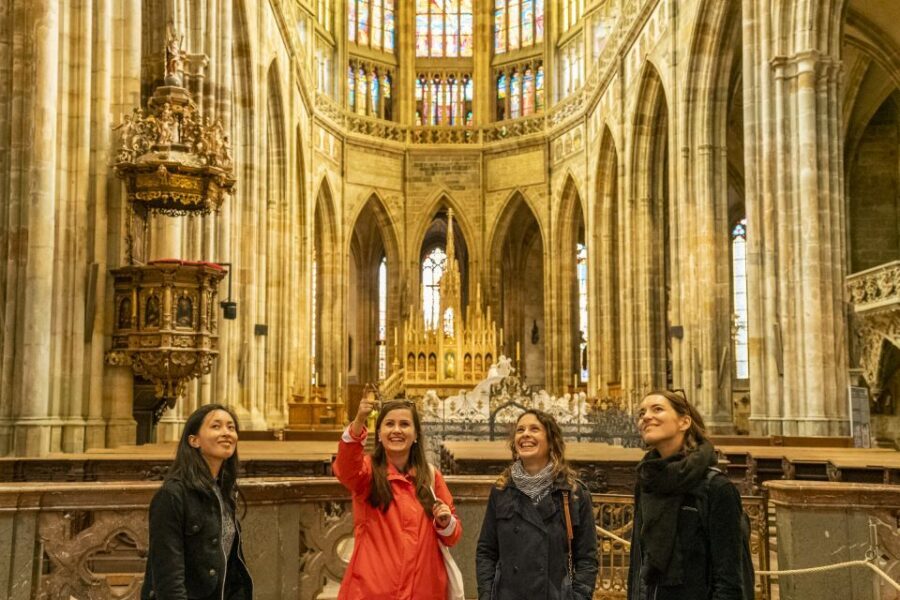
Inside, you’ll focus on Gothic architecture and signature details that visitors often miss. The exterior has gargoyles, and your tour time is structured so you notice them instead of rushing past. Then comes a showstopper: the Art-Nouveau stained glass window made by Czech artist Alfons Mucha. It’s a sharp reminder that the castle complex isn’t stuck in one era.
Another highlight is the 14th-century mosaic of the Last Judgment. That’s the kind of artwork that rewards a slow stop, and the headset commentary helps you understand what you’re seeing while you’re standing there.
And yes, crowds happen. One of the best practical features is that you can still hear your guide while the group pauses for photos in tight spots—especially around cathedral interiors.
Tombs and Chapels: St. Wenceslas, Charles IV, and Nepomuk
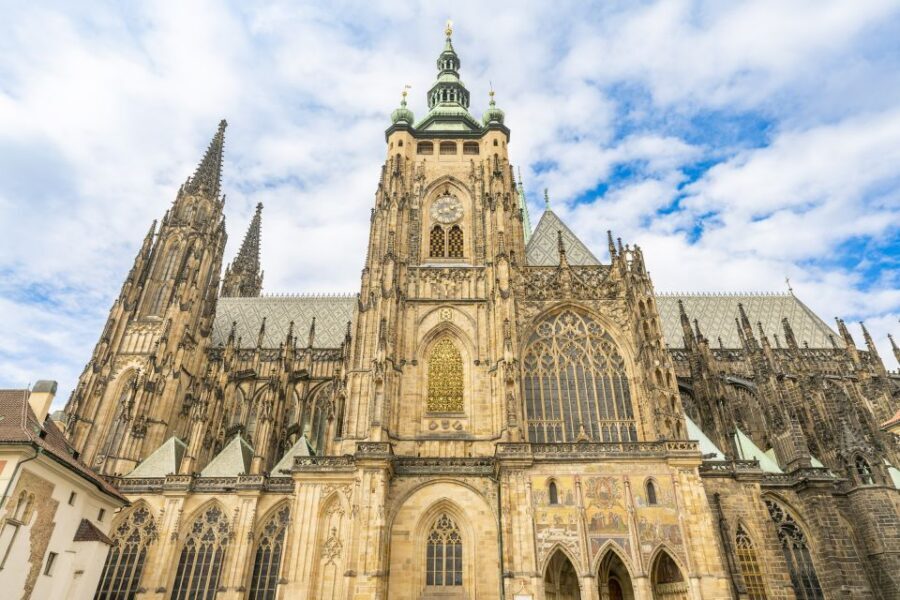
After you take in the big cathedral moments, the tour shifts into the human side of the complex: tombs and chapels tied to power, faith, and national identity.
You’ll see the tombs of St. Wenceslas and Charles IV, plus the Chapel of St. Wenceslas. These stops help you connect the symbolism of kingship to the religious space they built around it. It’s not just monument-viewing; it’s a story about who was remembered, how, and why.
Then there’s the baroque tomb of St. John of Nepomuk. Baroque style inside a medieval complex can feel like a voice with a different accent. With the live guide narration, that contrast makes more sense—what changes across centuries, and how Prague Castle became a place where different periods left their mark.
The Old Royal Palace and Vladislav Hall’s Massive Vaulting
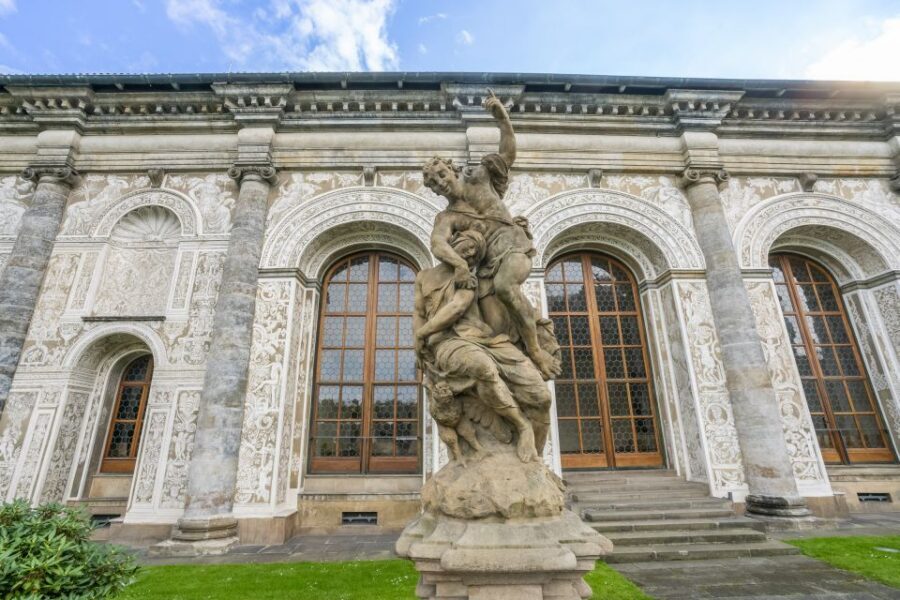
Next up is the Old Royal Palace, where the tour moves from sacred art to power and administration. If St. Vitus is all about spiritual grandeur, the palace spaces feel built for rule and ceremony.
Your guide brings you to Vladislav Hall, with its massive vaulted ceiling. Even if you’re not a “big room” person, you’ll likely find yourself looking up, because that ceiling dominates your sense of scale.
This stop is valuable because it adds a practical layer to the visit: you start seeing the castle as a functioning political machine, not just a museum. It helps you understand why certain areas were designed to impress—people were meant to feel small and controlled.
Guided is one way in; going alone is cheaper. PragueExplorer weighs the skip-the-line ticket with optional audioguide against tours like this one, and hrad.cz, the castle’s official site, lists which circuits each ticket class actually opens.
You can also read our reviews of more guided tours in Prague




The Defenestration Moment and the Thirty Years War Trigger
One of the most memorable parts is the chamber where the Defenestration of Prague occurred. This is where Czech Protestant aristocrats threw Catholic governors of the Habsburg emperor and their secretary out a window, and it set the Thirty Years War in motion.
The site matters, because it turns a textbook headline into a real physical location. You’re standing in the kind of room where a single act could escalate into something enormous, and the guide narration keeps the timeline clear.
I like this approach because it avoids the common problem of Prague Castle becoming only a sequence of pretty buildings. Here, history is anchored to a specific place, so your understanding sticks.
St. George’s Basilica: A Softer Counterpoint to the Main Cathedral
St. George’s Basilica is a good change of pace. It offers a different mood and a different kind of visual focus inside the overall castle complex.
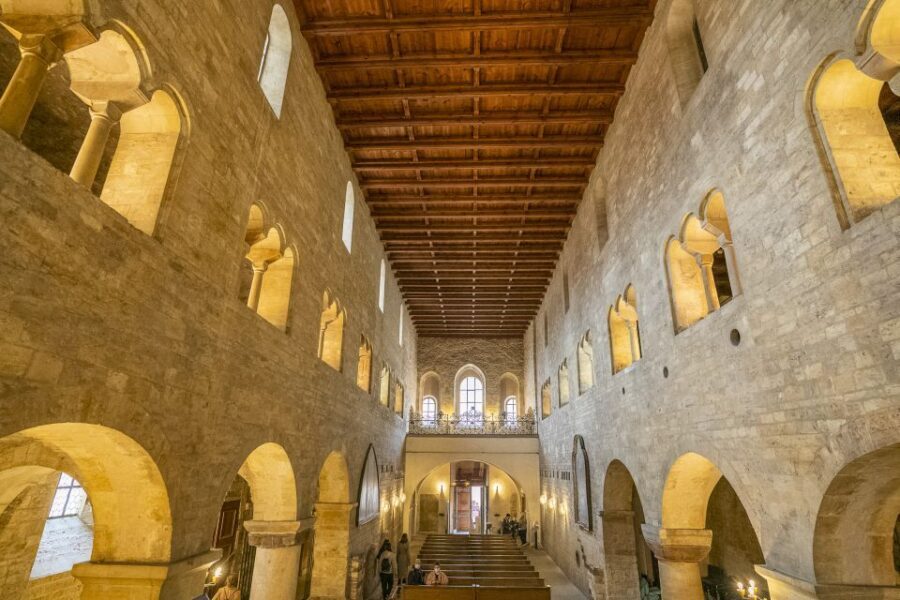
You’ll see fragments of 12th-century frescoes. Those pieces can be easy to overlook if you’re just hunting for the biggest sights, but with the guide steering you, the age and style stand out.
Then there’s the double staircase where the remains of St. Ludmila lie. That detail is worth paying attention to because it’s practical architecture tied to commemoration. It helps you see how devotion, movement, and memorial design were built into the basilica experience.
Golden Lane: Sharpshooters, Goldsmiths, and Kafka’s Prague
Golden Lane is where Prague Castle shifts from official spaces to everyday life. You’ll walk along the lane and see how these cottages were originally built for the castle’s sharpshooters, then later housed goldsmiths.
This part is great for two reasons. First, it makes the castle feel human—working people living in the shadow of the court. Second, it gives you a timeline you can actually picture, from military service to craftspeople.
You’ll also see reconstructed workshops and homes along the lane. Those reconstructions help you imagine daily routine, not just big events. And yes, there’s the Kafka connection—later centuries included artists like Franz Kafka living there—so the lane becomes a bridge between medieval Prague and more modern cultural life.
Headphones Make Crowds Work for You
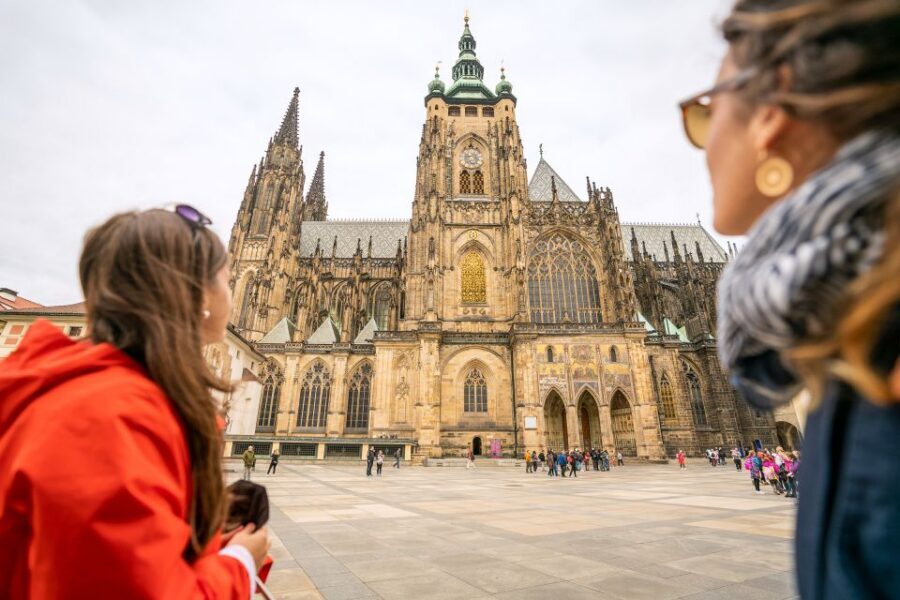
Prague Castle can get packed, especially in the cathedral and the palace interiors where people stop for photos and slow down. The headset system is one of the most underrated parts of the tour, and it’s repeatedly praised because it actually fixes the problem of distance.
With commentary through your headset, you can keep moving with the group while still hearing the story. That means you’re not forced to stay right next to the guide’s shoulder. It also helps in the busy areas when you pause to look up, not down.
If you’ve struggled with other tours where you’re always behind, you’ll likely appreciate how this format reduces that frustration.
Small-Group vs Private: Choose the Day You Want
This tour offers either a small-group or private guided experience. That choice can change how the day feels in real terms.
A small-group tour tends to be a balanced option when you want structure but still like meeting other visitors. It can also be a good fit if your group can handle a normal pace through multiple buildings.
If you want more control—extra time at a single stop, fewer waits, or a quieter experience—private is the safer call. Some people prefer private when they know they’ll have lots of questions or they’re visiting with someone who benefits from a slower rhythm.
Price and Value: What $61 Gets You in Prague Castle Time
At $61 per person for 150 minutes, the price can look straightforward, but the real question is what’s bundled into that figure.
You get:
- Tram ticket
- Admission ticket to Prague Castle, including St. Vitus Cathedral, the Old Royal Palace, St. George’s Basilica, and the Golden Lane
- Expert local guide
- Live commentary
- Skip the ticket line
- Use of the short security line
- Headphones
That combination is where the value comes from. Prague Castle admissions alone can be tempting to buy on your own, but the tour’s savings usually come from reduced waiting and less time getting lost between areas. When you add the guide’s narration and the headphones, the tour turns a scattered visit into a guided learning path.
I’d consider it a solid value if it’s your first time at the castle complex and you want to leave with context, not just photos.
Timing, Shoes, and the Winter Reality
The tour runs about 150 minutes. That’s enough time to hit the core highlights without turning the day into a whole afternoon hike—but you’ll still be walking, and you’ll be moving between interior and outdoor sections.
Bring comfortable shoes. The castle grounds involve uneven surfaces and stairs, and you’ll want your feet to be ready for repeated short climbs.
One more thing to plan around: on rare occasions, some areas of Prague Castle may close due to official regulations. The guide can’t promise every single building will be available, but the tour is designed to keep the highlights covered as best as possible.
If you’re visiting in winter, expect colder outdoor stretches. One of the practical tips I’d give is to dress in layers and treat the waiting and walking time as part of the experience, not an interruption.
Should You Book This Prague Castle Tour?
Book it if you want the castle highlights with clear storytelling, and you’d rather spend your time looking at art and architecture than juggling lines and directions. The headset system is a real quality-of-life upgrade in crowded interiors, and the skip-the-line plus short security line helps you keep momentum.
Consider private if you’re the type who hates being rushed, you want more time at one standout spot, or you prefer fewer people around you. If you’re flexible and you enjoy moving through big sites efficiently, the small-group version can be a great fit.
If Prague Castle is one of your only big priorities in Prague, this tour is a smart way to get a full dose of the complex in a short window—St. Vitus, the palace spaces, St. George’s Basilica, and Golden Lane—without feeling like you missed the meaning.
FAQ
Where is the meeting point?
Meet directly in front of the exit of the Malostranská metro station near the small water fountain. There’s a brown and white sign that says Meeting Point, and you’ll see a guide holding an orange umbrella.
How do I get there from the metro?
After taking the second escalator from the subway, go left. Then follow the signs and directions toward the Malostranská meeting area near the fountain.
How long is the tour?
The duration is 150 minutes.
What’s included in the ticket?
Admission to Prague Castle (including St. Vitus Cathedral, the Old Royal Palace, St. George’s Basilica, and the Golden Lane) is included, along with a tram ticket, an expert local guide, live commentary, use of the short security line, headphones, and skipping the ticket line.
Can I choose a small-group or private experience?
Yes. You can choose from either a small-group guided tour or a private guided experience.
Which languages are available?
Italian, French, Spanish, English, German, and Russian.
What should I bring?
Comfortable shoes. The visit includes walking through multiple areas of the castle complex.
What if part of Prague Castle is closed?
On rare occasions, some areas may be closed due to official regulations. Your guides will do their best to ensure a great experience, but access to every building cannot be guaranteed.