REVIEW · PRAGUE
World War II History Tour of Prague’s Old Town
Book on Viator →Operated by Rosotravel - Ostrava City Tours · Bookable on Viator
Prague’s WWII story is written on street corners. This Old Town history walk connects major landmarks to Nazi policy and Czech resistance, from the Jewish quarter to the underground Heydrich agents’ hideout. I like how the tour ties specific places to what happened there, and I also love the pacing and clarity I’ve heard from top guides like Hubert. One thing to plan for: it’s mostly outdoors, so bring rain gear and something warm if the weather turns.
You’ll cover a lot of ground without feeling rushed, and the key sites are easy to find in the city center. The tour is offered in English, uses a mobile ticket, and is set up as a private group so you’re not squeezed into a huge crowd. If you’re doing a shorter option, note that the Heydrich Terror stop depends on the selected duration.
In This Review
- Key takeaways before you go
- WWII Prague in the Open: Why This Route Works
- Starting at Nám. Franze Kafky: Getting Oriented Before the Dark Parts
- Maisel Synagogue and the Spanish Synagogue: When Looting Was Planned as a Display
- Josefov, the Old Jewish Quarter: A Walk Through a Nazi Target
- Old Town Hall and the Astronomical Clock: WWII Damage You Can Still See
- Petschek Palace: From Grand Architecture to Gestapo Headquarters
- Wenceslas Square and the Resistance Plaque: Czech Courage Under Pressure
- The Heydrich Terror Memorial Crypt: The Underground Stop That Stays With You
- Old Town Square Landmarks: Ending With the Places Everyone Knows
- Price and Time: Is $93.36 Good Value?
- Practical Tips for a Fully Outdoor Experience
- Who This Tour Fits Best
- Should You Book This WWII Old Town Tour?
- FAQ
- Where is the meeting point for this Prague WWII Old Town tour?
- How long does the tour take?
- Is the tour offered in English?
- Is this tour private?
- Are admission tickets required for the stops?
- Do I visit the National Memorial to the Heroes of the Heydrich Terror?
- Is the tour mostly outdoors?
- How do I get the tickets?
- What are the cancellation rules?
Key takeaways before you go
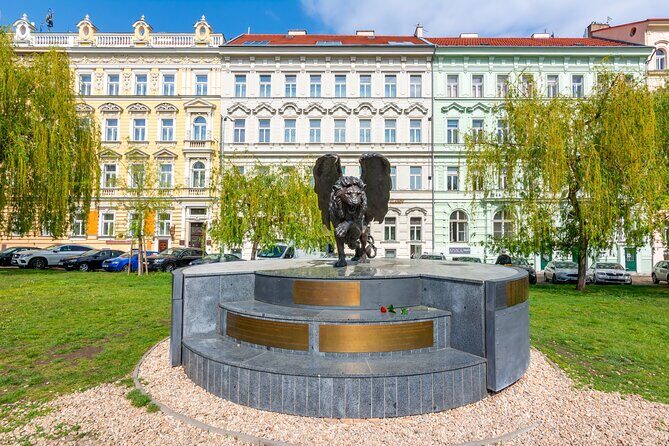
- Jewish quarter context you can actually picture, not just names on plaques
- Nazi occupation details placed at real buildings, including Gestapo headquarters at Petschek Palace
- Resistance stories that continue into the underground crypt, where the Heydrich agents hid
- Landmarks with visible WWII scars, including damage to the Old Town Hall façade after the May 1945 uprising
- English-language guidance with good pacing, called out by guides like Hubert
WWII Prague in the Open: Why This Route Works
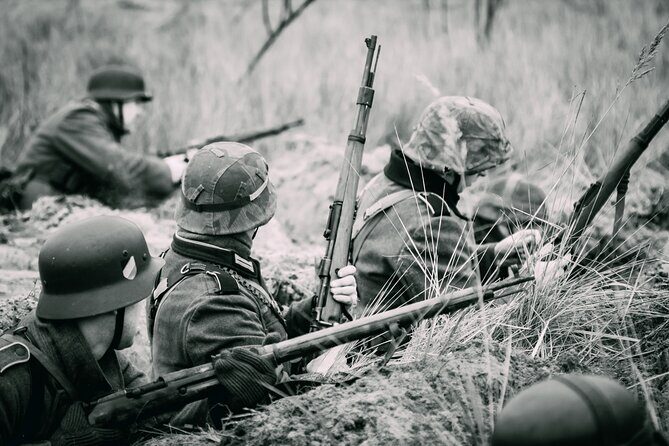
Prague’s Old Town can look postcard-pretty, but this walk keeps you focused on what was happening under the stonework. The strength of this tour is that it doesn’t treat WWII as an abstract lesson. It points you to the places where policies were carried out, where communities were singled out, and where resistance networks tried to stay one step ahead.
The route also makes sense geographically. You’re mostly working in and around the Old Town/Square area, which helps you avoid wasting your time hopping around Prague. And because the guide keeps linking stops, you start to see patterns: how Nazis used museums, how they used interrogation and surveillance, and how Czech resistance tried to disrupt the machine.
You can also read our reviews of more historical tours in Prague
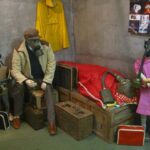
Starting at Nám. Franze Kafky: Getting Oriented Before the Dark Parts
The tour meets at the World of Franz Kafka on Nám. Franze Kafky 16/1 in Staré Město. This is a smart starting point because it’s central, easy to reach with public transport, and it gives you a clean launch pad before you move into older, tighter streets.
From there, you’re not just reading history off a sign. You’re getting the guide’s storyline first: how Prague’s key communities and institutions were affected once Nazi power tightened its grip. That framing matters, because later stops hit harder when you know what you’re looking at.
If you want to maximize your experience, arrive a few minutes early. With a walking-style tour, that small buffer helps you settle in and listen from the first stop.
Maisel Synagogue and the Spanish Synagogue: When Looting Was Planned as a Display
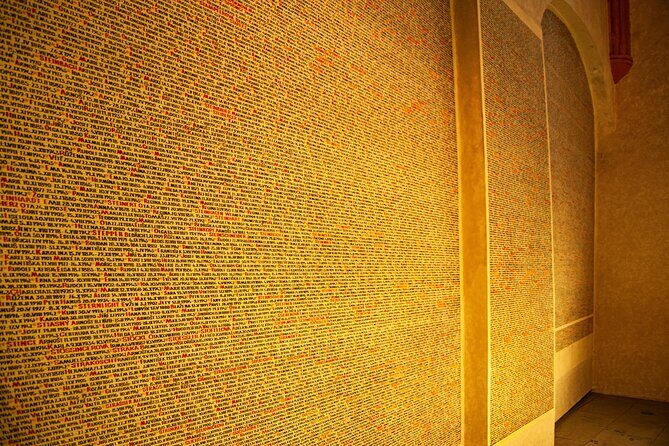
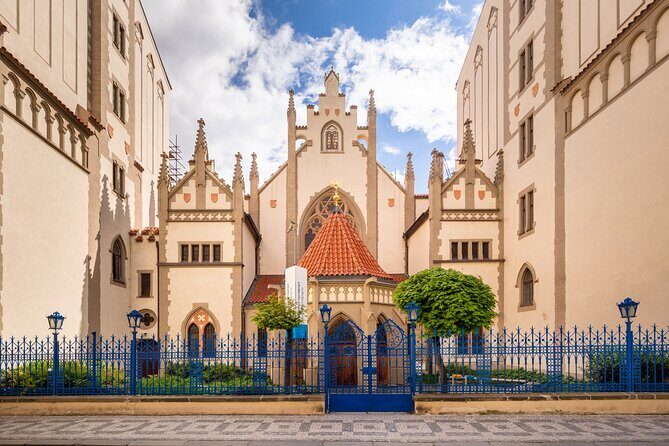
One of the most striking early stops is the Maisel Synagogue and the Spanish Synagogue. You’ll see the area and learn what Nazis intended for valuable Jewish objects—there’s a specific idea here: some items were stored with the goal of setting up a Nazi museum about an extinct race.
This stop works because it explains the cruelty in a cold, organized way. It’s not only that property was stolen. It’s that the occupiers tried to control the narrative, turning culture into a propaganda tool. Even if you only spend around 25 minutes, the message stays with you.
A practical note: depending on the day, you might find some Jewish venues closed to the public. That doesn’t mean the story disappears, but it can affect how much you can physically see inside. If you’re aiming for maximum access, check what days the sites are open.
Josefov, the Old Jewish Quarter: A Walk Through a Nazi Target
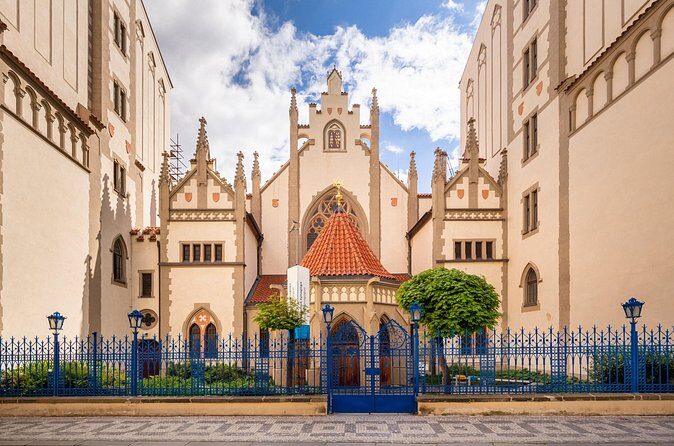
Next you move into Josefov, Prague’s Old Jewish Quarter. The tour keeps your attention on why this area mattered to the Nazi regime and what happened once transportation began in 1941.
This is where the tour shifts from buildings to impact. The guide connects the regime’s interest in the area to the mass deportations toward Theresienstadt. The point is not to overwhelm you with dates, but to help you understand how geography and bureaucracy worked together.
It also gives you a helpful mental picture. When you later hear about resistance or clandestine operations, you’ll remember that Jewish communities faced extreme, systematic pressure well before WWII ended. It makes the rest of the tour feel like part of the same story, not a separate chapter.
Old Town Hall and the Astronomical Clock: WWII Damage You Can Still See
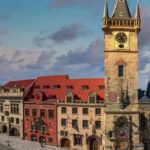
Then you head to the Old Town Hall area and the Astronomical Clock. Here, the WWII connection is visible: the facade suffered heavy damage during the Prague uprising in May 1945, but the iconic clock survived.
That’s an important detail because it turns history into something physical. You’re standing with your eyes on the kind of structure people fought over—buildings that anchored public life. When a clock survives while a facade is damaged, it’s a simple image with a lot of meaning.
You’ll typically spend about 25 minutes here. It’s enough time to slow down, look closely, and understand what the guide is pointing out. If you tend to rush through famous squares, try not to. The guide’s cues are what transform a quick glance into an informed look.
Petschek Palace: From Grand Architecture to Gestapo Headquarters
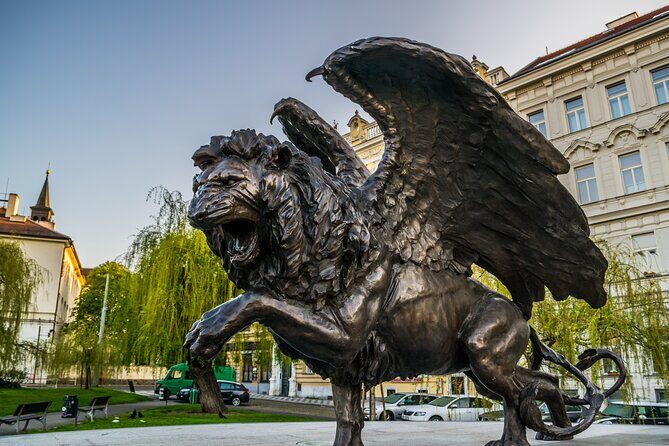
Petschek Palace is next, and this is one of the tour’s biggest “wait, what?” moments. The palace is the former seat of the Gestapo headquarters, meaning you’re looking at a building tied to surveillance, interrogation, and terror.
The contrast is sharp. It’s easy to forget that seats of power weren’t always grim-looking on the outside. The guide helps you connect the architecture to the function: where a regime’s control became real in people’s lives.
A detail that can add a lot to this stop: today, Petschek Palace is used as the US ambassador’s residence. If you notice security details or the difference in how the building feels now, that’s part of the experience. Long-range photos can be tricky depending on rules and sightlines, but the payoff is seeing how the same walls can shift roles across decades.
Wenceslas Square and the Resistance Plaque: Czech Courage Under Pressure
The tour then moves toward Wenceslas Square. On a corner of a nearby building, you’ll find a memorial plaque dedicated to the Czech resistance, and the guide explains what their efforts involved—offensive actions, interrogations, and tortures.
This is a key moment because it flips the tone from victimization to action. You still get the reality of what resistance carried with it, but you also learn what people were trying to do to disrupt Nazi plans.
You’ll also hear that Nazis used Wenceslas Square for mass demonstrations. So you’re not only learning about resistance; you’re seeing the stage where the occupiers performed power. The effect is sobering: a place can be both historically public and historically dangerous, depending on who controls it.
The Heydrich Terror Memorial Crypt: The Underground Stop That Stays With You
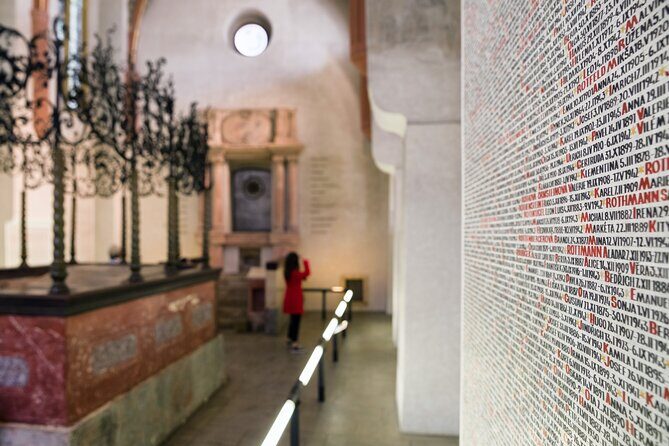
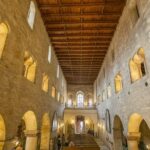
One of the best parts of this tour is the National Memorial to the Heroes of the Heydrich Terror. It’s in the underground crypt of the Cathedral of Saints Cyril and Methodius, and the setting alone makes the story feel more real.
You’ll learn that this site was the last hideout of seven SOE-trained Czechoslovakian agents involved in the assassination of Reinhard Heydrich, a high-ranking German SS and police official. Then the tour connects that action to the aftermath: the search and the wider fallout for the agents and their support network.
This is typically the longer stop—about 1 hour 20 minutes—and it’s where you get the most narrative density. It’s also where the tour earns its “history walk” label. Instead of just naming events, the guide maps the chain of action in a way that feels human.
Important planning note: the Heydrich Terror Memorial may not be included in the basic 2-hour option. If you want this crypt stop, choose the option that explicitly covers it.
Old Town Square Landmarks: Ending With the Places Everyone Knows
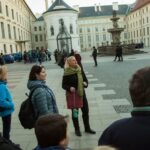
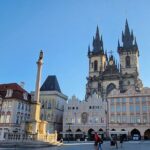
After the darker underground stop, you return to Old Town Square. The tour highlights major landmarks such as the Church of St Nicholas, Kinsky Palace, and the Church of Our Lady before Týn.
This part is not filler. It helps you reset your eyes and connect WWII stories back to the city’s daily identity—what was worth protecting, what the Nazis tried to reshape, and what remained part of Prague afterward.
Because the tour generally ends back near the meeting point, you finish close to where you can grab food or plan the next leg of your day. If you’re pairing this with another attraction, ending around the Old Town core is very convenient.
Price and Time: Is $93.36 Good Value?
At $93.36 per person, this isn’t a “cheap walk,” but it can be strong value if you care about the story quality. The price buys you an English-speaking guide, a private format for your group, and access to multiple major sites across a few hours—plus the chance to hear connections between them rather than reading them one by one on your own.
Duration runs about 2 to 4 hours depending on the option, and that matters for value. If you pick the longer version that includes the Heydrich Terror Memorial crypt, you’re getting the tour’s most time-intensive stop. If you choose the shorter option, you may still see the Old Town landmarks and Gestapo-linked locations, but you’ll miss that underground payoff.
A practical tip: book ahead. The tour is commonly booked about 42 days in advance, and that’s a sign it fills up, especially around weekends and peak travel months.
Practical Tips for a Fully Outdoor Experience
This tour is largely outdoors, so your comfort affects everything. When rain hits, Prague can feel extra cold, and you’ll want to keep moving. Bring a light rain jacket, wear shoes that handle uneven pavement, and plan for wind on open square areas.
Also, check your email the day before you go. You’ll receive important information, and the tour uses a mobile ticket. Having it ready makes the start smoother.
Finally, don’t assume every venue will be open on your exact day. If your trip lands on a Saturday, you might encounter closures for Jewish sites. The guide can still guide the story, but it helps to be flexible.
Who This Tour Fits Best
This is a good match if you:
- want WWII context tied to specific Prague locations
- prefer walking with an English guide instead of solo museum-hopping
- care about how the Nazis tried to control culture, surveillance, and public messaging
- like when a guide gives a clear narrative, not just a list of dates
It may feel heavy if you’re seeking a light history stop. This tour focuses on Nazi occupation and resistance, including interrogations, tortures, and deportations. If that’s too much for a single day, consider splitting it into two shorter activities with a quieter break between.
Should You Book This WWII Old Town Tour?
I’d book it if you want WWII in Prague to make sense as a chain of actions, not separate “things to see.” The big reason is how the route links synagogues, Josefov, Gestapo headquarters at Petschek Palace, public control at Wenceslas Square, and then the underground Heydrich agents’ hideout.
Skip it only if you hate cold, wet walking days or you’re not interested in the resistance side of the story. If you do book, choose the option that includes the Heydrich Terror Memorial crypt if that stop is a priority. That’s the moment that tends to stick, because the setting and story combine in a way you can’t get from a casual walk through the Old Town.
FAQ
Where is the meeting point for this Prague WWII Old Town tour?
The tour meets at World of Franz Kafka, Nám. Franze Kafky 16/1, Staré Město, 110 00 Prague, Czechia.
How long does the tour take?
The duration is about 2 to 4 hours, depending on the selected option.
Is the tour offered in English?
Yes, the tour is offered in English.
Is this tour private?
Yes. It’s a private tour/activity, so only your group participates.
Are admission tickets required for the stops?
Admission tickets are listed as free for the stops included in the tour.
Do I visit the National Memorial to the Heroes of the Heydrich Terror?
That stop depends on the selected option. It is not included in the basic 2-hour option.
Is the tour mostly outdoors?
It is described as a fully outside tour, so plan for outdoor weather.
How do I get the tickets?
You’ll receive a mobile ticket. You should also check your email the day before the tour for important information.
What are the cancellation rules?
You can cancel up to 24 hours in advance for a full refund. If you cancel less than 24 hours before the start time, the amount paid is not refunded.