REVIEW · PRAGUE
Second World War & Communism (Tip-based 3 hour tour)
Book on Viator →Operated by Real Prague Guides · Bookable on Viator
Prague history doesn’t sit on a pedestal. It moves street by street, from Czech Jewish fate in WWII to the Cold War realities that shaped modern Czechoslovakia. I like how the tour packs a lot of big themes into an easy city walk, and the Museum of Anthropoid Operation stop gives the story a real sense of place. It’s also a strong pick if you want history told clearly, including guides like Kamil and Vaclav who were praised for straight, suspenseful storytelling.
Two things I really appreciate: you get WWII and Communism in one connected narrative, and each stop feels tied to a specific question you’ll care about, from Hitler’s early occupation to what happened after communism took hold. I also like that it’s tip-based, so you can match your cost to the experience you actually felt.
One possible drawback: the walking adds up over 3 hours. Even with moderate pace, one person noted that the route felt like about 5 km, and the tour isn’t recommended for mobility problems. Also, in at least one run, the group was larger than expected, so if you prefer smaller groups, it’s worth asking ahead.
In This Review
- Key highlights you’ll notice fast
- What this tour really teaches: WWII choices, Communist control, and Czech resistance
- Starting at Klárov: the Resistance memorials that set the tone
- Pinkas Synagogue: the fate of Czech Jewish communities during WWII
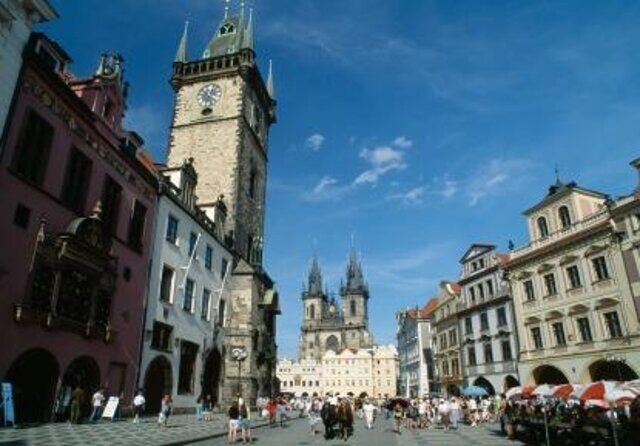
- Old Town Square by the Old Town Hall: the Prague Uprising and the postwar shift
- Wenceslas Square: the 1968 invasion and Jan Palach’s place
- OC Quadrio and the Rotating Head of Kafka: art under communism
- Narodni třída wall sculpture: the Velvet Revolution in one moment
- National Theatre: Václav Havel and the new presidency after 1989
- Dancing House: the Valentine’s Day bombing and Prague’s modern layers
- St Cyril and St Methodius Cathedral: Operation Anthropoid and the crypt finish
- Price and logistics: why a low base price can still be a serious value
- Group size, walking pace, and what to bring
- Who should book this WWII and Cold War Prague tour
- FAQ
- How long is the Second World War & Communism tip-based tour?
- Is the tour offered in English?
- Where do I meet the guide for the tour?
- Where does the tour end?
- Is entry to the Museum of Anthropoid Operation included?
- Is this tour private?
- Do I get a mobile ticket?
- What fitness level is required?
- Are service animals allowed?
- Should you book this tour?
Key highlights you’ll notice fast
- A tight story line from WWII to the Velvet Revolution, not random facts
- Pinkas Synagogue for the fate of Czech Jewish communities during the Nazi era
- Operation Anthropoid at the end, with entry into the museum and the crypt setting
- Kafka and art under communism via the rotating head at OC Quadrio
- Clear, linear guide style that keeps the pacing moving without feeling rushed
What this tour really teaches: WWII choices, Communist control, and Czech resistance
This is one of those Prague tours that helps you connect dots you might not notice on your own. You’ll start with the pre-WWII and early-occupation setup, then shift into the human cost during WWII. After that, the story moves into the Prague Uprising, the postwar power shift, and the communist era—ending with the Velvet Revolution and Czechoslovakia’s return to self-determination.
What makes it valuable is the way the stops answer real-life questions. Not just what happened, but what choices people faced, and what power systems did to ordinary life. It’s also a good way to understand why Czechs and Slovaks remember certain events so intensely: resistance wasn’t abstract, it was local, risky, and costly.
And since it’s in English with a certified guide, you’re not stuck trying to connect timelines while navigating street corners and memorials on your own.
A few more Prague tours and experiences worth a look

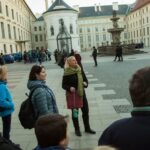
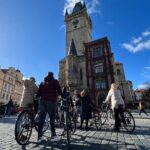
Starting at Klárov: the Resistance memorials that set the tone
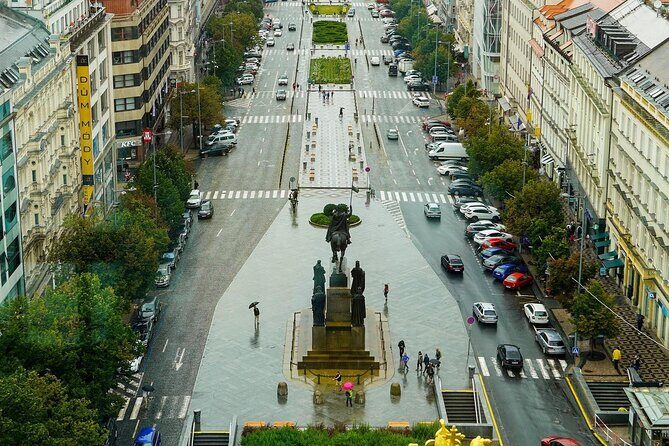
Most tours start with a landmark. This one starts with a mood.
At Klárov, you’ll stand at two key memorial points: the Memorial to the Second Resistance and the Winged Lion Memorial. The guide uses these as more than photo stops. You’ll hear the background on Czechoslovakia’s independence after World War I, how it became one of the early countries Hitler occupied, and what happened to Czechoslovak soldiers during WWII.
Why I like this opening: it stops you from treating WWII and the communist era like separate museum topics. You’re told early on that the same conflict themes—occupation, resistance, survival—keep resurfacing in different forms.
Practical note: this first stop is quick (around 20 minutes) and sets up the rest of the walk. If you’re the type who gets lost in details, this is a good structure: you learn the “why” first, then you get the “where.”
Pinkas Synagogue: the fate of Czech Jewish communities during WWII
The Pinkas Synagogue stop is focused and emotionally heavy in the way history should be. Here you’ll learn the fate of Czech Jewish people during WWII—what happened to those who managed to emigrate and what happened to those who didn’t.
This is one of the most important stops on the route because it gives the Nazi occupation story a human scale. It’s not only about armies and politics; it’s about what the Nazi system did to families, communities, and survival choices.
Time here is about 15 minutes, so don’t plan on lingering. Instead, go in ready to listen. If you care about WWII history beyond headlines, you’ll feel this stop adds real weight to everything that comes after it.
Old Town Square by the Old Town Hall: the Prague Uprising and the postwar shift
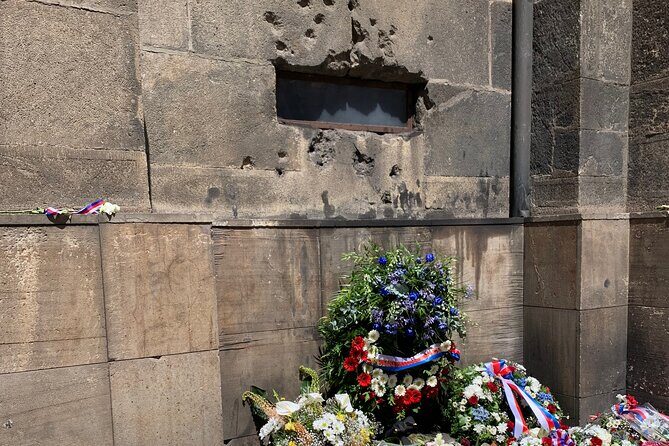
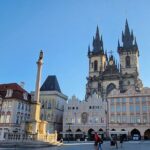
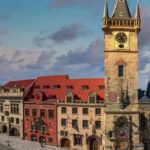
Next comes Staroměstské náměstí with its stage-like presence beside the Old Town Hall. This is where the tour connects WWII to the earliest seeds of the communist era.
You’ll hear the story of the Prague Uprising, and then you’ll get the explanation that matters: how the end of WWII set the stage for communism’s rise in Czechoslovakia. In other words, the tour frames the transition period as a power change, not a sudden switch you either love or hate.
Why this stop works: it’s not only about the uprising as an isolated event. You’ll hear how the aftermath shaped what came next. That makes later stops—Warsaw Pact invasion, censorship-era art, Velvet Revolution—feel connected instead of random.
Wenceslas Square: the 1968 invasion and Jan Palach’s place
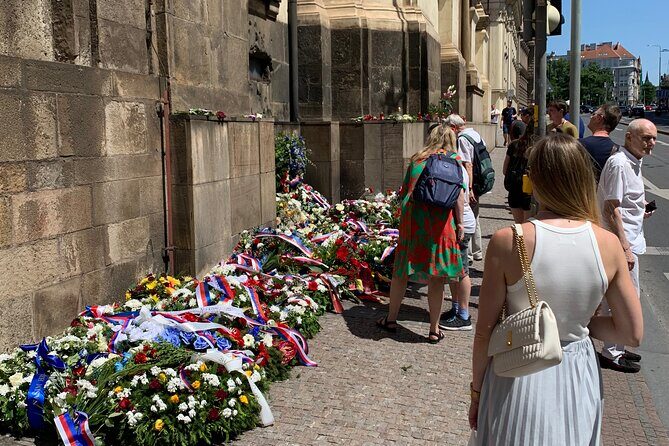
At Wenceslas Square, the tour shifts from occupation and uprising into Cold War reality.
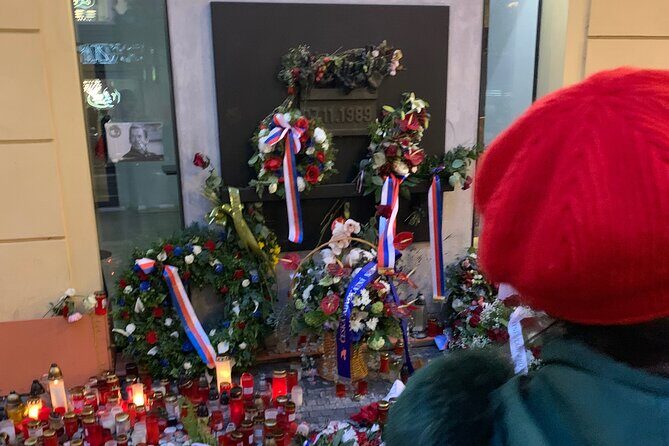
You’ll hear what happened after communism started in Czechoslovakia, why Warsaw Pact armies invaded in 1968, and where Jan Palach’s self-immolation took place. Even if you’ve heard the name before, this is the moment when it becomes tied to a real location in the city, not just a date on a poster.
One practical consideration: this is an open, busy public area. Expect crowds and noise. The guide’s job here is to keep the timeline clear while you’re surrounded by modern Prague life that doesn’t feel like 1968 at all.
If you prefer hearing major events explained in a linear way, this stop is a good match. Several guides linked to this experience have been praised for staying clear and structured as they move through the city.

OC Quadrio and the Rotating Head of Kafka: art under communism
Then you get an angle that’s easy to skip when you tour Prague: art during communism.
At OC Quadrio, you’ll see the Rotating Head of Kafka and the guide will explain what art looked like when political systems controlled public life. This isn’t just cultural trivia. The point is to show how ideas traveled under pressure, and how creativity survived even when freedom was restricted.
Time here is short (about 15 minutes), but it’s a smart palate cleanser. After heavy WWII and political repression topics, you get a reminder that culture wasn’t frozen—it adapted, signaled, and sometimes pushed back in indirect ways.
Narodni třída wall sculpture: the Velvet Revolution in one moment
The stop called Hands reaching out of the wall on Narodni třída gives the tour a strong emotional beat late in the walk.
Here, you’ll learn about the Velvet Revolution and the fall of communism. This part matters because it turns the story from “systems imposing control” into “people forcing change.” You’re no longer just watching history happen from a distance; you’re seeing the city mark its own turning points.
At about 15 minutes, it’s enough to understand the change, not enough to replace your own reading. Still, it gives you a clear mental framework for what comes next—especially once you reach the National Theatre.
National Theatre: Václav Havel and the new presidency after 1989
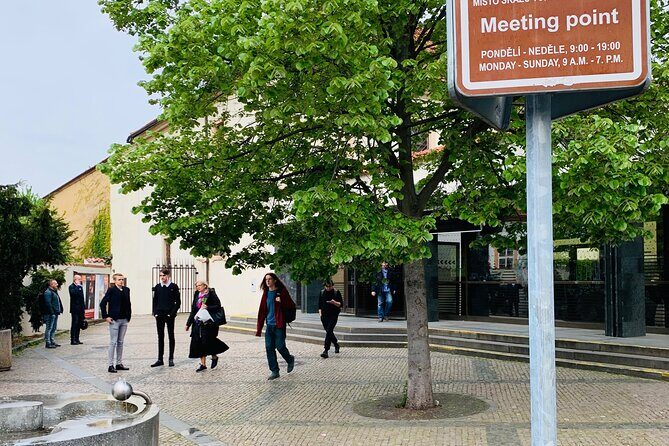
At the National Theatre, the tour brings in one of the most important names of the post-communist era: Václav Havel.
You’ll hear that he became the first president of Czechoslovakia after communism fell, and you’ll learn about his role during the Velvet Revolution. Even if you don’t know Havel’s story yet, this stop helps you understand why he’s remembered not just as a politician, but as a symbol of the shift toward civic freedom.
Time here is brief (around 10 minutes), so think of it as a clear orientation point. The guide helps you connect the Revolution energy to the leadership that followed.
Dancing House: the Valentine’s Day bombing and Prague’s modern layers
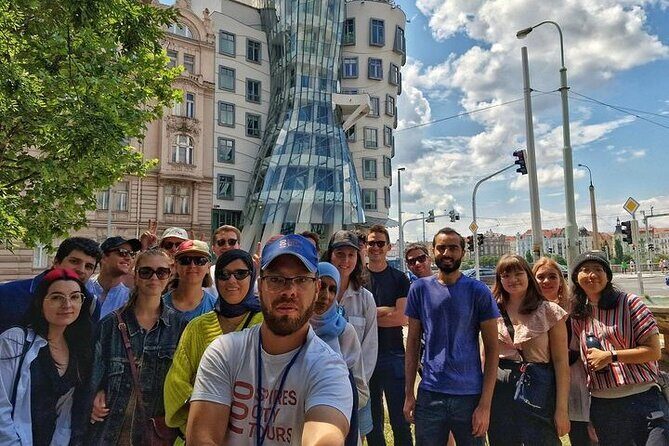
At the Dancing House, the tour adds another layer to Prague: the story of the Valentine’s Day bombing.
This is a stop that helps explain why Prague’s streets feel like they belong to different centuries at once. You’ll see a modern structure, but the guide ties it to an event that shaped the city during WWII. That contrast is the point.
Time is about 10 minutes, so it’s not a full bombing history lecture. Instead, it’s a quick but meaningful marker that keeps WWII present as the tour travels forward in time.
St Cyril and St Methodius Cathedral: Operation Anthropoid and the crypt finish
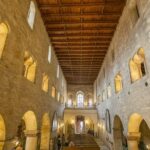
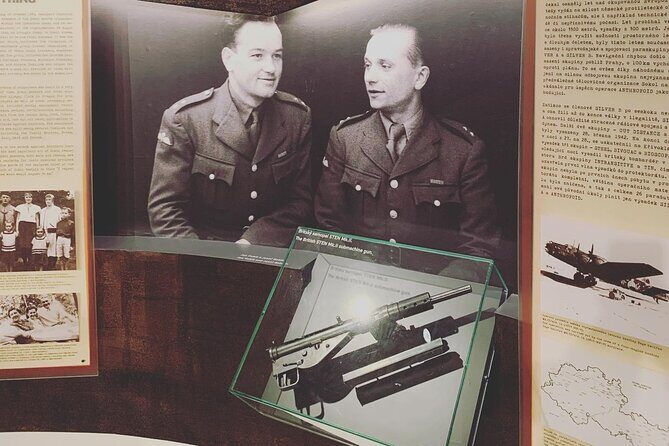
The tour closes at St Cyril and St Methodius Cathedral, with the story of the Czech resistance achievement during WWII: Operation Anthropoid.
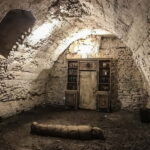
This is also where you get the practical payoff for the included benefit. You’ll have entry to the Museum of Anthropoid Operation, and you’ll finish in the crypt, described as a hideout for soldiers connected to the operation. The crypt is only about a 1-minute walk from the Dancing House or Charles Square, so you can also plan your next stop easily.
Why this ending sticks: you leave with the sense that resistance wasn’t only planned and performed—it had hiding places, networks, and desperate moments. The tour doesn’t just name the operation. It uses the setting to make you feel what it meant to operate under extreme risk.
Important note: animals aren’t allowed inside the war memorial area you visit at the end, even though service animals are allowed elsewhere.
Price and logistics: why a low base price can still be a serious value
The listed price is $3.60 per person for a roughly 3-hour tour, and it’s tip-based. That combo usually means the base price is low compared with what you’re actually buying: a certified guide in English, a defined route, and museum entry included at the end.
The real cost isn’t only the base fare. It’s your tip, and you’ll feel the difference if the guide is strong. One guest specifically called out the pay-what-you-feel structure and said they tipped more because they felt it was worth it.
So here’s how I’d think about value:
- You’re paying for time with a guide who can connect WWII, communism, and resistance into one narrative.
- You’re saving yourself the hassle of researching where to go for Operation Anthropoid and related context.
- You’re getting museum access as part of the package, not as a separate ticket hunt.
Also, the tour is popular enough that it’s commonly booked about 19 days in advance on average. If you want a specific day or guide, booking early is a smart move.
Group size, walking pace, and what to bring
This experience is labeled private, meaning it’s intended for your group only. Still, group size can vary day to day. One person noted a group size of 24 when the tour was advertised as smaller, and they felt the walking volume was significant.
That means: you should plan for a city-walking history walk, not a slow sit-and-sip pace.
What you can plan from the data:
- Duration: about 3 hours
- Fitness level: moderate physical fitness
- Not recommended for travelers with mobility problems
- You’ll walk between several central sites, and one guest estimated around 5 km
- It’s near public transportation
- Confirmation is received at booking
- You’ll have a mobile ticket
- Service animals are allowed, but animals aren’t allowed inside the war memorial area at the end
What I’d bring: comfortable shoes, water, and a charged phone for your mobile ticket. If you’re sensitive to crowds, go at a calmer time of day.
Who should book this WWII and Cold War Prague tour
Book it if:
- You want WWII and the Cold War connected, not treated as two separate trips.
- You care about the human story—Jewish community fate, resistance choices, and what daily life did under communism.
- You like guides who keep a clear, linear flow and use storytelling to keep you moving through the timeline. Named guides associated with this experience, including Kamil, Václav, Katerina, and Kuba, were praised for clarity and strong storytelling.
You might skip it if:
- You have mobility limits. The tour is not recommended for mobility problems.
- You hate walking at a steady pace for a full 3 hours.
- You want only light sightseeing. This is history with real weight, especially the Jewish community and resistance material.
FAQ
How long is the Second World War & Communism tip-based tour?
It’s about 3 hours.
Is the tour offered in English?
Yes, it is offered in English.
Where do I meet the guide for the tour?
The tour starts at MetrocafeKlárov, 51, 118 00 Praha 1-Malá Strana, Czechia.
Where does the tour end?
It ends at the Orthodox Cathedral of Saints Cyril and Methodius, 9a, 120 00 Praha 2-Nové Město, Czechia, in the crypt area.
Is entry to the Museum of Anthropoid Operation included?
Yes, entry to the Museum of Anthropoid Operation is included.
Is this tour private?
Yes. It’s a private tour/activity, and only your group participates.
Do I get a mobile ticket?
Yes, there is a mobile ticket.
What fitness level is required?
The tour asks for moderate physical fitness.
Are service animals allowed?
Yes, service animals are allowed. Animals are not allowed inside the war memorial area visited at the end of the tour.
Should you book this tour?
Yes, if you want a structured, emotionally honest walk through Prague’s 20th-century turning points—WWII to communism to the Velvet Revolution—with Operation Anthropoid given the setting it deserves. The 4.8 rating and strong recommendation level point to consistent quality, and the museum entry is a real value add for a 3-hour format.
I’d book it especially if you’re the type who likes to understand why events happened, not only what happened. Just be sure you’re comfortable walking roughly 3 hours on city streets, and if you’re particular about group size, ask before you go.