REVIEW · PRAGUE
Prague Renaissance & Baroque Gardens Walking Tour
Book on Viator →Operated by Insight Cities · Bookable on Viator
Prague’s gardens feel like royal secrets. I love the small-group pace, and I love how the guide turns fountains and sculptures into stories you can actually picture. The only catch is that Vrtbovská Garden includes steep stairs on the route to the top terrace.
You’ll start near Malá Strana at Bagel Lounge Malostranská Letenská, then take the 22 tram together up toward Prague Castle for a focused 3-hour walk. From there, it’s step-by-step garden architecture, statues, fountains, and viewpoints—more stroll than sprint.
The tour is in English with a professional scholar guide, limited to 8 people, plus a mobile ticket. Most garden access is built in, but Vrtbovská is an extra admission you’ll need to plan for.
In This Review
- Key highlights you should know before you go
- Prague Castle Gardens: why this walk feels like a different side of the city
- Meeting at Malá Strana and using the 22 tram like locals
- Belvedere Summer Palace area: Renaissance garden beauty with picture-perfect pacing
- Fig House and Orangery: the plant-history angle that makes gardens feel alive
- Wallenstein Garden energy: fountains, statues, and peacocks with meaning behind the marble
- Queen Anna’s Summer Palace: Renaissance architecture you can actually read
- Ball Game Hall above the Stag Moat: a Renaissance building with a second life
- Waldstein Garden (Senate gardens): grotto, aviary, and myth heroes
- Vrtba Garden: Baroque terraces, symbolism, and the steep stairs test
- Price and what you’ll actually budget for in CZK
- What makes the guide matter here (and why locals rate it too)
- Who this tour is best for (and who should consider an alternative)
- Should you book the Prague Renaissance & Baroque Gardens walk?
- FAQ
- How long is the Prague Renaissance & Baroque Gardens walking tour?
- What languages is the tour offered in?
- How big is the group?
- Where do we meet for the tour?
- Where does the tour end?
- What time departures are available?
- Is there a ticket or admission cost for Vrtbovská Garden?
- Are the other garden stops included in the tour?
- Will we use public transportation during the tour?
- What if I have trouble with the steep stairs in Vrtbovská Garden?
- Is cancellation free if plans change?
Key highlights you should know before you go
- Max 8 people means questions don’t get lost in the crowd.
- Renaissance + Baroque mix shows how garden design changed in real time.
- Myth and politics meet garden art through sculpture details and symbolic choices.
- Peacocks, fountains, statues keep the walk visually busy (and easy to photograph).
- Vrtbovská views over Prague Castle are worth the stairs, if you’re up for them.
Prague Castle Gardens: why this walk feels like a different side of the city
If you only do Prague’s big sights, you’ll see one side of the city. This tour is a different approach: the parts of Prague where power showed itself through plants, waterworks, and stone figures.
You get a rare combo of Renaissance elegance and Baroque drama. One minute you’re looking at geometric, carefully composed garden spaces; the next, the design starts acting like theater—full of sculpture, symbolism, and dramatic viewpoints.
You can also read our reviews of more walking tours in Prague



Meeting at Malá Strana and using the 22 tram like locals
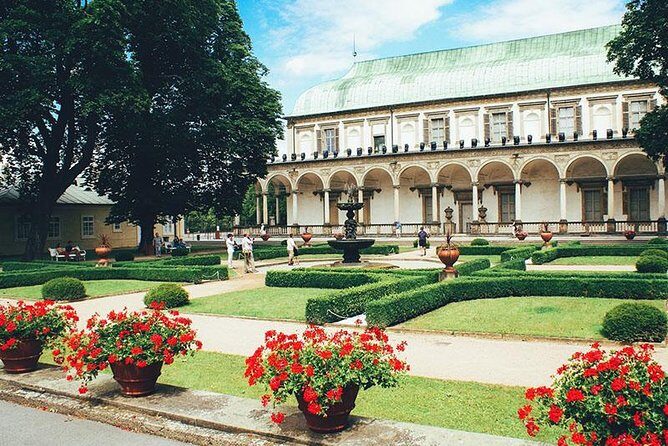
The meeting point is Bagel Lounge Malostranská Letenská (Praha 1 – Malá Strana). You’ll gather there, and the group then rides the 22 tram together to reach the castle’s garden area.
That matters more than you might think. A castle walk can turn exhausting fast, but starting with transit keeps the tour tight and efficient. It also helps you get oriented in a real neighborhood, not just a tourist drop-off zone.
Belvedere Summer Palace area: Renaissance garden beauty with picture-perfect pacing
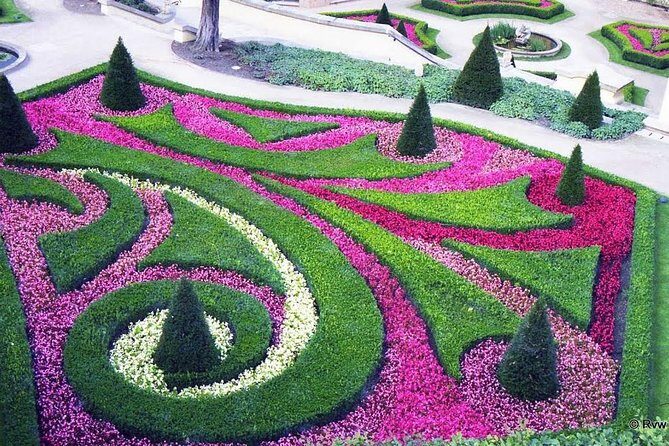
Your route begins around the Belvedere Summer Palace at Prague Castle, where the setting is widely described as one of the standout Renaissance garden scenes outside Italy. This is where I’d tell you to slow down on purpose.
The guide helps you spot the design choices—how pathways, viewpoints, and ornament work together. Expect plenty of statues and garden structure that look great in photos, but also make sense once someone explains what you’re seeing.
One practical tip: bring a phone or camera ready early. The best angles show up as you move, not while you’re stopped, so you’ll want to be ready before the group keeps walking.
Fig House and Orangery: the plant-history angle that makes gardens feel alive
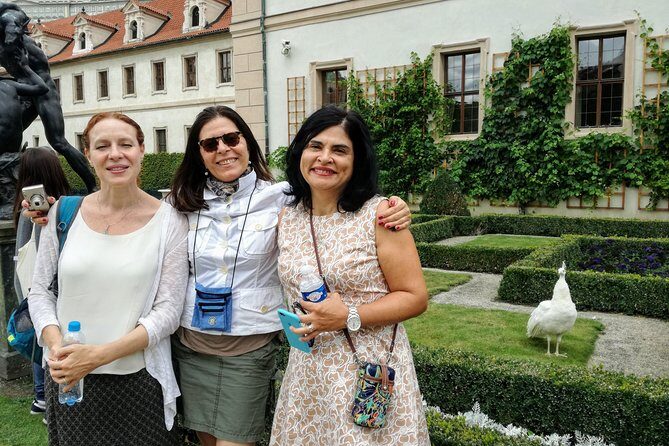
Next comes the Fig House and Orangery on the estate. This area is notable because it’s tied to some of the earliest planting of fruit crops in central Europe—figs, almonds, oranges, and lemons.
Then the story expands beyond “pretty plants.” You’ll hear about how tulips were first brought to Prague, which gives the gardens a connection to trade, exploration, and status. Gardens weren’t just decoration; they were a way to show reach.
If you like history that you can point to—like a tree species, an orangery, or a specific planting story—this portion is a strong payoff. It’s where the tour shifts from sightseeing to interpretation.
Wallenstein Garden energy: fountains, statues, and peacocks with meaning behind the marble
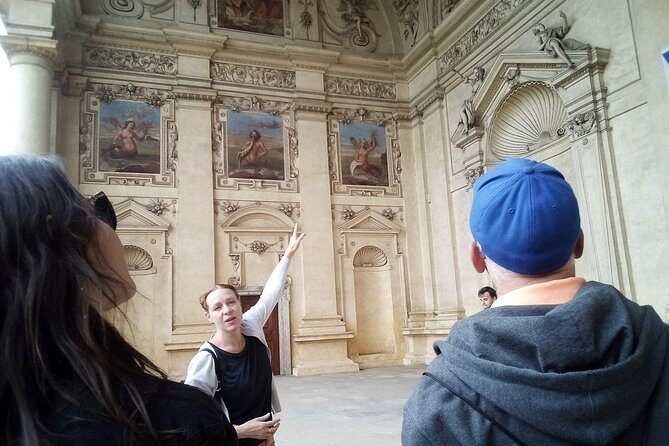
As you walk past the South Gardens and into the Wallenstein Garden, the place turns into a feast for the eyes. You’ll be looking at outdoor architecture with fountains, statues, and even brightly colored peacocks.
But here’s the twist that makes this garden walk more than pretty scenery: the guide pays attention to why sculptures were chosen. You’ll get help reading what mythological figures and classical references were doing in a garden setting—often connected to power and propaganda.
This is also where the small-group format pays off. You can pause for a close look without the tour turning into a traffic jam of people trying to squeeze past.






Queen Anna’s Summer Palace: Renaissance architecture you can actually read
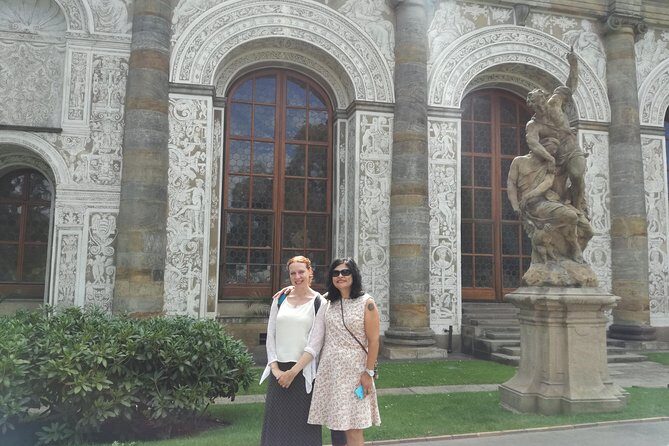
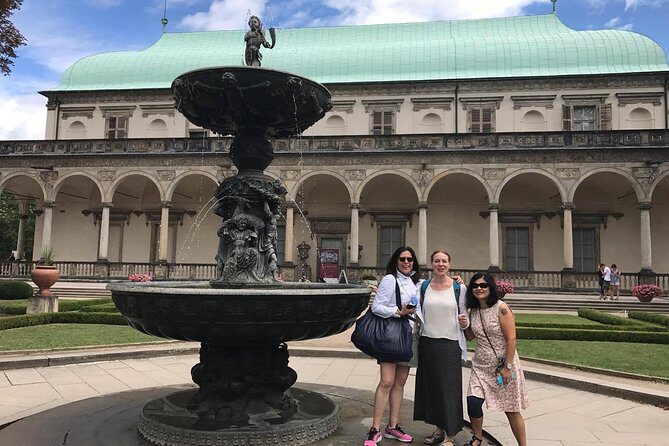
As the walk continues into the Royal Garden area, you’ll stop at Queen Anne’s Summer Palace. It’s described as the purest Renaissance architecture outside Italian territory, and the details are the point.
Look for the ornamental frieze and the outside arcades with decorated Tuscan heads. The reliefs around the walls depict scenes tied to mythology, hunting, and wars, and there’s even a specific figure connected to Ferdinand I and the Order of the Golden Fleece offering Queen Anna—tied to a fig-tree blossom.
If you normally skip building details, don’t. This stop is one of the best “eyes-on” moments of the tour because the architecture isn’t abstract. It’s storytelling in stone.
Ball Game Hall above the Stag Moat: a Renaissance building with a second life
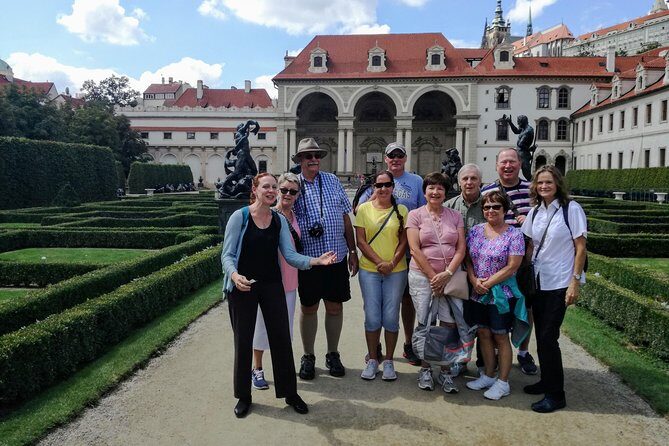
Another quick stop is the Ball Game Hall in the Royal Garden, on the south side directly above the Stag Moat. The building dates to the mid-1500s and started as a ball games hall.
Later, it served new roles: a riding school and stables. That makes the building feel less like a museum piece and more like an active part of palace life—changing with needs while still keeping its Renaissance bones.
Waldstein Garden (Senate gardens): grotto, aviary, and myth heroes

The Waldstein Garden is often where the tour feels especially “Prague” in a good way—less touristy, more architectural, and full of layered features.
You’ll see an Italian-style garden plan, plus an aviary, an artificial grotto, a sculptural gallery of mythological heroes, and a fountain by Adrian de Vries. The fact that it’s open to the public now adds another layer: you’re walking through spaces that once belonged to a world of elites.
This part also works well if you love symbolism. Myth figures weren’t placed casually. The guide helps you notice the connections between classical stories and the values of the people who commissioned the art.
Vrtba Garden: Baroque terraces, symbolism, and the steep stairs test
The highlight for many people is Vrtbovská Garden, a walled Baroque garden dating to the early 1700s. It’s known for original statuary and sculptural decoration, and it’s tied to UNESCO-recognized historic cultural values.
This stop is also where you should be honest about your legs. The tour includes climbing steep stairs to reach the highest terrace. If that’s hard for you, you can wait for the group on the second terrace while they go up, then return in about 10 minutes.
Once you’re at the better vantage points, the payoff is clear: you get some of the best views of Prague and Prague Castle from within the garden walls. Even if you’re not a “garden person,” this is the moment you’ll likely remember later—stone, water, and the city spreading out beyond.
Price and what you’ll actually budget for in CZK
The tour price is $126.03 per person for about 3 hours and a small group capped at 8. For Prague, that sits in the category of “worth it if you like context,” because you’re paying for a scholar guide and for access to more than the usual outdoor stroll.
Here’s what to watch for financially:
- Vrtbovská Garden admission is an extra cost (CZK 130 for individuals; CZK 100 for students and seniors).
- The provided info also lists a separate Prague Castle gardens admission fee (CZK 90 for individuals; CZK 60 for students and seniors), so budget for the possibility of additional entry fees depending on how your tickets are handled.
- The rest of the listed garden stops on the route are described as free for entry.
I like this pricing approach because you’re not stuck paying for everything twice. But it does mean you should check the day-of ticket situation in advance so you’re not scrambling at the entrance.
What makes the guide matter here (and why locals rate it too)
This isn’t a “walk and wave” garden tour. The professional scholar guide approach means you get explanations tied to design, mythology, and political symbolism—especially through sculpture choices.
In the feedback connected to this experience, Bonita is repeatedly praised for story-telling and for connecting Greek and Roman mythology to the specific pieces you see. There’s also mention of Vadim as part of the guide team in some groups, with the overall focus staying the same: you’re learning how the gardens were built to communicate ideas.
That’s why I think this tour works even if you’ve been to Prague before. If you’ve already seen the castle area, the value here is understanding the gardens as intentional art and messaging—not just landscaping.
Who this tour is best for (and who should consider an alternative)
This tour fits best if you enjoy:
- Garden design (not just flowers)
- Architecture details you can actually notice
- Myth and symbolism
- A tour pace that doesn’t leave you sprinting uphill
It also helps if you want a route that mixes famous names with quieter spaces. Several stops feel like they keep you slightly away from the main tourist churn, so you can actually focus on what’s in front of you.
The main drawback is physical. You should plan for moderate fitness and some steep stairs in Vrtba Garden. If stairs are a big problem, the option to wait on the second terrace exists, and the tour operator notes that a private tour can modify this portion for personal needs.
Should you book the Prague Renaissance & Baroque Gardens walk?
Yes—if you want Prague at a slower tempo, with a guide who reads the sculptures and explains why the garden was designed the way it was. The small-group size (max 8) makes this feel personal, and the combination of Renaissance and Baroque spaces means you’re not seeing the same design language over and over.
Book it especially if you:
- like viewpoints but don’t want a chaotic crowd scramble
- enjoy learning how art and power overlap
- want a half-day plan that feels different from standard Prague itineraries
Hold off or plan carefully if you:
- don’t handle stairs well (because Vrtba’s higher terrace requires climbing)
- dislike tours where part of the cost can be additional entry fees in CZK
FAQ
How long is the Prague Renaissance & Baroque Gardens walking tour?
It lasts about 3 hours.
What languages is the tour offered in?
The tour is offered in English.
How big is the group?
The tour has a maximum of 8 travelers.
Where do we meet for the tour?
You meet at Bagel Lounge Malostranská Letenská, Letenská 118/1, Praha 1-Malá Strana.
Where does the tour end?
The tour ends back at the meeting point.
What time departures are available?
You can choose between a 10am departure and a 2pm departure.
Is there a ticket or admission cost for Vrtbovská Garden?
Yes. Vrtbovská Garden admission is not included and costs CZK 130 for individuals (CZK 100 for students and seniors).
Are the other garden stops included in the tour?
The other garden entries on the route are described as free or included, while Vrtbovská is the clear exception listed as extra.
Will we use public transportation during the tour?
Yes. The group rides the 22 tram together to get to the Prague Castle garden areas.
What if I have trouble with the steep stairs in Vrtbovská Garden?
You can wait for the group on the second terrace, and they’ll come back in about 10 minutes. A private tour option is also mentioned as a way to modify the stair portion for personal needs.
Is cancellation free if plans change?
Free cancellation is available up to 24 hours in advance for a full refund.