REVIEW · PRAGUE
Prague Communism History and Nuclear Bunker Tour
Book on Viator →Operated by Communism and Nuclear Bunker Tour · Bookable on Viator
Prague’s Cold War story goes underground. This tour strings together key communist-era sites across Prague with a visit to a nuclear bunker four floors down. You’ll get the official-looking history plus the human side—how the system felt on the street and how fear shaped everyday life.
I love two things most: the mix of above-ground landmarks with the bunker museum, and the way the guide connects politics to real places you can stand in. Names you might hear along the way include Vaclav Havel (tied here to the StB holding cells) and Alexander Dubcek (linked to the 1968 Soviet invasion). That’s a lot of major history, but it stays tied to walks, corners, and walls.
One drawback to plan for: the experience isn’t for claustrophobia or mobility limits, since the bunker involves lots of stairs and up ramps. If you’re hoping for a calm, easy museum stroll, this one may feel like work.
In This Review
- Key highlights before you go
- Why Prague’s Cold War Sites Feel More Real Than Photos
- Meeting at Malé Náměstí: Getting Started Without Stress
- From StB Holding Cells to Wenceslas Square: The Cold War Story Above Ground
- The StB Holding Cells stop: the fear machine up close
- Velvet Revolution Memorial: the turning point in 1989
- Národní třída: political history on a visible street
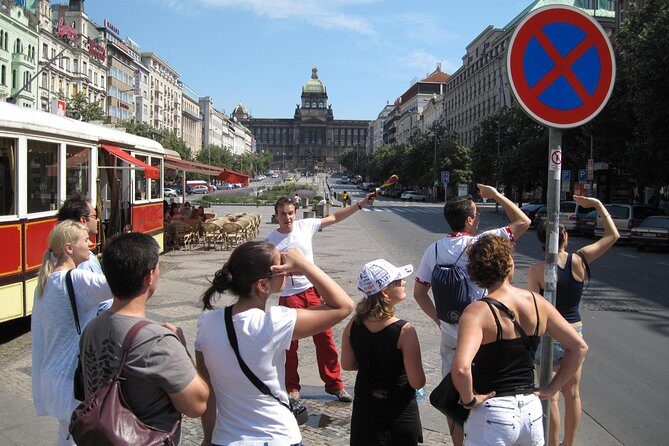
- Wenceslas Square: 1968, Soviet pressure, and Alexander Dubcek
- Olšanské náměstí: socialist architecture you can still see
- The Underground Nuclear Bunker Museum: Four Floors Down, Real Cold War Fear
- What you’ll do inside
- Expect lots of stairs (and why it matters)
- Photos and video rules underground
- Price and Timing: Does $45.16 Offer Good Value?
- What the Best Guides Really Add (And Where You Might Feel Friction)
- Who Should Book This Prague Communism and Nuclear Bunker Tour
- Should You Book It? My Practical Take
- FAQ
- How long is the Prague Communism History and Nuclear Bunker Tour?
- What’s included with the tour price?
- Is the tour offered in English?
- Can I take photos or video?
- Is this tour suitable for people with mobility issues or claustrophobia?
- How big are the groups?
Key highlights before you go
- StB Holding Cells: A former secret police building with a direct connection to Vaclav Havel
- Velvet Revolution Memorial: A focused look at the 1989 uprising
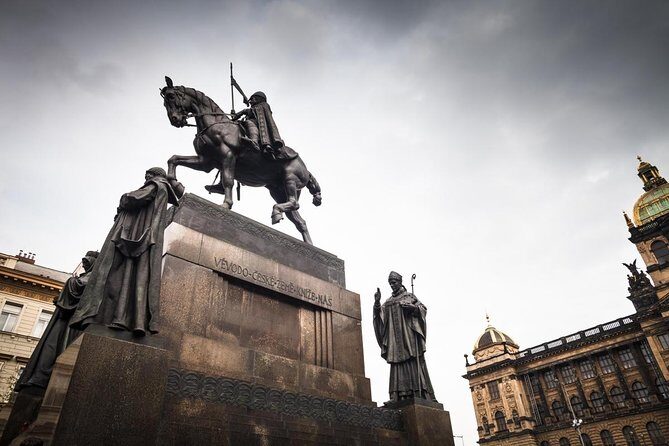
- Wenceslas Square: The tour connects the square to the 1968 Soviet invasion and Alexander Dubcek
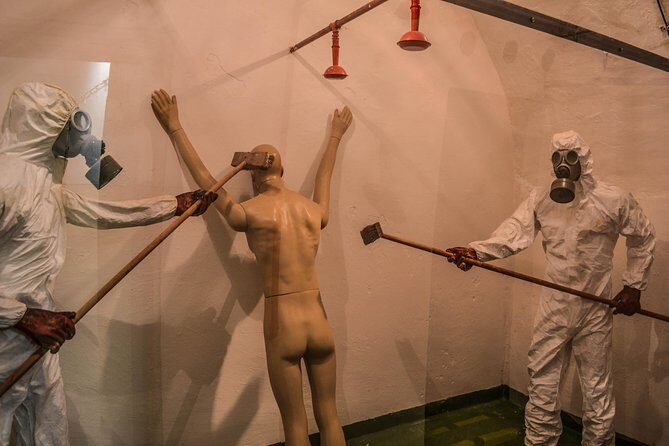
- Nuclear Bunker Museum (4 floors underground): Cold War fear made physical, with survival-focused exhibits
- Small group size (max 26): Easier pace and more chances to ask questions (within the rules)
Why Prague’s Cold War Sites Feel More Real Than Photos
If you like history that has weight, this is one of the best ways to get it in Prague. Prague looks sturdy and beautiful today, but the story underneath includes surveillance, political pressure, and a Cold War that never really ended—it just changed shape.
What makes this tour click is the sequencing. You’re not bouncing between random plaques. You start with Prague’s communist machinery (the StB site), then you move through the turning points that helped crack the system (Velvet Revolution), then you follow the Soviet-era pressure that shaped how Czechoslovakia navigated its politics (including 1968 and Dubcek). Finally, you descend into the bunker where the worst-case thinking lived.
And you’ll feel the contrast fast: street-level history is loud in its visibility. Underground bunker history is quiet and tight, designed to make you slow down and think about air, space, and time.
You can also read our reviews of more historical tours in Prague
Meeting at Malé Náměstí: Getting Started Without Stress
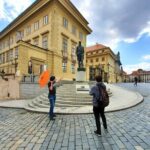
Your meeting point is in Prague 1, right by Malé Náměstí. The ticket office is inside the Passage at Male Namesti Square Nr. 459/11—about 20 meters to the right from Hotel U Prince. It’s a practical setup for anyone staying near Old Town.
The tour itself is about 2 hours 20 minutes (approx.), and the schedule can shift by 10–15 minutes depending on group size. That doesn’t sound dramatic, but for tours with an underground component, that small change can matter for how many breaks you get. Plan to arrive a few minutes early, then keep your shoes ready to go.
There’s also a clear rule that helps everyone: you must be able to speak the chosen tour language. If you’re taking the English option, English has to be your speaking ability for safety and flow.
From StB Holding Cells to Wenceslas Square: The Cold War Story Above Ground
This is the part where Prague’s communist-era history stops being a textbook timeline and becomes a map in your head.
The StB Holding Cells stop: the fear machine up close
You’ll start by visiting the StB Holding Cells, a former secret police building. This stop is especially strong if you care about how regimes maintained control, not just who won elections later. The tour ties the site to Vaclav Havel, which gives the story a personal anchor: you’re not only hearing about “the system,” you’re hearing about people shaped by it.
The value here is simple. When you see an old holding-cell space, it’s harder to reduce communism to slogans. It becomes architecture, confinement, and the kind of power that doesn’t need to shout.
Velvet Revolution Memorial: the turning point in 1989
Next comes the Velvet Revolution Memorial and the story of what happened in 1989. This segment works for two reasons. First, it gives you a clear “before and after” feeling. Second, it helps you understand why 1989 wasn’t just a political change—it was a cultural shift in how people believed the future could look.
You’ll also notice how the guide tends to connect this to the nearby streets and public spaces. That matters, because revolution isn’t only “events.” It happens in places where crowds can gather and in locations where messages can land.



Národní třída: political history on a visible street
You’ll stop at Národní třída, where the tour highlights historical events and recent political history of the Czech Republic. Even if you don’t remember every date already, you’ll start placing major turning points on the city’s geography.
The drawback here is pacing. If you’re someone who wants every stop to be sharply factual and brief, you may feel the guide sometimes gives extra context. Some people love that storytelling style; others want more of a clean timeline.
Wenceslas Square: 1968, Soviet pressure, and Alexander Dubcek
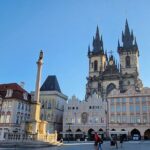
Then you reach Wenceslas Square, one of Prague’s most recognizable public stages. Here, the focus is the Soviet invasion of August 1968 and Alexander Dubcek.
This is a powerful stop because it’s a “same place, different reality” moment. Wenceslas Square today is busy and everyday. The tour asks you to mentally rewind to when public space had political meaning and when the limits on expression were enforced from outside the country.
Olšanské náměstí: socialist architecture you can still see
Finally, you’ll visit Olšanské náměstí, in the former workers district. The tour points out socialist architecture and original buildings from the 1970s concrete era—the kind of design meant to communicate stability, order, and mass living.
If you’re the type who likes learning through your eyes, this stop is great. You start reading buildings as messages: who they were built for, what kind of society they assumed, and how they shaped daily routines.
The Underground Nuclear Bunker Museum: Four Floors Down, Real Cold War Fear
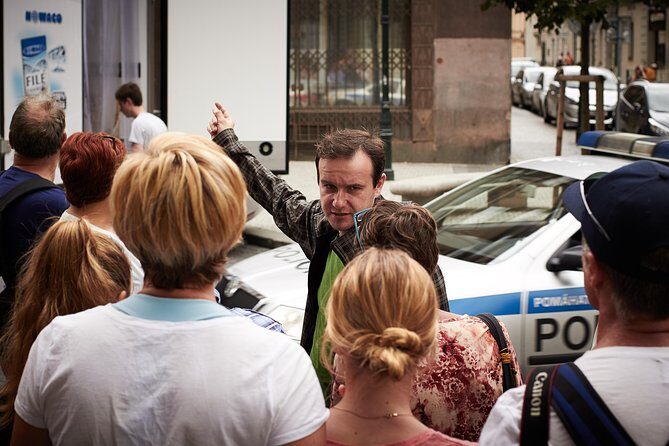
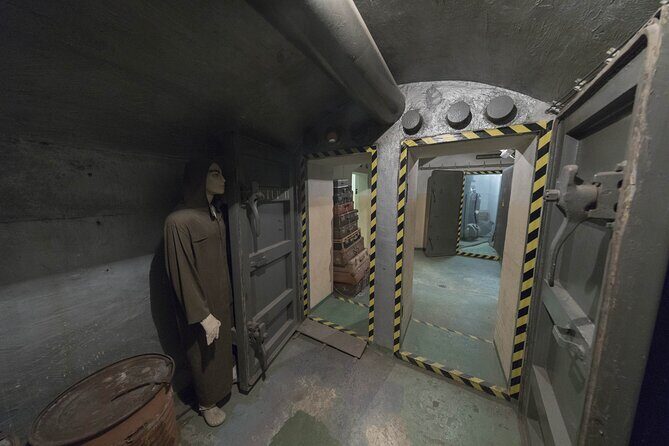
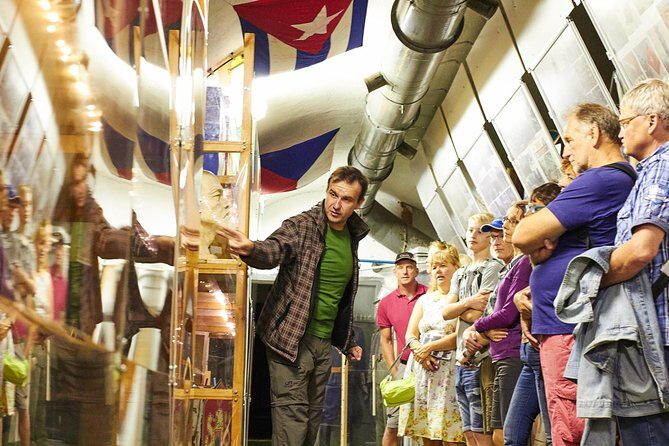
This is the main event. You’ll visit the Prague Nuclear Bunker Communism and Cold War Museum, and you should expect about 1 hour underground.
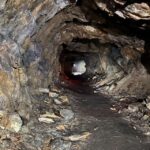
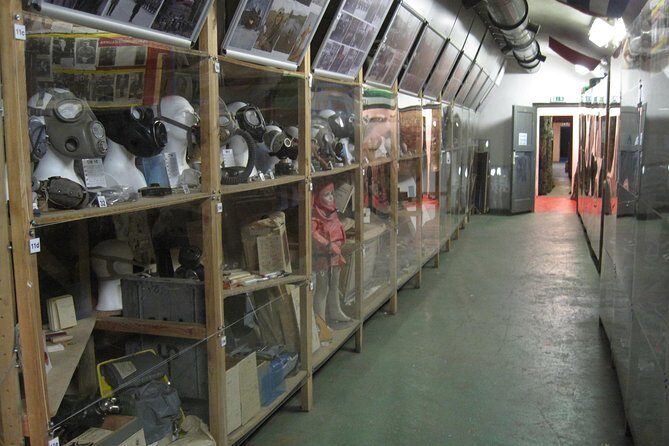
It’s hidden four floors underground, which already tells you what kind of feeling to expect: contained, stair-heavy, and designed for survival scenarios. Several guides build this stop around the idea that the bunker wasn’t only about nuclear weapons. It was also about planning for collapse—fear management made physical.
What you’ll do inside
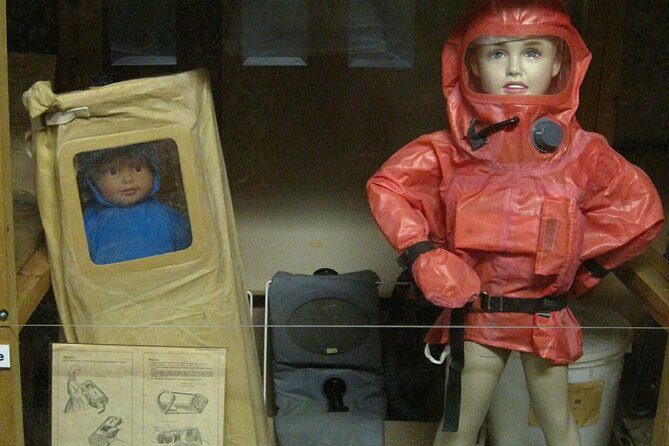
You’ll be given a photo booklet and bunker survival guide, which helps you follow what you’re seeing. The museum experience is designed to be educational, but it’s also meant to make you imagine how a system prepares people to accept bad possibilities.
Just don’t expect it to feel like a “realistic day in the life” apartment. One theme you’ll hear emphasized is Cold War readiness and the mindset behind it—how governments prepared for worst-case events and how those preparations affected human behavior.
Expect lots of stairs (and why it matters)
This bunker is not a flat hallway experience. People who enjoyed the tour still flagged that it involves a lot of stairs and up ramps. That means you should treat this as a mild workout, not a relaxed museum visit.
If you have claustrophobia, this is a deal-breaker based on the tour’s own safety guidance. If you’re pregnant and high-risk, it’s also not recommended. And if mobility is an issue, this isn’t the right choice; the tour says it’s not possible for people with any walking disability or mobility concerns.
Photos and video rules underground
Photos are allowed. Video recording is only with special permission. So bring a charged phone and be ready to shoot thoughtfully—this isn’t a place where constant filming is practical or welcomed.
Price and Timing: Does $45.16 Offer Good Value?
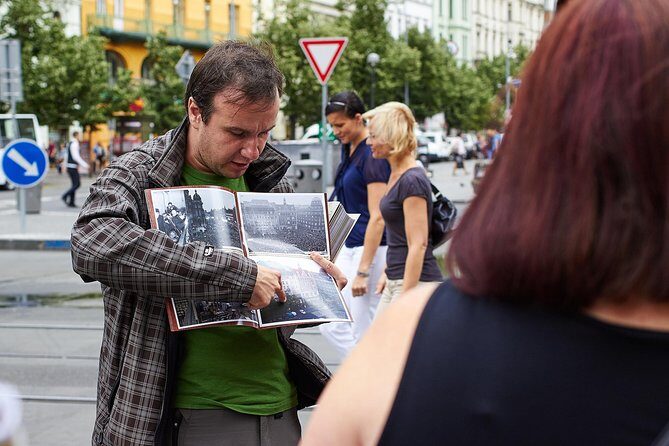
At $45.16 per person, you’re paying for a lot more than a walking tour. The price includes the nuclear bunker museum entrance, an English live guide, a photo booklet plus a bunker survival guide, and transport to and back from the bunker.
The timing is also realistic if you like structured history. The walk-and-sites portion adds up, and then you spend a full hour in the bunker. That said, a couple of practical notes from people’s experiences matter for your expectations.
First: expect some time spent moving between areas. One critical note said nearly 45 minutes were spent on a tram ride. I can’t promise that exact number for your day, but transit time is clearly part of how this tour functions, so factor that into your planning.
Second: the tour style depends heavily on the guide. Most people highlight guides who are passionate and bring personal experience into the history. A smaller set of comments complains about repetition, irrelevant tangents, or a lack of depth. If you prefer a tight chronology with minimal storytelling, you’ll want to choose a day when your group has the energy for it—and be ready to ask questions rather than just listen.
So is it worth it? For me, it’s a solid value if you want a one-stop package: Cold War Prague walking + a bunker that goes where few tourists can go. If you’re mainly excited about the bunker and not the city walk, you might compare other Czech bunker options before committing.
What the Best Guides Really Add (And Where You Might Feel Friction)
This is one of those tours where the guide can make or break your day.
When it works well, the guide connects the history to lived experience and keeps things moving. People have specifically praised guides such as Ladislav, Stan, Pavel, Lada, Tom, Maki, Karl, and Paul for adding personality—sometimes with humor—while still covering Cold War themes. The strongest version of this tour gives you both: facts plus the emotional “why.”
It also helps that the tour is capped at 26 travelers, which usually means better hearing and fewer herding herds.
Where friction shows up is usually one of these:
- The guide repeats points or gets sidetracked, which some visitors interpret as time-wasting
- The pace feels slower than expected for the length you thought you were buying
- The bunker museum can feel more like curated exhibits and memorabilia than a “how people lived daily” walkthrough, which disappoints visitors with very specific expectations
- One unlucky day can bring a confrontational approach, which is tough for a group learning environment
My practical advice: go in with curiosity, not a checklist. If you want to understand how fear, propaganda, and politics shaped public life, you’ll get more from this format.
Who Should Book This Prague Communism and Nuclear Bunker Tour
This tour fits best if you:
- Want a guided walk focused on communist and Cold War Prague, not just medieval sights
- Like seeing history where it happened: secret police sites, public squares, and architecture from the socialist era
- Are comfortable with stairs and the physicality of underground spaces
- Appreciate personal storytelling alongside political history, especially around key names like Vaclav Havel and Alexander Dubcek
Skip it if:
- You have claustrophobia (the bunker is four floors down)
- You’re dealing with serious heart issues or similar safety concerns
- Mobility limits make stairs or uneven underground access hard
- You want a purely relaxing, sit-down museum day
Also, it’s not for the smallest children (it says not allowed under school age), and it’s not recommended for high-pregnancy situations. It’s designed for adult-style participation.
Should You Book It? My Practical Take
I’d book this if you want one guided, English-led experience that combines Prague’s political landmarks with a real underground nuclear bunker visit—complete with survival-themed guides and museum time. The value isn’t just the bunker entrance; it’s the way the city walk builds context for what you’re about to see underground.
I would pause and think twice if you’re easily overwhelmed by tight spaces, stairs, or if you dislike tours where the guide spends extra time on storytelling instead of strict facts. In that case, compare with tours that focus only on either city history or bunker history.
If you do book, wear comfortable shoes, keep your expectations honest, and bring a curious mindset. Prague has many ways to teach you history. This one just teaches it with stairs and shadow.
FAQ
How long is the Prague Communism History and Nuclear Bunker Tour?
The tour runs for about 2 hours 20 minutes (approx.), though it may vary by 10–15 minutes depending on the group size.
What’s included with the tour price?
You get an English live guide, entrance to the nuclear bunker museum, a photo booklet and a bunker survival guide, plus transport to and back from the bunker.
Is the tour offered in English?
Yes, the tour includes an English live guide, but you must speak the chosen language of the tour for safety.
Can I take photos or video?
Photos are allowed. Video recording is only allowed with special permission.
Is this tour suitable for people with mobility issues or claustrophobia?
No. The tour is not possible for people with any walking disability or mobility issue, and it is not for people with claustrophobia (or serious heart issues).
How big are the groups?
The tour has a maximum of 26 travelers.