REVIEW · PRAGUE
Prague: 2-Hour Back to Communism Walking Tour
Book on GetYourGuide →Operated by Spectrum Tours · Bookable on GetYourGuide
Communism shows up in Prague, even today.
What makes this tour interesting is that it pairs street-level landmarks with firsthand-style explanations of how the system worked day to day. You’ll get a quick foundation in the rise of socialism and communism, then move through key places tied to the secret police, the Communist Party, and major protests and upheavals. One possible drawback: the overall experience depends heavily on the guide’s delivery and focus, so if you get an off moment (pacing or distractions), the talk can feel less smooth.
I particularly like that you’re not just looking at buildings. You’re also invited into the arguments—advantages and disadvantages of the Soviet-style system—so the tour turns into a real conversation, not a one-way lecture. The one consideration to keep in mind is that this is a compact 1–2 hour format, so if you want lots of free time to browse details on your own, you’ll have to choose what to linger on.
In This Review
- Key things you’ll get from this Back to Communism walk
- Why this 2-hour Prague walk hits harder than a museum
- Meeting on Na Příkopě: how you’ll start moving fast
- First stop: a quick history lesson on socialism and communism
- Former secret communist police headquarters: where fear became policy
- Stalin’s shadow: the former spot of the Stalin statue
- Communist Party seats and political power on display
- Protests, demonstrations, rebellions, and revolutions in Prague’s streets
- Cold War survivor stories: how common life really looked
- So, is it worth $50 for 1–2 hours?
- Who this tour suits best (and who should think twice)
- Tips to get the most out of the walk
- Should you book this tour?
- FAQ
- How long is the Prague 2-Hour Back to Communism walking tour?
- Where does the tour start?
- What price should I expect?
- What languages are available for the live guide?
- Is the tour wheelchair accessible?
- Is a private group available?
- What should I bring, and what should I avoid?
- Are there cancellation terms if plans change?
Key things you’ll get from this Back to Communism walk
- A theory-first start: socialism and communism background before you hit the streets
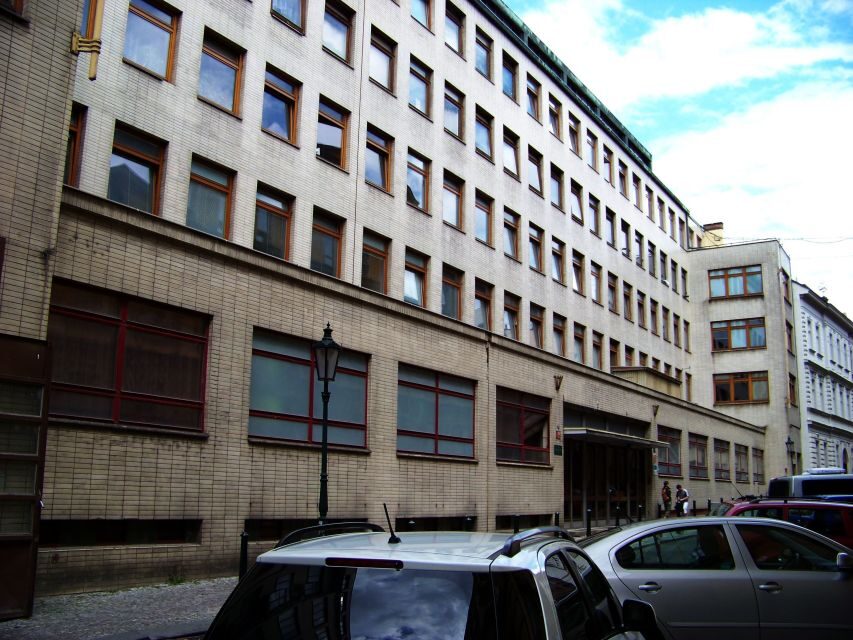
- Real Prague landmarks tied to the Communist Party, repression, and Soviet occupation
- Cold War survivor perspective from local guides who lived through the era
- Built for discussion, with questions welcome during the walk
- Time-efficient route that covers major themes without dragging
Why this 2-hour Prague walk hits harder than a museum
Prague is famous for beauty, but this tour helps you see the other layer: how power worked, how fear worked, and how everyday life got shaped by ideology. In just 1–2 hours, you get both the big timeline and the street details that explain why some places still feel heavy.
I like that it doesn’t pretend the story is simple. The guide format pushes you to weigh pros and cons of Soviet-style communism, not only list crimes and slogans. That balance is exactly what makes the walk useful for visitors who want understanding, not just condemnation.
And you do get a clear, practical promise: you’ll cover the most important communist-era stops in Prague that connect to Czechoslovakia’s capital role and the later Czech Republic.
You can also read our reviews of more walking tours in Prague

Meeting on Na Příkopě: how you’ll start moving fast
Your tour kicks off from one of two meeting locations on Na Příkopě (the specific address depends on what option you booked). Because the start can vary, I suggest checking your exact booking confirmation before you head out—don’t rely on memory or a guess.
Once you’re together, the pace is built for quick momentum. The goal is to get you from a short historical setup into the main sights within the first stretch of the walk, so you’re not standing around trying to piece the story together.
This also matters if you’re traveling with a tight schedule. A 2-hour walking tour is long enough to connect themes, but short enough that you can still plan other Prague highlights afterward without your day collapsing.
First stop: a quick history lesson on socialism and communism
Before you see the sites, you get an introduction into the history and theory of socialism/communism. The framing includes how these ideas rose in the 19th century and how they spread across Central and Eastern Europe.
That matters more than it sounds. If you only show up for the dramatic buildings, you miss the logic that drove the system—how people were persuaded, how institutions were reshaped, and how the state justified control. This early setup gives you a lens for everything you’ll see afterward.
Expect the guide to connect dates, milestones, and key personalities to the places on the route. You’ll also hear how the Cold War survivors describe what daily life looked like—what was normal, what was missing, what was risky, and what people learned to say (or not say) in public.
If you like asking questions, this is a good fit. The format explicitly welcomes discussion, and you’ll often understand the timeline better by reacting to the guide’s examples.
Former secret communist police headquarters: where fear became policy
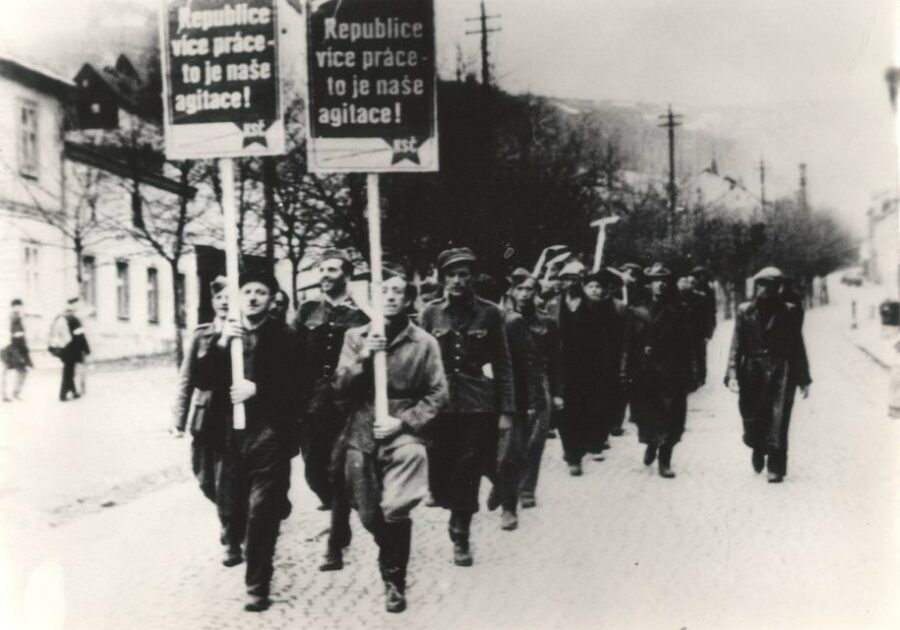
One of the most important stops is the former secret communist police headquarters. Even if you’ve read general Cold War history before, seeing a specific location helps your brain anchor the idea of surveillance and coercion in real stone and real streets.
The practical value here is the way the guide ties buildings to behavior. You don’t just hear that secret police existed—you hear how repression operated through institutions and daily routines, and how that shaped conversations, jobs, and personal safety.
This is also where the tour’s emotional tone tends to show. You may hear that some parts of Prague still carry a sense of gloom, not because the buildings are haunted, but because the history left real psychological scars in how people remember the era.
A drawback to keep in mind: the tour is only 1–2 hours long, so you won’t get a full deep-study of every mechanism. Instead, you get the key connections fast, and you may want to follow up later with reading if something specific sparks your curiosity.
Stalin’s shadow: the former spot of the Stalin statue
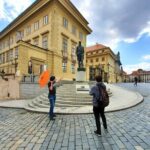
You’ll also hear about the former spot of the Stalin statue, a detail that works as a powerful symbol for shifting power and shifting loyalties. Statues sound like politics from a distance, but the point of this stop is the message that symbols sent to ordinary people.
The guide’s job here is to connect the statue to the larger story: Soviet influence, political theater, and the ways regimes tried to make their authority feel permanent. When you hear this explanation on-site, it changes how you interpret the rest of the route—suddenly the street feels like a timeline made of concrete.
Even though you’re standing in Prague today, the tour keeps pulling your attention back to what it would have meant to live under that worldview. That is where a local guide’s lived perspective can make the walk feel more grounded than a standard slideshow.
A few more Prague tours and experiences worth a look

Communist Party seats and political power on display
As you continue, you’ll pass current and former seats of the Communist Party. These stops are less about architecture trivia and more about power geography—where decisions were made, where authority gathered, and how political legitimacy was staged.
For you, the key benefit is understanding that communist rule wasn’t just an idea. It was an operating system with offices, procedures, and roles. When you connect that to the secret police locations you saw earlier, you can start to see the pattern: information control plus institutional control equals social control.
This is also a good moment to pay attention to how the guide explains personalities and milestones. Even basic names and dates become clearer when you can point to the place where influence concentrated.
Protests, demonstrations, rebellions, and revolutions in Prague’s streets
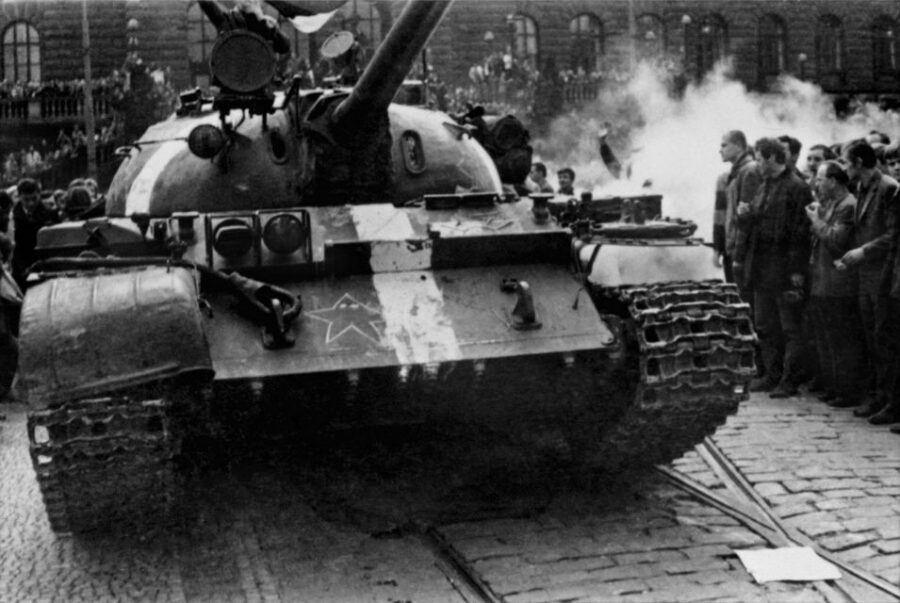
The tour isn’t only about repression. It also covers places tied to protests, demonstrations, rebellions, revolutions, and Soviet occupation. That’s crucial for balance, because the story of communism in Czechoslovakia is also a story of resistance and political change.
What I like here is how the guide can explain cause and effect: what people were reacting to, what conditions fueled anger, and how protests fit into the broader Cold War pressure. You’ll often walk away understanding the era as a cycle—control from above, pushback from below, then negotiations or crackdowns.
You may also feel the contrast between the symbolic weight of official buildings and the human weight of public dissent. That contrast is one of the reasons a walking tour works better than reading alone: your body is literally moving between “power” and “people,” and the story makes more sense.
Cold War survivor stories: how common life really looked
One of the strongest parts of this tour format is that the guide isn’t just studying the era—they’re describing what the system looked like from the inside. You’ll hear details about common life during that period, including how daily routines and choices were shaped by politics.
This is where the discussion-style approach becomes valuable. Instead of treating the communist era as a static historical chapter, the guide’s answers help you connect ideology to practical reality: work, speech, private life, public behavior, and what people did to get through the day.
You’ll also hear both advantages and disadvantages. That doesn’t mean the guide softens the critique—it means you get a more realistic picture of how people experienced the system and why some supported it, at least at certain moments.
A practical consideration: some guides may shine more in certain languages or pacing styles. If you’re choosing between Czech, English, or German, pick the language where you can follow nuance easily—one earlier comment flagged that stronger language delivery matters to overall satisfaction.
So, is it worth $50 for 1–2 hours?
At $50 per person for a compact walking tour, the value is in the guide quality and the specificity of the stops. You’re paying for two things that standard audio guides don’t offer: explanation with context and a storyteller who can connect locations to lived experience.
If you get a guide who is organized, clear, and good at turning history into street meaning, this can feel like a fast course in Prague’s 20th-century political reality. If the guide’s delivery is less focused, you’ll feel the time pressure immediately—there’s simply not enough time to “make up” for gaps.
Group type can also affect how much you engage. The tour offers private group availability, which is great if you want more back-and-forth rather than a more general group flow. Some participants noted the tour format felt less personal when it wasn’t truly private, so if you value interaction, consider aiming for a private setup.
Who this tour suits best (and who should think twice)
This is a great fit if you:
- want a street-based Cold War overview without committing to a full-day program
- like history explained with context, dates, and cause-and-effect
- enjoy questions and discussion, not just passive listening
- care about how ideology translated into everyday life
It might not be the best fit if you:
- want long stops for photos and slow sightseeing
- dislike uncomfortable political topics and repression narratives
- prefer highly structured, museum-style presentation with minimal discussion
Also, if your main goal is “see the sights” only, know that this tour leans heavily into interpretation. The route matters, but the real product is the explanation attached to it.
Tips to get the most out of the walk
Come with your expectations set to learn fast. The tour compresses a lot: theory background, key personalities, major events, and then specific communist-era landmarks around Prague.
If you care about accuracy, bring a notebook or notes app and jot the names and dates you hear. Later, you’ll be able to look up what you found most surprising—especially anything that connects to the Stalin-era symbols and the Soviet occupation story.
And during the walk, don’t be shy about questions. The guide format is designed for them, and the best moments often happen when you ask about what life would have felt like, not just what policy did.
Finally, wear comfortable shoes. It’s a walking tour, and Prague streets can be uneven. You’ll enjoy the explanations more if your body isn’t distracted by foot pain.
Should you book this tour?
Book it if you want a short, meaningful way to understand Prague’s communist-era imprint through specific places and a local guide’s storytelling. At $50, it’s a good value when the guide is sharp and the pacing stays focused, because you’re getting a structured timeline plus on-site context in a couple hours.
Skip it (or choose carefully) if you dislike political history, want lots of free time, or are worried about language nuance—guide delivery and language comfort can make or break the experience in a time-limited format.
If you’re planning a Prague trip and want one solid activity that adds real historical weight, this is one of the more direct ways to do it without turning your day into a classroom.
FAQ
How long is the Prague 2-Hour Back to Communism walking tour?
The duration is listed as 1–2 hours.
Where does the tour start?
Meeting point may vary depending on the option booked. The listed starting locations are on Na Příkopě at two addresses: Na Příkopě 28 and Na Příkopě 864.
What price should I expect?
The price is $50 per person.
What languages are available for the live guide?
The tour offers live guidance in Czech, English, and German.
Is the tour wheelchair accessible?
Yes, the tour is marked as wheelchair accessible.
Is a private group available?
Yes, private group options are available.
What should I bring, and what should I avoid?
Bring a passport or ID card. Luggage or large bags are not allowed.
Are there cancellation terms if plans change?
You can cancel up to 24 hours in advance for a full refund.