REVIEW · OLD TOWN PRAGUE
Prague: Highlights Walking Tour to the German embassy 1989
Book on GetYourGuide →Operated by David Klaus Travel Manager Service Prag · Bookable on GetYourGuide
Cold War history in Prague feels personal, fast. I love how this tour ties 1989 events to real street corners, and I love the end stop at the German embassy balcony tied to Hans-Dietrich Genscher. The only drawback: it’s a walking tour and isn’t suitable for people with mobility impairments.
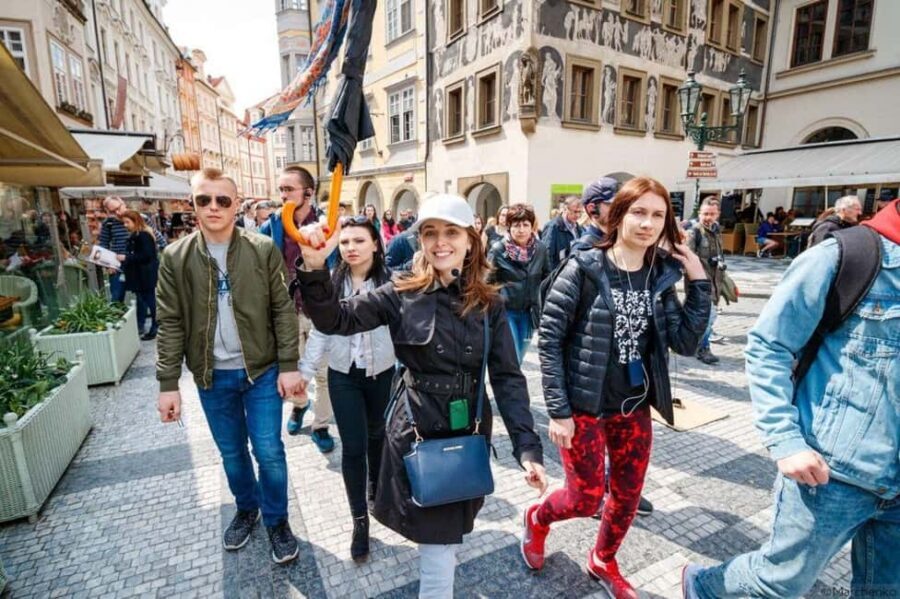
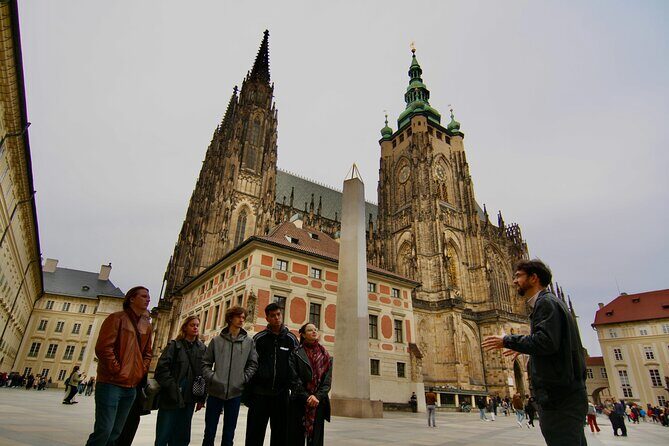
You’ll cover major sights without turning it into a checklist, because your licensed German-speaking guide keeps explaining what happened and why it mattered. I also like that you see the John Lennon Wall and Jan Palach sites as part of the same political story, not as random photos. One thing to consider: the German embassy interior isn’t open, so plan for an outside look and the emotional punch of the balcony from public space.
In This Review
- Key Highlights You Should Actually Care About
- A 150-Minute Walk That Makes 20th-Century Politics Make Sense
- Meeting at Charles University: Get Your Bearings Quickly
- Old Jewish Cemetery + Josefov: Prague’s Past in the Middle of the Present
- Jan Palach Square and the Velvet Revolution Memorial: When Protest Turns Personal
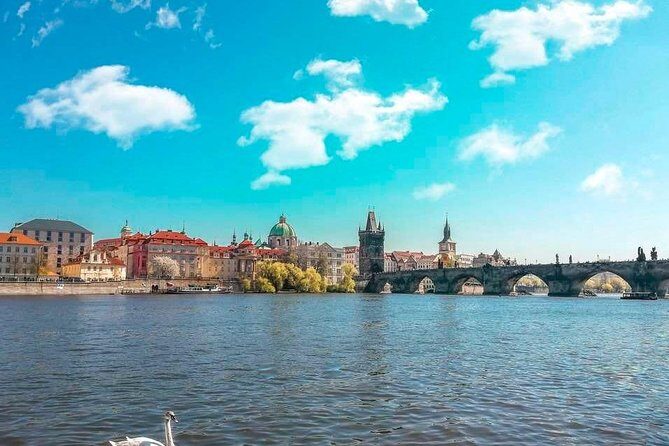
- Charles Bridge Walk: A Scenic Icon That Also Works as a Timeline
- John Lennon Wall: Protest Art as a Living Footnote to 1989
- Wenceslas Square and the Prague National Museum: Quick Stops, Clear Picture
- Malostranské Square and the Final Approach to the German Embassy
- Price and Value: Why $32 Feels Reasonable for This Route
- Who This Tour Suits Best (and Who Might Want a Different Plan)
- Should You Book This Prague 1989 Highlights Tour?
- FAQ
- How long is the tour?
- What language is the guide?
- Where do I meet the tour?
- Is hotel pickup included?
- Where is the closest metro station to the meeting point?
- Do I get to go inside the German embassy?
- What does the tour cover?
- Is it suitable for people with mobility impairments?
- How much does it cost and what’s included?
Key Highlights You Should Actually Care About
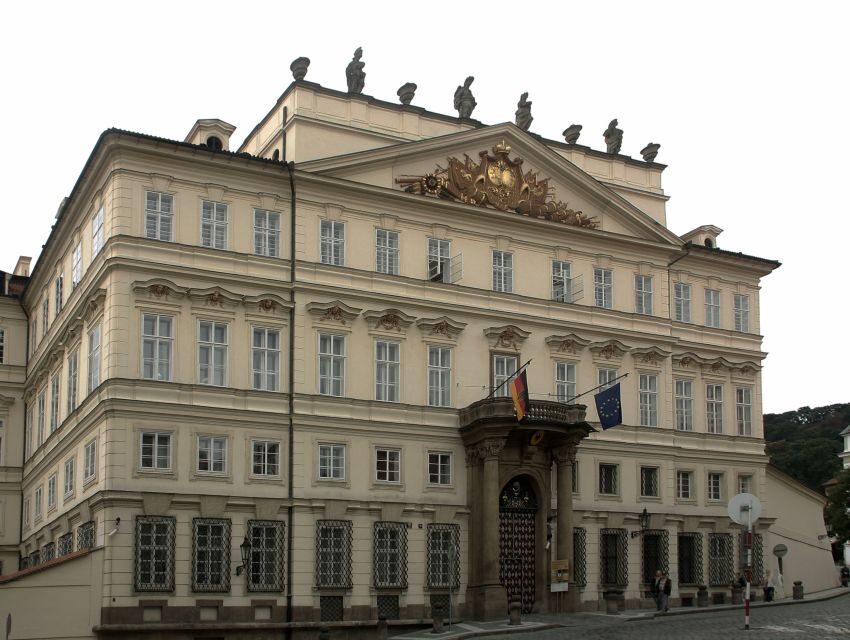
- Hans-Dietrich Genscher’s balcony moment at the German embassy area, tied to the 1989 news everyone remembers
- Charles Bridge on foot with a history-wired route that keeps you moving and looking
- John Lennon Wall stop where modern protest art belongs in the same timeline as communist repression
- Jan Palach Square and the Velvet Revolution memorial for the human cost behind political change
- Old Town + Josefov context so you understand Prague as a living city, not just a museum set
- German-speaking licensed guide who answers questions and helps you place events in time
A 150-Minute Walk That Makes 20th-Century Politics Make Sense
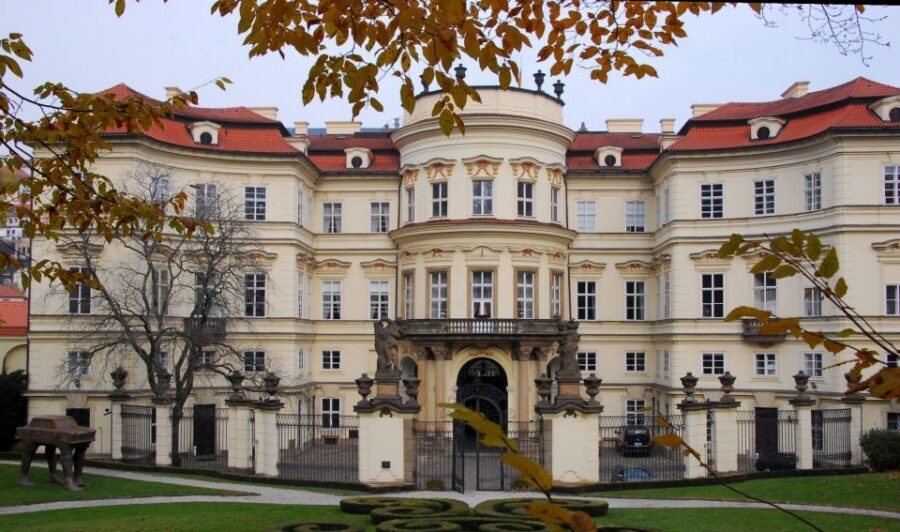
Prague can feel like it’s built from postcards. This tour refuses that. In about 150 minutes, you connect famous landmarks to the pressure-cooker reality of life under communism and the year the system finally cracked.
What makes it work is the structure: you start in the dense center, weave through Old Town and Josefov, then pivot toward the protest-and-memory sites—Jan Palach, the Velvet Revolution, the John Lennon Wall—before ending near the German embassy. You’re not just seeing sights. You’re learning how ordinary people were pushed into choices, and how messages traveled.
And yes, the ending matters. Even from outside, the setting gives weight to what Hans-Dietrich Genscher said from the balcony. One guest described how returning to that spot years later was emotional. That’s the kind of impact this route aims for.
Meeting at Charles University: Get Your Bearings Quickly
The meeting point is in front of the Faculty of Law, Charles University (nám. Curieových 7) in the Old Town. If you’re coming by metro, get off at Staroměstská station and walk about 550 meters. If you’re taking tram, 17 drops you near Pravnicka Fakulta.
I like starting here. You begin at an anchor point that’s easy to find, and you’re already in the zone where Prague’s center sights cluster. No long transit. No complicated wayfinding.
If you choose optional hotel pickup, it’s limited to Prague 1, 2, 3 or the city center near Můstek. If you’re staying further out, you’ll probably do better meeting at the university and keeping the plan simple.
Old Jewish Cemetery + Josefov: Prague’s Past in the Middle of the Present
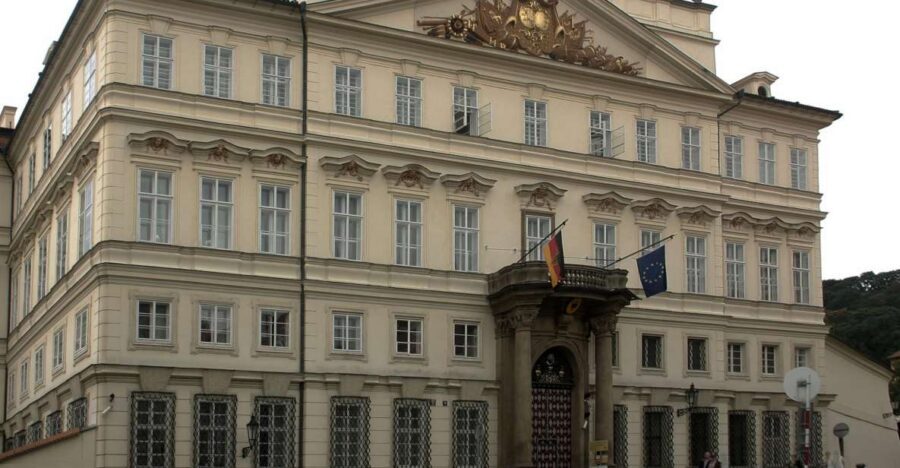
Early on, you get photo stops that help you understand Josefov, the historic Jewish quarter. The Old Jewish Cemetery stop is short, but it’s a powerful moment to frame what Prague has carried through time—community, loss, survival, and memory.
Then you move through Josefov with another photo stop. Even if you don’t go inside any buildings here (you’re on a guided walking route), the area helps set the mood. It’s a reminder that when you talk about political conflict and refugees later, you’re not talking abstract theory. Prague has long been a city where history leaves physical marks.
Practical note: because these are photo stops, don’t worry if you only have a few minutes at each. The guide uses the time to connect the locations to the bigger story.
Jan Palach Square and the Velvet Revolution Memorial: When Protest Turns Personal
Next comes one of the tour’s most “you can’t un-know this” sections. You spend time at Jan Palach Square—both a photo stop and a guided visit component. This is where the tour brings in 1968 and the fate of Jan Palach, a student at the Faculty of Philosophy during the Prague Spring.
You then reach the Velvet Revolution Memorial, with a photo stop plus guided interpretation. This is the bridge from individual sacrifice to collective change. The guide’s job here is crucial: you’ll learn how the culture of dissent and the push for reform under communism set the stage for later events.
I like that these stops don’t feel like separate “history exhibits.” They’re treated as part of the same emotional logic: people acted, and the consequences echoed until 1989.
If you care about human stories behind political terms like “iron curtain” and “communism,” this is where the tour earns its keep.
Charles Bridge Walk: A Scenic Icon That Also Works as a Timeline
You get a photo stop on Charles Bridge early, then later you walk across it for real. The bridge is famous for views, architecture, and the fact that it connects sides of the city in a way you can feel immediately.
What’s different here is the guide framing. The route uses the bridge as a moving “time marker.” As you cross, you’re also learning how Prague became a stage where information, diplomacy, and escape routes mattered.
On one hand, you’ll enjoy the classic Charles Bridge experience: the river views, the crowds, the drama of being in the middle of a postcard. On the other hand, you’re doing it with context—so you notice more than just angles for photos.
John Lennon Wall: Protest Art as a Living Footnote to 1989
At the John Lennon Wall, you get another photo stop plus guided context. This isn’t just about taking pictures. It’s about why this wall exists in the first place—how public expression became part of the resistance culture in a country under heavy political control.
The guide links it to the same broader arc you’re learning: pressure, repression, and the push for freedom. That’s why the Lennon Wall belongs on this specific route. It’s not a random stop. It’s an emotional shortcut.
A practical tip: bring a bit of patience. The wall is popular, so you may have to wait for your turn to get close enough for good photos.
Wenceslas Square and the Prague National Museum: Quick Stops, Clear Picture
You’ll reach Wenceslas Square, with a photo stop and a guided tour component plus sightseeing time. It’s one of those places where the scale can surprise you. Even if you’ve seen photos, being there helps you understand how crowds, slogans, and history could gather in one major public corridor.
Then there’s a short photo stop near the Prague National Museum (about five minutes for sightseeing). It’s brief on purpose. This tour is about keeping momentum while still grounding you in recognizable landmarks.
I think these quick stops work well because you don’t lose your focus on the political narrative. You also don’t spend the whole route stuck in one spot.
Malostranské Square and the Final Approach to the German Embassy
You’ll move toward Malostranské Square with a short photo stop, then travel “on foot” for about 10 minutes to reach the final focus: the Embassy of Germany, Prague area.
This is the big finish. You’ll spend time there as a photo stop and sightseeing visit, including the payoff moment tied to Hans-Dietrich Genscher’s famous speech from the balcony. The tour emphasizes what the embassy represented in 1989, especially the refugee crisis context: East German citizens fleeing through Poland and Hungary toward West German access.
Here’s the practical reality: the interior of the embassy is not open to the public. So set expectations accordingly. You’re there for the outside setting, the balcony story, and the way the location turns a headline into something you can stand beside.
One guest’s note about returning to that area years later—and remembering the balcony news with family—captures why this stop hits emotionally. Even if you’re not returning to an old memory, you’re likely to feel the shift from facts to meaning.
The tour ends at Malostranské náměstí. It’s a good finish point because you’re back in a lively neighborhood where you can continue exploring on your own afterward.
Price and Value: Why $32 Feels Reasonable for This Route
At $32 per person for 150 minutes, this isn’t a “cheap-and-short” throwaway. You’re paying for a few things that add up fast:
- A licensed German-speaking guide who connects sites to the history of 1968 and 1989, not just the architecture
- The logistics of stitching together multiple central districts—Old Town, Lesser Town, and former Jewish quarter—without wasting your time
- A final emphasis on the German embassy balcony story, which is hard to piece together if you’re just wandering
Could you read about this online? Sure. But you’d be missing the street-level choreography: where to look, what to remember, and how to connect the dots while you’re still standing in the same urban space where the story unfolded.
Because there’s no food included, you’ll want to plan a meal either before you start or after you finish. The tour is long enough for a normal walking pace, but it’s also short enough that you can still fit a proper post-tour dinner.
Who This Tour Suits Best (and Who Might Want a Different Plan)
This works best for you if you like history that comes with places you can point to. If you’re the type who enjoys learning why a public square matters, why a protest wall formed, and how diplomacy intersects with everyday escape plans, you’ll get a lot from this route.
It also fits well if you want a compact Prague center walk that still feels meaningful. You’ll see major attractions, but the tour keeps them tied to the 20th-century story.
It’s not suitable for people with mobility impairments, and since it’s a walking itinerary with multiple stops, you should expect steady foot time. Wear comfortable shoes. Bring a layer if weather turns—Prague can swing quickly even when the forecast looks calm.
If you prefer strict museum-style content with lots of indoor time, this might feel more like an outdoor narrative walk than an exhibit.
Should You Book This Prague 1989 Highlights Tour?
If you want Prague at ground level—with history explained in the same places it happened—yes, I’d book it. The value is in the guided connections: Charles Bridge as a moving scene, Jan Palach and Velvet Revolution as human anchors, the Lennon Wall as protest culture in public space, and finally the German embassy balcony story tied to 1989.
If you hate walking tours, or you need lots of wheelchair-friendly access, look for another option. And if you’re already tired of political history, you might find the focus heavy.
But for most people who want more than sightseeing photos, this tour gives you exactly what you came for: Prague’s center plus a clear thread through the moments that changed Central Europe.
FAQ
How long is the tour?
The duration is 150 minutes.
What language is the guide?
The tour is led by a live guide speaking German.
Where do I meet the tour?
You meet in front of the Faculty of Law (Charles University), nám. Curieových 7, in the Old Town.
Is hotel pickup included?
No. Hotel pickup and drop-off are not included, though optional pickup may be available in Prague 1, 2, 3 or near Můstek.
Where is the closest metro station to the meeting point?
Staroměstská metro station is about 550 meters from the meeting point.
Do I get to go inside the German embassy?
No. The embassy interior is not open to the public, so you’ll see it from outside.
What does the tour cover?
It includes major central sights and historic stops connected to events like Jan Palach in 1968 and the fall of the Iron Curtain in Prague, with a focus on the German embassy area related to Hans-Dietrich Genscher’s speech.
Is it suitable for people with mobility impairments?
No, it is not suitable for people with mobility impairments.
How much does it cost and what’s included?
It costs $32 per person and includes a licensed German-speaking guide. Food and drinks are not included.