REVIEW · PRAGUE
Royal Splendor Unveiled Private Prague Castle Interior Tour
Book on Viator →Operated by Prague Articulate · Bookable on Viator
Prague Castle feels like a moving puzzle. I love the private route that keeps the story organized from viewpoint to courtyard to interiors, and I love how the highlight lands at St. Vitus Cathedral, where the architecture and royal burials make the whole complex feel personal. It’s also guided by a real professional (Max Hutar from Prague Articulate is one name I saw tied to excellent tailoring).
One possible drawback: the Castle can get packed, especially around Christmas, and you’ll need an extra €18.50 per person for entrance tickets to key interiors like St. Vitus Cathedral, Old Royal Palace, St George’s Basilica, and Golden Lane. If you time it well and come ready for lines in peak season, this tour can be a smart way to see Prague’s most famous “stone world” without wasting energy.
In This Review
- Key highlights worth knowing before you go
- Entering Prague Castle with a plan, not a maze
- Starting at Kavárna U Prašného mostu and ending near Malostranská
- Prašný most and the Deer Moat: views you’ll remember
- Garden Na Baste: modern design on older fortification ground
- Matthias Gate and the courtyards: the real entrance mood
- St. Vitus Cathedral: the main event with real burial weight
- Old Royal Palace: late Gothic halls and the royal machinery
- St. George’s Basilica: ancient, still standing, and quietly powerful
- Golden Lane and how people lived between walls
- Na Opyši viewpoint: seeing Prague as a single system
- Staré zámecké schody: heading back down in a more charming way
- Price and ticket reality: what your €87.11 actually buys
- Crowds, timing, and avoiding the Christmas squeeze
- Who should book this tour, and who might skip it
- Should you book Royal Splendor Unveiled Private Prague Castle Interior Tour?
- FAQ
- How long is the Royal Splendor Unveiled tour?
- Is this tour private?
- What language is the tour offered in?
- Where do I meet, and where does the tour end?
- Are entrance tickets included in the price?
- Is free cancellation available?
Key highlights worth knowing before you go
- Max Hutar and other certified guides: you get a professional, English-speaking guide who can tailor the pace to your interests
- Powder Bridge and the Deer Moat: quick stops for big views across the ravine
- Courtyard-to-cathedral flow: the itinerary is built to move you from gates to courtyards before you hit the main church
- St. Vitus Cathedral focus: time set aside for the Gothic masterpiece and its notable burials
- Golden Lane + St. George’s Basilica: two very different atmospheres, both with paid-entry access
- End near Malostranská: the tour finishes close to a subway stop, making it easier to keep exploring after
Entering Prague Castle with a plan, not a maze
Prague Castle is one of those places where you can walk for hours and still feel like you saw only “more castles.” What you want instead is direction: where to look, what matters, and how to pace the climb so you don’t burn out before the best parts.
That’s exactly what a private, 2 hours 30 minutes format helps with. You’re not guessing how long to spend at each spot or trying to read signs while other people stream past. The route also stays practical: it starts on the north side area (near Prašný most) and then builds in views, then courtyards, then the big interiors. By the time you reach St. Vitus Cathedral and the royal residences, you’re already oriented—so the history feels like a connected story instead of a list of buildings.
A bonus for value: most stops in the complex are quick, and several of them don’t require paid entry tickets. That means your extra money mainly goes toward the four bigger, ticketed experiences.
You can also read our reviews of more private tours in Prague



Starting at Kavárna U Prašného mostu and ending near Malostranská
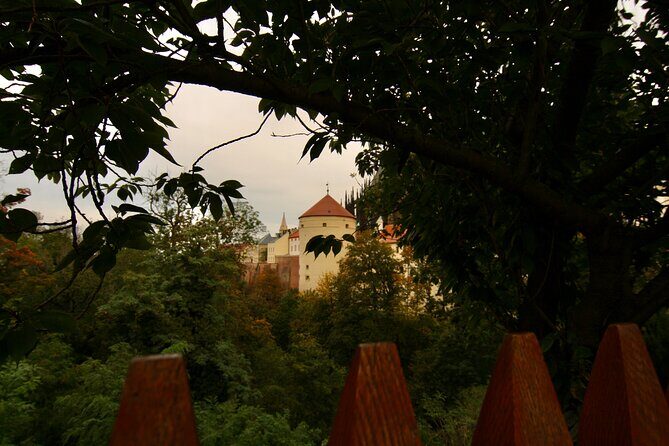
I like that the meeting point is not some vague landmark. You start at Kavárna U Prašného mostu 6 (Prague 1-Letná), right where the Powder Bridge area begins. It’s a natural “gateway” to the castle grounds, and you can get a sense of what you’re about to climb before you commit.
You also end near Malostranská subway station. That matters more than you’d think. Prague’s Castle area sits above the river and Old Town, and after a walking-heavy visit, you’ll want a smooth exit plan. Finishing near Malostranská makes it easier to keep your day going without a long backtrack.
If you’re using public transport, you’ll also appreciate that the start and end points connect you back into the city web.
Prašný most and the Deer Moat: views you’ll remember
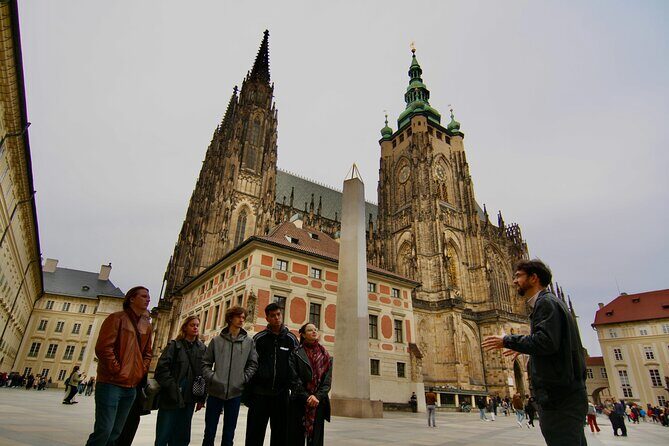
The first “wow” moment is Prašný most, also known as the Powder Bridge. It crosses the ravine over the Deer Moat, which the castle uses as a natural barrier on the north side. Even if you’re not a military-history person, it’s a great place to get your bearings fast.
Expect only a short stop, around 5 minutes, but it’s not time wasted. From here, the views can line up in a way that helps you understand the geography of the complex. You’ll see the cathedral and surrounding fortifications framed across the ravine, and that visual context makes later stops click.
Practical tip: this is a spot where the wind can pick up and your eyes get pulled from one view to another. Wear something comfortable. You’ll stand still long enough to take it in.
Garden Na Baste: modern design on older fortification ground
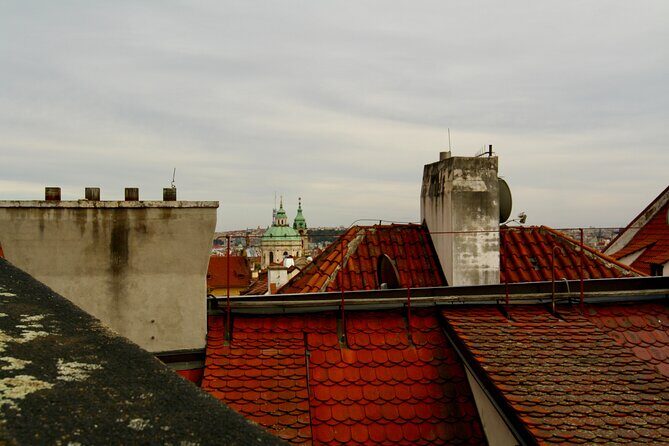
Next comes Garden Na Baste, about 10 minutes. This is a modernist garden built on the location of earlier fortifications. The result is a nice contrast: you’re in a place that still carries the shape of defenses, but it’s softened into a garden atmosphere.
What I like about this stop is the “transition” feeling. After Powder Bridge, you’re ready for something that shifts from big defensive scenery into lived-in space. The garden also offers connections back toward the castle’s first courtyard areas, so it acts like a bridge between viewpoints and interiors.
The drawback is also simple: because it’s short and moving, you may not get a long sit-down moment here. If you want quiet time for photos without crowds, you’ll need good timing.
Matthias Gate and the courtyards: the real entrance mood
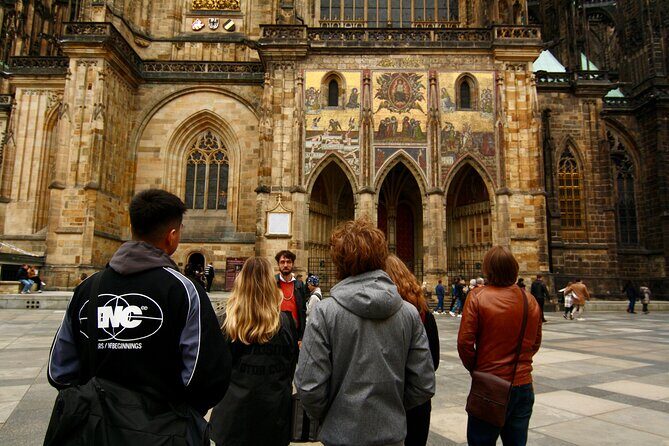
You then reach Matthias Gate, the official entrance to the castle area, with a view opening toward Castle Town Square. This is another quick stop, around 5 minutes, but it sets the tone. Gates in Prague are never just gates—they’re where the city’s energy meets the castle’s authority.
Right after that, you move into the Second Courtyard, about 5 minutes. It’s surrounded by the chateau’s early modern parts, so it feels more like a working space than a grand museum hall. I find that helpful before you enter the big religious and royal sites. It “warms up” your brain for architecture and political power.
Then the tour reaches the Third Courtyard, about 10 minutes. This one is especially useful because it gives you outside views of St. Vitus Cathedral. You also get a look at a medieval glass mosaic over the southern gate. Seeing the mosaic from the courtyard side helps you notice what you’ll later recognize from inside.

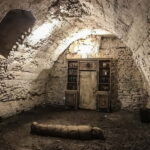




St. Vitus Cathedral: the main event with real burial weight
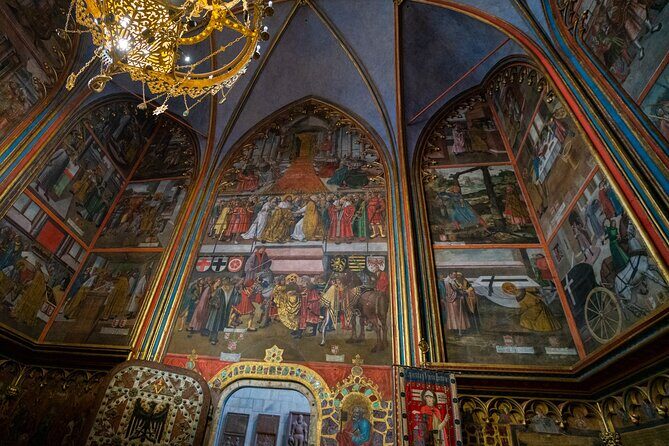
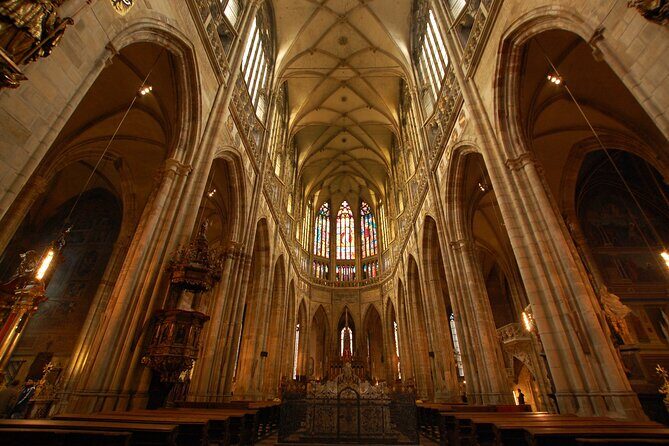
If you do only one interior stop at Prague Castle, make it St. Vitus Cathedral. Your time here is about 50 minutes, and that’s enough to do more than just look up at ceilings.
St. Vitus Cathedral is a 14th-century Gothic masterpiece and one of the most important historical monuments tied to the Czech nation. But it’s not just style points. The cathedral also functions like a memorial space: it’s described as a gravesite connected to five saints, and it holds burials of figures such as kings, archbishops, and aristocrats.
This is where a guide earns their fee. Without guidance, you can walk through feeling like you’re seeing “a lot of old stone.” With guidance, you can understand why certain features matter and how the cathedral connects to the power structure of the castle complex.
What to consider: St. Vitus can be visually intense. Even with a timed tour, you might feel pulled in many directions. Take a breath and let the guide’s pacing help you choose what to focus on. If you prefer your sightseeing slow, tell your guide early. With a private setup, you can usually adjust.
Old Royal Palace: late Gothic halls and the royal machinery
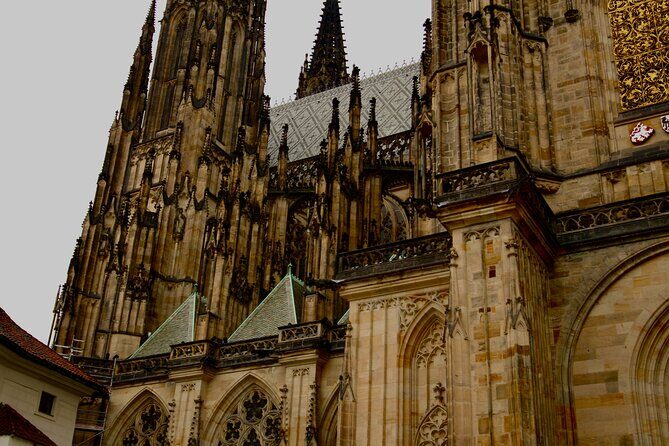
Next is Old Royal Palace, about 30 minutes. This is where the medieval residence of the kings of Bohemia comes into view. In other words, you’re not just looking at pretty rooms; you’re looking at how power lived.
This section includes 15th-century late Gothic halls, and the emphasis is on the medieval court and its institutions. That’s what turns the palace from “another interior” into a political snapshot of the Czech lands.
A practical note: palaces are often less about one single wow moment and more about understanding layout. That’s why your time here matters. 30 minutes is long enough to pick up key themes and not feel rushed, especially when you’ve already gotten oriented in the courtyards.
If you’re a photo person, you’ll want to balance shots with listening. A guide’s explanation can make certain angles feel much more meaningful.
St. George’s Basilica: ancient, still standing, and quietly powerful
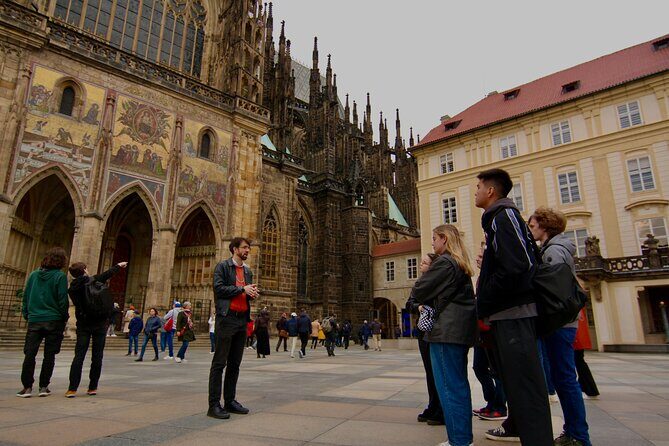
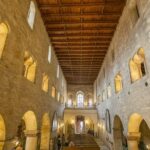
After the royal palace, you step into St. George’s Basilica, about 15 minutes. This church is described as arguably the oldest still-standing building in all of Prague. It was built as the second church of Prague Castle around 920.
That means you’re dealing with an interior that feels old in a different way than a cathedral built centuries later. The tour highlights the monastery-church atmosphere, which can feel like a time jump even if you don’t know every detail.
This is one of those stops where you can get a calmer mood break. St. Vitus is monumental and ornate; St. George’s brings a more grounded, early medieval feeling. If you’re tired from walking, this is a good place to slow down and let your senses catch up.
Golden Lane and how people lived between walls
Then comes Golden Lane, about 10 minutes. It’s described as the romantic street of the castle archers, tucked between two layers of fortification. Today it’s treated like an open-air museum, and the focus is on how people lived there across different centuries.
Golden Lane is great because it’s human-scale. Even if you’re not obsessed with architecture, you can connect to the idea of daily life in small spaces inside a fortress. The lane’s setting also makes it a good photo spot, but it’s best as a story stop rather than just a snapshot.
Time here is short, but the guide can help you notice patterns: how space changes meaning when you’re living close to defensive walls.
Na Opyši viewpoint: seeing Prague as a single system
After Golden Lane, you get an external payoff: Na Opyši, about 5 minutes at the eastern gate. This is a city-view stop—an overview of Prague that lets you connect the castle’s position to everything below it.
I like adding one of these viewpoint moments late in the tour. It gives you a reset for the legs and a chance to appreciate why the Castle was placed where it was. When you’ve been walking through gates, courtyards, and interiors, seeing the city from above makes the whole complex feel strategic.
Staré zámecké schody: heading back down in a more charming way
The final walking moment is Staré zámecké schody, the old castle stairs, about 5 minutes. This is described as a romantic path from the castle hill back toward the city.
It’s not a long hike, but it helps you end the tour on an easier emotional note. Instead of feeling dropped off somewhere random, you leave with a sense of movement back into Prague’s streets.
Price and ticket reality: what your €87.11 actually buys
The tour price is $87.11 per person, and it runs about 2 hours 30 minutes in English with a private professional guide. You also get a mobile ticket and group discounts are listed as available.
The key value point is that your money isn’t just buying entry into a few sites. You’re paying for someone to:
- keep the route logical (views, gates, courtyards, then interiors),
- spend your limited time on the best stops,
- and explain what you’re looking at inside the major buildings.
One caution: paid-entry tickets are listed as an extra €18.50 per person for St. Vitus Cathedral, Old Royal Palace, St. George’s Basilica, and Golden Lane. So the real planning move is to budget that add-on when you compare value to other options.
If you already have those ticketed attractions at the top of your list, this tour can still be good value because you’re bundling them with a guide and a tight route.
Crowds, timing, and avoiding the Christmas squeeze
Prague Castle is famous for one thing: crowds. During peak periods, including around Christmas, it can be packed enough that your experience depends heavily on timing.
A practical strategy you can use is to plan for a calmer part of the day. The operator notes that they’ve used an approach like afternoon tours to reduce crowd stress during busy seasons. That advice matches what I’d recommend generally for major-sight Prague.
Also, keep expectations realistic. Even with a private guide, you may still face busier stairways and tighter spaces in the most popular interiors. The guide’s job becomes more important here: guiding you to the right spots at the right time so you spend less time standing still.
Who should book this tour, and who might skip it
This tour is a strong fit if:
- you want a private, English-language guide in Prague Castle without navigating every “what’s next” decision,
- you care about St. Vitus Cathedral and want help making sense of what you see inside,
- you like a route that mixes courtyards, interiors, and viewpoints instead of only one type of stop.
It might be less ideal if you’re traveling with a very flexible schedule and you want to wander at your own pace for a full day. Also, if you hate crowds and only travel at the most congested times, you’ll want to build buffer time and possibly shift your visit window.
One more practical match: if you’re a group, ask about group discounts. The tour is private, so you’re not dealing with random strangers, and discounts can improve the price equation.
Should you book Royal Splendor Unveiled Private Prague Castle Interior Tour?
Yes, with two conditions: budget for the €18.50 entrance ticket add-on and plan your timing to reduce crowd pain. If you want St. Vitus Cathedral, Old Royal Palace, St. George’s Basilica, and Golden Lane in one efficient visit, this private format is exactly what helps. And with a guide like Max Hutar (Prague Articulate), you also have a real chance of getting a tour that matches your interests rather than a rigid script.
If you’re traveling during the busiest holiday season, consider aiming for an afternoon slot when possible. And if you’re the type who gets stressed by logistics, double-check your day-of meeting details before you head out—private tours live or die on smooth coordination.
FAQ
How long is the Royal Splendor Unveiled tour?
It lasts about 2 hours 30 minutes.
Is this tour private?
Yes. It’s a private tour/activity, and only your group participates.
What language is the tour offered in?
The tour is offered in English.
Where do I meet, and where does the tour end?
You start at KavárnaU Prašného mostu 6, 118 00 Prague 1-Letná. The tour ends near Malostranská subway station (Malostranská 118 00 Prague-Prague 1).
Are entrance tickets included in the price?
St. Vitus Cathedral, Old Royal Palace, St George Basilica, and Golden Lane have an extra ticket cost of €18.50 per person.
Is free cancellation available?
Yes. You can cancel for a full refund up to 24 hours in advance of the experience start time.