REVIEW · PRAGUE
Discover Prague’s most Photogenic Spots with a Local
Book on Viator →Operated by LocalBini - The go-to platform for Experiences by Locals in Europe · Bookable on Viator
Prague’s best photo stops are close together. This 90-minute small-group walk strings together iconic landmarks and modern art angles, with a local host helping you aim your camera and understand what you’re seeing. I like that it stays short and efficient, so you hit big sights without losing half a day to transit.
You’ll also get real photo payoff from places you’ll actually want to revisit at night or later on your own, like Charles Bridge and the Lennon Wall. One possible drawback: the experience is packed and depends on the guide’s style and weather, so if you want deep, museum-level explanations the whole way, you may find it a bit light for the price.
In This Review
- Key points before you go
- Price and what $76.46 buys you (and what it doesn’t)
- Start at Jiráskovo náměstí, end near Letná Park
- Dancing House: modern twists for your first photo “win”
- Kafka’s rotating head: a mechanical sculpture you’ll want to frame
- Man Hanging Out – Sigmund Freud: David Černý’s provocation
- Old Town Square and the Astronomical Clock in motion
- Charles Bridge: 14th-century statues with a photo strategy
- Lennon Wall: the ever-changing wall of messages
- Isla Kampa and David Černý’s Babies
- Pařížská Street: Prague’s fashion boulevard walk
- (Likely) pause in Wallenstein Palace Gardens for softer light
- Letná Park and the Metronom Monument: your end-of-tour payoff
- The guide factor: what you should expect from the local host
- Who this tour fits best
- Photo tips that work on this exact route
- Should you book this Prague Photogenic Spots with a Local tour?
- FAQ
- How long is the Prague photogenic spots with a local experience?
- What does the tour cost?
- How big is the group?
- Is the tour offered in English?
- What’s the tour starting point and where does it end?
- Are entry tickets and public transportation included?
Key points before you go
- Up to 8 people means less crowd pressure and more chances to ask questions
- English-speaking independent local who can tailor the pace to your group
- 90 minutes covers a lot of Prague without turning into a full-day slog
- Modern + classic mix: Dancing House, Kafka’s head, Charles Bridge, Lennon Wall
- Photo-focused stops with standout public art by David Černý
- Route can shift depending on weather and what your group wants most
Price and what $76.46 buys you (and what it doesn’t)
At $76.46 per person for about 1.5 hours, you’re paying for three things: (1) local guidance, (2) a tight sightseeing route, and (3) help turning Prague’s sights into stronger photos. That value makes the most sense if you’re staying a limited number of days and want to get your bearings quickly.
What you do not get is museum time and paid entries. Public transportation entry tickets and monument or museum tickets aren’t included, so if you plan to use trams or pay into something specific, budget extra for that. Also, because this is a walking tour built around photo stops, you should be ready for a steady pace even if your group takes breaks.
You can also read our reviews of more tours and experiences in Prague.
Start at Jiráskovo náměstí, end near Letná Park
The tour begins at Jiráskovo náměstí and finishes at Letenské sady, near Letná Park. That matters because it gives the day a natural flow: you start in Prague’s central areas, move through the Old Town core and the river approaches, then work your way toward the viewpoints at Letná.
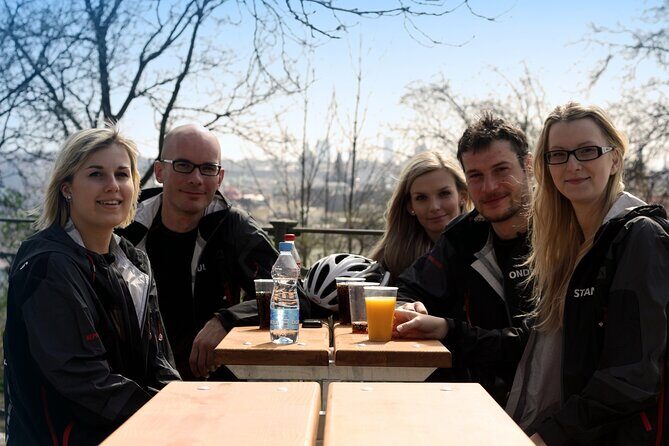
You’ll travel as a small group (max 8). That size is ideal for photos because you’re not fighting a sea of bodies around the same corner. It also makes it easier for a local host to adjust the pace when someone wants one more angle of Charles Bridge or needs time under better light.
Dancing House: modern twists for your first photo “win”
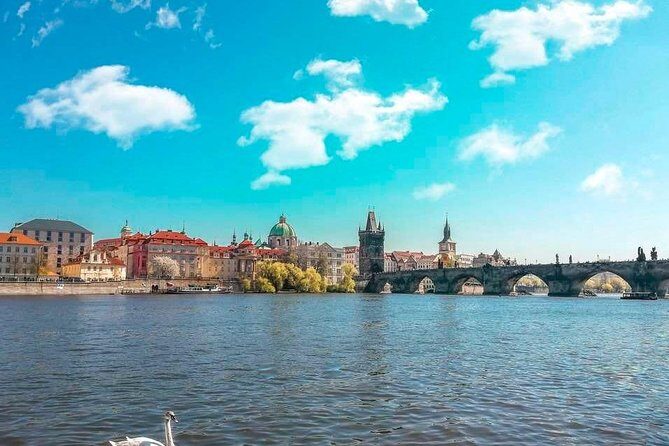
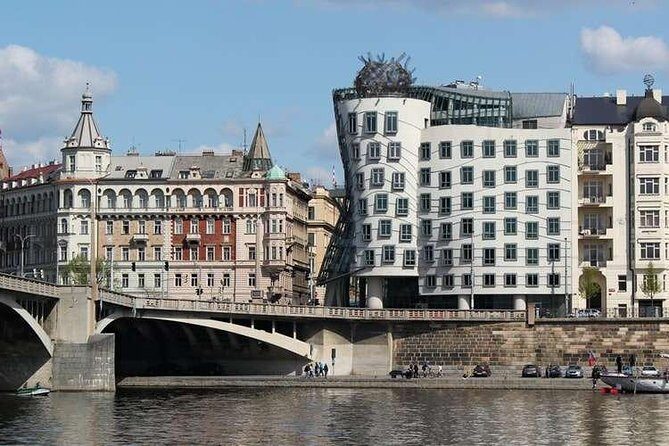
You’ll kick things off with Prague’s Dancing House, a modern design that looks like it’s mid-motion. The building’s playful twist is the point: it breaks the flat, traditional skyline you’ll see elsewhere in the city. For photos, that means you can get clean compositions from several angles without needing a perfect backdrop.
One smart thing I like about starting here is momentum. Early on, you’re still fresh, your camera setup feels new, and the guide can point out where Prague’s light hits best on angular architecture. If you’re traveling with limited time, the Dancing House is a quick way to prove Prague isn’t only about castles and bridges.
Kafka’s rotating head: a mechanical sculpture you’ll want to frame
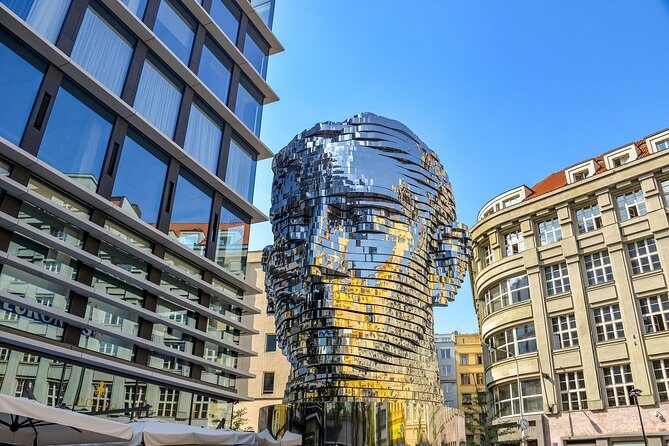
Next comes a dynamic tribute to Franz Kafka: a 11-meter rotating metallic head with 42 moving layers. The height alone makes it memorable, but the movement is what turns it into a photo moment instead of a static landmark.
Here’s how to make it work for you:
- Take one shot when the head is between slow rotations and you can see the structure clearly.
- Take another from a slightly lower angle to emphasize scale against pedestrians.
A local guide is helpful here because the sculpture’s concept makes more sense when you’re not just looking at metal parts—you’re learning what kind of ideas Kafka was known for, and why this public artwork treats complexity as something you can literally watch.
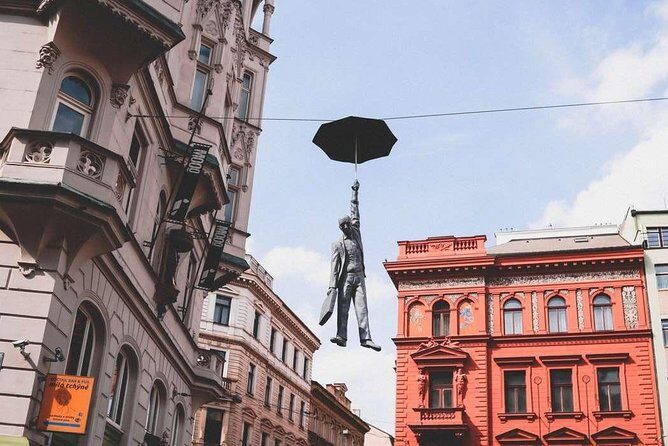
Man Hanging Out – Sigmund Freud: David Černý’s provocation
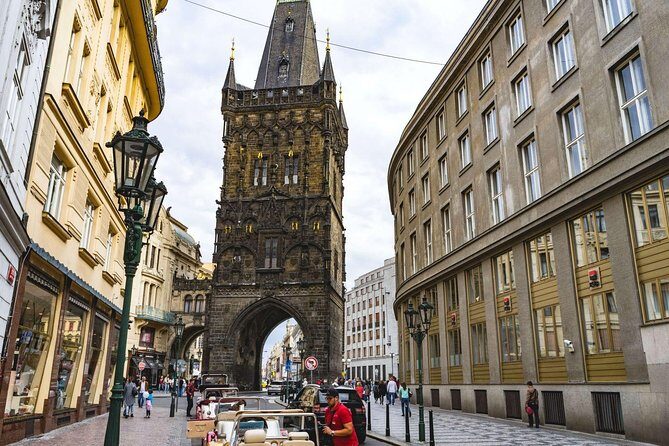
If you’ve got a soft spot for thought-provoking art you can’t ignore, you’ll likely enjoy Man Hanging Out – Sigmund Freud, a work by David Černý. The name alone signals playful discomfort, but the real draw is the way it makes you look up—then pause.
Prague’s public art is often best photographed when you catch people reacting or when the sculpture lines up with a street’s architecture. This is the kind of stop where you’ll benefit from the guide’s timing and placement suggestions, because the best angle can depend on foot traffic and the exact moment you’re there.
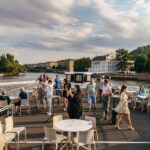
Old Town Square and the Astronomical Clock in motion
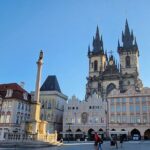
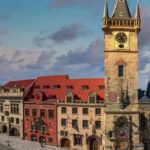
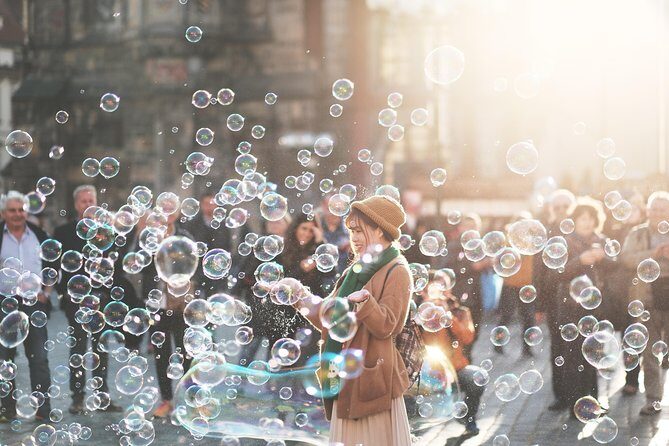
Then you step into Old Town Square, where the Astronomical Clock is the headline. You’re not just seeing a clock on a wall; you’re watching a mechanism do what Prague does well—turn civic life into theater.
This stop pays off if you’re the type of traveler who likes being present while something happens, not only photographing the aftermath. Even if you’ve seen photos online, the in-person experience tends to feel more grounded because the square itself is part of the story: the buildings frame the scene, and the crowd naturally organizes around the moment.
Practical tip: arrive with your camera ready, but also give yourself a quick minute to look with your eyes first. If you’re chasing only the “perfect” image, you can miss how the clock draws people in and how the square feels as a living public space.
Charles Bridge: 14th-century statues with a photo strategy
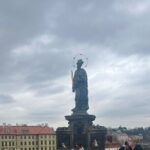
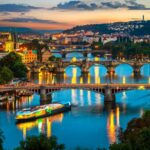
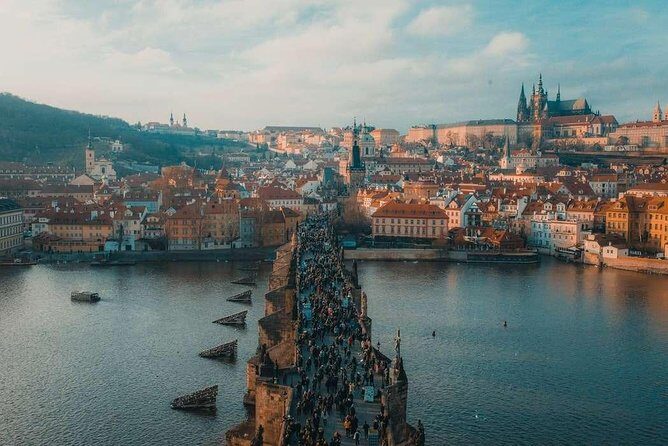
Few cities have a bridge you can turn into a whole photo plan. Charles Bridge, dating back to the 14th century, is exactly that. You’ll admire the statues and the architecture, and you’ll also learn how the bridge fits into Prague’s bigger cultural picture.
For photos, Charles Bridge is all about layers:
- One layer is the bridge itself—arches and stone texture.
- Another layer is the statues.
- The third layer is the river and the changing lines of Prague behind you.
What I like about having this stop included in a small-group format is that you can spend less time deciding where to stand and more time actually shooting. A local host can also help you avoid common framing mistakes, like placing your subject in a position that gets swallowed by railings or crowd movement.
One consideration: the area can get busy, so if you’re very sensitive to crowds, treat Charles Bridge like an angle-and-shoot moment. Don’t force the idea of standing in one spot for 30 minutes.
Lennon Wall: the ever-changing wall of messages
You’ll then visit the Lennon Wall, an ever-evolving canvas connected to John Lennon and messages about freedom and peace. The wall works like living street art, which means your photos will never look exactly like someone else’s from a different year.
This is a great stop for two reasons:
- It’s visual storytelling without needing tickets.
- You can take close-ups and wide shots in the same area.
If you want variety in your pictures, try both:
- Tight frames that focus on a single message or color block.
- Wider frames that show the wall’s texture as a whole.
Isla Kampa and David Černý’s Babies
One of the most distinctive stops on the route is seeing David Černý’s Babies—bronze sculptures crawling their way around Isla Kampa. The theme is eerie in a playful, public-art way, and the “crawling” idea makes it fun to photograph because you can play with perspective.
Here’s why this stop stands out for me: it’s not a typical postcard landmark. It feels like Prague is winking at modern art, and it gives your photo set a different personality from the classic bridge-and-square shots.
Also, if you like to mix genres in your travel photos—old stone one minute, weird modern metal the next—this is the right place to do it.
Pařížská Street: Prague’s fashion boulevard walk
Next you’ll stroll down Pařížská Street, described as Prague’s most prestigious boulevard. It’s where history, art, and luxury show up in a more everyday, shopping-street way, and it’s considered a fashion epicenter.
For photography, this part of the route changes the tempo. Instead of filming only landmarks, you get street-level detail: storefronts, façades, and the way people move in a grand avenue. It can be a nice contrast after the intensity of Old Town Square and Charles Bridge.
Also, this is one of the moments where a local host’s pacing helps. If you rush, you miss architectural details. If you slow down, you risk losing time. The small-group format helps keep you in the sweet spot.
(Likely) pause in Wallenstein Palace Gardens for softer light
The highlights also promise time to wander through the Wallenstein Palace Gardens. Even if weather changes the exact order of stops, this kind of pause is valuable because gardens give you breathing room. They also tend to be more forgiving for photos: fewer crowds, more natural lines, and more space to step back from your subject.
If your guide can fit it in, I’d use the garden time for:
- calmer wide shots when your eyes need a break from dense urban scenes
- close-ups of textures (stone paths, foliage edges, garden structures)
You’ll feel the difference immediately if you’ve been shooting only buildings and statues.
Letná Park and the Metronom Monument: your end-of-tour payoff
The tour finishes at Letenské sady, near Letná Park, and you’ll get unreal city views from up there. The reason this ending works is simple: Prague photographs beautifully from above, and you’re ending your route on perspective.
You’ll also see the Metronom Monument, a distinct landmark that adds another “Prague mix” to the day: classic city core below, modern-looking structure and open space around you.
This is a great finish point because you can do one last photo pass with fresh eyes. If you’ve been shooting the river and squares, this viewpoint helps your brain connect the different neighborhoods into one coherent story.
The guide factor: what you should expect from the local host
This experience is hosted by an independent local and tailored to your group’s interests and walking pace. That can be excellent—especially for photos—because a local can decide what to emphasize based on what you actually care about, not just a scripted script.
One practical lesson from real-world guide behavior: punctual communication helps a lot. In at least one case linked to this type of experience, the host Stefan arrived promptly and sent meeting details by text messages. That kind of clarity saves stress when you’re in a new city.
Where value can dip is when explanation feels broad or a bit shaky. If you’re paying for a local’s interpretation, you want your questions answered with confidence. If you find yourself craving more precision, ask right away. A good local guide should be able to anchor a story to the spot you’re standing in.
Who this tour fits best
This is a strong match if:
- you have about a day or less in Prague and want the biggest “photo hits” fast
- you enjoy public art as much as classic sights
- you want a local to point out what you might miss on your own
- you’re traveling with a small group or solo and like meeting others up to 8 people
It’s less ideal if:
- you want museum entrances and long indoor time (not included)
- you need slow, step-free pacing (not recommended for guests with impaired mobility)
- you’re expecting a deep lecture for every stop in 90 minutes
Photo tips that work on this exact route
A photo tour is only worth it if you come away with better images, not just more photos. Here’s how I’d approach this route.
First, shoot in sets, not single frames. For each landmark, I’d aim for:
- one wide establishing shot
- one medium shot that includes the key structure
- one tighter frame for textures or faces (statues and sculpture details are perfect for this)
Second, keep an eye on movement. Charles Bridge statues, the Kafka head’s rotation, and the changing Lennon Wall all reward timing. If something moves or evolves, wait ten seconds. Often your best frame happens right after you think it won’t.
Third, manage your camera energy. Prague weather can change fast, and your walking time is fixed. If clouds roll in, pivot your plan toward darker, high-contrast subjects like metallic sculptures and stonework. If the sun comes out, prioritize open viewpoints at Letná.
Should you book this Prague Photogenic Spots with a Local tour?
I think you should book it if you want a tight, photo-first route through Charles Bridge, Lennon Wall, Kafka’s head, David Černý art, and Letná viewpoints—without needing to plan each stop. The small group size and local adaptation help a lot, especially for first-time Prague visitors.
Hold off if your top priority is deep explanations or you strongly dislike short, packed walks. Also, if you’re sensitive to the possibility of a guide giving more general context than you expected for the price, treat this as a photography-oriented introduction rather than a full history course.
If you’re here for standout images and fast orientation, this tour is a sensible way to turn 90 minutes into a photo story.
FAQ
How long is the Prague photogenic spots with a local experience?
It’s approximately 1 hour 30 minutes.
What does the tour cost?
The price is $76.46 per person.
How big is the group?
The maximum group size is up to 8 travelers.
Is the tour offered in English?
Yes, it’s offered in English.
What’s the tour starting point and where does it end?
It starts at Jiráskovo náměstí and ends at Letenské sady.
Are entry tickets and public transportation included?
No. Entry tickets for museums and monuments and public transportation are not included.