REVIEW · PRAGUE
Psychiatric Hospital & Abandoned Cemetery
Book on Viator →Operated by McGee's Trips & Tickets · Bookable on Viator
Dark history, quiet streets, real buildings.
This Prague tour is interesting because you’re walking through Bohnice with a guide who explains how European psychiatry shaped (and misshaped) lives, and then you head to the hospital cemetery at night. I love that it’s structured like a proper guided circuit, not a loose wandering walk, and I also like that admissions at the stops are listed as free—so your $33.64 feels tied to the guide and time, not entry fees. The main drawback is the subject matter: it’s serious and heavy, and the tour description notes it isn’t recommended for small children.
You’ll meet at Ústavní 7 in Prague 8 and spend about three hours moving between four stops, including a viewpoint over Bohnice Valley and the Vltava River. I like that the pacing gives you a breather at the viewpoint after the darker parts, and I appreciate that the group stays limited (max 30), which usually keeps things more manageable. One consideration: you shouldn’t plan on treating it like an abandoned-building photo shoot—there are corrections that the hospital is operational and not abandoned.
In This Review
- Key things to know before you go
- Prague after dark: Bohnice, the cemetery, and the weight of place
- Price and value: what you pay for at $33.64 per person
- Getting there: the meeting point, the timing, and the route shape
- Stop 1: Psychiatric Hospital Bohnice — operational place, tough stories
- Stop 2: Bohnicky cemetery of fools — where the quiet does the talking
- Stop 3: Bohnické údolí viewpoint — a necessary break with real views
- Stop 4: back at Bohnice — end of the tour and the metro option
- Who this tour suits best (and who should pass)
- Photography and expectations: what you can and can’t treat as abandoned
- Booking timing and practical tips for a smooth experience
- Should you book this Prague hospital and cemetery tour?
- FAQ
- How long is the Psychiatric Hospital & Abandoned Cemetery tour?
- What time does the tour start?
- Where do I meet the guide?
- What stops are included in the route?
- Is the tour available in English?
- Are admission tickets included?
- Is hotel pickup and drop-off included?
- How big are the groups?
- Is there any guidance about children or sensitive topics?
- Can I cancel for free?
Key things to know before you go
- After-dark atmosphere with a guided route through Bohnice
- Psychiatric Hospital Bohnice is active, so expect access rules
- Bohnicky Cemetery of Fools offers a lonely, sobering stop
- A viewpoint over Bohnice Valley and the Vltava River breaks the mood
- English mobile ticket and a max group size of 30
- Free admissions are listed for the main stops
Prague after dark: Bohnice, the cemetery, and the weight of place
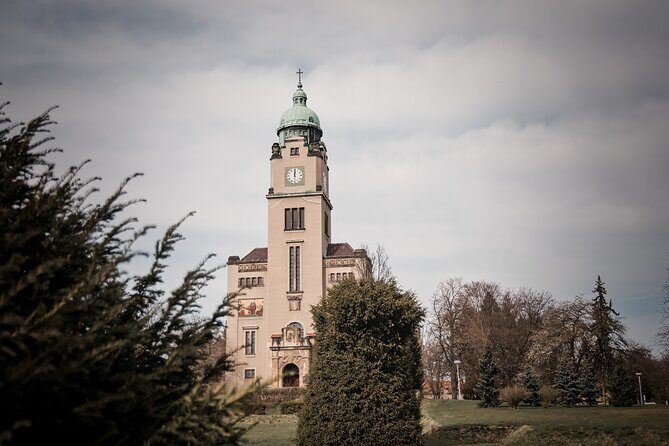
This is not a typical “see the sights” Prague tour. It’s a guided walk tied to a specific place—Psychiatric Hospital Bohnice—and the story it carries after night falls. You get that eerie-but-controlled feeling that comes from being led through real, lived-in spaces while you hear why people were labeled, treated, confined, and remembered.
What I like most is how the tour doesn’t rush past the theme. You spend enough time at the hospital to understand the setting and the controversies around European psychiatry. Then you shift to the cemetery, where the atmosphere changes from institutional to personal and isolating. If you’re the type who reads history and wants context you can stand inside, this will click.
The flip side: this tour is intentionally dark in tone. Even if you’re prepared, the subject matter is heavy, and the description specifically discourages small children. If you prefer cheerful tours—or if you don’t handle grim topics well—skip it and pick something brighter in Prague.
You can also read our reviews of more tours and experiences in Prague.



Price and value: what you pay for at $33.64 per person
At $33.64, the math is pretty straightforward: admissions are listed as free for the tour’s stops, so your money mostly goes toward the guided portion and the time on route. The total duration is about 3 hours, and the hospital stop alone takes about 1 hour 40 minutes, which is a strong chunk of structured time.
Group size matters here. With a max of 30 travelers, you’re less likely to feel like you’re shouting to be heard, especially in tight hallways or along cemetery paths. And since it’s in English with a mobile ticket, you don’t need extra printouts or complicated steps.
One practical value point: you can’t count on “wander and find it yourself” working for this kind of story. The value is the explanation you get while walking through the hospital grounds and cemetery setting. If you come just for photos, you may be disappointed; if you come for context and guided storytelling, the price makes more sense.
Getting there: the meeting point, the timing, and the route shape
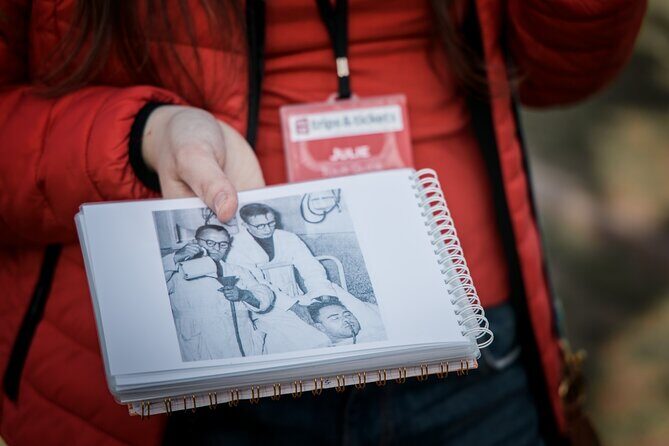
Start time is 2:00 pm, and the itinerary runs roughly 3 hours. You’ll meet at Ústavní 7, 181 00 Praha 8. The tour ends back at the meeting point area.
The route is built in four parts:
- a long first stop at Psychiatric Hospital Bohnice
- a dedicated 40-minute cemetery visit
- a short 20-minute viewpoint break
- a final 20-minute wrap-up back at Bohnice, with the guide heading toward the metro
Near public transportation is listed, which is a big help. You don’t want your evening plans stuck behind one long taxi ride. Also, the tour notes moderate physical fitness is expected. That doesn’t sound like hiking Everest—more like you should be comfortable walking at night and moving between sites.
Finally, confirmations are handled at booking time, and the tour uses a mobile ticket, so plan on having your phone charged and ready.
Stop 1: Psychiatric Hospital Bohnice — operational place, tough stories
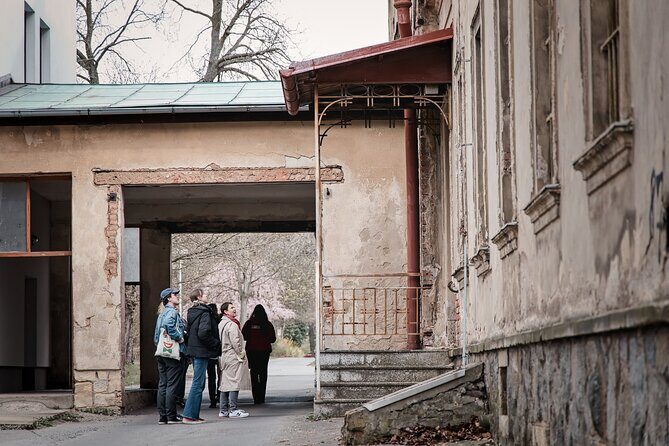
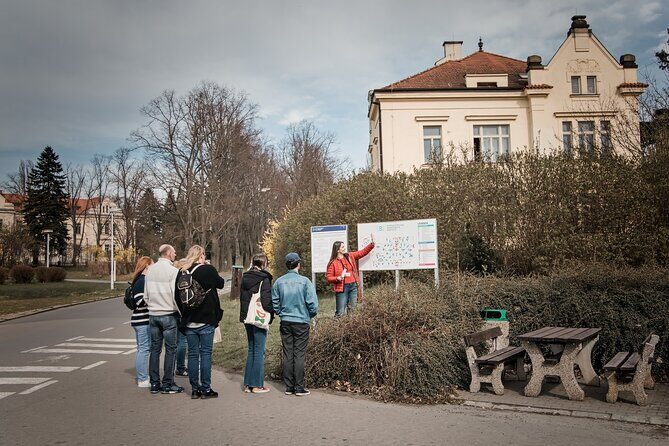
The first stop sets the tone: you meet in front of the gate of Psychiatric Hospital Bohnice, and the guide introduces the intense and controversial history of psychiatry in Europe. Then you move through a “maze” of buildings and corridors for the long hospital segment—about 1 hour 40 minutes.
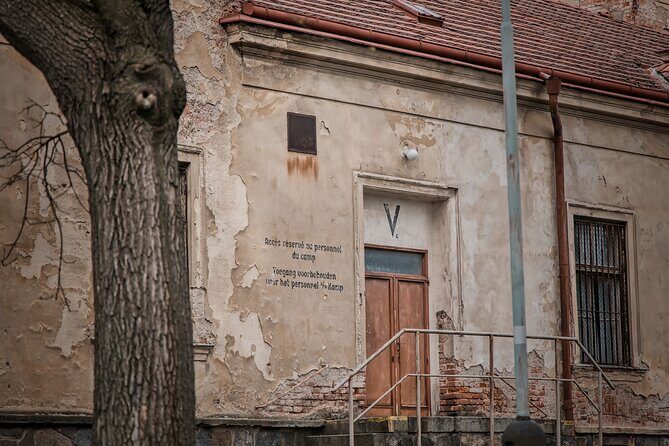
Here’s the key thing to understand before you go: this is not an abandoned site. A clarification was provided that Bohnice Psychiatric Hospital is fully operational, with buildings actively used for patient care or storage. That matters for expectations. You can’t assume you’ll roam freely into derelict rooms. Think of it more like a guided walkthrough where your access depends on what the hospital allows.
You’ll hear stories about former patients as part of the tour’s historical context. That can be emotionally intense, especially since the description warns the treatments discussed are torturous and deadly. Even if you know some European history, hearing it anchored to the actual hospital grounds tends to hit harder than reading about it.
Practical tip: wear shoes you trust. You’ll likely be walking indoors and outdoors around the hospital complex, and you’ll want grip and comfort more than anything “nice.”
Stop 2: Bohnicky cemetery of fools — where the quiet does the talking

After the hospital portion, the tour shifts to the cemetery: Bohnicky Cemetery of Fools. It’s about 40 minutes here, after a short walk from the hospital area to the graveyard.
This is the part where the tour becomes less about institutions and more about isolation. The cemetery is described as mysterious, lonely, and dark—so expect a somber pace. Even though 40 minutes doesn’t sound long, it’s enough time to slow down and let the place do its work.
What I find valuable about this stop is that it connects the abstract topic of psychiatry to people and memory. The name is unsettling, but the deeper point is human: how societies categorized and treated individuals, and how those decisions echo long after.
If you’re sensitive to heavy topics, this is where you’ll feel it most. That’s not a reason to avoid the tour—just a reason to mentally prep.
And if your goal is photography: the tour includes a note through a correction that some expectations about abandoned buildings or a church don’t match reality. So treat your camera as secondary to listening. You’ll get more out of this with your attention on the guide’s narration.





Stop 3: Bohnické údolí viewpoint — a necessary break with real views

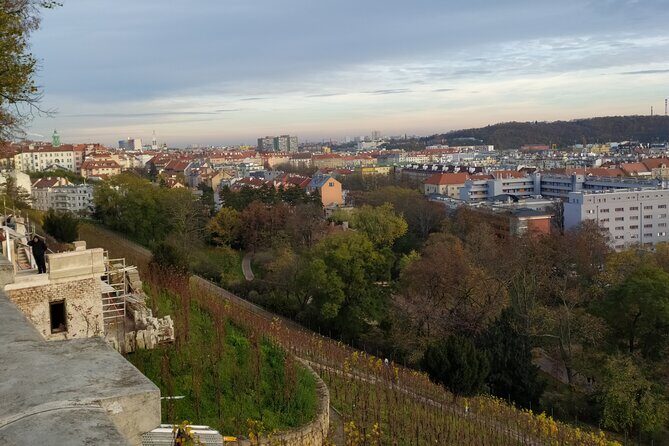
Between the dark stops, you get a breather at Bohnické údolí. This is about 20 minutes at a viewpoint overlooking the valley and the Vltava River.
It’s a smart placement in the itinerary. After the hospital and cemetery, you need a visual reset. From here, you can step back and see the wider geography that shapes Bohnice’s setting—valley, river, and the sense of a place tucked away from the rest of Prague.
You don’t need to be a scenery hunter for this stop to matter. The value is emotional calibration. You’ve been hearing difficult stories; the viewpoint gives you a chance to breathe before the wrap-up back at Bohnice.
If it’s cool outside (and it often is, especially after dark), layer up. Viewpoints can feel colder and windier than street level.
Stop 4: back at Bohnice — end of the tour and the metro option
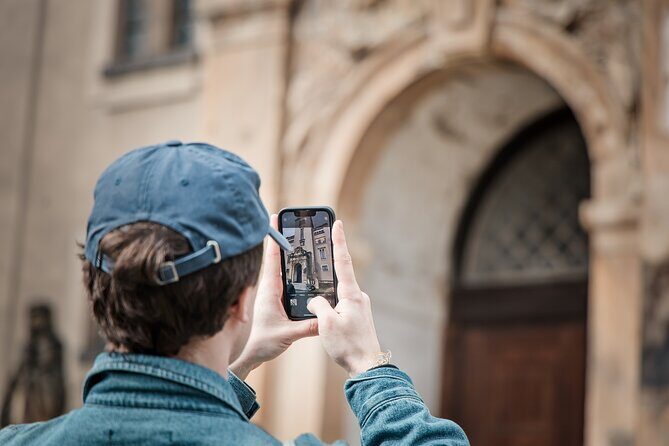
The final segment returns you to the hospital area for about 20 minutes, and the tour ends in front of Psychiatric Hospital Bohnice. The guide then heads toward the metro, and you can join him.
This matters because a lot of Prague tours end with “good luck” energy. Here, there’s a clear off-ramp: you’re dropped back near the starting neighborhood and the guide is moving toward public transport.
This is also why the “back at the meeting point” detail is useful. It helps you plan your night afterward without guessing how to get home from a random side street.
One more expectation-setting note: the walk is guided and time-bound. So don’t treat the route like a free extended visit where you can linger indefinitely inside spaces. The structure is part of the experience.
Who this tour suits best (and who should pass)
This is best for adults—or older teens—who want a serious, place-based history tour in Prague. If you’re the type who likes context (how institutions worked, why controversies grew, and how stories persist), you’ll probably enjoy the pace and focus.
It also suits travelers who like guided interpretation. The tour is designed to be done with a guide, and the content is tied to what you’re standing in front of. Going solo would likely feel like random walking plus reading signs you can barely connect.
Who should pass? The tour information says it’s not recommended for small children, and the theme can be intense. If you’re traveling with kids and you’re hoping for something “educational but light,” this isn’t that.
Also, if you’re motion sensitive or worried about walking at night, remember the physical fitness requirement is “moderate.” It’s not extreme, but it does involve getting around and staying engaged for about three hours.
Photography and expectations: what you can and can’t treat as abandoned
One of the most practical points from the feedback is expectation control. A correction explained that there are no abandoned buildings at the Bohnice Psychiatric Hospital and that it’s fully operational, with buildings used for patient care or storage. That means you should not plan on wandering into empty, crumbling rooms.
If your idea of this tour includes lots of interior photos, set that expectation lower. The cemetery and exterior hospital grounds are where you’ll get most of your photo opportunities—while the narration will be the main “product.”
I think this is actually part of the respectful value here. When you accept that it’s a working facility and a memorial space, the tour becomes less about spectacle and more about understanding.
Booking timing and practical tips for a smooth experience
The tour is often booked about 21 days in advance on average, which suggests it’s a popular specialty night option. If you’re traveling during a busy season or on a specific date, don’t wait until the last minute.
The tour includes a mobile ticket, so keep your phone accessible. With a short, structured route, there’s no benefit in arriving late and getting split from the group.
Finally, the tour is in English and capped at 30 travelers. That’s generally a good match for an intimate experience in a darker setting—enough people for energy, not so many that you constantly lose sight of the guide.
Should you book this Prague hospital and cemetery tour?
If you want a standard Prague highlights routine, skip this. This is for travelers who like their history grounded in real places and who don’t mind dark themes.
I’d book it if:
- you’re curious about how psychiatry developed in Europe and want context on location
- you’re comfortable with serious topics and hearing stories connected to past patients
- you like guided, structured walking rather than DIY exploring
I wouldn’t book it if:
- you’re traveling with small children
- you’re mainly after abandoned-building interiors for photos
- you’re sensitive to grim history and want a lighter evening
If your goal is honest understanding—hospital, cemetery, and viewpoint in one coherent circuit—this tour earns its place on a Prague plan.
FAQ
How long is the Psychiatric Hospital & Abandoned Cemetery tour?
It runs about 3 hours (approx.).
What time does the tour start?
The listed start time is 2:00 pm.
Where do I meet the guide?
You meet at Ústavní 7, 181 00 Praha 8, Czechia.
What stops are included in the route?
The tour includes Psychiatric Hospital Bohnice, Bohnicky cemetery of fools, a viewpoint at Bohnické údolí, and then a final return to Psychiatric Hospital Bohnice.
Is the tour available in English?
Yes, the tour is offered in English.
Are admission tickets included?
Admission tickets are listed as free for the stops.
Is hotel pickup and drop-off included?
No, hotel pickup and drop-off are not included.
How big are the groups?
The tour has a maximum of 30 travelers.
Is there any guidance about children or sensitive topics?
The tour includes historical facts connected to the dark history of psychiatry and is not recommended for small children.
Can I cancel for free?
Free cancellation is available. You can cancel up to 24 hours in advance for a full refund, and cancellation cut-off is based on local time.