REVIEW · TEREZIN
Terezin Concentration Camp w/Holocaust Historian SMALL GROUP
Book on GetYourGuide →Operated by Local Historian Tours · Bookable on GetYourGuide
Terezin hits you fast. This small-group tour (up to 6 people) is led in English by a Holocaust historian, with a focus on quality over quantity, so you get space to ask questions and absorb what you’re seeing. I especially like the mix of places: the Jewish ghetto route where over 35,000 people perished, plus the Small Fortress as a Gestapo prison for political prisoners. One thing to consider: this is a very intense site, with a longer on-the-ground session, so it can feel emotionally heavy even if you’ve read about it before.
What makes this experience work for real travelers is the pacing. You’re transported in a car or minivan, picked up at metro Ládví, and then you spend about 3.5 hours guided inside Terezin—enough time to understand the story without racing through stops. Also, the tour goes beyond the obvious “main paths,” including locations like the hidden Prayer Room (synagogue), the National Cemetery, and the remains of the former railway to the Ghetto.
In This Review
- Key things you’ll notice on this tour
- Why this small-group Terezin tour feels different
- Meeting at Metro Ládví: the easiest starting point
- The 5-hour schedule: what the timing really means
- Terezin’s ghetto route: walking where the numbers hurt
- Small Fortress: where Gestapo imprisonment becomes real
- Best preserved concentration camp sites: why preservation affects your understanding
- The prayer room, cemetery, and the remains of the railway
- Getting the most out of a 3.5-hour guided walk
- Price and value: is $114 actually fair?
- Who should book this Holocaust historian-led tour
- Should you book this Terezin small-group tour?
- FAQ
- Where is the meeting point for the tour?
- How long is the Terezin guided portion?
- What group size should I expect?
- Is the tour offered in English?
- Is the museum entrance included in the price?
- Does this tour help with ticket lines?
- Is free cancellation available?
- Is pay later an option?
Key things you’ll notice on this tour
- Very small group (limited to 6), which keeps the experience personal and question-friendly
- Holocaust historian guide in English, with context that connects the dots
- The ghetto + Small Fortress combination, covering both lived-in confinement and imprisonment
- Stops beyond the usual tourist routes, including the Prayer Room (synagogue) and National Cemetery
- Transport from Ládví by car/minivan, with time planned to avoid traffic when possible
- Line-skipping support, with museum entrance not included on your ticket
Why this small-group Terezin tour feels different

Terezin (Theresienstadt) is one of those places where “seeing” isn’t the point. The point is understanding what happened there and what the site communicates today. This tour is built around that idea: you’re not just touring buildings, you’re learning how the parts relate to the larger story of Nazi concentration camps, and why this location matters in the history of the Czech lands under Nazi rule.
I like that the guide’s approach is explicitly quality over quantity. In practical terms, that means you spend less time herding people from one spot to the next and more time making sense of what you’re looking at. Even the way the tour is described signals that the goal is respectful, contextual walking—especially in an area where details matter.
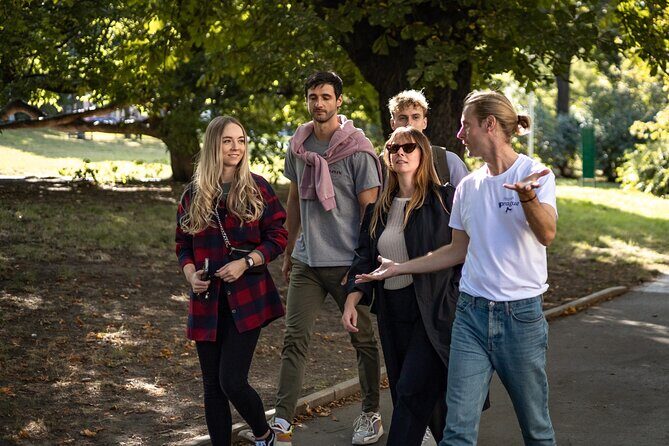
The other reason it works is the group size. A limit of up to 6 participants changes the entire feeling of the day. You can ask a question without feeling rushed, and the guide can slow down when something needs explanation. One review even noted that the tour ended up just two people plus Jiri, and that small setup made the visit feel easier to handle. That’s the kind of comfort you usually only get in private tours.
You can also read our reviews of more tours and experiences in Terezin.

Meeting at Metro Ládví: the easiest starting point
Getting to Terezin can be the part that ruins your morning if you start late or pick the wrong plan. This tour keeps it simple. You meet at metro Ládví, and the guide will pick you up there with a car. The instructions are sent the day before, which helps you avoid the usual guesswork.
From central Prague, Ládví is an easy jump—about 10–15 minutes by metro. The metro cost is listed at 1.50 USD/EUR, so you can plan your budget without surprises. If you want pick-up in Old Town, you can ask, but the trade-off is traffic: the tour says it may get you stuck for hours if that’s how the road behaves that day.
This “start in one predictable place” matters because Terezin is already mentally demanding. You want your travel to feel boring. Boring is good on days like this.
The 5-hour schedule: what the timing really means
The full experience runs 5 hours, with about 3.5 hours in Terezin itself. That split is important. You get enough time to walk, hear context, and visit multiple sites, but you’re not stuck for the whole day in a way that turns the visit into endurance.
You’ll also have transportation time to and from Ládví. The tour description emphasizes avoiding traffic so you can spend more time exploring on-site. Water is included, which sounds small, but on a long day outdoors it’s the difference between “I can pay attention” and “I’m already distracted.”
Also note the structure: you’re getting a guided tour inside Terezin, and then you return to the meeting point. That’s helpful if you’re planning dinner after. You won’t be stuck wondering how you’ll get back at the end of a heavy day.
Terezin’s ghetto route: walking where the numbers hurt
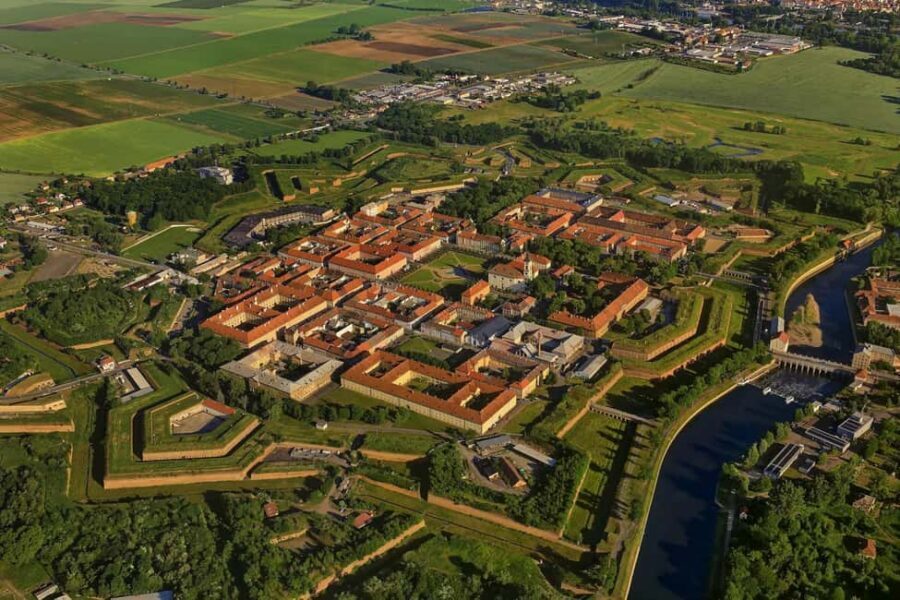
One of the biggest highlights is navigating the Jewish ghetto area, where over 35,000 people perished. That figure is stark, and the site makes it impossible to treat history like a checklist. On this tour, you don’t just look at the geography—you learn how to read it.
Here’s what you can expect to feel, and why the guided context matters: a ghetto isn’t just a “place.” It’s a system. The guide’s job is to help you connect what you see on the ground to what those spaces meant for people who were confined there.
What I like about having a historian steer this part is how it reduces the risk of misreading what you’re seeing. When you walk on your own, it’s easy to spot buildings and guess their purpose. With a Holocaust historian in English, you’re more likely to understand what each area is meant to represent and why the tour’s route includes certain corners and not others.
This is also one of the reasons the “small group” format matters. You’re standing in emotionally heavy spaces. A larger group can feel noisy and hurried. A smaller group tends to keep the pace respectful.
Small Fortress: where Gestapo imprisonment becomes real
After the ghetto route, the tour heads to the Small Fortress, described as a Gestapo prison for political prisoners. This is the part many people remember most because it shifts the story from a broader confinement setting to a more direct, prison-centered reality.
The phrase political prisoners is a key framing detail. It signals that this wasn’t only about one category of victims or one type of suffering. It’s about how the Nazi system held people it wanted to silence or control.
Practically, what you’ll notice is that the experience changes tone. The guide’s context helps you adjust your mental lens: you stop treating Terezin like a museum and start treating it like a place built for coercion. Even if you think you know the history, walking the Fortress with a guide can be a wake-up call about how the physical layout supports control.
This is also one of the stops where line-skipping and guided flow matter. When the subject is intense, the last thing you need is extra waiting or confusion. The tour includes transportation by car or minivan and tries to keep the day on track so your focus stays where it should.
Best preserved concentration camp sites: why preservation affects your understanding
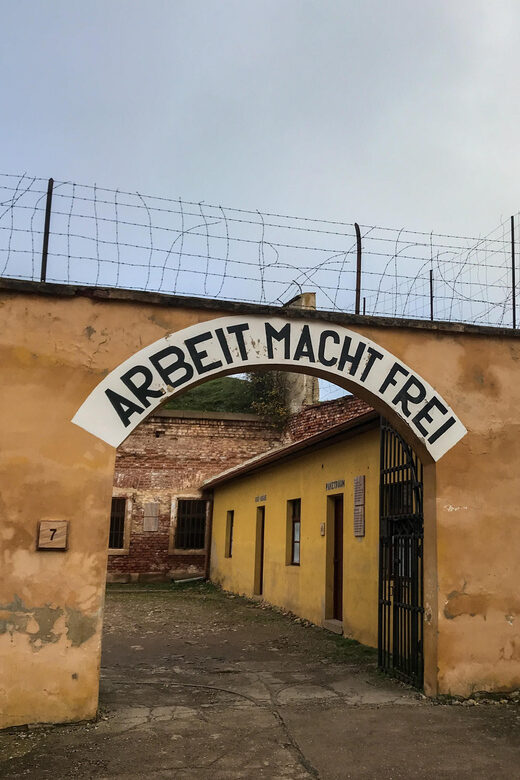
The tour highlights Terezin/Theresienstadt as one of the best preserved concentration camps. That doesn’t mean it feels comfortable. It means you get to see more than fragments.
In practical terms, preservation can be a double-edged sword. On one hand, it gives you a clearer sense of what was there and how spaces were used. On the other hand, it can make the atmosphere hit harder because you’re standing in places that still feel “complete.”
This tour leans into that value by guiding you to the “hidden corners” and traces you might otherwise miss. You’ll be nudged to notice what remains, what was built, and what was left behind.
That’s where the historian approach is worth the money. When the site is well preserved, your interpretation matters more. A guide helps you avoid turning the visit into vague sadness and instead turns it into understanding.
The prayer room, cemetery, and the remains of the railway
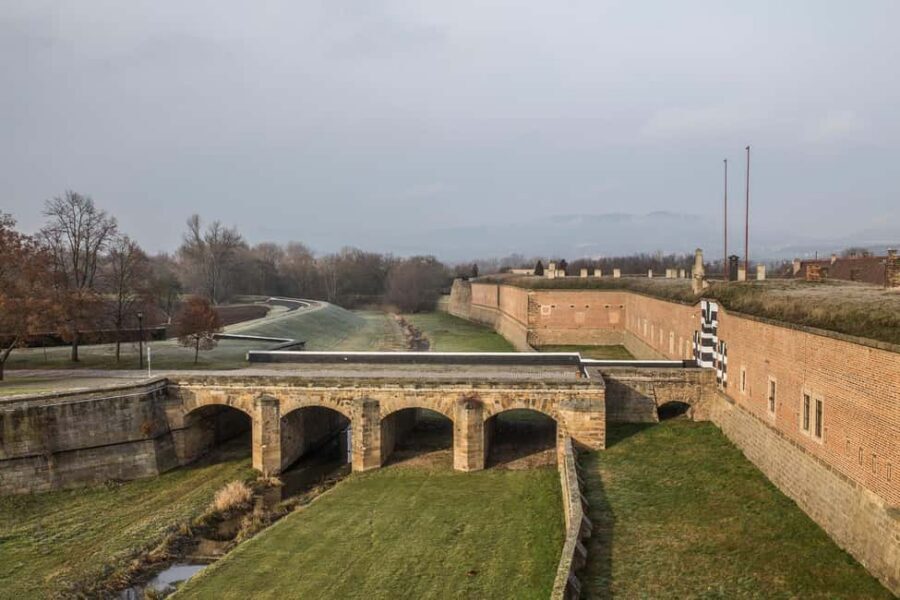
One of my favorite parts of this tour description is that it goes beyond the obvious. You’re not only visiting the big-ticket areas. You also get to explore specific locations that help round out the human story.
You’ll visit the hidden Prayer Room (synagogue). Places like this matter because they remind you that people weren’t only living inside a system—they also carried faith, routine, and community wherever they could.
You’ll also see the National Cemetery. Cemeteries can be hard to navigate emotionally, but with guided context you’re not left guessing how to interpret what you’re seeing. The guide’s framing helps you connect memory to place.
Finally, you’ll visit the remains of the former railway to the Ghetto. Rail traces are powerful because they make the process visible. Even when you’re looking at remains rather than a fully intact facility, the connection between movement and confinement becomes clear.
These are the kinds of stops that turn a “tour” into a fuller education. They’re also exactly the sort of locations that people searching only for mainstream photo spots often miss.
Getting the most out of a 3.5-hour guided walk
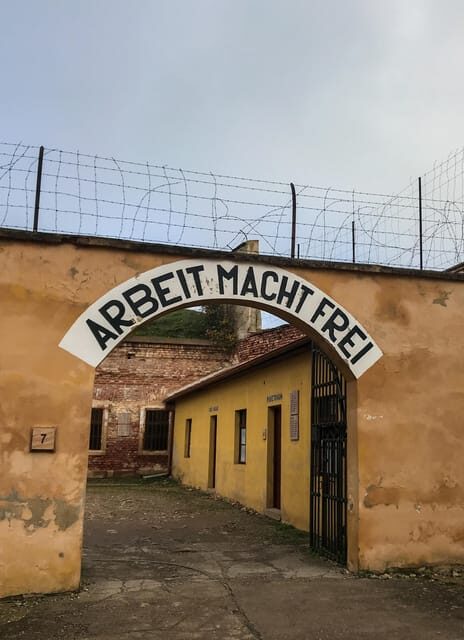
Even if the walking isn’t described in detail, you can plan for a long, on-foot segment. 3.5 hours is a real chunk of time in a concentration camp setting, so you’ll want to prepare mentally and physically.
A few practical tips that fit this kind of day:
- Wear comfortable shoes. The day is about paying attention, not battling sore feet.
- Bring a light layer if weather is changeable. You’re outside and you want your body to cooperate.
- Pace your questions. If something hits hard, it’s okay to pause and let the guide finish their context before you respond.
Because the tour includes water, you don’t need to worry about dehydration as much. Still, start the day hydrated.
And remember: the guide’s whole method is quality-focused, which usually means they will take time to explain. That’s not wasted time. It’s the point.
Price and value: is $114 actually fair?
The price is $114 per person, and the value comes from what’s bundled. You get transportation by car or minivan, all fees and taxes, and water, plus a professional guide. The group is very small—up to 6 participants—so you’re paying for both expertise and space.
What’s not included is entrance to the museum. So you should budget for that extra cost if you plan to enter museum areas tied to the visit.
Also consider what the “skip the ticket line” benefit means in practice. Since museum entrance isn’t included, you should assume you may still have some waiting depending on what you’re entering and when. The main value is that your guided flow is organized, and you’re less likely to waste time figuring things out.
All told, $114 looks reasonable when you compare it to the cost of a crowded tour plus the cost of private interpretation. Here, you’re getting the historian-led, context-heavy format with small-group comfort, and that’s hard to recreate on your own.
Who should book this Holocaust historian-led tour
This is a good match if you want more than a surface-level walkthrough. If you prefer a slower, respectful day with room for questions, the small-group setup is a big win.
It’s also a strong choice if you like context delivered in English with care. The tour description says it’s an English live tour guide, and one review specifically mentioned that the explanations worked for both adults and children. That suggests the guide can tailor the tone without turning it into entertainment.
If you’re the type who doesn’t want to bounce around without understanding what the places mean, this tour is built for you. The route includes the main concentration camp site elements, but it also includes stops like the hidden prayer room, the cemetery, and railway remains—details that help you understand the full human shape of the story.
And if you’re sensitive to crowds, you’ll appreciate that this is capped at 6. One review noted gratitude for not being in a large group, which is exactly the experience you want on a site like this.
Should you book this Terezin small-group tour?
Book it if you want a respectful, historian-led visit that connects the ghetto, the Small Fortress, and the smaller, meaning-rich stops like the prayer room, cemetery, and railway remains. The format is designed for focus: very small group, English guidance, transport included, and enough time on-site to make sense of what you see.
Don’t book it if you’re looking for a light, casual outing or if you want a strictly self-guided experience. This tour is built for serious learning, and the time on-site can feel intense.
If you’re on the fence, here’s your simplest decision test: do you want your visit explained in context by someone who treats the history carefully? If yes, this is a solid choice.
FAQ
Where is the meeting point for the tour?
The meeting point is metro Ládví. The guide will pick you up there with a car.
How long is the Terezin guided portion?
The guided tour in Terezin lasts about 3.5 hours.
What group size should I expect?
The tour is limited to a very small group, with a maximum of 6 participants.
Is the tour offered in English?
Yes, the live tour guide provides the tour in English.
Is the museum entrance included in the price?
No. Entrance to the museum is not included.
Does this tour help with ticket lines?
The tour includes a skip-the-ticket-line benefit, but museum entrance itself is not included.
Is free cancellation available?
Yes. You can cancel up to 24 hours in advance for a full refund.
Is pay later an option?
Yes. The option says reserve now & pay later, meaning you pay nothing today.