REVIEW · PRAGUE
Walking tour of Prague in french: Old Town & Charles Bridge
Book on GetYourGuide →Operated by Prague Découverte · Bookable on GetYourGuide
Prague makes sense on foot. This French walking tour links the Old Town’s big symbols to Charles IV’s 14th-century ambitions, then sends you to the best views over the Vltava from Charles Bridge. I like how the story stays concrete, from the Astronomical Clock’s details to the political shockwaves tied to the Czechs’ fight against Habsburg power, and you’ll notice how architecture and ideas share the same space.
What I love most are the emblematic stops packed into 90 minutes and the way the guide explains the city’s contradictions, especially around Old Town Square. One heads-up: it’s a short walk, so if you’re hoping to spend long minutes inside churches or with slow photo stops, you may want extra time on your own after the tour.
In This Review
- Key highlights you’ll actually feel
- Why this 90-minute French walk hits the right Prague highlights
- Meeting point on Celetná 601/5: get oriented before you start
- From Týn yard to Old Town Square: where commerce and power overlap
- Old Town Square’s face-off: Jan Hus vs the Marian Column
- The Prague Astronomical Clock: three time systems and a lot of meaning
- Small squares near Old Town: Malé Náměstí and Mariánské náměstí
- Hussite-era Prague at full scale: Our Lady before Týn and the reform story
- Charles IV’s birthplace, civic buildings, and the Renaissance “side quest”
- Clementinum and Saint Nicholas: the religious and scholarly atmosphere
- Karlova to Charles Bridge: a classic approach with photo-friendly payoff
- Guide quality matters: why Alexandre’s style shows up in the results
- Price and value: is $19 for 90 minutes a good deal?
- Who should book this Prague Old Town and Charles Bridge tour
- Should you book this Old Town & Charles Bridge walk in French?
- FAQ
- What language is the tour in?
- How long is the walking tour?
- What does it cost?
- Where do I meet the guide?
- Which areas does the tour cover?
- What’s included in the price?
- Is there free cancellation?
Key highlights you’ll actually feel
- French-led walking tour with a licensed local guide and a smooth pace for 90 minutes
- Old Town Square focus, including the faces-off monuments: Jan Hus and the Marian Column
- Astronomical Clock explanation, including how medieval Prague measured time in different ways
- Hussite Church threads, from Our Lady before Týn to the broader Reform-era story
- Charles Bridge viewpoints, with built-in chances for photos from a classic perspective
Why this 90-minute French walk hits the right Prague highlights
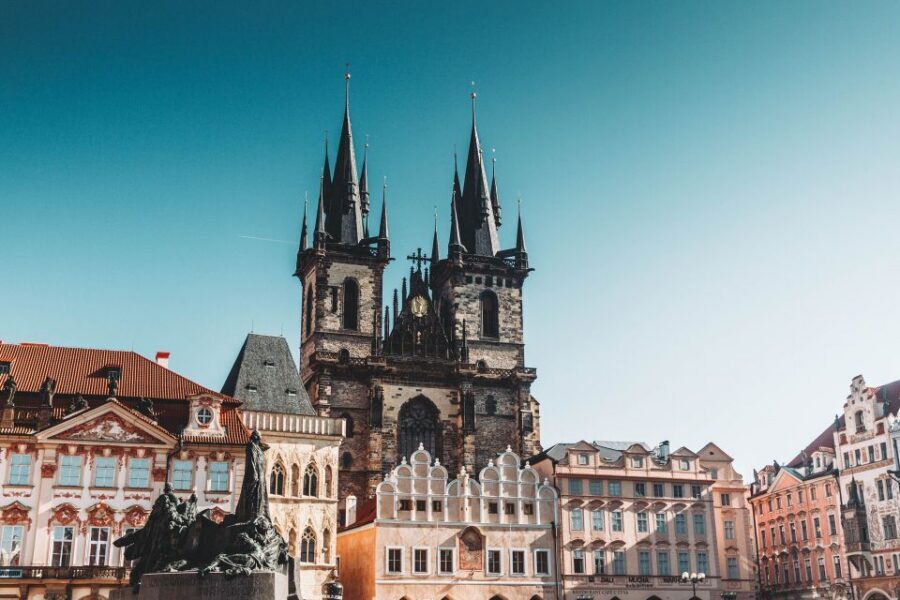
Prague can feel like a postcard until someone gives you the key. On this tour, you get the key fast. You’ll start in the Old Town area and move toward Charles Bridge, with the guide connecting what you see to what it meant when Prague was at its height. The result is practical: you stop looking at buildings as scenery and start reading them like history on stone.
I also like that it’s not just “here’s a church, here’s a square.” You get explanations tied to real turning points, including the rise of Charles IV (King of Bohemia and Emperor of the Holy Roman Empire) and the later tensions that helped shape the Thirty Years’ War. When your guide links cause and consequence, the city’s symbols stop being vague.
The group format and time length matter too. Ninety minutes is long enough to cover meaningful ground, but short enough that you’ll still have energy left to explore on your own afterward. If you’re doing a first trip and want your bearings quickly, this is a strong fit.
You can also read our reviews of more walking tours in Prague


Meeting point on Celetná 601/5: get oriented before you start
You meet at number 5 on Celetná Street, in front of the Swarovski shop. It’s an easy landmark to recognize, which is a small but real quality-of-life win when you’re navigating Prague for the first time.
You can reach it by metro at Staroměstská, Mustek, or Náměstí Republiky (lines A and B), or by tram at Jindřišská station (lines 3, 5, 6, 9, 14, 24). From the station exit, it’s about a 10-minute walk to the meeting spot.
Practical tip: plan to arrive a few minutes early. Not because you’ll be rushed, but because you’ll want a calm moment to scan the surroundings before the guide starts connecting the dots.
From Týn yard to Old Town Square: where commerce and power overlap
The tour begins with a short stop at the Týn yard and Ungelt area. This brief introduction matters because Old Town Square isn’t just a pretty hub; it grew alongside trade and civic life. Even the earliest moments of the walk set the tone: Prague isn’t only religious or royal. It’s also economic, political, and tightly organized.
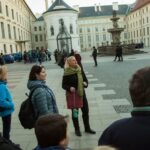
Then you move into Old Town Square, and this is where the tour earns its keep. Old Town Square is one of those places where you can look around for hours. The guide’s job is to keep you from doing a random wander. You learn what you’re seeing, and why opposing viewpoints were built into the square’s layout.
One helpful thing here is how the tour frames Prague’s Golden Age. When you understand that the city’s “great achievements” were launched in the 14th century under Charles IV, everything else starts clicking. You’re not just collecting sights; you’re following momentum.
Old Town Square’s face-off: Jan Hus vs the Marian Column
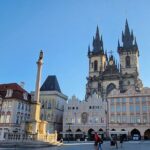
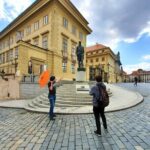
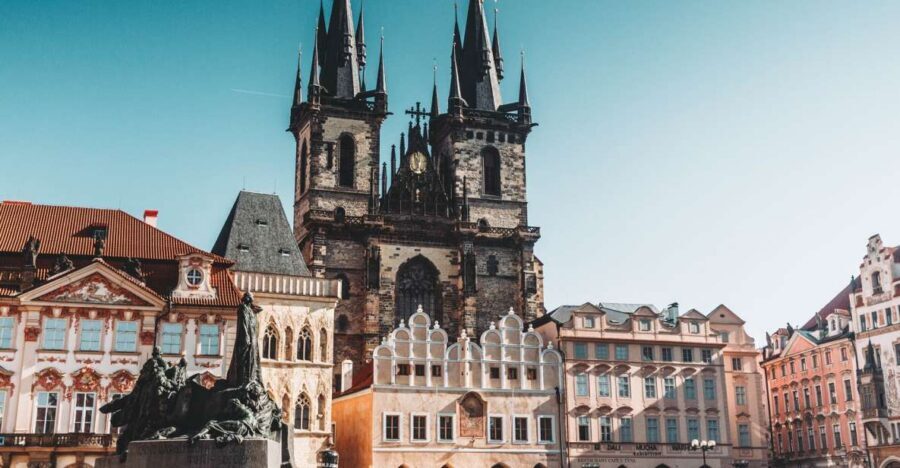
Old Town Square has a built-in argument. Two monuments face each other: the monument to Jan Hus and the Marian Column. The guide’s explanation is key. Rather than treating them as two random statues, you learn why they’re contradictory.
That contradiction is more than symbolism. It’s a snapshot of Prague’s religious and political tensions, and it helps you understand why later movements like the Hussite reform mattered so much. If you like travel that feels like turning pages, you’ll appreciate this part.
And this is also where the guide’s communication style shows. In the past, I’ve seen tours that throw facts at you. Here, the explanations feel organized: you understand what the monuments mean, then you move on with that context still in your head.
The Prague Astronomical Clock: three time systems and a lot of meaning
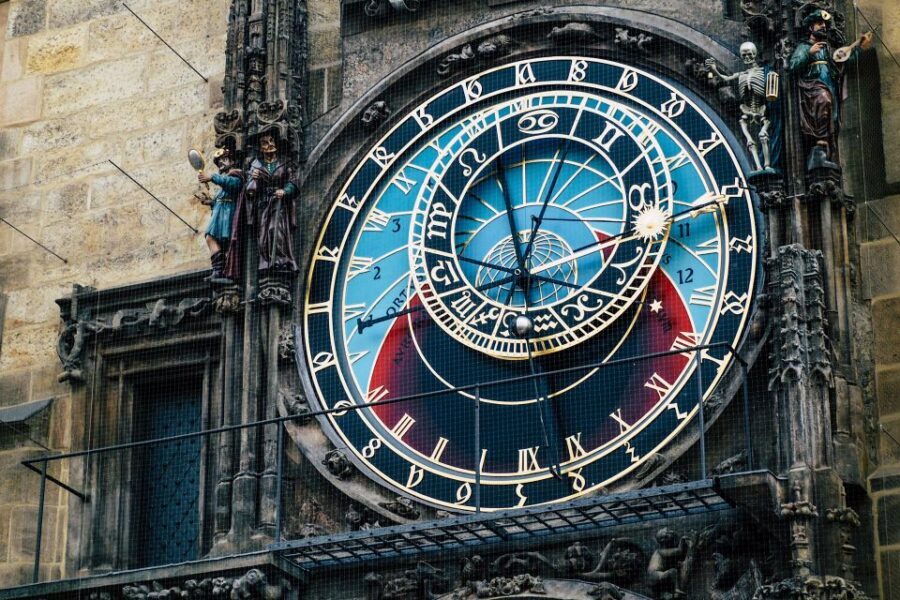
The Old Town Square segment includes a detailed description of the Astronomical Clock, and that’s one of the most useful parts of the tour. The clock isn’t just a mechanical attraction. The guide explains its many details and, importantly, the three time measurement systems used in the Middle Ages.
Why does that matter for your trip? Because it changes how you look at the clock. You’re no longer staring at something you can’t “decode.” You have a framework. You learn that time wasn’t one universal setting in the 1300s and 1400s, and that Prague reflected those multiple ways of measuring the world.
If you’re the kind of visitor who enjoys explanations more than pure sightseeing, this section will be a highlight. Even if you’re not a clock person, the story behind it gives you a sharper feel for medieval Prague.


Small squares near Old Town: Malé Náměstí and Mariánské náměstí
After Old Town Square, the tour moves through Malé Náměstí (a small square) and then Mariánské náměstí. These stops are short, but they’re not filler. They show a different side of the city’s rhythm.
Small squares help you slow down just enough to notice details you’d miss if you stayed only on the biggest viewpoints. This tour uses those micro-stops to keep the walk from feeling like a straight line from one landmark to another. You’re still learning, but you’re also building a sense of how Prague’s streets and public spaces connect.
If you’ve ever felt overwhelmed in Prague, this “smaller stop” approach is a smart way to stay oriented. It prevents the trip from becoming a blur of names.
Hussite-era Prague at full scale: Our Lady before Týn and the reform story
One of the tour’s big themes is the rise and development of the Hussite Church. You don’t get this as an abstract lecture. Instead, you see how religious identity appears in architecture and in major city landmarks.
A standout here is the Church of Our Lady before Týn. The guide presents it as a stronghold of the Hussite Church. Once you know that, the building reads differently. You’re not just admiring an old façade; you’re seeing a statement about belief and power in a city where religious politics had consequences.
The tour also links major events to later history. You learn how one famous defenestration helped spark the Thirty Years’ War, and what terrible consequences followed for the people of Bohemia. It’s heavy material, but it’s also the reason Prague’s history isn’t just decorative. Actions had outcomes, and the city remembers them in stone and street names.
Charles IV’s birthplace, civic buildings, and the Renaissance “side quest”
The walk includes several important structures tied to Prague’s civic and royal life.
You’ll hear about the Town hall and its successive extensions, which helps you understand that this wasn’t a one-time build. The city grew, changed, expanded, and kept updating its public face. You’ll also cover the Stone Bell House, which adds a flavor of local detail.
Charles IV’s birthplace is part of the story too. That matters because Charles IV isn’t just a name you’ve heard in passing. When your guide ties him to Prague’s achievements in the 14th century, you start seeing the “why” behind the city’s ambition.
And then you get a rewarding shift in style with the Kinsky palace and the Granovsky palace. The Granovsky palace is described as a masterpiece of Italian Renaissance. This is where Prague surprises people. Yes, you get medieval church drama and Hussite history, but you also get a strong dose of Renaissance influence. That architectural diversity is one of the tour’s pleasures: it keeps the city from feeling one-note.
Clementinum and Saint Nicholas: the religious and scholarly atmosphere
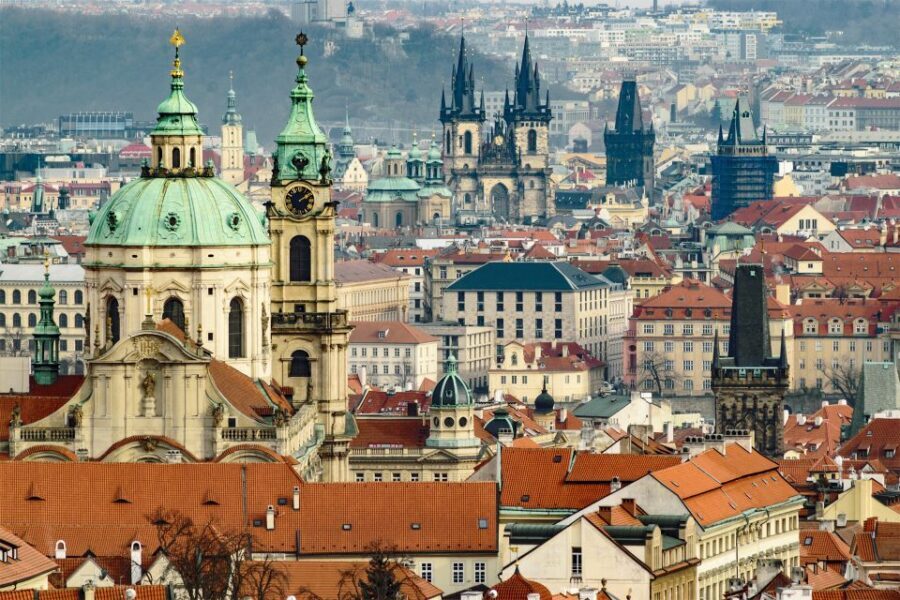
Two names you’ll connect during this stretch are the Clementinum and the churches of Saint Nicolas (of Staré Město). Even if your main interest is history, this part helps you understand Prague’s atmosphere.
The Clementinum is presented as a key stop in the walk, and the guide uses it to keep the broader story moving. Then Saint Nicholas brings you back to architectural meaning. These buildings help you see how Prague’s religious life and intellectual life likely overlapped in the way they shaped public space.
If you’re worried you’ll only get one type of content, don’t be. This tour balances political-religious story with concrete architectural stops, so you get context and visuals together.
Karlova to Charles Bridge: a classic approach with photo-friendly payoff
After the palace-and-church stretch, you follow Karlova toward Charles Bridge. This portion acts like a transition. It’s where you feel the change from Old Town’s dense symbol-layers to a broader viewpoint over the river.
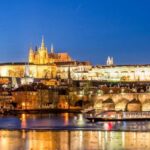
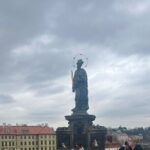
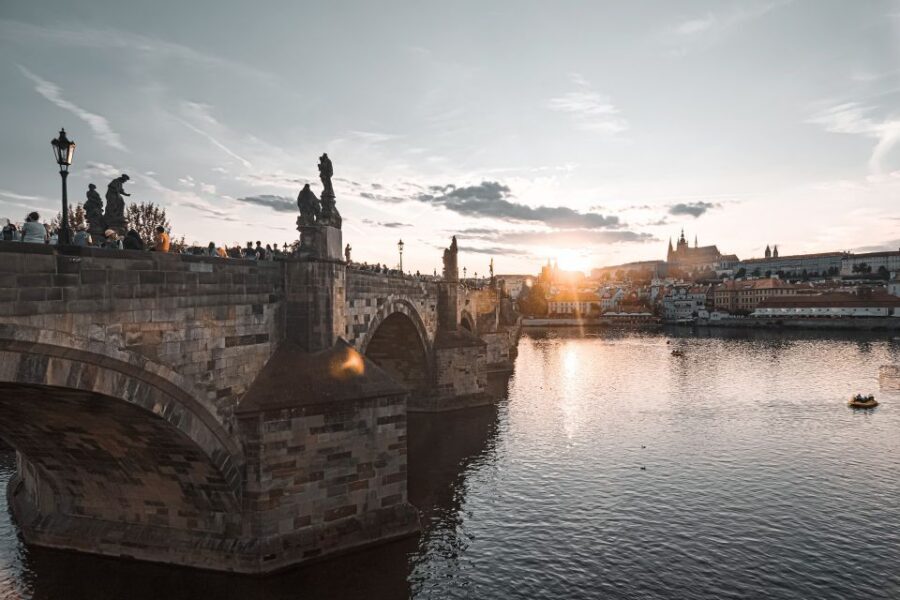
The tour explicitly sets you up for unique views of the city from Charles Bridge and offers chances to make unique photographs. Even if you think you already know the famous bridge, you’ll likely enjoy how the guide times explanations so you’re not only looking down; you’re also learning what the view represents.
And here’s a practical thing to remember: if you want the best photos, keep your camera ready during the explanation. The guide’s narrative is what makes the angle worthwhile, not just the scenery.
Guide quality matters: why Alexandre’s style shows up in the results
The tour is led in French by a licensed local guide. In the feedback you’ve seen, the name Alexandre stands out. People describe him as sharing a deep base of history and staying attentive to the group.
That matters more than it sounds. A good walking guide doesn’t just know facts. He knows how to pace them, how to explain connections clearly, and how to keep a group feeling included. From what’s reflected in the ratings, this tour’s strength is that you come away feeling informed, not just entertained.
A balanced note for you: because it’s in French, your experience will feel best if you’re comfortable listening in French at a natural speaking pace. If your French is basic, you may still enjoy the sights and catch the main story beats, but you’ll get more if you can follow the explanations.
Price and value: is $19 for 90 minutes a good deal?
At about $19 per person for a 90-minute French walking tour, the value is strong if your priority is context. You’re not paying for transport or entry tickets. You’re paying for guided interpretation by a local guide with a licensed background and a clear thematic route from Old Town Square to Charles Bridge.
That’s the key: this tour is built to compress a lot of meaning into a short time. In other words, it’s a first-day helper. If you’re spending a few days in Prague and want to understand the city’s major symbols quickly, this price is reasonable.
If, on the other hand, you’re already fluent in Czech history and you mainly want slow museum-level detail, you might prefer to spend your time more independently. But for most visitors, the time-to-understanding ratio here is what makes it worth it.
Who should book this Prague Old Town and Charles Bridge tour
You’ll love this tour if:
- You want Prague’s key landmarks explained in French
- You’re interested in Charles IV, the Hussite Church, and why religious politics shaped the city
- You like structured walking routes that end with a great viewpoint (Charles Bridge)
- You want photo opportunities tied to real context, not random snapshots
You might skip or pair it differently if:
- You want longer church visits or slower “street photography” time
- You’re not comfortable with French narration
- You’re expecting a full-day deep study (this is 90 minutes, so it’s focused)
Should you book this Old Town & Charles Bridge walk in French?
If you want Prague to make sense quickly, I think you should book it. The route links major sites like Old Town Square, the Astronomical Clock, Our Lady before Týn, and Charles Bridge into one coherent story, with a strong emphasis on Prague’s reform-era conflicts and the lasting effects on Bohemia. Add in the consistently high ratings for guide attentiveness, and you have a tour that feels like good planning, not just a standard sightseeing loop.
If you’re visiting in February or any cool month, consider wearing layers. This is a walking tour, and being comfortable makes the explanations easier to enjoy.
FAQ
What language is the tour in?
The tour is offered in French with a live guide.
How long is the walking tour?
It lasts about 90 minutes (approximately 1.5 hours).
What does it cost?
The price is listed as $19 per person.
Where do I meet the guide?
You meet at number 5 on Celetná Street, in front of the Swarovski shop.
Which areas does the tour cover?
It focuses on Prague’s Old Town area and Charles Bridge, including stops such as Old Town Square and Charles Bridge, plus smaller nearby squares and major landmarks along the route.
What’s included in the price?
A local guide licensed by the Czech Ministry of Tourism and the walking guided tour in French are included.
Is there free cancellation?
Yes. Free cancellation is available up to 24 hours in advance for a full refund. You can also reserve now and pay later.