Prague changes mood fast when you get the 20th-century story. This World War II and Communism tour pairs walking with local, human-scale context, so the city feels like more than old stone. I especially love how the route uses off-the-beaten-track stops like the St Cyril and St Methodius Cathedral crypt, not just the usual postcard sights.
I also like the fact that it includes public transportation, which makes it easier to keep your day moving without stress. And the tour has a small cap of 30 people, which helps the guide keep answers clear and direct.
One thing to consider: the subject matter is serious, and you’ll be standing and walking for about 2.5 hours, so this isn’t the best pick if you want a light, casual sightseeing stroll.
In This Review
- Key points to know before you go
- How this WWII-and-Communism walk really connects the dots
- Getting oriented at Týnská and easing into the story on Old Town Square
- Inside St Cyril and St Methodius Cathedral crypt: the moment history becomes physical
- Finishing on the square tied to the Velvet Revolution
- Public transportation included: why it’s a real value, not a throwaway feature
- Guides: the difference between facts and understanding
- What the itinerary does well (and where you should adjust expectations)
- Who this tour is best for (and who might prefer something else)
- Price and what you actually get for $34.84
- Tips to make the most of the tour
- Should you book the World War II and Communism Tour?
- FAQ
- What is the duration of the World War II and Communism Tour in Prague?
- Where does the tour start?
- What time does the tour begin?
- What language is the tour offered in?
- What is included in the price?
- What is not included?
- How many people are in a group?
- Can I cancel for a full refund?
Key points to know before you go
- WWII-to-Communism timeline in one walk with practical, place-based explanations
- St Cyril and St Methodius Cathedral crypt included so you can see the setting up close
- Public transportation included to reduce backtracking and walking fatigue
- Local guides with strong storytelling (I like hearing how events affected ordinary people)
- Small group size (max 30) keeps the pace manageable and questions welcome
- Ends where the Velvet Revolution is remembered, tying the story to modern Prague
How this WWII-and-Communism walk really connects the dots
Prague is beautiful in the obvious ways. It’s also layered in ways you’ll miss if you only follow the same sightseeing loop. This tour’s big value is that it links World War II resistance and the rise of Communism to the specific streets and buildings you can actually stand in.
The format is simple: you meet, you walk, you pause, and you go inside one key site—the Cathedral crypt. The guides I saw highlighted most often (names like Phil, Adam, Zach, Tony, and Analise) seem to have a gift for explaining complicated political change in plain language. That matters because Prague’s 20th century is not one neat story; it’s a series of shifts that overlap, collide, and leave marks on daily life.
The tour also leans into local perspectives. I like when a guide can connect the official dates to feelings—fear, courage, propaganda pressure, and the slow reshaping of what people thought was possible.
You can also read our reviews of more tours and experiences in Prague.
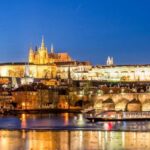

Getting oriented at Týnská and easing into the story on Old Town Square
The tour starts at Týnská 639/4, Staré Město, 110 00 Praha-Praha 1, with a scheduled meeting at 2:30 pm. You’ll meet your guide at Discover Prague Tours, then get oriented before the walk really gets going.
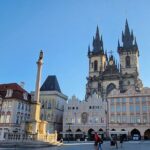
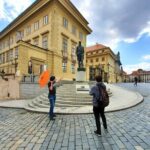
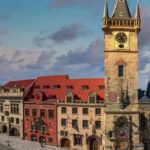
A short early segment includes a stroll through the Old Town Square area. Even if you’ve already seen this part of Prague, I’d still keep an open mind here. The guide uses the surroundings as a springboard, which is a fast way to stop thinking of history as a textbook and start thinking of it as geography. You’ll be less likely to feel lost later, especially once you move into the more specific WWII and Communist-era connections.
Practical tip: since this is a walking tour, it helps to arrive a few minutes early. Prague sidewalks can be uneven, and you’ll want to get comfortable before the pace picks up.
Inside St Cyril and St Methodius Cathedral crypt: the moment history becomes physical
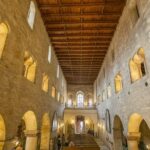
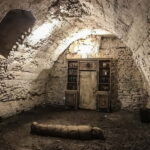
The heart of the experience is the stop at St Cyril and St Methodius Cathedral. You go inside and the tour includes time to enter the crypt, with the entrance ticket included.
What I like about this stop is that it gives you a concrete setting for the WWII story. Some of the strongest reactions in the feedback you provided call this place moving—specifically linked to a church connected to where the assassins hid. Even if you don’t come in with detailed knowledge, the crypt stop gives you a real sense of atmosphere and consequence. A guide can point out how an ordinary building becomes part of resistance, danger, and history under pressure.
This is also the point where the tour’s tone matters. Guides highlighted a balance of solemn moments and human clarity. That balance helps you absorb heavy events without it turning into a lecture where your brain checks out.
How long will you be there? The Cathedral stop is about 20 minutes. That’s enough time to see the space and hear the story, without dragging the tour into museum-length territory.
Finishing on the square tied to the Velvet Revolution
The tour ends back near the meeting point, and one of the closing beats is finishing on the square connected to where the Velvet Revolution happened. This ending matters because it gives you a full arc: WWII resistance and Communist rule are not just “then.” The story reaches the late 1980s and the political shift that reshaped Czechoslovakia.
I like tours that don’t stop at 1945. Prague’s later transformation is where a lot of modern Prague’s identity makes sense. If you’ve ever wondered why certain places feel like they hold their breath, this ending helps you understand that the city kept moving even when politics tried to freeze it.
And because the tour is a walking route using included public transportation, you’re not stuck plotting how to reach the next stop. You can stay focused on the explanation instead of the commute.
Public transportation included: why it’s a real value, not a throwaway feature
A lot of history tours advertise walking, then secretly make you do the hardest part—transfers—on your own. Here, public transportation is included, which changes the feel of the day.
It means you can:
- Keep the tour’s pacing intact
- Spend your energy on seeing, not navigating
- Avoid the common Prague problem of walking too much too early and running out of steam by the crypt stop
Also, because the group is capped at 30 travelers, the logistics tend to be easier for a guide to manage. I don’t need the tour to be fancy; I need it to be smooth.
If you’re planning your day around other sights, think of this as a structured block. The 2 hours 30 minutes (approx.) duration is long enough to feel substantial, but short enough to still fit into a full Prague itinerary.


Guides: the difference between facts and understanding
The most praised aspect across the feedback you shared isn’t just the content—it’s how the guides speak. Names like Phil, Adam, Tony, Zach, and Analise show up repeatedly, along with comments about how they can answer questions and explain complex ideas in simple words.
That’s not a small detail. WWII and Communism can sound like a chain of acronyms and dates. A strong guide turns those into cause-and-effect. One guide was specifically praised for explaining how the Nazi Party rose to power in Germany in a way that made the chain of events feel more sensible and comprehensible. Another was praised for making the drama and emotions land, not just the timeline.
I also appreciate when guides add what Prague feels like now. Several comments referenced how the guide connected the past to Prague today. That’s where understanding sticks, because you start noticing how history lives in the city’s layout and public memory.
What the itinerary does well (and where you should adjust expectations)
This tour is designed to do three things in one package:
- Show you where key WWII and resistance stories connect to Prague
- Explain how Communism shaped daily life and politics
- End with the Velvet Revolution, so the story has a modern payoff
The tour structure supports that. You don’t just watch history unfold behind glass; you see it in streets, squares, and inside a significant religious site.
Where expectations should be realistic: this is not a light comedy tour. The topic is heavy, and the emotional weight can hit harder if you’re visiting during remembrance dates. One of the feedback examples mentions doing the tour on Remembrance Sunday, which felt especially poignant. If you can match the tour to a meaningful date, the experience may land more strongly.
Who this tour is best for (and who might prefer something else)
This one is a great fit if you:
- Want context behind Prague’s political evolution, not just sightseeing
- Like walking tours that include a real interior stop
- Enjoy history but don’t want to feel buried under academic jargon
- Prefer a guide who can answer questions and keep the pace steady
You might think twice if you:
- Want a casual, carefree afternoon with minimal standing
- Are looking for a purely architectural focus
- Don’t want to spend time on serious WWII and Communist-era themes
The tour calls for moderate physical fitness, which usually means you should be comfortable walking through uneven old-city areas and standing for explanations. If that’s not your strength, choose shorter or more seated options.
Price and what you actually get for $34.84
At $34.84 per person, this tour sits in a sweet spot: you’re not paying museum-level prices for a long indoor experience, but you are paying for guide time, a structured route, and an included entrance ticket.
What you’re getting that you’d likely pay for separately:
- Public transportation included
- Entrance ticket to St Cyril and St Methodius Cathedral (crypt stop included)
That “included transport + included ticket” combination is a big part of the value. It reduces friction in your day and removes two cost items that add up quickly when you’re traveling.
And the feedback you shared leans heavily toward value: people were quick to recommend it for both information and price. You shouldn’t expect luxury. You should expect clarity, context, and a guide who works hard to make you understand why the story matters.
Tips to make the most of the tour
- Bring a small notepad or use your phone notes. WWII-to-Communism timelines are easier to remember when you can jot a few dates or names your guide mentions.
- Wear comfortable shoes. The route is a walking experience, and the timing is built around staying on schedule.
- If you have specific questions (about resistance, life under Communism, or Prague’s late-20th-century transition), save them for when the guide pauses. The best guides in the feedback were specifically praised for answering questions directly.
- If you’re visiting around solemn dates like remembrance events, consider how the setting and season might affect the tone. A tour on a commemorative day can feel different in a good way.
Should you book the World War II and Communism Tour?
Book it if you want Prague to make sense beyond postcards. The biggest reason to choose this tour is that it doesn’t treat WWII and Communism as distant history. It places the story into real locations—including the Cathedral crypt—and ends with the modern political shift tied to the Velvet Revolution.
Skip it (or choose a different style) if you prefer a lighter atmosphere, or if the idea of spending a couple hours focused on 20th-century conflict is not your thing. Also, if walking is tough for you, look for a tour with less standing.
If you’re on the fence, I’d treat this like a “foundation tour.” Once you understand the WWII-to-Communism arc here, the rest of Prague tends to click into place much faster.
FAQ
What is the duration of the World War II and Communism Tour in Prague?
The tour lasts about 2 hours 30 minutes.
Where does the tour start?
It starts at Týnská 639/4, Staré Město, 110 00 Praha-Praha 1, Czechia.
What time does the tour begin?
The start time shown is 2:30 pm.
What language is the tour offered in?
The tour is offered in English.
What is included in the price?
Included are public transportation and the entrance ticket to St Cyril and St Methodius Cathedral.
What is not included?
Food and drinks and lunch are not included.
How many people are in a group?
The tour has a maximum of 30 travelers.
Can I cancel for a full refund?
Yes. You can cancel up to 24 hours in advance for a full refund.