REVIEW · PRAGUE
Back In Time: Zážitkové muzeum historie
Book on GetYourGuide →Operated by Máj - House of Fun · Bookable on GetYourGuide
History you can walk into for an hour. Back In Time Prague is a hands-on museum experience that mixes interactive exhibits with 5D cinema to make Czech history feel current. You move through themed rooms that spotlight major eras, from medieval Prague to the Prague Uprising, using modern tech alongside authentic-style scenes.
I especially like how the story is broken into clear, memorable chapters: Libuše and the founding of the city, Charles IV and how he actually lived, and the real-life angle behind the astronomical clock. I also love the energy of the 5D cinema segment, where the screen comes to life and you get a real adrenaline hit. The main drawback to know: at only one hour, the history can feel fast, and the narration or depth may not satisfy you if you want a more detailed, academic treatment.
If you’re planning Prague with kids, or you want something schools can use to make history less dry, this is built for that. Just check the entry limits first: it’s not for people with epilepsy or claustrophobia, and it’s also not recommended for pregnant women. If you’re in that group, skip it for comfort and safety.
In This Review
- Key highlights at Back In Time Prague
- Back In Time Prague: walking history in one focused hour
- The Time Machine start: getting your bearings fast
- Middle Ages to Renaissance via interactive Prague scenes
- Legend of the golem: when folklore gets a role
- Libuše and the founding of Prague: myth and origin story together
- King Charles IV: seeing the person, not only the title
- Hall of Fame: famous names as a timeline shortcut
- The astronomical clock story: more than just a landmark
- Prague Uprising: the emotional historical turning point
- 5D cinema: the adrenaline moment you’ll remember
- Pricing and value: is 18 dollars worth it?
- Who should go to Back In Time (and who should skip it)
- Timing your visit with the rest of Prague
- Book it or skip it: my honest call
- FAQ
- How long is the Back In Time Prague experience?
- What is the price per person?
- Is it suitable for young children?
- What height requirement is there?
- What’s included with the ticket?
- Is it wheelchair accessible?
Key highlights at Back In Time Prague
- A 5D cinema finale that adds real adrenaline to the museum
- Interactive scenes that walk you through Prague’s big turning points
- Time Machine start that gives you a simple way into the timeline
- Libuše, Charles IV, and the astronomical clock covered as full stories, not just names
- Legend of the golem plus Prague’s uprising history in themed stops
- Family and school friendly pacing for a one-hour visit
Back In Time Prague: walking history in one focused hour
Back In Time Prague is a museum you move through, not a museum you stand and read in for hours. The vibe is practical: you get the timeline in chunks, then you jump to the next scene, with technology helping explain what you’re looking at.
The smart part is the duration. For many visitors, an hour is the sweet spot in a city like Prague, where you’re balancing outdoor sights with indoor breaks. You’ll finish feeling like you have context for what you’ll see later around town, even if you don’t become a history expert by the end.
And for kids, the format matters. This place is built around making history visible and physical, with entertainment woven into the learning. If you want something that doesn’t require constant adult translating, this is one of the better options in Prague for family time.
You can also read our reviews of more tours and experiences in Prague.


The Time Machine start: getting your bearings fast
You begin with the museum’s time machine framing device. Even if you’ve never thought of Prague’s history as a story you can experience, this kind of “start point” helps you connect the eras without getting lost.
What I like here is the clarity of structure. You’re not thrown into random displays. Instead, the experience guides you through major periods—so when you later see the real city landmarks, you’ll likely remember what era they belong to and why it mattered.
A possible downside is also tied to that structure. If you prefer deep storytelling, the time machine setup can feel like a shortcut. In other words, it helps you get oriented, but it doesn’t promise a slow, detailed lecture.
Middle Ages to Renaissance via interactive Prague scenes
The museum’s core concept is interactive exhibits paired with authentic-style scenes. You’ll see scenes that represent life in major periods, including the Middle Ages and the Renaissance. Modern technology is used to explain the context while you’re inside the environment.
This is where the experience earns its ticket price. Instead of learning Prague history as a list, you’re learning it as you go room to room. That makes it easier for children to remember the big moments, and it helps adults build a mental map too.
For practical planning: treat this part like a walking route with stops. If you try to read every label like you’re in a library, you’ll slow the pace and may feel rushed later when you reach the cinema segment.
Legend of the golem: when folklore gets a role
One of the themed sections is the legend of the golem. This matters because Prague’s story isn’t only battles and rulers. Folklore is part of what makes the city feel like itself.
I like how this section can keep the museum from becoming too academic. It gives you a different entry point—one that’s easier for many families to engage with. Even if you’ve heard the golem story before, the way it’s presented inside a themed museum stop is often more memorable than a quick anecdote.
If you care about strict historical accuracy for every folklore element, keep expectations flexible. This is an experience museum, so the focus is on storytelling and atmosphere as much as it is on academic detail.
Libuše and the founding of Prague: myth and origin story together
The experience includes the founding of the city of Prague by Libuše. That’s a big one because it’s the kind of origin narrative that shows up again and again in the city’s identity.
What’s useful for you is the cause-and-effect feeling this setup can create. Even if you already know Prague has legendary beginnings, this museum style tends to make the origin story feel connected to later eras—so you’re not just collecting random facts.
Keep in mind: you’ll likely move through this section quickly. The museum is designed as a one-hour hit, so the goal is takeaway understanding, not exhaustive coverage.






King Charles IV: seeing the person, not only the title
Another named highlight is King Charles IV and what his real life was like. This is a clever angle because it turns a famous ruler into a more human figure.
I find that approach helps you connect to the places and institutions Prague is famous for. When you understand what kind of leader Charles IV was, and how daily reality might have shaped decisions, later sightseeing can click into place.
There’s also a practical benefit. If you’re traveling with mixed ages—adults who want context and kids who want action—Charles IV’s story can be a good “middle” chapter. It’s recognizable, but it doesn’t have to be heavy to be interesting.
Hall of Fame: famous names as a timeline shortcut
The experience includes a hall of fame area. Even without getting buried in detail, hall-of-fame style sections work well for building a quick mental roster of key figures and moments.
This is the part of the museum that can help you plan the next step of your trip. After you leave, you’ll know which names or events you want to chase around Prague, whether that means reading more on your own or spotting connections on the streets.
The trade-off: hall-of-fame sections are rarely for people seeking deep, long explanations. If you want a textbook, this won’t replace one. If you want a guided route that sets your curiosity in motion, it’s a good use of time.
The astronomical clock story: more than just a landmark
You’ll also see the founding of the astronomical clock and the real story. Prague’s clock is one of those sights where many people get excited on arrival, but don’t always know what makes it historically important beyond the view.
This stop is valuable because it gives you meaning before you stand in front of the real landmark. When you understand the clock’s backstory, the mechanical wonder feels less like a photo-worthy surface and more like an achievement tied to people, effort, and ideas.
For best results, don’t treat it as a “quick look.” Pay attention to what the museum is saying about the clock’s origins and why it mattered in its time. That attention tends to pay off when you revisit the real thing afterward.
Prague Uprising: the emotional historical turning point
The museum includes Prague Uprising content. This kind of section matters because it brings tension into the experience. It’s not only about big rulers and inventions; it’s about people, conflict, and historical change.
I like that the museum uses themed presentation to keep this heavy subject from becoming only dates on a wall. For students or families, that can make discussion easier later. It gives you something concrete to ask about, rather than a vague feeling of unrest.
The caution is the same as the whole experience: time is limited. You’ll get a clear sense of the uprising as a turning point, but you won’t get every nuance. If you want more depth, you’ll likely use this visit as a stepping stone.
5D cinema: the adrenaline moment you’ll remember
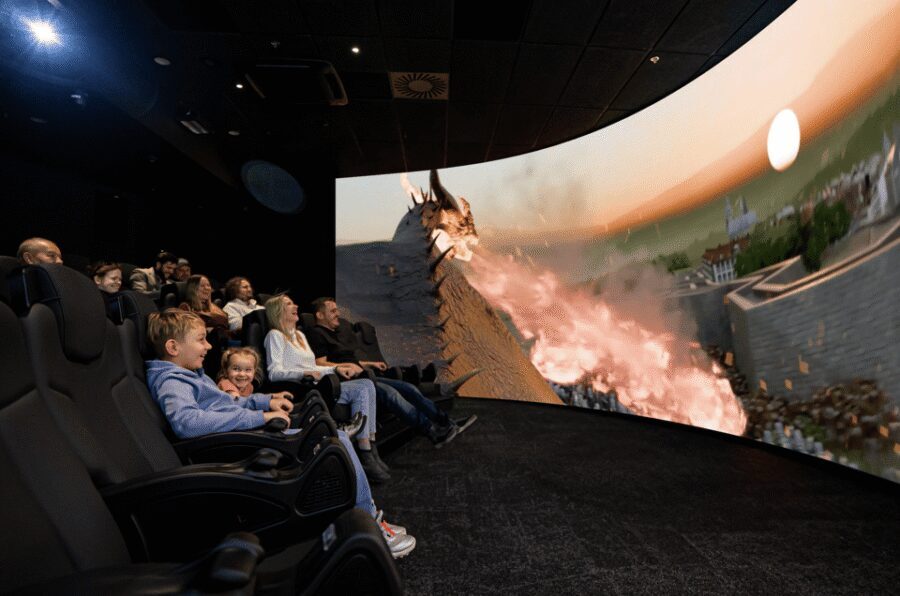
Now for the part many people talk about: the 5D cinema experience. The description is straightforward—watch the screen come to life, and expect a good dose of adrenaline.
In experiences like this, 5D can be a double win: it’s fun for kids, and it helps adults pay attention without feeling like they’re stuck in a classroom. It also gives your brain a break from reading while still keeping you inside the same historical theme.
If you have concerns about sensory effects, treat this seriously. The museum already notes that entry is prohibited for people with claustrophobia and epilepsy. Even if you’re not in those categories, be honest with yourself about motion, sudden effects, or intense visuals.
Pricing and value: is 18 dollars worth it?
The price is listed at $18 per person, and I think it can be good value if you match the experience to your goals. You’re paying for a curated one-hour format that includes interactive exhibits plus a 5D show, with multiple major Prague history chapters included.
Where the value lands depends on you:
- If you want a family-friendly “history plus fun” stop, this is strong value because the content is packaged for shorter attention spans.
- If you want a deep, slow history course, $18 won’t buy that level of depth in just an hour.
One review noted it was well organized but that the history storytelling felt weak and content felt limited. That comment lines up with the structure. You shouldn’t expect a lecture; you should expect a guided primer with entertainment.
Who should go to Back In Time (and who should skip it)
This experience is ideal for:
- Families with children who enjoy hands-on exhibits and tech-driven storytelling
- Schools or groups that want a more engaging format than standard classroom materials
- Adults who like history but don’t want a full-day museum commitment
It’s also wheelchair accessible, which is a big practical plus for Prague sightseeing planning.
Important safety and suitability notes from the experience rules:
- Entry is prohibited to people with epilepsy, claustrophobia, or heart disease
- Not suitable for pregnant women
- Children must meet age and height rules: open to children from 6 years and persons taller than 110 cm
- Not suitable for people under 3 ft 6 in (110 cm)
If you or someone in your group is close to these limits, take the rules seriously. A fast-paced, tech-heavy show isn’t the place to “wait and see.”
Timing your visit with the rest of Prague
Because the duration is about 1 hour, I recommend pairing it with a day that has lots of outdoor walking. Treat it like your indoor reset.
A simple approach:
- Go after a morning of major sights to refuel and get history context.
- Or use it as a calm-down activity after a busy afternoon, when kids and adults start to feel overstimulated.
You’ll also likely leave with new names and stories to follow outside the museum. That’s one of the best ways to get value in Prague: turn an indoor experience into a map for what to look up next.
Book it or skip it: my honest call
I’d book Back In Time Prague if you want a short, entertaining history primer that works well for families and students, and you don’t mind that it’s not meant to be an all-day deep dive. The interactive chapters plus the 5D cinema are a great combination when you’re trying to make Prague’s past feel tangible.
I’d skip it if you need detailed storytelling, because the pacing is tight and the content may feel thin if you’re craving nuance. I’d also skip if you have any of the listed medical or comfort issues—epilepsy, claustrophobia, heart disease—or if anyone in your group is pregnant.
If you’re in the middle—curious, short on time, and traveling with people who want fun while learning—this is a solid bet.
FAQ
How long is the Back In Time Prague experience?
The experience lasts about 1 hour.
What is the price per person?
The listed price is $18 per person.
Is it suitable for young children?
It’s open to children from 6 years old. Entry is prohibited for children under 6, and it also has a height limit of 110 cm.
What height requirement is there?
People under 110 cm (3 ft 6 in) can’t enter.
What’s included with the ticket?
The ticket includes interactive exhibits and a 5D cinema experience, plus themed parts such as the time machine, legend of the golem, Libuše’s founding story, King Charles IV, a hall of fame, the astronomical clock story, and the Prague Uprising.
Is it wheelchair accessible?
Yes, the experience is wheelchair accessible.