REVIEW · PRAGUE
Classic Prague Castle Tour, Strahov Monastery & Castle District
Book on Viator →Operated by Prague Pulse Tours · Bookable on Viator
Prague Castle hill is more than postcards. I love that this tour starts with practical public-transport tips in Klarov Park, and I love the top-to-bottom story thread that connects Strahov Monastery with the Castle District and St. Vitus Cathedral. You’ll get a guided walk that makes the setting feel logical, not random.
One catch to plan for: there’s a lot of uphill walking on cobblestones, and you may still need separate tickets for interior areas like parts of the cathedral.
In This Review
- Key Highlights That Make This Tour Worth It
- Starting at Josef Manes and Ending by the Castle Ramparts
- Klarov Park: Get Your Bearings Using Prague Public Transport
- Strahov Monastery and the Brewery Stop Up on the Hill
- Strahov Library: Stories and Curiosities You Can’t Google Quickly
- A Castle District Walk That Connects the Dots
- Entering Prague Castle: Main Gate Orientation and 1000+ Years in Context
- Courtyards 4 and 2: Learning the Castle’s 20th-Century Touches
- St. Vitus Cathedral: What to Notice (Even if You Don’t Go Inside)
- Third Castle Courtyard and the Presidential Office View Angle
- Old Royal Palace: One Building, Many Architectural Revisions
- Gardens Below Prague Castle (Mar–Oct): Best City Views and the 1618 Link
- What You Get for the Price (and Where Extra Costs May Appear)
- Timing, Walking, and the Cobblestone Reality
- Guide Style: Why Names Like Dylan, Aris, and Lyle Matter
- Should You Book This Prague Castle Tour With Strahov Monastery?
- FAQ
- How long is the Classic Prague Castle Tour, Strahov Monastery & Castle District?
- What language is the tour offered in?
- Are paid monument entrance fees included?
- Do I need a public transport ticket?
- When can I visit the Gardens Below Prague Castle?
- Can I cancel for a full refund?
Key Highlights That Make This Tour Worth It
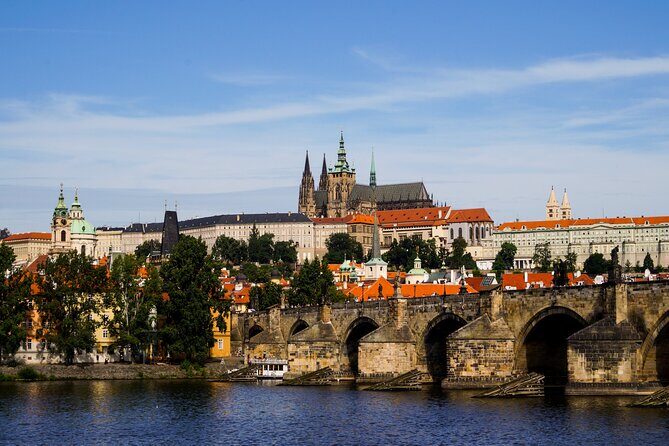
- Klarov Park start: quick instruction on how to handle Prague’s public transport before you climb
- Strahov Monastery hilltop setting: monastery views plus small “wait, what is that?” moments
- Strahov Library stop: a guided look at the building’s stories and odd curiosities
- Castle District route: palaces and courtyards along the way, not just the main sights
- St. Vitus Cathedral positioning: a structured look at the cathedral’s importance, with what to watch for
- Seasonal gardens: best views and the Prague 1618 defenestration spot when open (Mar–Oct)
Starting at Josef Manes and Ending by the Castle Ramparts
This tour begins at the Josef Manes monument in Prague 1, near Alšovo nábř., which is a smart base if you’re already staying in the Old Town area. You’ll finish at Hradčany 192 in Hradčany, with the walk ending near the Prague Castle ramparts and a short stroll (about 7 minutes) back toward the meeting point area.
The feel is “walk-smart.” The guide doesn’t just point at buildings. You learn how the area fits together, and you get coached on how to move through it efficiently.
The group size is capped at 30 people, so you’re not trapped in a slow-moving conga line. And it’s run in English with a mobile ticket, which is convenient when you’re bouncing between multiple sites.
You can also read our reviews of more tours and experiences in Prague.


Klarov Park: Get Your Bearings Using Prague Public Transport
The first stop is Klarov Park, and it’s a sneaky-good opener. Instead of starting with tickets and towers, the guide uses the park to explain how to handle Prague transit basics so you can connect routes later.
That matters because the Castle District isn’t a single point you walk to from your hotel. It’s a hillside zone with different entry points, staircases, and viewpoints. Learning the rhythm early helps you avoid wasting energy later.
If you like practical tips, this is where the tour starts paying off.
Strahov Monastery and the Brewery Stop Up on the Hill
Next you head to Strahovsky Klaster, the monastery perched at the top of the Castle District hill. This stop is more than a quick photo break. The guide frames what you’re seeing, so the monastery feels like part of the larger hilltop story rather than a standalone stop.
You’ll also see the Monastery Brewery. Even if you’re not there for beer history, it adds texture. It reminds you this place wasn’t built to be museum-clean. It’s tied to real life in the area.
One more point: because Strahov sits high, you tend to get better sightlines as you move. That makes the tour’s early climb feel worth it.
Strahov Library: Stories and Curiosities You Can’t Google Quickly
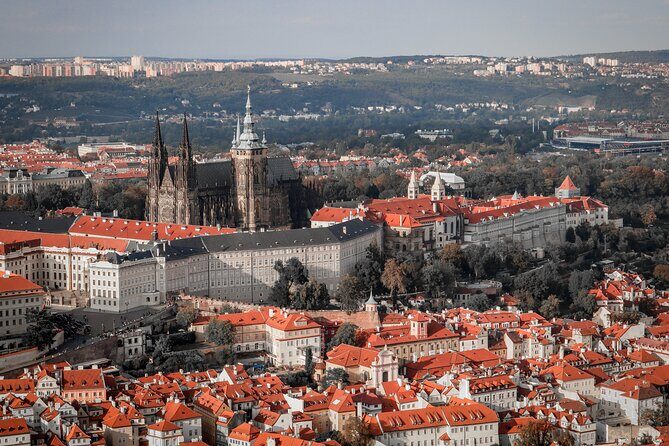
After the monastery, you’ll reach the Strahov Library, where the focus shifts from religious grandeur to something more human: stories and odd details inside the collection.
The tour time here is short, so don’t expect a slow museum pace. Instead, you’ll learn what to look for and why certain details are worth noticing even if you’re skimming.
This stop works especially well if you like “how did this place end up like this?” thinking. The guide helps you see patterns, not just artifacts.
A Castle District Walk That Connects the Dots
From Strahov, you continue through the Castle District on foot. This part is valuable because it turns the area into a coherent route.
You’ll pass by Cernin Palace, where the guide explains the story tied to Prague’s most recent defenestration. It’s not just a spooky anecdote. It’s also a way to understand how dramatic events leave fingerprints on the city’s memory.
Then you’re in the zone of main square views and Schwarzenbersky Palac, famous for its sgraffito architecture. This is the kind of detail that’s easy to miss if you’re rushing. With a guide, you get pointed to the visual trick that makes the facade feel almost alive.
And that “walk it” approach is one of the reasons this tour fits first-timers well. You leave with a mental map, not just a list.





Entering Prague Castle: Main Gate Orientation and 1000+ Years in Context
When you reach Prague Castle, you get a pre-entry orientation first. The guide explains the Castle complex and its founding over 1000 years ago, while you’re looking at the ornate main gate.
That’s a smart setup. The castle grounds can look like random layers of old stone unless someone explains the logic of what came first, what changed, and what stayed.
This is where having someone talk through the layout really helps. You’ll be able to connect courtyards, churches, and palace sections to a bigger timeline rather than chasing sightlines.
Courtyards 4 and 2: Learning the Castle’s 20th-Century Touches
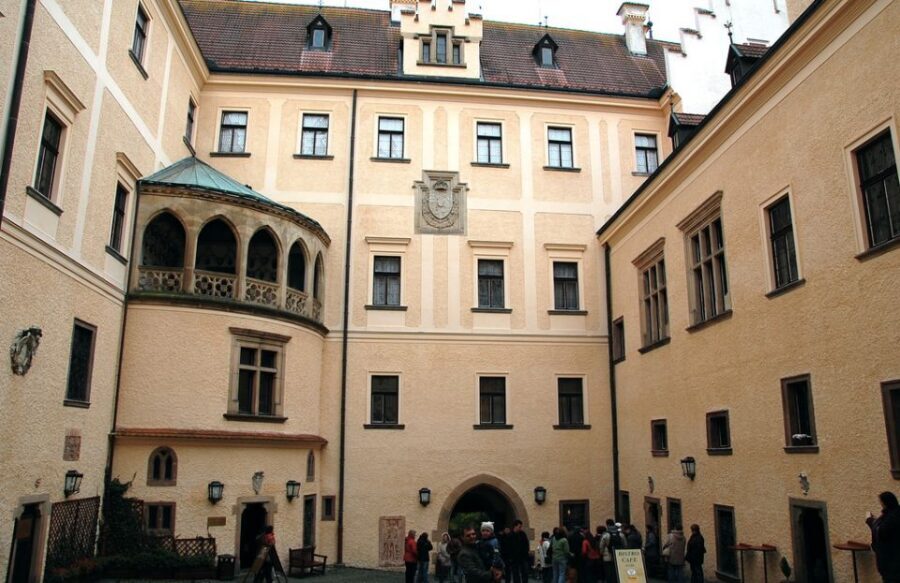
After the main castle area, you’ll move into the courtyards—specifically the Fourth Courtyard and the Second Courtyard. Here the guide focuses on the final touches made in the 20th century, which is often where people stop looking.
I like this kind of framing because it cuts through the “medieval only” mindset. Even if you’re seeing old walls, you’re also seeing later decisions about restoration, function, and symbolism.
The courtyards also give you breathing room. They’re natural spots to reset, re-orient, and get ready for the cathedral portion.
St. Vitus Cathedral: What to Notice (Even if You Don’t Go Inside)
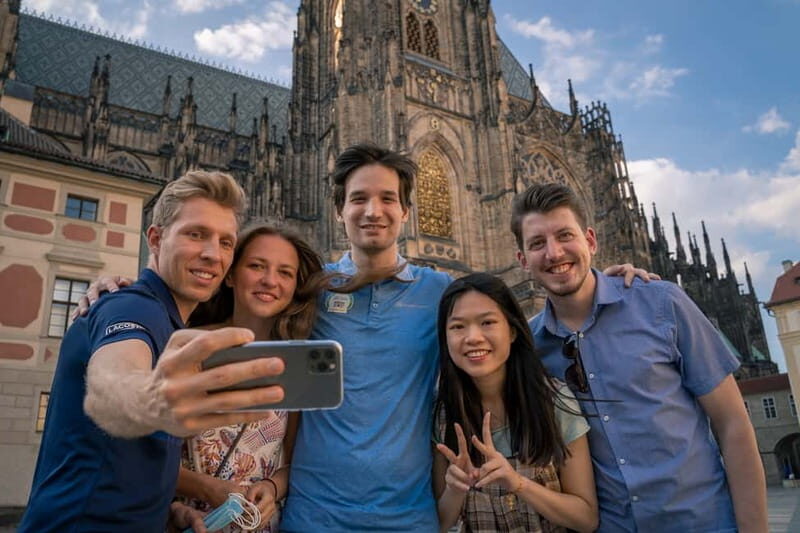
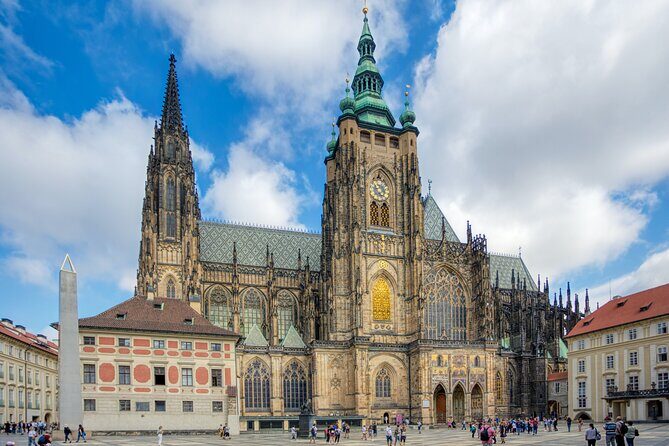
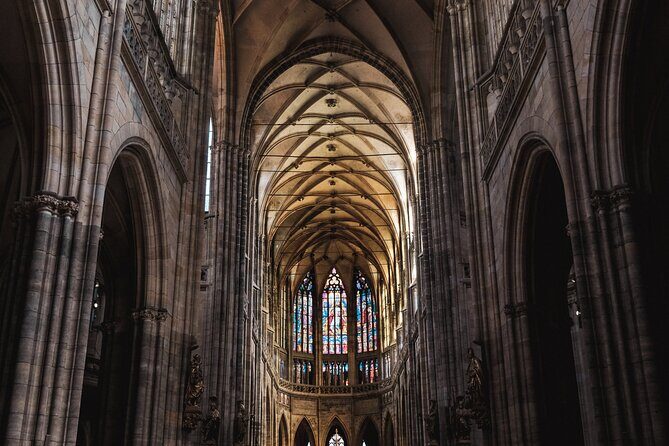
Next up is St. Vitus Cathedral, with a dedicated stop of about 20 minutes. The guide connects the cathedral to King Charles IV and points out what history is hiding in plain sight.
Plan for the practical reality: although the tour notes that it won’t enter paid monuments, some stops can still require tickets if you want interior access to certain areas. A few guides on this route have highlighted this exact point, so it’s worth thinking about ahead of time.
If you’re the type who likes looking closely—doors, carvings, and angles—this cathedral segment pays off. You’ll leave with more than a landmark photo.
Third Castle Courtyard and the Presidential Office View Angle
From the cathedral zone, you reach the Third Castle Courtyard. This stop includes a look at where the Czech presidents office is located, plus the guide positions you to see the cathedral from a strong angle.
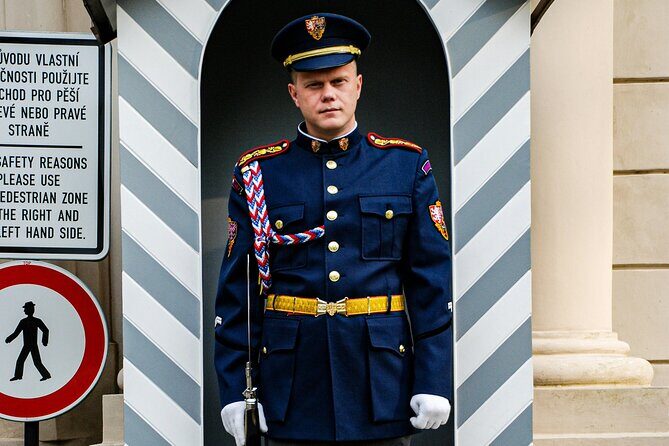
This is also where timing can matter. In past sessions, guides have helped groups catch notable ceremonial moments while navigating through the area more smoothly. You don’t have to chase it aggressively—just follow the guide’s cues and keep an eye on what’s happening around you.
Even without a ceremony, the courtyard perspective is a real payoff. It’s one of the best ways to understand how the cathedral sits within the broader castle plan.
Old Royal Palace: One Building, Many Architectural Revisions
The final major architecture stop is the Old Royal Palace, where the theme is evolution—how multiple rulers upgraded and reshaped the palace over time.
This is a short stop, but it’s a useful one. Palaces can feel like a single block of history if you don’t learn how to read them. This segment gives you a way to spot different “eras” in the same space.
Think of it as learning a visual language. Once you start noticing the way buildings change, Prague Castle stops feeling like a static backdrop.
Gardens Below Prague Castle (Mar–Oct): Best City Views and the 1618 Link
The last part is the Gardens Below Prague Castle, but only during the summer season from March to October. When they’re open, this stop is one of the best places to swap “up-close architecture” for “city overview.”
Here you get best views over the city, plus the tour connects this area to the 1618 defenestration of Prague. That combination is why the gardens are worth saving for the end: you’re standing where the story echoes, and you can actually see the city layout around it.
If you’re visiting outside Mar–Oct, you’ll still get the core castle and cathedral experience. But you’ll likely miss this specific viewpoint finale.
What You Get for the Price (and Where Extra Costs May Appear)
At the listed price of $3.63 per person, the value is mostly about the licensed local guide and the structured walk through major highlights. The tour also notes that you won’t be entering paid monuments, so many stops are designed to be “see it without paying a separate entry fee” style.
Still, Prague has a way of charging you if you want to go fully inside. Some parts of this route have required separate tickets for interior access, especially around the cathedral and other areas. So I’d budget a little flexibility even if you’re planning to keep costs tight.
Also note the transit cost: the public transport ticket is 30 CZK, about 1.2 EUR. This tour specifically calls it out, which is helpful. You’ll spend less time guessing and more time moving.
Timing, Walking, and the Cobblestone Reality
The tour runs about 2 hours 30 minutes and is built on steady movement. That duration is long enough to cover a full hill climb, multiple courtyards, and the cathedral zone without feeling rushed, but short enough that you won’t melt into the day.
What you should plan for:
- Uphill walking in sections around Strahov and the Castle District
- Cobblestones, especially in older areas
- Stops that are timed tightly, so you’ll want to keep up with the group
Bring comfy shoes. This isn’t a stroller-friendly stroll in practice, even though the tour says most people can participate. If your legs are picky, consider arriving early, taking breaks at the stops, and choosing a lighter day elsewhere.
Guide Style: Why Names Like Dylan, Aris, and Lyle Matter
A big reason this tour earns a high rating is how the guide teaches the space. In past departures, guides such as Dylan, Aris, Lyle, Andy, Anna, Filip, and Jan have been praised for turning dates into stories you can remember.
What that looks like on the ground:
- Talking through the building layout so you understand what you’re seeing
- Adding humor and personality without losing the thread
- Answering questions on the spot, from history details to local food and beer advice
If you spot a guide name you like when booking, that can be a useful clue for your expectations. You still need to show up ready to walk, but the storytelling makes the walking feel like part of the point.
Should You Book This Prague Castle Tour With Strahov Monastery?
I’d book it if you want:
- A first-timer-friendly introduction to Prague Castle and the Castle District on foot
- A route that includes Strahov Monastery and Strahov Library, not just the main cathedral photo stops
- A guide-led story walk that makes the hill make sense, step by step
I wouldn’t choose it as your only plan if:
- You hate walking uphill on cobblestones
- You need a very hands-off experience with minimal stairs and shifting group pace
- You’re trying to keep every cost to zero, since interior access may require separate tickets
If your goal is to understand Prague Castle as a functioning, layered complex, this tour delivers. And it ends with views near the ramparts that feel like a reward for paying attention all the way up.
FAQ
How long is the Classic Prague Castle Tour, Strahov Monastery & Castle District?
It’s listed at about 2 hours 30 minutes.
What language is the tour offered in?
The tour is offered in English.
Are paid monument entrance fees included?
The tour states it will not be entering any paid monuments, and admission is listed as free for the stops. That said, some areas like interior parts of St. Vitus Cathedral may require separate tickets if you want to go inside.
Do I need a public transport ticket?
Yes. A public transport ticket costs 30 CZK (about 1.2 EUR).
When can I visit the Gardens Below Prague Castle?
The gardens are listed as available only during March to October.
Can I cancel for a full refund?
Yes. You can cancel up to 24 hours in advance for a full refund.