REVIEW · PRAGUE
Day Trip to Kutná Hora by train from Prague
Book on Viator →Operated by SANDEMANs Tours - Prague · Bookable on Viator
Bone art meets real medieval history. This Prague to Kutná Hora day trip is built around a guided plan and smooth rail transport, so you’re not wrestling timetables while trying to see a UNESCO town in one day.
I also love the way the tour bundles the big-ticket stops and facts together: you get the story behind the Sedlec bone chapel (including the chandelier and bone furnishings) and then you move on to major sights like St Barbara’s Cathedral. One possible drawback: the schedule is tight, so time at each stop can feel limited, especially if your group has slower walkers or if trains run late.
In This Review
- Quick hits: what to know before you go
- Prague to Kutná Hora by train: getting out clean and easy
- Sedlec Ossuary: the bone chapel where the details matter
- Kutná Hora Old Town: UNESCO streets and medieval architecture in limited time
- St Barbara’s Cathedral: Gothic grandeur tied to miners
- Hrádek and the Royal Mint area: streets worth the extra walking
- Lunch in Kutná Hora: plan for own-cost food and tight clocks
- The guide factor: why their style changes your whole experience
- Price and value: what $83.44 covers on a day trip
- What to pack: water, sun, layers, and a charging plan
- Should you book this Kutná Hora day trip from Prague?
- FAQ
- How long is the day trip to Kutná Hora?
- What is the meeting point in Prague?
- Is lunch included?
- Is the tour offered in English?
- Are entry tickets included?
- Are photos allowed inside the Bone Church in Sedlec?
- Is this tour good for people with mobility limits?
Quick hits: what to know before you go
- A full-day structure in about 6 hours from Prague, with multiple medieval stops and walking time
- Sedlec Ossuary as the centerpiece, including entry and the full macabre design inside
- St Barbara’s Cathedral included, with frescoes tied to medieval mining and the saint of miners
- A UNESCO Old Town visit, plus extra sightseeing around the Italian Court and Hrádek area
- Small group size (max 30), which can help, but pace still depends on your guide and connections
- No photos inside the Bone Church, so plan your memories accordingly
Prague to Kutná Hora by train: getting out clean and easy
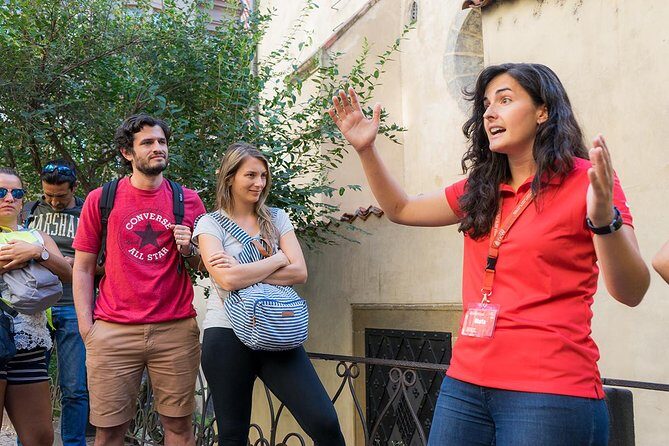
This tour is designed for one main goal: get you out of Prague without you playing transport detective. You meet in Prague’s main train station area, with the day organized through the Czech rail system and a guide who keeps the group together. You start at 9:30 am, and the whole loop returns you back to Prague at the end.
From there, the ride itself is part of the charm. It’s not a long multi-hour slog, and you should feel like you’re swapping city noise for countryside pace pretty quickly. Several guides on this route also show real talent for helping the group find the right platform, get seated, and stay on track. That matters, because Kutná Hora is the kind of place where 20 minutes can make the difference between seeing the inside of a church and arriving after your entry window.
Still, keep one consideration in mind: the day is timed, and schedules can shift. In the real world, delays happen, and the tour may adjust with alternate routing when needed. The guide’s job is to keep you moving and get you back on schedule, but you should mentally prepare for a bit of pressure.
A few more Prague tours and experiences worth a look

Sedlec Ossuary: the bone chapel where the details matter
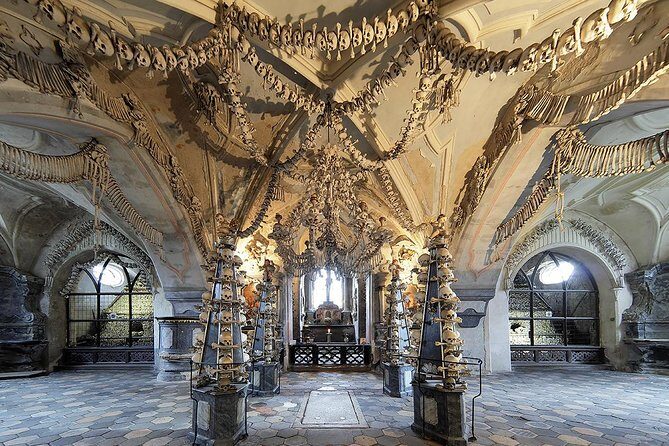
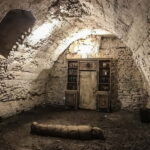
The first and biggest stop is the Cemetery Church of All Saints with the ossuary, often called the Sedlec Bone Chapel. The building sits in a historic cemetery setting and connects to the Sedlec Monastery story from the 12th century. The guide’s explanation is key here. Without the context, it’s easy to see only the shock value. With it, you understand that this is both a memorial tradition and a carefully arranged artwork made from human remains.
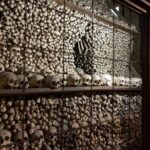
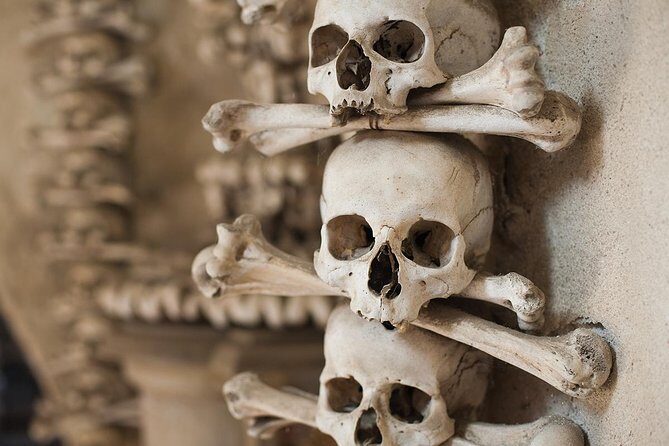
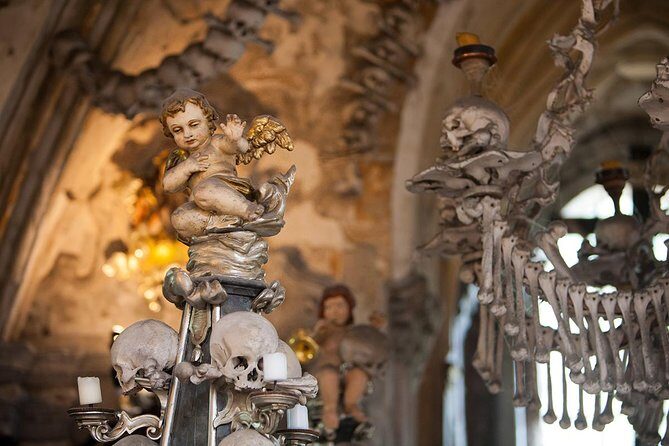
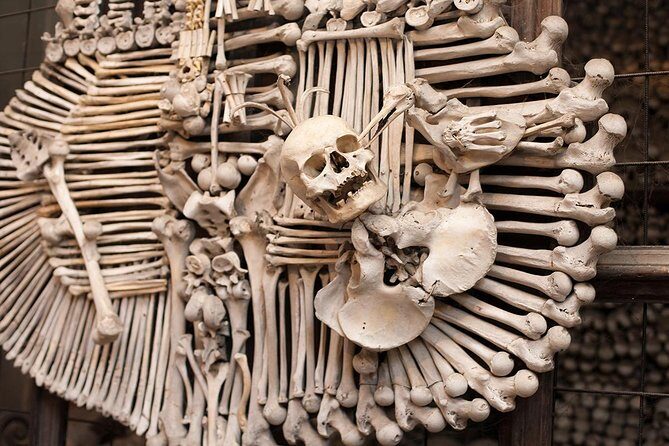
Once you step inside, the interior is what everyone comes for. The chandelier, furnishings, and bone-made decorations are all made entirely from bones, and the ossuary contains skeletons of around 40,000 people. That number is hard to hold in your head until you’re standing under the structure itself. The result is equal parts eerie and oddly structured. It’s not chaotic horror; it’s organized, patterned, and intentional.
Two practical notes:
- No photos are allowed inside the Bone Church. So don’t waste time trying to set up your camera.
- Bring your own pacing mindset. The stop is included and timed, and you’ll want a quick rhythm: look at the big features first, then slow down for details after the first wow moment.
If you’re visiting with teens or just the kind of person who likes strange cultural history, this is the kind of stop that makes Kutná Hora feel unforgettable fast.
Kutná Hora Old Town: UNESCO streets and medieval architecture in limited time
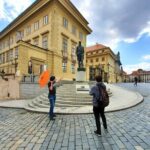
After the ossuary, the tour moves to Kutná Hora’s UNESCO-listed Old Town. This is your reset moment. The bones are dramatic; the Old Town is atmospheric in a different way. You get roughly 1 hour 20 minutes to explore the historic center on foot with your guide’s orientation, then some time to take in the street layout and architecture yourself.
What makes this section worth it is not just the buildings—it’s how the guide connects the town’s rise to the era of medieval mining and rivalries with Prague. You can feel that theme as you walk. Kutná Hora wasn’t only a place where people passed through; it became wealthy enough to build impressive public and religious structures and to compete in influence.
A downside to this Old Town block: it’s not enough time to “wander forever.” You’ll see more than if you went alone for an hour, but you’re still moving. If you love slowing down and photographing every corner, you might wish the Old Town stretch was longer. On the other hand, this is a good trade if your must-see list is packed—because it keeps you on track for St Barbara’s Cathedral and the later sightseeing.
St Barbara’s Cathedral: Gothic grandeur tied to miners
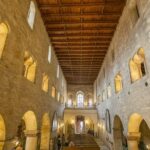
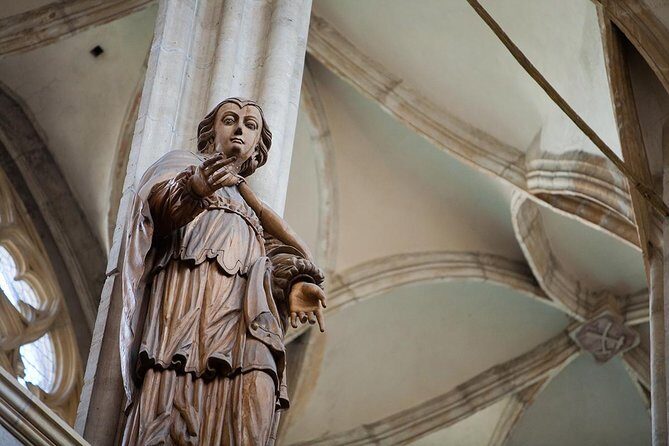
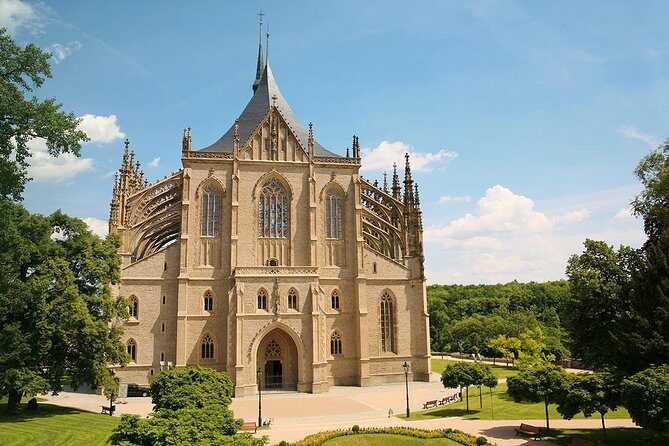
Next up is St Barbara’s Cathedral, a Gothic landmark that’s both visually impressive and story-heavy. You’ll walk inside and see frescoes linked to medieval miners, and your guide ties the church to St Barbara, the patron saint of miners.
Why this stop hits: it explains why a town would pour effort into a church that rivals major cities. Kutná Hora’s mining wealth made it possible to build something grand, and St Barbara’s became a symbol of that prosperity. Your guide’s talk helps you notice what you might miss if you were only scanning for photos: the themes, the saints’ significance, and how the church fits into the town’s ambitions.
You typically get around 1 hour at this stop, and entry is included. That time is enough to take in the scale, read the important visual cues (with or without a guide), and enjoy the echoed interior. If you’re the type who likes religious art, this is one of the more satisfying uses of your time on the whole day.
Hrádek and the Royal Mint area: streets worth the extra walking
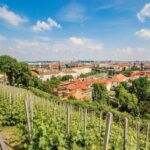
After the main churches, the tour heads toward the quieter romance of Kutná Hora’s streets and squares. You’ll pass by highlights like the Italian Court, which was the former Royal Mint, and you’ll also see the fortified Hrádek palace area.
This part is less about formal interior visits and more about atmosphere. You get around 1 hour to walk, take in views, and absorb how the town’s layout supported its wealth and defense. The Italian Court connection is especially useful if you like economic history—because it reminds you that medieval towns weren’t only about religion and kings. Money, minting, and trade were part of the story too.
Drawback? Because this is walking-focused and less structured than a church interior, it can feel like filler if you’re not into street-level sightseeing. If you are, it’s a great finish to balance the shock of the ossuary with normal human scale scenes—courtyards, facades, and those medieval corners that look great even without a camera.
Lunch in Kutná Hora: plan for own-cost food and tight clocks
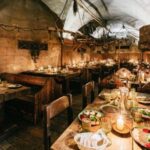
Lunch is a stop, but food and drinks are not included. The tour includes the structure and timing, and you’ll have the chance to eat on your own at the lunch restaurant chosen for the group. Some guides also help place orders, which can save you stress when time is short.
Here’s the practical part: your lunch window is limited. You shouldn’t assume you’ll have a leisurely sit-down meal plus dessert plus time to wander afterward. One way to make this work is to go simple. If you want water, coffee, or a snack before your next stop, buy it when you can. Also, if you’re visiting in cold weather, bring layers. One snow-day comment pointed out that proper clothing made a real difference.
If you want to keep the day enjoyable, treat lunch like fuel, not a two-hour event. Then you’ll still arrive at the later sightseeing feeling human.
The guide factor: why their style changes your whole experience
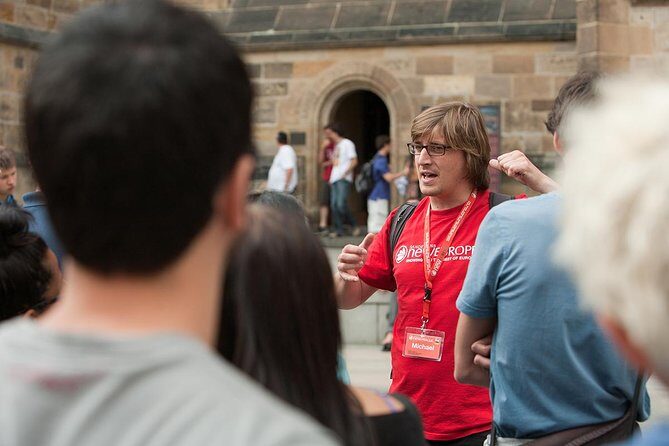
This tour succeeds or struggles based on pacing, and the guide is the difference. You’ll see a pattern of praise for guides who are fun, organized, and quick about explanations—people like Karl, Pavel, Brandon, Gabby, Jan, Libor, and Oliver. What stands out is not just the amount of information. It’s how they deliver it while keeping you moving across trains, station levels, and walking routes.
A couple of real-world tips from the way different guides operate:
- Some guides are extra careful about where you enter buildings and when you’ll need to line up for entry.
- Some groups get large enough that a bus connection may show up to protect the schedule. That can help you keep timing, but it also means less freedom than a pure rail plan.
- When delays happen, guides who stay calm and active tend to keep the vibe manageable.
One small but important rule: photos are forbidden inside the Bone Church. Good guides will tell you early, so you don’t waste time trying to photograph as you enter. That saves friction and helps you focus on seeing with your eyes.
Price and value: what $83.44 covers on a day trip
At $83.44 per person, this tour isn’t a bargain in the “cheap seat” sense. But it can still be good value, because it includes a lot that would cost you time and money if you tried to DIY it.
Here’s what you get for the price:
- Local guide
- Transportation arranged for the day
- Included entry fees for the Sedlec Ossuary and St Barbara’s Cathedral
- A guided visit through the Old Town and later sightseeing areas
What’s not included:
- Lunch and drinks
So the value equation becomes: are you saving enough time and stress to make the paid guide worth it? If you’d rather not figure out rail timing, meet points, and which entrances matter, the tour has real value. If you’re comfortable navigating public transport on your own and you’re happy to skip a guided explanation, you might feel the price more strongly—especially if your day turns out to be tighter than expected.
Also consider group size and pace. Even with a max of 30 travelers, your experience depends on how your group moves and how efficiently your guide keeps everyone together.
What to pack: water, sun, layers, and a charging plan
This is a walking-and-stairs day. The tour calls for moderate physical fitness, and in practice you’ll want to plan for steps, uneven surfaces, and cobblestones in places. If the weather flips (snow, rain, cold), it changes the whole comfort level. One tip that came up strongly: bring water and sunglasses, and bring a change of clothes or at least be ready for restroom stops if you’re out longer than you expected.
Also, since photos are not allowed inside the Bone Church, pack for note-taking or just be ready to look closely. Your camera roll won’t do the heavy lifting here.
Should you book this Kutná Hora day trip from Prague?
Book it if you want a guided route that hits the big UNESCO highlights and you’d rather spend your energy on explanations and seeing rather than coordinating trains and entry points. The best version of this trip feels like: you get the ossuary story clearly, you see St Barbara’s Cathedral with context, and you finish with the town’s medieval streets in time to feel satisfied.
Skip it or reconsider if:
- You hate scheduled timing and prefer long, slow exploration.
- You’re extremely sensitive to pace changes if trains are delayed or if a bus segment is used to keep you on time.
- You think the ossuary photo restriction will feel like a deal-breaker for your style of travel.
If you’re flexible and ready to walk, this is a strong way to turn Prague into a memorable medieval day without the transport headache.
FAQ
How long is the day trip to Kutná Hora?
The tour runs for about 6 hours (approx.).
What is the meeting point in Prague?
You meet near Wilsonova 300/8, 110 00 Praha 2-Vinohrady, Czechia, and you’ll also gather at the Prague main train station area for the departure.
Is lunch included?
No. Food and drinks are not included, and lunch is an own-cost stop.
Is the tour offered in English?
Yes. The tour is offered in English.
Are entry tickets included?
Yes for the main paid sights: Sedlec Ossuary and St Barbara’s Cathedral have admission included. The Old Town (Historické centrum) and Hrádek time is listed as free-entry.
Are photos allowed inside the Bone Church in Sedlec?
No. It is forbidden to take photos inside the Bone Church in Kutná Hora, Sedlec.
Is this tour good for people with mobility limits?
The tour lists moderate physical fitness. It involves walking and you may encounter stairs and cobblestones. If you have mobility concerns, you should think carefully before booking.