Prague history gets teeth when you pedal. I love the Malá Strana detours and the Vltava River ride, stitched together with the story of Reinhard Heydrich. One catch: food and drinks aren’t included, so you’ll want to plan a stop before or after.
This is a 3-hour bike tour with a live guide in English or Dutch, plus a helmet and a real focus on “what’s here, and why it matters.” You’ll pass both classic Prague views and modern landmarks like the Dancing House, and you’ll hear the darker WWII threads that sit behind places you’d normally rush past.
The route is built for steady cycling—generally easy going, but it’s not a good fit if you can’t ride confidently. Also, the exact bike setup can feel a bit variable day to day, so expect typical city-bike reality.
In This Review
- Key points before you go
- Why this Hidden Prague bike tour is worth your 3 hours
- Meeting point: where the ride really starts (and how not to miss it)
- Pedal along the Vltava: old Prague views, modern shapes, and the first stories
- Malá Strana and the WWII storyline: Heydrich, Nusle Bridge, and the places you’d skip
- Vyšehrad by bike: Cathedral views, a cemetery with famous Czech names, and quiet power
- The return via Naplavka: a lively quayside ride and the end-of-tour reset
- Price and value: why $45 can make sense (if you like this style of tour)
- Bikes, comfort, and the one practical reality you should plan for
- Guides and pacing: what I’d look for in this kind of tour
- Who should book this bike tour (and who should skip it)
- Should you book Hidden Prague Bike Tour?
- FAQ
- How long is the Hidden Prague Bike Tour?
- How much does it cost?
- Where do I meet for the tour?
- What’s included in the price?
- What’s not included?
- What languages are the guides?
- What do I need to bring?
- Is it okay if I’m not a strong cyclist?
Key points before you go
- Malá Strana detours with photo stops that don’t feel like a loop of the usual highlights
- WWII focus on Reinhard Heydrich, explained in city locations you can actually see
- Nusle Bridge context that adds a darker layer to a structure you might otherwise ignore
- Vyšehrad Cathedral and the national cemetery with major Czech names like Smetana, Dvořák, and Alfons Mucha
- Naplavka on the return, when you’re riding along a busy quayside and Prague feels very “alive”
- Small-group energy, with some tours running very intimate (I’ve heard reports of just 2–3 riders)
Why this Hidden Prague bike tour is worth your 3 hours
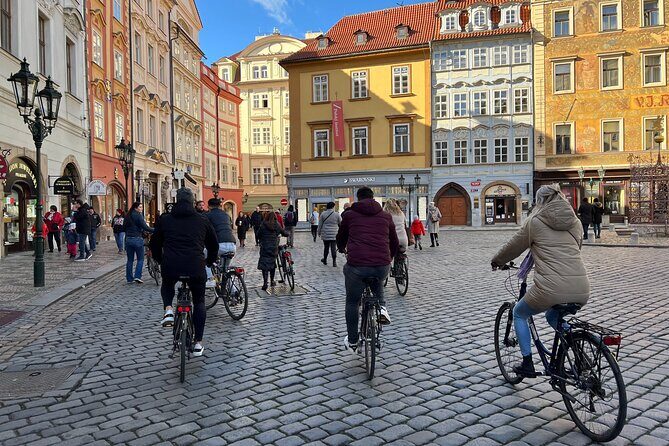
There are lots of Prague tours. Most either do monuments, or do stories. This one tries to do both, and it does it with wheels under you, not just feet in crowds.
What makes it click is the way the route connects themes. You start in areas that look postcard-pretty, then the guide ties what you’re seeing to WWII events—especially the assassination of Reinhard Heydrich and the ripple effects around Prague. You’re not stuck in a lecture hall. You’re cycling past the actual city fabric, which makes the details feel less abstract.
And I like that it isn’t only “WWII and nothing else.” Even while the main thread is that era, you still get quick context about Prague itself, plus architectural contrast as you move from older streets to more modern shapes.
You can also read our reviews of more cycling tours in Prague
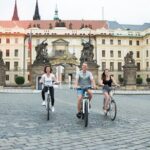

Meeting point: where the ride really starts (and how not to miss it)
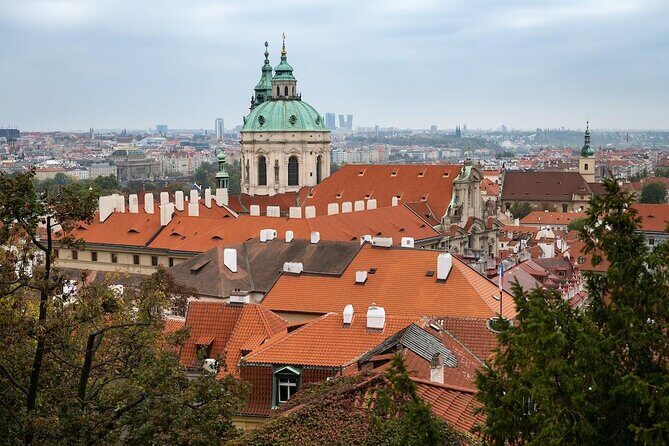
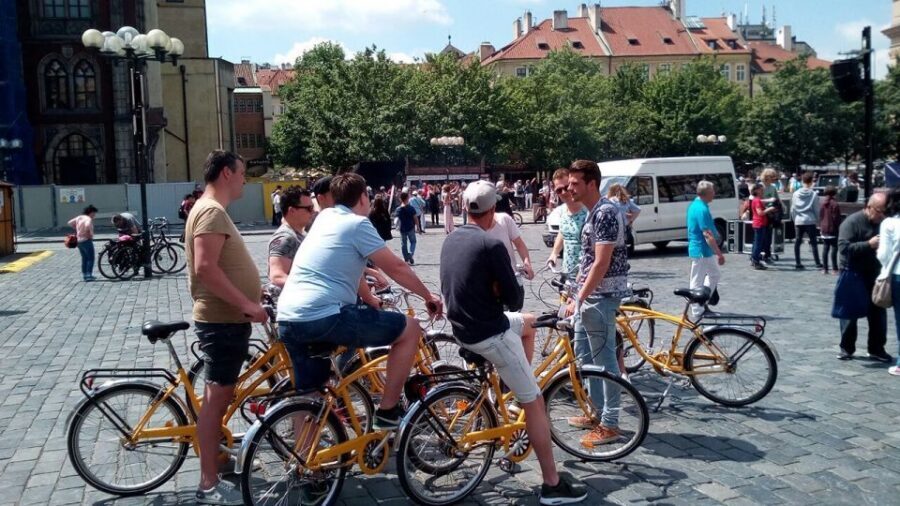
You meet at Michalská 509/10, 110 00. The key detail: take the entrance to the courtyard where the yellow bike is parked.
This matters more than people think. Courtyards in Prague can look identical from street level, and bikes parked inside can be easy to overlook if you’re arriving late or staring at the wrong doorway. Give yourself a few extra minutes, and scan for that yellow bike.
Also bring a passport or ID card. The requirement is simple, but it’s not the kind of detail you want to remember mid-trip.
Pedal along the Vltava: old Prague views, modern shapes, and the first stories
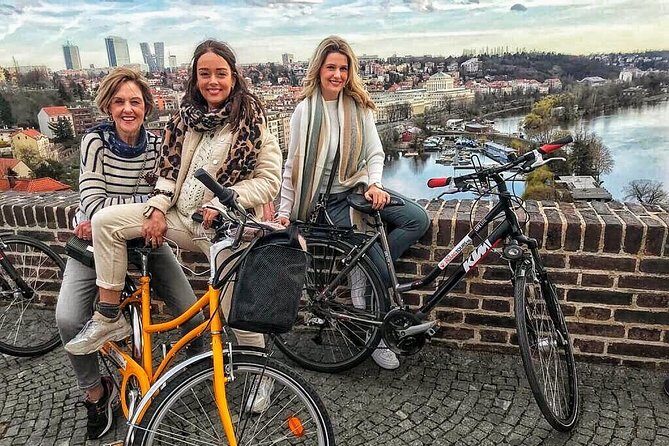
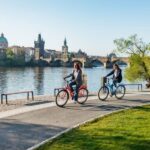
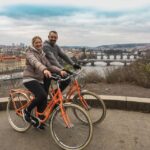
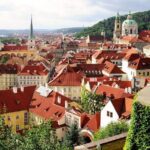
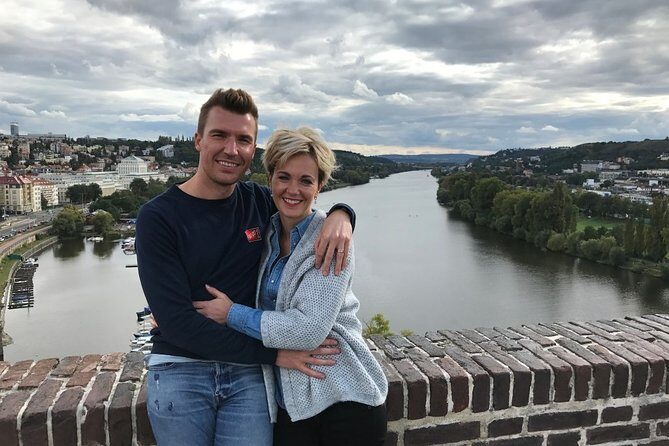
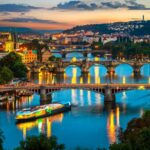
Once you roll out, the vibe is immediate: you’re riding with the Vltava River nearby, and the city shifts as you go. The guide points out how Prague carries multiple eras at once—historic facades alongside modern architecture.
A standout moment is seeing the Dancing House from the ride. It’s one of those buildings people recognize from photos, but it lands differently when you spot it while moving. You get to feel the spacing of the city—what’s close, what’s far, and how viewpoints open up as you angle toward the river.
Then the WWII thread starts to show up in the places you’d normally treat as “just walking streets.” The guide doesn’t just list dates. He or she connects the story to the physical city so your brain builds a map while you ride.
Malá Strana and the WWII storyline: Heydrich, Nusle Bridge, and the places you’d skip
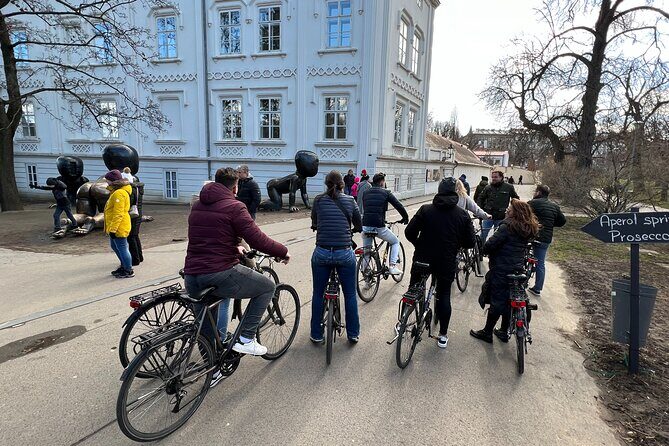
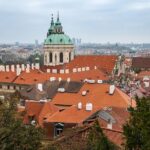
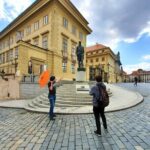
Malá Strana is the part of Prague many people come for. This tour adds value by slowing you down enough to notice what’s around you, not just what’s famous.
The tour’s historical focus centers on the assassination of Reinhard Heydrich, and the guide keeps tying key points to the setting. I found that kind of storytelling works best by bike because the city itself becomes the timeline. You see how locations relate, and the facts feel less like a quiz.
One memorable stop is the Nusle Bridge area. The guide explains that it has a darker side to its history, and that changes how you look at the structure. After that, you’ll notice how Prague’s architecture can hide stories in plain sight.
This is also where you’ll appreciate the guide’s control of the ride. You’re not doing it alone, and the pace is kept steady. From real experiences, the tour typically feels organized enough that you can focus on the story instead of constantly worrying about spacing in traffic.
Vyšehrad by bike: Cathedral views, a cemetery with famous Czech names, and quiet power
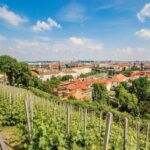
Eventually, the ride brings you to Vyšehrad, and the scenery shifts again. The approach feels romantic in the literal sense: hills, stone, and a sense of arrival that you don’t get on flat city walks.
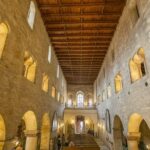
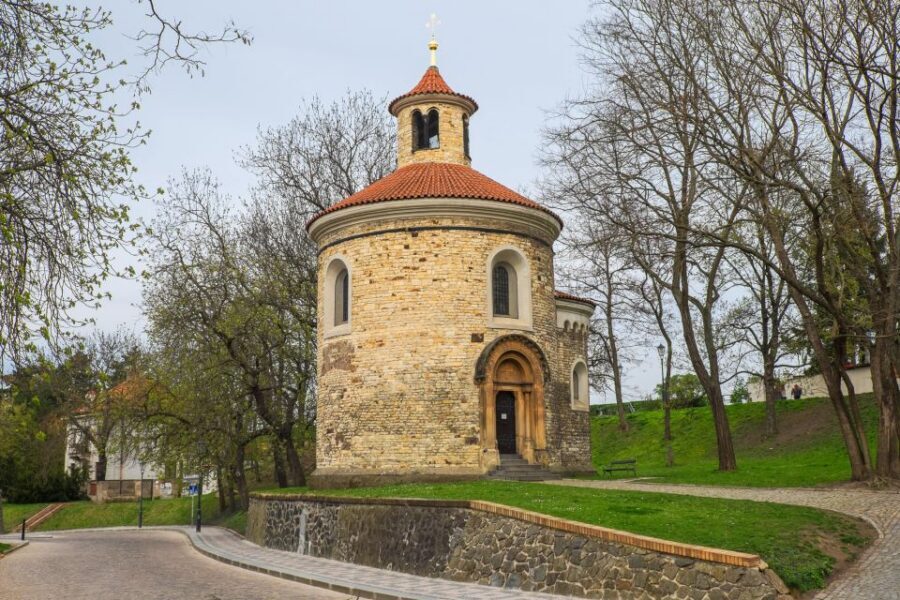
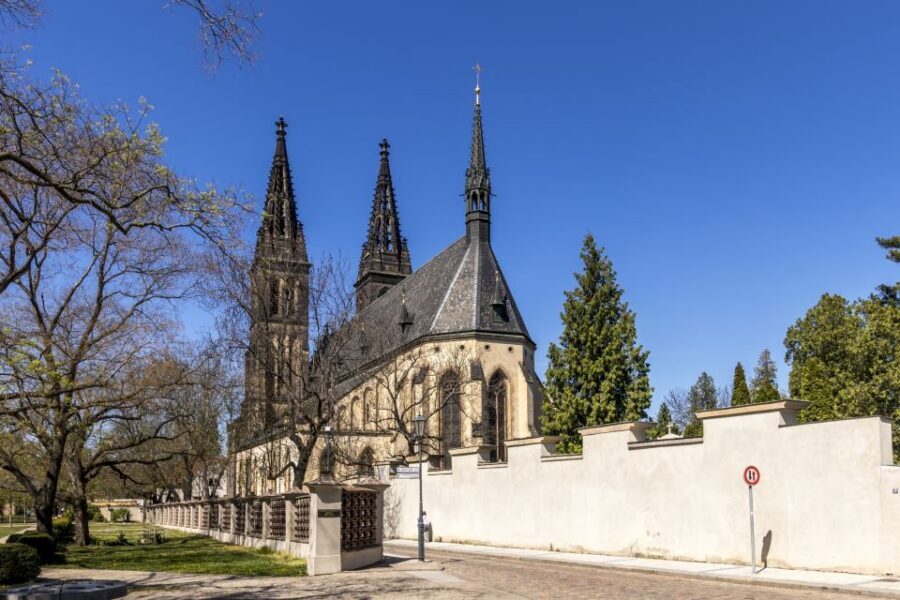
You’ll pass the Cathedral of Saint Peter and Paul (Vyšehrad’s standout church), and then you reach the cemetery next door. This part is important not because it’s dramatic, but because it’s specific. The cemetery has been the official national cemetery of the Czech Republic since 1869, and it’s where you find major Czech figures.
Names you’ll hear include Bedřich Smetana, Antonín Dvořák, and artist Alfons Mucha. The guide uses the cemetery to anchor Czech cultural identity in a very tangible way. It’s a meaningful stop, and it breaks up the WWII intensity so the tour doesn’t feel like one long emotional lecture.
I also like the pacing here. You’re not racing through. You get time to absorb. And since you arrived under your own legs, the viewpoint feels earned.
The return via Naplavka: a lively quayside ride and the end-of-tour reset
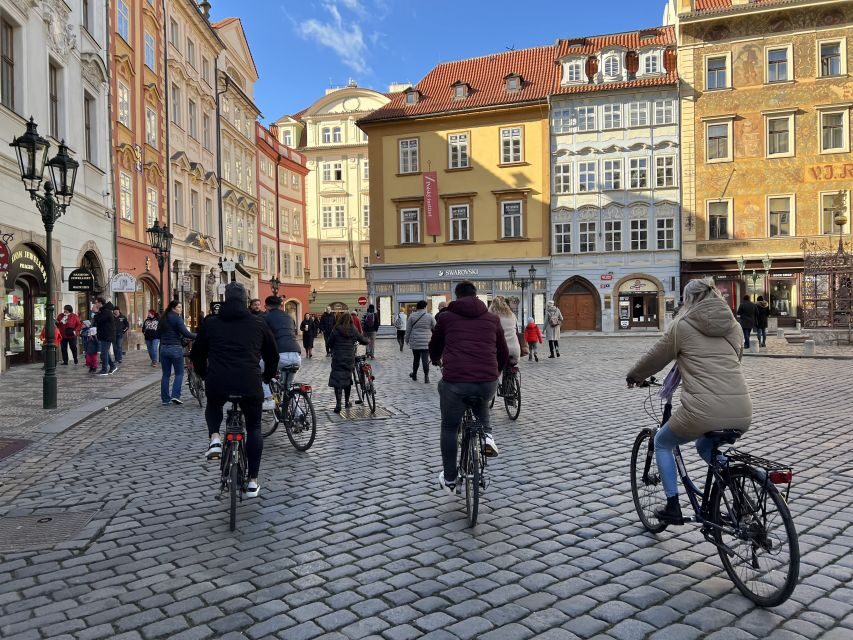
On the way back, you cycle along Naplavka, one of Prague’s busiest quaysides. This is a good finish because it flips the tone: less official history, more everyday Prague energy.
Riding along the water works like a reset for your brain. After the cathedral and cemetery stop, the quayside brings you back to street-level life—colors, movement, and the feeling of a city that keeps going past its past.
If you’re the type who gets tired of tours that end quickly, you’ll like this return stretch. It doesn’t feel like a victory lap. It feels like Prague continuing in real time while you’re still moving with it.
Price and value: why $45 can make sense (if you like this style of tour)
At $45 per person for a 3-hour guided ride, the value depends on what you’re optimizing for.
If you want only the biggest sights, you might feel like you could do more by yourself for less. But this isn’t only about major landmarks. You’re paying for:
- Transportation without stress (you’re on a bike, with a guide handling the route)
- Helmet included
- A WWII narrative tied to specific city locations, including places you might otherwise walk past
- Stops that add meaning, like the cemetery at Vyšehrad, not just photo moments
Also, because food and drinks aren’t included, you’re not paying for a meal you might not want. Instead, you can choose what fits your day—snack early, grab a coffee after, or only take a drink stop if it makes sense for you.
One more value note: small-group tours can change the experience a lot. I’ve seen guidance from people like Marit and Mark described as friendly, organized, and very “on it,” with tours running with only 2–3 riders at times. That kind of group size usually means more attention per person.
Bikes, comfort, and the one practical reality you should plan for
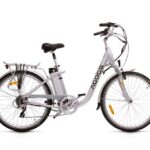
This tour includes a bicycle and helmet, which is a huge convenience. Still, be realistic about city biking in Prague.
One review-style detail to keep in mind: the bicycles provided might not be the best match for Prague’s streets. In practice, that can mean a less-than-smooth ride quality, especially if you’re picky about seat comfort or tire feel.
And while it’s not guaranteed, punctures can happen on any bike. I’ve seen mention of a rider dealing with a flat and having to walk the bike back. So don’t treat this like a fancy studio cycling setup. Treat it like street cycling with normal city risks.
If you’re the cautious type, you’ll probably still be fine because the guide takes care to keep riders together and watches road safety. But if you’re expecting zero bumps and zero surprises, you’ll be happier setting expectations slightly lower.
Guides and pacing: what I’d look for in this kind of tour
The tour runs with Dutch and English guides, and you’ll get live interpretation throughout. Several guide names show up in experience reports, including Marit, Mark, George, Dennis, Ann, Michael, Emma, and Roos.
What matters for you isn’t the name—it’s the pattern. The best reports describe guides who:
- Know the subject matter well enough to keep it clear
- Maintain a steady ride pace
- Add extra context without turning it into a textbook
- Keep you with the group and focused on safety
One bonus detail: there’s sometimes a film recommendation connected to the WWII events covered. I like that because it’s an easy way to keep learning after the ride, without hunting for sources at midnight.
Who should book this bike tour (and who should skip it)
This works best if you:
- Enjoy history, especially WWII stories tied to real places
- Like seeing both classic Prague and modern architecture in the same ride
- Feel comfortable cycling in a city environment
- Want a tour that moves at a steady pace but still includes meaningful stops
It’s not suitable if you can’t ride a bike. Since “no bike skills” is explicitly a limitation, don’t sign up thinking you’ll learn mid-route.
If you’re someone who hates any emotional heaviness, the Heydrich thread might feel intense at times. That said, the inclusion of Vyšehrad and the cemetery helps give the tour emotional balance.
Should you book Hidden Prague Bike Tour?
Book it if you want Prague history with legs—literally. The combination of Malá Strana, a Vltava ride, WWII context focused on Reinhard Heydrich, and the Vyšehrad cemetery stop makes the experience feel designed, not random.
Skip it if you only care about ticking off the biggest monuments and you don’t like any WWII framing. Also skip if bike comfort is your weak spot, or if you’re not confident riding on real roads.
If you do book, do one smart thing: plan your food timing. Since no food or drinks are included, you’ll enjoy the ride more when your stomach isn’t running your attention.
FAQ
How long is the Hidden Prague Bike Tour?
It lasts 3 hours.
How much does it cost?
The price is $45 per person.
Where do I meet for the tour?
Meet at Michalská 509/10, 110 00. Take the entrance to the courtyard where the yellow bike is parked.
What’s included in the price?
You get a bicycle and a helmet.
What’s not included?
Food and drinks are not included, and there’s no pickup or drop-off.
What languages are the guides?
The live tour guide speaks Dutch and English.
What do I need to bring?
Bring your passport or ID card.
Is it okay if I’m not a strong cyclist?
No. The tour is not suitable for people who can’t ride a bike.