REVIEW · PRAGUE
Jewish Prague With a Local Historian
Book on Viator →Operated by Prague: Local Historian Tours · Bookable on Viator
Prague’s Jewish story moves fast. This 3-hour walk ties together centuries of Jewish life with the brutal reality of World War II, all with a historian who makes the streets feel readable. I especially liked the small group size (max 6) and the way the tour connects places you might miss on your own, including Josefov’s synagogues and cemetery.
Two big wins for me were the focus on specific sites and the strong storytelling. You’ll hear about the 13th-century Jewish Quarter (once Europe’s largest Jewish ghetto), learn how persecution unfolded during WWII, and also get the Franz Kafka thread woven into the neighborhood. The walk keeps a steady pace, and it’s paced so you can actually ask questions.
The main thing to consider: parts of the experience depend on good weather, and you’re doing a real walking route. If you prefer heavy museum time or long indoor stops, this tour leans more street-level than gallery-level.
In This Review
- Key things to know before you go
- Why Prague’s Jewish Quarter still tells hard stories
- A historian-guided walk with Jiri and a comfortable pace
- Josefov: synagogues, the cemetery, and Klausen Synagogue
- Nove Mesto hidden Jewish sites and the oldest Prague Jewish cemetery
- Bubny and the Holocaust Memorial: where deportations began
- Praha hlavní nadrazi: Nicolas Winton and 669 Jewish children
- Jerusalem Synagogue: a short stop and one admission detail
- Price and value: is $64 per person fair for this walk?
- Timing, route start/end, and how to make it smooth
- Who should book this Jewish Prague historian tour
- Should you book this Jewish Prague With a Local Historian tour?
- FAQ
- Where does the tour start and end?
- How long is the tour?
- How many people are in the group?
- Is this a private tour?
- What’s included in the price?
- Do we visit the Jewish Museum during the tour?
- Is Jerusalem Synagogue included with admission?
- What if the weather is bad?
- When will I get confirmation after booking?
- Can I cancel for a refund?
Key things to know before you go
- Historian-led, PhD-level explanations: Jiri brings strong context and answers questions in full detail.
- Max 6 people: the group is small enough to feel personal without the logistics of a solo tour.
- Josefov first, then off-the-main-grid stops: you get synagogues and cemetery plus lesser-seen spots in nearby districts.
- WWII gets real, but stays grounded in place: Bubny connects deportation history with the Holocaust Memorial.
- You’re not rushed through museums: the Jewish Museum is not part of the shared visit, though you can arrange it separately.
- Mobile ticket and public transport included: you’ll get bottled water plus a Prague public transport ticket.
Why Prague’s Jewish Quarter still tells hard stories
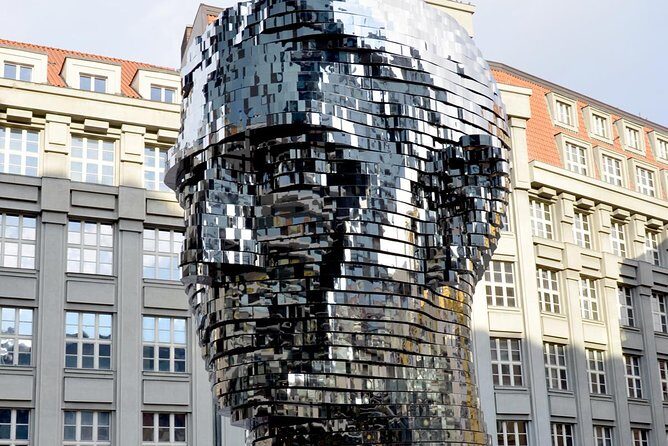
Prague’s Jewish heritage isn’t confined to one building. It’s written into corners, street turns, and the gaps between monuments. That’s what makes a guided walk work so well here: you’re not just collecting dates. You’re learning how a neighborhood functioned, how communities lived, and how the city changed under persecution.
This tour frames the Jewish Quarter back in the 13th century, when Josefov was once Europe’s largest Jewish ghetto. Then it jumps forward to the darkest chapters of the 20th century, including what happened during World War II and the Nazi concentration camp system. The key is that the story is tied to what you see outside your window, not just what’s printed on a sign.
If you like history that has weight, but still feels human, you’ll probably enjoy this approach. You’ll hear about both persecution and the everyday life and writing tied to figures like Franz Kafka, without turning the whole experience into a lecture.
You can also read our reviews of more tours and experiences in Prague.


A historian-guided walk with Jiri and a comfortable pace
The tour is led by Jiri, and his background shows in how he explains things. He takes time with questions and doesn’t treat your curiosity like a nuisance. If you’re the type who wants to understand why a street name matters or what a specific site represents, you’ll likely feel taken seriously.
Pace matters on tours like this. Here, it’s not a speed-walk. The route is active, but it’s paced so you can keep up and still process what you’re hearing. That’s a big deal in Prague, where it’s easy to get swept up in the motion of the city and miss the details that make a Jewish Quarter tour worthwhile.
Also, the group size is limited to a maximum of 6 travelers. That small number helps the tour feel more personalized, even if you’re booking as part of a group. And because it’s close to a private experience in practice, you’re more likely to get direct answers instead of waiting for the next scheduled topic.
Josefov: synagogues, the cemetery, and Klausen Synagogue
Josefov is where you’ll spend the most time: about 1 hour 30 minutes. This is the core of the Jewish Quarter story, and you’ll walk by different synagogues and lesser-seen spots that are hard to notice if you’re only relying on your own eyes.
Two of the tour’s highlighted stops are the Klausen Synagogue and the Jewish Cemetery. Those locations matter for different reasons. A synagogue gives you a sense of community life and worship, while the cemetery grounds the story in memory and continuity. Standing in these places helps you understand that this history isn’t only about tragedy. It’s also about long-term presence in the city.
One practical note: the Jewish Museum is not visited together during the main shared portion. The tour can be arranged so you can visit it separately, if you want more museum time. I like this structure because it keeps the walk focused on street-level context first, instead of turning the whole experience into another ticket line and indoor schedule.
Admission timing here is also friendly for your planning: the Josefov segment lists admission as free in the provided details. Even if you don’t know what that includes yet, it’s a helpful sign that you won’t feel trapped by constant extra fees mid-walk.
Nove Mesto hidden Jewish sites and the oldest Prague Jewish cemetery
After Josefov, the tour shifts into Nove Mesto (New Town) for about 30 minutes. This part is short, but it’s intentionally about finding what most people miss.
You’ll hit three places around the area, including the oldest known Prague Jewish cemetery. Even if you’ve never studied Prague’s Jewish history before, a cemetery site like this can change how you interpret everything you saw earlier. It turns the neighborhood from a backdrop into a lived landscape where generations left their mark.
This segment is also a good choice if you want variety without losing momentum. You’re not doing long detours, and you’re not stuck repeating the same famous photo spots. You’re getting a few meaningful stops, plus the context to understand why they matter.
One consideration: 30 minutes can feel quick. If a particular topic hooks you—say, burial traditions, community layout, or how the neighborhood evolved—be ready to ask Jiri about what you’re seeing right then, because this stretch doesn’t linger.
Bubny and the Holocaust Memorial: where deportations began
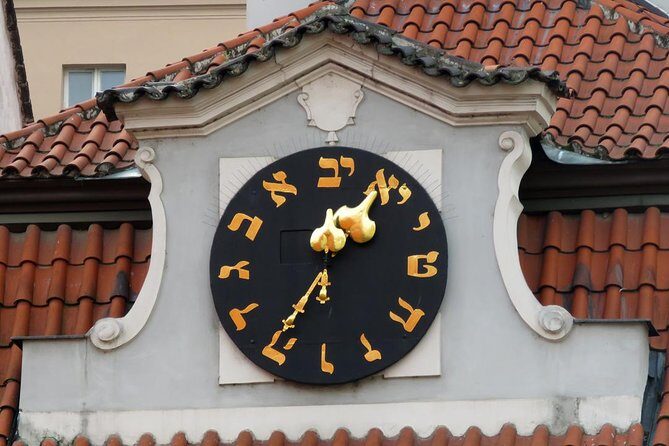
Then the tour moves to Bubny, with about 30 minutes here. This is where the story becomes sharply difficult. You’ll connect the local history of Czech Jews being sent to Nazi concentration camps with the Holocaust Memorial at the site.
Hearing about persecution is one thing. Standing where deportation history is anchored in the city makes it harder to keep history abstract. This stop gives you that physical sense of location—where the city held people and where the machinery of persecution moved out from.
If you’re sensitive to heavy subject matter, plan for your emotions. You don’t have to rush through it. In a small group, you can take a moment, look around, and let the guide’s context do its job. I also like that the tour doesn’t stop at generic Holocaust talking points. It aims to connect what happened with Prague geography.




Praha hlavní nadrazi: Nicolas Winton and 669 Jewish children
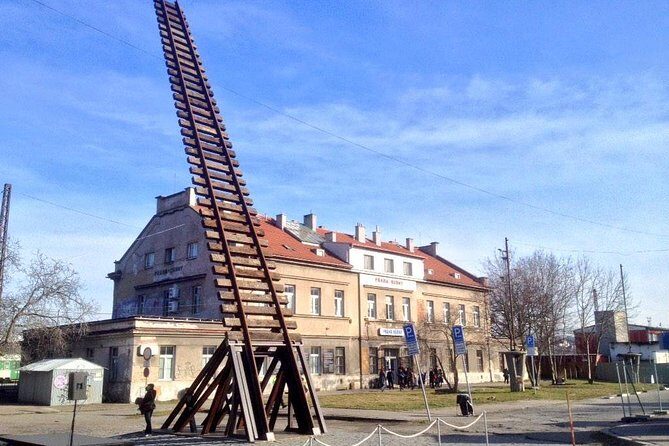
Next comes a different kind of story: rescue and responsibility. At Praha hlavní nadrazi (Prague main railway station), you’ll get about 15 minutes focused on the story of Nicolas Winton, who saved 669 Jewish children.
Rail stations are powerful places for history. They’re where journeys begin, and in the case of WWII-era Europe, where people were forced to go somewhere they didn’t want to go. By pairing the earlier deportation context with Winton’s rescue story, this stop gives you a more complete picture: harm happened, and people also took action.
Fifteen minutes is brief, so I’d treat it as a foundation. If you want to read more afterwards, this is the kind of stop that makes you want follow-up. The tour notes this segment includes admission, which helps you avoid a surprise cost or decision point at the station itself.
Jerusalem Synagogue: a short stop and one admission detail
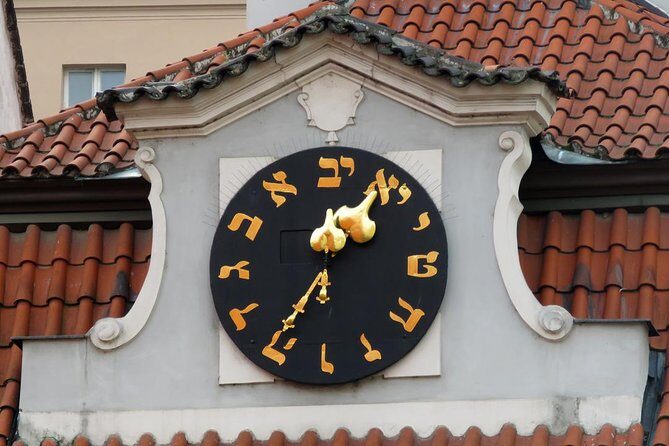
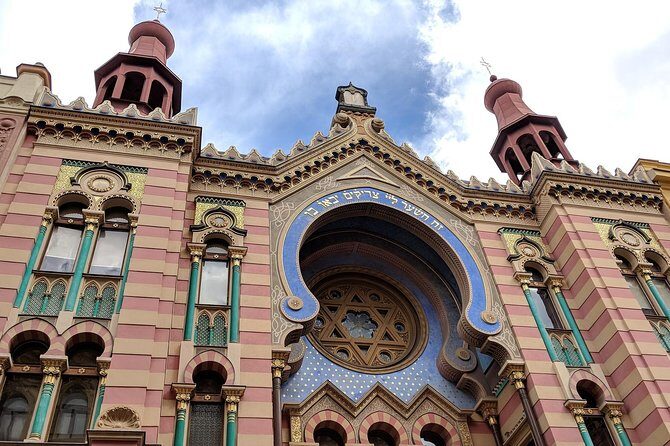
The tour finishes near Jeruzalémská on the Nové Město side, with a 15-minute stop at the Jerusalem Synagogue. The key practical detail: admission here is not included.
That means you’ll likely see it as part of the tour’s route, but if you want to go inside or spend longer, you’ll need to plan for that separately. I like that clarity. It prevents the classic problem of hoping an included visit turns into a last-minute payment decision.
If you’re someone who prefers to control how long you spend inside a building, the short timing is a plus. You get the exterior and the context, then you can decide if you want more.
Price and value: is $64 per person fair for this walk?
At $64 per person, this tour isn’t cheap like a free walking tour, but it also isn’t priced like a long museum day. For your money, you’re buying three things:
First, you’re paying for a historian—not just a casual guide. The tour is built around interpretation, and Jiri’s question-friendly approach is part of that value.
Second, you get structure and context across multiple neighborhoods in about 3 hours. That time window matters. Prague has plenty of distractions. A guided route helps you cover meaningful ground without spending your entire afternoon consulting maps and guessing what matters.
Third, you get practical inclusions: bottled water and a Prague public transport ticket. Those sound small, but they reduce friction—especially when you’re moving between Josefov, Nove Mesto, Bubny, and the station.
Also, the group cap at 6 travelers helps justify the price. With a larger group, the experience can become one-way. Here, the format supports interaction.
The only cost-related consideration is admission choices. Most listed segments are shown as free for admission, but the Jerusalem Synagogue admission is not included, and the Jewish Museum is not part of the shared visit. If you plan to add those, budget extra time and a bit of money.
Timing, route start/end, and how to make it smooth
You can choose a morning or afternoon tour time. That flexibility is handy in Prague, where weather and energy levels can change hour to hour. The tour uses a mobile ticket, which is useful if you don’t want to hunt for printed vouchers.
The start point is Nám. Franze Kafky 24/3, Staré Město, 110 00 Praha-Praha 1, Czechia. The tour ends at Jeruzalémská, Nové Město, 110 00 Praha-Praha 1, Czechia. That end location is convenient because it leaves you near the neighborhood where you might want to keep exploring streets, cafés, or additional religious/historic sites.
Because it’s designed for people who can do a walking tour, the “most travelers can participate” note makes sense. Still, wear comfortable shoes. This kind of route works best when you can walk steadily and stop briefly when you want to look or ask a question.
If you’re planning around train or dinner, remember the total duration is about 3 hours. The stop durations are short enough that you’re not stuck for half a day, but they’re substantial enough to take in meaningful context.
Who should book this Jewish Prague historian tour
This is a strong fit if you:
- want a guided story of Jewish Prague that connects places to events
- appreciate history explained clearly, with room for questions
- like small-group tours instead of crowded group dynamics
- are interested in both the “life and writings” side (Franz Kafka) and the WWII reality
It’s less ideal if you want:
- only museums and indoor exhibits
- lots of long sit-down time at a single venue
- a tour that includes every ticketed site by default
If you’re on a first visit to Prague and want a single focused Jewish-history walk that still covers multiple neighborhoods, this tour checks that box. You also get enough variety—Josefov, Nove Mesto, Bubny, the station, and Jerusalem Synagogue—to keep the day from feeling repetitive.
Should you book this Jewish Prague With a Local Historian tour?
If you’re deciding between winging it and taking a guide, I’d lean toward booking. The Jewish Quarter can be confusing at street level, and the most important parts of the story are often the parts you don’t automatically notice. With Jiri leading and a small group size, you get both context and the chance to ask questions instead of hoping you figured it out from plaques.
Book this tour if you want a respectful, place-based history of Jewish Prague that moves from early community life into WWII persecution and includes the Nicolas Winton story of rescue. It’s priced reasonably for what you’re getting: a historian-led route that’s short enough to fit in your schedule, but deep enough to feel like you actually learned the neighborhood.
If weather is a concern, watch the forecast close to your day. Good weather is required, and if conditions don’t cooperate, you’ll be offered a different date or a full refund.
FAQ
Where does the tour start and end?
It starts at Nám. Franze Kafky 24/3, Staré Město, Prague 1, and it ends at Jeruzalémská, Nové Město, also in Prague 1.
How long is the tour?
The experience lasts about 3 hours.
How many people are in the group?
The tour has a maximum of 6 travelers.
Is this a private tour?
The experience is described as private in terms of personalization, and it’s designed for a small group size that supports a more individualized feel.
What’s included in the price?
Included items are all fees and taxes, bottled water, and a Prague public transport ticket. Admission is listed as free for certain stops, and not included for others.
Do we visit the Jewish Museum during the tour?
The Jewish Museum is not visited together as part of the main tour. You can arrange a visit together separately.
Is Jerusalem Synagogue included with admission?
Jerusalem Synagogue is included as a stop, but admission there is not included.
What if the weather is bad?
The tour requires good weather. If it’s canceled due to poor weather, you’ll be offered a different date or a full refund.
When will I get confirmation after booking?
Confirmation is received within 48 hours of booking, subject to availability.
Can I cancel for a refund?
Yes. Free cancellation is available if you cancel at least 24 hours in advance for a full refund.