REVIEW · PRAGUE
Moriarty’s Phantom Trap Escape Game in Prague
Book on Viator →Operated by Questerland · Bookable on Viator
Tick-tock turns the lights off in Prague. This is Moriarty’s Phantom Trap, a timed, story-driven challenge at Questerland where your group is locked into the ghost’s game for about an hour.
I like two things right away: the private setup, so you’re only competing with your own crew, and the way the host team supports you with clear guidance when you’re stuck, without taking over the puzzle-solving. One thing to keep in mind is that this can feel hard, and the theme runs a little spooky. If you’re bringing very young kids, you may want to think twice.
In This Review
- Key highlights you should know
- What Moriarty’s Phantom Trap feels like in Prague
- Questerland location and how to show up without stress
- Price and value: is $47.18 per person worth it?
- How the game rules keep it challenging (and why hints matter)
- The story engine: Moriarty’s trap, the timer, and your emotions
- Puzzles, difficulty level, and what “easy to understand” really means
- Meet the host team: Šimon, Tom, Sylvie, Julia
- Effects and set design: why people keep calling it “nicely done”
- How long it takes and how to plan your day
- Who should book this in Prague
- Should you book Moriarty’s Phantom Trap?
- FAQ
- Is the game offered in English?
- How long does Moriarty’s Phantom Trap take?
- Where is the meeting point in Prague?
- Is this a private activity?
- What ticket type do I need?
- Is the location near public transportation?
- Are service animals allowed?
- How soon will I get confirmation after booking?
- Can I cancel for a full refund?
Key highlights you should know
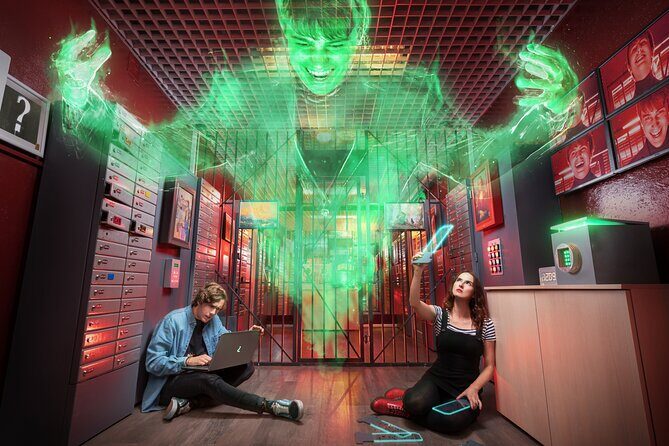
- Private group experience: only your team plays, so it stays personal and focused.
- Timed pressure: the story leans hard on the clock, so your time management matters.
- English-friendly: the game is offered in English, with a mobile ticket for smooth entry.
- Pro hosts help through speakers: support tends to come as hints, not full solutions, depending on the moment.
- Effects and props do the heavy lifting: the setting is praised for looking amazing and feeling interactive.
- Finish time can be fast: some groups report wrapping in around 58 minutes.
What Moriarty’s Phantom Trap feels like in Prague
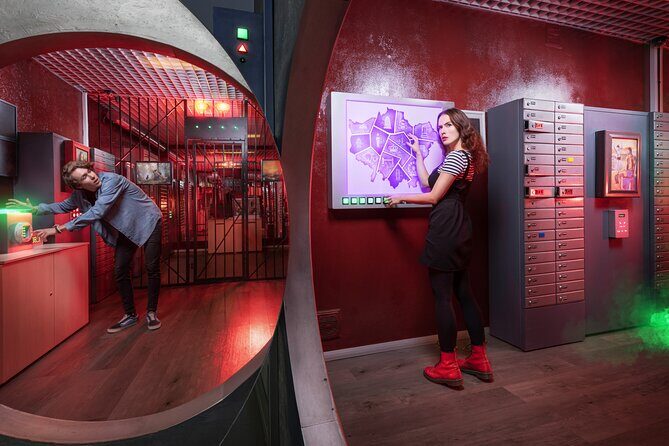
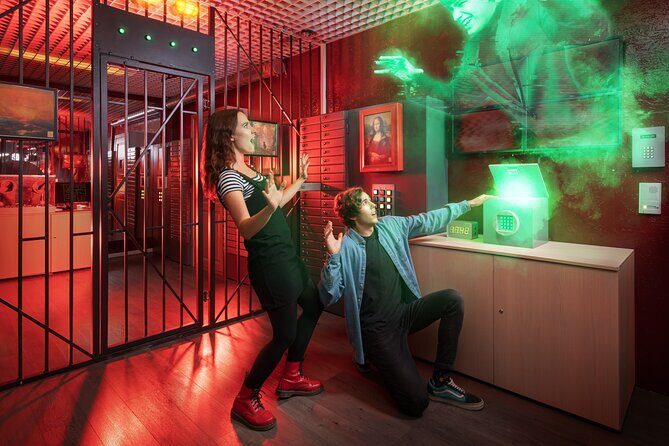
Prague already has plenty of dark alley atmosphere. This game adds a different flavor: a ghost story that treats the escape-room format like a real trap, with a ticking clock and rules that push you to rely on your brains.
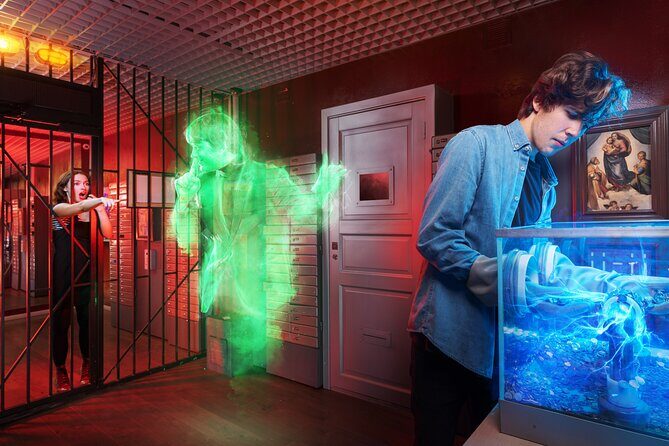
The premise is classic: Sherlock dealt with Moriarty once, but Moriarty’s spirit is still playing. The game frames your emotions as part of the puzzle. So it’s not just “find clues.” It’s more like: think fast, stay calm, and work as a team while the story presses in.
For me, the most practical draw is that the experience is time-bound and group-based. That’s what makes it easy to plan. You’re not signing up for a vague “sometime this afternoon” activity. You know you’ll be done in about an hour.
You can also read our reviews of more tours and experiences in Prague.



Questerland location and how to show up without stress
The action is at Questerland, at Mánesova 1613/54, 120 00 Praha 2-Vinohrady. It’s near public transportation, which matters in Prague where walking time can stretch fast once you add hills, trams, and crowds.
Here’s how I’d plan it in real life: arrive a bit early so your group can settle in, scan the mobile ticket, and meet your game master. The activity ends back at the meeting point, so you won’t need to reorganize your whole day afterward.
If you’re coming from central sights, build in buffer time. Not because the venue is hard to find (it’s described as easy to locate), but because timed games start when they start.
Price and value: is $47.18 per person worth it?
The price is $47.18 per person for about an hour. That’s not cheap, but it’s in line with what you pay for a professionally run escape-style attraction in a major European city.
Where the value shows up is in what you get for that time:
- A private experience for your group (not shared with strangers).
- A host team that’s actively involved during the game.
- A setup with effects and props strong enough that people keep bringing it up as a highlight.
- English support.
Also, this is booked far in advance on average, which is a good sign that slots fill up. If you’re traveling in peak season or on a busy weekend, plan to book early so you have the time windows you want.
How the game rules keep it challenging (and why hints matter)
One line in the game’s own tone is basically a warning: don’t expect things to be handed to you. The theme leans into you solving without relying on the operator.
At the same time, the way the team is described in actual play is reassuring: if you get stuck, the host can provide hints through speakers. That’s an important difference. You’re not going to get a full walkthrough that ruins the puzzle. You’re more likely to get “go look over here” style help that nudges you back to momentum.
So what should you expect as a player?
- The clock is running.
- You’ll be thinking under pressure.
- You might get help, but it’s framed as guidance, not rescue.
- The experience tries to keep clues understandable, even if some puzzles are genuinely tough.
If you’re the group type that solves well under time pressure, you’ll probably have a great time. If you freeze when something is unclear, try to bring someone who likes rapid teamwork and pattern spotting.
The story engine: Moriarty’s trap, the timer, and your emotions
The game’s narrative isn’t just decorative. It’s part of how the puzzles are paced. You start with the sense that turning back isn’t an option. The timer becomes a character.
That matters because it changes how the room feels. In some escape rooms, the story is background noise. Here, the clock and the trap framing seem built into the experience rhythm.
You’ll also see repeated emphasis on fear and emotions. That’s not the same as jump scares all the time, but it does explain why people describe it as a little scary while also saying it’s funny. It’s the Halloween vibe turned into game mechanics.
If you want a totally light, comedy-only hour, you might find the theme slightly intense. If you like spooky play that still feels playful, you’ll likely enjoy it.






Puzzles, difficulty level, and what “easy to understand” really means
The best puzzles don’t just trick you. They give you enough signal to keep moving, so you don’t waste time spinning your wheels.
Here, the feedback is mixed in a useful way:
- Many people say the clues are easy to understand.
- Others say some puzzles are hard, though they still make sense once you see the logic.
- Several people highlight the satisfying moment when you solve one step and suddenly the path becomes clear.
That combination usually means the design is “fair but not soft.” In other words, you might get stuck for a bit, but the answers aren’t random.
Practical tip: don’t let one person hog the thinking. Since it’s a team escape game, roles help. One person reads clues out loud. Another checks props and connections. Someone else times decisions. When you run out of ideas, that’s exactly when speaker hints tend to save your momentum.
Meet the host team: Šimon, Tom, Sylvie, Julia
A big part of the quality here is the people running it. Multiple staff names show up in the way the experience is remembered, which usually means they’re visible and supportive during play.
I’m especially glad to see that different hosts are praised:
- Šimon is mentioned as sweet and as a guiding coach-style presence.
- Tom is noted for being helpful with hints through the speakers.
- Sylvie earns repeated kudos as a fantastic game master with positive energy.
- Julia also gets named in the context of a smooth, family-friendly experience.
Why does this matter? Because timed games live or die by the host’s pacing. If the host is engaged, you don’t feel lost. If the host is hands-off, you can end up frustrated. The descriptions here point to a middle ground: you solve your way through, but you’re not abandoned.
Effects and set design: why people keep calling it “nicely done”
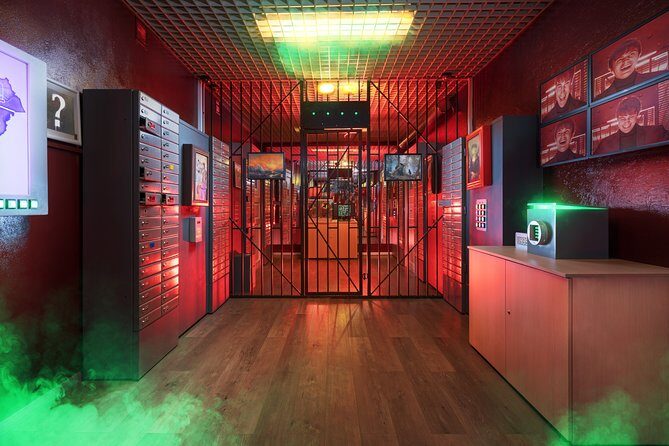
Escape games live on physical details: lighting, props, sound cues, and how the room guides your attention.
What stands out in the feedback:
- The effects are described as great.
- Props are described as attention-grabbing.
- The location itself looks amazing.
- The game is called interactive, which usually means you’re not just reading static riddles.
This is also where the “latest escape room technology” claim starts to make sense. Even without a technical breakdown, the repeated praise for effects and interactivity suggests a modern production value level.
If you care about atmosphere as much as puzzles, this is the kind of hour that can feel like a mini show. The puzzles don’t just exist on paper.
How long it takes and how to plan your day
The game runs about 1 hour. Some people report finishing in around 58 minutes, and that lines up with “about” on the schedule.
In practical terms:
- Plan to be at the venue a little early.
- Don’t schedule a must-do appointment right after.
- If you’re bouncing between Prague sights, treat this as a solid block of time, not a side quest.
Also consider booking timing. Since it’s popular enough to be booked well in advance on average, you’ll likely have more flexibility if you reserve earlier.
Who should book this in Prague
This game fits best if you want:
- A timed team challenge with story pressure.
- A private experience, meaning your group stays together without strangers nearby.
- English play that doesn’t leave you guessing how to participate.
- A good mix of thought and atmosphere.
It also sounds like a solid option for celebrations. One memory specifically calls it a great birthday setup where kids and a friend group had fun.
Who should hesitate?
- If your group hates spooky themes, the trap-and-fear framing might not be your vibe.
- If you’re bringing very young children, the theme and the puzzle difficulty can be a mismatch. Even if the environment is playful, it can still be hard and a bit scary.
Should you book Moriarty’s Phantom Trap?
If you and your group like puzzles, teamwork, and a serious timed challenge, book it. The private setup, strong production values, and host support through speakers make it a good bet when you want an hour that feels intentional, not random.
If your group wants something gentle, with lots of hand-holding, or you need an activity that’s very kid-friendly, you might want to think carefully. The difficulty level can be real, and the tone is ghostly.
FAQ
Is the game offered in English?
Yes. The experience is offered in English.
How long does Moriarty’s Phantom Trap take?
It lasts about 1 hour (approx.).
Where is the meeting point in Prague?
You meet at Mánesova 1613/54, 120 00 Praha 2-Vinohrady, Czechia. The activity ends back at the same meeting point.
Is this a private activity?
Yes. It’s a private tour/activity, and only your group participates.
What ticket type do I need?
You get a mobile ticket.
Is the location near public transportation?
Yes. It’s near public transportation.
Are service animals allowed?
Yes. Service animals are allowed.
How soon will I get confirmation after booking?
Confirmation is received within 48 hours of booking, subject to availability.
Can I cancel for a full refund?
Yes, free cancellation is available if you cancel up to 24 hours in advance of the experience’s start time.