REVIEW · PRAGUE
Prague Art Nouveau and Cubism Walking Tour
Book on Viator →Operated by Insight Cities · Bookable on Viator
Prague’s architecture tells two stories at once. This walking tour connects Art Nouveau elegance to Cubism’s sharp, crystal-like forms, using real buildings you can see up close. I especially like how the historian guide turns façades into context, from gingko leaves and curvy typography to how Eastern art shaped the look. I also like the tight small-group format, capped at 8, because it means more questions and more time to actually notice details. The main downside: it is only about 3 hours, and several stops are brief, so you’ll want good footwear and a willingness to move.
You start in Old Town near Ovocný trh and end around Café Louvre in the New Town area, which is a nice setup for continuing your day on foot. You can choose a morning or afternoon departure, and you’ll get a mobile ticket plus a guide who builds the story as you walk—from design to politics to big historical turns. One more consideration: food and drinks are not included, so plan on grabbing something before or after the tour.
In This Review
- Key Things You’ll Notice on This Prague Architecture Walk
- Why Prague’s Art Nouveau and Cubism Make Such a Perfect Walking Tour
- Price and Value for a 3-Hour Historian-Led Group (Max 8)
- Start at Ovocný trh, Finish Near Café Louvre: Your Day’s Flow
- Stop 1: House of the Black Madonna and Cubism’s Bold Geometry
- Stop 2 and 3: Obecní Dum’s Art Nouveau Landmark Status and K+K Hotel Central’s Firsts
- Stop 4: Café Imperial and the Turn-of-the-Century Feeling Inside
- Stop 5: Czechoslovak Legion Bank and Cubism’s Wartime Memory
- Stop 6: Prague Main Train Station and Learning to Read the Art Nouveau Dome
- Stop 7 and 8: Wenceslas Square’s Art Nouveau/Art Deco Mix and Lucerna Music Bar
- Stop 9: The Upside-Down Wenceslas and Czech National Revival Symbolism
- How to Spot Art Nouveau and Cubism Fast (So You’ll Notice It After the Tour)
- Who This Tour Is Best For (and Who Might Want Something Different)
- When to Book and What to Bring
- Should You Book This Prague Art Nouveau and Cubism Tour?
- FAQ
- How long is the Prague Art Nouveau and Cubism Walking Tour?
- How much does the tour cost?
- What group size should I expect?
- What language is the tour offered in?
- Is the tour ticket mobile?
- Where does the tour start and end?
- Are there any extra admission costs at the stops?
- Is food included?
- What is the cancellation policy?
- Is hotel pickup and drop-off included?
Key Things You’ll Notice on This Prague Architecture Walk
- Art Nouveau details you can spot fast, like gingko leaves, light fixtures, and curvy lettering styles
- Cubism made visible in real façades, including crystal-like forms and pyramid shapes across the city
- A historian guide, with time for questions and real explanations tied to Czech history
- Small-group size (max 8) for a calmer pace and more back-and-forth
- Free admission tickets at the listed stops, so you can focus on the buildings instead of budgeting add-ons
Why Prague’s Art Nouveau and Cubism Make Such a Perfect Walking Tour
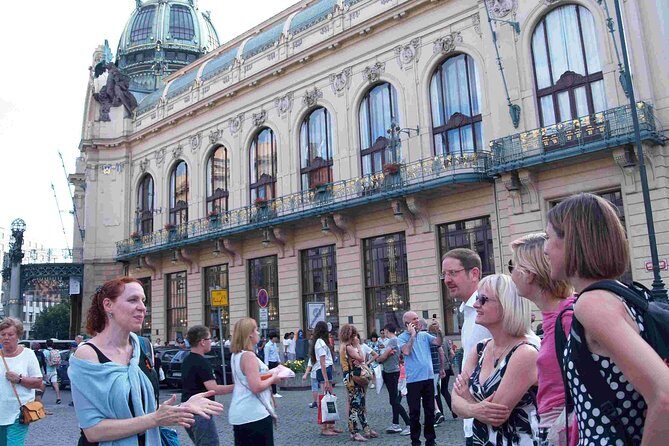
Prague can look like one long, beautiful postcard—until you start learning what you’re actually seeing. On this tour, you train your eye on two movements that feel almost like opposites. Art Nouveau is all curves, ornamental light, and botanical rhythm. Cubism is angular, geometric, and dramatic, like the city decided to build with shards instead of flowers.
What makes this walk work well is the way it’s paced and framed. You’re not just passing buildings; you’re collecting clues as you go: why designers borrowed from elsewhere, how construction tech supported modern life, and how wars and politics pushed Prague’s story in new directions. Even if you don’t consider yourself an architecture person, the guide’s job is to translate style into meaning.
You can also read our reviews of more walking tours in Prague

Price and Value for a 3-Hour Historian-Led Group (Max 8)
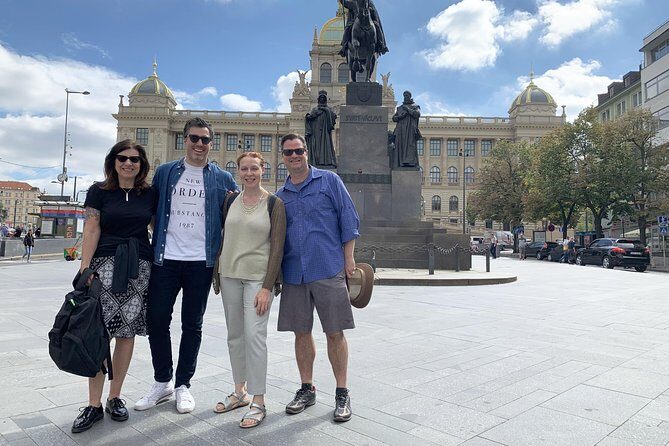
At $126.71 per person for about 3 hours, this isn’t the cheapest way to see Prague. But you’re paying for three things that add real value: a historian guide, a small group size (max 8), and multiple stops where admission tickets are free.
In practice, the small group limit matters more than you’d think. When there are fewer people, the guide can slow down when you ask questions, and you’re more likely to catch those fine points—like how lettering changes, or how a façade’s composition signals Cubist ideas. If you’ve ever done a large group city walk where you spend half your time craning your neck, this format is a different experience.
Also, because food and drinks aren’t included, the tour value is focused: you’re spending the money on architecture and context, not on meals. If you like structured sightseeing that still feels human, this price can start to make sense quickly.
Start at Ovocný trh, Finish Near Café Louvre: Your Day’s Flow
The tour meets at Ovocný trh 19 in Staré Město and ends at Café Louvre on Národní 22 in the New Town area. I like this because it keeps you from feeling trapped in one neighborhood. Old Town is where you can start noticing style cues right away, and finishing near Café Louvre puts you close to options for coffee, a proper meal, and more sightseeing.
There’s also a practical benefit: the start point is near public transportation, so you don’t need to stress about getting there perfectly. If you’re doing this as your first architectural tour in Prague, it’s a smart anchor for later days. You’ll start recognizing Art Nouveau and Cubism features when you stumble into them on your own.
Stop 1: House of the Black Madonna and Cubism’s Bold Geometry
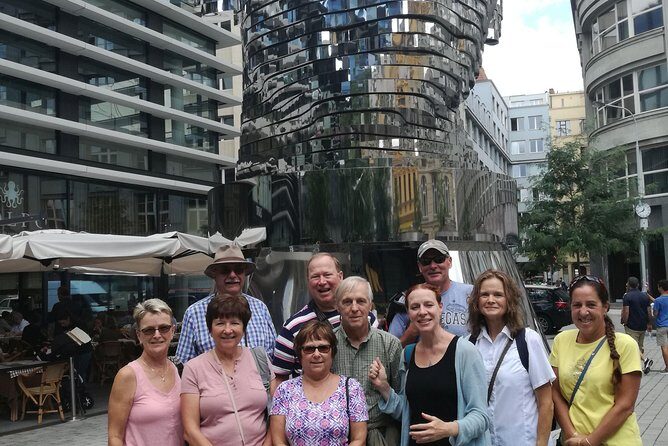
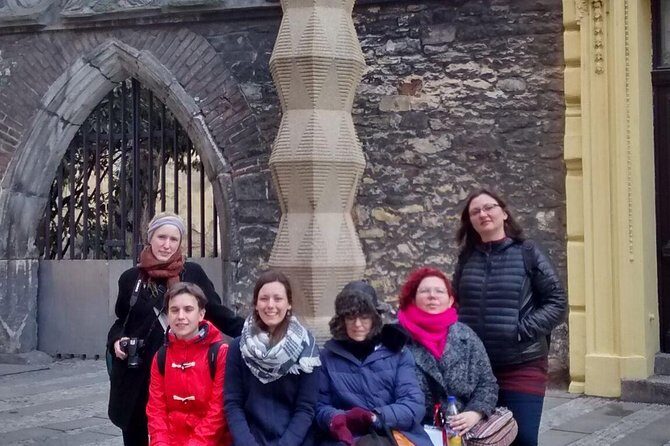
You begin with the House of the Black Madonna, a building described here as Cubist in style. This is a strong opening because Cubism can feel abstract until you connect it to a real location. Here, you’ll see how the movement’s shapes can read as dramatic and intentional, not random.
The best part of starting with this stop is contrast. As you move later to Art Nouveau landmarks, you’ll better understand what Prague architects were reacting against—or building in response to. Expect the guide to frame it with local history and the wider design story, not just paint a style label on the wall.
Time is short at around 10 minutes, so use this stop to lock in your “Cubism checklist”: sharp angles, geometric thinking, and a refusal to keep things smooth and traditional.
Stop 2 and 3: Obecní Dum’s Art Nouveau Landmark Status and K+K Hotel Central’s Firsts
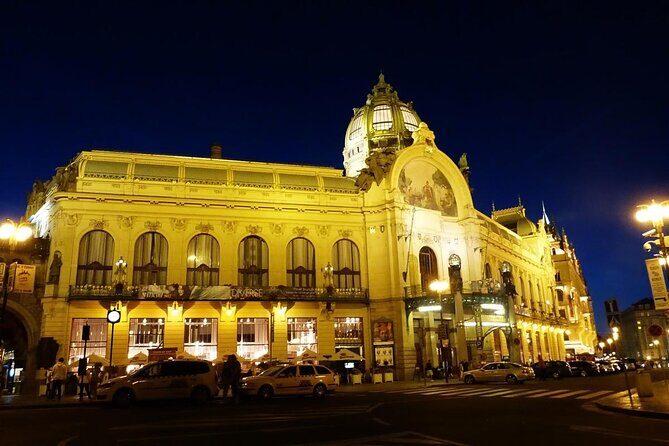
Next up is Obecní Dum, an iconic Art Nouveau site. This is one of the places where Art Nouveau becomes more than decoration. It represents a bigger idea: modern optimism expressed through design—how people wanted their public spaces to feel progressive, beautiful, and forward-looking.
Then you head to the K+K Hotel Central Prague, noted as the first Art Nouveau building in Prague. I like including a “first” early in the tour because it gives you a timeline. You’re not just seeing examples; you’re building a sense of sequence—how styles arrived and spread, and why they caught on.
A nice bonus here is the way the tour ties construction to culture. You’ll hear about groundbreaking technologies used during construction, including central heating and ventilation, drinking water, hydraulic elevators, steam-powered laundry, and an intercom system. That matters because it connects architecture to daily life. You start asking not only what the buildings look like, but what they enabled.
A small caution: these stops are about 15 minutes and 10 minutes respectively, so don’t plan to treat them like a long interior visit. You’re there to learn what to look for, then move on.


Stop 4: Café Imperial and the Turn-of-the-Century Feeling Inside
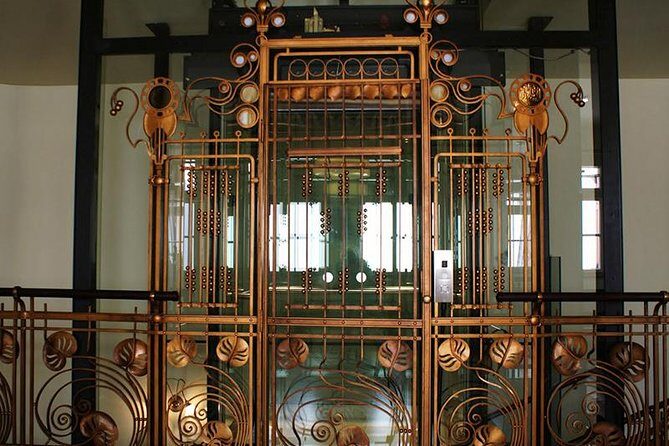
Café Imperial is next, and the focus is its unique Art Nouveau interior. Even if you’re not chasing museum-style quiet, this kind of interior stop is valuable because it shows that Art Nouveau wasn’t only for façades. It showed up in public rooms, where people actually lived their evenings—over coffee, conversations, and plans for the future.
In the bigger story of the tour, Café Imperial also helps you connect the dots between style and mood. Art Nouveau often feels playful and decorative, but it also reflects ambition and a new urban identity. The guide’s explanations should help you read what you’re seeing as part of that mindset.
Time here is about 5 minutes, so your best move is to pick one thing to focus on: a light fixture, a decorative motif, or the way the room’s design shapes your eye. If you try to absorb everything at once, you’ll leave with blur instead of insight.
Stop 5: Czechoslovak Legion Bank and Cubism’s Wartime Memory
The Czechoslovak Legion Bank stop brings Cubism together with a specific historical dedication: the Czechoslovak Legion of the 1st World War. This is a turning point in the tour’s narrative. Up to now, the architecture has been about design and modern life. Here, the story expands into memory and nation-building.
You’re told to look for Cubist architecture and interior details, but the real value is the meaning behind why the space exists. When architecture includes commemoration, it becomes more than style. It becomes a way a country talks to itself—what it chooses to remember, and how.
Time is around 10 minutes, so again, aim for precision. Let one design element symbolize the bigger story the guide is explaining: Cubism as a visual language tied to identity and era.
Stop 6: Prague Main Train Station and Learning to Read the Art Nouveau Dome
Prague hlavní nadrazi (Prague Main Train Station) is the next stop, and the highlight is the magnificent Art Nouveau dome interior. This matters because it’s a rare case where you get major architecture in a place you might otherwise treat like a transit blur.
A station dome can easily become a background feature while you’re thinking about tickets and platforms. On this tour, you’re meant to slow down and treat it as architecture with its own personality. The guide can also help with how to navigate the station area, which is useful even if you don’t change trains later that day.
Time is about 10 minutes. You won’t solve the station like a local, but you can leave with a sense of orientation and a sharper eye for the design choices that make this place feel grand rather than purely functional.
Stop 7 and 8: Wenceslas Square’s Art Nouveau/Art Deco Mix and Lucerna Music Bar
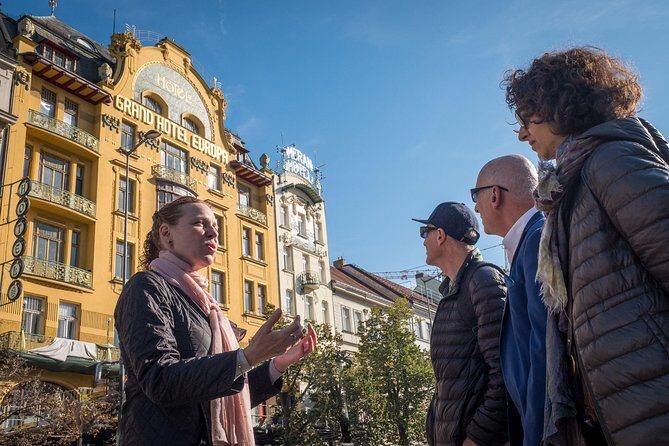
Wenceslas Square is where you’ll talk about Art Nouveau and Art Deco architecture in one setting. This stop is great for learning pattern recognition. You start noticing that Prague’s design story doesn’t sit in neat boxes. Styles overlap, and designers borrowed from different sources depending on what felt current.
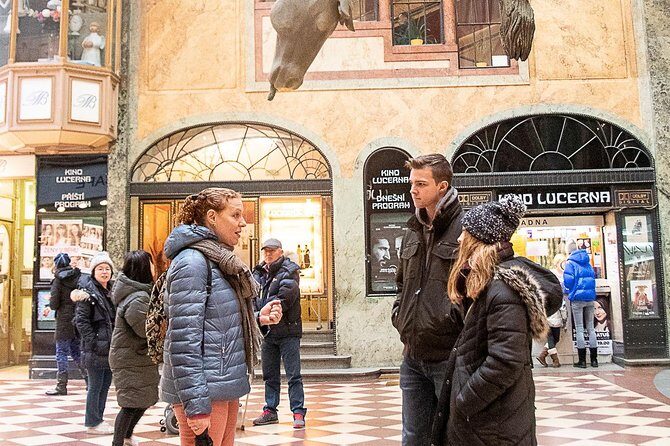
Then you move to Lucerna Music Bar, with an Art Nouveau interior and a focus on the arcades of Prague. The guide frames Lucerna as a glimpse of turn-of-the-century Czech optimism and avant-garde movements. This is one of those moments where the tour shifts from describing design to showing how people wanted to feel about the future.
Important context comes in here as well: fierce European wars changed the course of Prague history. That line of thought is part of why this tour is more than a photo walk. You see how the mood of buildings and public life can shift when history turns.
Lucerna is about a 10-minute stop, so you’ll want to choose what you want to look at first. I recommend picking one architectural element and listening for what the guide says about it, rather than trying to take in everything at once.
Stop 9: The Upside-Down Wenceslas and Czech National Revival Symbolism
The tour ends with the upside-down statue of King Wenceslas riding a dead horse. This stop is short (about 10 minutes), but it’s memorable because it’s about symbolism. The guide connects the contemporary sculpture to Czech history and to the Czech National Revival.
Statues are often used to tell a simple story: who should be honored, and how. This one complicates that. It asks you to think about meaning rather than just appearance. That’s why it’s a strong final stop: after learning about design movements, you end by learning how public art can carry political and cultural messages.
If your goal is to leave with more than just a list of buildings, this ending is where it clicks. You’ll start seeing architecture and art as language—sometimes loud, sometimes coded.
How to Spot Art Nouveau and Cubism Fast (So You’ll Notice It After the Tour)
By the end, you should be able to walk into Prague and recognize style features with more confidence. Here are the visual cues this tour trains you to look for:
- Gingko leaves and botanical ornament on Art Nouveau façades
- Curvy typography tied to the movement’s distinct aesthetic choices
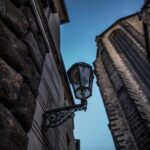
- Elaborate light fixtures influenced by Eastern art and aesthetics
- Crystal-like forms and pyramids associated with Cubism
- A clear sense of contrast: smooth ornament versus sharp geometry
I also like that the tour frames these cues inside a bigger story. Architecture doesn’t happen in a vacuum. You learn how Prague became one of Europe’s great centers for Cubist art, and why these design ideas spread where they did.
If you’re taking photos, don’t only chase the biggest façade. Get close enough to catch the small design language—letters, motifs, junctions where ornament meets structure. That’s where the “aha” moments live.
Who This Tour Is Best For (and Who Might Want Something Different)
This is a great fit if you:
- love architecture and want historical context tied directly to what you see
- want a small-group experience with time for questions
- are visiting Prague for the first time and want a fast way to build visual literacy
- like being guided through both Art Nouveau and Cubism in one coherent route
It may feel less ideal if:
- you want a long, slow interior-only museum day
- you hate walking (the tour lasts about 3 hours, and stop times are brief)
- you expect food or a built-in meal plan (it’s not included)
The good news is that the experience is designed for “most travelers,” and the walking route is short enough to keep momentum without turning into a grind.
When to Book and What to Bring
The tour is offered in English, with a maximum of 8 travelers. It also uses a mobile ticket, and it’s common for departures to fill, with an average booking window around 69 days in advance. If you have fixed travel dates, I’d book early.
What to wear is simple: comfortable shoes. You’ll be moving between sites and you’ll want to stay upright and alert long enough to notice details, not just survive the route. Also, bring a camera or phone with decent battery. You’ll want photos that capture both the big façades and the smaller design moments.
Should You Book This Prague Art Nouveau and Cubism Tour?
I think you should book it if you want your Prague sightseeing to feel smarter, not just longer. The mix of Art Nouveau landmarks and Cubist structures gives you contrast, and the historian guide connects what you see to why it matters. The small group size helps you actually ask questions, and the fact that listed admissions are free at the stops makes it easier to commit without surprise costs.
If you’re on the fence because the price feels high, treat it as a guided learning tool. You’re buying time with a historian and a route designed to teach your eye. If architecture is even a moderate interest for you, this tour is a solid way to start seeing Prague as a designed city, not just a pretty one.
FAQ
How long is the Prague Art Nouveau and Cubism Walking Tour?
The tour lasts approximately 3 hours.
How much does the tour cost?
The price is $126.71 per person.
What group size should I expect?
The tour has a maximum of 8 travelers.
What language is the tour offered in?
It’s offered in English.
Is the tour ticket mobile?
Yes, it uses a mobile ticket.
Where does the tour start and end?
It starts at Ovocný trh 19, Staré Město, and ends at Café Louvre on Národní 22.
Are there any extra admission costs at the stops?
Admission tickets are listed as free for the tour’s stops.
Is food included?
No. Food and drinks are not included unless specified.
What is the cancellation policy?
Free cancellation is available up to 24 hours in advance for a full refund.
Is hotel pickup and drop-off included?
No, hotel pickup and drop-off are not included.