REVIEW · PRAGUE
Prague Art Nouveau Tour
Book on GetYourGuide →Operated by TOMAS TOUR · Bookable on GetYourGuide
Prague’s Art Nouveau hits you fast. In two hours, this tour shows you how the style shapes doorways, street life, and even metro entries in the center of town, with a clear route from République Square toward Wenceslas Square. I love how quickly you learn to spot the details, and I also like that the guide connects the buildings to Prague’s bigger history instead of treating everything like decoration.
The guide focuses on the work of major names like Antonín Balšánek and Osvald Polívka, plus other architects, so you get a sense of who shaped the look and when. If you’re hoping for Art Nouveau only, the tour can feel a bit broader, since it also uses general city context and some extra variety along the way.
Price check: it’s listed at $34 per group up to 25, which can be great value if you want a guided walk without spending for a long day. The only real catch to consider is that the live guide is in French, so plan ahead if you want everything explained at your level.
In This Review
- Key things you’ll notice on this Art Nouveau tour
- Art Nouveau in Prague: what you’re really looking for
- Meeting Tomas and setting the pace for a 2-hour architecture walk
- The route that makes comparisons easy: République Square to Wenceslas Square
- Metro gates and lettering: the Art Nouveau detail you’ll spot instantly
- The architects behind the style: Balšánek, Polívka, and more
- Why the general history lesson makes the buildings feel less random
- What the private group format changes for your day
- Price and value: $34 per group for a focused architecture hit
- Practical tips that make the tour feel smooth
- Who this Prague Art Nouveau tour is best for
- Should you book this tour
- FAQ
- FAQ
- How long is the Prague Art Nouveau Tour?
- What does the price include?
- Is it a private group or a shared tour?
- Where does the tour start and end?
- Do I need to speak French?
- What’s the meeting process at my hotel?
- Is there a cancellation policy?
- What should I bring?
Key things you’ll notice on this Art Nouveau tour
- A focused route from République Square through Na Příkopě toward Wenceslas Square, so the architecture is easy to compare.
- Metro-entry Art Nouveau details, including swirling, plant-like gatework and distinctive lettering you’ll recognize right away.
- Architect names that matter: Antonín Balšánek, Osvald Polívka, and others are part of the storyline.
- A guide who explains history clearly in French, with explanations described as interesting and the guide as attentive.
- A private-group format that keeps the pace comfortable for questions.
- Two hours of planning-friendly length, ideal if you want Art Nouveau without losing half a day.
Art Nouveau in Prague: what you’re really looking for
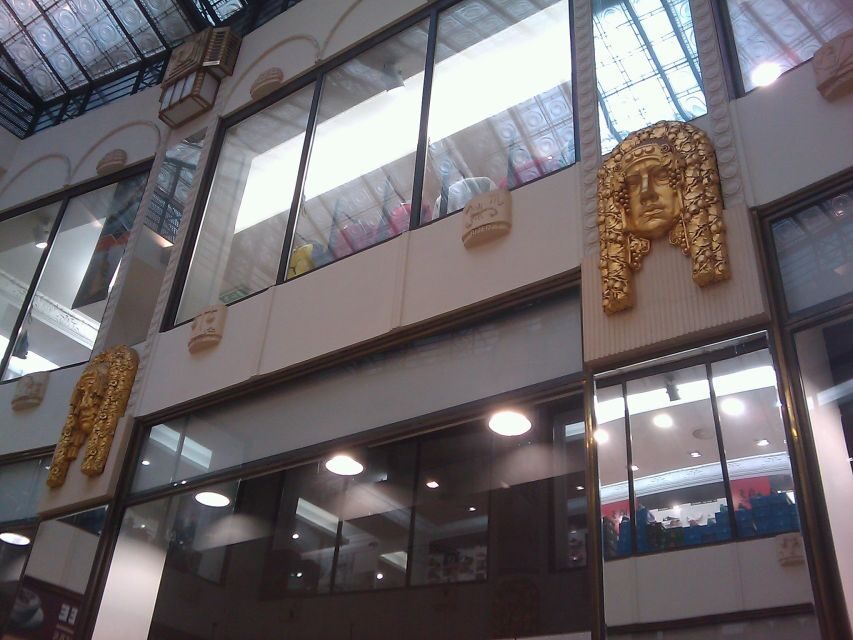
Art Nouveau is easier to understand when you know what to watch for. You’re looking for organic lines—plant-like curves, ornament that wraps around structure, and lettering that feels like part of the design rather than an afterthought. In Prague, that look shows up in places you might not expect, including entryways linked to the metro.
What makes this tour feel worthwhile is that it doesn’t just point at pretty buildings. It teaches you how the style spread across countries and how Prague’s architects adapted it to local needs and tastes. That context turns random street corners into something you can actually read with your eyes.
You can also read our reviews of more tours and experiences in Prague.


Meeting Tomas and setting the pace for a 2-hour architecture walk
This tour is run by Tomas Tour, and the guide is often identified as Tomas during the experience. You’ll be picked up from your hotel reception, and the guide holds a desk with a name in front of the hotel so you can spot them quickly. It’s a smart setup if you don’t want to waste time guessing meeting points.
The experience lasts about 2 hours. Starting times depend on availability, so you’ll want to choose the slot that fits your day. The moving part can be on foot, by tram, or by metro, which matters because Art Nouveau isn’t concentrated in one tiny block—you’ll be covering a central stretch.
The route that makes comparisons easy: République Square to Wenceslas Square
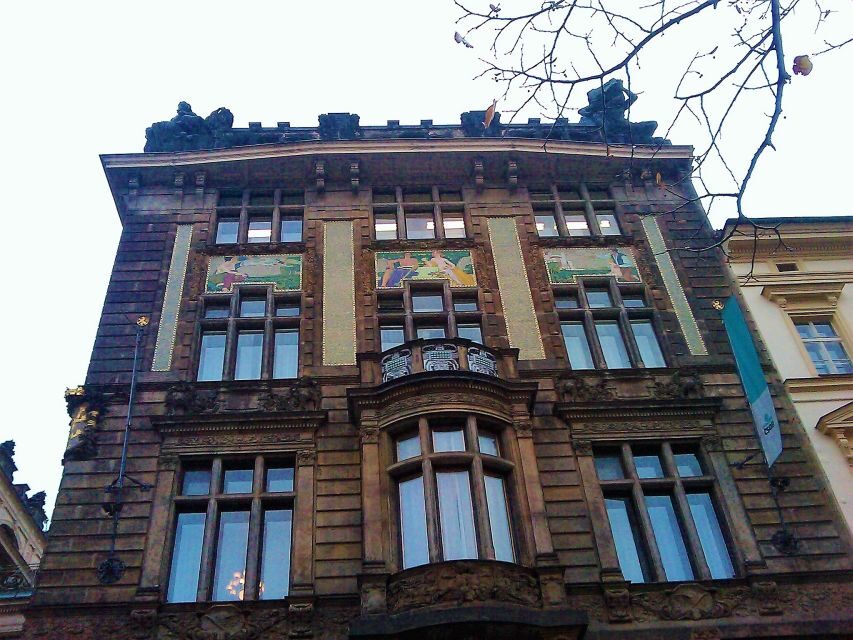
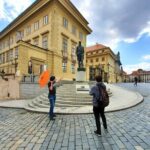
The visit starts in Republiky Square and continues via Na Příkopě Street to Wenceslas Square. That matters because you can see how the vibe changes as you move through Prague’s central axes. It’s like turning on the same camera lens while walking forward: the style stays consistent, but the surrounding city story evolves.
Na Příkopě is the kind of corridor where you can notice contrasts—between older urban fabric and later decorative ambition. Even if you’re not a building-spotter by nature, this route gives you natural sightlines to compare details without having to do heavy research.
At Wenceslas Square, you’re positioned where people naturally spend time. That’s useful because if you want to keep exploring afterward, you’re already at a logical hub instead of being dropped in the middle of nowhere.
Metro gates and lettering: the Art Nouveau detail you’ll spot instantly
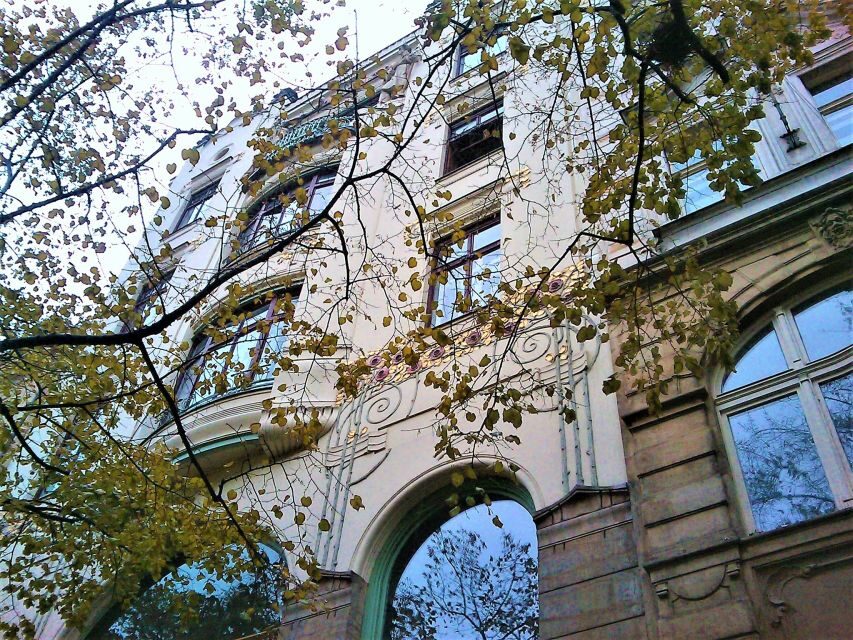
If you’ve been to Paris, you’ll recognize the vibe of those swirling, plant-like entry gateways that often frame transit spaces. Prague has its own versions of that idea, and this tour points you to them so you learn the pattern quickly.
The guide emphasizes the distinctive lettering and ornamental forms that act like an identity badge for the system. Once you see it, you’ll start noticing the style at a faster pace than you would on your own—because you now know what to filter for visually.
This is one of the highlights of the experience for a simple reason: transit-related design is everywhere, but it’s also easy to ignore. Here, it becomes the main lesson.
The architects behind the style: Balšánek, Polívka, and more
A key part of the tour is its focus on specific architects: Antonín Balšánek and Osvald Polívka, plus other contributors mentioned in the format. Having real names attached to the look changes how you experience the city. You’re not just admiring shapes—you’re learning that the style was built by people with ideas, careers, and design choices.
Balšánek and Polívka are used as anchors for the story, helping you connect the ornamental look to Prague’s architectural development. Even if you only catch a few moments of context, those names give your brain something to organize the visuals around.
And since this is a guided experience, you’re not stuck trying to identify buildings from memory while also following a map. The guide does the linking work.



Why the general history lesson makes the buildings feel less random
Art Nouveau can look like a visual theme at first. The history piece is what turns it into a timeline—why certain decorative choices show up when they do, and how Prague’s urban identity evolved.
The tour includes general history of Prague alongside the architecture focus. That combination is exactly what I’d want if I’m traveling with limited time. In two hours, you don’t have time for a full architecture textbook, but you do have time to gain a framework: Prague’s center developed through layers, and Art Nouveau is one of the decorative chapters you can read on the street.
One of the most praised aspects from the experience is that the explanations feel structured and the guide stays attentive. That kind of delivery matters because architecture tours can sometimes become lecture-heavy. Here, the goal is understanding, not just sight-seeing.
What the private group format changes for your day
This is listed as a private group. That doesn’t automatically mean the group is tiny, since the price is listed for a group up to 25, but it still tends to feel more flexible than a large join-the-crowd situation. You can ask questions in the moment, and the pace is easier to manage.
You’re also not dealing with the friction of matching your schedule to strangers. If your group includes people with different interests—someone obsessed with decorative details and someone who wants the city story first—private format helps the balance work.
It’s also a good fit if you’re the type who likes to take photos but doesn’t want to get swept along like a tour-factory product. A guide can slow down where the architecture needs your attention.
Price and value: $34 per group for a focused architecture hit
The price is listed at $34 per group up to 25. Even though you should double-check what “per group” means for your exact booking, it signals a very low-cost, value-forward way to get a live guide for a 2-hour experience. For Prague, that can be a smart use of your time because guide-led context is often the difference between noticing something and truly understanding it.
What you’re paying for here is not just a walk. It’s the interpretation: why the style looks the way it does, how it spread, and how Prague’s architects—especially Antonín Balšánek and Osvald Polívka—fit into the larger picture.
And because the tour duration is short, the opportunity cost is low. You’re not tying up a whole day that you might want for museums, beer halls, or just wandering.
Practical tips that make the tour feel smooth
Wear comfortable shoes. This is a city-center route that can shift between walking and transit, and the comfort factor is what lets you actually look at facades without constantly thinking about your feet.
Also, pay attention to the language: this is a live tour guide in French. If your French is basic, you might still enjoy the architectural visuals, but the “why” part may not land fully. If French is comfortable for you, you’ll likely enjoy it more—many positive impressions are tied to the guide’s passion and ability to explain.
Finally, plan your day so you don’t feel rushed afterward. You’ll come away spotting Art Nouveau details, and it’s fun to continue the habit at your own pace once the guide has taught you what to look for.
Who this Prague Art Nouveau tour is best for
This tour is ideal if you like architecture but don’t want a full-day commitment. It’s also a great match if you’ve already seen some big sights and you want something more specific and local: Prague’s version of Art Nouveau, including the transit-linked entryways.
You’ll probably enjoy it most if:
- You want a guided introduction to Art Nouveau with names you can remember.
- You’re interested in Prague’s general history as a backbone for what you see.
- You’re traveling with a small group and prefer a private format.
If you only want a deep dive into a single building type with lots of time at each site, you might feel the two hours are quick. But for many people, that pace is the sweet spot.
Should you book this tour
Yes, I’d book it if you want a time-efficient, guide-led way to learn how Art Nouveau shows up in Prague’s center. The strongest reasons are the clear focus on major Art Nouveau architects like Antonín Balšánek and Osvald Polívka, and the way the tour blends architecture with practical city context so the buildings make sense, not just look nice.
Book it especially if French explanations work for you and you want a route that links République Square, Na Příkopě, and Wenceslas Square into one coherent story. If French is a barrier and you need full understanding, consider whether you can manage the architecture visuals on your own before choosing this one.
FAQ
FAQ
How long is the Prague Art Nouveau Tour?
The tour lasts about 2 hours. Starting times depend on availability.
What does the price include?
It includes a local guide. Pickup is also included, and the guide meets you with a name desk in front of your hotel reception.
Is it a private group or a shared tour?
It’s listed as a private group.
Where does the tour start and end?
The tour starts in Republiky Square and continues via Na Příkopě Street to Wenceslas Square.
Do I need to speak French?
The live tour guide is French. The tour data specifies French as the language, so plan around that.
What’s the meeting process at my hotel?
The guide will pick you up at your hotel reception and hold a desk with the name in front of the hotel so you can easily find them.
Is there a cancellation policy?
Yes. Free cancellation is offered up to 24 hours in advance for a full refund.
What should I bring?
Wear comfortable shoes, since the experience may involve walking and transit during the 2-hour route.