REVIEW · PRAGUE
Prague Castle St. Vitus Cathedral, Royal Palace, St. George’s Basilica
Book on GetYourGuide →Operated by Robert Procházka · Bookable on GetYourGuide
Prague Castle is history with stairs. This 3-hour guided walk through Prague Castle grounds connects Gothic, Renaissance, and Baroque big ideas to specific people and objects, with a historian keeping it clear and grounded. I especially like how Mr. Robert Procházka turns architecture into stories you can actually remember.
I also love the sharp sequence inside St. Vitus Cathedral, where you move from the Wenceslas Chapel up a spiral staircase toward the crown chamber. One possible drawback: the tour is in German only, so if you’re not comfortable with the language, you’ll need to rely on your own reading of signage and details.
In This Review
- Key tour highlights you will not want to miss
- Meeting at Pražský hrad and how the tour flows
- St. Vitus Cathedral: Gothic proof, plus the Wenceslas Chapel details
- Old Royal Palace: crown jewels, a late Gothic throne room, and the Thirty Years’ War spark
- St. George’s Basilica: the tomb of St. Ludmila and the myth behind the stone
- Golden Lane: Rudolf II’s alchemists, Kafka’s little houses, and a time jump
- Prague Castle grounds and the view that ties it together
- Price and value: what $41 includes and what to budget for entry tickets
- Who should book this German Prague Castle tour
- Should you book Prague Castle St. Vitus, Royal Palace, St. George’s Basilica, and Golden Lane?
- FAQ
- Where is the meeting point for the Prague Castle tour?
- How long is the guided tour?
- What languages is the tour offered in?
- What sights are included in the itinerary?
- Who is the guide for this tour?
- Are entrance tickets included in the price?
- How much are the entrance tickets?
- Will the guide help with ticket lines?
- Is the tour suitable for young children?
- What is the cancellation policy?
Key tour highlights you will not want to miss
- Mr. Robert Procházka leads with historian-level context and practical explanations
- St. Vitus Cathedral: Wenceslas Chapel, Gothic shrine, and the spiral staircase route
- Royal Palace: the largest late Gothic throne room in Central Europe plus the Third Defenestration story
- St. George’s Basilica: tomb of St. Ludmila, with the legend of her death
- Golden Lane: Rudolf II’s alchemists searching for an elixir of life and Kafka’s connection
Meeting at Pražský hrad and how the tour flows
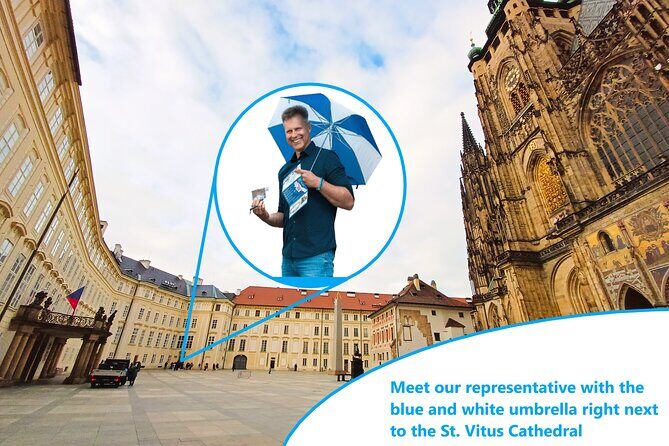
Your meeting point is right at the streetcar stop Pražský hrad (Prague Castle), served by streetcar lines 22 and 23 in the direction of Bílá hora. You’ll meet your guide, Mr. Robert Procházka, at that stop. This is handy because it keeps things simple: you’re already in the castle area before the tour even starts.
The tour runs about 3 hours, and it’s a structured route through the castle’s major sights: St. Vitus Cathedral, the Old Royal Palace, St. George’s Basilica, and the Golden Lane. The end point is described as returning toward the meeting area, with the route finishing in/around Golden Lane. In real terms, you should plan for a steady pace and lots of standing in doorways and viewpoints while explanations land.
The best part is that the guide doesn’t just point at buildings. You get a historian’s way of explaining why these places matter: where power was staged, how rulers were celebrated, and how legends attached themselves to real stone. If you like understanding the “why,” this format is a good match.
You can also read our reviews of more tours and experiences in Prague.


St. Vitus Cathedral: Gothic proof, plus the Wenceslas Chapel details
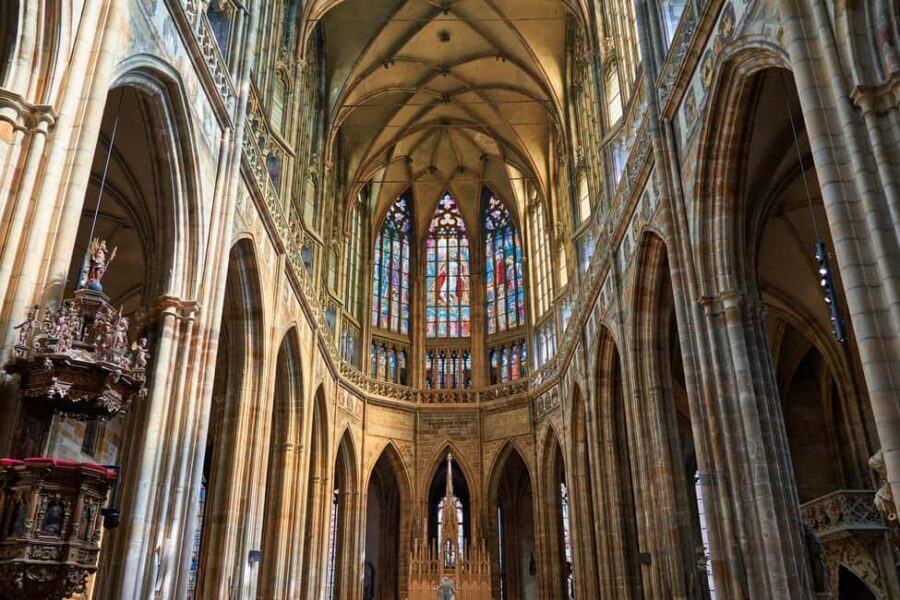
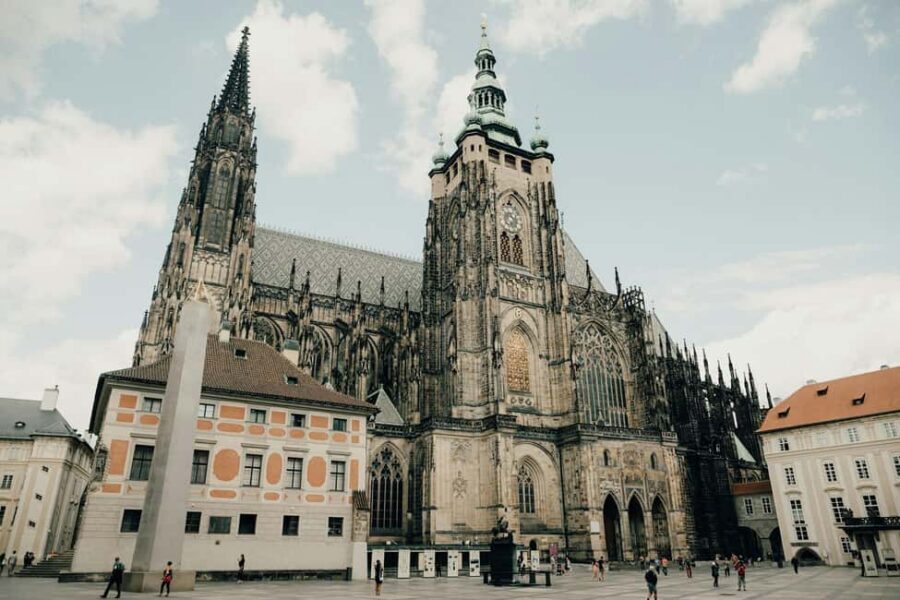
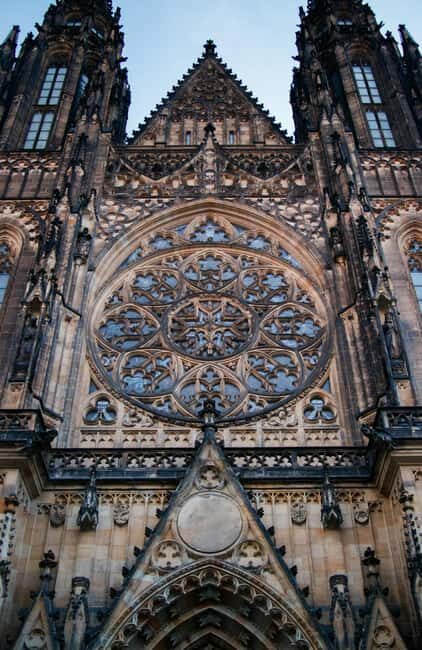
St. Vitus Cathedral is the kind of place where your first reaction is visual, then your second reaction is, wait, how old is this? The cathedral is the burial and coronation site of Bohemian kings, and it traces back even further than you might expect. An older predecessor building, a Romanesque rotunda, was founded around 925.
The crown jewel of the visit is the 14th-century Gothic architecture, and the guide helps you understand the inside route. You’ll hear about key patron saints laid to rest here, including St. Wenceslas and St. Adalbert. If you only know one Czech name tied to national history, Wenceslas is the one, and this is one of the clearest ways to see why.
What I really like is the specific path through the story of Wenceslas. You’ll learn about the Wenceslas Chapel, decorated with semi-precious stones, and the Gothic shrine where the remains of St. Wenceslas rest. From there, a spiral staircase leads up toward the crown chamber, where the coronation regalia are kept. Even if you’re not a museum person, that staircase and the “what belongs where” feeling make the visit click.
Practical tip: plan to look up and around. Gothic design rewards you for shifting your attention, and your guide’s explanations make those details feel intentional rather than random decoration.
Old Royal Palace: crown jewels, a late Gothic throne room, and the Thirty Years’ War spark
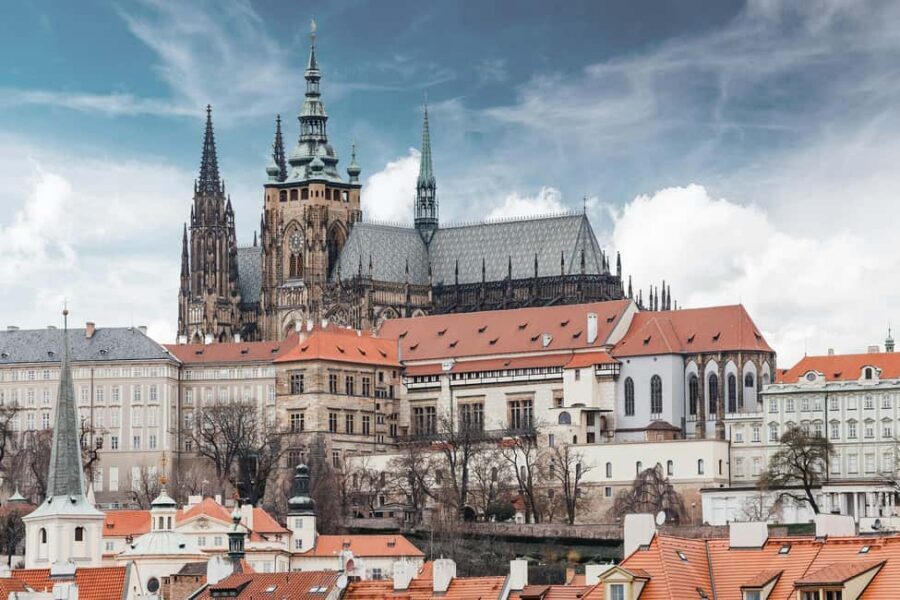
Next you move into the old Royal Palace, where you’ll get a mix of ceremonial power and political drama. One highlight is that you’ll see a replica of the Bohemian crown jewels. It’s not the real thing you’re chasing, but the point is learning what these symbols meant and why they were used.
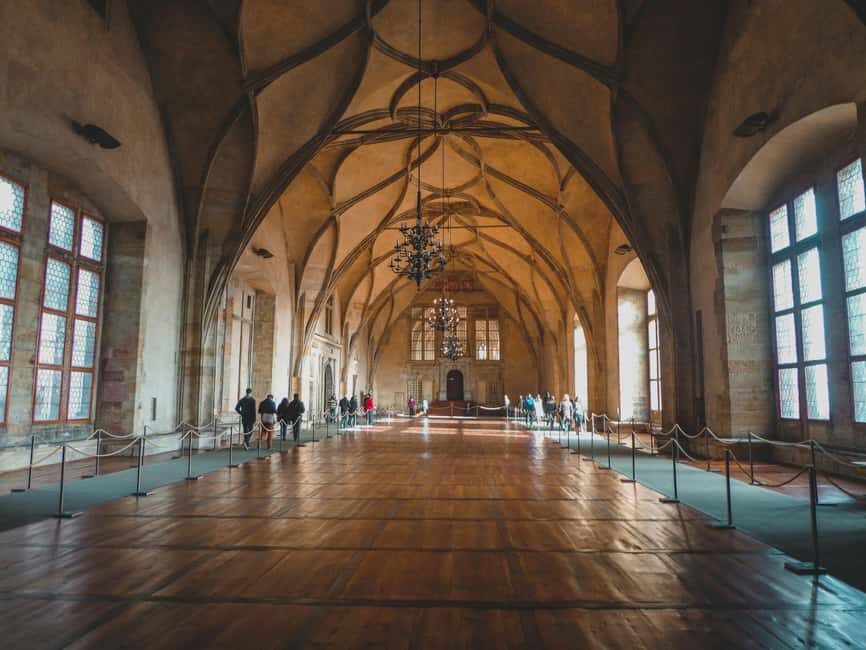
You’ll also visit the largest late Gothic throne room in Central Europe. That phrase matters because it signals scale, but your real takeaway should be how the room functions as theater for authority. Thrones aren’t just furniture here—they’re built to project status, and the architecture supports that message.
The Royal Palace stop also connects directly to European history. You’ll hear about the Third Defenestration of Prague, tied to the State Chancellery, and how it helped start the Thirty Years’ War. Defenestration sounds like a party trick until you place it in context: it’s a moment when politics became physical, and it changed what Europe did next.
One small consideration: this part is concept-heavy. You’ll get a lot of information in a limited time, so it helps to stay mentally switched on. If you prefer slower storytelling, still go—just expect the guide to pack meaning into the spaces you stand in.
St. George’s Basilica: the tomb of St. Ludmila and the myth behind the stone
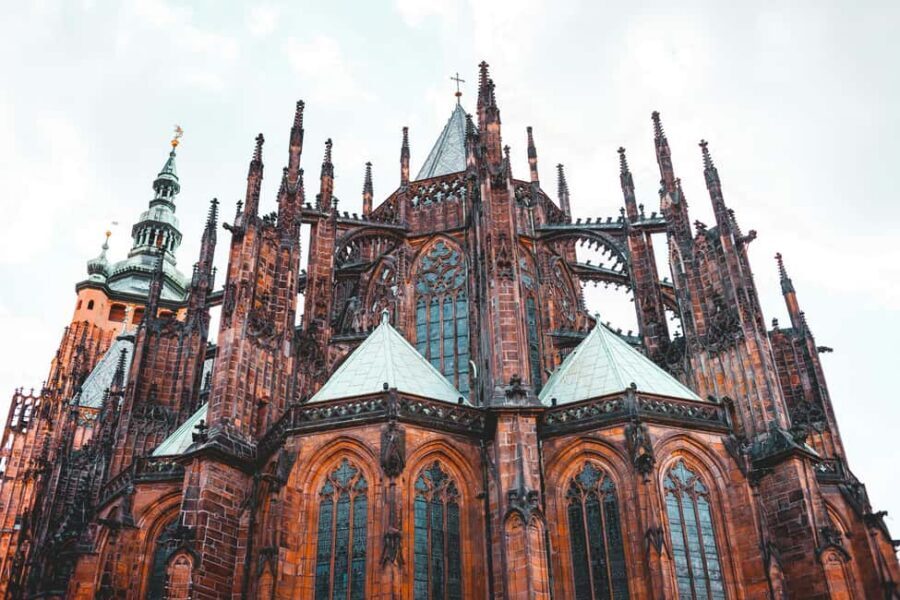
St. George’s Basilica goes back even further than you might guess, with origins in the 10th century. It’s known for housing the tomb of St. Ludmila, the grandmother of St. Wenceslas. That connection alone makes it feel personal: the cathedral handles coronations, and this basilica anchors a key family thread.
Your guide will explain the story of St. Ludmila’s death, including that she was strangled to death by Viking warriors, acting on behalf of her daughter-in-law. That’s the kind of detail that can sound sensational at first, but within the basilica it makes sense as part of how medieval Europe told its own story—saints, power shifts, and family politics all tangled together.
Architecturally, it offers a different mood from the huge Gothic cathedral. Basilicas feel calmer, more enclosed, more about atmosphere than spectacle. If you want variety in how Czech history is presented, this stop delivers.
Practical note: don’t rush through this section. This is where your listening matters most, because the meaning sits in names and relationships rather than in one obvious visual centerpiece.
Golden Lane: Rudolf II’s alchemists, Kafka’s little houses, and a time jump
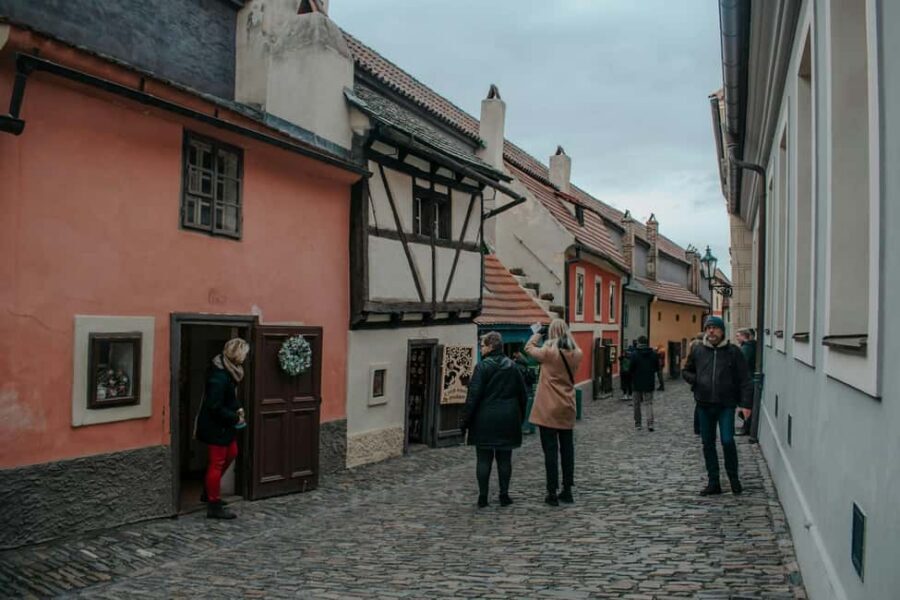
After the big formal buildings, the tour shifts to something almost human-scale: the Golden Lane. This is where you’ll get a return trip to the 16th century through the lens of characters who were chasing impossible things.
You’ll learn that Emperor Rudolf II’s alchemists were there in search of an elixir of life, and that they tried to produce gold from lead. It’s a clever way to understand why people built their lives around experiments and theories even when success was far from guaranteed. The physical setting helps: you can imagine daily routines, supplies, and obsession taking shape in small spaces.
Then there’s the literary link that many people come for. Franz Kafka lived in one of the little houses on Golden Lane. Even if you’re not a Kafka expert, it’s a satisfying contrast: royal politics and religious legitimacy earlier in the tour, then a writer’s life in the same corridor of history.
I like that Golden Lane doesn’t feel like a separate attraction—it feels like the final paragraph of the castle story. You finish with the sense that the castle wasn’t only for kings and ceremonies. People lived here, worked here, argued here, and dreamed here.




Prague Castle grounds and the view that ties it together
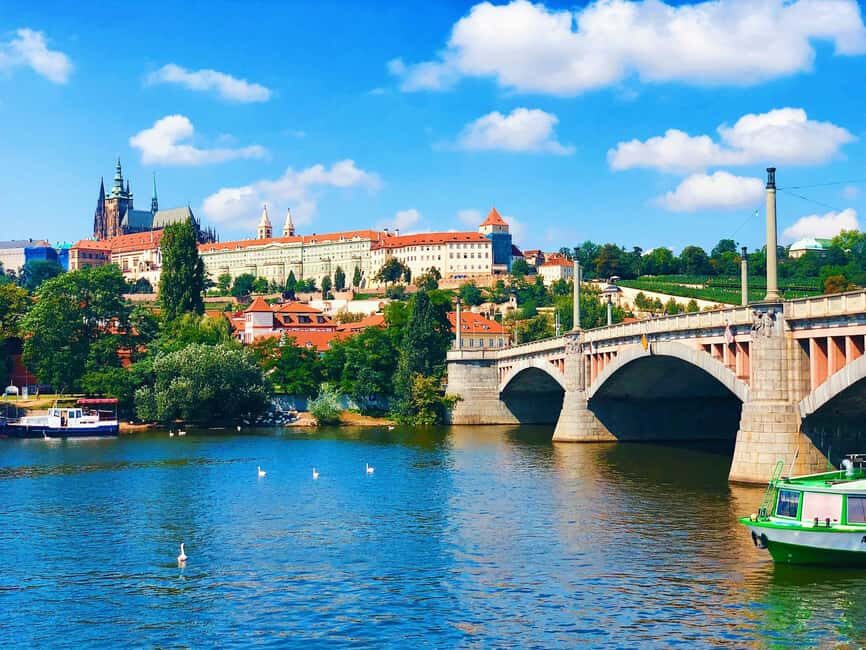
One reason this tour feels worth it even before you reach the cathedral is the castle grounds themselves. The grounds are listed in the Guinness Book as the largest enclosed castle grounds in the world, and that statistic is useful because it explains why the visit requires structure. You’re moving through space, and your guide gives you the mental map so you don’t feel lost.
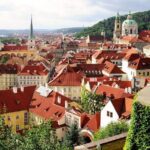
You’ll also get breathtaking views of the whole of Prague from the castle area. The view is not just a photo moment. It’s a way to understand why this place kept winning: height, control, visibility, and drama.
If you’re the kind of traveler who likes connecting geography to history, the viewpoint is where the stories settle. You’ll see how the city spreads, and suddenly the castle’s role stops being abstract. It becomes a command point.
Try a simple routine: before the view, listen for why this location mattered. Then, when you look out, match what you heard to what you can see. That’s how tours turn into memories, not just timestamps.
Price and value: what $41 includes and what to budget for entry tickets
The tour price is listed as $41 per person, and that’s for the 3-hour guided tour in German by a historian. Importantly, entrance tickets are not included for St. Vitus Cathedral, the Old Royal Palace, St. George’s Basilica, and the Golden Lane.
Entrance tickets are priced at €18 for adults and €14 for seniors (from 65 years of age), based on the provided info. The practical value question is simple: you’re paying extra for the guide because the guide handles the story connections and—this matters—helps you avoid long waits. The guide accompanies you to the castle ticket office, and the tickets are bought at a counter exclusively for guides, so you should not expect a long queue.
So the best way to judge value is this: if you’re willing to pay for interpretation, the ticket helps your time. If you’re purely trying to check boxes quickly on your own, you could do it without a guide—but you’d miss the links between coronations, specific shrines, the Third Defenestration, and the alchemists and Kafka connection.
If you’re traveling with a mix of history interest levels, this guided format is a strong compromise. You get depth without needing to study beforehand.
Who should book this German Prague Castle tour
This tour fits best if you want a clear guided route through the biggest castle highlights, with a historian’s explanations that connect architecture to events and people. I think it’s especially good for visitors who feel overwhelmed by “where do I start” at Prague Castle.
You should also consider the language. It’s German, and the tour is not suitable for children under 10. If your German is limited, you might still enjoy the visuals, but the main value here is what you’ll understand and remember from the explanations.
If you like structured tours and hate the feeling of wandering in the wrong direction, the meeting point setup at Pražský hrad and the fixed 3-hour route make it easier. And if you’re someone who wants one “main” castle experience rather than multiple separate tickets and separate visits, this itinerary hits the major anchors in one go.
Should you book Prague Castle St. Vitus, Royal Palace, St. George’s Basilica, and Golden Lane?
Yes, if you want one guided, story-driven pass through the castle that ties everything together—from St. Vitus and the Wenceslas Chapel path, to the Royal Palace political flashpoints, to Golden Lane’s alchemists and Kafka. The fact that your guide is Mr. Robert Procházka and the tour includes the historian-led context is exactly what makes this more than a walk around impressive buildings.
Book it especially if you know you’d otherwise struggle to connect symbols, timelines, and locations into a coherent picture. If German is a deal-breaker, though, you’ll probably be happier with a tour offered in a language you fully understand.
FAQ
Where is the meeting point for the Prague Castle tour?
You meet at the streetcar stop Pražský hrad (Prague Castle), at the S-Bahn streetcar stop area, with streetcar lines 22 or 23 in the direction of Bílá hora.
How long is the guided tour?
The duration is 3 hours. Starting times depend on availability.
What languages is the tour offered in?
The tour guide gives the tour in German.
What sights are included in the itinerary?
You visit St. Vitus Cathedral, the Old Royal Palace, St. George’s Basilica, and the Golden Lane.
Who is the guide for this tour?
The tour is led by historian Mr. Robert Procházka.
Are entrance tickets included in the price?
No. Entrance tickets for St. Vitus Cathedral, the Old Royal Palace, St. George’s Basilica, and the Golden Lane are not included.
How much are the entrance tickets?
Adults pay €18. Seniors (from 65 years of age) pay €14. The guide will accompany you to the ticket office for payment and ticket purchase.
Will the guide help with ticket lines?
The guide purchases tickets at a counter exclusively for guides, so you should not have to queue for long.
Is the tour suitable for young children?
No, it is not suitable for children under 10.
What is the cancellation policy?
You can cancel up to 24 hours in advance for a full refund.