REVIEW · PRAGUE
Prague Castle Tour Including Admission Ticket – 2.5 Hour
Book on Viator →Operated by Get Prague Guide · Bookable on Viator
Kings and crowns start on the bridge.
This Prague Castle tour is a smart hit of the city’s power center, with included admission tickets for the big interiors and a guide who turns monuments into people and events. I like the way it’s structured like a storyline, not a checklist, and I also like that the tickets are handled for you—so your time goes to looking, listening, and asking questions.
One thing to think about: early time is spent on Charles Bridge, and crowds can make the pace feel busy on some days. If your main goal is maximum minutes inside the Castle buildings, you may feel shorted at the start.
In This Review
- Key points worth knowing before you go
- A 2.5-hour plan that actually respects your time
- Charles Bridge start: good context, but expect a crowd
- Lesser Town Square: where the story turns geographic
- Inside Prague Castle: Vladislav Hall and the “people behind power” feel
- St. Vitus Cathedral: coronations, symbols, and what to actually look for
- St. George’s Basilica and the Old Royal Palace: church + palace in one flow
- Golden Lane: the best place for daily-life context
- Tram ticket and the walking reality: prep so you stay comfortable
- Price and value: what you’re paying for (and why it can be worth it)
- Guide quality: why names like Peter, Steve, and Jan matter
- Crowds and the line reality: plan for less-perfect conditions
- Who should book this tour (and who should do something else)
- Should you book Prague Castle Tour Including Admission Ticket (2.5 Hours)?
- FAQ
- FAQ
- How long is the Prague Castle tour?
- Where does the tour start?
- Where does the tour end?
- Is the tour offered in English?
- What tickets are included?
- Is a tram ticket included?
- Is Charles Bridge included in the route?
- Are there any seasonal closures in September and October?
- What physical fitness level is needed?
- What is the cancellation policy?
Key points worth knowing before you go
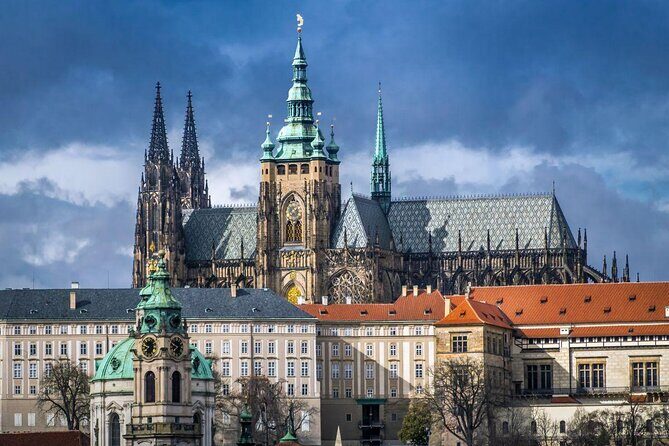
- Admission tickets are included for St. Vitus Cathedral, the Old Royal Palace, St. George’s Basilica, and Golden Lane.
- Tram ticket is included to cut down the steep uphill slog.
- Charles Bridge is part of the route, with guided context before you reach the Castle hill.
- St. Vitus Cathedral gets real attention, including coronations of Czech kings and queens.
- Golden Lane adds the everyday angle, with stories about the residents who lived there.
- English guides vary by day, with many praised for humor and strong storytelling.
A 2.5-hour plan that actually respects your time
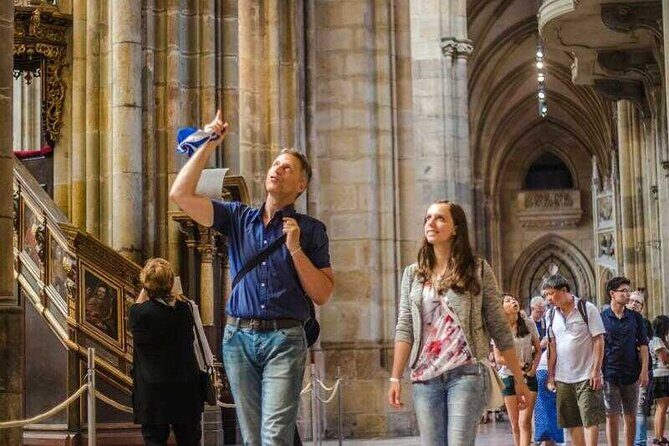
Prague Castle is one of those places where your feet can do the sightseeing even when your brain is asleep. This tour tries to solve that problem fast. You get a guided route across the key areas—Charles Bridge, Lesser Town, the Castle highlights, St. Vitus Cathedral, St. George’s Basilica, the Old Royal Palace, and finally Golden Lane—within about 2 hours 30 minutes.
The big value play is the included admissions. When you walk into places like the cathedral and the palace areas already covered by your ticket, you lose less time to ticket counters and ticket delays. That matters because the Castle complex is popular, and you’ll feel it. A good portion of the “time savings” is really about reducing decision-making when you’re standing in a line that’s not moving fast.
Also, there’s a nice “vacation math” benefit. The tour runs in the afternoon, so your morning stays free for other Prague classics—parks, neighborhoods, or simply letting yourself enjoy the city at a slower pace before the Castle crowds crank up.
A few more Prague tours and experiences worth a look


Charles Bridge start: good context, but expect a crowd
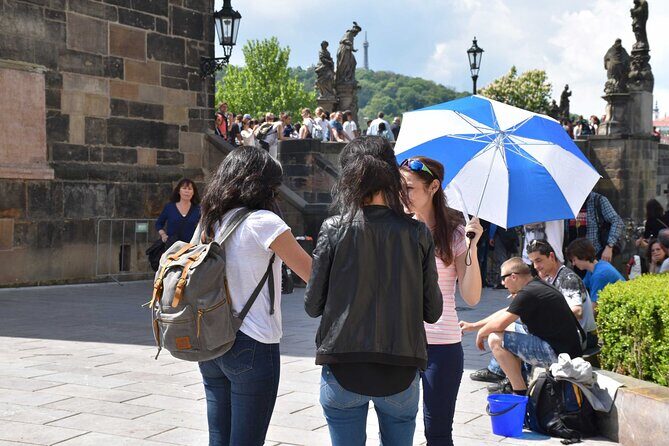
You meet at Křižovnické nám. 3 in Old Town and kick things off at Charles Bridge. This is not the day’s main-ticket stop, but it’s a smart opening move. The guide starts you with the kind of backstory that makes the Castle hill make sense. You’re not just crossing a postcard bridge; you’re setting up the “how Prague got its power” narrative.
Charles Bridge also works as a visual warm-up. You get the famous views toward the Castle area and learn what you’re looking at before you’re buried inside walls and chapels. It’s a classic technique: get your bearings first, then let the architecture teach you.
Possible drawback: this is where the pacing can feel tight. Some people wanted more time focused purely on Castle buildings. If that’s your priority, keep your expectations tuned: the bridge is part of the route, not a quick photo stop.
Lesser Town Square: where the story turns geographic
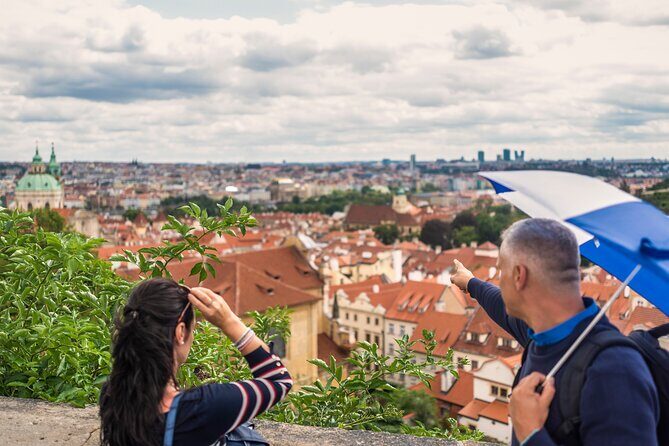
From Charles Bridge you cross into Lesser Town, heading toward Lesser Town Square. This stretch is guided with the history of the Castle in mind, so the city doesn’t feel like separate locations stacked on top of each other.
What I like here is that it helps you understand Prague as a living set of places. Lesser Town isn’t just a backdrop; it’s part of how the Castle functioned and how people moved through the landscape. Even in a short stop, the guide’s storytelling helps you notice patterns—where power sat, where worship happened, and where the city’s center-of-gravity shifted over time.
Inside Prague Castle: Vladislav Hall and the “people behind power” feel
Your longer stop is the Prague Castle segment, about 1 hour on the schedule, with guided explanation across key areas tied to the Castle’s ceremonial and political life. This is where you hear about kings, princes, and emperors, and where the route points out the meaning of what you’re seeing.
The highlight for many is that you get the “why” behind the spaces—not just the “what.” You’ll hear about ceremonial history connected to St. Vitus Cathedral, plus context for major Castle buildings, including Vladislav Hall and St. George’s Basilica.
Why this matters: without guidance, Prague Castle can turn into a sequence of stone corridors and doorways. With a guide, the spaces start to feel like stages. You’ll better understand how authority was performed—how rulers and institutions used architecture to signal legitimacy, continuity, and importance.
Crowds can still be a factor inside the complex. If you find yourself in tighter groups, the best move is to keep your attention on what the guide points out rather than trying to get “your own perfect photo angle” every two steps.
St. Vitus Cathedral: coronations, symbols, and what to actually look for
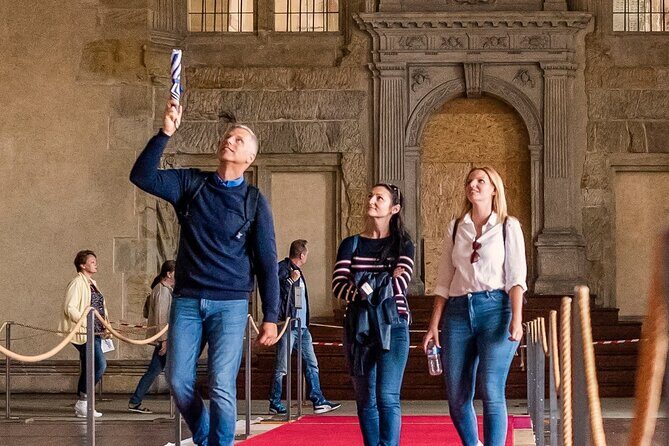
Then you hit St. Vitus Cathedral, about 10 minutes in the itinerary. That sounds short, but it’s usually enough for the guide to point you toward the big ideas so your eyes don’t wander.
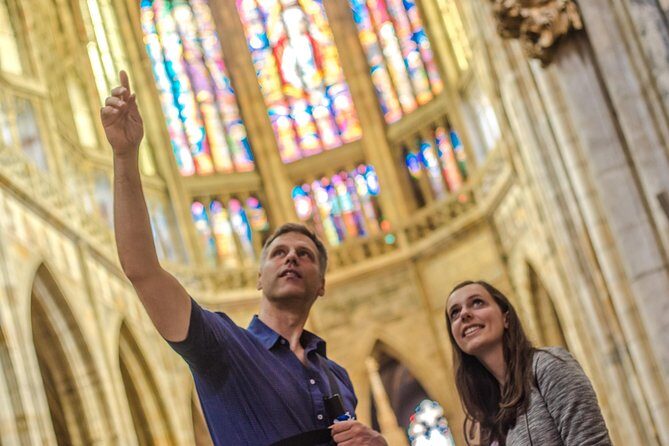
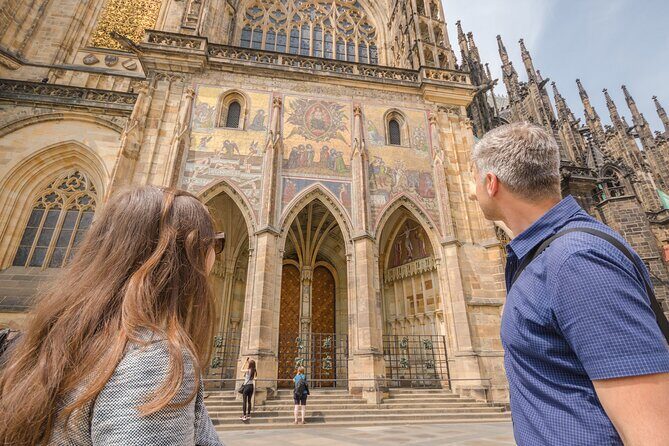
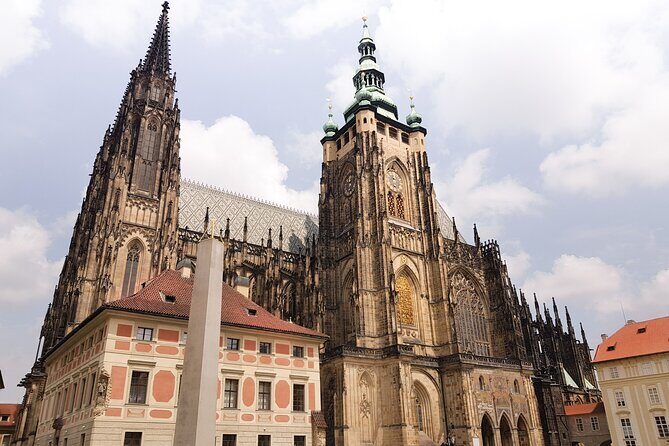
St. Vitus Cathedral is described as the largest and most important temple in Prague. It’s also tied to coronations—Czech kings and queens were crowned here. That detail is huge, because it changes your mental framing. You’re not only looking at religious art and stained-glass style grandeur; you’re looking at a civic theater for monarchy.
If you’re the type who notices symbols and wants to understand what they represent, this is the part that tends to click. Many people call the cathedral the standout moment, and it makes sense: once someone explains the ceremonial history and symbolism, the building stops being just beautiful and starts being meaningful.



St. George’s Basilica and the Old Royal Palace: church + palace in one flow
Next you visit St. George’s Basilica, around 10 minutes. The tour highlights that it originated as the second church at Prague Castle. It’s part of why the Castle complex feels like a layered city within a city—multiple generations building over the last.
Then you go to the Old Royal Palace, about 20 minutes, including Vladislav Hall. This is where the tour balances religious grandeur with political life and administration. The palace areas help you connect coronation ceremonies and royal symbolism to the functioning spaces of rule.
What I find useful here is the “contrast training.” By the time you’re in the Old Royal Palace after the cathedral, you’ll likely understand how Prague’s power system used both sacred and secular spaces. The guide’s storytelling helps keep the route from feeling like separate attractions with no glue.
Golden Lane: the best place for daily-life context
The last part of the tour includes Golden Lane. This is a favorite because it shifts your brain away from emperors and coronations and toward everyday residents. The tour’s framing is about the lives of the people who lived there, not just the famous walls.
Golden Lane can feel like a time capsule, and the guide’s explanations help it go from “cute street” to “how ordinary people lived in the Castle shadow.” That kind of context is where you start to understand what a Castle complex really was: a workplace, a home for staff, and a neighborhood—not only a royal residence.
Tram ticket and the walking reality: prep so you stay comfortable
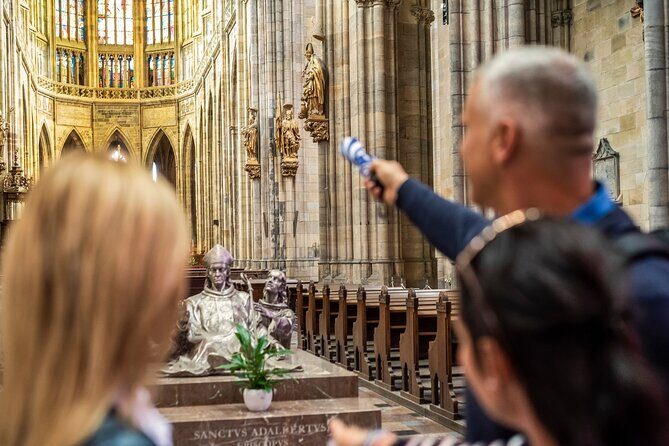
Even with a tram ticket included, you’ll still walk. The point of the tram is simple: save your legs from the steep hill up to the Castle area. But once you arrive, the complex is built for strolling at a slower pace—uneven surfaces, stairs, and lots of turning.
So bring practical shoes. One of the most repeated pieces of advice is to wear proper footwear. If you’re visiting in winter or when the ground is slick, add extra caution. The tour includes a moderate physical fitness level requirement, meaning you should be comfortable with walking and moving through crowds.
Also, groups can get packed at key bottlenecks (bridge approaches and interior entrances). The tour has a maximum capacity listed as 999 travelers, which sounds huge on paper, but what you’ll feel in real life is how crowded your specific departure feels.
Price and value: what you’re paying for (and why it can be worth it)
At $59.26 per person for about 2.5 hours, you’re paying for three things: a guided route, a tram ticket, and included admission tickets to several paid interiors.
Here’s why that can be good value:
- You get multiple major ticketed sites covered (St. Vitus Cathedral, Old Royal Palace, St. George’s Basilica, Golden Lane). Doing these yourself means managing entry rules and ticket logistics while crowds surround you.
- You get a guide to convert architecture into stories. Even if you’re a confident self-guided traveler, Castle history is easier with someone pointing out what matters and what to ignore.
- The tram ticket is a small cost, but it removes a steep uphill effort that can sap your energy before you reach the sites.
The tradeoff: you’re limited by tour pacing. You won’t have unlimited time for detours. If you love to linger in chapels or you’re the type who reads every plaque, you might feel you’re moving too quickly—especially if the group spends extra time on Charles Bridge.
Guide quality: why names like Peter, Steve, and Jan matter
This tour’s biggest strength shows up repeatedly in the feedback: the guide makes the stories feel alive. You’ll hear about kings, princes, emperors, ceremonies, saints, and the everyday lives connected to Castle spaces.
Specific guide names mentioned include Peter, Steve, Jan, Vojta, Misha, and Zora—with praise for humor, organization, and the ability to explain complicated history in a way that stays understandable. That doesn’t mean every guide hits the same notes every day, but it does suggest that many departures put effort into making the tour fun and clear, not just factual.
One practical lesson from the less-positive feedback: if you’re sensitive to hearing issues, it can help to position yourself closer to the guide in outdoor segments. In very crowded spaces, voice carrying can be tricky.
Crowds and the line reality: plan for less-perfect conditions
Even with included admissions, you can’t fully avoid lines inside a famous complex. Some people reported long waits during peak season or holidays, and others felt the tour tempo suffered when crowds were heavy.
So think of this as a guided route that helps you spend time wisely, not a guaranteed no-line pass. The “ticket included” part helps, but it doesn’t erase the fact that Prague Castle draws huge numbers of people.
If you want the best odds of a smooth visit, aim for the time slot you’ve booked, follow the group, and don’t treat the first minute as proof of how the whole tour will go. The guide’s job is to manage what’s possible under crowd pressure.
Who should book this tour (and who should do something else)
This tour is a great match if you:
- Want a fast, organized introduction to Prague Castle, St. Vitus Cathedral, and Golden Lane
- Prefer a guide to tie history to what you’re seeing
- Like afternoon plans that keep your morning flexible
- Appreciate included admissions so you can focus on looking rather than ticket logistics
It may be less ideal if you:
- Want maximum time inside the cathedral and palace interiors and are sensitive to feeling rushed
- Hate crowd navigation and would rather go at your own pace
- Expect a perfectly quiet experience with plenty of personal space
If you’re unsure, use this simple test: do you want a guided route that helps you understand what you’re seeing, or do you want maximum self-directed time to wander and linger? This tour leans toward understanding first.
Should you book Prague Castle Tour Including Admission Ticket (2.5 Hours)?
Yes, if you want the Castle complex to make sense quickly. The combination of a guided storyline, included admission tickets, and a tram ride is a strong value for first-time visitors. I’d especially recommend it if you’re excited about St. Vitus Cathedral, the ceremonial side of the Castle, and Golden Lane’s human-scale stories.
I’d hesitate only if you’re very time-focused on the interior spaces and you strongly dislike the idea of starting at Charles Bridge. In that case, you might prefer a more flexible plan that gives you extra minutes where you care most.
If you go, wear good shoes, stay close to the group, and listen for the details the guide uses to connect each building to the big story of Prague’s power—and everyday life—under the Castle walls.
FAQ
FAQ
How long is the Prague Castle tour?
The tour is about 2 hours 30 minutes.
Where does the tour start?
You meet at Křižovnické nám. 3, Staré Město, 110 00 Praha-Praha 1, Czechia.
Where does the tour end?
The tour ends at Prague Castle, 119 08 Prague 1, Czechia.
Is the tour offered in English?
Yes, it is offered in English.
What tickets are included?
Admission tickets are included for St. Vitus Cathedral, the Old Royal Palace, St. George’s Basilica, and Golden Lane.
Is a tram ticket included?
Yes, a tram ticket is included to help save you from walking the steep hill up to the Castle.
Is Charles Bridge included in the route?
Yes. Charles Bridge is listed as the first stop, and no admission ticket is required for that stop.
Are there any seasonal closures in September and October?
Some buildings within the Prague Castle complex can be closed during September and October, especially around Czech Independence Day, for an annual Crown Jewel Exhibition and award ceremony. You should be informed of closures via email if you book in that period.
What physical fitness level is needed?
The tour asks for a moderate physical fitness level.
What is the cancellation policy?
Free cancellation is available up to 24 hours in advance for a full refund. If you cancel less than 24 hours before the start time, the amount paid is not refunded.