REVIEW · PRAGUE
Prague: Classical Concert in the Spanish Synagogue
Book on GetYourGuide →Operated by Fun in Prague · Bookable on GetYourGuide
One room, serious sound. In Prague, the Spanish Synagogue turns a historic interior into a live listening room, and the music hits fast. I love the acoustics—clear, warm, and surprisingly intimate—and I also like the mix of classical favorites with Jewish melodies and lighter modern touches. It’s a short show that feels special, not padded.
One thing to consider: the program depends on the weekday, so if you have a specific piece in mind, check the day’s theme before you go.
In This Review
- Key highlights at a glance
- Why the Spanish Synagogue works so well for a concert
- The music lineup: what you’ll hear (and how the weekday theme changes)
- Inside the room: Moorish Revival details and the acoustics people talk about
- Who performs and what to listen for during the hour
- Practical logistics: timing, seating vibes, and what arrival feels like
- Price and value: is $50 worth it in Prague?
- What to know before you go (dress, heat, photos, and kids)
- Who this concert suits best
- Should you book this Prague Spanish Synagogue concert?
- FAQ
- How long is the Prague classical concert at the Spanish Synagogue?
- What time should I arrive for the concert?
- Do the music programs change depending on the day?
- What composers or styles might I hear?
- Is the venue wheelchair accessible?
- Is there a dress code?
Key highlights at a glance
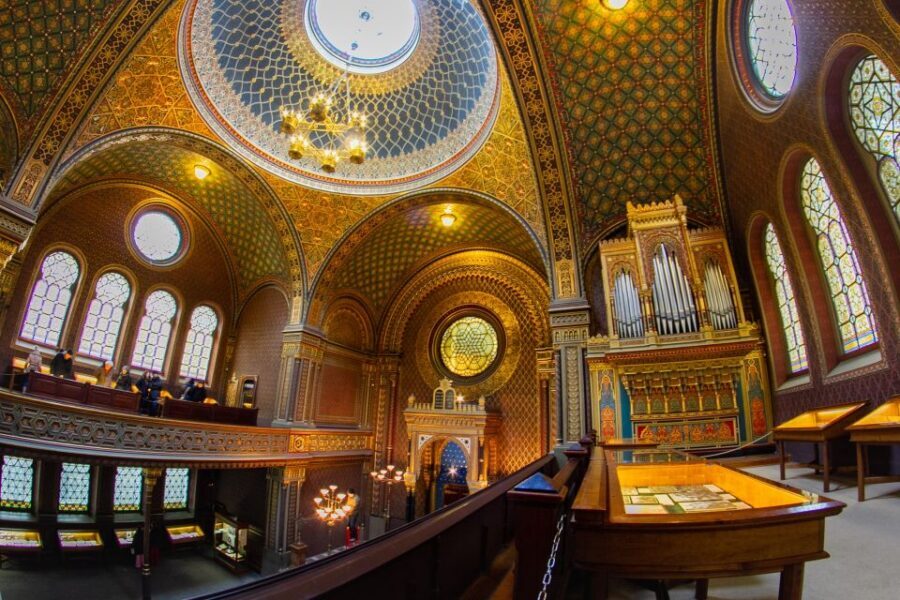
- Moorish Revival interior: stylized Islamic motifs on walls, doors, and gallery balustrades
- Perfect-sounding 60 minutes: a short concert length that works well even on a busy Prague evening
- Professional Prague musicians: leading players from the Prague FOK Symphony Orchestra, plus solo voices
- Day-specific music themes: Bolero (Sun/Tue), Czech + world (Wed), Hallelujah (Mon/Thu)
- A printed program in English: helpful for following along in the moment
Why the Spanish Synagogue works so well for a concert
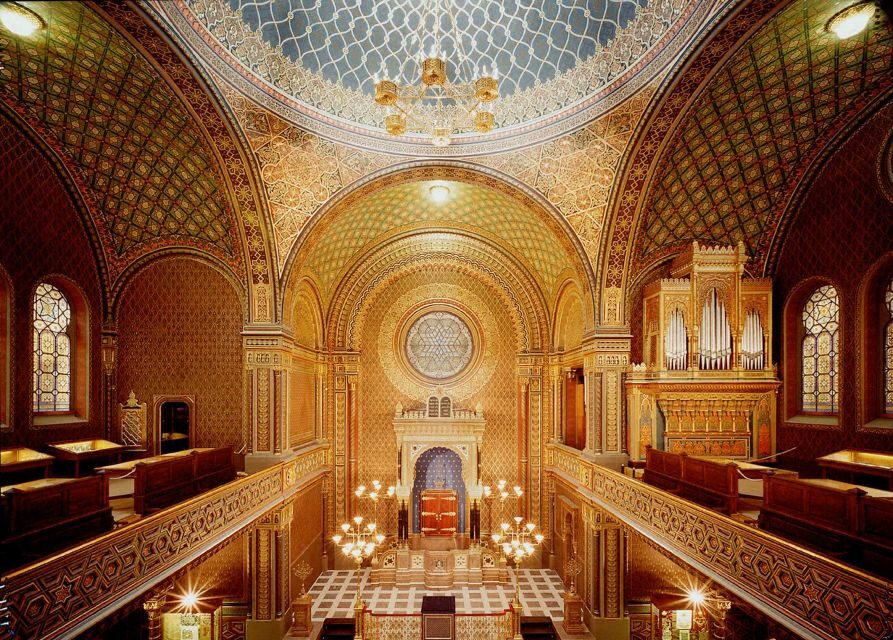
If you love Prague for its churches, you’ll still be happy here. The Spanish Synagogue is different—Moorish Revival design instead of Gothic spires—and that change matters the moment the music starts. The room is designed for sound to carry, so even a soft line from a soprano doesn’t feel lost.
I like that this concert is built around the venue, not pasted onto it. You’re not just paying for talent; you’re also paying to hear a strong performance in a space that naturally makes voices and strings sound vivid. It’s the kind of setting where you stop thinking about your phone and start listening.
The other practical win is the length. At one hour, you can fit it before or after dinner without turning the evening into a logistical puzzle. In a city where every plan seems to fight for your time, that matters.
A few more Prague tours and experiences worth a look

The music lineup: what you’ll hear (and how the weekday theme changes)
The core idea is a blend of classical, modern-classical, and Jewish music. You’ll hear songs, arias, and compositions from famous composers, with Czech favorites mixed in for that unmistakable Bohemian flavor.
The day-to-day program follows a simple pattern:
- Sundays and Tuesdays: Bolero
- Wednesdays: The Best of World and Czech music
- Mondays and Thursdays: Hallelujah
That weekday structure is useful if you like planning. It also explains why the concert can feel different from one night to another.
In the larger musical mix, the program can include works by composers like Verdi, Rossini, Mozart, and Bach. You may also hear well-known 19th-century Czech composers such as Dvořák and Smetana. That’s a good range: it covers the serious stuff, but it also includes melodic pieces that don’t demand a music degree.
Now, here’s the honest bit: some performances can feel more eclectic than strict classical-only. People have reported unexpected choices like popular show-style melodies mixed into the set, which can be fun if you like variety. If you’re the type who wants one consistent classical lane, you’ll want to look at what’s scheduled for the specific day and be mentally ready for a mixed program.
Inside the room: Moorish Revival details and the acoustics people talk about

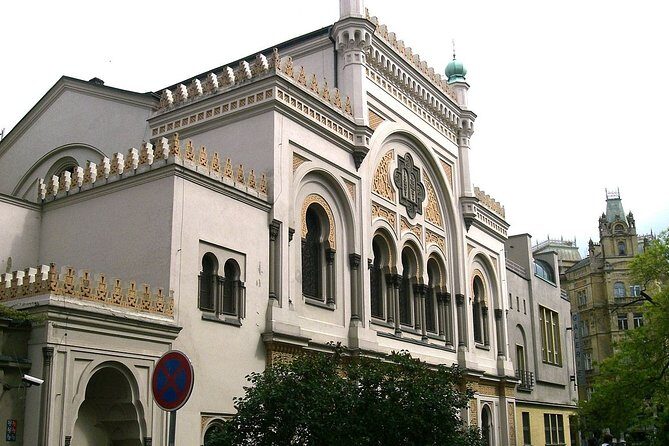
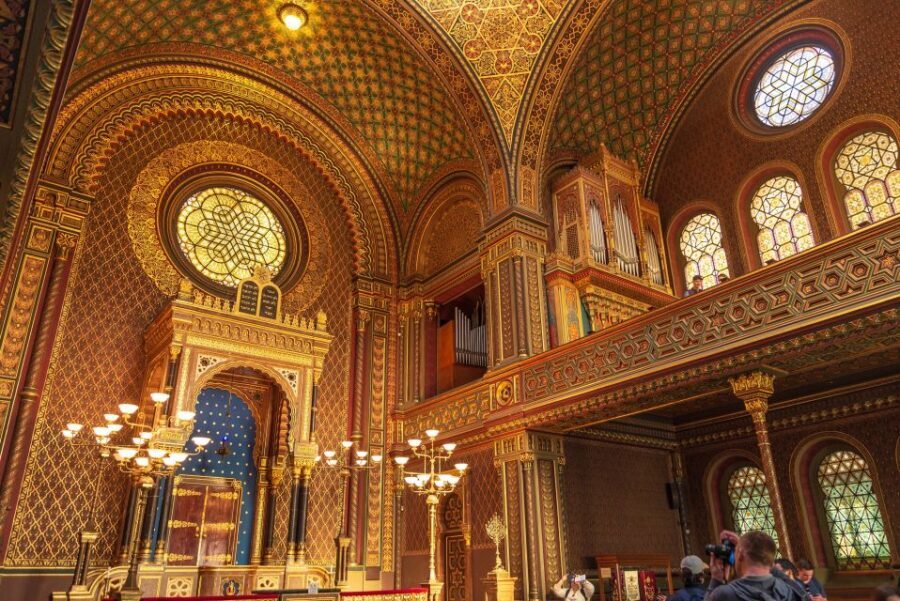
The Spanish Synagogue isn’t subtle. The interior includes stylized Islamic motifs worked into the walls, doors, and the gallery balustrades. It’s Moorish Revival architecture, and it gives the space a decorative glow that feels almost theatrical—like the building itself is part of the staging.
Then the sound does the rest. The acoustics are frequently described as unbelievable or phenomenal, and the reason is simple: the room shapes the music instead of swallowing it. Strings don’t get muddy. Voices come through clearly. You can hear details without needing to sit in the front row.
If you’re traveling with someone who normally finds concerts too formal, this kind of venue helps. The synagogue makes it feel less like a stiff recital and more like an event. Even the first notes feel like they belong in the space.
Who performs and what to listen for during the hour
This isn’t a casual community singalong. The concert is performed by leading players from the Prague FOK Symphony Orchestra, along with soloists. The musical setup often includes a mix such as a string quintet, trumpet, and a soprano, which gives the program variety in texture.
Here’s how I’d listen, so you get more out of the hour:
- Start by tracking the soprano lines. In this setting, the voice tends to feel strong and clear, so you’ll notice the phrasing.
- Listen to the strings for balance. The short duration doesn’t mean the players speed through; it usually means the pacing stays tight and focused.
- Pay attention to the trumpet and ensemble moments. When the instruments trade space, you’ll hear why the acoustics get praised.
One reason this concert works is that it covers emotional territory. You get dramatic classical arias, but you also get music that feels lighter and more entertaining. On some evenings, that includes Jewish traditional songs that add a distinct atmosphere to the synagogue setting.
And yes, the experience tends to feel intimate. One review specifically called out that the concert felt small, with about 80 people. That’s a sweet size: big enough for energy, small enough to feel personal.
Practical logistics: timing, seating vibes, and what arrival feels like
The synagogue opens about 15 minutes before the scheduled performance start. That’s your window to get seated without rushing. I’d treat it like a small ceremony: arrive early enough to breathe, find your spot, and let the room impress you before the first note.
Seating matters because you’re in a single, focused hall. People have advised arriving a bit early for better seats, and that makes sense here. With only about an hour, you don’t want to spend half your time adjusting your view.
If you’re the type who likes an unhurried evening, this show can be a lifesaver. It’s designed as a perfect pre- or post-dinner plan, especially for those who want to keep a reasonable bedtime in a travel-heavy schedule.
Also, a small reality check: pew-style seating can vary in comfort. A couple of notes mentioned that the seats are as uncomfortable as pews can be. It’s only an hour, but if you have back issues, plan to wear something supportive and consider where you’ll sit.





Price and value: is $50 worth it in Prague?
At $50 per person, you’re not shopping for a bargain matinee. This is more like paying for three things at once: a short concert duration, professional performers, and a stunning venue that genuinely enhances the sound.
Here’s how I evaluate value for this kind of experience:
- You get a full hour of live music, not a quick sampler.
- The setting is special enough that it’s worth paying even before you count the music.
- The performers are professional-level musicians, not a casual add-on act.
Some people have said it can feel pricey for a one-hour concert, and I get that instinct. If you’re trying to stretch every crown and don’t care about venues, you can find longer or cheaper classical options elsewhere in Prague.
But if you want a concert where the room itself is part of the show, $50 starts to make sense. You’re buying the sound in a famous interior, and you’re buying convenience: it’s an easy evening slot.
What to know before you go (dress, heat, photos, and kids)
Dress code is relaxed. There’s no official rule, and most people go for smart casual. Think comfortable shoes and something that won’t distract you when you’re sitting still for an hour.
In winter, the interior is heated, which helps a lot. (Prague winters can be real, and you’ll feel it if you arrive dressed for mild weather outside.)
A couple of practical notes from real experiences:
- There are signs requesting no photography, and people have found it distracting when others ignore them. If you want the best atmosphere for the singers and your fellow listeners, follow the signs.
- The concert is wheelchair accessible, so you can plan around that with confidence.
Kids are fine as long as an adult is present. Unaccompanied minors aren’t allowed, and children must be accompanied by an adult (18+).
There’s also a student rule: if you’re booking as a student, the offer is valid with a student ID such as a public transport pass or another student document. That matters if you’re traveling on discounts.
Who this concert suits best
This is a strong fit if you want a Prague experience that blends art and architecture. If you already plan to see major Prague sites in the daytime, this gives you a change of pace at night: seated, quiet, and focused.
It’s also a good match for couples. The concert is romantic in mood without being cheesy, and the short length keeps it from dragging.
If you like classical music but don’t want the deep-commitment marathon, you’ll probably enjoy the format. It’s short enough to stay lively, and the set list theme by weekday helps you choose the right evening.
If you only want one genre—say, strictly traditional religious music or strictly opera—this may feel too mixed. But if you’re open to a musical sampler that still stays high-quality, it’s a smart pick.
Should you book this Prague Spanish Synagogue concert?
I’d book it if two things are true for you: you want a standout venue and you’re happy with a one-hour classical concert that mixes styles. For many visitors, the combination of Moorish Revival beauty and strong acoustics is the main reason to go, and the music holds up just as well.
Skip it only if you’re very picky about the exact repertoire and you didn’t check the weekday theme. The concert is short, so there’s less time for “your favorite piece later.” Choose the right day for the program, and it becomes a reliable, memorable evening plan.
If you want an easy cultural win with a wow-factor room, this is one of the best ways to spend an hour in Prague.
FAQ
How long is the Prague classical concert at the Spanish Synagogue?
The concert lasts 1 hour.
What time should I arrive for the concert?
The synagogue opens about 15 minutes before the scheduled performance start time.
Do the music programs change depending on the day?
Yes. Sundays and Tuesdays focus on Bolero, Wednesdays include The Best of World and Czech music, and Mondays and Thursdays feature Hallelujah.
What composers or styles might I hear?
The program can include classical and Jewish music, with composers such as Verdi, Rossini, Mozart, Bach, and Czech composers like Dvořák and Smetana. Exact selections can vary by day.
Is the venue wheelchair accessible?
Yes, the synagogue is wheelchair accessible.
Is there a dress code?
There is no official dress code. Attire is mostly smart casual.