REVIEW · PRAGUE
Prague Cold War Walking Tour
Book on Viator →Operated by Insight Cities · Bookable on Viator
Cold War Prague walks better than museum walls. You get a historian guide and a route that puts you face-to-face with propaganda, fear, and rebellion across the city. It’s not just dates. It’s how power was staged in public space.
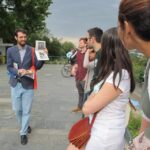
I especially loved how the tour connects details to big ideas—why statues, squares, and even locked doors mattered. I also liked the small group size (max 8), which makes it easier to ask questions and get clear, human explanations from the guide, like Vadim, who brings an intellectual but plain-spoken style. One thing to watch: Vitkov Hill has a steep climb, and you’re looking at about 20–30 minutes uphill if you do that segment.
In This Review
- Key Highlights You’ll Notice Fast
- The Value in This Prague Cold War Walk: History You Can See
- Meeting Up in Prague and What Timing Really Means
- Stop One: The Karlin-Zhizhkov Pedestrian Tunnel and Cold War Fear
- Vitkov Hill: Jan Žižka, the Hall of the Soviet Soldier, and Gottwald’s Mausoleum
- A Quick Break With Views: Zizkov Television Tower
- Wenceslas Square and King Wenceslas: From Parade Ground to Revolution Spark
- Letna Hill and the Stalin Statue Story That Showed the Cost of Propaganda
- John Lennon Wall and the National Assembly: Protest in Plain Sight
- Hall of the Red Army and KSC Propaganda: Why the Look of Power Matters
- Price and Value: What $126.43 Buys You
- The Group Size and Historian Guide Effect (Vadim’s Style)
- Who Should Book This Tour (and Who Might Prefer Another Option)
- Should You Book This Prague Cold War Walking Tour?
- FAQ
- How long is the Prague Cold War Walking Tour?
- What is the price per person?
- What language is the tour offered in?
- How big is the group?
- What’s included in the tour?
- Is the tour mostly walking, and is there climbing?
- What places does the tour cover?
- Where does the tour start, and where does it end?
- Is a morning departure available?
- Can I cancel for a refund?
Key Highlights You’ll Notice Fast
- A historian guide who explains not only what happened, but why people were pressured to believe it
- Small group (max 8) for better pacing and more time to ask questions
- Vitkov Hill sites tied to Klement Gottwald and Czechoslovakia’s Communist Party power center
- Public protest landmarks like the John Lennon Wall and the political energy around Wenceslas Square
- Real Cold War infrastructure at Karlin-Zhizhkov, including a pedestrian tunnel linked to bomb-shelter corridors
The Value in This Prague Cold War Walk: History You Can See
Prague is famous for pretty buildings. This tour is about the less-glamorous side of the city: how the Communist state tried to control your daily life, your worldview, and even what you were allowed to say out loud. You’re walking through places where ideology was made physical—statues, monuments, government buildings, and protest walls.
The format helps. It’s around 3 hours, and it’s designed around a route through key Communist-era locations, not a scattershot photo tour. I also like that you move at a human pace with breaks built into the walk, plus tram tickets included so you’re not just hoofing it across every neighborhood.
The best part is the “connect-the-dots” feel. You’ll start with Cold War fear, see how leaders were mythologized, and then end with the story of the Velvet Revolution—all tied to the same city streets you’d otherwise treat as scenery.
You can also read our reviews of more walking tours in Prague

Meeting Up in Prague and What Timing Really Means
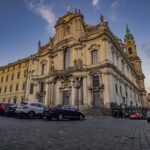
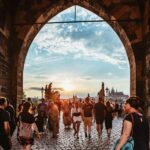
You’ll want to plan your arrival around the set start time (the tour you’re looking at starts at 2:00 pm). Your listed meeting point is Náměstí Republiky 1077/2, Nové Město. The route itself begins at St. Joseph Church, so when you get close, keep an eye out for the group and follow the guide’s lead from there.
You can choose morning or afternoon departure when booking. That matters because Prague weather can flip fast, and you may want the tour earlier if you’re sensitive to crowds. Also, this tour involves a steep climb later on, so starting in the afternoon can be fine, but it’s not the time to gamble on sore knees.
The tour language is English, and the operator provides a mobile ticket. Confirmation comes within 48 hours of booking, subject to availability.
Stop One: The Karlin-Zhizhkov Pedestrian Tunnel and Cold War Fear
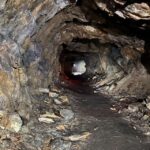
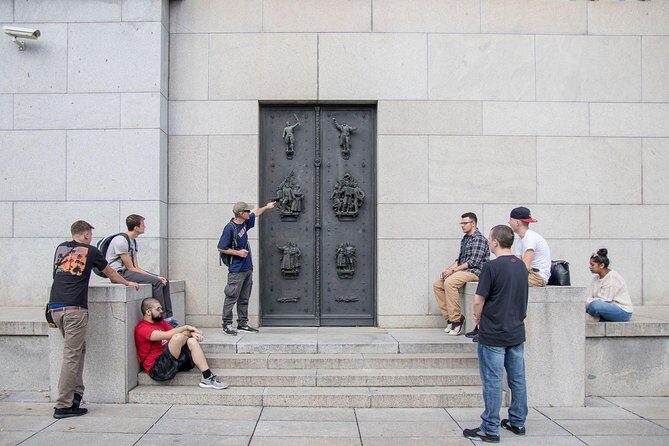
The first major jolt comes at Pedestrian Tunnel Karlin-Zhizhkov. You walk through the tunnel and focus on what’s still there: locked doors leading to Cold War nuclear bomb-shelter corridors that are reportedly maintained.
This stop changes how you look at the city. Prague’s architecture can make you think everything is old and calm. But this is different. You’re seeing how the Cold War built a parallel world underground, planned for worst-case scenarios, and kept for readiness even after the political system collapsed.
Practical tip: this is the kind of stop where good questions pay off. If you’re wondering how ordinary residents lived with that kind of threat, ask. A historian guide tends to connect the tunnel to the larger culture of fear and control without turning it into a lecture.
Vitkov Hill: Jan Žižka, the Hall of the Soviet Soldier, and Gottwald’s Mausoleum
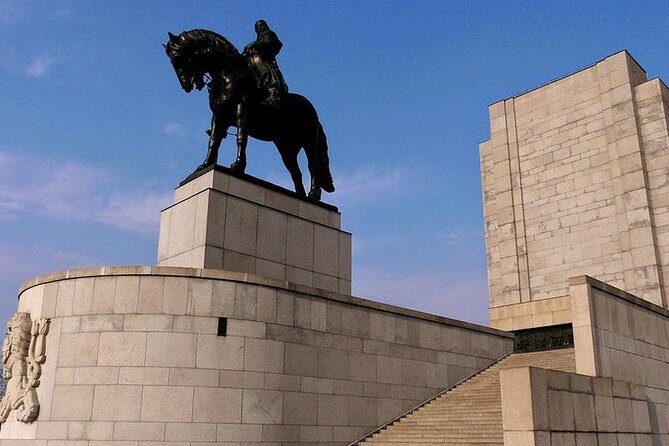
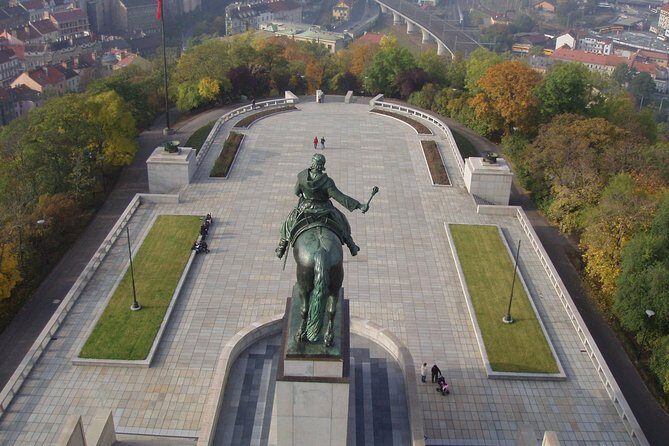
Vitkov Hill is the heart of the tour’s Communist story, and it comes with the only real physical challenge. The climb is a steep uphill effort, and the tour information flags 20–30 minutes of climbing as the key requirement. If you know you’ll struggle, the operator recommends a private tour that leaves out the Vitkov ascent, focusing on Cold War sites in the city center.
Once you reach the National Monument at Vitkov, you get several layers in one place:
- A WWI memorial for Czech and Slovak warriors
- The Hall of the Soviet Soldier
- The former mausoleum of Klement Gottwald, the first chairman of the KSC (Czechoslovak Communist Party)
- An adjoining laboratory where his body was embalmed
- Plus the monument to Jan Žižka, a massive bronze equestrian statue
What makes this stop fascinating is the mix of symbolism. The monument structure isn’t neutral. It’s designed to shape emotions—grandeur, permanence, legitimacy. You’re seeing how the state built a feeling of inevitability around Communist rule, from memorial spaces to leader-focused architecture.
And yes, there’s a major contrast here. Jan Žižka represents Czech history and nationalism, while Gottwald represents Communist power. Watching those messages cohabitate on the same hill helps you understand something important: Communist governments didn’t only import ideas. They also tried to stitch themselves into local identity.
A Quick Break With Views: Zizkov Television Tower
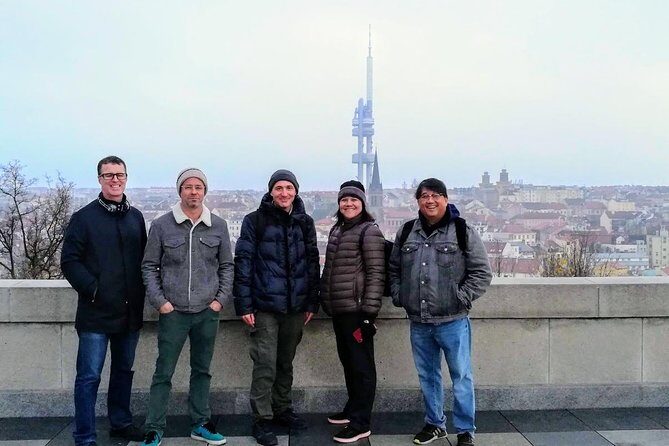
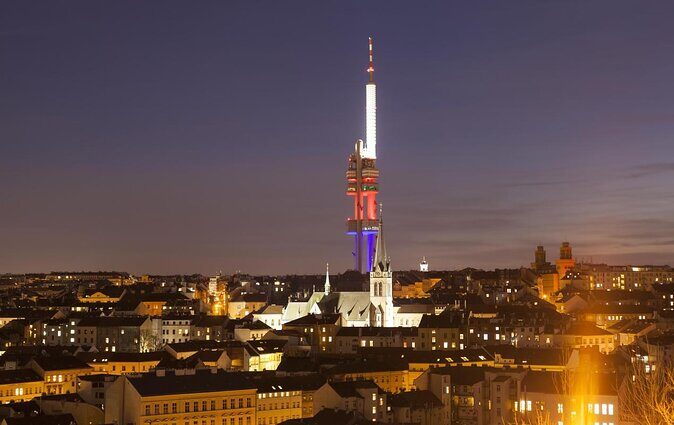
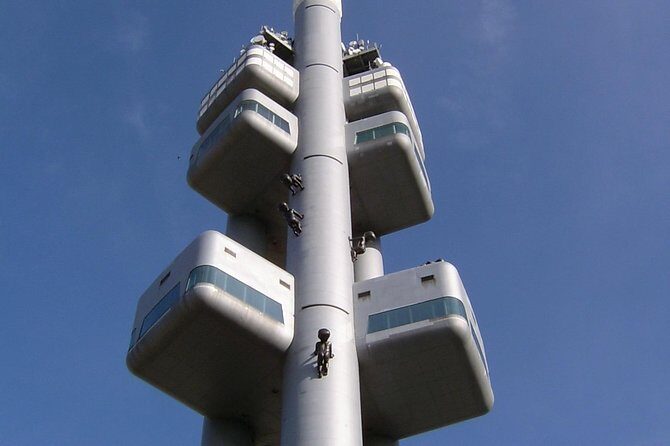
After the monument area, the route turns toward a more modern (and more visually dramatic) Prague landmark: the Prague TV tower on Zizkov Hill. You’ll spend a short moment there for views of the tower’s Brutalist style.
This stop is brief, but it works. After the heaviness of mausoleums and state theater, you get a change of texture. It reminds you that political control and cultural change both leave marks on city design.
Also, the timing helps. The tour isn’t only about trudging through sites of oppression. It mixes in skyline moments so you can process what you’ve learned before the story shifts again toward protest and revolution.
Wenceslas Square and King Wenceslas: From Parade Ground to Revolution Spark
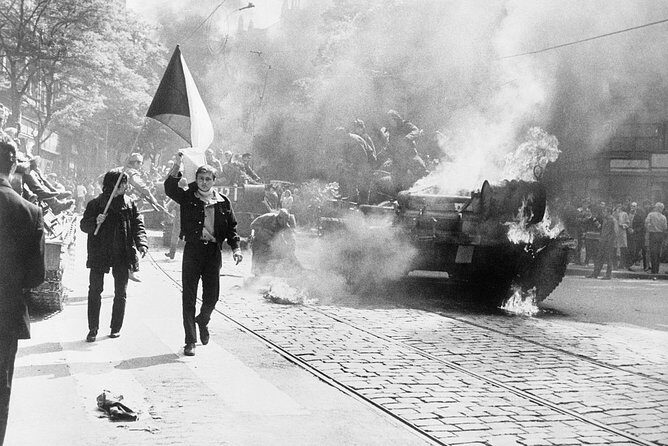
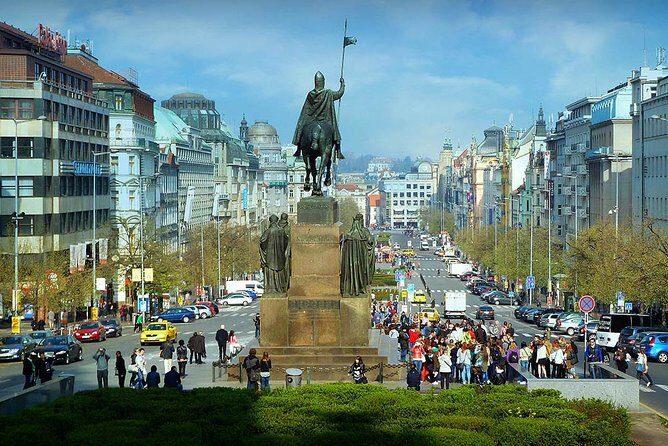
Wenceslas Square is the big outdoor stage. You’ll walk through it while considering how the square changed over time: founded in the 14th century, used for military parades by occupying powers, touched by tragic events tied to Prague Spring, and then transformed by the Velvet Revolution—described as igniting in a single day.
This is where the tour earns its “nuanced picture” promise. The guide doesn’t just list events. You start to see why squares matter: they concentrate crowds, media attention, and symbolic power. A regime can use a square to display control. Protesters can use the same space to flip the meaning in hours.
A short additional moment comes at the Upside-Down Statue of King Wenceslas Riding a Dead Horse. It’s an irony you can’t ignore once you notice it. It prompts the question: what does national symbolism mean when the political atmosphere changes? It’s the kind of street art-adjacent statement that works best with a guide explaining the context.
Practical tip: this area can be busy. Even if the tour is small, give yourself a second to slow down and really watch the space. The guide is likely directing your attention to small details that are easy to miss while you’re scanning for photos.
Letna Hill and the Stalin Statue Story That Showed the Cost of Propaganda
The tour also includes the Letna Hill area, once the site of a huge Stalin statue. You’ll hear the tragic story of the sculptor tied to that monument.
This section matters because it goes beyond political theory and into the human cost behind state art. When regimes commission monumental propaganda, the people who build it can be trapped too—used by the system, punished by it, or crushed by the story they’re forced to tell.
Letna is also a good reminder that Cold War power didn’t just sit inside buildings. It was meant to dominate the horizon. Even after those statues were removed, the spaces kept the memory of them, and you can feel why that matters when new movements came along later.
John Lennon Wall and the National Assembly: Protest in Plain Sight
One of the most memorable stops is the John Lennon Wall, a key site of political protest. You’ll also pass the National Assembly building, which served as the seat of the Communist government.
These locations are powerful because they show the other side of the story: not just how Communism was staged, but how people pushed back. The Lennon Wall is especially good for helping you understand that dissent often finds creative outlets when formal politics are controlled.
And walking past the National Assembly adds weight. A building like that can feel like just another official landmark until a guide frames what it meant in the Communist era—who held power, what decisions got made there, and how the public experienced it.
If you care about how political change happens in real life, this portion is the pay-off. You see protest as a response, not as a vague “good vs. bad” timeline.
Hall of the Red Army and KSC Propaganda: Why the Look of Power Matters
Some of the most chilling explanations in this tour connect to the Hall of the Red Army, built after the 1948 Communist power shift described as an elegant coup. You’ll discuss KSC propaganda and politics and how leaders used imagery, design, and messaging to make their system feel normal, historic, and unstoppable.
Here’s the value for you: propaganda works best when it looks like culture, not like control. A guide can point out the “why” behind the statuary and decorations, and that helps you notice similar techniques in other countries and other eras.
Even if you don’t love politics, you’ll probably understand this instinctively when you see how aesthetics were deployed to guide belief.
Price and Value: What $126.43 Buys You
At $126.43 per person for around 3 hours, this isn’t the cheapest thing in Prague. But it also isn’t priced like a generic walk. You’re paying for a historian guide, a structured route through major sites, and tram tickets included.
The value really depends on how you like to travel. If you enjoy factual, interpretive guides—people who explain what you’re looking at and why it mattered—this price can feel fair fast. The alternative is doing it on your own with guidebooks, but then you lose the connective tissue: propaganda logic, leader symbolism, and the way the Velvet Revolution fits into daily life and public spaces.
Also, the max 8 travelers format matters. For a city tour, that size often means you get more attention than you would with a big bus group. If you’re the type who likes to ask follow-ups, you’ll benefit from that.
The Group Size and Historian Guide Effect (Vadim’s Style)
A tour like this lives or dies on the guide. This one comes with a historian guide, and the feedback is clear that the tone is thoughtful and intellectually sharp without being dry. One guide name you may hear is Vadim, described as amazing and ideal if you want a sophisticated discussion rather than slogans.
That makes a difference because Communist-era sites can be overwhelming. You don’t need every minute detail, but you do need the right framing. A good guide turns what could be depressing or confusing into something you can process: fear, compliance, resistance, and change.
Who Should Book This Tour (and Who Might Prefer Another Option)
This Prague Cold War walking tour suits you if you want more than sightseeing and you enjoy explanations tied to real landmarks. It’s especially good if you’re curious about how the Communist state used public space—and how the Velvet Revolution flipped that meaning.
It may be less ideal if:
- you have limited stamina for uphill walking, because Vitkov Hill involves a significant climb
- you want mostly flat, easy strolling with lots of free time
If you do struggle with the climb, the operator notes that they can offer a private tour variant that leaves out the Vitkov ascent while still covering Cold War sites in the city center.
Should You Book This Prague Cold War Walking Tour?
Book it if you like the idea of walking through Prague with a historian who can connect propaganda, architecture, and protest into one clear storyline. The small group size and inclusion of tram tickets help keep it from feeling like a tourist slog. And the combination of Gottwald-era symbolism with places linked to dissent gives you a fuller picture than most one-topic walks.
Skip it or switch to the private alternative if you know Vitkov Hill uphill climbing will be hard for you. The tour’s biggest physical “price” is that climb, and it’s not meant to be casual.
If you’re ready for Prague with context—and you want your history lesson delivered through streets, monuments, and squares—this one is worth your time.
FAQ
How long is the Prague Cold War Walking Tour?
The tour lasts about 3 hours.
What is the price per person?
The price is $126.43 per person.
What language is the tour offered in?
The tour is offered in English.
How big is the group?
The tour has a maximum of 8 travelers.
What’s included in the tour?
You get a historian guide and tram tickets.
Is the tour mostly walking, and is there climbing?
It includes walking and involves a steep climb up to Vitkov Hill, with 20–30 minutes of uphill climbing noted for the monument area.
What places does the tour cover?
You’ll visit sites including the Pedestrian Tunnel Karlin-Zhizhkov, the National Monument at Vitkov, the Prague TV tower on Zizkov, Wenceslas Square, and the Upside-Down Statue of King Wenceslas riding a dead horse, plus additional major Communist-era landmarks along the route.
Where does the tour start, and where does it end?
The tour starts at St. Joseph Church and is associated with a meeting point at Náměstí Republiky 1077/2, Nové Město. The tour ends in Prague.
Is a morning departure available?
Yes, you can choose a morning or afternoon departure when booking.
Can I cancel for a refund?
Yes. Free cancellation is available, and you can cancel up to 24 hours in advance for a full refund.