REVIEW · PRAGUE
Prague Communism and World War II Walking Tour
Book on Viator →Operated by Fun in Prague, s.r.o. · Bookable on Viator
Prague’s past walks right beside you. This 20th-century timeline turns central Prague into a clear, story-driven route through the Nazi years, Soviet influence, and the end of communist rule, guided in English with a local voice and real context. You’ll start near Old Town Bridge Tower, then work your way to New Town and finally Wenceslas Square, where the city’s dramatic 1968 and 1989 moments still show up in the streets.
I like that the route stays practical and readable: you get landmarks, dates, and “why it matters” explanations without needing to study beforehand.
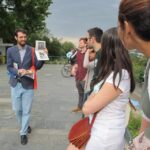
What I really like is the personal, lived-in perspective some guides bring. In reviews, guides like Tomas, Martin, and Maria were noted for mixing major events with details from everyday life under communist rule, and even for making room for questions. I also love that the walk connects big political events to specific places—like learning that not far from the Castle area once stood the world’s largest Stalin statue, and seeing how Wenceslas Square becomes a stage for Prague Spring fallout and later protest memory.
One possible drawback: if you’re mainly hunting for very specific, action-heavy WWII details (like tunnels, hideouts, or niche operations), this tour can feel like it stays more on the political storyline than on extra sites. One reviewer who wanted more hands-on WWII content felt it didn’t go far enough in that direction, so set expectations that this is about systems and consequences as much as individual episodes.
In This Review
- Key highlights you’ll care about
- Turning Prague into a timeline (without losing the plot)
- Stop 1: Křižovnické náměstí, Castle views, and Stalin’s once-shocking shadow
- Stop 2: Nove Město, the road to Czechoslovak democracy, and WWII turning points
- Stop 3: Václavské náměstí (Wenceslas Square), Prague Spring, student resistance, and 1989
- Why the guide’s voice really changes the experience
- What to expect on the ground: walking pace, comfort, and your morning plan
- Price and value: what $30.12 gets you in real terms
- Who should book, and who might want something different
- Should you book the Prague Communism and World War II Walking Tour?
- FAQ
- How long is the Prague Communism and World War II Walking Tour?
- What time does the tour start?
- Where do I meet the guide?
- What language is the tour offered in?
- How much does it cost?
- Is food included in the tour price?
- Is there an admission fee at the stops?
- What is the maximum group size?
- Can I cancel and get a full refund?
- Who can participate?
Key highlights you’ll care about
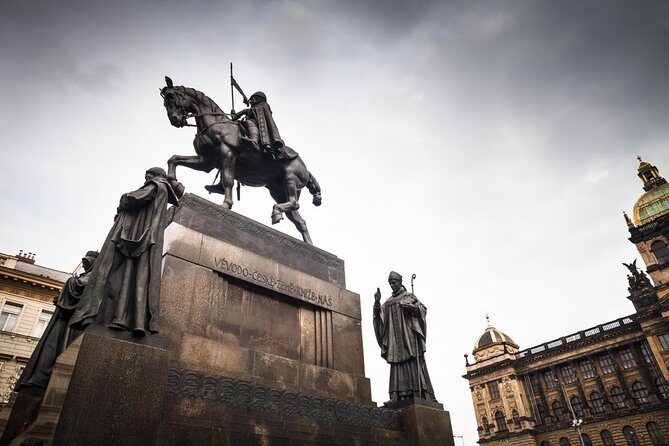
- A tight, chronological route across Old Town, New Town, and Wenceslas Square instead of random stops
- Nazi-to-communism continuity: you learn how the story evolves from the Protectorate era to Soviet control
- Operation Anthropoid gets context, not just a name, and it’s tied to Prague’s WWII reality
- Prague Spring and 1969 student resistance are explained at the exact places where memory is kept
- Small group feel with a max of 25, plus many reviews describe an easy, conversational pace
- Central meeting point near public transport, making it simple to fit into a morning plan
Turning Prague into a timeline (without losing the plot)
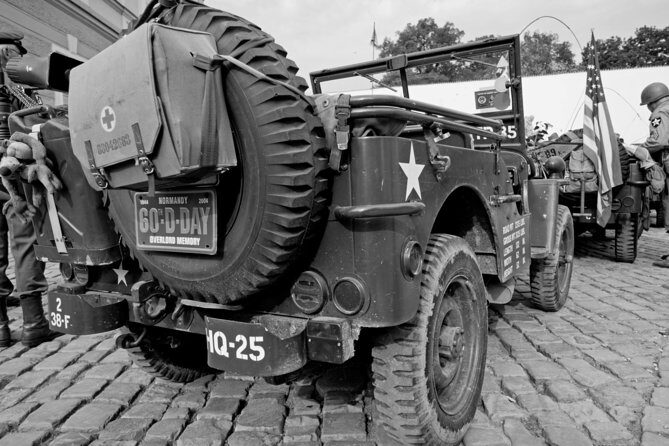
This is a walking tour built for orientation and understanding. The idea is simple: instead of throwing you facts about Czech history like loose postcards, the guide links the eras together in a clear sequence, then shows how those eras still shape the city you’re standing in.
The content focuses on the 1930s through the Velvet Revolution era, with the Nazi occupation and the communist takeover treated as linked chapters. You’ll hear stories tied to major turning points—then you’ll look at the city again with sharper eyes. Afterward, you’ll be able to place what you see on your own: statues, museum-like plaques, public squares, and the dramatic architecture that often looks neutral until you know what happened there.
You’ll also notice a pattern in the reviews: people don’t just call it educational. They describe it as a guided understanding of how life changed—how ordinary people lived under occupation, how power was enforced, and how the push toward freedom took years, not weeks.
You can also read our reviews of more walking tours in Prague

Stop 1: Křižovnické náměstí, Castle views, and Stalin’s once-shocking shadow

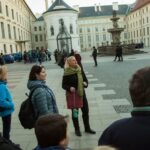
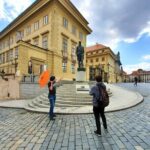
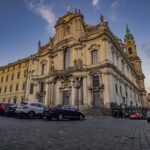
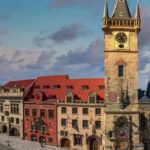
You meet in central Prague at Křižovnické náměstí (near the Old Town Bridge Tower area) at 10:00 am. The first segment is about getting your bearings while the guide sets the big historical frame.
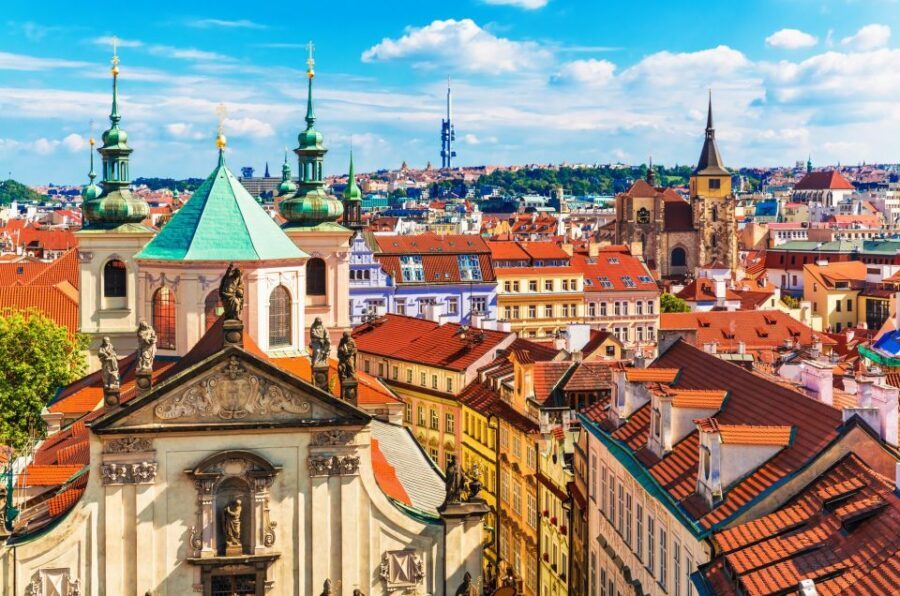
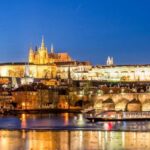
Expect a short walk and then a panoramic view of Prague Castle. That’s not just a photo moment. For this tour, the Castle area is a reference point: it’s a symbol of Czech state power over centuries, and your guide uses that symbolism to make the jump into the 20th century.
Then comes a detail that makes the era feel real: the guide explains that not far from this area once stood the largest statue of Joseph Stalin in the world. Even if you’ve never studied Prague’s communist period, that fact tends to reorganize your thinking. You’re not just looking at “old buildings.” You’re seeing how regimes used monuments, visibility, and public space to project authority.
This stop is listed as around 15 minutes, so don’t expect an essay here. It’s meant to hook you, set themes, and start the timeline in a way that makes the next parts click.
A practical note: because the opening includes viewpoints, wear shoes you’re comfortable standing in for short stretches. If it’s windy or cold (Prague can be), you’ll appreciate it.
Stop 2: Nove Město, the road to Czechoslovak democracy, and WWII turning points
From Old Town, you head into Nove Město (New Town) for the “how did we get here?” section. This is where the tour sharpens into historical causality.
The guide walks you through:
- how Czech national life shifted from the grip of the Austrian monarchy toward an independent Czechoslovak democratic state
- how that democratic period connected to a strong economy of its time
- why the mood changed after 1933 and how the Second World War broke the trajectory
Then the focus turns hard to the WWII reality under the Nazi Protectorate of Bohemia and Moravia. One of the most specific parts here is Operation Anthropoid, described as the only successful assassination of a senior Nazi leader during WWII. Instead of treating it like a trivia fact, you’ll get the “why it mattered” explanation and the sense of risk and consequence in the city at that time.
This stop is listed at about 30 minutes. It’s long enough to connect themes—democracy, occupation, resistance—without dragging. That matters because you’ll still have a big “payoff” stop later at Wenceslas Square.
One drawback to keep in mind: since the emphasis is on the Nazi-to-communist transition, people who want extremely detailed WWII battlefield-style storytelling may find they need a second, separate WWII-oriented experience to fully satisfy that itch.
Stop 3: Václavské náměstí (Wenceslas Square), Prague Spring, student resistance, and 1989
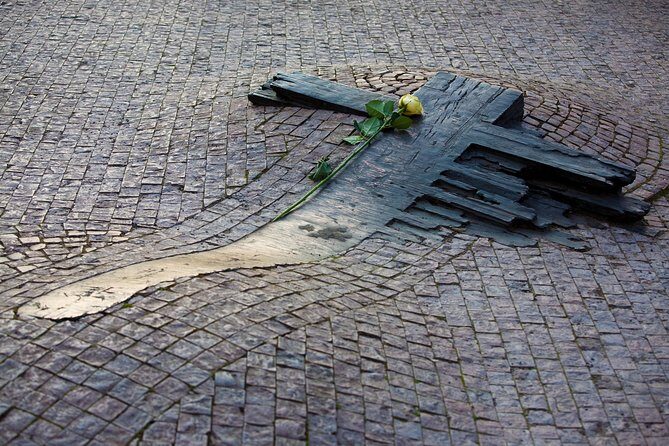
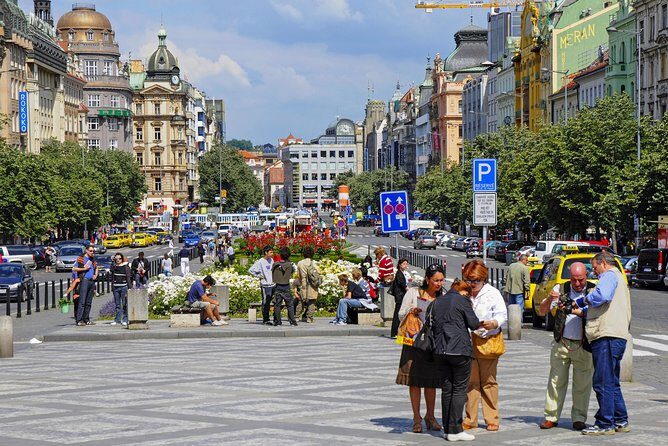
The final stop is the dramatic one: Václavské náměstí. The tour uses this square like a historical stage.
You’ll start with the euphoria of Prague Spring and then shift to the shock of Soviet tanks invading Prague in 1968, including the moment tied to the National Museum building on Wenceslas Square. This is the kind of information that makes you understand why people still talk about those years with a mix of pride, fear, and anger.
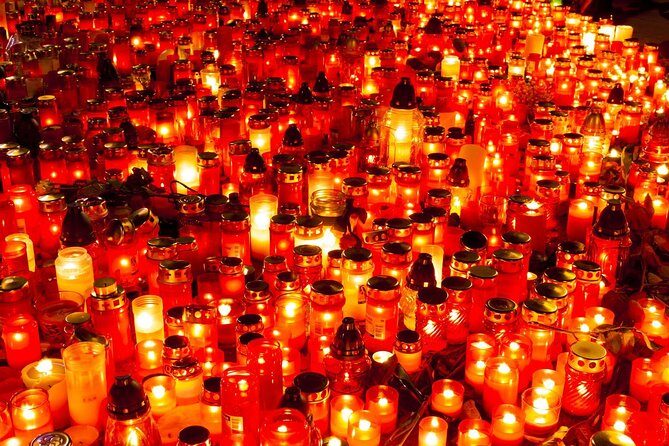
Then the guide moves to 1969, honoring young students who burnt themselves alive to unite the nation against the common enemy. That segment is intense, and it’s placed here because it’s meant to be understood where the memory lives in the public space.
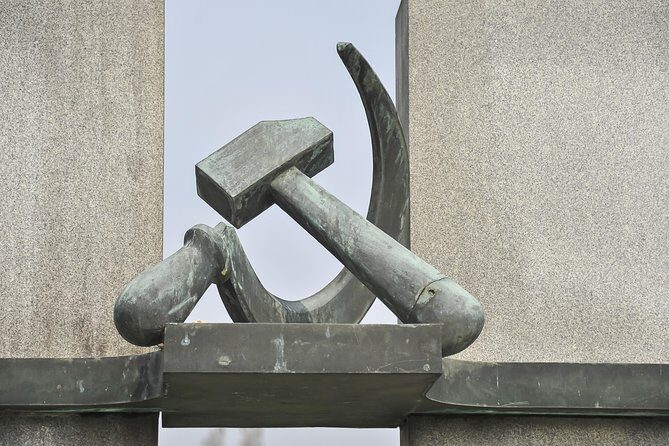
As the walk continues toward the 1970s and 1980s, you’ll see how the city’s streets mirror the long grind of power and resistance. This is where the tour gets specific about communist methods and the enduring influence of the USSR—showing how a state can shift from democratic foundations into a dictatorship where human life was treated as less important than control.
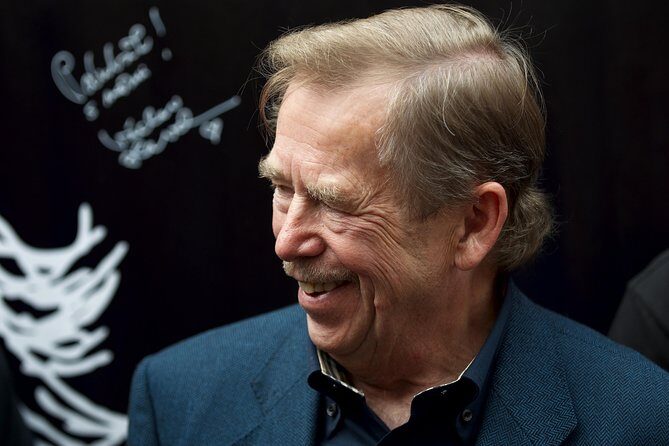
Finally, you’ll arrive at 1989 and the Velvet Revolution, described as the ultimate victory of democracy after more than 40 years of communism. Expect stories about Václav Havel, courageous students, brutal policing, and the clashes at Národní třída. You’ll also hear the lighter side too—accounts of humor and obscure stories after newly gained freedom, because even in harsh times, people kept living.
This stop runs about 1 hour, which makes it the heart of the tour. If you have limited time, this is the part you’ll remember most clearly because it ties emotion to place.
Why the guide’s voice really changes the experience
A good guide can turn history into static. A great guide turns it into a map.
In the reviews, you can see the difference in the way people describe the guides. Tomas was praised for being articulate and for covering the arc from the end of WWII through Soviet arrival, the crushing of democracy, Prague Spring, Brezhnev-era doctrine, and the slow unraveling of communist rule. Martin and Dominick were both singled out for clear communication and for showing places and plaques people might otherwise skip. Maria was highlighted for knowledge and for taking guests to areas that other tours may not cover.
Even when the tour stays within three main areas, this guide-led framing matters. You’re not only learning dates; you’re learning:
- how power was justified
- how resistance formed over time
- how everyday routines were affected
- how people tried to keep dignity under pressure
And because it’s a walking format, you can ask questions while the guide points at what you’re seeing. One review mentioned the tour extending when questions came up—so if you like dialogue, you’ll likely enjoy the pacing.
What to expect on the ground: walking pace, comfort, and your morning plan
The tour is about 2 hours on average, but it can run longer depending on questions and the guide’s style. Some reviews mention around 2.5 to 3 hours, which tells me this isn’t a rushed script where you’re herded from one curb to another.
The route is described as walkable and manageable. Still, you’ll be on your feet for a couple of hours in central Prague—so wear comfortable shoes, especially if you’re visiting in shoulder season when sidewalks can be damp.
No food or drinks are included, which is typical for a morning or early afternoon walking tour. If you start at 10:00 am, plan to grab coffee or a snack after. A nice bonus from the reviews: guides often share recommendations at the end, including where to eat and drink locally.
Price and value: what $30.12 gets you in real terms
At $30.12 per person for a roughly 2-hour English-language guided walk, you’re paying for one thing: a local guide who can connect political history to street-level reality.
That price is often a good deal in Prague because:
- you get a professional guide for the entire time
- the route stays in central locations, so you’re not spending your day on transit
- the tour includes no paid attractions, since the stops are shown as admission ticket free
- small-group dynamics help you actually ask questions
If you’re the kind of person who likes museums but also wants context before you walk into them, this tour can function like a “primer.” It makes later sightseeing easier because you’ll recognize what you’re looking at—and why it matters.
Just remember the value trade-off: this is not a deep museum day. It’s a walking narrative. If you want physical exhibits, artifacts, or underground spaces, you may want to pair it with something more hands-on afterward.
Who should book, and who might want something different
This tour is a strong match if you:
- want a clear orientation to Prague beyond the usual postcard circuit
- like history with context—especially WWII and the communist era
- enjoy asking questions and getting answers in plain language
- want to understand how public memory shows up in Prague’s squares and monuments
It may be less ideal if you:
- are only interested in very specific WWII incidents with lots of tactical detail
- prefer tours that focus heavily on one narrow subject with lots of stops and entry tickets
- want a deeper dive into areas not included in the main route
That’s not a dealbreaker. It’s a fit question. The tour’s strength is the storyline and the city-wide connections.
Should you book the Prague Communism and World War II Walking Tour?
If you want Prague to make sense—politically, historically, and emotionally—this is a very good bet. I’d book it if you’re visiting for a short time and want the fastest way to understand why Prague’s 20th century shaped the city you’re seeing today.
Book it especially if you like guides who bring a personal, human layer to big events. The repeated praise for Tomas, Martin, Maria, and Dominick suggests the guide quality is a key part of the value.
Just be honest with your own interests. If your dream is WWII hideouts, tunnels, and highly specialized sites, you may want to add a second experience. If you want the big picture connected to real places—this tour is built for that.
FAQ
How long is the Prague Communism and World War II Walking Tour?
It lasts about 2 hours on average.
What time does the tour start?
The listed start time is 10:00 am.
Where do I meet the guide?
You meet at Křižovnické náměstí, 110 00 Praha 1-Staré Město, Czechia.
What language is the tour offered in?
The tour is offered in English.
How much does it cost?
The price is $30.12 per person.
Is food included in the tour price?
No. Food and drinks are not included.
Is there an admission fee at the stops?
Admission tickets are listed as free for the stops on this route, and the tour includes a professional guide.
What is the maximum group size?
The tour has a maximum of 25 travelers.
Can I cancel and get a full refund?
You can cancel for a full refund if you cancel at least 24 hours in advance of the experience start time. If you cancel less than 24 hours before, the amount is not refunded.
Who can participate?
Most travelers can participate, and children must be accompanied by an adult.