REVIEW · PRAGUE
Walking Tour in Prague with Local Historian
Book on Viator →Operated by Ivitsa Manovski · Bookable on Viator
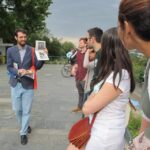
A small-group walk rewrites Prague in hours. This 2.5-hour, English-language tour with historian Ivitsa takes you beyond the usual postcard loop and into quieter corners, with a strong story thread you can actually follow. I love the small group (up to 10) because questions don’t get lost, and I love how you get mix-and-match stops like St. Wenceslas, the rotating head of Franz Kafka, and the John Lennon Wall. The only drawback to plan for is straightforward: you do real walking, so if your legs are touchy, wear decent shoes.
Prague is crowded in almost every direction, so the best part here is the route choice. You skip the Old Town Square routine and spend more time where you can slow down, look closely, and hear how places connect—New Town history in the morning, Old Town layers next, then Charles Bridge for views and photos. Expect lots of stop-and-go moments for photos and explanations, not a sit-down lecture.
By the end, you finish near the John Lennon Wall, which makes it easy to keep exploring on your own. It’s also priced in a way that feels fair for what you get: guided storytelling, multiple major landmarks, and listed stops that don’t require paid admissions. If you’re set on seeing everything only by yourself with no guide, you might prefer a self-guided walk—this one is built for asking why things look the way they do.
In This Review
- Quick hits before you lace up
- Why Prague makes more sense when you walk it this way
- Meeting at Václavské náměstí and what to expect from the group
- Nove Město: New Town history, St. Wenceslas, and Kafka’s rotating head
- What you’ll love here
- One thing to consider
- Stare Město: defensive walls, Mozart, Jan Hus, and secret passages
- What you’ll love here
- One thing to consider
- Charles Bridge: king Charles IV, Prague Castle views, and ending at Lennon Wall
- What you’ll love here
- One thing to consider
- Price and value: getting context with a $25 guided walk
- Practical tips that make the walk feel easy
- Is this your kind of Prague tour?
- FAQ
- How long is the Walking Tour in Prague with Local Historian?
- Is the tour offered in English?
- How big is the group?
- Where do we meet and where does it end?
- Do I need to buy admission tickets for the sights?
- Will I get a mobile ticket?
- What if the weather is bad?
- Can I bring a service animal?
- Is free cancellation available?
- Is the tour suitable for most people?
- Should you book this Prague walking tour?
Quick hits before you lace up
- Up to 10 people means you get real back-and-forth instead of one-way talking
- Kafka and Charles Bridge sit on the same route, plus a finish at the John Lennon Wall
- A route that avoids the Old Town Square crowd so you can actually hear details
- Secret passage and Franciscan garden time give Prague a calmer side
- Ivitsa’s humor and patient pacing make the stories easy to follow
- Photo angles at Charles Bridge help you capture Prague Castle views without rushing
Why Prague makes more sense when you walk it this way
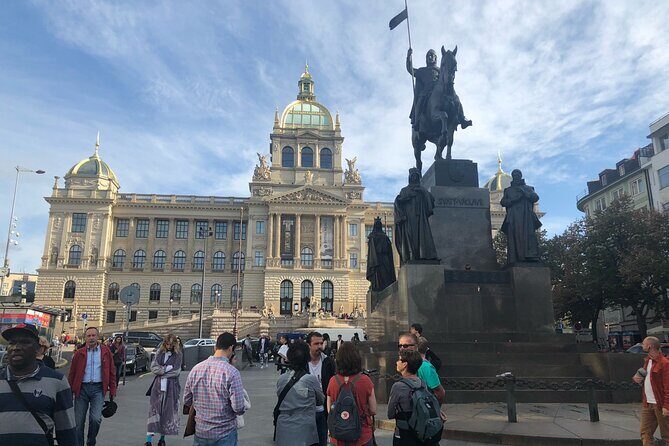
Prague can feel like three cities stacked on top of each other. New Town and Old Town have very different vibes, and Charles Bridge is its own whole stage set. This tour strings those parts together so you leave with a map in your head, not just a list of landmarks.
What changes everything is the pace and how the guide connects the dots. You don’t just pass by sites; you learn why they matter and how they fit into Prague’s shifts in power, art, and ideas. I like that the route isn’t trying to cram every famous stop in. It’s more focused, and that makes the “why” land.
This also helps early in a trip. If you start Prague before you know the neighborhoods well, you’ll understand what you’re seeing on later days. And if you’re returning for a second look, you’ll notice details you would normally miss.
You can also read our reviews of more walking tours in Prague


Meeting at Václavské náměstí and what to expect from the group
The tour meets at Václavské nám. 68 and ends at Velkopřevorské náměstí, near the John Lennon Wall. Ending there is smart, because it keeps you close to an area where you can keep wandering without backtracking.
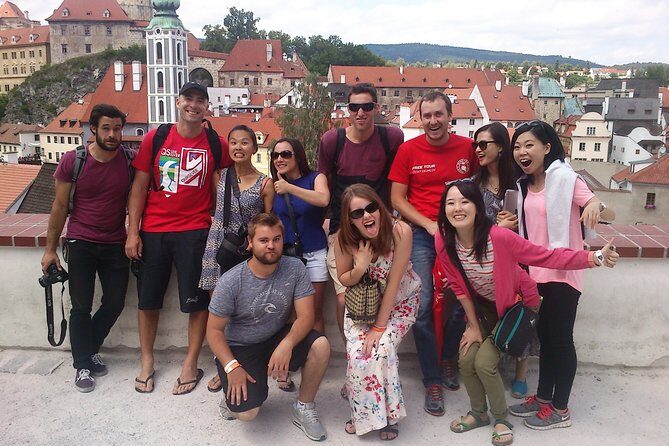
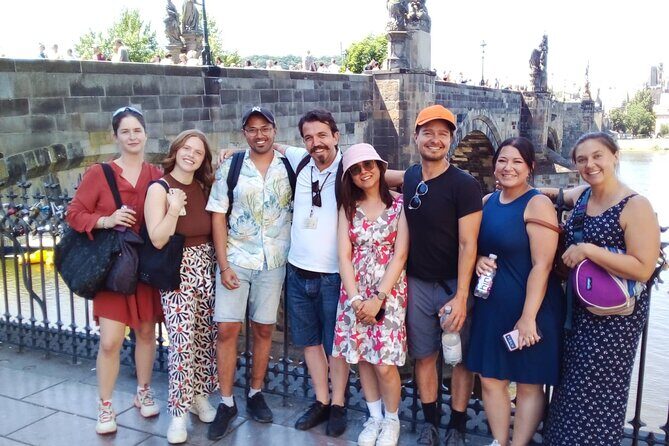
With a maximum of 10 travelers, the walk stays manageable and conversational. That matters on a route like this, where you’ll want to ask about architecture, the meaning of statues, or the stories behind places like the Jewish cemetery site or the Mozart-related stop.
The tour is offered in English, and you get a mobile ticket. It also runs on a “good weather” requirement, so if skies are miserable, you may need to switch dates. And because it’s a walking tour, plan on moving for the full duration rather than expecting lots of standing still.
Nove Město: New Town history, St. Wenceslas, and Kafka’s rotating head
You start with New Town (Nove Mesto), and the first phase sets the tone: history with specific anchors you can picture later. The guide begins at the National Museum, with context around its role and student resistance. Even if you don’t know Prague’s modern chapters yet, this gives you a framework for how people fought for ideas in the city.
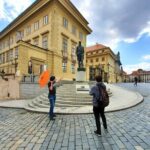
From there, you move toward the statue of St. Wenceslas. The explanation is brief, but it’s the kind of moment that helps you understand Prague’s political and cultural symbolism. St. Wenceslas isn’t just a statue you walk past—it’s a marker of who Prague claims as a central figure.
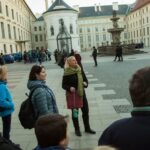
Then comes one of the route choices I really appreciate: the tour avoids Old Town Square, where a huge share of visitors get stuck. Instead, you step into parts of Prague that feel more lived-in and less stage-managed. The result is less queue time and more chances to hear stories without shouting over a crowd.
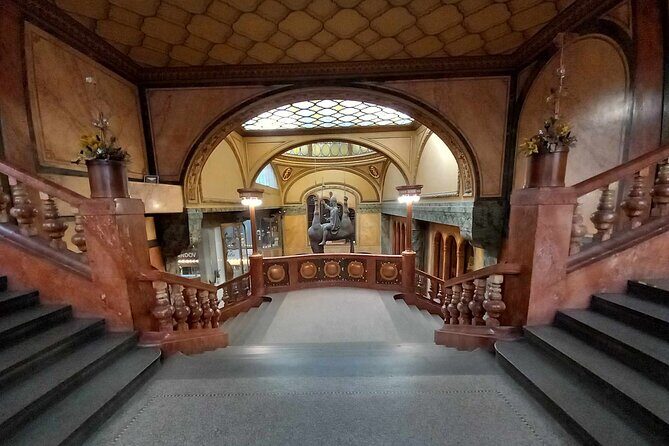
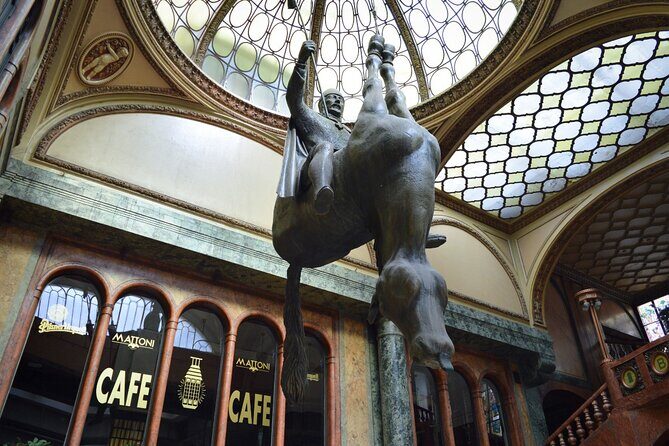
Next, you reach an Art Nouveau palace with an upside-down horse statue. This is where the tour shows its variety. It’s not only about kings and churches. It’s also about design, style shifts, and the playful oddities Prague loves to sprinkle into serious streets.
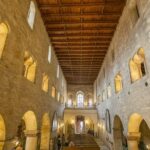
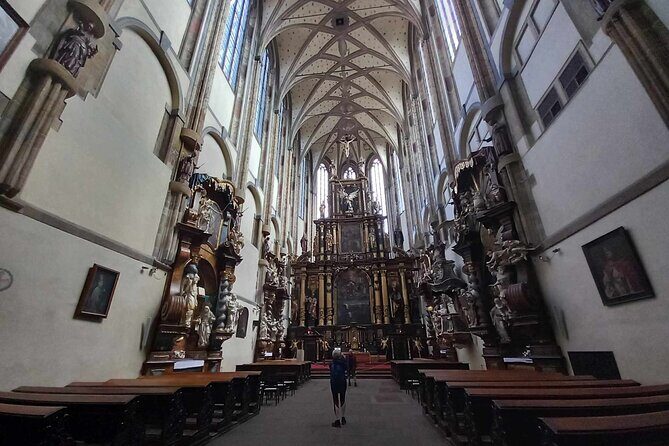
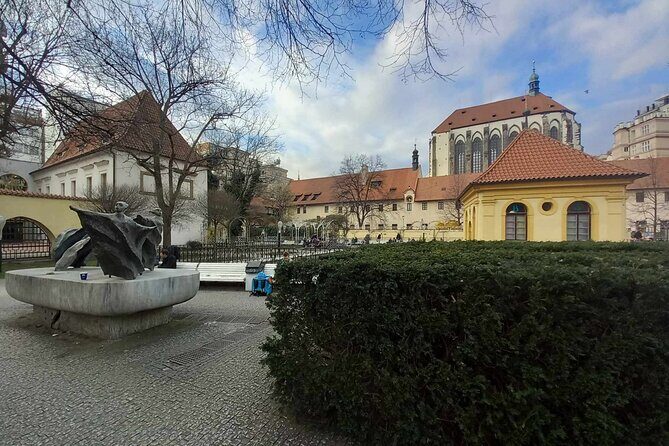
After that, you visit the Franciscan garden, described as a quieter stop tucked away from the main flow. You don’t just see greenery; you get a reason for the location and why gardens like this matter in a dense city. A bit later, you step into a medieval church, which keeps the “layers of time” theme moving forward.
The mood shifts again at the site tied to the oldest Jewish cemetery in Prague. This is one of those places where you need the guide’s framing to understand what you’re looking at. It’s also a respectful stop, and you’ll want to move thoughtfully here rather than turning it into a photo-only moment.
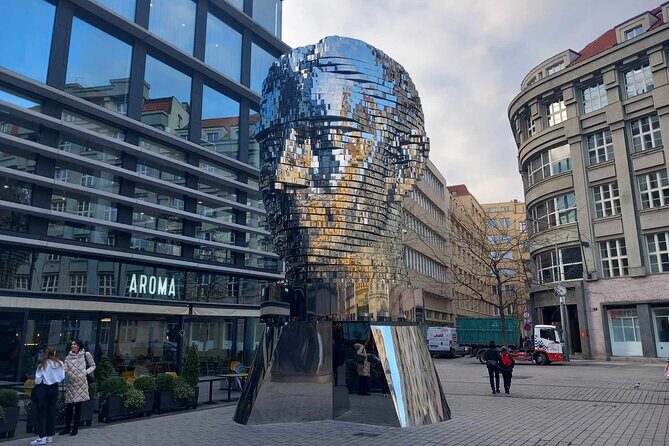
The New Town portion closes with the rotating head of Franz Kafka. Yes, it’s a famous stop, but seeing it as part of the larger story of Prague’s intellectual life makes it hit harder. If you love literature or simply enjoy when a city’s creativity has a human face, this is a satisfying finale to the first stretch.
What you’ll love here
This section gives you a real mix: museums and monuments, strange art details like the upside-down horse, and a contemplative pace at the garden and cemetery site. You’ll come away seeing New Town as something more than a route to Old Town.
One thing to consider
Because you’re walking through multiple distinct areas, you’ll want to keep your energy up early. If you start Prague at a slow pace, take a small snack before you meet.




Stare Město: defensive walls, Mozart, Jan Hus, and secret passages
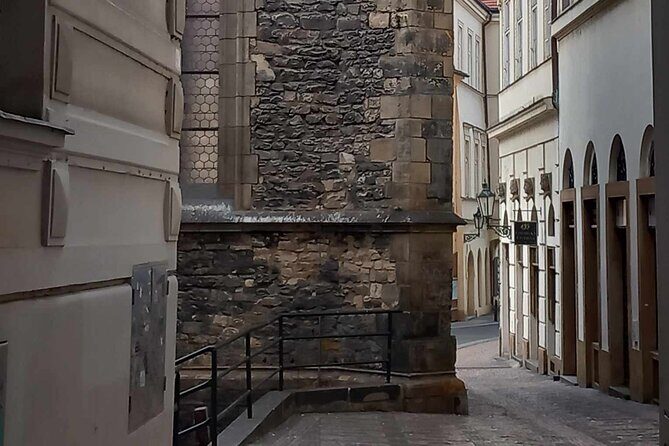
After New Town, the tour shifts into Stare Město (Old Town), but it doesn’t treat Old Town like one long conveyor belt. It starts with the first defensive walls of Prague and an older church in the area. That’s a smart way to introduce Old Town: before the big sightseeing names, you understand why the city was built as it was.
Then the tour connects places to people. You visit the house where Mozart lived, and you also connect it to the opera house where his Don Giovanni premiered. For classical-music fans, this is one of the most rewarding parts because it turns a famous composer into a city-specific character.
Next up are the Bethlehem chapel and a stop linked to Jan Hus. These are not just architecture stops; they’re the kinds of sites that help you understand how beliefs and conflicts shaped Prague. You’ll likely walk away realizing that Prague’s “art and beauty” story is tied to religion, reform, and political tension too.
One of the best practical details here is how you get to experience Old Town without getting trapped in only famous facades. The walk includes the labyrinths of the Old Town and street art installations, so you’re moving through narrow spaces where the city feels more real and less like a theme park.
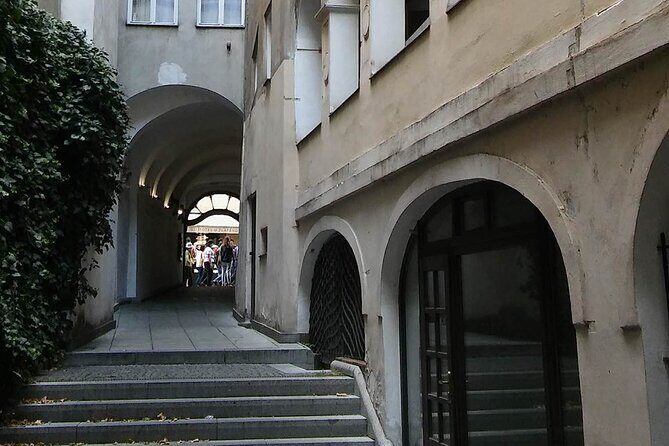
Then comes a stop that adds a fun twist: a secret Renaissance passage that takes you to a Baroque palace. That kind of moment is memorable because it breaks the expected flow of streets and squares. You’ll feel like you found something. More importantly, the guide frames it so you understand what the passage was for and why it’s not just a novelty.
The section ends with a stop tied to Johannes Kepler, including the house where Kepler lived. Kepler’s presence in Prague makes a lot of sense once you’ve heard the tour’s connective logic. Science here isn’t separate from culture. It’s part of the same city identity.
What you’ll love here
This is where the tour feels most “Prague-specific.” Defensive walls, Mozart, Jan Hus, street art, and a Kepler connection all show up in one coherent route. It’s not only pretty. It’s meaning-heavy in a way you can actually track.
One thing to consider
Old Town streets can be uneven and tight. If you have mobility concerns, take it slow and let the guide know early. The small group format helps the guide pace the walk to the crowd.
Charles Bridge: king Charles IV, Prague Castle views, and ending at Lennon Wall
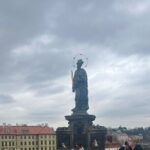
The final chapter is the one many people come to Prague for: Charles Bridge. The tour starts at a statue of King Charles IV, labeled as a key Czech figure, then you walk toward the bridge with explanations about the statues, views, and the history of Charles Bridge.
As you cross, the guide points out details that help you see the bridge as a viewpoint, not just a crossing. You get panorama views of Prague Castle, and those moments are timed well for photos—especially when you want the wide, postcard-like shot without sprinting.
You’ll also learn how the bridge’s symbolism and placement helped shape the city’s identity over time. That’s valuable because it changes your mindset while you’re walking. You’re not just watching tourists take pictures. You’re walking through a built timeline.
The tour finishes near the John Lennon Wall. That ending is perfect for a “last mood shift” from historic power and architecture to a more modern, human, artistic statement in the city. Even if you’re not into street art, it’s an easy place to keep wandering after the tour ends.
What you’ll love here
Charles Bridge is a photo magnet, but it can also feel chaotic. The guide’s pacing helps you find angles, stop for views, and keep the story moving instead of waiting for crowds to thin.
One thing to consider
If you’re coming in at peak tourist hours, the bridge can still be crowded. The difference is that you’ll have something to look at beyond the crowd—statues, the castle panorama, and the bridge’s history.
Price and value: getting context with a $25 guided walk
At $25 per person for about 2 hours 30 minutes, this tour sits in the “budget-friendly but not skimpy” category. You’re paying for a guide to do the hard work: connect neighborhoods, explain why specific stops matter, and keep the route moving so you don’t waste time hunting.
The stops themselves are listed with free admission tickets across the itinerary segments. That’s a big part of the value. You’re not paying extra just to participate, which helps keep the total cost predictable.
The small-group size is another hidden value point. With a max of 10 people, you get more individualized attention. That makes the $25 feel less like you bought a walk and more like you hired a storyteller for the streets.
If you’re the type who likes to get your bearings fast, this tour is a smart early move. It gives you a mental framework for later, independent sightseeing, which can prevent “I saw it but didn’t get it” days.
Practical tips that make the walk feel easy
Wear shoes you can move in. This is a walking tour, and you’ll spend time on mixed surfaces and in tighter streets than you might expect from the big landmarks.
Bring water. Even if it’s not blazing hot, Prague days can add up quickly on your feet. If you’re photographing, keep your phone ready but your attention also on the guide’s explanations. Some of the best details are the kind you only notice when you’re listening for them.
Expect a tour style that invites questions. The best part isn’t just the facts; it’s the back-and-forth. Ivitsa’s humor and patient pacing help the group stay comfortable, and you’ll likely pick up practical advice that you can use after the walk.
One more note: the tour requires good weather, so keep an eye on forecasts. If weather forces a change, you’ll want a flexible day. Prague can still be dramatic in rain, but this particular format depends on being outdoors.
Is this your kind of Prague tour?
Book this if you want Prague as a story, not a scavenger hunt. You’ll enjoy it most if you like mixing major landmarks (Charles Bridge, Kafka’s rotating head) with lesser-swept stops (Franciscan garden, secret Renaissance passage, cemetery site context). The route avoids the densest tourist bottlenecks in Old Town, and that makes the experience feel calmer and more personal.
Skip it or consider a lighter alternative if you hate walking or you prefer to set your own pace without questions. Also, if your plan is extremely tight with very late-night schedules, the full 2.5-hour walk will be noticeable.
For me, the clearest sign this tour is worth your time is the way the route teaches you how to look. You’ll leave Prague not just with photos, but with a better understanding of how its people, art, religion, and ideas changed the places you see.
FAQ
How long is the Walking Tour in Prague with Local Historian?
It lasts about 2 hours 30 minutes.
Is the tour offered in English?
Yes, the tour is offered in English.
How big is the group?
The tour has a maximum of 10 travelers, and it needs a minimum of 2 people to start.
Where do we meet and where does it end?
You meet at Václavské nám. 68, Praha 1-Nové Město, and you end at Velkopřevorské náměstí near the John Lennon Wall.
Do I need to buy admission tickets for the sights?
The itinerary notes free admission tickets for the listed stops.
Will I get a mobile ticket?
Yes, the tour includes a mobile ticket.
What if the weather is bad?
The tour requires good weather. If it’s canceled due to poor weather, you’ll be offered a different date or a full refund.
Can I bring a service animal?
Yes, service animals are allowed.
Is free cancellation available?
Yes. You can cancel up to 24 hours in advance for a full refund.
Is the tour suitable for most people?
Most travelers can participate, but it is still a walking tour, so expect time on foot.
Should you book this Prague walking tour?
If you want Prague to make sense fast, this is a strong pick. You get a small-group feel, a clear mix of New Town, Old Town, and Charles Bridge, and a guide who keeps things interactive. The route also trades some of the most crowded sightseeing areas for quieter, more specific places, which is exactly how you get a more personal Prague.