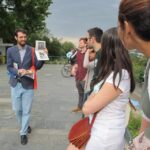
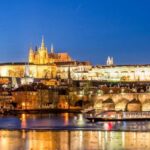
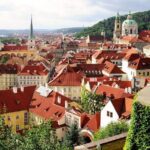
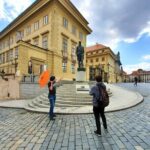
Prague rewards the curious walker. This 3-hour walk threads through Old Town, quiet back streets, and major landmarks with stories you won’t get from a self-guided stroll. I like the fact that guides such as Honza (Jack) and Mike (based on recent guide feedback) treat history like a living thing, not a list of dates.
What I liked most: you get two strengths at once—serious visual stops (churches, monasteries, and architectural details) plus the way the guide ties them to how Prague thinks today. And the pace is built for questions, with a small group capped at 15. One thing to consider: the finish at Vyšehrad involves a climb up a steep street, so comfy shoes and moderate stamina matter.
In This Review
- Key Things to Know Before You Go
- Starting at Staroměstské náměstí: Getting Your Bearings Fast
- Church of St. James the Greater: A Church That Actually Moves You
- The House of the Black Madonna: Cubism in the City Center
- Wenceslas Square and the Church of Our Lady of the Snows: Power, Plans, and Irony
- Franciscan Garden and Vodičkova Street: Finding the Calm Between Sights
- Karlovo náměstí and a Curious Clock Mystery
- Emmaus Monastery: Frescoes, Imperial Money, and a Survivor’s Story
- Vyšehrad Castle Finish: A Viewpoint and a Full Circle Ending
- Price and Value: Why This Tour Fits the $44 Range
- Who Should Book This Walk (and Who Might Skip It)
- Should You Book This Prague Lesser-Known Sights Walking Tour?
- FAQ
- How long is the Prague walking tour?
- Is the tour guided in English?
- What does the price include?
- Where does the tour start and end?
- Is there a limit on group size?
- Can I cancel if my plans change?
Key Things to Know Before You Go
- Small group size (max 15): you’re not swallowed by a crowd, and questions actually land.
- English guide and mobile ticket: simple to use, and you can stay flexible on the day.
- A mix of big squares and off-the-main-path streets: you still hit major landmarks, but you’re guided into calmer corners.
- Churches plus architecture: expect interior time where allowed and strong stops for building styles (including cubism).
- Emmaus Monastery is included: one ticket you don’t have to plan or buy separately.
- Tour ends at a viewpoint: you finish high with river views over Prague.
Starting at Staroměstské náměstí: Getting Your Bearings Fast
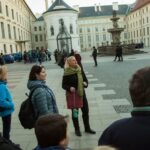
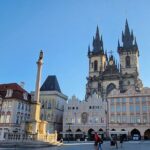
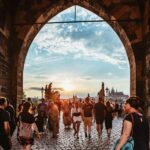
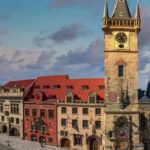
You meet at Staroměstské náměstí (Old Town Square), and the guide uses that spot to frame the city. You’ll get a quick orientation—where Prague’s power and identity formed, and why the next few streets matter. It’s not just “stand here and listen.” The intro sets up the walking rhythm, so the details you’ll see later feel connected.
This is also where you’ll learn what kind of tour day you’re having: some guides lean more into political history, others focus on architecture and social patterns. Either way, you’ll leave the square with better navigation instincts for the rest of your trip.
You can also read our reviews of more walking tours in Prague

Church of St. James the Greater: A Church That Actually Moves You
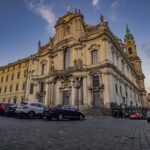
The next stop is the Church of St. James the Greater, and it’s the kind of place that makes you slow down without trying. If you like churches for their interiors—not just their exteriors—this is a strong early anchor.
The guide gives you the history and helps you read what you’re seeing inside. That matters, because churches can be visually busy: lots of lines, ornament, and symbolism. With a guide, you’re not just staring at beauty—you’re understanding why certain choices were made and what they signaled at the time.
A small practical note: church interiors can be cooler and dimmer than the street. Wear layers you can handle.
The House of the Black Madonna: Cubism in the City Center
Then you turn toward one of Prague’s most famous architecture stories: the House of the Black Madonna. This stop is about architecture styles you might not notice on your own—especially cubism, which Prague is famously associated with.
What makes this feel worth your time is the guide’s narrative. You don’t just get told that the building is cubist. You learn the story of the house and why it became such a marker in the city center. After that, you’ll start spotting architectural “tells” as you walk through Prague—shapes, angles, and the way facades communicate ideas.
If you’ve spent your first day in Prague chasing landmarks, this is a good reset. It teaches you how to look at what most people pass without thinking.
Wenceslas Square and the Church of Our Lady of the Snows: Power, Plans, and Irony
From here, the tour shifts to Wenceslas Square, a place tied to major events in Czech history. The guide walks you through the most famous 20th-century stories connected to the square. This isn’t a lecture that stays abstract. You’ll start seeing the space like a stage where history played out.
After that comes the Church of Our Lady of the Snows. On the outside, it can look like a smaller stop. The guide flips that expectation by explaining the church’s original ambition—how it was intended to become one of the greatest churches in Central Europe. That contrast is the point.
And it adds a neat lesson in how plans change over time. Prague is full of buildings that grew into different realities than the founders imagined. This stop helps you understand Prague by looking at what didn’t go according to plan.
Franciscan Garden and Vodičkova Street: Finding the Calm Between Sights
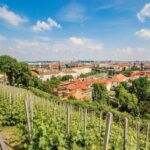
Right after the church, you take a short walk into a quieter stretch: Franciscan garden. This is the kind of pause that makes the whole tour feel more balanced. You get a small break from the main flow of foot traffic, and it’s a chance to reset before the next architecture stop.
Then the guide heads to Vodičkova Street, where you walk and look like you have a mission. This part is basically architecture spotting: the guide points out buildings you would likely miss on your own, and you start seeing how the street’s mix of styles tells a story of changing eras.
This is a good section for people who like photos. Even without a perfect camera, you’ll get plenty of angles because you’re being guided to features, not just generic street scenes.

Karlovo náměstí and a Curious Clock Mystery
At Karlovo náměstí, you get history tied to a large public space—how it worked when it was founded and how its role evolved. The guide also shares a fascinating detail: there used to be another astronomical clock in Prague, besides the famous one in Old Town Square.
This is one of those “wait, really?” moments that turns into better sightseeing later. Once you hear how clocks and public timekeeping mattered, you’ll notice how Prague organizes civic life through buildings and squares.
This stop also helps you understand the logic of the route. The walk isn’t random; it links social spaces, religious spaces, and the city’s defense/identity zone that comes at the end.
Emmaus Monastery: Frescoes, Imperial Money, and a Survivor’s Story
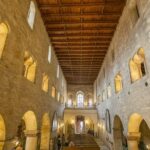
Next is Emmaus Monastery, and this is where the tour leans hard into “slow down and look.” The ticket is included, so you don’t spend your mental energy figuring out logistics.
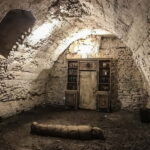
The monastery is one of the oldest in Prague, and the guide explains that it was financed by the emperor himself. That detail matters because it helps you understand why the interiors are so richly decorated. You’ll see frescoes, and the best part is that many have survived.
The guide also addresses how it was hit during the 20th century and why it still feels special today. That combination—beauty plus survival—gives the stop emotional weight without turning it into doom-and-gloom.
If you’re the type who loves religious art but sometimes finds it hard to connect the dots, this is a great “I get it now” moment.
Vyšehrad Castle Finish: A Viewpoint and a Full Circle Ending
The tour ends at Vyšehrad National Cultural Monument, with a walk up toward the castle area. The guide frames Vyšehrad as an early medieval seat of Czech kings and also as part of Prague’s defense system.
Then you reach the viewpoint over the river. This final stretch is where the whole route clicks. You started in civic time at Old Town Square, moved through faith and design, and now you finish with the city’s defensive identity and its best “look back at Prague” moment.
Also, be ready for the physical part. The walk up is steep enough to matter. Comfortable shoes aren’t optional if you’re hoping to enjoy the view instead of focusing on your footing.
Price and Value: Why This Tour Fits the $44 Range
At about $44.32 per person for roughly 3 hours, the value comes from the structure. You’re paying for a local guide plus a route that would take longer (and cost more) if you tried to stitch it together yourself across multiple churches and key architecture stops.
A big practical advantage: many stops are marked free, and Emmaus Monastery is included. That means you’re not juggling extra ticket purchases for the main interior moments. You also get a small group experience with a cap of 15, which often makes the difference between “I learned a few things” and “I can ask questions and get straight answers.”
The tour is also in English and includes a mobile ticket, which is helpful if you like to move with less paperwork.
Is it pricey compared with a generic walking audio app? Sure. But for a guided route that mixes major landmarks with calmer streets and includes one notable interior ticket, it’s a fair deal.
Who Should Book This Walk (and Who Might Skip It)
This tour is for you if:
- you want more than the headline sights, but you don’t want to give up the big Prague names
- you like architecture explanations, especially the cubism angle
- you enjoy churches and monasteries, and you want help noticing what you’re looking at
- you like ending with a view rather than rushing off to your next reservation
You might skip it if:
- you already plan to do a heavily church-focused day and don’t want overlap
- you’re very sensitive to hills, since ending at Vyšehrad involves a climb
Should You Book This Prague Lesser-Known Sights Walking Tour?
I’d book it if you want a guided Prague day that feels smart, not rushed. The reason is simple: the route mixes major landmarks with quieter streets and design details, and the guides highlighted in recent feedback sound like they manage the balance well—professional, friendly, patient with questions, and willing to add extra time when it’s deserved (one guide even went beyond the expected schedule).
If you’re curious about why buildings look the way they do, and you’d rather hear the story behind what you see than just collect photos, this is a strong match.
FAQ
How long is the Prague walking tour?
It’s about 3 hours.
Is the tour guided in English?
Yes, the tour is offered in English.
What does the price include?
The price includes a local guide. Emmaus Monastery has admission included, while the other listed stops are marked free.
Where does the tour start and end?
It starts at Staroměstské nám. 1, 110 00 Praha 1-Staré Město and ends at Vyšehrad, 128 00 Prague 2, at Vyšehrad Castle.
Is there a limit on group size?
Yes. The tour has a maximum of 15 travelers.
Can I cancel if my plans change?
Yes. You can cancel for a full refund up to 24 hours before the experience’s start time.
If you want, tell me your travel dates and what you’ve already seen in Prague. I’ll help you decide where this fits best into your day.