REVIEW · PRAGUE
Prague: Market Tour and Traditional Czech Cooking Class
Book on GetYourGuide →Operated by Chefparade · Bookable on GetYourGuide
Your hands learn Czech food fast. In a few hours in Prague, you’ll shop for ingredients at a morning market and then cook a classic Czech menu in a chef-led studio.
I like that this experience is both hands-on and practical, and I also like that it starts with real ingredients you can actually recognize. One thing to plan for: there’s no hotel pickup, so you’ll need to get to the Prague Market meeting point on your own.
First, I love how you cook side-by-side with the chef instead of just watching. Second, I love that you eat the 3-course lunch you make, and you also leave with recipes you can repeat later.
A heads-up: you’ll want to confirm the exact date and start time at least 24 hours ahead, since the class schedule can vary.
In This Review
- Why This Prague Cooking Class Feels Like Local Food
- Key Things You’ll Remember From the Market and Studio
- Prague Market Stop: Choosing Ingredients Like a Chef
- What to watch for at the market
- Chefparade Cooking School: What the Workshop Is Really Like
- Language and teaching style
- The 3-Course Menu: What You Might Cook (and Why It Works)
- Bramboračka: Potato Soup With Mushrooms
- Goulash with dumplings (including Carlsbad style)
- Bramboráky: Potato pancakes
- Fruit dumplings: Ovocné knedlíky
- Spinach soup with herb croutons
- Main course favorites: rabbit or baby chicken
- Sweet ending: Apple strudel and beránek
- What Makes the Cooking Tips Practical (Not Just Cute)
- Eating What You Made: The Comfort Part
- Price and Value: Is $227 Worth It?
- Timing, Meeting Point, and Getting There Smoothly
- Who This Prague Class Is Best For
- Should You Book This Prague Market Tour and Traditional Czech Cooking Class?
- FAQ
- How long is the Prague market tour and cooking class?
- Is the market tour included?
- Where do I meet for the class?
- What dishes will I cook?
- Do I get recipes to take home?
- Can the menu be changed for dietary requirements?
- What language does the instructor speak?
- Is hotel pickup included?
Why This Prague Cooking Class Feels Like Local Food
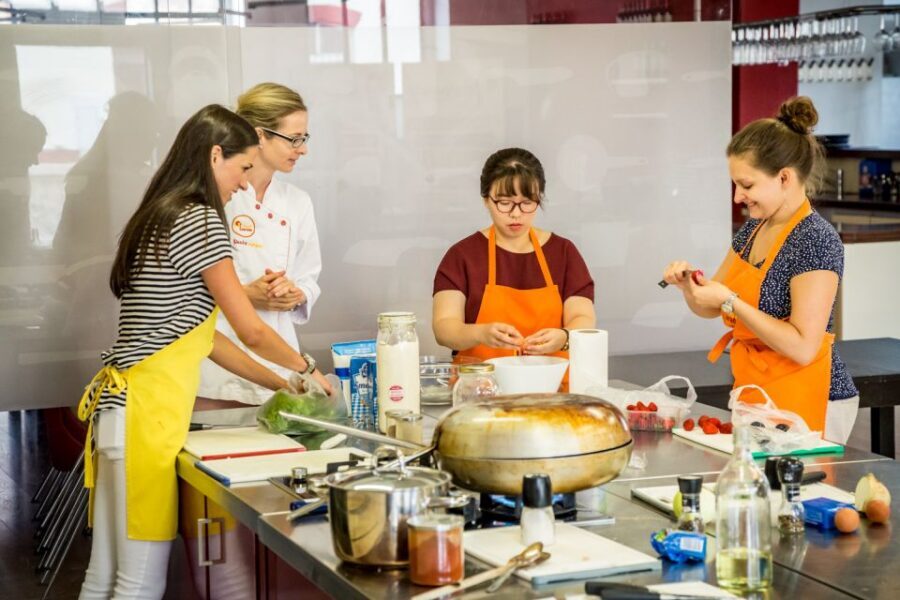
This isn’t a sit-and-smile food tour. It’s a short workshop built around Czech comfort food, with a market start that helps you understand what you’re actually cooking.
You can expect a menu that often includes Czech staples like potato soup, goulash with dumplings, potato pancakes, and sweet treats such as apple strudel. And because the menu can shift based on what’s in season (and your requirements), the class stays grounded in what’s truly available, not what’s only available in a cookbook.
Also, the vibe is modern and relaxed. You’re cooking in a studio environment at Chefparade, not in some cramped demonstration kitchen.
And yes, names matter here. Instructors such as Latisha and Vladimir have been described as especially warm and helpful, with plenty of technique and flavor tips that make you feel confident in the kitchen.
Key Things You’ll Remember From the Market and Studio
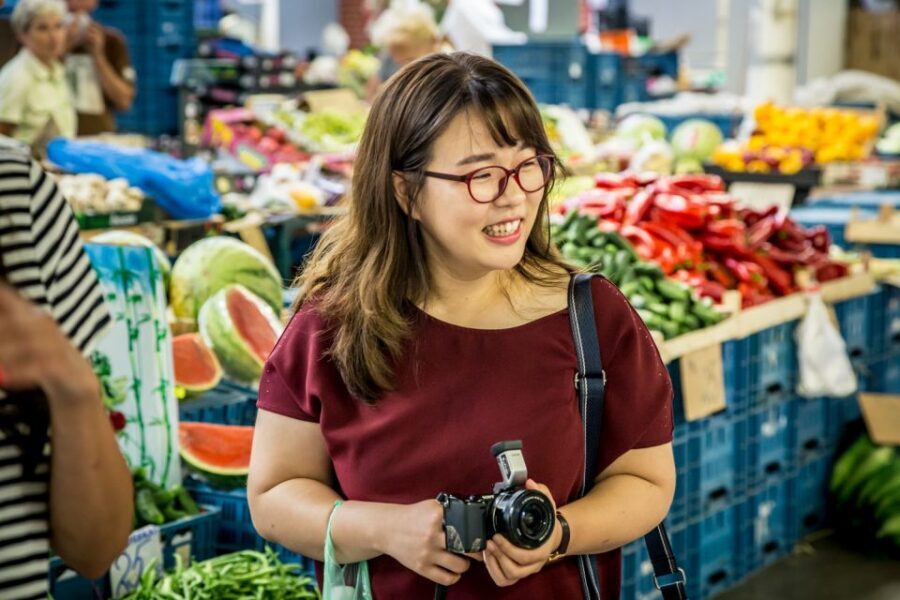
- Farmer’s market scouting in the morning, when stalls are freshest and most active
- Hands-on cooking side-by-side with a local chef in a contemporary studio
- Czech classics like bramboračka (potato soup with mushrooms) and goulash with dumplings
- Practice with dumplings and comfort dishes, with options that may include ovocné knedlíky (fruit dumplings)
- A full 3-course lunch you prepare and then eat at the studio
- You take home recipes plus the knowledge behind the methods
You can also read our reviews of more shopping tours in Prague
Prague Market Stop: Choosing Ingredients Like a Chef
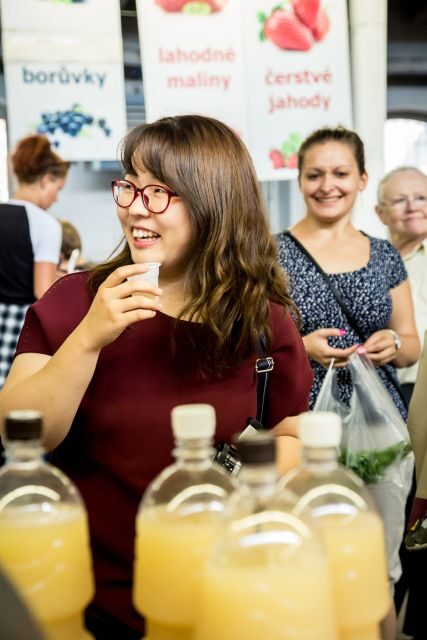
If you choose the morning option, your day starts at 09:00 with a guided walk through a farmers market. This is the part I like most because it turns cooking from a theory lesson into something you can smell, touch, and select.
The guide will point out ingredients that are typical for Czech cooking—spices, produce, and other items you’ll use for your meal. The useful twist is that you’re not just browsing. You’re shopping with purpose, so when you return to the studio, you’re working with the same foods you learned to recognize.
This also matters for value. A cooking class that starts with ingredient literacy is usually more memorable because it gives you context. You’ll understand why certain flavors show up repeatedly in Czech dishes—especially when potatoes, mushrooms, onions, herbs, and dumpling-friendly ingredients keep appearing across the menu.
What to watch for at the market
Since you’ll be buying items for your class, keep a small plan for what you carry. You may want a tote bag you’re comfortable to bring back. Also, wear shoes you can stand in, because markets don’t stay polite for long.
Chefparade Cooking School: What the Workshop Is Really Like
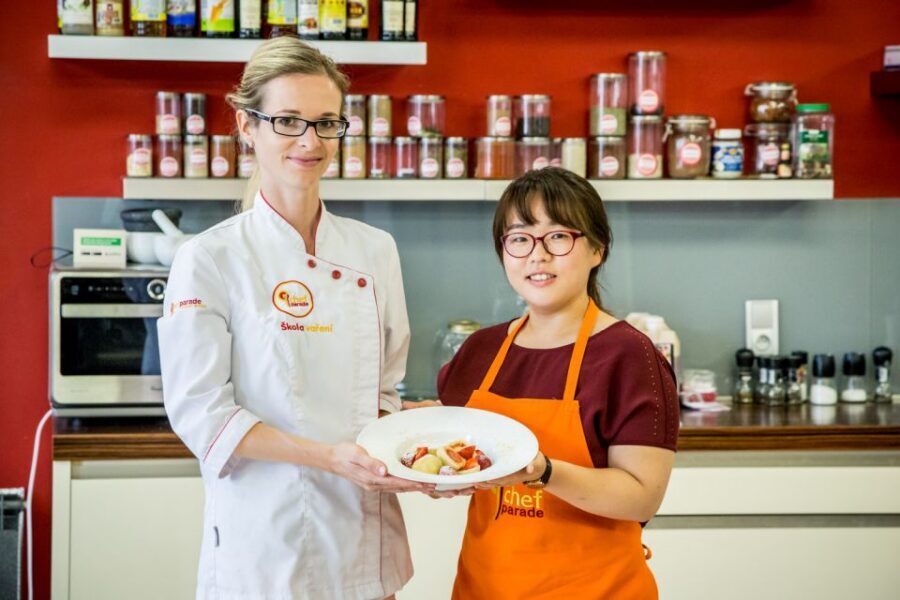
Your cooking portion happens at Chefparade Cooking School at Prague Market, Hall No. 36, in Prague 7 (Holešovice). The studio is described as contemporary and cosmopolitan, which matters because it tends to feel welcoming instead of overly formal.
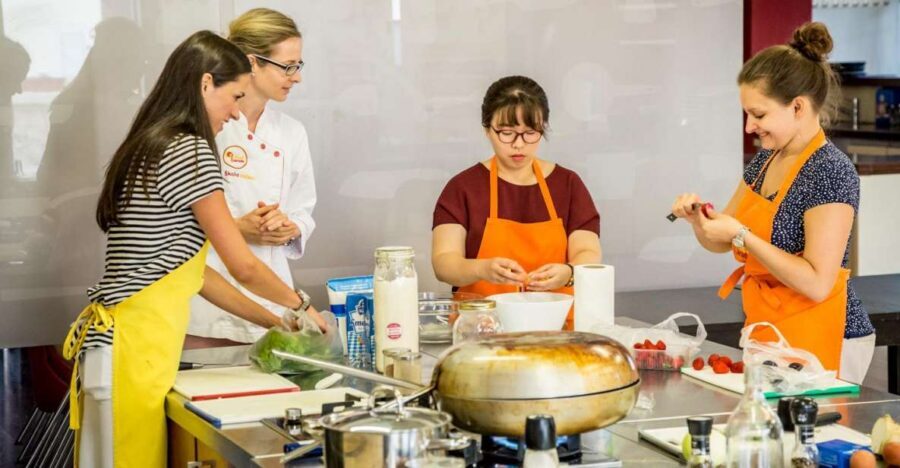
You cook in a hands-on setting with you as the chef. That means you’re doing the chopping, stirring, assembling, and portioning—not just observing.
You’ll also get what you need to cook comfortably: aprons, kitchen utensils and equipment, and all the cooking ingredients. That removes a big hassle factor, since you don’t have to guess what to bring or how to translate unfamiliar pantry items.
Language and teaching style
The instructor speaks Czech and English. Based on the instructor impressions shared for past classes, the best parts are usually the practical flavor guidance—learning what to taste for and how to adjust.
In classes associated with instructors like Latisha and Vladimir, the emphasis is on technique you can actually use next time, not just the final dish. That’s the difference between a fun meal and a lesson that sticks.
A few more Prague tours and experiences worth a look

The 3-Course Menu: What You Might Cook (and Why It Works)
Menus can be altered based on requirements and what’s in season, but Czech comfort-food themes stay consistent. Expect potatoes, hearty soups, dumplings, and a dessert finish.
Here’s what you might see on the menu.
Bramboračka: Potato Soup With Mushrooms
One very common first course is bramboračka, a traditional potato soup with mushrooms. This dish is a smart choice for a class because it teaches a core Czech flavor pattern: earthy mushrooms plus starchy potatoes create body, while herbs add lift.
Even if you’ve had potato soup before, learning the Czech version helps you understand what makes it taste distinct. It’s not just “potatoes in water”—it’s a balanced bowl with structure.
Goulash with dumplings (including Carlsbad style)
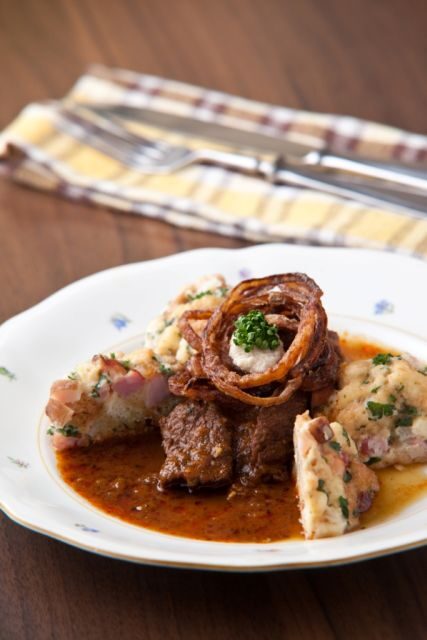
A main-course highlight often includes goulash with dumplings from Carlsbad. Goulash is famous, but dumplings are where Czech cooking gets especially satisfying. The texture matters: too dense and it’s heavy, too loose and it falls apart.
This is the sort of lesson you’ll love if you enjoy learning how to get the details right, because dumplings are the kind of dish that rewards technique. The upside is you’ll gain skills that can transfer to other cuisines that use similar dumpling ideas.
Bramboráky: Potato pancakes
Another possible savory dish is bramboráky, Czech potato pancakes. These are great for learning because they show how potatoes can be turned into something crisp outside and tender inside. It also gives you a break from soup-and-stew rhythms while still staying classic.
Fruit dumplings: Ovocné knedlíky
For a sweeter or lighter course component, you might work on ovocné knedlíky, fruit dumplings with cottage cheese. This is a classic Czech idea: cottage cheese adds softness and richness, and fruit brings brightness.
Even if you’re not a “dessert person,” this can be a surprisingly satisfying course because it balances comfort with fruit flavor.
Spinach soup with herb croutons
Some menus may include a creamy spinach soup with herb croutons. If you like greens but want them in a comforting way, this can be a nice switch from heavier potato-forward dishes. The herbs on croutons add a fresh note that helps cut through the creaminess.
Main course favorites: rabbit or baby chicken
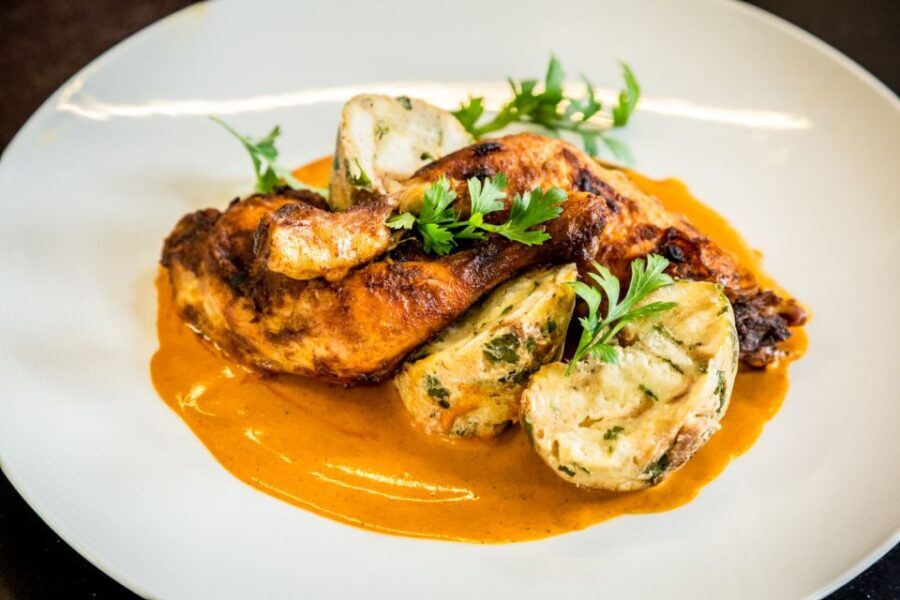
Some classes include a main course favorite such as rabbit or baby chicken with Easter stuffing, served with new potatoes and chives. That combination is classic Czech thinking: meat that’s cooked with intention, paired with potatoes, and supported by herbs.
This portion is typically about learning how to handle the flavors and timing so everything lands on the plate ready to eat.
Sweet ending: Apple strudel and beránek
For dessert, the experience may include sweet apple strudel and the authentic Czech cake beránek. If you’ve never had Czech strudel, you’ll likely notice how comfortable and home-style it feels compared with some more showy versions.
Beránek is also a great way to finish because it’s tied to tradition and gives your menu a distinctly Czech signature.
What Makes the Cooking Tips Practical (Not Just Cute)
A lot of cooking classes teach recipes. This one aims to teach methods.
The best guidance is usually about flavor building—what to taste, how to adjust, and how to understand the dish while you’re making it. That’s exactly the sort of help that makes your food taste better even after the class ends.
When an instructor is noted for helping students get more flavor, that usually means you’re learning small steps like balancing seasoning and understanding how ingredients behave together. And since you’re cooking a full 3-course meal, you get repeated practice instead of one short taste test.
You’ll also appreciate that the class includes all the ingredients and tools. That means your brain can stay on the lesson, not on logistics.
Eating What You Made: The Comfort Part
Once the cooking wraps, you eat the lunch you prepared as a group. It’s a simple idea, but it changes the whole experience. You’re not rushing to a photo op. You’re sitting down and tasting the result right away.
Because it’s a 3-course meal, you get a full arc:
- something comforting and hearty (often soup),
- a substantial main (often goulash, dumplings, or chicken/rabbit with potatoes),
- and a sweet finish (like apple strudel or beránek).
That rhythm is a big reason this is such a good value for food lovers. Many cooking experiences are short on either instruction or eating time. Here, you get both.
Price and Value: Is $227 Worth It?
At $227 per person for roughly 3.5 to 4 hours, the cost can feel steep until you map it to what’s included.
You’re paying for:
- a guided farmers market visit (if you pick the option),
- a hands-on chef-led cooking class,
- ingredients for the full menu,
- kitchen utensils and equipment,
- aprons,
- and a 3-course meal you make and eat,
- plus recipes you take home.
For me, the value comes from the “learn + eat + repeat” combo. You’re not just buying lunch. You’re buying a skill set you can use again, and you’re getting a built-in meal at the end so you don’t have to plan another stop.
Timing, Meeting Point, and Getting There Smoothly
The overall duration is listed as 3.5 to 4 hours. That typically means the cooking portion runs close to 3 hours, with the market visit adding extra time if you choose the morning tour.
The meeting point is at Chefparade Cooking School, Bubenske nabr, 306/13, in the Prague Market area. It’s Hall No. 36, Prague 7 – Holešovice. The experience ends back at the same meeting point.
Two practical notes:
- There’s no hotel pickup, so plan your route to Holešovice and the Prague Market halls.
- Contact the vendor to confirm the exact date and time at least 24 hours in advance.
Who This Prague Class Is Best For
This is a strong fit if you want Czech food beyond what you can order in a restaurant.
I’d especially recommend it if:
- you like hands-on activities more than museum-style experiences,
- you want to learn how to make classics like goulash, dumplings, potato soup, and sweet apple strudel,
- you care about understanding ingredients, not just recipes.
It’s also a good option for people who enjoy structured time. You get a start point, a clear flow (market then cooking), and a finished meal.
Should You Book This Prague Market Tour and Traditional Czech Cooking Class?
Book it if you want a genuinely practical Prague food experience: shop for ingredients, cook a traditional menu with a chef, and eat what you made—then take the recipes home so the lesson continues.
Skip it only if you hate kitchen work, or if you’re unwilling to travel to the Prague Market/Hall No. 36 meeting point without pickup. Otherwise, this is one of the more “worth your time” ways to learn Czech cooking in a few hours.
FAQ
How long is the Prague market tour and cooking class?
The total experience runs about 3.5 to 4 hours, depending on the schedule. The cooking class portion is described as about 3 hours, with the market visit adding time if selected.
Is the market tour included?
The market visit is included only if you select the option that adds it. The class can also be booked without the market tour.
Where do I meet for the class?
Meet at Chefparade Cooking School, Bubenske nabr, 306/13, Prague Market, Hall No. 36, Prague 7 – Holešovice. The tour ends back at the same meeting point.
What dishes will I cook?
You’ll learn to prepare traditional Czech dishes such as potato soup with mushrooms (bramboračka), goulash with dumplings from Carlsbad, potato pancakes (bramboráky), and fruit dumplings with cottage cheese (ovocné knedlíky). Menus may also include spinach soup with herb croutons, and sweets such as apple strudel or beránek, depending on season and requirements.
Do I get recipes to take home?
Yes. Recipes are included and you can take them home after the course.
Can the menu be changed for dietary requirements?
Yes. Menus can be altered based on requirements and also based on what is in season.
What language does the instructor speak?
The instructor teaches in Czech and English.
Is hotel pickup included?
No. Hotel pickup is not included. You’ll need to make your way to the meeting point on your own.
If you tell me your preferred travel dates and whether you want the morning market option, I can help you decide what dishes to prioritize and how to plan the timing around the rest of your Prague day.