REVIEW · PRAGUE
Prague: Nightwatchman of Prague Walking Tour
Book on GetYourGuide →Operated by The Nightwatchman of Prague · Bookable on GetYourGuide
Prague changes after dark. This 90-minute Nightwatchman of Prague walking tour turns the Old Town into a 17th-century patrol route with a nightwatchman guide in costume and lantern-lit history you can actually follow. I especially like how it takes you off the usual daytime rhythm and gives you a calmer Prague once the sun and crowds fade. One thing to consider: it’s mostly outdoors, so bring weather-appropriate clothing and plan for chilly evening air.
I love the mix of big landmarks and street-level details. You start at the Powder Gate area, then work your way through squares and historic corners that feel louder and more meaningful when the city is quiet. If you want a relaxed pace with lots of chances to ask questions, guides like Thomas and Oscar (often in full character) are a strong reason to go.
The route is short, so you won’t get everything in Prague. But for first-timers who want the “how did this city survive wars, plague, and politics” story, it’s an excellent hit of context without burning half a day.
In This Review
- Key things I’d pay attention to
- Nightwatchman Costume Turns Prague Into a 17th-Century Patrol
- Finding Nám. Republiky 5 and the Powder Gate Start
- Powder Tower and Ovocný trh: Where Defense Meets Everyday Life
- Estates Theatre and the Prague Astronomical Clock Stops
- Old Town Square and Jan Hus Monument: History That Hits People
- Vltava River Sunset Moment: The Calm Pause Before Charles Bridge
- Charles Bridge to the Charles IV Statue: Finishing With Purpose
- What You Learn: Nightwatchman Duty, Wars, and Plague Years
- How the Pace Works and Why Guides Like Thomas, Oscar, and David Matter
- Price and Value: $23 for 90 Minutes of Costumed Storytelling
- Who Should Book This Nightwatchman Tour (and Who Might Skip It)
- Should You Book the Nightwatchman of Prague Walk?
- FAQ
- Where is the meeting point for the Nightwatchman of Prague walking tour?
- How long is the tour?
- What languages are available?
- What’s included in the ticket price?
- Are food and drinks included?
- Is the tour wheelchair accessible?
- What should I bring?
Key things I’d pay attention to
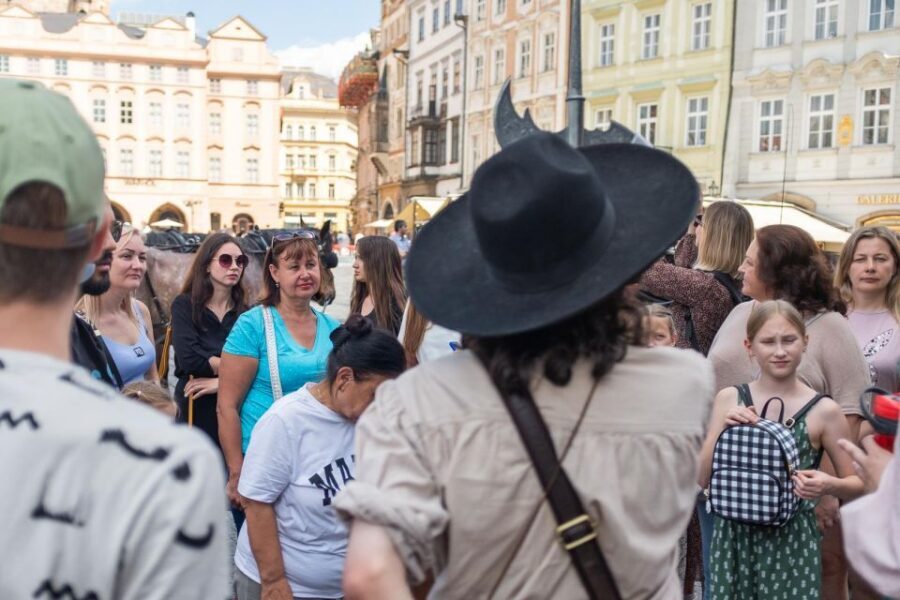
- A 1633-era nightwatchman in costume: It’s not just a theme. The guide narrates from the watchman’s world.
- Nighttime Old Town timing: You see famous spots after daylight crowds thin out.
- Defense, markets, theater, and clocks: The stops connect daily life to major events.
- Vltava River and the castle-at-night viewpoint: A great pause before the bridge.
- Storytelling that includes common people: Not only kings and battles, but also jobs and habits of ordinary Prague residents.
Nightwatchman Costume Turns Prague Into a 17th-Century Patrol
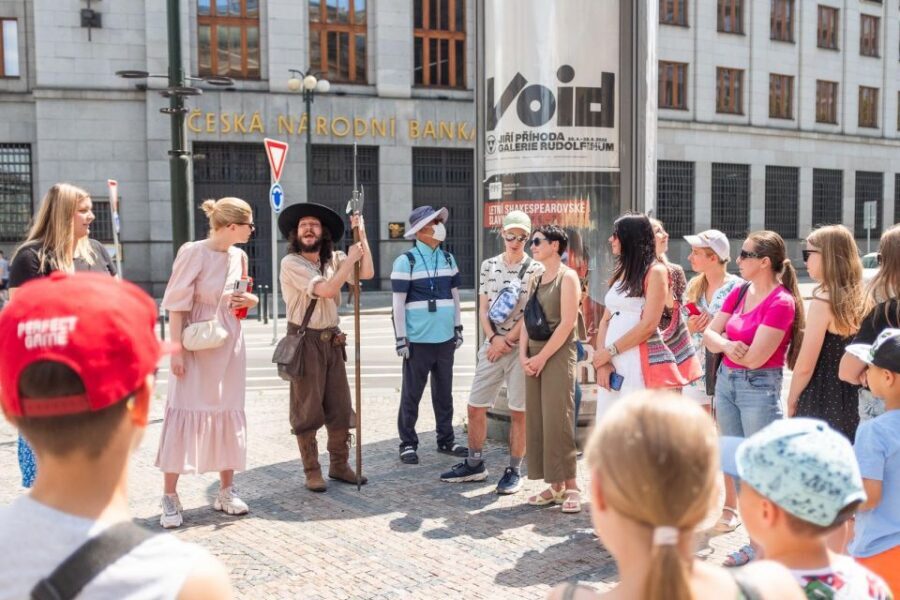
The core idea is simple: you walk Prague as if you’re on duty. The guide shows up as a nightwatchman of the year 1633, carrying the look and attitude of someone tasked with keeping watch. It’s a clever way to link landmarks to real-life fears and responsibilities, like protecting the city, noticing trouble, and surviving long stretches where safety was never guaranteed.
This tour also leans into atmosphere. You’re not just collecting photos. You’re moving through Old Town streets when the light softens and the city feels more like what it was built for: a place people relied on, feared for, and rebuilt again. More than once, the entertainment comes from the guide’s character work. One reviewer specifically called out Oscar for mixing humor with clear answers, which tells me the best part isn’t the costumes alone. It’s how the guide uses that persona to explain the history in plain language.
There’s also a very practical payoff: you start to recognize the “why” behind Prague’s layout. When you hear the watchman’s duty story while standing near old defenses and plazas, the city stops feeling like random streets. It starts feeling like a system—security, commerce, public life, and power all tied together.
You can also read our reviews of more walking tours in Prague

Finding Nám. Republiky 5 and the Powder Gate Start
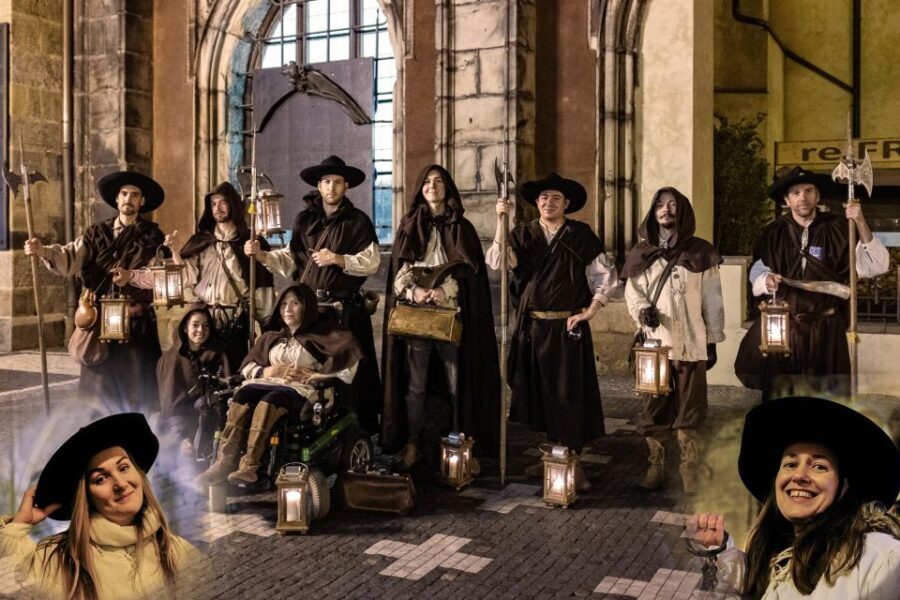
Meeting is easy if you’re paying attention. You begin in front of the big Powder Gate at Nám. Republiky 5, about a five-minute walk from Republic Square. The gate is prominent, and that matters here because night tours are only fun when you don’t waste time searching.
You’ll want to arrive a few minutes early. Not because the tour is fussy, but because the first moments set the tone. The guide can get everyone oriented, explain how the watch works, and get the group into the right mindset before you head into the historic core.
Also, keep your expectations tuned to the evening format. This is a 90-minute walk, so you’re moving from stop to stop with short sightseeing breaks rather than lingering like you would with a self-guided plan. If you like to wander on your own, this tour is best as the “story layer” that gives you a framework for the rest of your Prague time.
Powder Tower and Ovocný trh: Where Defense Meets Everyday Life
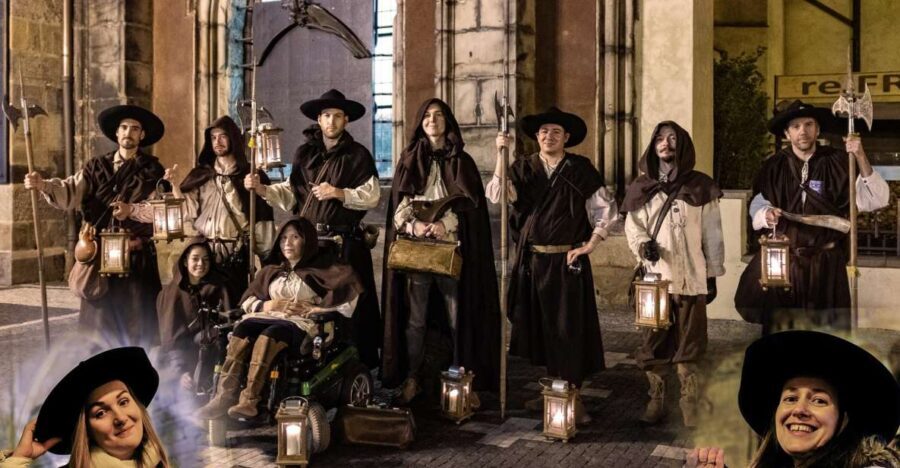
The first stop is the Powder Tower area, and it’s a strong beginning. Gates and towers in Prague weren’t just decoration. They were part of how the city protected itself and controlled movement. Starting here helps you understand why the tour keeps mentioning wars and plague-era hardship: these weren’t abstract historical themes. They shaped the streets you see every day.
From there, you move into Ovocný trh, a historic market square area. Markets are where you feel daily life more than big speeches. Even on a short tour, this stop is useful because it balances the defense theme with a human one: people traveled, bought, sold, and carried on while larger events threatened their world.
If you’re the type who gets tired of tours that only point at buildings, you’ll probably like this part. It gives you the “people lived here” angle early, so the later political and crisis stories land better.
Estates Theatre and the Prague Astronomical Clock Stops
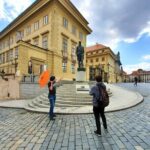
Next up is Estates Theatre. Even without long explanation, it works as a reminder that Prague wasn’t only about survival. It also had culture, performance, and public life. One of the strongest review-based signals I picked up here is that guides often connect theater to famous creative moments—Mozart’s ties to Prague came up in a review—so you may hear how art and politics bumped into each other during different eras.
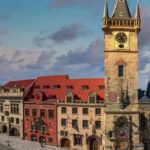
Then you reach the Prague Astronomical Clock area, with a short stop. This is one of those landmarks that can overwhelm you in daylight because everyone is craning their neck at the same angles. At night, the same spot feels more like a piece of medieval technology and civic pride rather than a photo line.
The tour’s value at the clock stop is not that you get extra “clock facts” no one else knows. It’s that you get context about why this kind of public timekeeping mattered in a city where daily routines and civic order depended on shared signals.
The quick pace here is also a good thing. After the clock, you’re pushed into the deeper Old Town core, where the story continues rather than turning into a checklist stop.
Old Town Square and Jan Hus Monument: History That Hits People
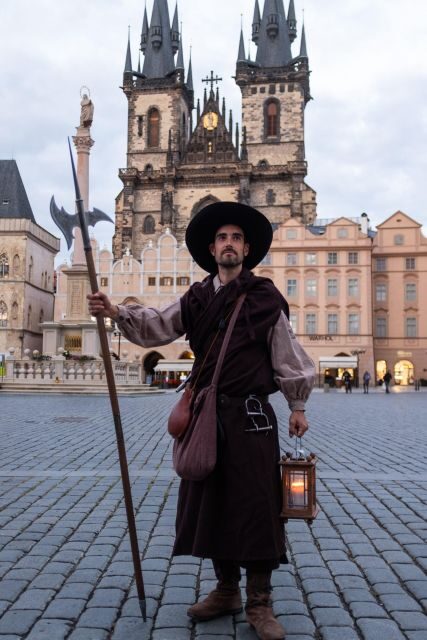
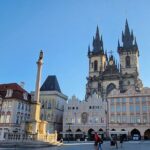
You spend time around Old Town Square. This stop matters because it’s the symbolic heart of the area, and it’s where the guide’s storytelling can connect multiple threads: power, public gatherings, and the tension between rulers and citizens. In a good tour, a place like this becomes readable. You start noticing how what you see today reflects older political and civic realities.
Then you head to the Jan Hus Monument. This is where the tour’s “time travel” promise turns more serious. One of the best review-based themes was how guides spoke about the Hussite movement and Jan Hus’s role, tying those events to Prague’s identity through the centuries. It’s not just name-dropping. You’re learning how these turning points shaped what people believed, feared, and fought for.
The reason I think this works well on an evening walk is emotional timing. At night, the square and monument feel less like a museum photo backdrop and more like a public reminder of real conflicts. If you’re pairing this tour with your own self-guided wandering afterward, you’ll likely find it easier to connect what you see to what you just heard.


Vltava River Sunset Moment: The Calm Pause Before Charles Bridge
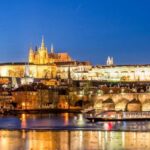
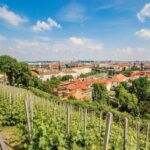
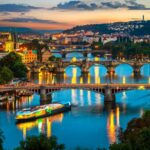
One of the nicest parts of this tour is the Vltava River stop, described as a sunset moment. Even when sunset doesn’t land perfectly where you want it, the idea is still smart: you get a short pause away from the tight streets and back into open space and water views.
This is also where you can appreciate the city’s “geometry.” You’re walking the old defensive and civic route, then the tour shifts to how Prague opens up toward the river. Reviews also specifically highlight the wonderful view toward the castle at night, and that makes sense. The castle silhouette gives your brain a satisfying landmark at the end of a story-heavy stretch.
I’d treat this as a recharge stop. Use it to look around, breathe, and reset before the final bridge crossing. It’s the kind of moment that makes the 90 minutes feel complete, not rushed.
Charles Bridge to the Charles IV Statue: Finishing With Purpose
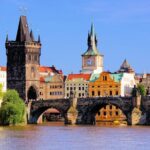
Finally, you reach Charles Bridge. The tour includes time here, which is important because this is a place where crowds can turn a stroll into a shuffle in daylight. At night, the vibe changes. You still get the bridge’s famous look, but it feels more like a working passageway than a crush of sightseeing.
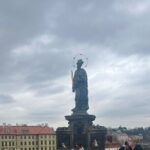
The tour ends at the Charles IV statue, which gives you a satisfying historical full stop. Charles IV is connected to Prague’s medieval prestige, and ending with a named figure makes the walk feel organized rather than ending wherever your guide happens to be.
If you want practical advice: plan to keep your eyes up while you’re on the bridge. Even if you’re focused on the story, let the view do its job. The bridge is where the city looks cinematic, and that visual payoff is part of why people choose night tours in the first place.
What You Learn: Nightwatchman Duty, Wars, and Plague Years
The tour’s educational value comes from perspective. The nightwatchman role naturally centers daily responsibility and community risk. Instead of only hearing about monarchs and wars, you hear about the city under pressure—how it was watched, threatened, and managed when safety wasn’t guaranteed.
The tour description points to a Prague shaken by wars and plague, and that theme appears through the way guides narrate the centuries. You get a sense of what people feared, what they monitored, and how routines changed when trouble was near. This is the kind of story that sticks because it connects to real human behavior: vigilance, rumor, disorder, and repair.
You also get “fun facts” about medieval life, and the reviews suggest the guide’s humor plays a real role. Comedy isn’t there to replace history. It’s there to keep you listening as the timeline jumps across centuries.
One subtle but powerful benefit: you come away with language for what you’ve seen. A visitor who only knows dates might leave with photos. A visitor who hears the watchman’s duty framing leaves with understanding—why certain buildings matter, why certain public spaces were where they were, and why Prague’s medieval survival story isn’t just a chapter, it’s baked into the street plan.
How the Pace Works and Why Guides Like Thomas, Oscar, and David Matter
Pace is everything on a night walk. Here, the stops are short and structured, which keeps the group moving without turning it into a sprint. Reviews repeatedly mention a relaxed feel and that the guide made sure everyone felt included in discussion. That’s a big deal if you’re traveling with a mixed group of ages or you don’t want to stand at the edge of a tour while someone else does all the talking.
Guide performance also seems to vary by personality, but the pattern is strong: character plus clear answers. Multiple reviewers named guides such as Thomas, Oscar, and David, and each came up as engaging and story-focused. One review highlighted that Thomas’s character added realism and that the guide made everyone feel safe throughout. Another pointed to Oscar’s humor and strong interaction. That tells me the tour’s success isn’t accidental. The guides are trained to carry the story, not just recite facts.
If you care about comfort, watch for how your guide handles safety and group cohesion. This is a walking tour at night, so good guidance means you’re not constantly worrying about where to step or when the group will pause.
Price and Value: $23 for 90 Minutes of Costumed Storytelling
At $23 per person for 90 minutes, the price is reasonable for Prague, mainly because of what’s included. You’re paying for a licensed guide and for the guide to appear in historical dress as a 1633 nightwatchman. That costume element would be fluff if the storytelling didn’t carry it, but the consistent review theme is that it does carry it.
You also get a lot of “daytime landmarks, nighttime timing” value. Old Town highlights like the clock and squares are famous for a reason, but visiting them in the evening changes the experience. The tour sells the calmer side of Prague—sun and tourists disappear, and the guide stays on watch with lantern-and-halberd energy.
The one thing to factor in: food and drinks are not included. So don’t assume the tour replaces dinner plans. If you want a full evening, plan a meal before or after, and consider bringing a light snack only if the tour rules allow it in your specific departure (the data here doesn’t mention food rules, just that food/drinks aren’t part of the package).
Who Should Book This Nightwatchman Tour (and Who Might Skip It)
This tour is a great fit if you want:
- A night walk that teaches why Prague’s past matters, not just what buildings look like
- A guide who uses a character role to keep history lively (Thomas and Oscar are highlighted often)
- The “quiet Prague” angle, with fewer people than daytime hours
You might skip it if:
- You prefer long, unstructured museum-style time and want deep stops at fewer sites
- You hate cold evenings and don’t like outdoor walking
- You’re already doing a heavy-history Prague plan and only want a photo-focused route
For most people, this tour works as an early or mid-trip anchor. You learn the city’s survival logic, then you’re better equipped to explore on your own afterward.
Should You Book the Nightwatchman of Prague Walk?
Yes, if you want your Prague history with a clear point of view. This is not a generic “here’s a church” tour. The nightwatchman persona gives you a consistent lens as you move from gate to market to square to river.
Book it if you value atmosphere and pacing. The route includes major Old Town landmarks and finishes with a classic view moment on and near Charles Bridge, without dragging you through an all-day schedule. And because it’s structured for a relaxed 90 minutes, it’s a smart choice even if you’re also tackling bigger attractions later.
I’d especially consider booking if your group enjoys humor in history. Several guides are praised for comedy and for interacting well, and that kind of storytelling tends to make the walk enjoyable even when you’re not a hardcore history person.
FAQ
Where is the meeting point for the Nightwatchman of Prague walking tour?
You meet in front of the big Powder Gate at Nám. Republiky 5. It’s about a five-minute walk from Republic Square.
How long is the tour?
The tour lasts 90 minutes.
What languages are available?
The live tour guide offers English and German.
What’s included in the ticket price?
Included is a licensed tour guide, plus the guide appears in historical dress of a Nightwatchman from the year 1633.
Are food and drinks included?
No. Food and drinks are not included.
Is the tour wheelchair accessible?
Yes, the tour is listed as wheelchair accessible.
What should I bring?
Wear weather-appropriate clothing since this is an outdoor evening walk.