REVIEW · PRAGUE
Prague: Old Town and Jewish Quarter Tour
Book on GetYourGuide →Operated by Fun in Prague · Bookable on GetYourGuide
Prague’s Old Town has two faces. This 90-minute walking tour connects the big sights—like the Astronomical Clock—to real human stories from Josefov and the Jewish Quarter. I love how the guide turns street-level landmarks (Powder Tower, house signs, statues, and major façades) into a storyline you can follow.
I also like that the tour deals with sensitive Jewish history with care and seriousness, including darker chapters, in a way that still helps you understand Prague today. Guides such as Thomas and Martin (names you may hear) are singled out for handling these topics with attention and for answering questions. One possible drawback: you’ll be on your feet the whole time, and you need to spot the guide early—if you’re late, the meeting spot near Charles Bridge can be a little tricky.
In This Review
- Key things you should know before you go
- Walking in Prague: the Charles Bridge meeting point
- Old Town Square and the Astronomical Clock moment
- Powder Tower, house signs, and Municipal House storytelling
- The switch to Josefov: former Jewish Ghetto streets
- Rabi Loew’s Golem, Jewish traditions, and Prague’s legends
- Kafka’s Prague: literature meets the neighborhood
- Synagogues and the oldest in Europe claim
- The Jewish Town Hall site: where community administration mattered
- Old Jewish Cemetery and the largest synagogue in Europe
- Price and value: is $24 worth 90 minutes?
- Who this fits best (and who might want a different plan)
- FAQ
- FAQ
- Where is the tour meeting point?
- How long is the Prague Old Town and Jewish Quarter tour?
- What languages are offered?
- Is the Jewish Museum included?
- When is the Jewish Museum open or closed?
- Do I need to bring anything?
- Is pickup available?
- Can I cancel for a refund?
- Should you book this tour?
Key things you should know before you go
- Old Town Square to Josefov, in one smooth storyline: you’ll connect the Astronomical Clock area to the former Jewish Ghetto.
- Powder Tower and Municipal House stories: you’re not just looking—you’re hearing what the symbols and setting meant.
- Rabi Loew’s Golem and Kafka: Prague’s legends and literature show up in the walk.
- Synagogues and the Old Jewish Cemetery: you get both sacred sites and the place where communities are remembered.
- The guide matters: multiple guides (like Thomas, Martin, Martha, Vera, Katerina, Marcela) are praised for clarity and sensitivity.
- Optional Jewish Museum tickets: you may add the museum, but the walking guide part doesn’t turn into a guided museum tour.
Walking in Prague: the Charles Bridge meeting point
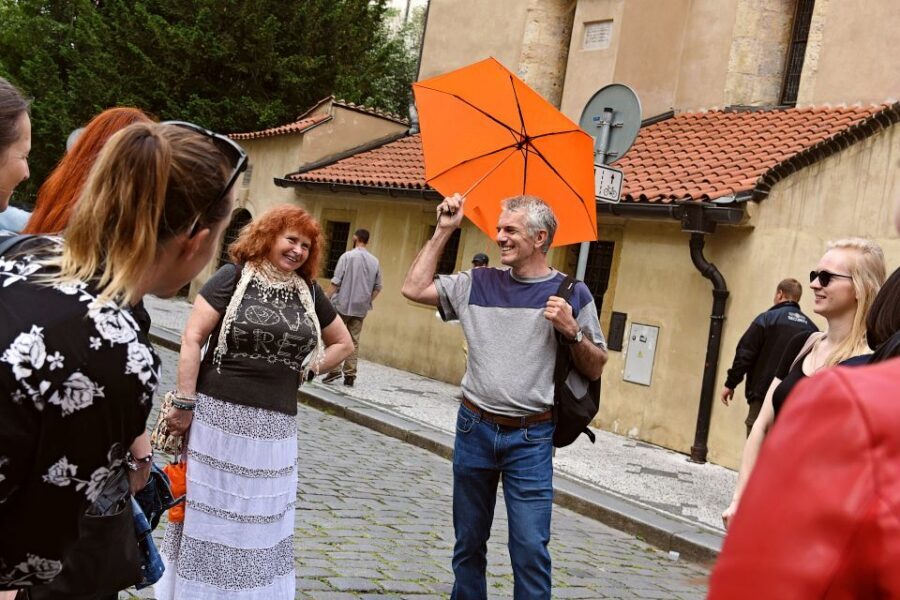
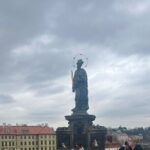
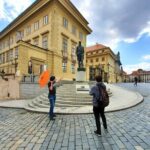
Your tour starts at Křižovnické náměstí, right near Charles Bridge. The meeting point is very specific: look for the statue of King Charles IV near the Charles Bridge area, at Křižovnické náměstí 191/3, and spot your guide holding an orange umbrella.
This is the right kind of start if you want your first bearings to happen fast. You’re in a high-traffic zone with lots of photo angles, so give yourself a few extra minutes to find the guide and settle your group before you begin walking.
You can also read our reviews of more tours and experiences in Prague.


Old Town Square and the Astronomical Clock moment
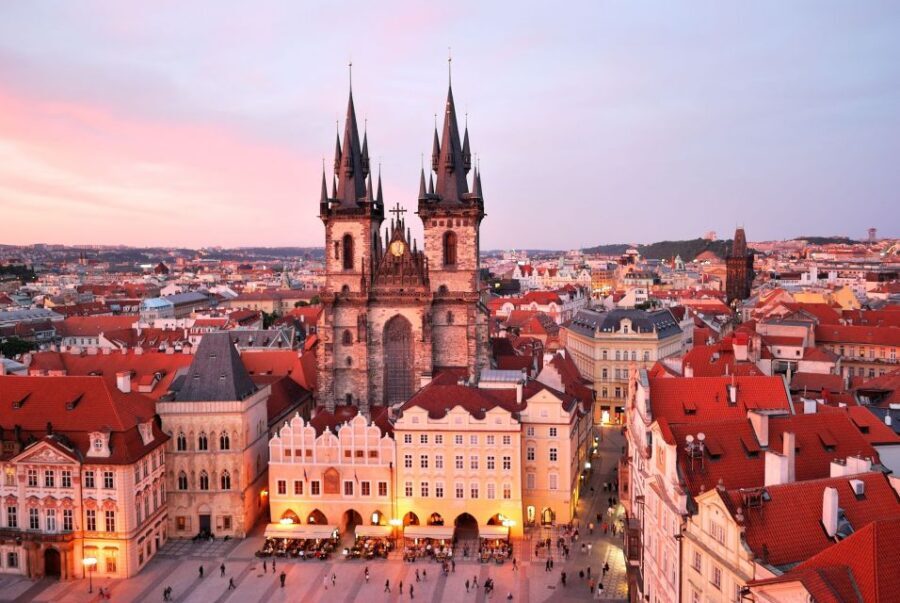
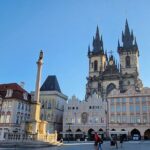
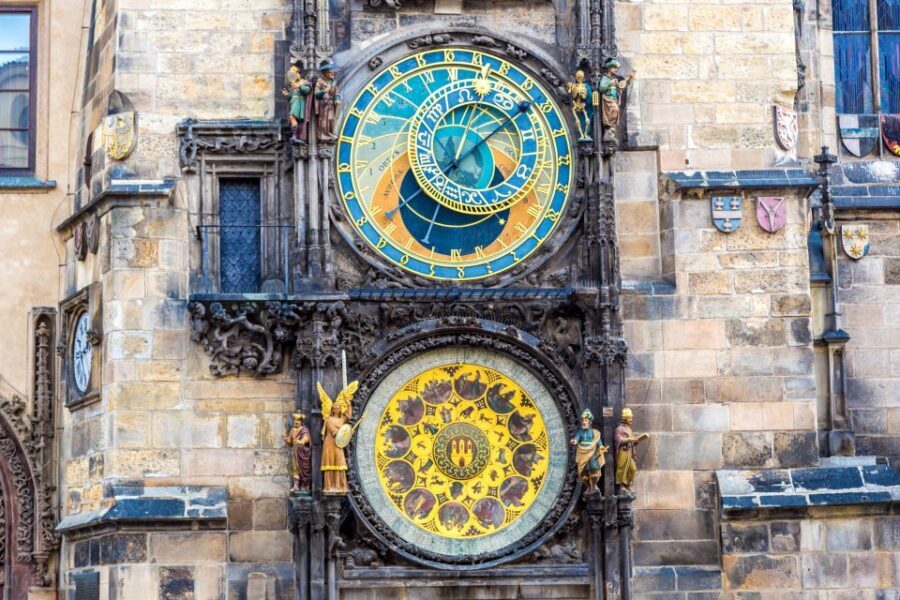
Old Town Square is where Prague flexes its postcard power, and this tour uses it as a story anchor. You’ll head to the Old Town Hall area to see the legendary Astronomical Clock—and the point isn’t only the famous face of it. A good guide will help you connect what you see to the broader idea of Prague as a place where public life, culture, and power all mixed in the same streets.
What I like about hitting this early is the mental shift it creates. Once you’ve seen the Clock, it’s easier to understand why the Old Town area felt so important—and why the city’s history isn’t just dates on a page. You can literally walk from the spectacle to the neighborhood stories right after.
Powder Tower, house signs, and Municipal House storytelling
From there, the tour pulls you inward with details that most self-guided wandering often misses. You’ll hear stories about Powder Tower—including tales tied to house signs and statues. Prague loves symbolism, and this is a chance to read it like a message, not just a decoration.
Then you’ll move toward the Municipal House, where your guide adds context as you marvel at the setting. Along the way, you’ll also get to see the façade of the Church of St. Nicholas. Even if you’re not the kind of traveler who stops for every façade, Prague’s architecture works better when someone gives you a lens first.
A practical tip: bring your patience for short stops and photo moments. This part of the tour works best when you slow down enough to look at the details your guide points out.
The switch to Josefov: former Jewish Ghetto streets
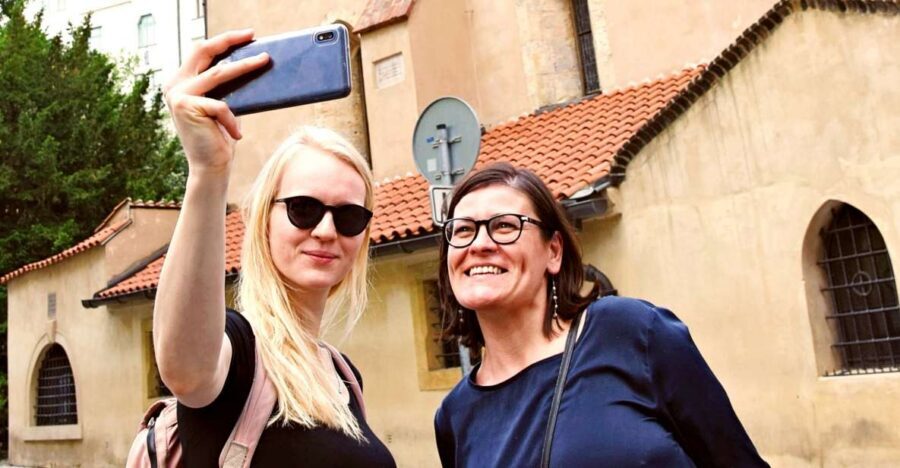
This is the heart of why the tour feels more meaningful than a standard Old Town walk. You’ll go into Josefov, the area that was once the former Jewish Ghetto, and the guide tells the stories that connect community life to the city’s physical layout.
Expect a mix of everyday cultural explanations and the heavier turns in history. The tour covers Jewish habits and traditions, and it frames them as part of how people lived in Prague—then shows how those lives were affected as history got harder.
If you care about understanding a place beyond the sightseeing list, this is where the walk starts paying off.
Rabi Loew’s Golem, Jewish traditions, and Prague’s legends
You’ll hear the story of Rabi Loew’s legendary monster Golem as part of the broader cultural narrative in Josefov. It’s one of those Prague legends that outsiders often treat like a quirky myth—but on this tour, it’s presented as more than entertainment. The guide uses it to help you feel how stories traveled alongside real communities and real streets.
This is also where the tour can pleasantly surprise you if you only came for major landmarks. Legends, traditions, and the way people marked time and meaning in their daily lives make the neighborhood feel less like a museum district and more like a lived place.




Kafka’s Prague: literature meets the neighborhood
Prague and Kafka are impossible to separate if you know even the basics of his name, but this tour keeps you from staying at the vague level. You’ll learn about Kafka’s life and work in the context of the Jewish Quarter, tying the intellectual side of Prague to the neighborhood that shaped the city’s identity.
For me, this kind of connection is what turns a tour into a memory. You leave with something more solid than: I saw that street. You end up thinking: I get why this neighborhood mattered to ideas too.
Synagogues and the oldest in Europe claim
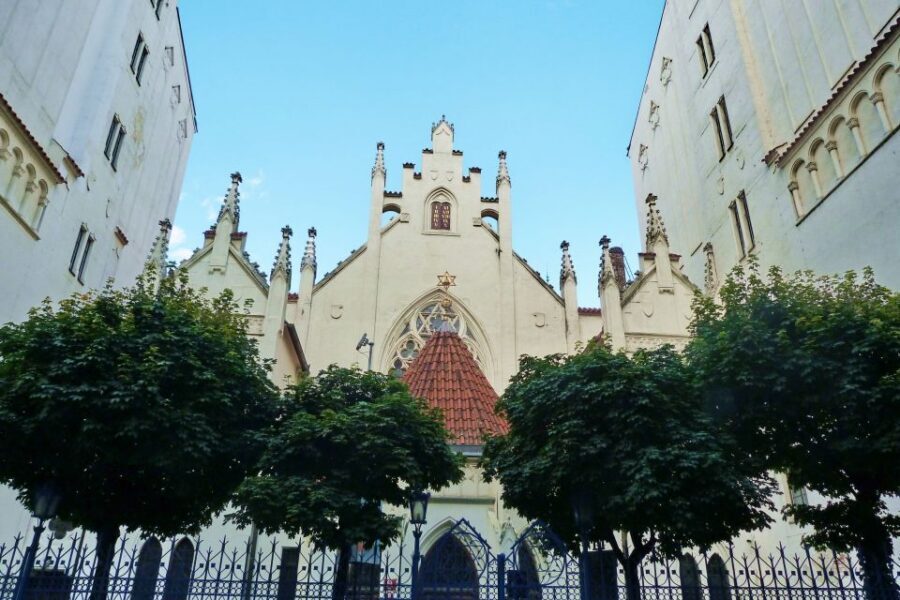
You’ll visit city synagogues, including the oldest in Europe (as described in the tour). Even when you’re not religious, synagogues are powerful because they show how architecture, community, and belief shaped daily life.
This stop is also a reminder to slow down and take the tone seriously. The guide’s approach matters here, and the tour tends to do well with respectful presentation. In particular, guides such as Martin are mentioned for treating Jewish persecution and Holocaust-related topics with seriousness and sensitivity—so you can expect a careful pace, not a flippant vibe.
The Jewish Town Hall site: where community administration mattered
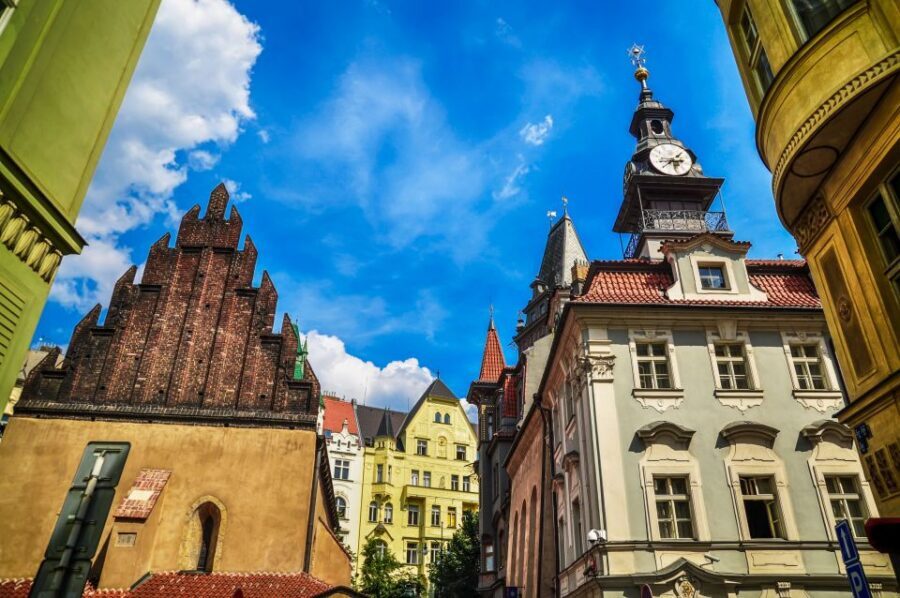
You’ll also visit the site of the Jewish Town Hall. That detail is easy to miss on your own, but it changes how you see the Quarter. It’s not only about religious buildings—it’s about community structure, leadership, and the civic side of life.
This stop makes the tour more practical as an understanding tool. You begin to see that the Jewish Quarter was part of city governance in its own way, not only a backdrop for dramatic legends.
Old Jewish Cemetery and the largest synagogue in Europe
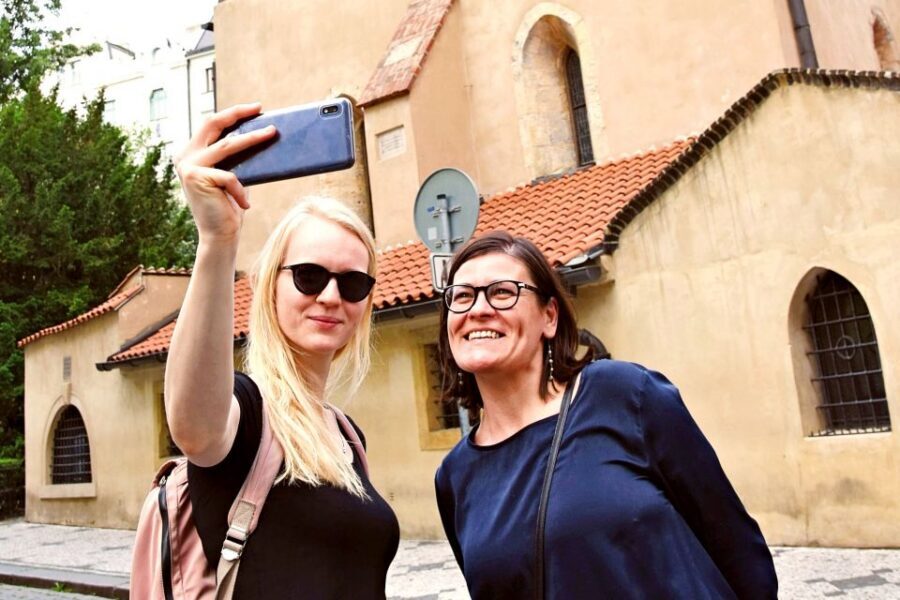
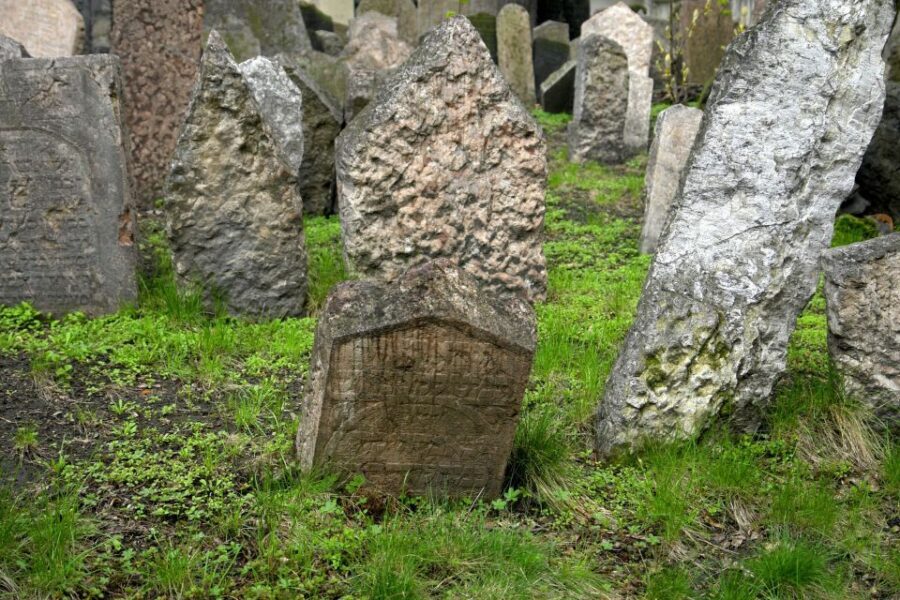
The tour ends up at the Old Jewish Cemetery, where the mood shifts from storytelling to remembrance. This is where you can feel the weight of time. You’re not just seeing a site—you’re building a picture of how Jewish community life unfolded in Prague over generations.
The tour also includes the largest synagogue in Europe (as described). That pairing—cemetery plus synagogue—works well. One place speaks to continuity of community worship and identity. The other speaks to continuity of memory.
Practical note: wear comfortable shoes. Cemetery ground and cobbled sections around historic Prague can be a little unforgiving, and this is still a walking tour from start to finish.
Price and value: is $24 worth 90 minutes?
At $24 per person for about 90 minutes, this tour is priced like a “get your bearings and learn fast” experience. The value comes from three things you don’t easily replicate on your own:
- Narrative guidance: Powder Tower details, Jewish Quarter context, Golem legend, Kafka context—those connections are what make the walk feel like a course, not a scavenger hunt.
- Time efficiency: You hit Old Town Square, Josefov, synagogues, and the cemetery without needing to plan a route.
- Optional add-on potential: if you choose the option with Jewish Museum tickets, you can extend the day, though the tour itself does not include a guided museum walkthrough.
If you love history but hate spending hours mapping streets, this is a solid deal for the time.
Who should book it? You’ll likely enjoy it most if you want:
- a structured walk through Old Town plus Josefov
- story-driven context (legends + real-life community history)
- a guide who handles sensitive topics thoughtfully
Who this fits best (and who might want a different plan)
Best fit:
- First-timers who want a fast, guided understanding of Prague beyond the main squares
- Travelers who like architecture but also want meaning behind it
- Families too—some guides are noted for keeping children engaged while still covering serious history in an appropriate way
Maybe not ideal if:
- you don’t like guided storytelling and prefer total silence and wandering
- you need a fully step-free experience (the tour is described as a walking tour, and you’ll want mobility comfort)
- you’re planning a museum visit on days the Jewish Museum is closed
FAQ
FAQ
Where is the tour meeting point?
Meet your guide at Křižovnické náměstí, at Křižovnické náměstí 191/3, near the Charles Bridge area. Look for the statue of King Charles IV and the guide with an orange umbrella.
How long is the Prague Old Town and Jewish Quarter tour?
The duration is 90 minutes.
What languages are offered?
The live tour guide is available in Spanish, French, English, Russian, and German.
Is the Jewish Museum included?
Tickets to the Jewish Museum are included only if you select that option. The tour data also notes that a guided tour in the Jewish Museum is not included.
When is the Jewish Museum open or closed?
The Jewish Museum in Prague is open every day except Saturdays and Jewish holidays.
Do I need to bring anything?
Wear comfortable shoes—this is a walking tour through historic areas and sites.
Is pickup available?
Pickup is available only if that option is selected.
Can I cancel for a refund?
Yes. Free cancellation is available up to 24 hours in advance for a full refund.
Should you book this tour?
If you want Prague that feels lived-in—where the Astronomical Clock connects to Josefov, and legends like the Golem sit next to real community sites—then I’d book it. The price is reasonable for the ground you cover, and the tour’s standout strength is how guides connect places to stories with care, not just facts.
Book it especially if you like a guided framework. Skip it if you already know you’d rather wander Old Town solo and read everything at your own pace.