REVIEW · PRAGUE
Prague Renaissance and Baroque Gardens Walking Tour
Book on GetYourGuide →Operated by insightcities.com · Bookable on GetYourGuide
Prague gardens sing, literally, in the Renaissance courts. This 3-hour walk links politics and power to plant choices and design, starting with how Emperor Ferdinand I brought Italian gardeners to shape the Castle Gardens. I especially love the big storytelling behind each space, and I also like the way the tour turns into an eye-candy circuit: Wallenstein Garden with albino peacocks and myth-style fountains, then the calmer, walled world of Vrtba Garden.
One thing to consider: the route includes stairs that can be narrow or steep, so if mobility is an issue, you’ll want to ask about a private option and a shorter, gentler route.
In This Review
- Key Points You’ll Remember After This Garden Walk
- Gardens as Power Moves in Renaissance and Baroque Prague
- The Ferdinand I Era: Italian Gardeners and the Royal Pleasure Garden Mindset
- Practical tip
- Fig House and Orangery: Fruit Trees, Exotic Plants, and the Tulip Story
- What might bother you here
- Down Through the Castle: Bull Stairs, Paradise Garden, and Terraced Views
- Footwear matters
- Wallenstein Garden: Albino Peacocks, Mannerist Statues, and Myth Fountains
- If you love odd details
- Vrtba Garden (1720): A Baroque Walled Retreat With Marine Grotto Views
- A note on admission
- Price and Value: Is $123 Worth It for 3 Hours?
- Who Should Book This Tour (and Who Might Want a Private Route)
- Before you go, pack like a gardener’s apprentice
- Should You Book This Prague Renaissance and Baroque Gardens Walking Tour?
- FAQ
- How long is the Prague Renaissance and Baroque Gardens Walking Tour?
- Is the tour offered in English?
- Where do I meet the guide?
- Is admission to Prague Castle gardens and Vrtba Garden included?
- Does the tour involve a lot of stairs?
- Can I pay later or cancel?
Key Points You’ll Remember After This Garden Walk
- Ferdinand I’s Italian landscaping crew explains why Prague’s gardens suddenly look Mediterranean
- The Singing Fountain (bell bronze, cast in 1564) gives you a memorable sound-and-symbol moment
- The Fig House and Orangery show how fruit trees like figs, oranges, almonds, and lemons were grown for the first time in Central Europe
- You’ll track how tulips reached Prague as an exotic gift, tied to the Sultan of Constantinople
- Wallenstein Garden mixes drama and design: albino peacocks, grotto wall, and mythical fountain effects
- Vrtba Garden (1720) is a rare Baroque walled interior, topped with a marine-themed grotto and city views
Gardens as Power Moves in Renaissance and Baroque Prague
Prague’s gardens aren’t just pretty yards. They’re status statements in soil form. The tour frames garden design as a reflection of the era’s social, political, and religious thinking. That means you’re not only spotting plants and statues. You’re learning why a place was built the way it was, and what it was trying to say.
A useful baseline is where the story begins. Early medieval gardens in the region were often practical: growing herbs for cooking and medicine. Those surviving examples tend to be tied to religious sites like Gothic cloisters. Then, as you move forward in time, you see a shift: gardens become performance spaces. By the 1500s, the idea of a grand palace garden really takes off, and Emperor Ferdinand I becomes the key spark.
You also get a bigger map of Prague than the word “Castle area” alone. Even if the core focus is Renaissance and Baroque, the walk connects you to horticultural gems scattered around the city, spanning medieval to more modern times. That structure helps you stop thinking of Prague as one style layered over another. Instead, you start seeing choices.
You can also read our reviews of more walking tours in Prague



The Ferdinand I Era: Italian Gardeners and the Royal Pleasure Garden Mindset
The heart of this tour begins with the moment Prague’s garden design changes direction. Emperor Ferdinand I had a strong pull toward the Italian Renaissance approach, and he hired an impressive team of Italian gardeners and architects. This is one of those “once you know, you can’t unsee it” themes: classicism north of the Alps starts taking a more formal, Italian-shaped form.
You’ll hear how Ferdinand commissioned major garden work around Prague Castle, including the Belvedere Summer Palace. The palace itself is described as one of the most beautiful Renaissance structures outside Italy, with design credited to Paola della Stella. If you like art-adjacent architecture, this stop is worth your attention because the details are part of the message.
Look for the relief that shows Ferdinand presenting his wife, Queen Anne, with a flower from the Royal Gardens. It’s not random decoration. It’s a marriage of romance and propaganda: love, power, and cultivated nature all in one sculpted moment. And Anne didn’t live to see completion, which quietly adds an edge to the palace story. It’s the kind of detail a garden tour should include because it changes how you read the space.
In front of the palace sits a small garden area called the Giardinetto, and one highlight is the Singing Fountain. The idea is wonderfully strange: a fountain cast in 1564 using bell bronze. When water drops into the bowl, it resonates like a bell—hence the name. Even if you don’t get a full concert experience, the point lands: this is Renaissance engineering used for atmosphere.
Practical tip
Bring your eyes. These gardens are built for slow looking, and the tour’s strength is that it teaches you where to look first—reliefs, materials, the logic behind sightlines—so you don’t just walk through pretty scenery.
Fig House and Orangery: Fruit Trees, Exotic Plants, and the Tulip Story
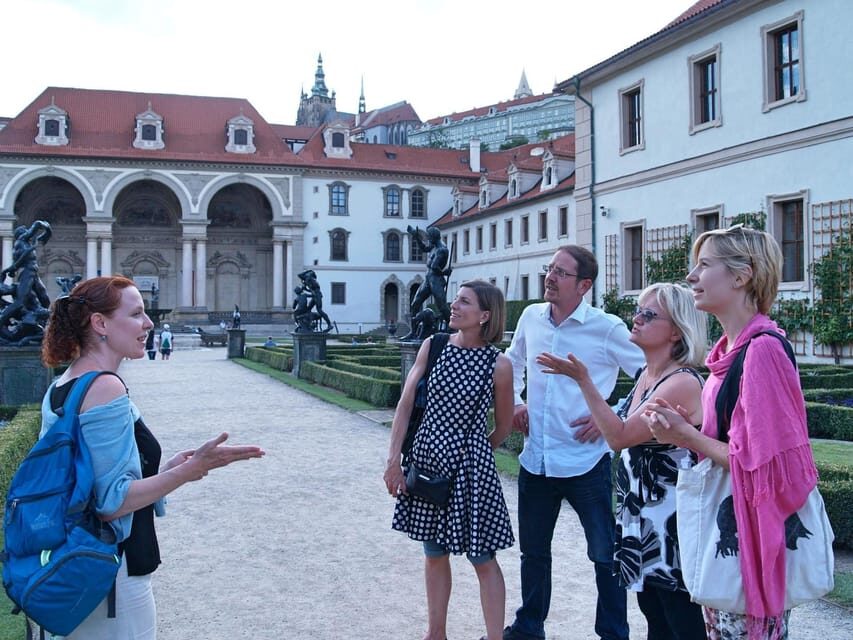
After the big imperial setting, the pace shifts to something more hands-on in your mind: the garden functions. You’ll visit the Fig House and Orangery, and this is where the tour becomes especially satisfying if you like the “how did they do this?” side of history.
These buildings grew plants that were cultivated for Central Europe for the first time, including figs, almonds, oranges, and lemons. That detail makes the gardens feel less like museum backdrops and more like old-world technology. A historic palace couldn’t just be fancy. It had to be productive enough to keep Mediterranean-style plants thriving—or at least trying.
And then comes the plant rumor-turned-history moment: tulips. You’ll hear how tulips, previously unknown in Europe, were introduced to the Royal gardens as an exotic gift connected to the Sultan of Constantinople. The tour threads this into the larger theme of prestige and exchange, where rare plants work like living trophies.
This section also helps you understand why Renaissance gardens weren’t only about symmetry and statues. They were about access—access to trade routes, special seeds, and international relationships. In other words, it wasn’t just “pretty.” It was a global network, translated into horticulture.
What might bother you here
If you’re mainly after dramatic Baroque theatrics, the Fig House and Orangery may feel more “explaining and observing” than “wow-ing.” It still matters, but set your expectations: this is the thoughtful middle of the tour.






Down Through the Castle: Bull Stairs, Paradise Garden, and Terraced Views
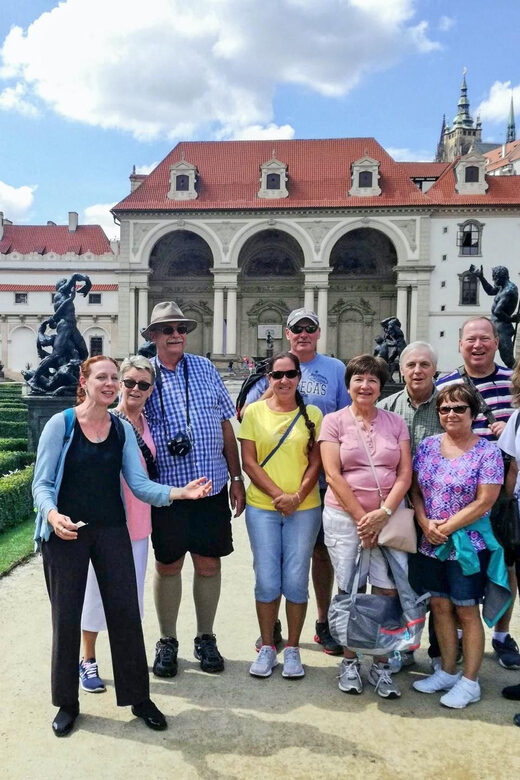
As you move deeper into the Castle Gardens, the tour turns from “palace and display” into “descent and design.” You’ll cross the stag moat, then go through the castle courtyard and descend via the Bull Stairs to the South Gardens.
That stair sequence matters more than you might think. The route isn’t random. It mirrors how Renaissance and later design aimed to orchestrate your experience as you move: first the formal view, then the gradual reveal, then the reward down the slope.
In the South Gardens you’ll explore places like the Garden of Paradise and the Garden on the Bulwark. The names alone hint at how these spaces were meant to feel like staged worlds. Paradise implies controlled beauty with a moral vibe. The bulwark suggests defense turned into decoration—history converted into aesthetics.
Then the walk continues downhill through terraced gardens below the castle. Terraces are one of those design tools that instantly tell you something: they show how the planners used terrain as a feature, not a limitation. You’ll likely find yourself looking for repeating shapes and rhythmic planting areas, because the terracing pushes the eye forward as you go.
Footwear matters
Because you’re moving between levels and some steps can be narrow or steep, wear shoes you can trust. This isn’t the moment for thin soles or fancy slip-ons, even if Prague looks like it’s begging you to dress up.
Wallenstein Garden: Albino Peacocks, Mannerist Statues, and Myth Fountains
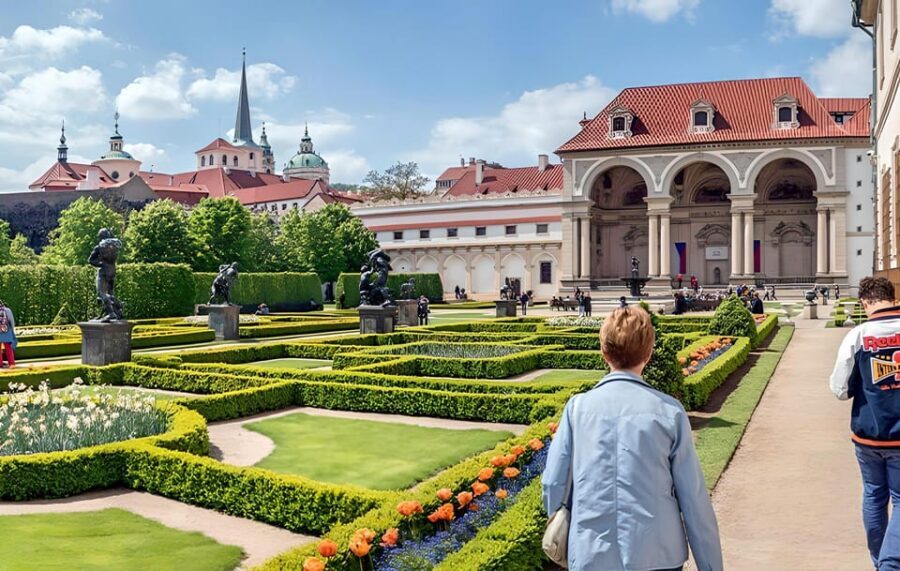
Then the tour hits its big theatrical gear with the Wallenstein Garden. This is the section that tends to stick in your memory, because it mixes the strange and the staged in a way that feels like Baroque storytelling.
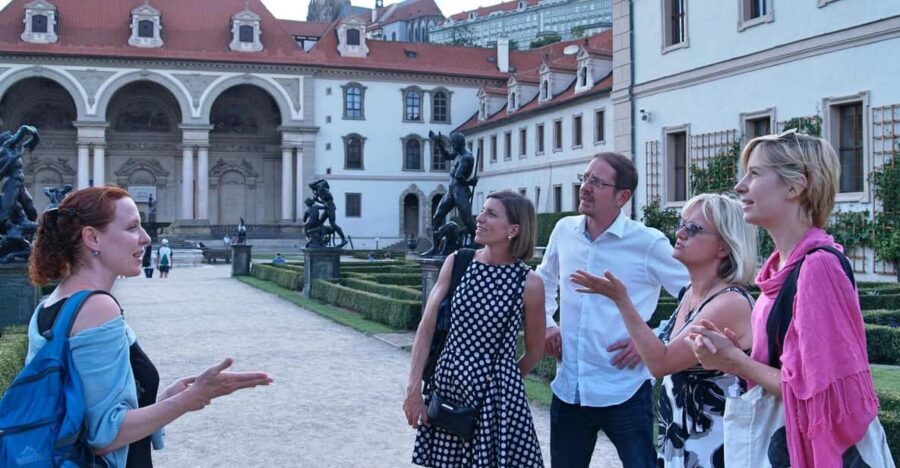
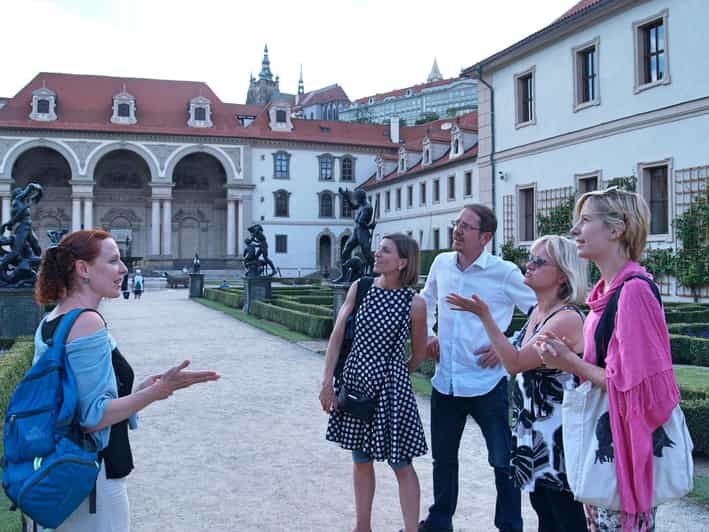
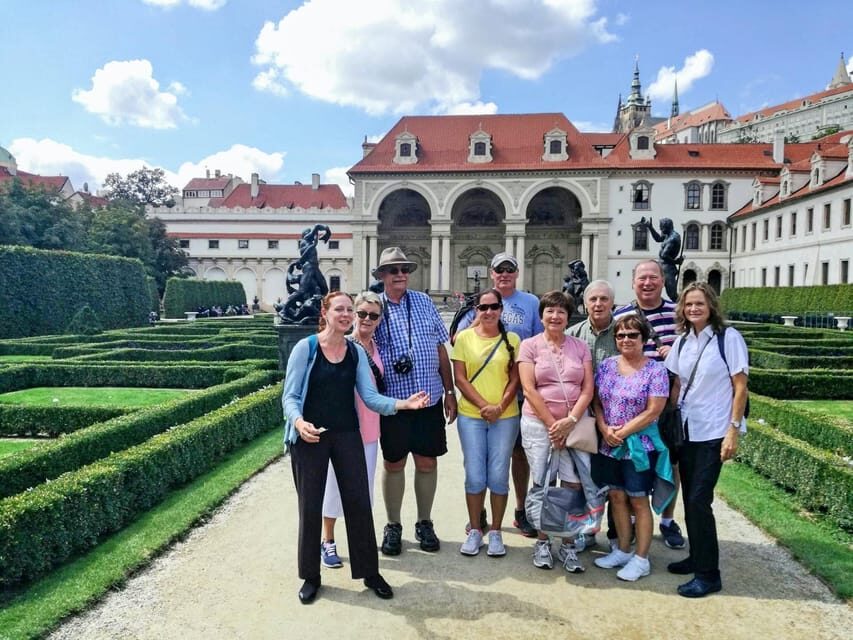
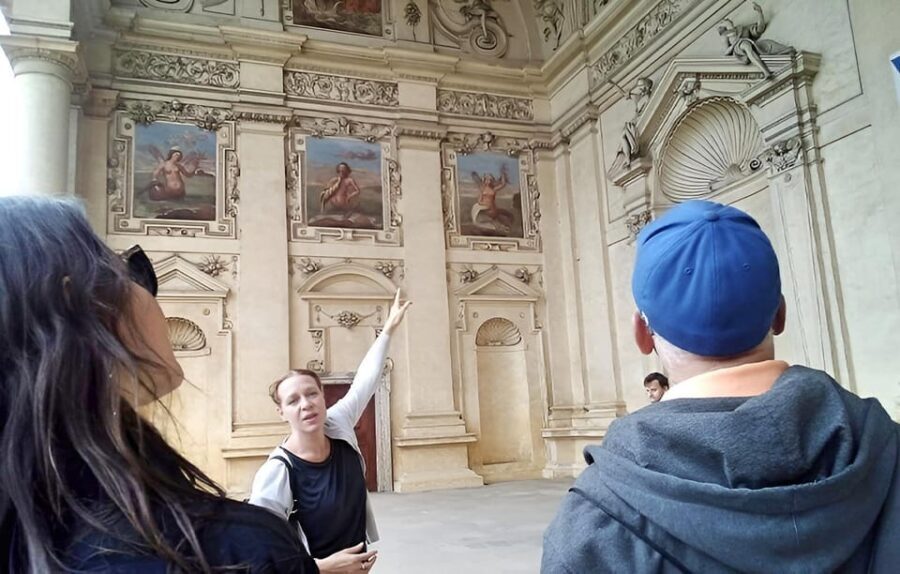
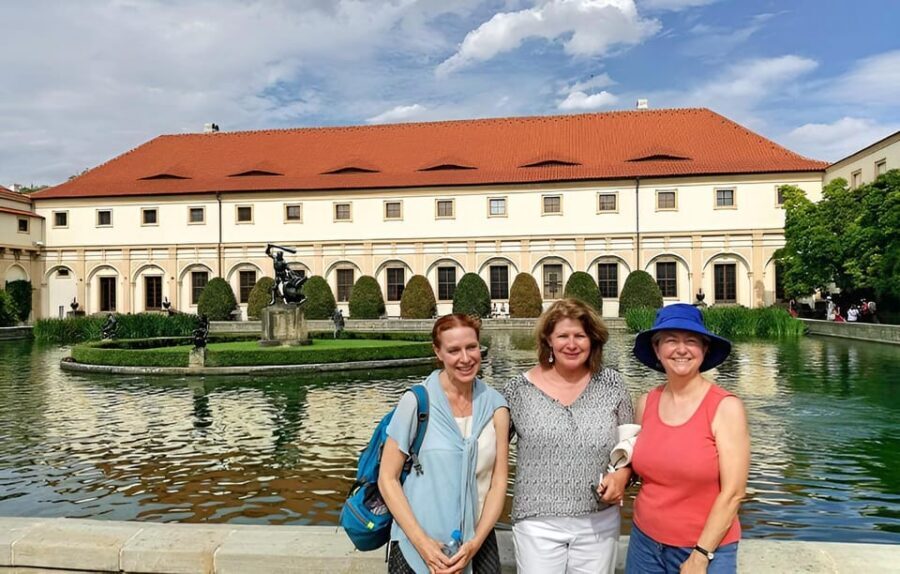
What you’ll see includes albino peacocks, Mannerist statues, a grotto wall, and mythical fountains. Albino peacocks alone feel like a fantasy detail, but the tour links these choices to the mindset of the time. Baroque design aims for impact. It’s meant to create emotion and motion, not calm neutrality.
You’ll also learn about the transition from Renaissance classicism to Baroque philosophies. The shift is more than style. It’s about how power, belief, and taste were expressed. Renaissance classicism often feels measured and idealized. Baroque feels like it wants to pull you into a scene and make you feel something.
And then there’s Albrecht von Wallenstein, the garden’s commissioner, with a dramatic life story tied into the design. When you connect the person to the setting, the statuary and fountain effects stop feeling random. You start seeing them as part of a personal brand before personal branding had a name.
If you love odd details
This is your stop. Albino animals, theatrical fountains, and grotto-like walls turn garden design into a small time-travel show. It’s not just a walk; it’s a narrative you can point at.
Vrtba Garden (1720): A Baroque Walled Retreat With Marine Grotto Views
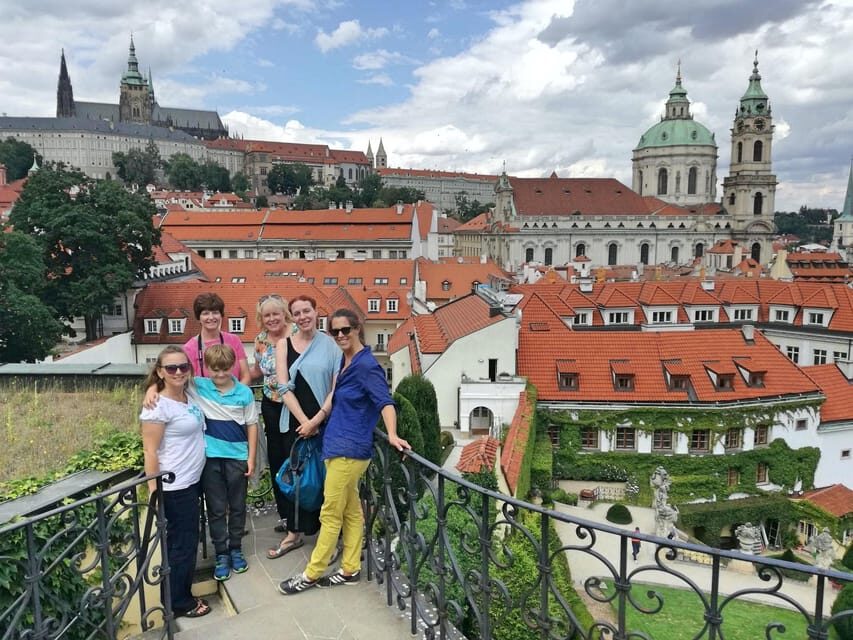
At the end, you’ll be guided to Vrtba Garden, a Baroque walled garden dating from 1720 in the Lesser Town (Mala Strana). The most important thing to know: this garden isn’t seen by many people the way the main Castle sites are. That makes it a quieter payoff after the busy grandeur above.
The tour frames Vrtba as an 18th-century window into noble life and Baroque landscaping aesthetics. Translation: you’re looking at how an elite household wanted the world to feel, inside its walls. And because it’s walled, it has a different mood than the open views around Prague Castle.
As you climb toward the top courtyard, you’re rewarded with the marine-themed grotto, plus stunning vistas over Prague’s cityscape. That combination is a classic garden trick. You get a themed interior space, then you get a panoramic “ahh” moment. It’s one of the few parts of Prague where the view feels like a planned event, not just an accident of geography.
A note on admission
The walk includes guidance, but entry fees for Prague Castle gardens and Vrtba Garden are not included. You’ll want to plan for that so you’re not surprised at the door.
Price and Value: Is $123 Worth It for 3 Hours?
At $123 per person for a 3-hour guided walk, the value depends on what you want most: gardening details, historical context, or pure “sightseeing efficiency.”
Here’s why I think it can be a smart spend:
- You get a historian guide, not just someone reciting facts. That matters because gardens are full of “why” questions: Why this plant? Why this sightline? Why this architectural flourish?
- You cover multiple garden environments that would be harder to connect on your own: Ferdinand’s Renaissance influence, then the Italian Renaissance approach, then Baroque theatrics, then Vrtba’s 1720 walled atmosphere.
- The route is paced for interpretation, so you don’t have to guess what’s important at each stop.
Where the cost might not feel as good:
- If you only care about the most famous scenic photo spots, you may wish you had a more flexible option. This tour is about explanation and walking the design logic.
Also, the tour lasts 3 hours, which is a good middle length. Long enough to connect the dots. Short enough to still enjoy the rest of your day in Prague without turning the trip into an endurance test.
Who Should Book This Tour (and Who Might Want a Private Route)

This is a great match if you like:
- Art and architecture with a story attached
- Plant-and-design history (not just statues)
- Learning how European elites used gardens to signal taste and control
It may be less ideal if:
- You want a fully flat walk. The route includes stairs that can be narrow or steep.
- You’re only focused on quick landmarks, not the meaning behind them.
The good news is that private or small groups are available. If stairs are a concern, booking private can help the guide adjust the route, leave out some sites, and keep your rhythm. That flexibility can turn a frustrating day into a confident, comfortable one.
Before you go, pack like a gardener’s apprentice
Comfortable shoes, water, and a layer for changing weather will make the walking easier. And if you enjoy photography, give yourself a little time at each major stop instead of sprinting to the next view.
Should You Book This Prague Renaissance and Baroque Gardens Walking Tour?
Book it if you want Prague’s gardens to make sense, not just look good. The tour’s strongest idea is that gardens are power and belief made visible through paths, fountains, and plants. You’ll come away knowing why Ferdinand’s Italian influence mattered, what the Singing Fountain is doing there, how the Fig House and Orangery connect Prague to Mediterranean cultivation, and why Wallenstein’s garden feels like a staged fantasy.
Skip or rethink it if you’re mainly chasing the fastest photo loop with minimal walking. This experience rewards patience and attention. If you’re willing to slow down, it pays off.
FAQ
How long is the Prague Renaissance and Baroque Gardens Walking Tour?
It lasts 3 hours.
Is the tour offered in English?
Yes, the live tour guide speaks English.
Where do I meet the guide?
You meet at the door of Bagel Lounge Malostranska.
Is admission to Prague Castle gardens and Vrtba Garden included?
No. Gardens under Prague Castle admission fee and Vrtba Garden admission fee are not included.
Does the tour involve a lot of stairs?
Yes. The regularly offered route includes walking up and down stairs that can be narrow and/or steep. If you have mobility concerns, consider booking a private tour so the guide can tailor the route.
Can I pay later or cancel?
You can reserve now and pay later, and you can cancel up to 24 hours in advance for a full refund.
If you tell me when you’re going and your comfort with stairs, I can help you decide whether the standard route fits or whether private is the better call.