REVIEW · PRAGUE
Prague: World War 2 and Operation Anthropoid Walking Tour
Book on GetYourGuide →Operated by McGee's Trips & Tickets · Bookable on GetYourGuide
A single city street can carry a whole war. This 3-hour Prague WW2 walk focuses on Operation Anthropoid, the Heydrich assassination, and the hiding places of Czech resistance members. I like how the route strings major landmarks together with real wartime stakes, and I especially value the ending at St. Cyril and Methodius, where the story becomes personal. One heads-up: it’s a lot of walking on city surfaces, and it’s not wheelchair accessible.
You’ll meet at 7, Týnská 627/7, and you’ll follow your live English guide through central Prague’s most meaningful WWII locations—ending at the New Town church memorial. Guides here tend to use story, context, and even visual aids, so the facts stick. Just wear comfortable shoes and plan for a cold-weather walk if you’re visiting in winter.
In This Review
- Key things that make this tour worth your time
- Operation Anthropoid: why this story lives in Prague
- Starting at Týnská 627/7 and lining up your bearings
- Dům U Kamenného zvonu and Celetná: Prague’s WWII streets on foot
- Wenceslas Square: where politics became public pressure
- Petschek Palace and Charles Square: the route through power and consequence
- National Memorial to the Heroes of the Heydrich Terror
- St. Cyril and Methodius: the last hiding place and the memorial feeling
- Walking time, group size, and what to wear
- Guides who make the plot click (and why that matters)
- Price and value: what $32 buys you in central Prague
- Who should book this Operation Anthropoid walking tour
- Should you book this tour?
- FAQ
- Is the tour in English?
- Where do I meet the guide?
- How long is the walking tour?
- What does the price include?
- Is it wheelchair accessible?
- Is it stroller friendly?
- Are service animals allowed?
- What should I wear or bring?
Key things that make this tour worth your time
- Operation Anthropoid in real places: You connect the assassination plot to the streets and buildings tied to the occupation.
- Heydrich Terror memorial stop: You learn why the retaliation after the attack shaped daily life and fear in Prague.
- Resistance hiding and the Prague Uprising: The walk explains why some people risked everything and how resistance networks worked.
- St. Cyril and Methodius visit: You end at a memorial church associated with the Czech paratroopers’ last hiding place.
- Small groups and question time: When headcount is low, you often get more back-and-forth with the guide.
- Guides who tell it clearly: Many guides are praised for strong English and for using maps/diagrams/photos on a tablet.
Operation Anthropoid: why this story lives in Prague
Operation Anthropoid is one of those WWII chapters that feels both huge and painfully human. In Prague, it’s not taught as an abstract “assassination.” You come away understanding how a targeted attack on one of Hitler’s top officers triggered a wave of terror, arrests, and reprisals—and how the Czech resistance kept moving under extreme pressure.
What makes this tour emotionally effective is the balance: you get the plot and the people, but you also get the practical question underneath—how do civilians and resistance fighters survive when the occupation turns every rumor into a threat? The walk treats Prague like a living document. Streets, squares, and historic interiors become evidence, not just scenery.
And yes, the subject matter can be heavy. But the guide doesn’t wallow. The goal is to make the events understandable: what happened, who the key players were, what the resistance tried to do next, and why that mattered long after the war ended.
You can also read our reviews of more walking tours in Prague
Starting at Týnská 627/7 and lining up your bearings
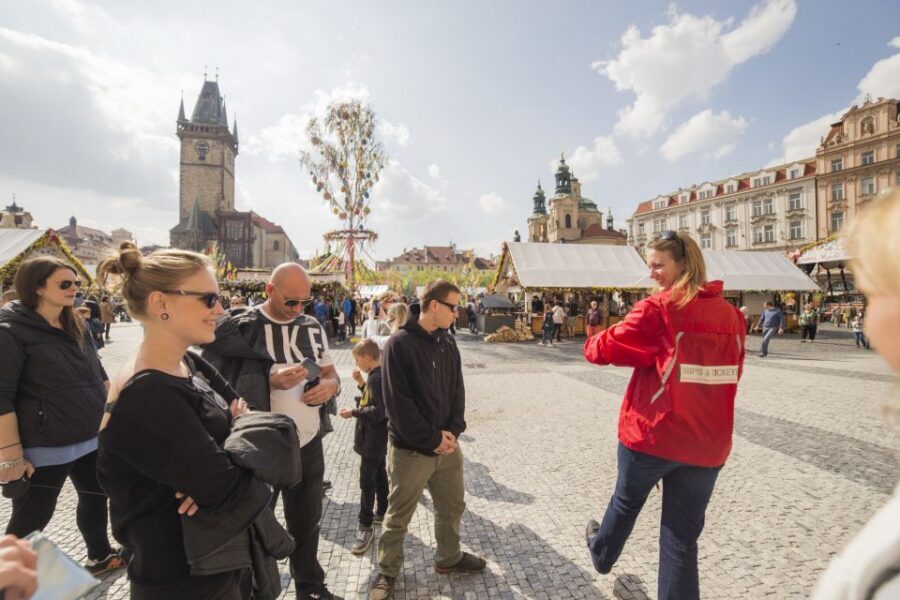
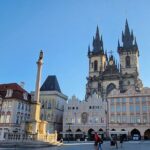
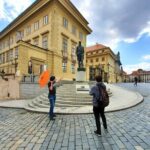
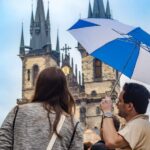
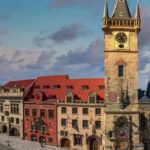
The meeting point is in the Old Town area: 7, Týnská 627/7, right in front of the building by Týn Cathedral. When you’re standing behind Týn Cathedral, turn left down Týnská Street and look for the wooden door of house number 7.
This helps a lot because the tour is built around tight central locations. If you arrive early, you can get your bearings quickly—use the cathedral as your reference point and you’ll feel less rushed when the group gathers.
Because it’s a live guided walk (English), the first few minutes set the tone. Your guide will frame Operation Anthropoid—what it was, who was involved, and how the Czech resistance and student unrest fit into the broader early-war chaos. That context makes the later stops far easier to follow.
Dům U Kamenného zvonu and Celetná: Prague’s WWII streets on foot
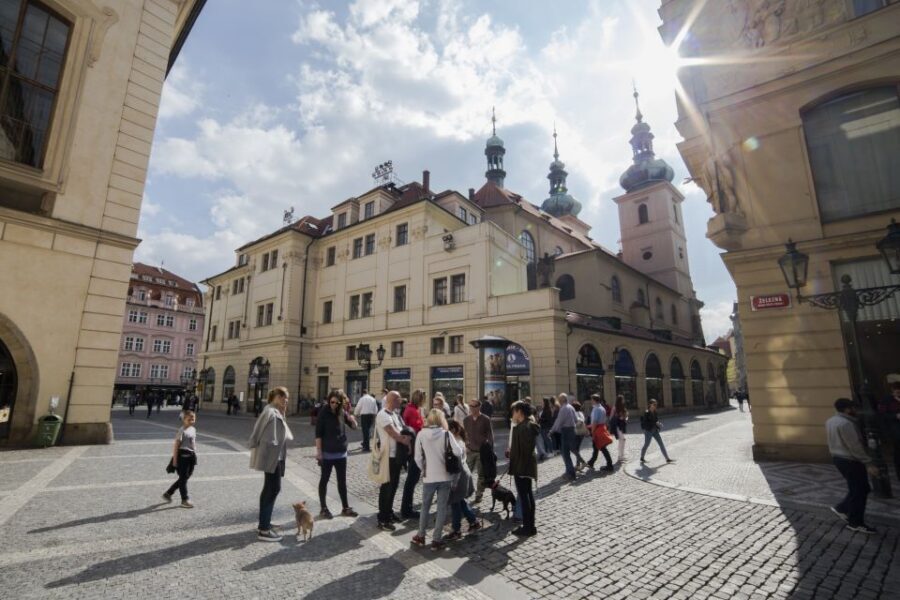
Early on, you pass through classic Old Town lanes where you can easily imagine daily life continuing as normal—until you remember the occupation reality. Stops like Dům U Kamenného zvonu and Celetná aren’t there just for architecture credit. They function like “timeline markers” for what the resistance faced: surveillance pressure, shifting power, and the constant risk of betrayal.
This section works best if you let the guide slow you down. Pay attention to the way your guide connects specific wartime decisions to specific urban spaces—where people met, hid, traveled, or simply tried to keep their heads down.
The pace here also matters because you’re building to the most intense portion of the story. The tour is short enough (3 hours) that you don’t get lost in logistics. Instead, every early stop is there to make the plot land later when you reach the memorial sites.
Wenceslas Square: where politics became public pressure
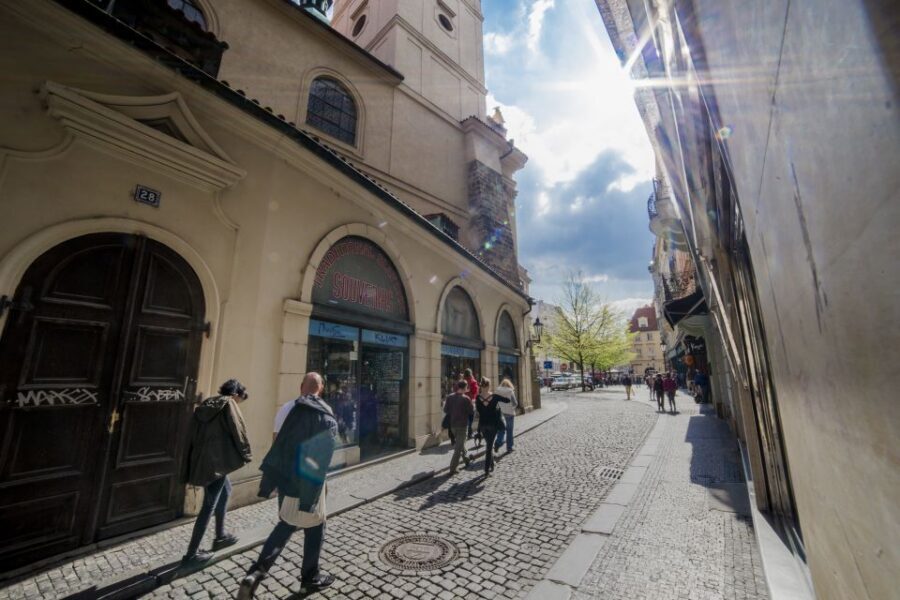
Wenceslas Square is one of Prague’s best-known stages. In peacetime it’s a place of movement and commerce. Under wartime conditions, it reads differently. Your guide uses it as a lens for how occupation power plays out in public space—how ideology shows itself loudly, and how fear can be enforced just by being visible.
Even if you’ve seen Wenceslas Square before, this stop changes the way you look at it. You’ll connect the square to the larger story of early war years and resistance reactions, including the mention of the student uprising and how unrest could flare under the stress of occupation.
It’s a useful reminder that resistance wasn’t only about one dramatic operation. It also involved networks of people reacting to political pressure long before any single mission unfolded.
Petschek Palace and Charles Square: the route through power and consequence
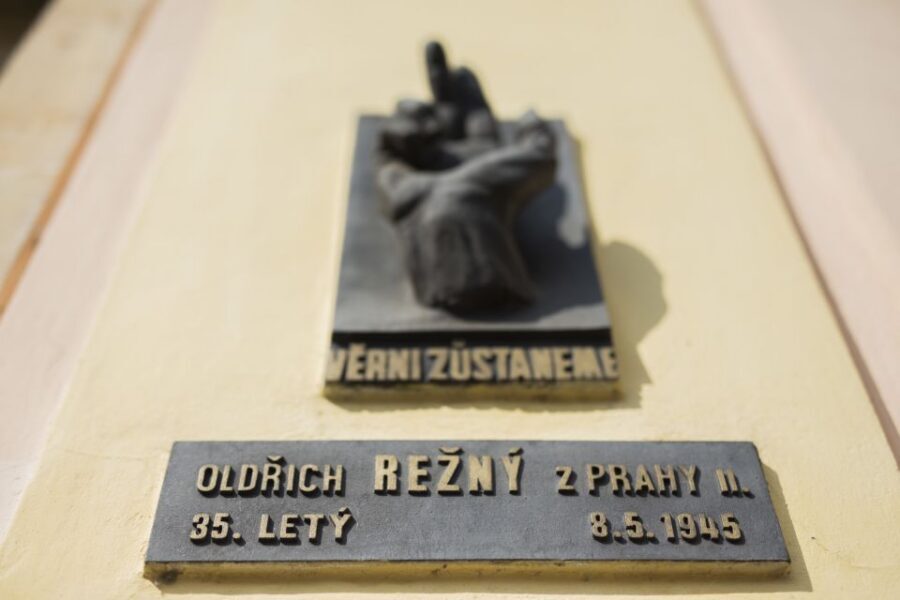
Next you’ll head toward Petschek Palace and later Charles Square. These stops help explain the wartime environment as something structural, not accidental. When you learn how the occupation worked, buildings like these stop being “just landmark photos” and start becoming part of the mechanism of control.
This is also where the tour’s strong storytelling shows up. The best guides don’t simply name dates. They explain why certain choices were possible for some people and deadly for others. When your guide talks through the resistance’s last hiding places and the logic of staying unseen, you start to see why the locations on this walk were chosen.
If you’re the type who likes order, this part of the route gives it. It’s a step-by-step way to go from the occupation’s presence in the city to the resistance’s need to move quietly, then to the consequences once the Nazis responded with force.
National Memorial to the Heroes of the Heydrich Terror
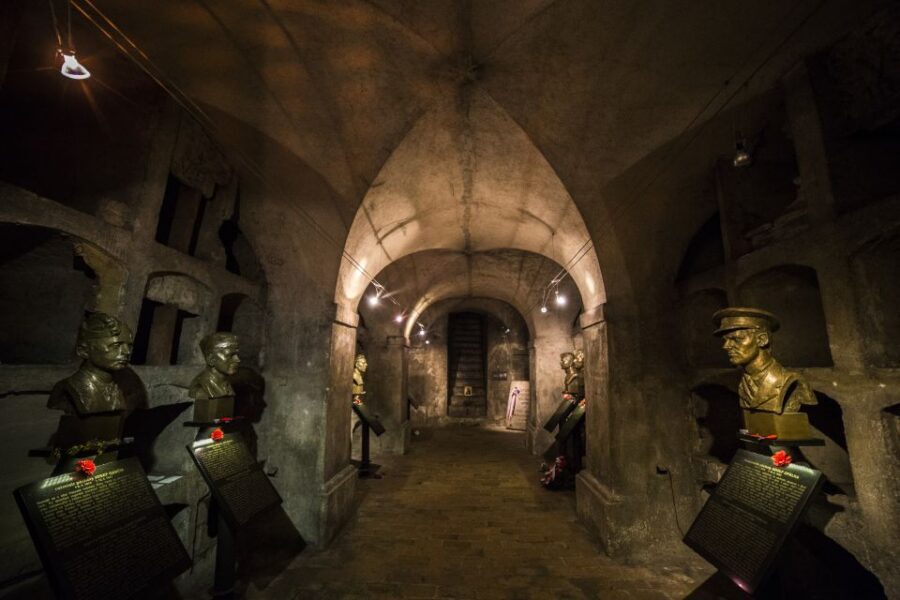
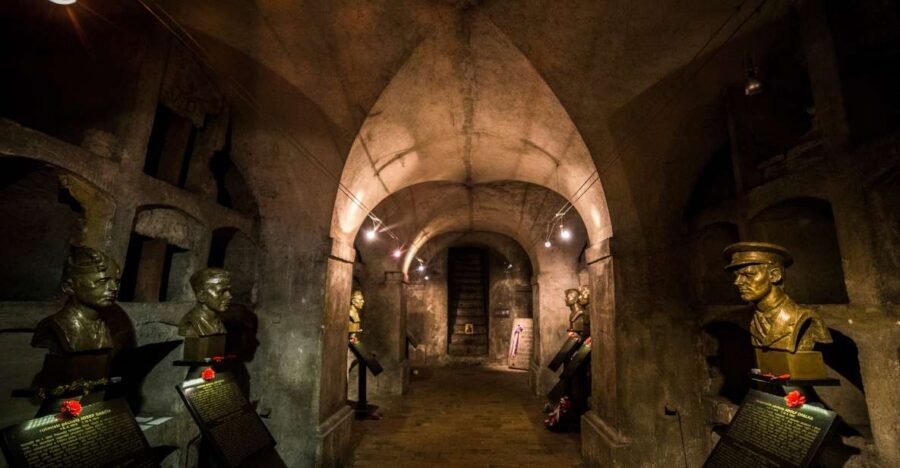
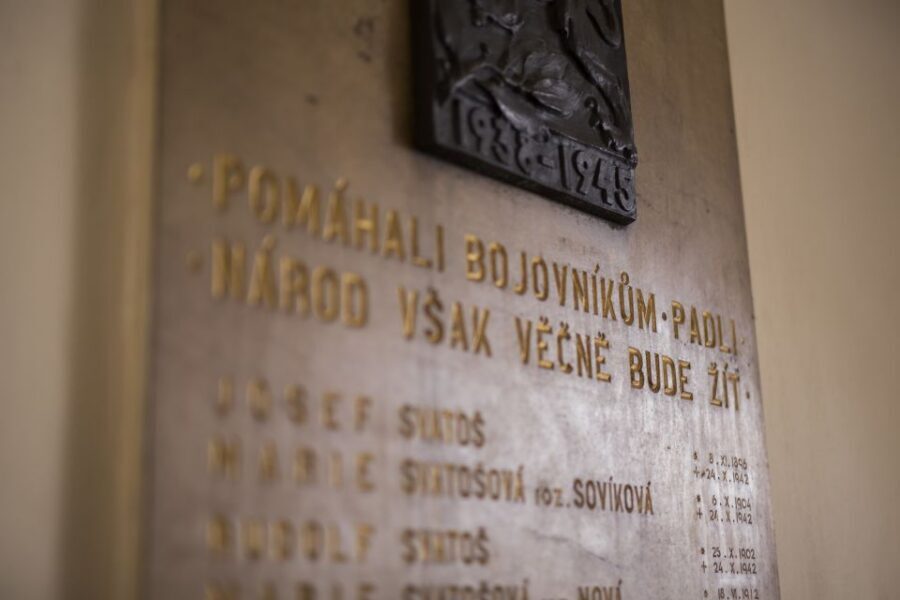
This is one of the emotional anchors of the whole experience: the National Memorial to the Heroes of the Heydrich Terror. By the time you reach it, you’ve heard enough background that the memorial doesn’t feel like a random stop. It lands as the aftermath of Anthropoid—what happened after the attack, and how terror became a tool of rule.
Your guide connects this to the wider Czech resistance story, including the Prague Uprising and how local resistance fought back even when odds were terrible. The memorial is essentially a warning etched into stone: when occupiers wanted compliance, they didn’t just punish the responsible—they punished the surrounding community too.
It’s a good stop to slow down at. Let the guide finish the thought. Then take a minute for your own mental reset before you move toward the final church location.
St. Cyril and Methodius: the last hiding place and the memorial feeling
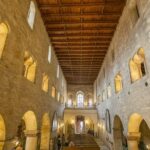
The tour visit includes Church of St. Cyril and Methodius in the New Town, a place tied to the last hiding associated with the Czech paratroopers. This is where the story turns from history lesson to moral geography.
What you’ll experience here depends on how the church spaces are arranged, but the intent is consistent: it’s a memorial site for victims of the Third Reich, and your guide gives you time to contemplate Prague’s tragic WWII chapter before you head back toward the Old Town area.
This ending is often cited as a highlight because it’s quieter and more direct. You’re no longer just walking through wartime context—you’re standing at a place that holds memory physically.
If you’re traveling with someone who isn’t a WWII fanatic, this stop is your best pitch. The operation details matter, but the memorial makes the meaning unavoidable.
Walking time, group size, and what to wear
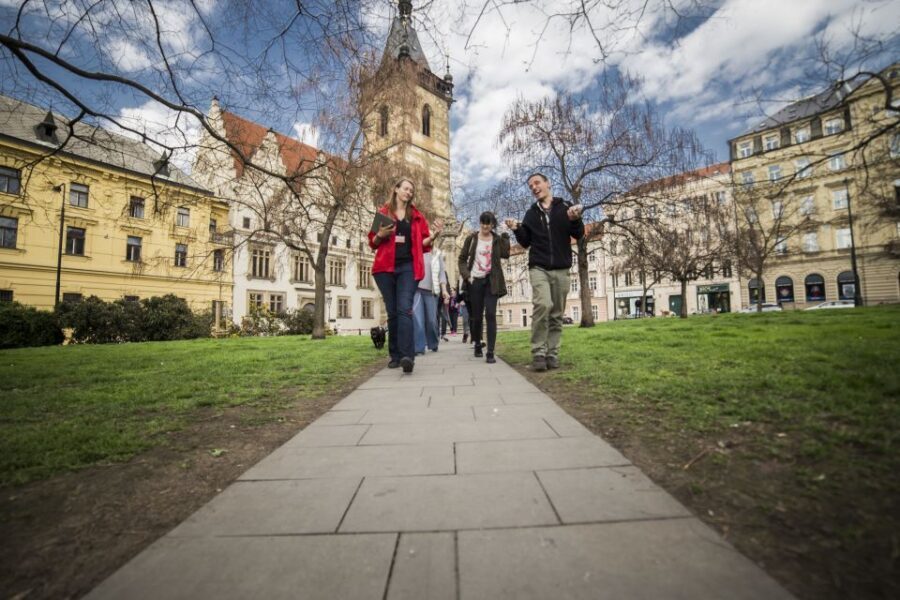
The tour runs for 3 hours, and it’s a city walking route through central Prague. You should expect steady walking between stops, and the surfaces are typical Old Town sidewalks rather than tourist-friendly paths.
It’s also not wheelchair accessible, though it is stroller accessible, and service animals are allowed. If mobility is an issue for you, I’d plan to arrive with buffer time in your schedule and consider whether a focused walking route is manageable for your body that day.
Comfort matters. Even in winter, people describe that the walking isn’t too much if you dress for it. Bring layers, and wear shoes with grip. You want to feel steady, because this kind of tour works better when you can stay present instead of thinking about your feet.
Group size can vary. The tour can run with a minimum of 2 guests, and there’s also an option for private groups. Smaller groups are a real advantage here because you can ask follow-up questions and get clearer answers instead of racing through facts.
Guides who make the plot click (and why that matters)
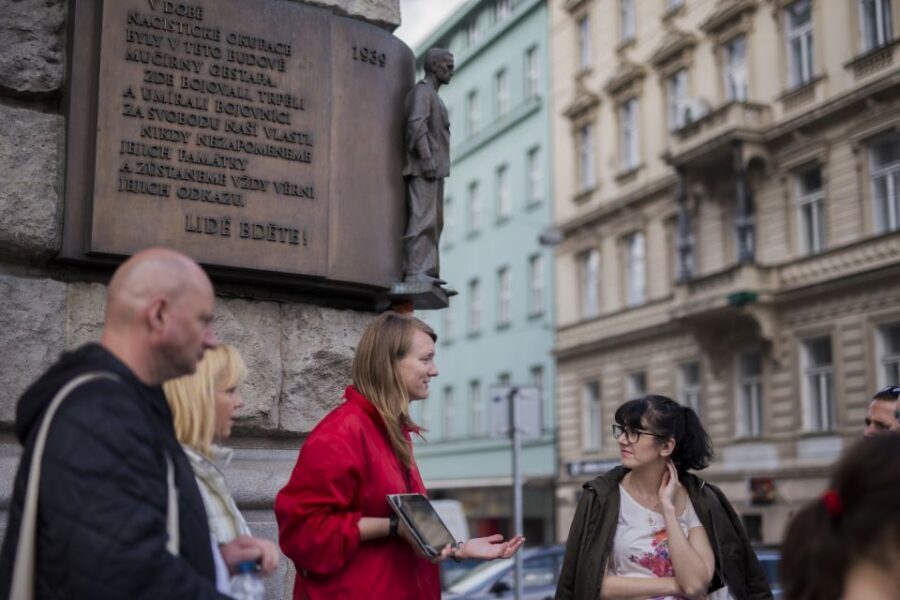
A big part of the value is the guide quality. In the feedback I’ve absorbed, names like Allen, Richard, Daniel, Martin, Anna, Pablo, Robin, Radek, Sloan, Dana, and Petra show up repeatedly. While each guide has a distinct style, the common thread is clear communication and strong command of the WWII details.
Many guests specifically praise guides for:
- making the Anthropoid story easy to follow
- answering questions beyond the main plot
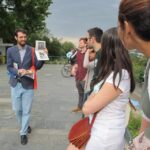
- using visuals like maps, diagrams, and photos on a tablet to clarify the situation
- keeping the walk engaging so the 3 hours feel fast rather than dragged out
That last point is important. WWII history tours can drift into long lectures. Here, the structure helps: each stop gives the guide a reason to talk, and each conversation makes the next location smarter.
Price and value: what $32 buys you in central Prague
At $32 per person for 3 hours, this tour is priced like something designed for real travel budgets, not just premium history collectors. You get a local guide and the included church visit at the end, and you’re moving through high-demand areas of Prague that you could easily spend time getting wrong on your own.
The value is also in efficiency. You’re seeing multiple WWII-linked locations in one focused route, ending at a memorial site connected to the Czech paratroopers’ last hiding. For many people, that’s the difference between a casual “see some plaques” walk and a tour that meaningfully changes how you understand Prague during the war.
One practical bonus: hotel pick-up isn’t included, so you’ll rely on yourself to reach the meeting point. That’s normal for walking tours, but it’s worth planning your day around. If you’re staying in or near Old Town, it’s usually straightforward.
Who should book this Operation Anthropoid walking tour
You’ll be happiest if you fall into one of these groups:
- You want WWII Prague that’s specific, not generic.
- You like story-driven history with clear explanations of motives and consequences.
- You’re curious about how the Czech resistance operated, including the Prague Uprising and student unrest context.
- You want a route that includes both landmark sightseeing and a memorial ending at a meaningful church.
It may not be your best fit if you dislike walking or you need wheelchair-accessible routes. Also, if you’re in Prague for mostly nightlife and casual sightseeing, the subject matter will feel heavy compared with lighter city tours.
Should you book this tour?
If you care about understanding Prague beyond postcard views, I think this is a very solid booking. The combination of Operation Anthropoid, the Heydrich Terror aftermath, and the memorial stop at St. Cyril and Methodius creates a coherent story arc in just 3 hours.
Book it if you want an organized, guide-led way to grasp how the Czech resistance lived with fear and acted anyway. Skip it only if you can’t handle a fair amount of walking or if WWII themes don’t interest you at all.
FAQ
Is the tour in English?
Yes. The live tour guide speaks English.
Where do I meet the guide?
Meet in front of the building at 7, Týnská 627/7. If you’re behind Týn Cathedral, turn left on Týnská Street and look for the wooden door at house number 7.
How long is the walking tour?
It lasts about 3 hours.
What does the price include?
It includes a local guide and a visit to the Church of St. Cyril and Methodious.
Is it wheelchair accessible?
No, the tour is not wheelchair accessible.
Is it stroller friendly?
Yes, the tour is stroller accessible.
Are service animals allowed?
Yes, service animals are allowed.
What should I wear or bring?
Wear comfortable walking shoes and plan for a walking route.