REVIEW · PRAGUE
Taste your way through Czech food history
Book on Viator →Operated by Local Food Tour · Bookable on Viator
Czech food history comes with every bite. This 3.5-hour Prague walk traces how Czech cuisine evolved over centuries, with classic plates, modern snacks, and plenty of context as you move toward Wenceslas Square.
I love how the tastings feel local and not canned, with stops that go beyond the usual tourist order. I also like that you’ll get to try the classic comfort duo chlebíček and bramboračka early on.
If you don’t eat meat or drink beer, you might find the tour’s flow a little meat-and-beer forward, and they advise you to skip your main meal first so you don’t get stuffed too soon.
In This Review
- Key points before you go
- A foodie walk that actually explains the why
- The tastings: what you’ll likely eat (and why it matters)
- Stop-by-stop vibes: what each part is good for
- Gourmet passage snacks (a modern start)
- A starter restaurant that lays the groundwork
- The walking history part: food and power
- A former bank restaurant and small-plate local flavors
- Dessert and coffee in a First Republic café
- Drinks, beer rhythm, and how to pace yourself
- Price and value: is $132.76 fair for 3.5 hours?
- The guide factor: why Christian-style explanations matter
- Who should book (and who should think twice)
- What the logistics feel like on the ground
- Should you book this Prague Czech food history tour?
- FAQ
- How long is the tour in Prague?
- Where does the tour start and end?
- What time does the tour begin?
- Is the tour offered in English?
- What’s included in the price?
- Do I need to eat before the tour?
- Is transportation to and from included?
- What should I bring?
- What happens if the tour is canceled due to too few travelers?
Key points before you go
- Small group (max 10) means it stays conversational and easy to hear your guide.
- English-speaking guide and a clear food-to-history story, not random restaurant hopping.
- Multiple tastings plus lunch/snacks add up fast, so this works well as an early evening plan.
- A former bank restaurant and a First Republic café add extra atmosphere to the food.
- Alcoholic beverages are included, so it’s best if you’re okay with that part of the experience.
- Bring an umbrella—because Prague weather can change its mind quickly.
A foodie walk that actually explains the why
Prague has plenty of places to eat. The trick is getting beyond the menu blur and understanding what you’re tasting. This tour is built for that. You move through Old Town and toward Wenceslas Square, while your guide connects Czech food to the city’s timeline—politics, culture, and everyday life.
What I like most is the way the tour keeps pulling the story back to your plate. You’re not just collecting bites. You’re learning how a Czech classic shows up in different shapes over time—sometimes traditional, sometimes with a modern twist. It makes the whole meal feel like it has a theme, not just a sequence of stops.
And there’s a social advantage here: the group is capped at 10. That keeps the rhythm relaxed. It also makes it easier to ask questions if you’re curious about something you’re eating, or if you’re wondering how to order it later on your own.
You can also read our reviews of more food & drink experiences in Prague


The tastings: what you’ll likely eat (and why it matters)
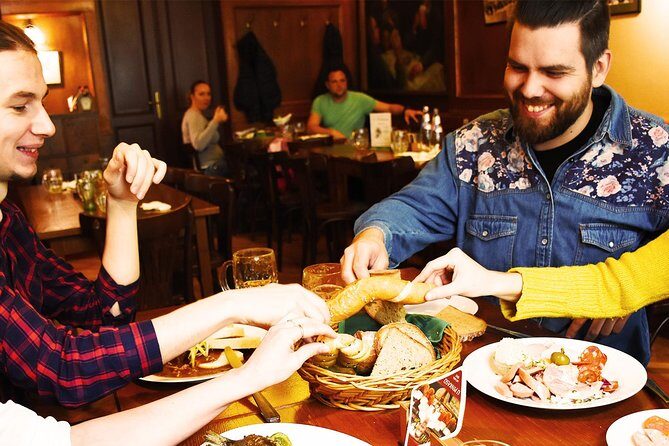
The tour’s sample menu gives you a good idea of the core Czech flavors you’ll meet. Expect a sequence that starts with familiar Czech comfort food and then expands into broader tastings.
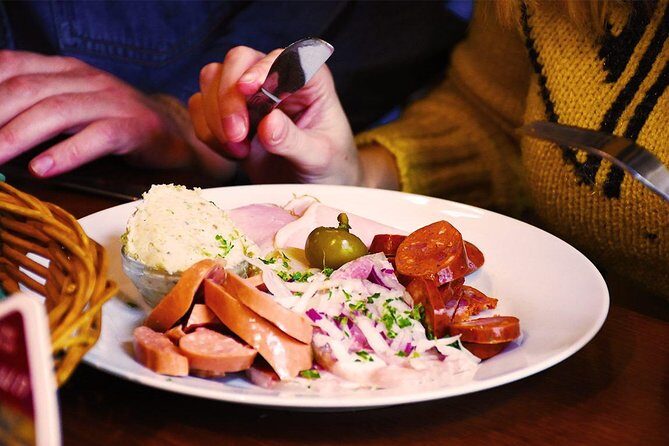
Chlebíček usually shows up early: a Czech-style open sandwich. Think dense bread, neat layers, and toppings that can range from creamy to cured. It’s the kind of food that feels casual, yet it’s deeply “Czech” in the way it’s served—simple, tidy, and meant to be eaten without fuss.
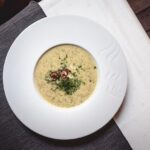
Then there’s bramboračka, a classic Czech potato soup. It’s hearty without being fancy, and it’s the perfect bridge between “snack” and “real meal.” Potato dishes in this part of Europe often reflect what’s practical and filling—especially in colder seasons.
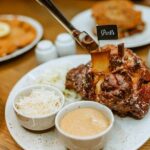
After that, you get a main dish served on small plates plus a sampling of local drinks. Small plates are a smart choice on a walking tour. They let you taste more than one thing without feeling like you need to choose one heavy entrée and commit your entire evening to it.
Finally, the tour ends with a typical Czech dessert and coffee at a café tied to the First Republic era. Dessert here isn’t an afterthought. It’s part of the timeline.
One practical note: the experience includes lunch and snacks plus tastings and drinks. If you eat a big meal right before, you’ll feel it. They even suggest skipping your main meal before the start. That advice is there for a reason—this tour is designed to feed you.
Stop-by-stop vibes: what each part is good for
The tour’s structure alternates between food stops and short stretches of walking history. Here’s how each phase works in real life.
Gourmet passage snacks (a modern start)
You begin at Náměstí Republiky and head to a gourmet passage. This first bite matters because it sets expectations: you’re tasting Czech food culture, but not only in its oldest, most rigid forms. In these passage-style spaces, you often see modern snacks served in a way that feels current while still rooted in local taste.
This stop is usually where people relax. You’re not yet deep into a sit-down course; you’re just getting oriented and warming up your appetite.
A starter restaurant that lays the groundwork
Next comes a restaurant stop where you start with a local starter and get an overview of Czech cuisine. This is the moment where the guide’s storytelling helps. If you’ve ever felt lost on food tours—like you’re just following a map—this part usually fixes that.
You’ll likely try the chlebíček and bramboračka combo here, and the explanation ties together why these foods became staples. It’s also where you can learn how Czech dining often treats comfort food as culture, not just fuel.
A few more Prague tours and experiences worth a look




The walking history part: food and power
Then you stroll through what’s often described as a melting pot of Prague history—and the guide connects that history to local food. This section is valuable because it explains the ingredients and habits behind the dishes.
Czech cuisine didn’t form in a vacuum. It’s shaped by shifting borders, trade, and social life in Prague. Even when you don’t know every historical detail, your guide helps you see patterns: why certain foods were practical, why others became celebratory, and how what people ate reflected the city’s changing mood.
This is also where you get a better sense of your surroundings. The route takes you between key areas, so it’s not only a food experience—it’s a “get your bearings fast” strategy for your first evening.
A former bank restaurant and small-plate local flavors
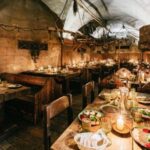
One of the most memorable segments is the stop at a restaurant in a former bank. That setting adds atmosphere. It’s not just a place to eat; it’s a reminder that Czech history lives in the buildings too.
Here, you’ll share a mix of local flavors served on small plates. This style keeps you tasting widely without a heavy commitment to one single dish. It also lets the guide switch between stories—how traditions were preserved and how modern dining keeps the spirit while changing the presentation.
Dessert and coffee in a First Republic café
The final food moment is at a First Republic café, followed by dessert and coffee. Ending here is smart because it brings recent history into the conversation. It’s not only about medieval roots or old-world comfort. You get a sense of how the more modern era also shaped Czech identity, including what counts as everyday and what counts as special.
It’s also a good psychological landing. After drinks and multiple savory stops, you finish with something sweet and comforting, plus coffee to keep the conversation going.
Drinks, beer rhythm, and how to pace yourself
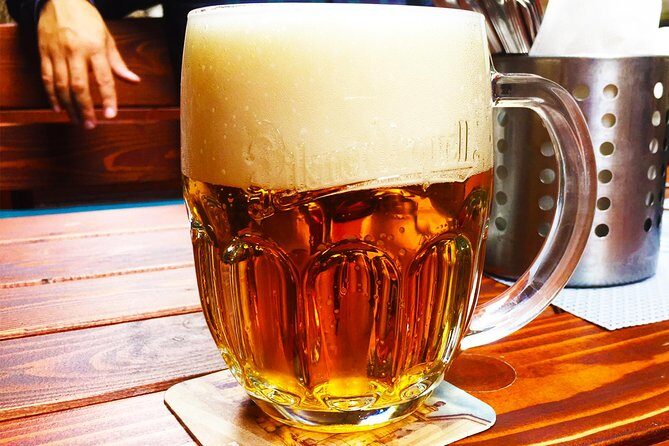
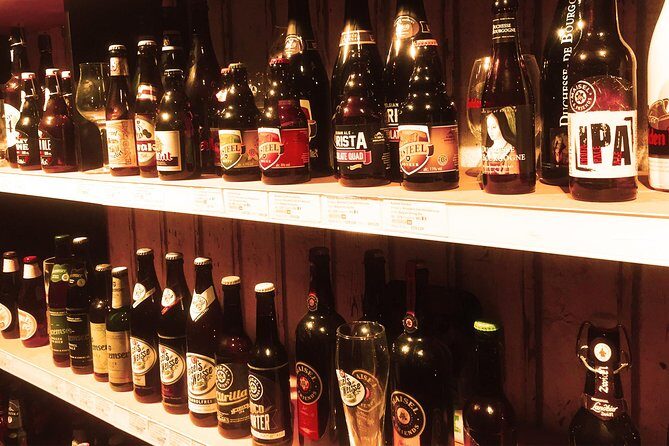
Alcoholic beverages are included, and the tour description makes it clear that you’ll enjoy it most if you like beer and you eat meat. That doesn’t mean you’re forced to drink everything. But it does mean the tasting plan is built around Czech drinking and meat-based dishes.
So here’s my practical advice: pace it like a local. Take smaller sips when you’re between stops. If you’re the type who powers through alcohol early, you’ll feel it later when you reach the heavier savory courses.
Also, because the tour includes lunch, snacks, and multiple tastings, you don’t need to grab dinner right afterward. Plan a lighter evening meal after the tour, or treat dinner as something simple—bread, cheese, or a quick Czech classic—rather than another full sit-down.
Price and value: is $132.76 fair for 3.5 hours?
At $132.76 per person for about 3 hours 30 minutes, this isn’t a bargain meal plan. It’s a paid experience. But it’s also a food-and-drink deal.
You’re getting:
- all tastings and drinks,
- lunch and snacks,
- alcoholic beverages,
- and English-guided storytelling.
When you add up what that would cost separately in Prague—especially if you’re trying to eat in quality places rather than tourist counters—the price starts to look more reasonable. The “value” isn’t just food volume. It’s also the fact that someone else handles the planning, timing, and the context so you don’t waste your vacation figuring out what’s worth eating.
One more thing: the tour is usually booked about 22 days in advance on average, and that’s a hint it’s popular for good reasons. If you know you want it as an early Prague experience, booking sooner rather than later is smart.
The guide factor: why Christian-style explanations matter
In past departures, guides with names like Christian (also seen as Kristian or Chris) have been praised for being personable and for linking traditional food to modern twists. That combination is exactly what makes a food history tour work.
Food history can go two ways:
1) a lecture where you’re hungry and bored, or
2) a story where you’re tasting, asking, and paying attention.
The guide style you’re likely to get here leans toward option 2. You don’t need to be a history buff to enjoy it. You just need to care about why people eat what they eat.
Who should book (and who should think twice)
This tour is a strong fit if:
- you like beer and you’re happy with meat-based Czech classics,
- you want an English guide to translate the story behind what you’re eating,
- you want a first-day plan that helps you walk the city confidently,
- you enjoy small-group tours where you can actually hear your guide.
It may be less ideal if:
- you avoid meat completely,
- you dislike alcohol (since alcoholic beverages are included),
- you’re not up for a walking pace plus multiple food stops in one session.
If you fall into a dietary or drink-limits category, I’d suggest messaging ahead to ask how they handle your needs. The tour description doesn’t spell out vegan or vegetarian versions, so you don’t want surprises.
What the logistics feel like on the ground
You meet at Náměstí Republiky and end at Wenceslas Square. The start time is 3:00 pm, and the tour runs about 3.5 hours. That timing is handy. It’s late enough that you can eat lunch on your own if you prefer, but early enough that you’re not stuck looking for dinner after you’ve had several tastings already.
It’s also near public transportation, so getting there doesn’t have to be complicated. They provide a mobile ticket, and the tour is in English.
And yes, bring the umbrella when rain is in the forecast. Prague can switch weather patterns fast, and you’ll be walking between stops.
Should you book this Prague Czech food history tour?
Yes, if you want food that comes with context—and you like the idea of tasting Czech classics in quality places instead of guessing. This tour is built to help you understand the “why” behind what you eat, and it uses atmosphere (like a former bank restaurant and a First Republic café) to make the story feel real.
I’d book it especially if it’s your first day in Prague and you want an easy way to get oriented. The route, the small group size, and the steady rhythm of tastings and explanations are the combo that makes the experience work.
If you’re picky about food types or you don’t want alcohol involved, check ahead. The tour description suggests beer and meat are central. With a quick confirmation, you can avoid disappointment.
FAQ
How long is the tour in Prague?
The tour is about 3 hours 30 minutes.
Where does the tour start and end?
It starts at Náměstí Republiky 656/8, Praha 1, Staré Město, and it ends at Wenceslas Square (Václavské nám., Nové Město).
What time does the tour begin?
The start time is 3:00 pm.
Is the tour offered in English?
Yes, it’s offered in English.
What’s included in the price?
All tastings and drinks, lunch, snacks, and alcoholic beverages are included.
Do I need to eat before the tour?
It’s suggested that you skip the main meal before the experience starts, since the tour includes lunch and multiple tastings.
Is transportation to and from included?
No. Transportation to and from attractions is not included.
What should I bring?
If rain is possible, bring an umbrella. The tour is near public transportation and most people can participate.
What happens if the tour is canceled due to too few travelers?
If it’s canceled because the minimum number of guests isn’t met, you’ll be offered an alternative date/experience or a full refund.