REVIEW · PRAGUE
The Royal road, walking tour in french
Book on GetYourGuide →Operated by Prague Découverte · Bookable on GetYourGuide
A royal route through Prague, on foot. This Royal Road walking tour in French traces the path kings and emperors followed toward coronation, from Old Town Square to Charles Bridge. I love how the history is explained in plain language, and you’ll get photo-ready angles along the way, but you should be ready for cobblestones and a few uphill bits.
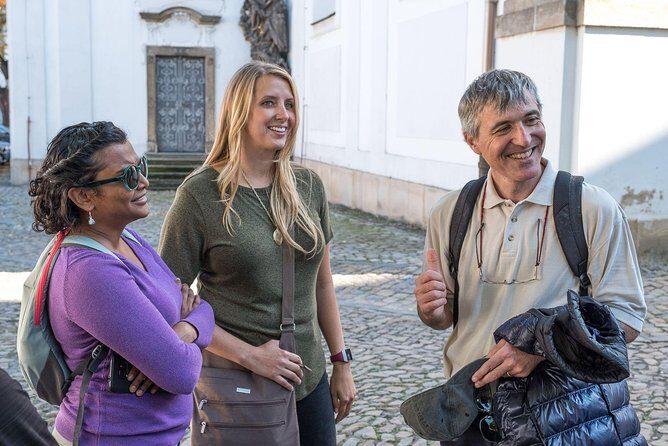
The tour is led by a licensed local guide, and the French guide Alexandre often gets praised for being passionate and easy to ask questions to. You’ll walk through Staré Město and Malá Strana, then finish near the Prague Castle area, so your next visit feels less like guessing and more like a plan.
If you want the Prague Castle visit to make sense, this walk is a strong warm-up. You’ll connect the streets to the big political story of Bohemia and the Holy Roman Empire, and you’ll see how the city’s architecture changes block by block.
In This Review
- Key things to know before you go
- Royal Road in Prague: The “why” behind the streets
- Price and time: Is $20 worth a 2.5-hour walk?
- Where the tour starts: Celetná Street and instant city orientation
- Old Town Square and the royal core of Prague
- Týn Yard to Ungelt: Small spaces with big character
- Malé Náměstí and Mariánské náměstí: The city’s rhythm in mini-squares
- Karlova and the move toward Charles Bridge: Finding the route
- Kampa Island and the Vltava edge: A calmer side of the same story
- John Lennon Wall and Maltézské náměstí: Culture between monuments
- Lavička Václava Havla and Karmelitská: Prague’s modern memory
- Malostranské náměstí: Baroque Prague in walking form
- Sněmovní to Nové zámecké schody: The climb toward Hradčany
- Hradčany Square and the Prague Castle gates: Finish with a plan
- What the guide adds: Alexandre’s French explanations and Q&A style
- Photo opportunities you’ll actually use
- What to wear, what to bring, and how to make the most of 150 minutes
- Who should book this French Royal Road walk
- Should you book the Royal Road tour in French?
- FAQ
- What language is the tour guided in?
- How long is the Royal Road walking tour?
- What is the meeting point for the tour?
- Where does the tour end?
- How can I get to the meeting point by public transport?
- Is the tour offered in bad weather?
- What is included in the price?
- What is not included?
- Is there a private group option?
Key things to know before you go
- French-language guidance you can follow easily with a licensed local expert
- Coronation-route storytelling that ties major sights to the kings’ and emperors’ era
- Great photo moments around the Vltava views and the Charles Bridge area
- Malá Strana’s baroque focus, including the Saint Nicolas Church area
- A logical finish near Prague Castle gates, helpful if you’re visiting St. Vitus Cathedral next
- A route that shows Prague’s architectural variety across multiple neighborhoods
Royal Road in Prague: The “why” behind the streets
Prague can feel like a postcard pile-up until someone gives you the map inside the map. This Royal Road walk does that job. Instead of treating sights like separate attractions, the guide connects them to the route power had to take: future sovereigns headed toward the Castle for their coronations.
That framing changes how you look. A square isn’t just pretty. A street corner isn’t just scenic. You start noticing where views open up, where churches rise, and why certain buildings sit where they do. It’s history with the volume turned down and the relevance turned up.
And you’re not stuck only in big, famous spots. The tour moves through the smaller squares and stairways that show Prague’s character. You’ll appreciate how Staré Město looks and feels different from Malá Strana, even when you’re still in the same city center.
You can also read our reviews of more walking tours in Prague



Price and time: Is $20 worth a 2.5-hour walk?
At $20 per person for about 150 minutes, this is strong value if you want structure. You’re paying for a licensed guide, French commentary, and a route that covers a lot of ground without feeling rushed.
Here’s what makes the math work:
- You’re getting explanations tied to multiple neighborhoods, not just one landmark.
- The walking pace is long enough to learn, but short enough that you can still explore on your own after.
- The ending near the Castle gates sets you up for a follow-on visit, which can save you time later.
If you already know Prague’s royal history and only want free time, you might prefer a self-guided stroll. But if your goal is to understand what you’re seeing while still having moments to photograph, the price-to-value ratio is hard to beat.
Where the tour starts: Celetná Street and instant city orientation
The meeting point is on Celetná Street, at number 5 / 601, in front of Madame Tussauds. It’s easy to reach by metro (Staroměstská, Mustek, or Náměstí Republiky on lines A and B) or by tram (Jindřišská station served by several tram lines). From the station exits, you’re looking at roughly a 10-minute walk.
I like this setup because it places you right where the Old Town story starts. Within minutes, you’re already moving from modern busy streets into historical layers—small courtyards, squares, and the kind of street alignment that hints at older city planning.
One practical note: this is a walking tour that runs rain, shine, or snow. Bring a light rain layer and shoes with good grip. Prague’s center can be slippery when weather changes.
Old Town Square and the royal core of Prague
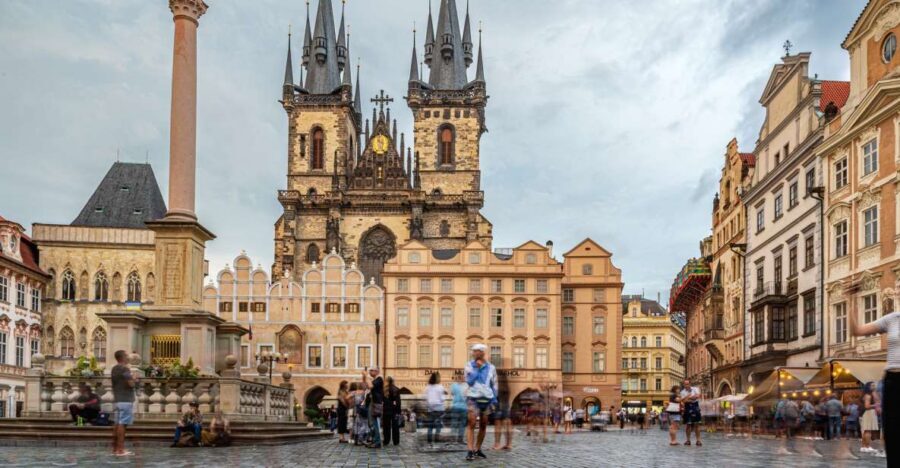
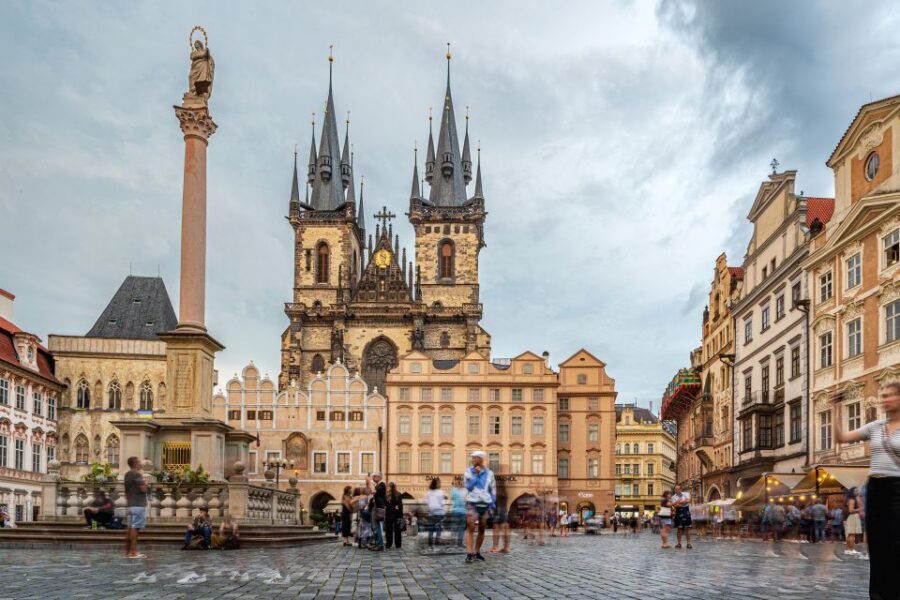
Old Town Square is the headline stop for a reason. The guide spends about 30 minutes here, which is enough time to go beyond surface facts and to understand why the square matters in the city’s political and civic life.
You’ll also see the Astronomical Clock area as part of the tour narrative. Even if you’ve photographed it before, having a guide explain what you’re looking at makes the whole scene click. You start noticing the building silhouettes, the way streets feed into the square, and the role this area played as Prague grew more important over time.
The tour also includes quick guided context nearby, so you don’t jump from one thing to the next with no connective tissue. That’s the big win: you’re learning the logic of the area while you’re in it.
Týn Yard to Ungelt: Small spaces with big character
Before the square, there’s a stop at Týn Yard and Ungelt, with a short guided introduction. Think of this as a warm-up that still matters. These are the kinds of places where you can see how Prague’s medieval layout left room for courtyards, passages, and the everyday “in-between” that tourists often miss.
Because the time is brief, this section works best if you’re paying attention to details the guide highlights—street alignments, how buildings edge toward the main route, and what these spaces suggest about older commercial and civic life.
A small consideration: if you’re expecting only dramatic monuments, this part can feel quieter. But it sets up the later transitions to Charles Bridge and Malá Strana so you don’t just memorize names.





Malé Náměstí and Mariánské náměstí: The city’s rhythm in mini-squares
The itinerary includes Malé Náměstí (a short guided stop) and then Mariánské náměstí (a bit longer). These are classic Prague “pause points,” where you catch your breath, take a photo, and reset your eyes between larger sights.
What I like about these stops is that they show Prague isn’t only about one grand square. The city has a rhythm made of smaller places that feel lived-in, even in the tourist center. The architecture here helps you understand the changing layers of the city rather than treating it like a museum.
If you’re the type who likes to explore at street level, you’ll probably love these micro-stops. If you only care about the single biggest landmark on a route, keep your expectations focused—these are supporting characters in the overall story.
Karlova and the move toward Charles Bridge: Finding the route
There’s a short guided segment along Karlova, which is important because it signals you’re stepping deeper into the historical “Royal Road” idea. This section is more about getting your bearings and understanding direction than about one huge photo scene.
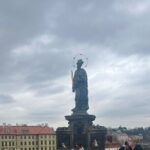
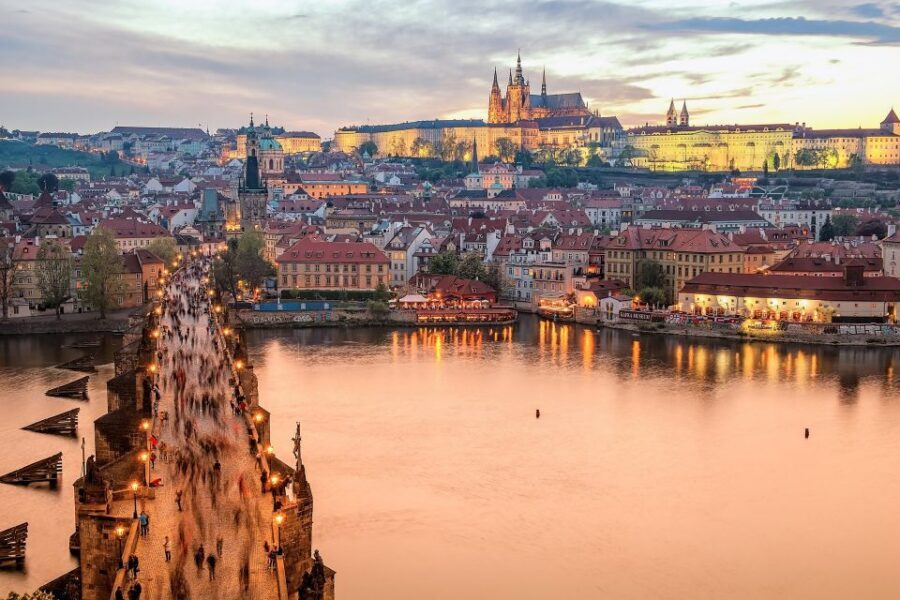
Then you hit Charles Bridge, where the tour slows down a bit for a guided walk and those famous views. Expect about 15 minutes with explanation and time to look around.
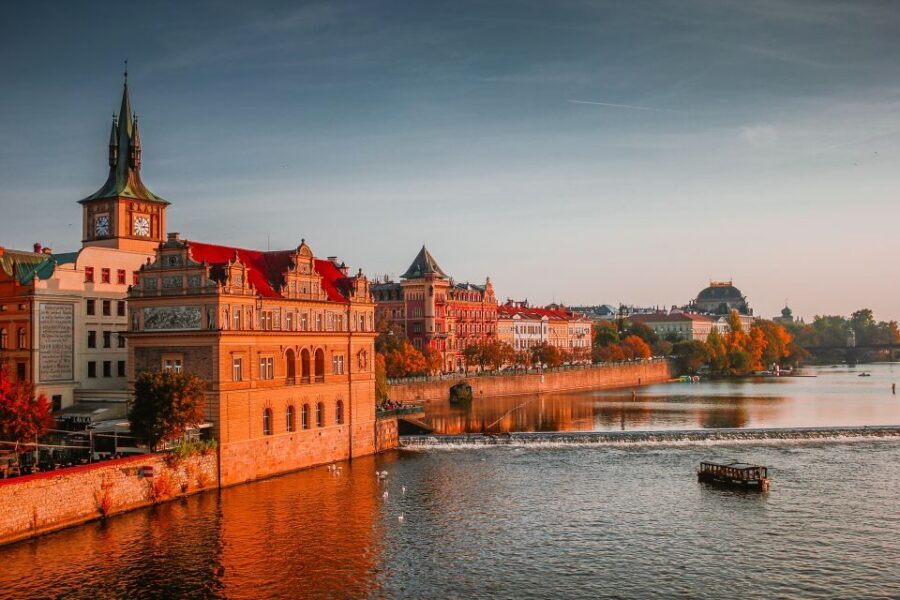
The guide’s story makes Charles Bridge feel less like a selfie conveyor belt and more like a strategic link—part of a path that connects the Old Town heart to the castle side. You’ll also get a look toward the Vltava from the bridge area, which is exactly what you want for photos: water, perspective, and that Prague skyline effect.
Practical tip: if you want the cleanest photos, plan for angles rather than trying to shoot straight through crowds. The guided route helps you find better vantage points than you’d get wandering randomly.
Kampa Island and the Vltava edge: A calmer side of the same story
After the bridge, the route moves to Kampa Island for about 10 minutes. This is a good shift. You go from the bridge intensity to a more relaxed riverside feel.
Kampa helps you see Prague’s relationship with the Vltava in a different way. Instead of just viewing the river as a backdrop to famous bridges, you start noticing how the shoreline shapes the city’s mood.
If you like photography, this segment is a nice chance to capture quieter water reflections and architectural edges without constantly battling the main tourist crush.
John Lennon Wall and Maltézské náměstí: Culture between monuments
Next comes the John Lennon Wall for about 10 minutes, then Maltézské náměstí for a shorter stop. These aren’t royal-coronation stops in the literal sense, but they’re part of what makes Prague feel like a real city: layers from different time periods, not just medieval and baroque.
The Lennon Wall often works because it’s visually distinct. Even if you’re not deep into protest art history, it’s a place that sparks questions. A good French guide can tie it into the broader idea of Prague as a city that remembers—and reacts.
A consideration: this area can be visually busy. If you want quiet viewing time, come ready to move with the group and use the guided explanations to stay focused on what matters.
Lavička Václava Havla and Karmelitská: Prague’s modern memory
You’ll also pass Lavička Václava Havla (a brief stop) and then head along Karmelitská for about 15 minutes. This is one of those stretches where the tour’s structure helps. Instead of randomly skipping between eras, it gives you a sense of continuity: power changes hands, but the city’s identity stays visible in what it names and preserves.
This part is a good reminder that Prague Castle history isn’t the only layer. The city’s modern story is part of the same street network. If you’re curious about Czech culture beyond the famous buildings, these stops help.
Malostranské náměstí: Baroque Prague in walking form
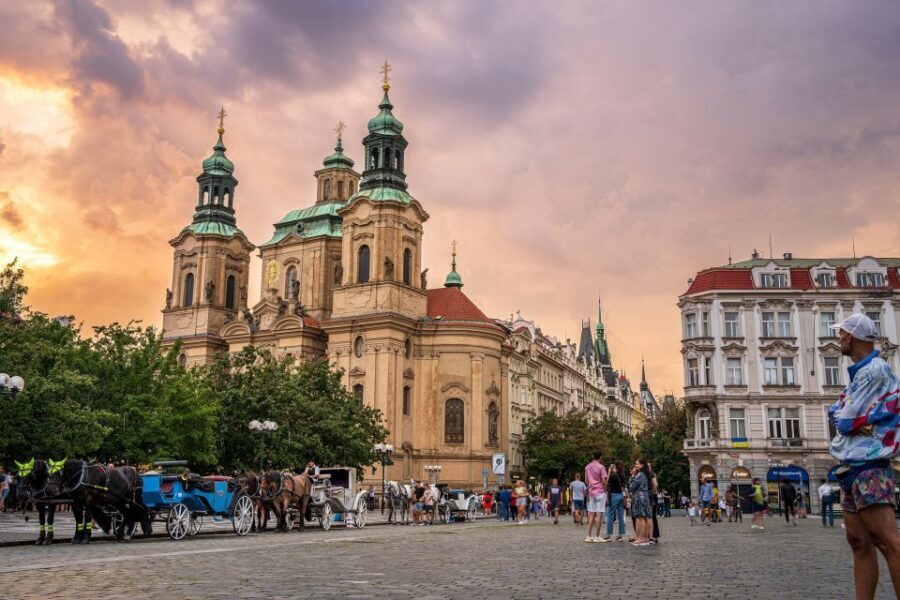
Then you reach Malostranské náměstí for a longer stop (about 15 minutes). This area is tied to the baroque side of the city—so much so that Malá Strana is often nicknamed the Pearl of the Baroque.
The guide’s attention here matters. When you look at baroque architecture without context, it can blur into decoration. With commentary, you start seeing how churches, palaces, and street slopes all play different roles in the city’s visual power.
This tour specifically spotlights the Saint Nicolas Church area as one of Europe’s standout baroque churches. Even when you’re not inside every building, the way the tour points your attention at forms and details helps you appreciate why people consider the church so special.
One practical note: take a moment to slow down during this segment. Baroque styles are visual but they also reward time. If you rush, you’ll miss the reason it looks dramatic in person.
Sněmovní to Nové zámecké schody: The climb toward Hradčany
You’ll then pass Sněmovní (a short guided stop) and move toward Nové zámecké schody, the new castle stairs area (about 5 minutes). These stairs matter because they change your perspective fast. You feel the city rise.
This is where the Royal Road story starts to turn from flat-city viewing to castle-side orientation. The route helps you understand why the Castle dominates the skyline. It isn’t just a landmark. It’s a destination that required effort to reach—exactly the kind of reality that shaped coronation logistics.
If you’re traveling in winter or wet weather, this is also where good footing matters most. Take your time on steps and let the guide’s pace lead you.
Hradčany Square and the Prague Castle gates: Finish with a plan
The tour ends around Hradčany Square (about 10 minutes), and you get drop-off points near a specific gas streetlamp at Hradčanské náměstí. The important part is that you finish at the gates of the Prague Castle area.
That ending is the real value if you’re following up with the big castle sights, especially Saint Vitus Cathedral. By the time you reach the Castle zone, you’ve already walked the approach logic. You know where you are in the city, and the architecture doesn’t feel random.
You’ll also hear about the unique views connected to the castle hill area, including the viewpoint from Opyš Hill, which is described as the seating/view area of Prague Castle. Even if you only get a quick glance, the effect is strong: your perspective becomes wider, and Prague starts looking like a city of layers rather than a list of stops.
What the guide adds: Alexandre’s French explanations and Q&A style
The biggest praise across bookings is consistent: the explanations and the guide’s ability to answer questions. The French guide Alexandre is specifically mentioned as passionate, interesting, and strong on history and architecture of Prague and the Czech Republic.
That matters because a walking tour in a foreign language can either feel like a blur or like a conversation you can follow. Here, the format is set up for clarity: short focused stops, guided time for the main sights, and a historical narrative that ties buildings together.
You’ll also get practical help along the way—good addresses in the area and advice for your stay. That’s the kind of bonus that turns a tour from sightseeing into planning.
Photo opportunities you’ll actually use
This route is built for pictures without forcing you to pose every ten seconds. The guide’s emphasis on key viewpoints helps.
Your best photo moments typically come from:
- The Charles Bridge approach and Vltava views
- Riversides around Kampa Island
- The visually distinct street-art wall area
- The baroque street views in Malá Strana
- The higher-ground feeling near Hradčany on your way into the Castle zone
Bring your camera, but also bring your eyes. Prague rewards slow looking, especially when the guide is pointing out why something was designed the way it was.
What to wear, what to bring, and how to make the most of 150 minutes
This is about comfort and timing. You’ll be walking for about 2.5 hours, with multiple stops where you’ll want to pause and listen.
I’d plan for:
- Comfortable shoes for cobbles and stairs
- A light rain layer since it runs in bad weather
- A charged phone/camera battery for bridge and viewpoint moments
- A bit of flexibility in pace so you can enjoy the explanations
If you try to cram this tour while also rushing off to check ten more places immediately after, you’ll miss the point. Instead, use it as your orientation. Then explore the Castle zone with confidence.
Who should book this French Royal Road walk
This tour is a great fit if:
- You want a French guide and clear historical context
- You’re planning to visit Prague Castle and Saint Vitus Cathedral soon
- You like architecture and want to understand how neighborhoods differ
- You enjoy photo stops but still want the story behind them
It might be less ideal if:
- You only care about one landmark and want minimal walking
- You dislike stairs and cobblestones, even with a guided pace
- You already know Prague’s royal history and prefer fully self-guided time
Should you book the Royal Road tour in French?
I’d book it if your goal is to understand Prague while you’re still in the thick of the Old Town and Malá Strana. For $20 and 150 minutes, you get a licensed guide, a strong narrative connecting the royal route to the Castle area, and photo-friendly viewpoints like the Vltava and Charles Bridge.
Skip it only if you want total freedom with no structured storytelling, or if you’re not up for uneven walking and occasional climbs. Otherwise, this is a smart way to turn a first-time Prague visit into something you can actually remember.
FAQ
What language is the tour guided in?
The tour is guided in French.
How long is the Royal Road walking tour?
The duration is about 150 minutes (roughly 2.5 hours).
What is the meeting point for the tour?
It meets at Celetná Street, number 5 / 601, in front of Madame Tussauds museum.
Where does the tour end?
It ends near the Prague Castle gates, with drop-off locations at a gas streetlamp at Hradčanské náměstí.
How can I get to the meeting point by public transport?
You can take the metro and get off at Staroměstská, Mustek, or Náměstí Republiky (lines A and B), or take the tram and get off at Jindřišská station. It’s about a 10-minute walk from the exit.
Is the tour offered in bad weather?
Yes. It runs rain, shine, or snow.
What is included in the price?
The price includes a licensed local guide, the walking guided tour of about 2.5 hours in French, explanations of the visited sites and Prague and Czech culture, good addresses, and advice for your stay.
What is not included?
Pick-up and return to your hotel, transport tickets, and food and drinks are not included.
Is there a private group option?
Yes, private group availability is offered.