REVIEW · PRAGUE
Walking through ages: 11th to 21st century, Prague flavoured
Book on Viator →Bookable on Viator
Prague tells its story in one long walk. This 4-hour route strings together 11th to 21st century Prague flavored sights, from the ramparts of Prague Castle down to modern squares in the city center.
I love the small group size (max 10), because it keeps the pace human and makes questions easy. I also love the guide style: Vadim is fast with details, answers plenty of questions, and can tailor the timing to your needs.
One catch: it’s exterior-only, and several landmarks mention admission tickets not included—so if you want interior visits, plan to add tickets on your own.
In This Review
- Key highlights worth planning for
- A 4-hour timeline walk that actually makes Prague make sense
- Price and logistics: what you’re really paying for
- Entering the Prague Castle story: dominant power, gothic symbols
- Hradcany Square and the Lesser Town rhythm: palaces, gardens, and baroque calm
- Charles Bridge: statues, views, and a 700-year spine
- Josefov and the Old-New Synagogue: Jewish quarter through eras
- Old Town Square and Stare Mesto: the city’s civic heartbeat
- The Estates Theatre and Obecni Dum: Mozart’s stage and Czech Art Nouveau pride
- Wenceslas Square: mixing 20th and 21st century Prague in one walk-off
- Small group pace and Vadim’s guide style: the reason it feels worth it
- What to bring so the exterior-only format works for you
- Who this tour suits best
- Should you book this Prague 11th–21st century walk?
- FAQ
- What’s the duration of the Prague walking tour?
- How much does the tour cost?
- Where does the tour start and end?
- Is the tour in English?
- Are admission tickets included?
- How big is the group?
- Is pickup available, and what about getting to the start?
Key highlights worth planning for
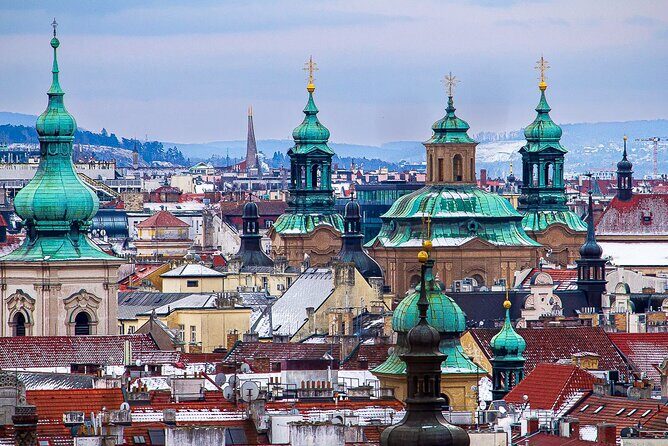
- 11th-to-21st century timeline through the city, not just a list of famous spots
- Prague Castle area first, so you start with the biggest views while your energy is fresh
- Guided exterior stops that explain what you’re seeing without making you wait in lines
- Vadim’s tram help and practical navigation tips, especially for getting to the castle
- Charles Bridge and Old Town Square covered in a way that ties landmarks to the story
A 4-hour timeline walk that actually makes Prague make sense
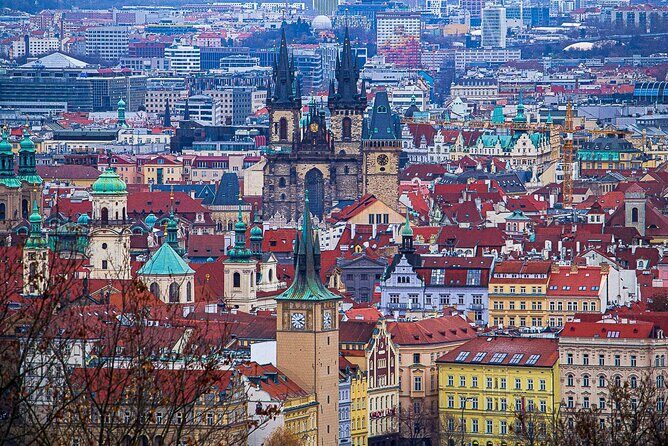
If you want Prague to click—politics, religion, art styles, and street-level details—this is a smart way to get oriented fast. The tour is built like a time line. You start at the most dominant medieval power center, then move through baroque neighborhoods, the Jewish quarter, and on into the architecture of modern Czech identity.
You’re walking for about four hours, and you’ll move between neighborhoods that feel totally different. Even though the tour is “just” exterior viewing, the guide does the heavy lifting: you’re not staring at buildings without context. You learn what each place represents and why it matters.
The value here is not the number of stops—it’s the way the stops connect. You’ll see the city as one continuous story, with a clear beginning and end instead of a random sprint for photos.
You can also read our reviews of more walking tours in Prague



Price and logistics: what you’re really paying for
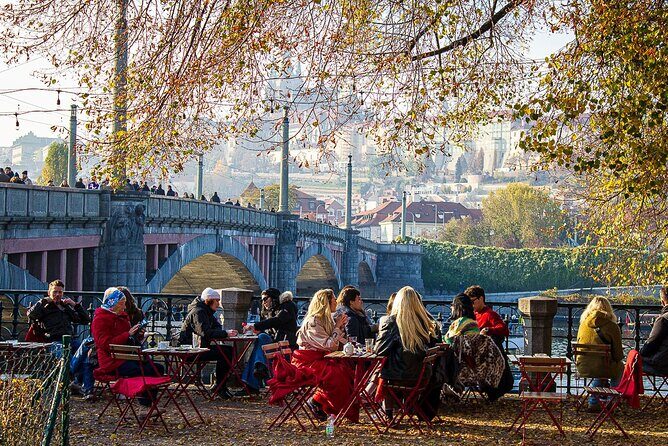
This tour costs $60.21 per person for a guided 4-hour experience. You’re paying for:
- a live guide service
- a route that reduces guesswork
- a plan that links major landmarks into one coherent narrative
- small-group attention (max 10)
A few costs are not included. Admission tickets aren’t included for the sites where you’d typically buy entry (the tour is described as exterior only). You’ll also pay public transport separately: €2.00 per person, since the walking tour includes getting to the start point by public transport. Water and snacks aren’t included, so bring some or buy along the way.
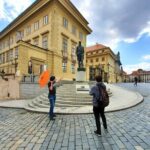
There’s also pickup offered, which matters if you’re not close to the start or you want an easier morning. You’ll meet at Pražský hrad and finish at Wenceslas Square (a convenient drop-off if you’re heading toward museums, restaurants, or further sightseeing).
If you like organized walking with explanations, this price can feel fair. If you only care about entering buildings, you’ll likely want to add separate tickets or pair this with another tour that includes interior access.
Entering the Prague Castle story: dominant power, gothic symbols
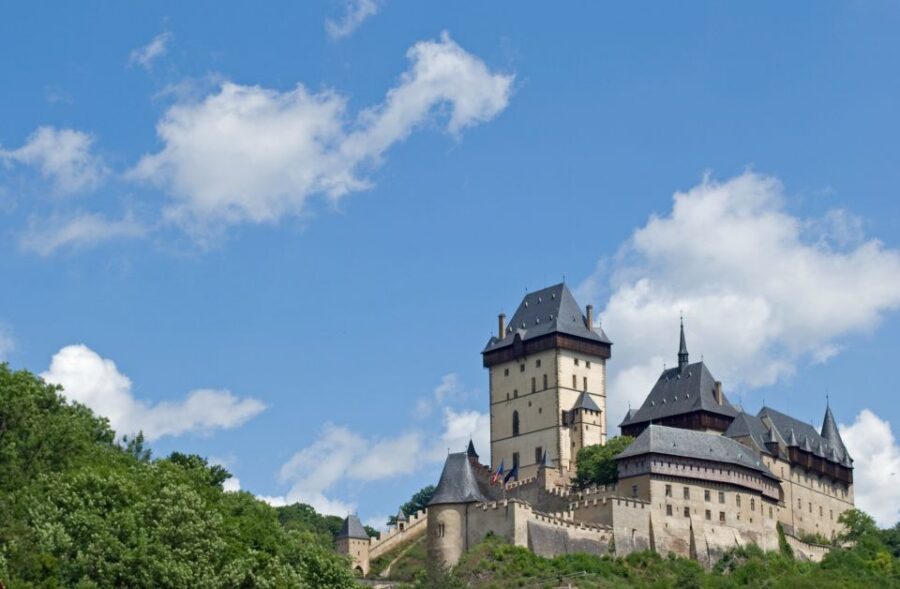
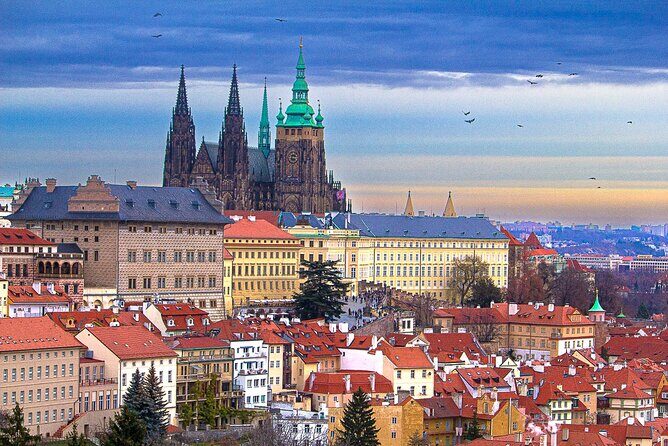
You begin near Prague Castle, Prague’s landmark and a UNESCO World Heritage Site. Since the 10th century it has been the seat of Bohemian rulers, so it’s not just a pretty complex. It’s the political core that shaped how the city grew.
You also get a brief look at St. Vitus Cathedral, described as a world-famous gothic masterpiece and a Czech state symbol tied directly to the Prague Castle area. Even in a short stop, the guide can help you notice the big-picture meaning: gothic style here isn’t just decoration. It’s a long visual statement that connects faith, identity, and power.
What I like about this start: you see the “why” before the “what.” By the time you step into the rest of the city, the castle area is already giving you context.
What to watch: the stop is short. You’re not meant to linger in museums or chapels. If you’re the type who needs deep interior time, treat this as the orientation layer, then book dedicated entry elsewhere.
Hradcany Square and the Lesser Town rhythm: palaces, gardens, and baroque calm
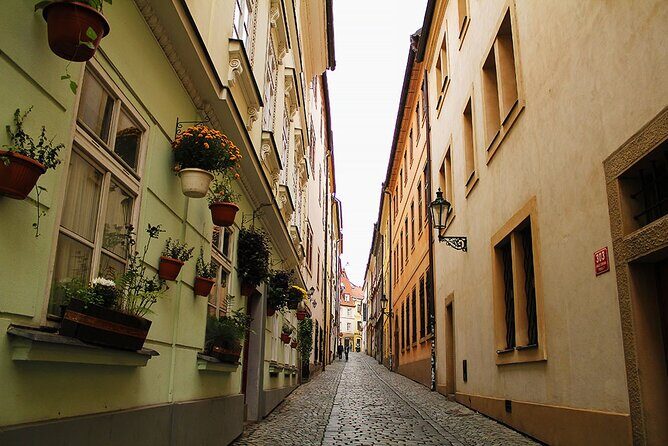
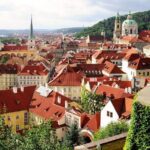
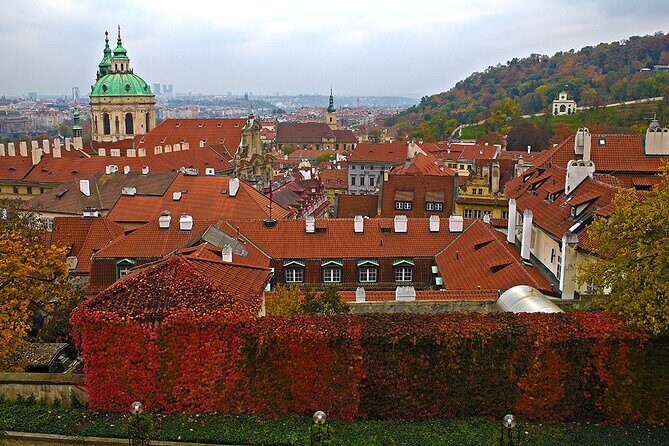
Next you move into Hradcanske Namesti, the open square in front of Prague Castle. This is where the vibe shifts from fortress to panorama. It’s surrounded by 17th century palaces of powerful noblemen, and you get a stunning view over the city.
From there you head toward Lesser Town, one of the best preserved baroque quarters of Europe. Here the feel changes again: lush gardens, majestic palaces, and neighborhoods that seem designed for strolling—plus cozy restaurants and small shops.
Then you reach Malostranske namesti, the center of the Lesser Town. It includes St Nicholas church, a baroque jewel. The dome is called out as one of the most recognizable sights on Prague’s skyline, which is helpful because even if you only see parts of the façade, you understand why it’s so prominent.
Best way to enjoy this section: slow down your photo-taking and listen to the guide’s style connections. Baroque Prague can look similar if you’re rushing. With the guide’s pointers, you start to see how the city’s “over time” design choices show up street by street.
Trade-off: several highlights here note admission tickets not included. You’re mainly there for exterior architecture and urban atmosphere, not long indoor visits.
Charles Bridge: statues, views, and a 700-year spine
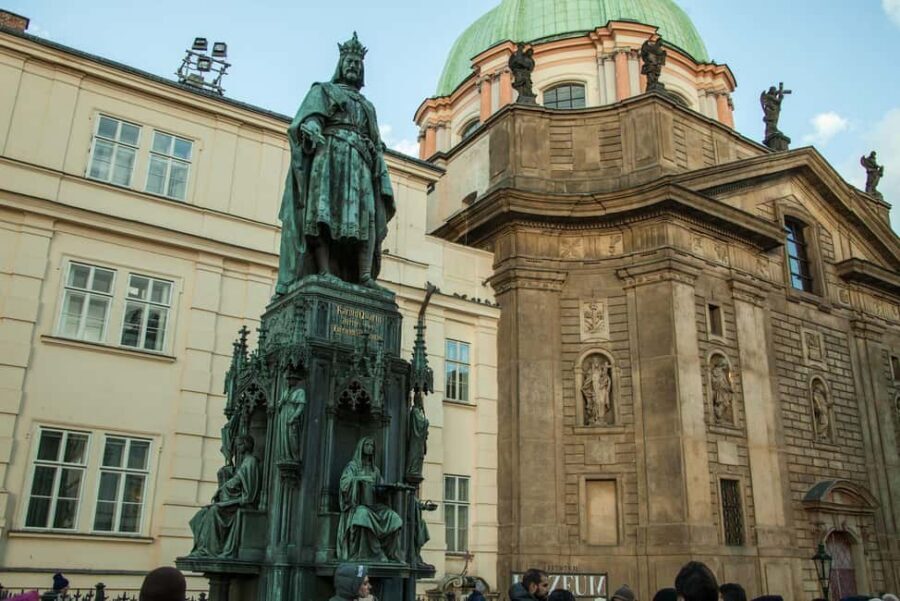
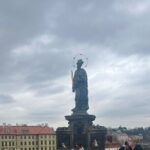
Then you hit Charles Bridge, one of Prague’s main landmarks. It’s described as a bridge with about 700 years of history, decorated by numerous statues, and it delivers majestic views over the city.
This stop is timed for walking and looking—around 15 minutes. That’s enough to take in the bridge’s character and also orient yourself to where the Old Town will feel different.
Practical tip: if you’re traveling with someone who wants maximum photos, you’ll appreciate a guided stop. Charles Bridge is popular, and having a guide steer you toward smart viewpoints helps you spend time on the view instead of wandering.

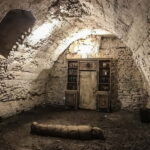




Josefov and the Old-New Synagogue: Jewish quarter through eras
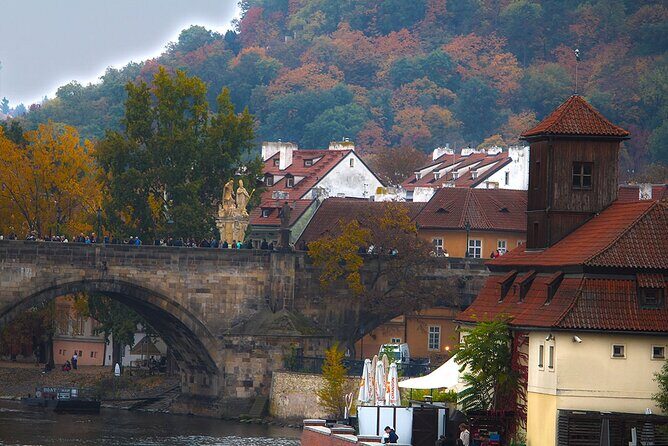
Next comes Josefov, the Jewish quarter. It’s described as rebuilt on the border of the 19th–20th centuries, with neorenaissance and art nouveau styles. That detail matters. You’re not only seeing medieval traces; you’re seeing how the city rebuilt and re-styled itself.
Then you glance at the Old-New Synagogue, one of the oldest surviving synagogues in Europe, dating back to 1270. There’s also a legend attached: a closed attic said to hold the remains of the Golem, a human-like creature created to serve its master.
Whether or not you believe the legend, it’s an effective way to remember the place. It adds a human story to architecture—something you can carry with you as you move into the older civic parts of the city.
Consideration: admission tickets aren’t included here. If you’re hoping for an inside look, you’ll need to plan separate entry.
Old Town Square and Stare Mesto: the city’s civic heartbeat
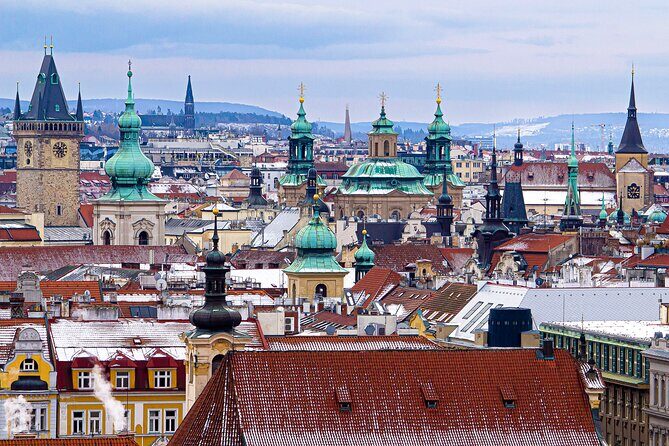
In the center, you reach Old Town Square, described as the heart of Prague with about 800 years of history, plus the famous Astronomical clock. This is one of those places where the architecture and the crowd energy can overwhelm you if you arrive with no plan.
That’s why the guided approach helps. You can look at the buildings, clock area, and street layout with better understanding because you’re not trying to figure out what you’re looking at in the middle of a busy square.
You continue into Stare Mesto (Old Town), where you also get mention of Charles University and the Estates Theater. One standout detail: the Estates Theater is the only remaining theater which saw Mozart perform.
The Estates Theatre and Obecni Dum: Mozart’s stage and Czech Art Nouveau pride
You get a dedicated look at the Estates Theatre, highlighted as the only theater in the world still in operation where Wolfgang Amadeus Mozart personally conducted his operas. Even if you don’t go inside (admission tickets aren’t included), this is the kind of fact that makes you see the building as more than a façade. It’s a living link to music history.
Next is Obecni Dum, the flagship Czech Art Nouveau building. It was completed on the eve of Czechoslovak independence and built on the site of the former Royal Court. The tour connects it to national identity and the proclamation of the new state in 1918.
In a short time here, you’re still getting a clear message: Prague isn’t only about medieval roots. It also celebrates modern Czech identity through architecture.
What I like about pairing these stops: you go from a music-related landmark tied to Mozart to a national-independence symbol tied to 1918. That’s a tidy emotional arc—art and identity side by side.
Wenceslas Square: mixing 20th and 21st century Prague in one walk-off
To finish, you end at Wenceslas Square, called the main square of new-time Prague. It remembers movements of the 20th and 21st centuries and is described as a place that never sleeps.
This is where the architecture becomes a visual timeline of more recent eras. The tour points out a mix of styles, including:
- the gothic church of Our Lady of the Snows (meant to be the biggest in Prague)
- the neo-classical National Museum
- an Art Deco Hotel Europa
- rondocubism from the third decade of the 20th century
Why the ending works for you: leaving the tour at Wenceslas Square sets you up for practical next steps. You’re in a central area that’s easy for further exploring and getting food.
Small group pace and Vadim’s guide style: the reason it feels worth it
This is where the reviews click into the experience. The group max is 10, and that size changes everything. You’re not stuck listening from the back while the guide talks to one big mass.
Vadim is singled out for being detailed in his answers and for handling lots of questions without rushing people. One of the most useful elements: he tailored the tour to timing needs. That matters if you’re trying to fit sightseeing around other plans—dinner reservations, a museum timed-entry, or simply needing a slower pace.
Another helpful practical piece from the reviews: Vadim helped guests get to Prague Castle using trams and explained how to use them so you can navigate easier during the rest of your stay. Even if you know public transit basics, a local guide’s route logic can save time on day two.
So yes, you get iconic landmarks. But what you really get is navigation plus context.
What to bring so the exterior-only format works for you
Since admissions are not included and the tour is exterior focused, pack for walking and for quick looking breaks:
- comfortable shoes (you’ll be on your feet)
- water or a snack (not provided)
- a small day bag for layers or rain
- a camera you can pull out quickly, since several stops are built for viewpoints
Also think about your goal. If you want the inside of cathedrals, synagogues, or theaters, you’ll need to book those separately. This tour is best as the framework: you’ll know which interiors are worth paying for later.
Who this tour suits best
This experience fits best if you:
- want a first-time orientation to Prague’s big landmarks
- like learning how eras connect—medieval power to baroque neighborhoods to modern independence
- prefer a small group with room for questions
- enjoy architecture and symbols, even when you’re not going inside
It may feel less ideal if you strongly prefer long interior visits or if you want a deep museum day where most of your time is spent inside ticketed spaces.
Should you book this Prague 11th–21st century walk?
I’d book it if you’re the kind of traveler who wants the city to make sense by the end of your morning. The combination of Prague Castle, St. Vitus Cathedral area, Charles Bridge, Old Town Square, Mozart’s Estates Theatre reference, Art Nouveau pride at Obecni Dum, and the modern mix at Wenceslas Square is a clean arc. You end with practical placement in the city center too.
Skip or pair differently if your top priority is entering many landmarks. Since it’s exterior-only and admission tickets aren’t included, you’ll have to add extra plans for interiors.
Given the strong rating and the guide’s hands-on approach, this is a solid value for the money. You’re buying clarity, pacing, and a smart route—not just photos.
FAQ
What’s the duration of the Prague walking tour?
It runs about 4 hours (approx.).
How much does the tour cost?
The price is $60.21 per person.
Where does the tour start and end?
It starts at Pražský hrad (Prague-Prague 6) and ends at Wenceslas Square (Václavské nám., Praha 1).
Is the tour in English?
Yes, it’s offered in English.
Are admission tickets included?
No. Admissions are not included, and the tour is described as exterior only.
How big is the group?
Maximum group size is 10 travelers.
Is pickup available, and what about getting to the start?
Pickup is offered, but it’s also described as a walking tour where you get to the starting point by public transport (public transportation is €2.00 per person).
If you cancel, is it free?
Cancellation is free up to 24 hours before the experience start time for a full refund.