REVIEW · PRAGUE
Best of Prague Private Walking Tour (Left and Right Riverbank)
Book on Viator →Operated by Private Prague Guide Day Tours · Bookable on Viator
Prague in one half-day walk? That is the idea here: you get a relaxed private introduction that stitches together both riverbanks, from the big drama of Prague Castle to the postcard stops around Charles Bridge and Old Town Square. I love how the tour stays personal, with your guide able to adjust as you go, and I also love the guide-led details that bring places to life, like how some guides (Gabriela, Linda, Jana, Tereza) lean into stories and practical tips, not just dates.
The main drawback to consider is that a private tour still depends on the guide you get. Most guides are praised for skill and friendliness, but a small number of accounts mention issues like heavy accents, limited answers to certain questions, or info that didn’t feel fully tight. If you care about a specific topic, bring questions and ask early for the style you want—more landmarks, more history, or a mix.
In This Review
- Key things that make this tour worth your time
- A private half-day that helps you stop getting lost
- Where you’ll start near Náměstí Republiky and how the route flows
- Prague Castle: the hilltop complex that explains Prague’s power
- Malá Strana: St. Nicholas Church, noble houses, and that softer riverbank mood
- The Lennon Wall: how Prague’s small acts of rebellion survived the era
- Charles Bridge: statues, legends, and the postcard views from the right angle
- Klementinum and the library world: when learning is built into the city
- The Jewish Quarter stops: Pinkas Synagogue and the Old-New Synagogue
- Old Town Square and the Astronomical Clock’s hour-by-hour drama
- Estates Theatre, Mozart, and Charles University’s Karolinum
- Wenceslas Square and the Powder Tower: modern events with medieval bones
- The Municipal House finish: a fitting last stop for Czech pride
- Price and value: why $134.23 can make sense for a private walk
- Who should book this Prague riverbank tour
- Should you book this private walking tour?
- FAQ
- How long is the Best of Prague Private Walking Tour?
- What does the tour cost per person?
- Is the tour private?
- Is pickup available?
- Where is the meeting point?
- Are tickets or admission included?
- Do I need a minimum number of people?
Key things that make this tour worth your time
- Left and right riverbanks in one go so you stop guessing where everything is
- Prague Castle plus the walk down to Malá Strana gives you the city’s height and layout in context
- Charles Bridge, Old Town Square, and the Astronomical Clock without getting stuck in the worst confusion
- Jewish Quarter stops that pair beautiful architecture with solemn details you can’t easily pick up on your own
- Mozart to Mozart-adjacent Prague via St. Nicholas Church and the Estates Theatre connection
- Your guide tailors the pacing, and you finish where you want—useful when you plan dinner or a sunset stroll
A private half-day that helps you stop getting lost
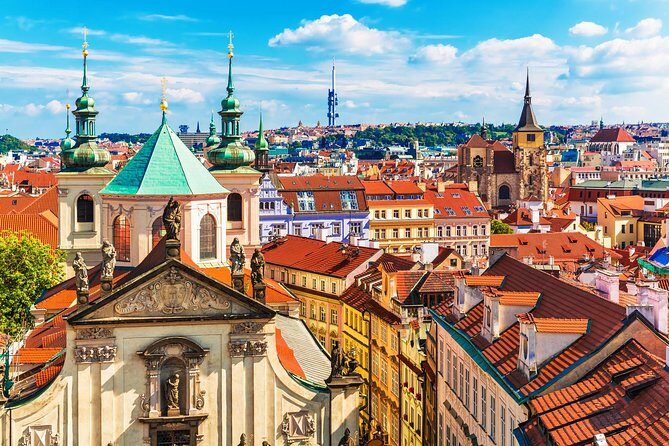
This tour works best as your first real day in Prague, because it teaches the city’s shape. Prague can feel like a puzzle box: hills, bridges, and neighborhoods that look close on a map but take real walking to connect. By the time you’re done, you’ll understand where Prague Castle sits above the river, how Malá Strana slopes down, and how the Old Town area pulls everything back together.
It’s also built for a true private format. That means you’re not stuck “waiting your turn” with strangers at every stop. You walk at a pace that fits your group and you can ask questions as you go. Even the included bonus of restaurant, shop, and photo-spot tips matters, because Prague is full of great choices—until you need local guidance on where to eat without wasting your evening.
One practical consideration: this is a walking tour with moderate fitness needed. If you’re nursing knee issues or you hate hills, plan on taking your time on the climbs and savor the slower pace rather than trying to power through.
You can also read our reviews of more walking tours in Prague



Where you’ll start near Náměstí Republiky and how the route flows
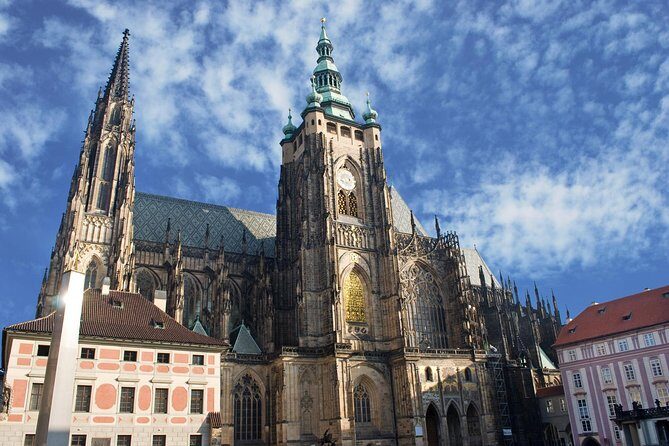
Your meeting point is Náměstí Republiky 5 in Prague 1 (Staré Město). Many days start from that area near the Gothic Powder Tower and the Municipal House zone, which is handy because it’s central and easy to reach by public transport.
Pickup is offered too, but it’s on foot from your hotel reception or outside your apartment building in the city center (not by car). That’s a small but real quality-of-life detail. It lowers the friction of traveling with luggage or when you’re still figuring out Prague streets.
The route is designed to keep you moving logically: from the Castle and Lesser Town area down toward classic bridge views, then over into Old Town, and later toward Wenceslas Square and the Powder Tower before returning. The ending can be tailored so you’re not dragged back to some fixed location when you’d rather continue your evening on your terms.
Prague Castle: the hilltop complex that explains Prague’s power
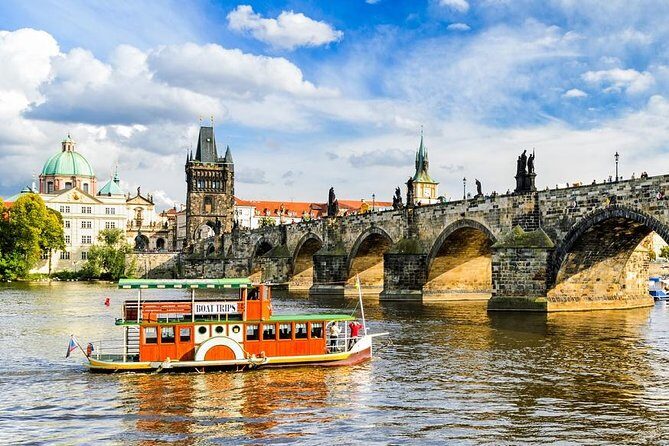
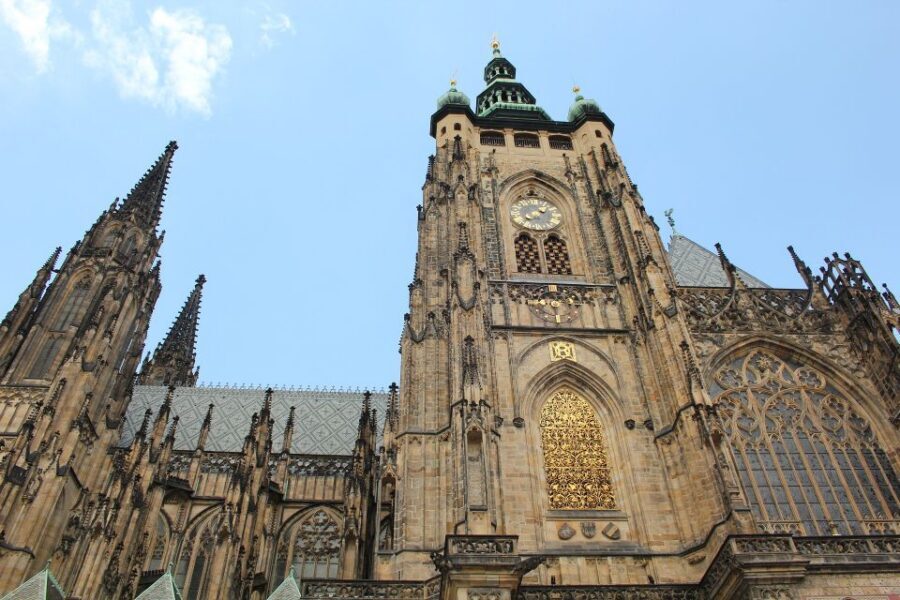
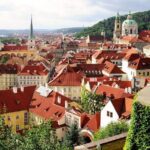
Prague Castle is not one building. It’s a whole world on a hill. From the start, you get the big-picture framing: it’s the seat of Czech presidents and a site with a long timeline that stretches back to the 9th century. The complex dominates the skyline, and once you know that vantage point, the rest of Prague makes more sense.
Saint Vitus’ Cathedral is the anchor. You’ll hear how it took an astonishing amount of time to build and how it carries the look and feel of the Gothic style even while it echoes centuries of politics and culture. This stop is also a good moment to slow down and appreciate scale. Even if you’ve seen photos, being near the cathedral complex gives you a real sense of why different rulers wanted to control this location.
A quick reality check: Castle areas can be crowded and you’ll likely do plenty of walking. The payoff is that you’ll stand where leaders once stood and then connect that viewpoint later to neighborhoods below.
Malá Strana: St. Nicholas Church, noble houses, and that softer riverbank mood
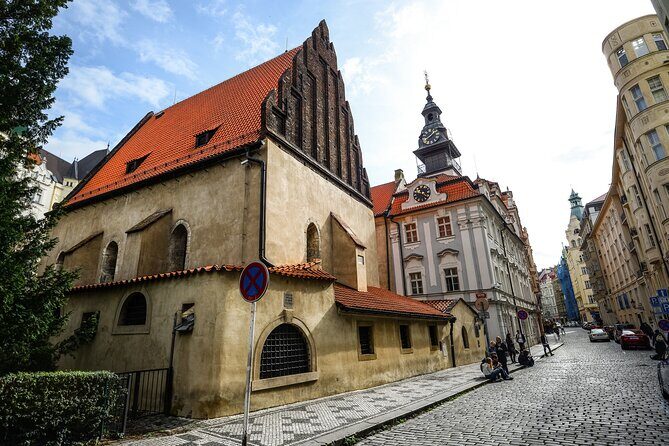
After the Castle, the tour shifts into Malá Strana, the Lesser Quarter that sits below the hill along the Vltava. Historically, this area grew from settlements outside the fortifications and later formed a distinct royal town. That context helps you understand why you see so many grand buildings tucked along tight streets—it wasn’t always citywide, it developed over time.
One stop you’ll appreciate is St. Nicholas Church, praised as Prague’s most beautiful Baroque church in this area. You also get an extra layer of meaning with the Mozart connection: he reportedly liked to practise on the organ here because the acoustics are excellent. It’s the kind of detail that makes you notice the church differently, not just as a pretty façade.
Expect to feel the neighborhood switch: less “monument on a hill,” more intimate streets, river views, and a quieter tempo than Old Town. It’s a nice contrast that keeps the tour from turning into a checklist.
The Lennon Wall: how Prague’s small acts of rebellion survived the era
Then comes a very different emotional beat: the Lennonova zeď wall covered in tributes to John Lennon. The story is the point here. During the Communist era, Western music was restricted, and Beatles fandom carried real risk. When news of Lennon’s death reached Czechoslovakia, fans created a tribute wall—something that would have been difficult, even dangerous, at the time.
What I like about this stop is that it breaks the “big monuments only” rhythm. You see a living memorial, one that reads like graffiti at first and turns into meaning when you look closer. It’s short, but it adds a human thread to all the stone and statues you’ve been looking at.
You can also read our reviews of more private tours in Prague



Charles Bridge: statues, legends, and the postcard views from the right angle
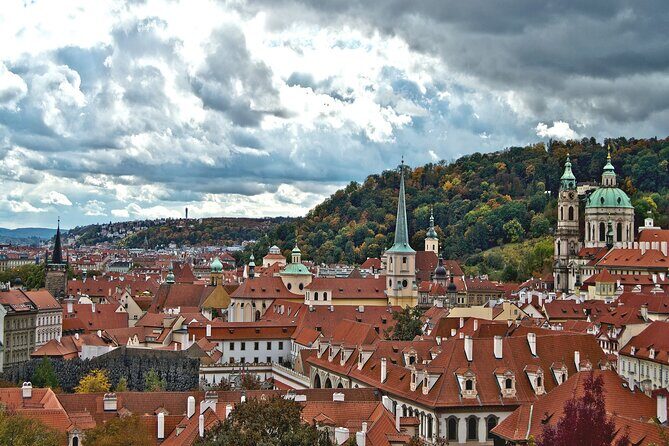
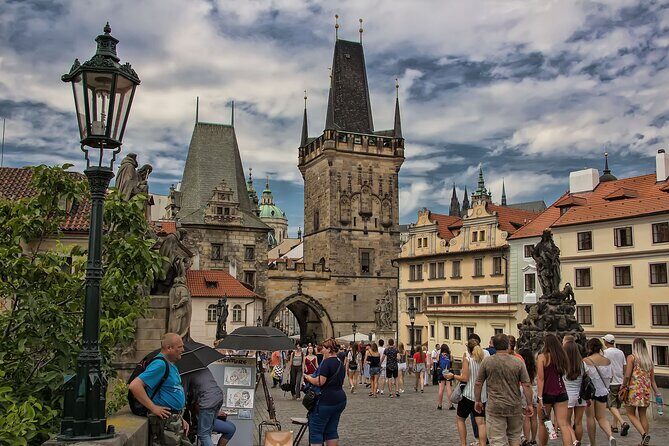
Charles Bridge is the classic Prague scene. It links Old Town and the Lesser Town, and it’s one of those places where your brain switches to tourist mode—then settles back when the details hit. You’ll learn it was commissioned by King Charles IV, and you’ll also hear how the bridge has served as a key link for centuries.
The famous statues matter here. There are many saintly Baroque figures, mostly sandstone, and you’ll discover that many you see today are replicas. That distinction keeps it grounded: the bridge is historic, but not every single element is original in the way you might assume.
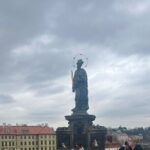
You’ll also get the legend behind St. John of Nepomuk—a refusal to reveal confessions, a fall from the bridge, and the story of stars appearing in the sky above the site. The famous five-star halo connection is the kind of detail you’ll remember the next time you walk through a city and spot a “myth marker” on a statue.
Do expect crowds, especially if you go during peak daylight. Still, the guide’s pacing and context help you experience it as a place with meaning, not just a photo line.
Klementinum and the library world: when learning is built into the city
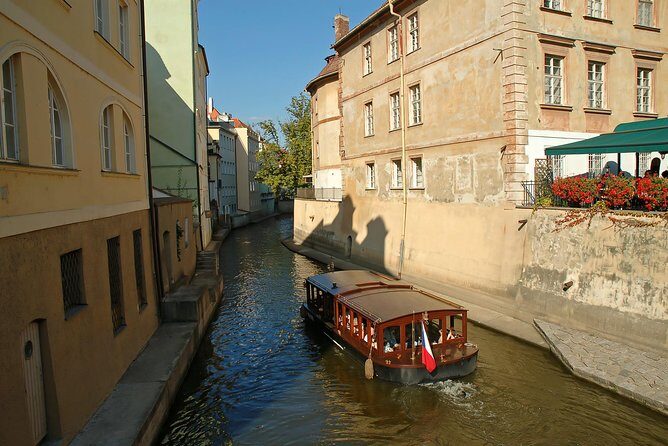
Crossing away from purely street-level scenes, you’ll reach the Klementinum, which was founded as a Jesuit complex and is now closely associated with the National Library. This is the moment the tour slows slightly into a different kind of Prague: buildings that signal authority through education and collecting.
If you’re the type who likes when architecture has a job, you’ll enjoy this stop. It isn’t just “pretty” in the way many churches are. It’s a place that represents how knowledge was valued, stored, and controlled in different eras.
Not everything here will be dramatic from the outside, so bring your patience. The value is in what your guide explains while you’re standing there.
The Jewish Quarter stops: Pinkas Synagogue and the Old-New Synagogue
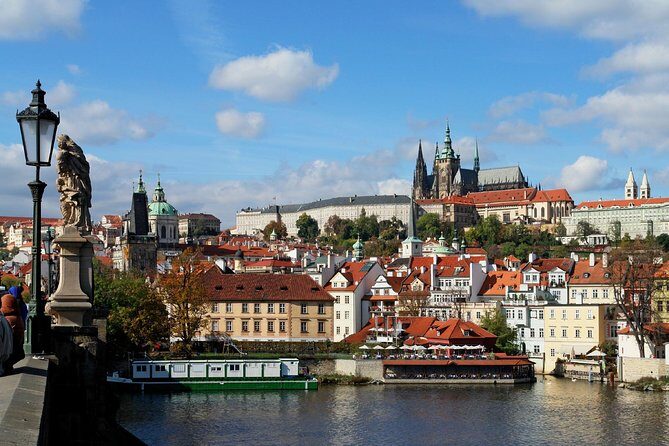
Two stops in the Jewish Quarter stand out for emotional weight and architectural significance.
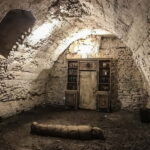
The Pinkas Synagogue is part of the Jewish Museum experience and its walls are covered with names of Jews who perished during World War II. This isn’t background texture. It’s a stark memorial you can’t easily reduce to a quick look. When your guide frames it properly, you’ll understand why the walls are the main story.
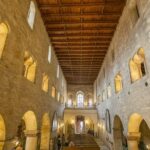
Then there’s the Old-New Synagogue, often described as the oldest still-serving synagogue in Europe. It was completed in 1270 in Gothic style—another “you’re looking at medieval work” moment that hits differently when you’re actually in front of it. Even if you don’t plan to go deep into religion or genealogy, you’ll feel the continuity here: worship, community, endurance.
If this subject feels heavy, that’s normal. That’s part of why a guided walk is useful—you don’t have to carry the interpretation alone.
Old Town Square and the Astronomical Clock’s hour-by-hour drama
Old Town Square is Prague’s signature stage. Palaces and churches circle it, and it’s the kind of place where politics and crowds both played out for centuries. You’ll get orientation about why this square is such a magnet: it concentrates the story of the city into one public stage.
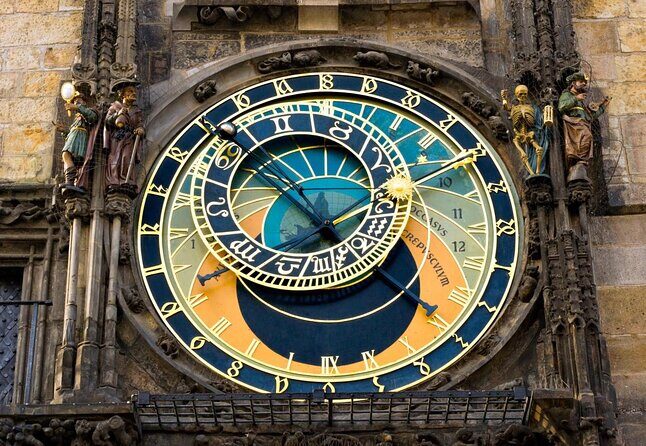
The next stop is the Old Town Hall and its Astronomical Clock. The highlight is the performance on the hour: Death tips an hourglass and a sequence of figures moves by, with details that include the cock crowing and the appearance of the 12 apostles. It’s theatrical in a way that makes you understand how public art worked back then. People didn’t just read the time; they watched it happen.
A practical tip: the clock show brings crowds. If you’re sensitive to standing still, consider timing the visit carefully so you’re not trapped in the densest part of the crowd. Your guide can help you place yourself better than wandering in blind.
Estates Theatre, Mozart, and Charles University’s Karolinum
Prague has a musician’s side, and two stops connect it to Mozart.
At the Estates Theatre, you’ll hear that Mozart visited and that he conducted the premiere of Don Giovanni there in October 1787. It’s a small stop time-wise, but it adds cultural context that balances all the political architecture around you.
Then you’ll reach Karolinum, tied to Charles University. Charles IV founded the university in 1348, and it remains the oldest university in the Czech lands and one of the oldest in Europe. This is another architecture-with-a-purpose moment: education and power intertwined in a way that’s easy to miss if you only look at buildings as decoration.
If you like Prague’s “ideas” side, these stops give it to you without needing a museum ticket.
Wenceslas Square and the Powder Tower: modern events with medieval bones
Next up is Wenceslas Square, part of the New Town founded by Charles IV in 1348. It used to be called the Horse Market, and it later became the stage for major events—especially the Velvet Revolution in 1989 that helped topple Communist rule.
That means you’re standing in a place shaped by old planning but activated by modern change. It’s a helpful reminder that Prague is not a museum town. People still live through real events here.
The Powder Tower (Prasna brana) closes the loop with medieval charm. It’s a Gothic gateway connected to the Medieval Royal Route and is one of Prague’s most iconic towers. If you want something that looks great in photos but also explains how the city moved and defended itself, this is a solid final anchor.
The Municipal House finish: a fitting last stop for Czech pride
The tour can end back around the Municipal House (Obecni dum) area, depending on what you want next. This building was built in 1912 on the site of a former Royal Court and was tied to Czech nation celebrations. It’s especially known for its concert hall and ornate decorations.
I like using the Municipal House as a closer because it brings you back to the idea of Prague as living culture, not only old stones and legends. It also helps you transition smoothly into your next plan—dinner, a concert, or a longer walk on your own.
Price and value: why $134.23 can make sense for a private walk
At about $134.23 per person for roughly 3 hours 30 minutes, this price lands in the “serious first-day value” category, not the cheapest option. The main reason it can still be a good deal is that you’re paying for time plus interpretation.
A private guide is useful when you want more than “what this is.” It’s about why it matters, where to stand for the best views, what legends connect to what buildings, and how to avoid wasting hours wandering in the wrong direction. The included restaurant and photo-spot advice also adds practical value. If you would otherwise spend your first evening hunting for a good meal or figuring out where everything is, a guided first pass can pay you back fast.
Another value point: the tour supports local children’s homes. That doesn’t replace the core experience, but it’s a genuine bonus that keeps the day from feeling purely transactional.
Who should book this Prague riverbank tour
This is a great fit if:
- You’re in Prague for a short time and want the main “layers” fast
- You want a guided feel for Prague Castle, Malá Strana, Charles Bridge, and Old Town
- You like stories tied to architecture, legends, and major historical shifts
- You value private pacing and the option to tailor your interests
It may be less ideal if you want a very specific deep-dive on one topic, like modern politics only, because the tour aims for broad orientation across many landmarks. If you’re heading that direction, just start by telling your guide what you most want to understand.
Also, if the weather is miserable, expect adaptation. People have reported that the guide can improvise and still keep the day moving, which is exactly what you want when Prague weather turns on you.
Should you book this private walking tour?
Yes, if you want a first-day guide that gives you a real mental map of Prague and connects major landmarks across both riverbanks. The biggest win is the combination of major sights with specific details you won’t reliably catch on your own—Mozart connections, legends around the bridge, and the memorial weight in the Jewish Quarter.
Book it especially if you like having someone adjust the day to you. The tour’s flexibility on where you finish can make a big difference for dinner plans and evening strolls.
Skip it if you know you dislike guided interpretation and you’d rather move at your own pace only. Also, if English comprehension is a make-or-break issue for you, plan to ask your guide early how they prefer to handle questions so you don’t end up with a one-way lecture style.
FAQ
How long is the Best of Prague Private Walking Tour?
It runs for about 3 hours 30 minutes.
What does the tour cost per person?
The price is $134.23 per person.
Is the tour private?
Yes. It is a private tour/activity, and only your group participates.
Is pickup available?
Yes. Pickup is offered at your hotel reception or outside your apartment building in the city center, on foot (not by car).
Where is the meeting point?
The main meeting point is Náměstí Republiky 5, 111 21 Praha 1-Staré Město, Czechia.
Are tickets or admission included?
Admission is not included. You can pay for admission on the spot by card.
Do I need a minimum number of people?
Yes. A minimum of 2 people is required per booking.