REVIEW · PRAGUE
Grand City Tour of Prague on Cruiser e-Bikes or e-Scooters
Book on Viator →Operated by Euro Segway Prague · Bookable on Viator
Prague can feel huge, then you glide through it. This Grand City Tour on cruiser e-bikes or e-scooters is a smart way to hit big landmarks fast, with that private, personalized vibe that keeps the pace comfortable. I especially liked the easy-going coverage of viewpoints and monuments without getting wiped out, and the fact that the guide (Nick, also called Nikita) can adjust the route when you already know a stop. The main drawback to watch for: it is still a 3-hour loop, so pauses are short, and you may want separate time for anything you want to go deeper on.
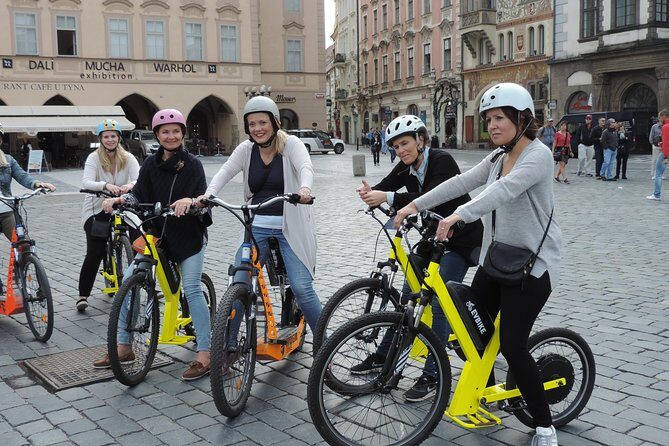
You get a quick training session (5–10 minutes) before rolling out, plus helmets with hygienic protectors in multiple sizes, raincoats if weather turns, and a photo service to help you log the moment. It runs in English, starts and ends back at Euro Segway Prague, and it is designed so most people can participate (with a strict no alcohol/drugs/strong medicine rule). If you want an organized overview of Prague that also feels active, this tour is built for you.
In This Review
- What makes this Prague e-bike circuit click
- Getting your bearings fast on an e-bike or e-scooter
- Meeting at Maltezské Square and rolling out smoothly
- Letná Park and the Metronome: Prague’s big-view warm-up
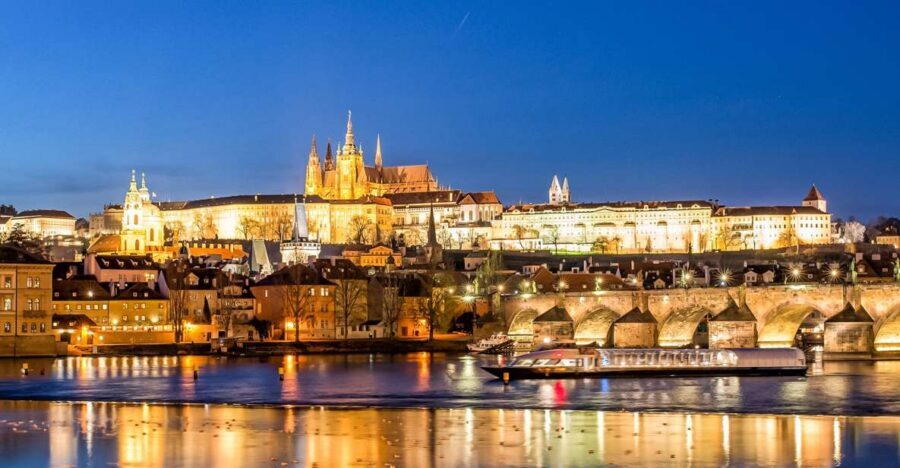
- Prague Castle and St. Vitus Cathedral: major sights, tight timing
- Strahov monasteries and the monastery brewery stop
- Petřín Hill and Petřín Park: viewpoints with less leg burn
- Kampa Park, John Lennon Wall, and the riverfront vibe
- Charles Bridge and the Prague “photo stop” rhythm
- Kafka Museum and the “peeing statues” quick hit
- Rudolfinum: a landmark pause that adds context
- Prague’s Jewish Quarter and Old Town Square: the finale anchors the story
- The real value: why $102.13 can make sense here
- Who should book this tour?
- Should you book this Grand City Tour on e-bikes or e-scooters?
- FAQ
- How long is the Grand City Tour of Prague?
- Is this tour private?
- What language is the guide?
- Is there any training before riding?
- What is included in the price?
- Where does the tour start and end?
What makes this Prague e-bike circuit click
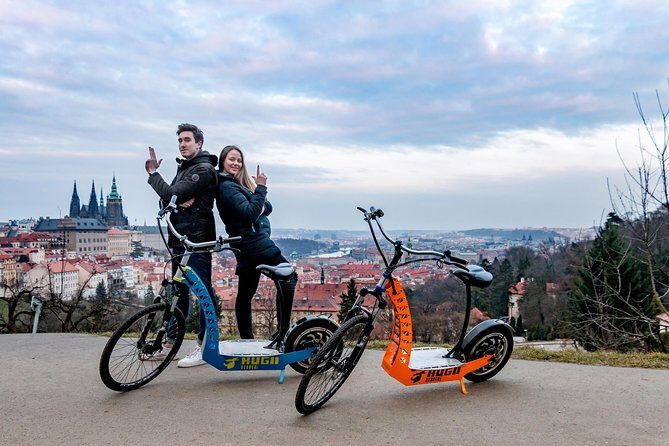
- Private group flexibility: only your group rides, so the guide can tailor timing and flow.
- 5–10 minute training: you get comfortable before you hit the streets.
- Viewpoints without the slog: Letná, Petřín Hill, and other lookouts come with less leg fatigue.
- Stops are packed but brief: lots of landmark moments in about 3 hours.
- Practical extras included: helmets, hygienic protectors, raincoats (if needed), and photo service.
- A guide who adapts: Nick (Nikita) is engaging and can rework the itinerary on the fly.
Getting your bearings fast on an e-bike or e-scooter
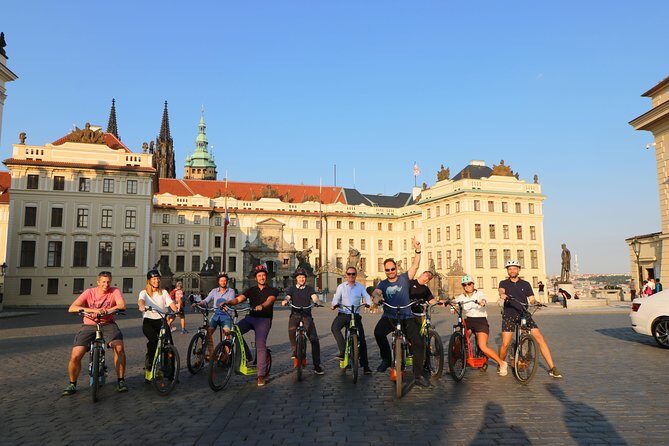
Prague is the kind of city where you can spend your whole day just figuring out how to see it. This tour fixes that problem. With electric cruiser bikes and e-scooters, you can move between neighborhoods quickly while still making enough stops to understand how the city is laid out.
The big value here is effort-to-sight ratio. You cover major areas that otherwise involve a mix of hills, stairs nearby, and long walks between viewpoints. Even if you consider yourself an average walker, the assist from the motor helps you keep your energy for the photo breaks and guide talk.
One more quiet win: because you are not white-knuckling a full day on foot, you can actually listen. A good overview only works when you have the mental space to connect what you are seeing: rivers and bridges, castle-area angles, and why certain spots became famous for views.
You can also read our reviews of more cycling tours in Prague

Meeting at Maltezské Square and rolling out smoothly
The tour starts at Euro Segway Prague, at Maltezské Square 9 in Malá Strana (you end back at the same meeting point). It is a location that makes sense for the first minutes of the ride because you are already near the heart of where the main sightseeing clusters begin.
Before you go anywhere, you get a training session (5–10 minutes). That matters more than it sounds. Even if you are a confident scooter or bike rider, a quick orientation is what keeps the tour feeling safe and relaxed instead of stressful.
You also get the essentials that make the experience easier right away:
- Helmets and hygienic protectors in all sizes
- Raincoats if the weather needs them
- A live guide who stays with your group
- A photo service to capture moments without you constantly juggling your camera and your balance
If you like knowing the plan, this tour gives you that. If you like spontaneity, the guide has room to adjust when it makes sense for your group.
Letná Park and the Metronome: Prague’s big-view warm-up
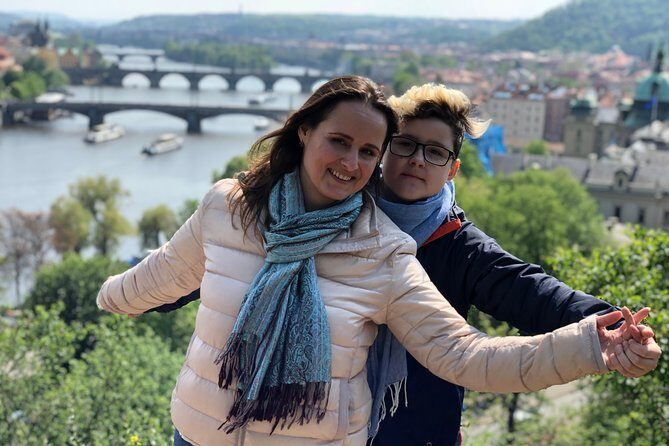
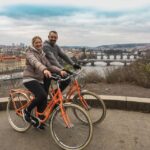
The ride begins with a classic skyline warm-up: Letná Park. It is the kind of place where Prague suddenly looks different. Instead of moving street to street, you get that wide-open feel, and you can see how the city’s old core fits into the bigger geography.
From there, you head to the Metronome stop. This isn’t just a quick photo moment. It is a chance to anchor your understanding of the viewpoints you will keep using throughout the tour. Once you have that reference point, the later lookouts at Petřín and other spots hit harder.
What I like about starting here is that you do not waste time. You get the payoff early, and it sets a mental rhythm for the rest of the route.
Prague Castle and St. Vitus Cathedral: major sights, tight timing
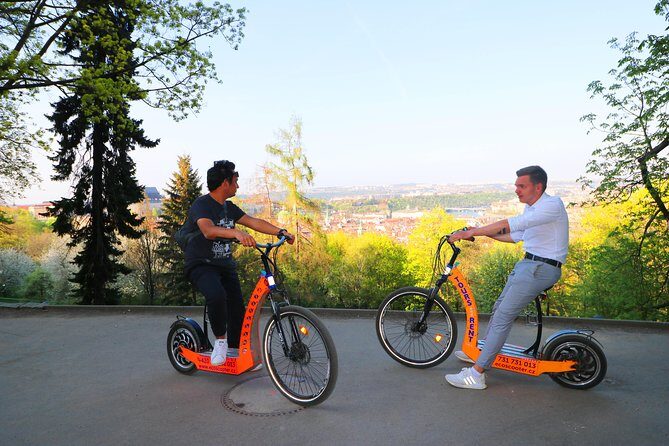
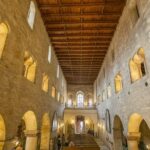
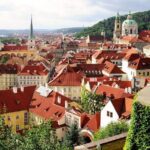
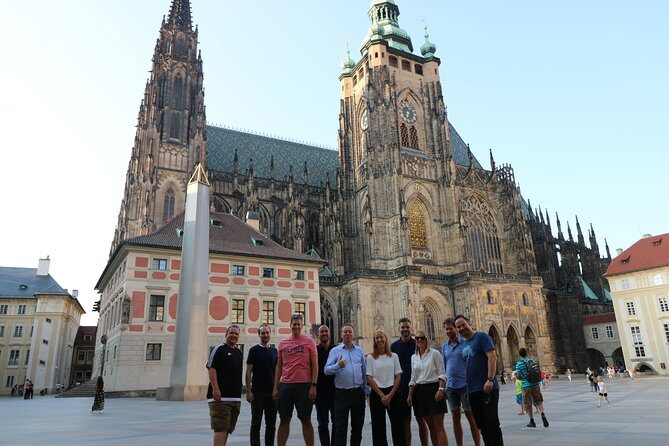
Next up is Prague Castle, followed by St. Vitus Cathedral. These are headline landmarks for a reason. You will see the scale of the castle complex and understand why so much of Prague’s story folds around it.
The trade-off is time. Each segment at this part of the route is short, so think of it as orientation and exterior viewing plus a guided snapshot of the significance—not a slow, in-depth visit.
If your priority is walking into multiple castle interiors, plan for that separately. If your priority is learning how the castle area fits into the city and getting the right angles for photos, this is a very efficient way to do it without turning your day into an endurance test.
Strahov monasteries and the monastery brewery stop
After the castle area, the tour shifts toward Strahovsky Klaster. This is where the tour becomes more than just famous landmarks. You get a feel for the monastic setting—because the stop is framed around the idea of different eras living side by side.
The route then includes the Strahov Monastery Brewery, with a listed link to brewery history spanning centuries (the monastery stop is described as from the 12th century, and the brewery spans 14th and 15th-century references depending on the specific stop segment). Even if you do not get a long sit-down experience here, the guide talk at this stage helps you connect the religious site to the practical, everyday world that grew around it.
This segment is especially good if you want contrast: castle grandeur on one side, then the monastery ecosystem on the other.
A practical note: monastery areas can mean tighter spaces nearby, so being comfortable riding your e-bike or scooter matters. The earlier training helps a lot here.
You can also read our reviews of more city tours in Prague
Petřín Hill and Petřín Park: viewpoints with less leg burn
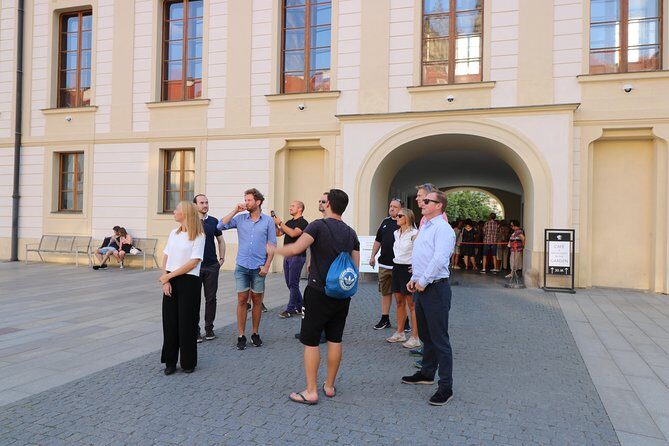
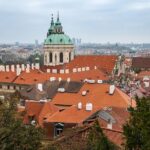
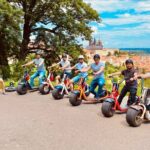
Then you head to Petrin (Petřín Hill) and Petrin Park. This is the point where the electric assist really shows its value. Petřín is famous for views, and the tour uses that reputation well by giving you stops built around photo angles and overlooks.
The Petřín portion is designed to help you understand why people keep returning to this area. You are not just seeing one pretty view; you are getting a sense of how the city opens up from different angles as you move through the park space.
Again, timing is tight, but the benefit is that you do not get worn out. You can look, listen, take photos, and move on without feeling like you spent the day climbing for nothing.
Kampa Park, John Lennon Wall, and the riverfront vibe
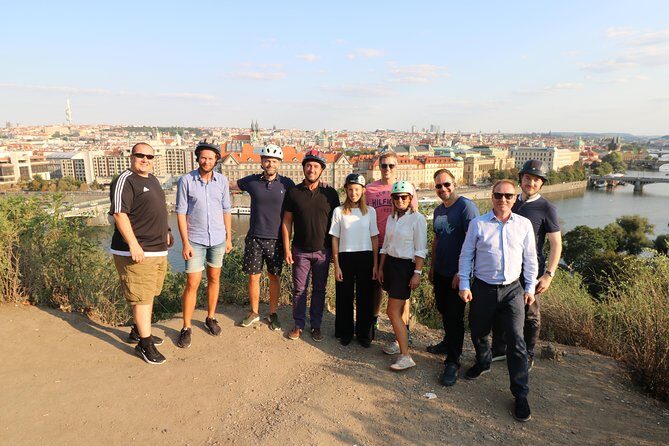
After the viewpoint phase, the route swings toward the river and calmer streets: Kampa Park (Kampa Island) and then Lennonova zed, the John Lennon Wall.
Kampa Park gives you a change of pace. It is a softer, greener feel than the castle hill zones, and it helps your eyes reset after all the hard edges of monuments and viewpoints.
Then comes the Lennon Wall stop. It is one of those Prague landmarks that feels instantly recognizable even if you have never been here before. The guide talk makes it more meaningful by tying it into how modern Prague has layers—historic sites alongside symbols that people keep adding to over time.
This is also a good stretch for photos because you are in a more human-scale setting.
Charles Bridge and the Prague “photo stop” rhythm
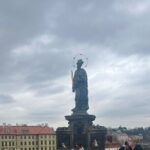
Next is Charles Bridge. This part of Prague tends to pull big crowds, and this tour handles it by keeping the stop short and purposeful. You get the landmark moment and the guide context without turning your entire visit into a slow shuffle.
If you want to spend serious time on the bridge, this tour will show you enough to understand why it matters, then you can choose to return later. If you want the broader overview today, the route keeps you moving.
Pay attention during the guide explanations here. Charles Bridge is not just a bridge; it is a visual axis for how Prague connects major areas.
Kafka Museum and the “peeing statues” quick hit
You then stop at the Franz Kafka Muzeum area, noted for the peeing statues. It is a short segment, but that is exactly why it works on a tour like this. You get one playful, memorable moment in the middle of more monumental stops.
If you have a sense of humor, you will appreciate this detour. Prague has plenty of solemn sites, and these quirky details make the day feel more human.
Rudolfinum: a landmark pause that adds context
After that, you reach Rudolfinum. The value of a stop like this is less about one single view and more about what it represents in the city’s cultural story.
Because the tour is moving efficiently between major neighborhoods, this is one of those moments where the guide can connect architecture and city identity without requiring a long visit. It helps you feel like the tour is building a framework, not just listing famous names.
Prague’s Jewish Quarter and Old Town Square: the finale anchors the story
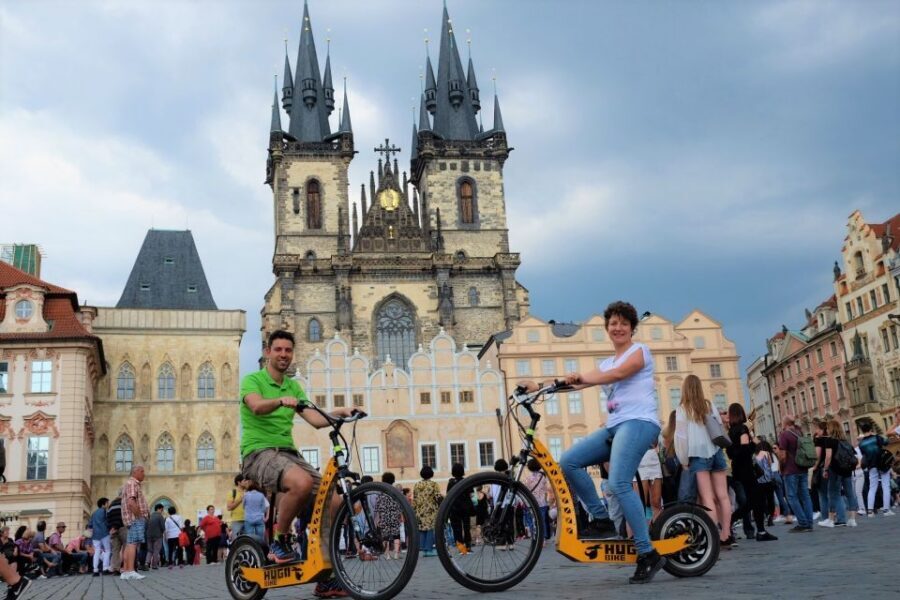
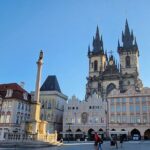
The tour finishes with a strong concentration of historic core sights: Prague Jewish Quarter, Old Town Hall with the Astronomical Clock, and Old Town Square with Týn Church and the Jan Hus Monument.
The Jewish Quarter stop is especially significant because the description highlights the Old Jewish Cemetery and the oldest synagogue in Europe. This is a section where a short guided pause can still be meaningful, because you are learning what you are looking at rather than just passing by it.
Then comes Old Town Hall and the Astronomical Clock. Even if you have seen photos before, the live context matters. The guide talk helps you understand why this clock is treated like a must-see marker in Prague’s central plaza life.
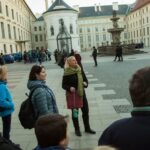
Finally, Old Town Square wraps it up with Týn Church and the Jan Hus Monument. This is the classic postcard zone, but the tour’s pacing gives you more than a quick snapshot—you leave with a clearer sense of how the city’s major themes connect across time.
The real value: why $102.13 can make sense here
At about $102.13 per person for roughly 3 hours, the price might look steep if you imagine it as only “transport.” But the tour is doing more than moving you around.
You are paying for:
- Live guiding in English
- A training session so you can comfortably ride without guessing
- Included gear: helmets, hygienic protectors, raincoats
- Photo service, which saves time and frustration
- A structured route that hits multiple top Prague landmarks in one go
One detail that boosts value is the way the stops are presented as free admission for the segments listed along the route. That means you are not constantly calculating which stops will cost extra before you even arrive.
The best kind of traveler for this tour is someone who wants an organized first look, or someone who wants a second-day overview without walking themselves into exhaustion. If you are the type who likes long museum time, this may feel short at the biggest sites—so plan to return for those.
Who should book this tour?
This is a great fit if you:
- Want a guided overview that covers far more than a normal walking circuit
- Like viewpoints but do not want a leg-heavy day
- Prefer a structured route with the option for the guide to adjust when needed
- Appreciate little extras like photo service and weather-ready gear
It is also ideal as a first full day in Prague, or as a “we need the highlights” day in the middle of your trip.
Should you book this Grand City Tour on e-bikes or e-scooters?
Yes, if you want a high-efficiency, guided Prague loop that keeps you moving comfortably. The strongest reasons to book are the combination of private-group feel, a quick training start, and a route that covers major landmarks from Letná and the Metronome through Prague Castle/St. Vitus, over to Petřín, and then down to Charles Bridge and the Old Town Square finale.
If your plan is to spend hours inside big attractions, you might use this as an orientation day and then return later. If you want long, slow lingering, this route may feel quick. But if you want to get your bearings, understand the city’s layout, and leave with solid landmark knowledge, this tour is an excellent value.
FAQ
How long is the Grand City Tour of Prague?
The tour lasts about 3 hours.
Is this tour private?
Yes. It is a private activity, and only your group participates.
What language is the guide?
The tour is offered in English.
Is there any training before riding?
Yes. You get a training session before the tour that lasts about 5–10 minutes.
What is included in the price?
Included: live guiding, the training session, photo service, helmets with hygienic protectors, and raincoats if needed. Food and drinks are not included, and tips for the guide are optional.
Where does the tour start and end?
It starts at Euro Segway Prague, Maltezské Square 9, Malá Strana, and ends back at the same meeting point.