REVIEW · PRAGUE
Grand Tour of Prague “among history, legends and curiosities” (NO ENGLISH)
Book on Viator →Operated by GUIDA di PRAGA · Bookable on Viator
Prague changes mood every ten steps. This Grand Tour of Prague mixes 1900s heartbreak with Prague’s fairytale-like royal views, using courtyards, galleries, and off-the-main-path corners instead of a lecture-and-go routine. It runs about 6 hours with a small group (up to 10), starts at MuzeumNew Town at 9:30 am, and uses a mobile ticket plus optional pickup.
What I love: the guide style feels like a real conversation, not robotic explanations, and my session with Alessandro was prepared, attentive, and genuinely available. I also like how the route is built as two arcs, first history and legends in the Old Town area, then the hill for a more royal, magical Prague mood. One consideration: the Jewish sites on the itinerary are external-only, so you will not enter the synagogues or the Jewish cemetery.
In This Review
- Key things that make this tour work
- A guided walk that feels like a story, not a script
- The morning arc: 1900s trauma in Prague’s old streets
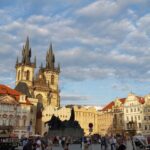
- Wenceslas Square to the Astronomical Clock: power, ideology, and time
- Prague Castle courtyards and the changing of the guard
- St. James Church legend and the quieter power of interiors
- Lennon Wall, Nerudova, and Celetna: legends you can walk through
- Strahov Monastery Brewery and Kampa’s Courtyard Views
- Lesser Town alleys and the National Theatre pause
- Jewish Museum exterior and Spanish Synagogue exterior: what you will see
- How the route actually saves you time (and confusion)
- Practical tips: the castle hill, the phone rule, and good shoes
- Who this tour is for
- Should you book this Grand Tour of Prague?
- FAQ
- How long is the Grand Tour of Prague?
- What is the group size?
- Where does the tour start and end?
- Is pickup included?
- Is the tour ticket mobile?
- Are entrances to the synagogues and Jewish cemetery included?
- Do you get access to Prague Castle?
- Do I need a tram ticket for the castle hill?
- What language is the tour?
- What should I do if the weather is bad?
Key things that make this tour work
- Two-part storytelling: 1900s events in the morning, then royal Prague views and legends in the afternoon
- Small group pace: up to 10 people, with more time for questions and back-and-forth
- Courtyards and galleries: you spend less time at bus-stops and more time moving through the city’s hidden passages
- Castle courtyards included: you reach the first free areas and courtyards of Prague Castle
- Jewish Quarter, but outside: you see key landmarks from the outside, not inside the institutions
- Smart phone policy: no recording of explanations, so you actually watch where you’re walking
A guided walk that feels like a story, not a script
This is the kind of tour where you start to notice patterns in Prague. I like that it doesn’t just name landmarks. You get prompts that help you read what you see, then connect it to the next place.
The group size is capped at 10. That matters in Prague, where the crowds can swallow your attention fast. Here, you keep momentum and you still get time to ask things when something clicks.
You’ll also feel the difference in guide approach. This experience explicitly avoids one-way, robotic explanations. In practice, that means less “tour voice” and more dialogue, like the guide is using Prague as a lesson you can talk through.
One more thing I appreciated: the tour is described as a real journey among history, legends, and curiosities, and the route reflects that. You’re not only going for famous photos. You’re being guided toward “why this place matters” moments.
You can also read our reviews of more historical tours in Prague
The morning arc: 1900s trauma in Prague’s old streets
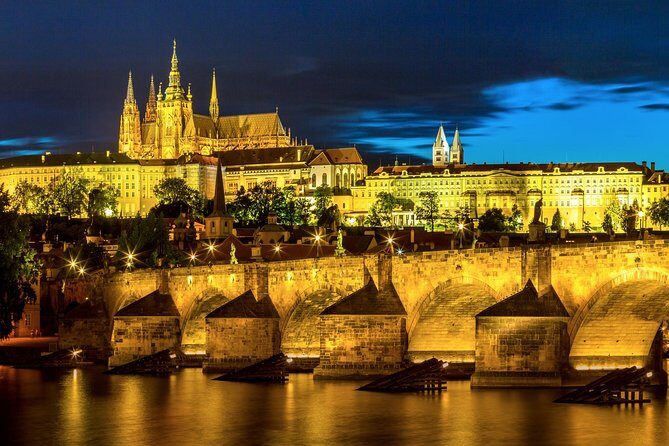
The first tranche is built around the 1900s and its most bloody events, from the Holocaust to the Prague Spring. Instead of treating this as a museum topic, the route places that story on the streets and buildings where it echoes.
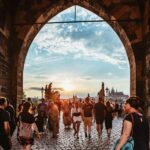
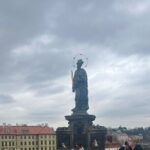
You start with Charles Bridge, where the tour begins by focusing on its history and the way Prague became a crossroads city. The time is short here (about 20 minutes), but the point is to get oriented early and learn how the bridge fits into the city’s larger identity.
Next is Republic Square, with the buildings and the Powder Tower area. The stop is also around 20 minutes. That’s a good length because you can stand back, look, and then move without getting stuck in the usual “photo line” rhythm.
From there you hit Municipal House Opava for Art Nouveau flourishes and the feeling of old prestige. The stop is only about 10 minutes, which signals a clear strategy: quick hits that deepen your understanding without dragging you off to one big-ticket stop.
Wenceslas Square to the Astronomical Clock: power, ideology, and time
The heart of the middle morning is Vaclavske NamEsti. This part goes from St. Wenceslas through communism and the Nazi period, including the mention of key headquarters in the area, plus the idea of “thousand courts” and galleries hiding in the sides. That’s the tour’s style in one sentence: Prague’s political layers are baked into the geography.
You get about 40 minutes here. For a stop of this scale, it’s enough time to step back and understand the “map” of the square, not just the monuments. It also gives you room to notice side passages and courtyards, which is exactly where the city hides its quieter stories.
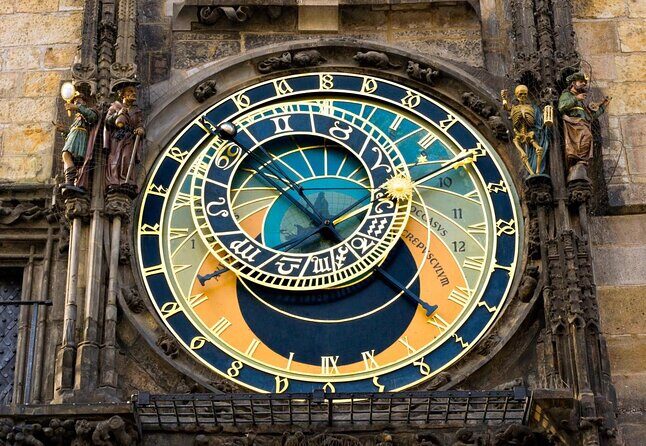
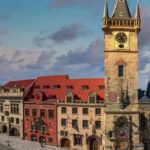
Then you move to the Old Town Hall with the Astronomical Clock. The tour keeps it to about 15 minutes, but this is one of those moments where time itself becomes the theme. You’re not lingering like you would inside a full museum visit; instead, you’re using the clock to frame how Prague built identity through symbolism.
This morning arc ends with a shift toward deeper cultural context. The tour description specifically points toward Jewish culture afterward, from rules to cuisine. Even if you are not entering everything, you’re being guided to understand how the quarter’s identity formed.
Prague Castle courtyards and the changing of the guard
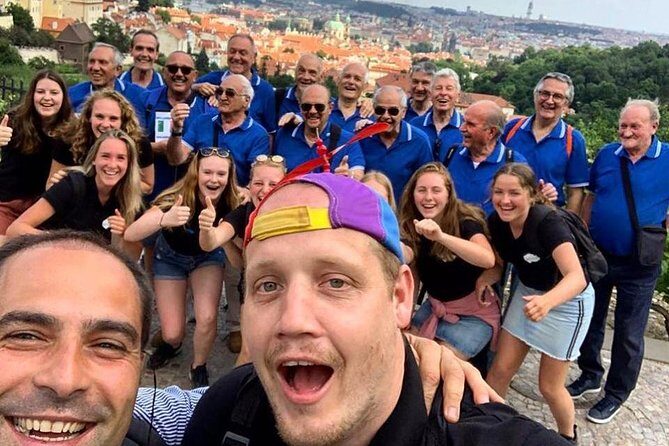
After the history-heavy stretch, you start moving up the hill. The tour notes that the castle requires a tram ticket to go up the castle hill, and that it is not included. So plan for either walking time or extra transit time on your own.
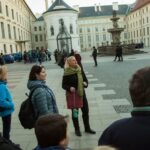
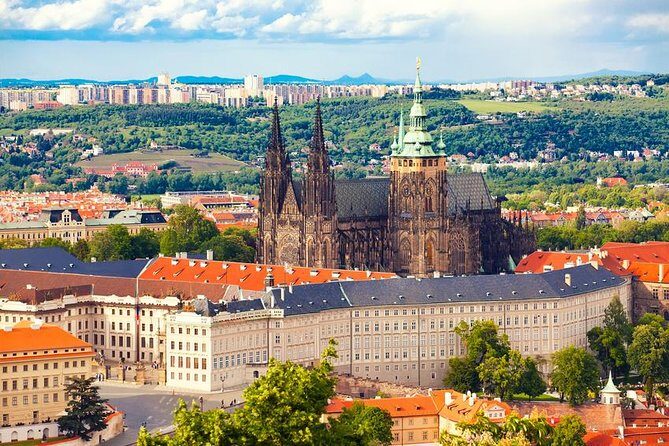
At Prague Castle, you see the first free part of the cathedral of San Vito and the first two courtyards, plus the changing of the guard. The stop is around 30 minutes. It’s not a full ticketed castle day, so manage expectations: you’ll get a classic courtyard introduction and that sense of ceremony, not every chapel and museum.
Still, I think this works well for most first-timers. Prague Castle can eat up a whole day if you’re not careful. Here, you get a structured taste and then you keep moving while the city is still fresh in your mind.
A key detail: during the Christmas period and the Easter period, the tour states there is no access to Prague Castle (free), and other places are included instead. If your dates land in those windows, confirm the substitute plan so you do not show up expecting the same castle portion.
St. James Church legend and the quieter power of interiors
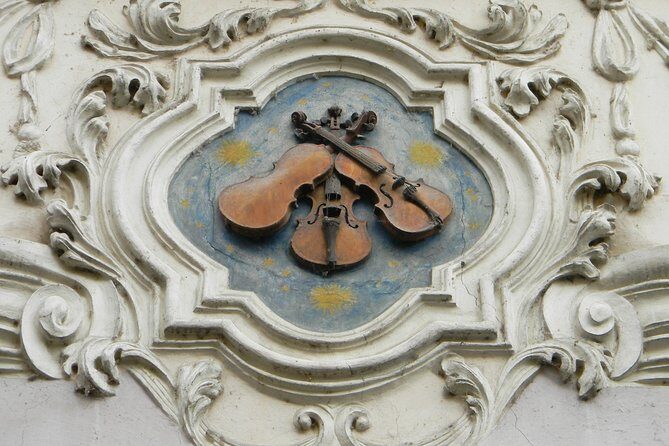
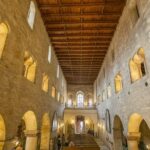
Next is Church of St. James, described through the interior of the basil of San Giacomo and its legend. The stop is about 10 minutes. That short window can be ideal for a place like this, because you can focus on the main interior elements without rushing through your own thoughts.
I like these brief interior stops because they give your eyes a rest from street-level motion. When you come from the bright openness of squares and bridges, a compact interior moment resets your attention.



Lennon Wall, Nerudova, and Celetna: legends you can walk through
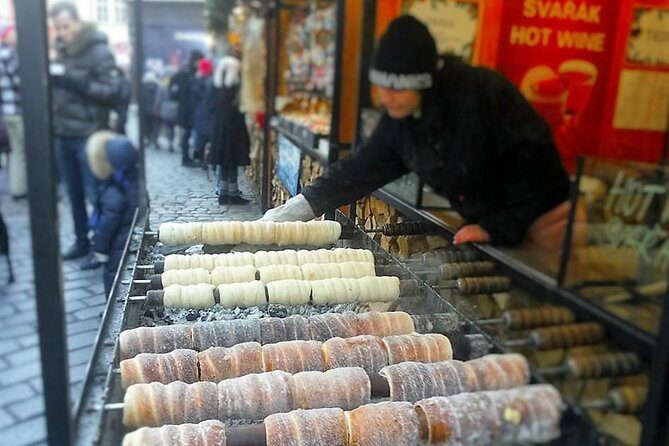
Then the route takes you to Lennonova zed, the John Lennon Wall, including its history and “bloody events.” The time is around 10 minutes. Even without going deep into a formal exhibition, the wall is one of those Prague places that turns politics into something human and visible.
From there you walk to Nerudova, one of the city’s beautiful streets in the route’s wording. You get about 15 minutes. This is the kind of stop where you want slower steps, because the street itself is the attraction: angles, stairways, and the way the hill feels different here than down in the river-level neighborhoods.
Next is Celetna Street, described as the Imperial Way, with about 15 minutes. This stop helps connect Prague’s big power themes with the street fabric. You start to feel how the city’s “important routes” were not just roads, but corridors of influence.
Strahov Monastery Brewery and Kampa’s Courtyard Views
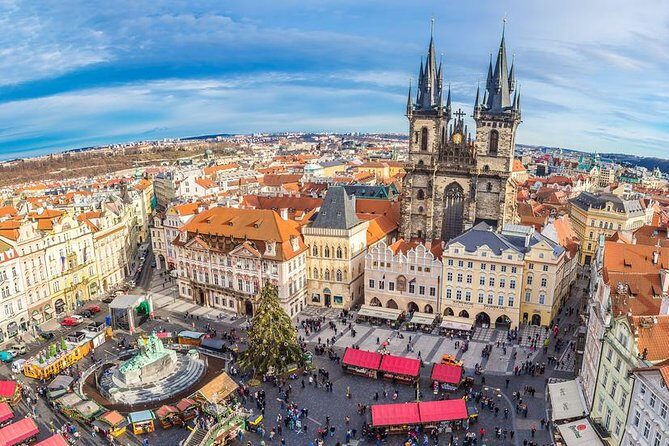
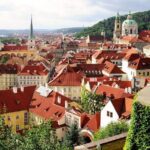
One of the best “reward” moments is Strahov Monastery Brewery. The description calls it the most beautiful monastery in Prague, with a fantastic courtyard and the Grand Panorama of the city. The stop is around 15 minutes.
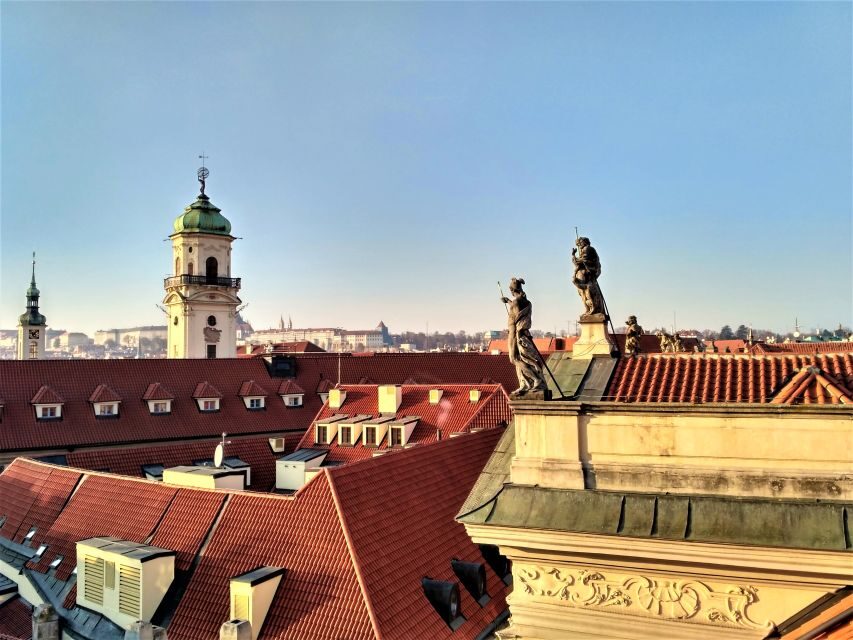
Even if you are not a big monastery person, the panorama angle is the practical reason to care. This is when Prague’s sprawl and layered rooftops become understandable in a single glance. It’s the stop where the city stops being a list and becomes a picture in your head.
After that, you go to Kampa Park, the island of Kampa and the Knights of Malta connection. This stop is about 15 minutes and works as a calm contrast. You’re moving away from the ceremonial hill energy and into a more relaxed, riverside-feeling corner.
Lesser Town alleys and the National Theatre pause
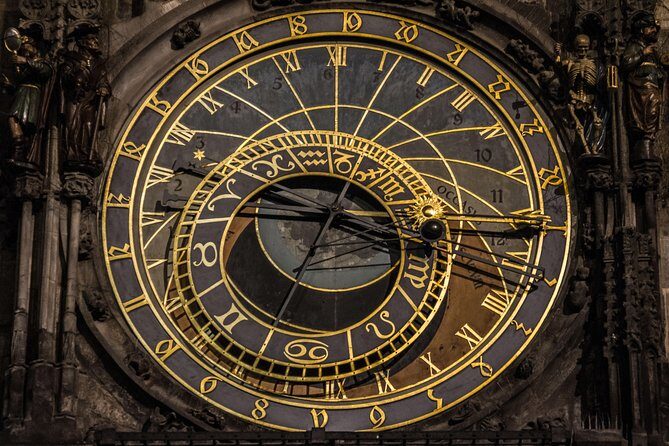
Then comes Lesser Town (Mala strange), with about 50 minutes. That’s a lot of time compared to the earlier stops, and I think it’s intentional. Lesser Town is where Prague feels most intimate: smaller passages, turns that surprise you, and alleys that feel like they were made for getting slightly lost.
The tour frames it as hidden alleys, and that’s exactly why it takes longer. You’re meant to wander within a guided structure, so you still end up where you should, but you don’t just march.
After that, there’s a short stop at the National Theatre, around 10 minutes. In a route that mixes heavy history and symbolic locations, this is a good reset. Even if you only spend a little time, the theatre helps show another side of Prague: art and identity.
Jewish Museum exterior and Spanish Synagogue exterior: what you will see
The itinerary finishes its cultural arc with the Jewish Quarter area, but with a specific limitation. You will not enter the synagogues or the Jewish cemetery; the tour states these are external only.
You start at the Jewish Museum in Prague for about 40 minutes, described as the exterior of the Prague cemetery. Then you continue to the Spanish Synagogue, also listed as external-only, with the synagogues of the Jewish quarter.
This is the main “consideration” you should weigh before booking. If your goal is to go inside and spend time with the interiors and exhibitions, this format will feel too light. But if your goal is to understand where the Jewish quarter sits in the city story, and you like to connect landmarks to broader themes, external viewing can still be powerful when paired with a guided narrative.
It also fits the tour’s overall style. Instead of splitting time into separate ticketed attractions, the tour keeps you moving through the quarter’s geographic and historical context in a single run.
How the route actually saves you time (and confusion)
A big part of value here is that the tour is organized to keep you from bouncing around on your own. Prague’s Old Town and hill areas can feel like two different worlds, and you can easily waste hours just figuring out where to go next.
This itinerary makes a clear promise: historic courtyards and galleries plus hidden non-touristic places. That’s not just wording. It changes your day. You spend less time circling big squares and more time moving through the city in smaller steps that feel more “Prague” and less “checklist.”
The mobile ticket also helps smooth things out. For a walking tour with multiple short stops, anything that reduces paper handling is welcome.
On price, the tour is listed at $234.61 per group up to 10. If you fill the whole group, it can work out to roughly $23 per person. Real life is often not that neat, but even if the group is smaller, a private-group structure can still be a good deal compared with paying per person for a long day of guided walking.
Practical tips: the castle hill, the phone rule, and good shoes
This is a walking tour with a hill component. The tour explicitly notes no tram ticket to go up the castle hill. If you dislike hills, plan your energy accordingly or be ready to take a tram on your own schedule.
Wear shoes you trust. You’ll be moving across bridges, squares, streets like Nerudova and Celetna, and the transition from old streets up toward Prague Castle and Lesser Town.
One fun-but-real detail: the tour is listed as not for cell phone addicts, and you can’t take back and record explanations. That means you’ll get more from the experience if you treat your phone as a navigation tool, not a constant camera/scroll device.
Finally, it requires good weather. If conditions are poor, expect changes or a refund option according to the tour terms. Prague in bad weather can turn a walk uncomfortable fast, especially when you’re doing multiple outdoor stops.
Who this tour is for
I think this works best if you want a first solid day in Prague that mixes landmark recognition with story-based context. If you like history but also enjoy legends, you’ll probably find the “between history and curiosities” approach satisfying.
It’s also a good fit for people who like guided wandering. Lesser Town takes enough time to feel like a real stroll, not a forced march.
If your top priority is museum-style entry tickets inside every major building, you might feel limited. The Castle is partial (free areas and courtyards), and the Jewish sites are external-only. You’ll need to add separate tickets if that is your style.
Should you book this Grand Tour of Prague?
Book it if you want a structured but conversational day that connects Old Town, the 1900s layers of Prague, and the hill views without overloading your schedule with full ticket lines. The guide quality is a clear strength here, and my experience with Alessandro matched that promise of being prepared and easy to ask questions with.
Skip or plan extra visits if Jewish interior access or full castle museum exploration is a must for you. This tour is designed for walking, context, and memorable place-to-place storytelling, not for deep entry-by-entry sightseeing.
If your dates fall in the Christmas or Easter period, double-check the castle access change so your expectations match the actual route you will take.
FAQ
How long is the Grand Tour of Prague?
It lasts about 6 hours.
What is the group size?
It’s a private tour for your group, with up to 10 people.
Where does the tour start and end?
It starts at MuzeumNew Town, Prague 1, and ends above Charles Bridge (Karlův most, Praha 1-Staré Město).
Is pickup included?
Pickup is offered.
Is the tour ticket mobile?
Yes, it uses a mobile ticket.
Are entrances to the synagogues and Jewish cemetery included?
No. You’ll only see those places from the outside.
Do you get access to Prague Castle?
Yes, you visit the first free part of the cathedral of San Vito and the first two courtyards, plus changing of the guard. During Christmas and Easter periods, Prague Castle access (free) is not available.
Do I need a tram ticket for the castle hill?
Yes, the tram ticket to go up the castle hill is not included.
What language is the tour?
The experience is marked NO ENGLISH, so you should confirm the language before booking.
What should I do if the weather is bad?
The experience requires good weather. If it’s canceled due to poor weather, you are offered a different date or a full refund.