REVIEW · PRAGUE
Highlights of Prague with a Funny and Local Guide
Book on Viator →Bookable on Viator
Prague gets fun when the guide tells the story. This tour mixes funny, local explanations with a tight walk through Prague’s most photographed corners. I really liked the pace, because you hit the big landmarks without feeling herded, and you also get little context that makes the streets make sense. One thing to consider: it’s a walking-heavy route, so comfortable shoes matter, and crowds at Old Town Square and Charles Bridge can slow things down.
I also like how the itinerary balances classic icons with stop-and-look architecture that you might miss on your own. The rooftop-view option at the Dancing House is a great add-on if you want one memorable skyline moment. If you’re hoping for sit-down museums the whole time, this is more about streets, façades, viewpoints, and city storytelling than indoor time.
In This Review
- Key Highlights You’ll Actually Feel
- How This Prague Route Stays Fun (Not Just Checklists)
- Where You Start: Náměstí Republiky to Powder Tower
- The Old Town Swing: Municipal House to Astronomical Clock
- Charles Bridge: The View Is Great, the Crowd Is Real
- Beyond the Postcards: National Theatre and the Dancing House
- Nové Město Squares: Karlovo náměstí and Václavské náměstí
- National Museum and the Street That Feels Like Two Cities
- Franciscan Garden: Your Reset Button in the Middle of the City
- The Optional 5-Hour Prague Castle Version
- Price and What You’re Really Buying
- Who Should Book This Tour (And Who Might Skip It)
- Final Thought: Should You Book?
- FAQ
- How long is the Highlights of Prague tour?
- Where does the tour start and end?
- Is pickup available?
- What sights are included in the main route?
- Is Prague Castle included?
- What’s included in the tour price?
- Are food and drinks included?
Key Highlights You’ll Actually Feel
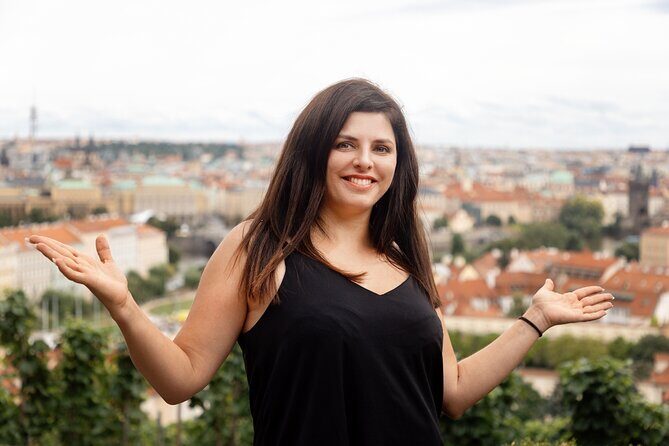
- A funny local guide who keeps the mood light while still explaining what you’re seeing
- Old Town + Charles Bridge in one continuous flow, with stops that clarify the city layout
- Architecture variety from Gothic and Art Nouveau to cubist design and modern curves
- A peaceful pause at the Franciscan Garden to reset before the next square
- Optional rooftop drinks at the Dancing House (from 5 EUR) for skyline time
- A longer 5-hour Prague Castle option with major sites listed, and admission handled separately
How This Prague Route Stays Fun (Not Just Checklists)
Prague can feel like a movie set. It also can feel like standing in line while someone points. This tour tries to do something better: you walk a smart route and the guide explains what’s going on in a way that’s easy to remember.
The tone is a big part of it. The tour is marketed as funny and local, and the guide style that comes through is quick-witted, high-energy, and story-driven. One guide name that shows up repeatedly in past experiences is Yulia—and the common thread is that she uses humor to keep you engaged while still giving practical, specific details about what you’re looking at. If you can request a specific guide in your booking flow, it’s worth asking.
The second reason I’d do it: you get structure. The itinerary doesn’t jump randomly. It strings together neighborhoods and landmarks so the city starts to feel like a map, not a pile of postcards. That matters most on a first visit, when Prague’s streets can still look like a maze.
The drawback is straightforward: expect walking. You’ll cover a lot of ground across Old Town and into Nové Město and then circle back toward central streets. If your knees are cranky or you’re traveling with limited mobility, plan on slower pacing and take breaks when you can.
You can also read our reviews of more guided tours in Prague


Where You Start: Náměstí Republiky to Powder Tower
Most tours in Prague start at a famous landmark. This one starts at Náměstí Republiky (Republic Square) in Nové Město. That’s useful. It’s central enough that pickup options can work, and it sets you up for an Old Town connection without wasting time.
The meeting point is clearly set, and there’s a practical pickup approach: you can meet at the meeting point or request pickup if you’re staying central. If you’re near the center, this kind of flexibility saves you the hassle of finding the group in a sea of tourists.
From there, the first major stop is the Powder Tower (Prašná brána). It’s Gothic, and it used to serve as a gunpowder store. That one detail changes how you look at it. You’re not just noticing a dramatic tower; you’re seeing a piece of city defense and logistics. It helps you understand why Prague’s entrances and boundary structures mattered.
If the tour begins at a time when Prague is busy (late morning and early afternoon are common), you may share space with groups heading for photos. You’ll still move through it quickly, but don’t expect a totally empty tower moment.
The Old Town Swing: Municipal House to Astronomical Clock
Right after Powder Tower, you head toward the Municipal House (Obecní dům), one of Prague’s standout Art Nouveau buildings. Even if you’re not an architecture nerd, you’ll feel the shift. This is a showpiece—made for public life, and still used today for concerts, exhibitions, and events.
Art Nouveau in Prague often looks like it’s in motion: ornament, curves, and a sense of drama in the design. On your own, it’s easy to glance up for five seconds and move on. With a guide, you’re more likely to notice the specific visual cues that make it feel different from nearby older styles.
Then you’ll get a walk past the main buildings and sights, plus context about what each part is famous for. This is where the tour earns its value. You’re not just touring; you’re learning how Prague’s neighborhoods relate to each other and why certain streets became the natural routes.
The next notable stop is the Black Madonna House (Dum U Cerné Matky Boží). This one is easy to spot thanks to its vibrant cubist design—almost like it arrived later than the surrounding Gothic and Baroque structures. When you see it in person, it’s a reminder that Prague isn’t frozen in time. It has layers, and sometimes those layers clash in a good way.
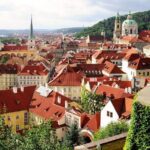
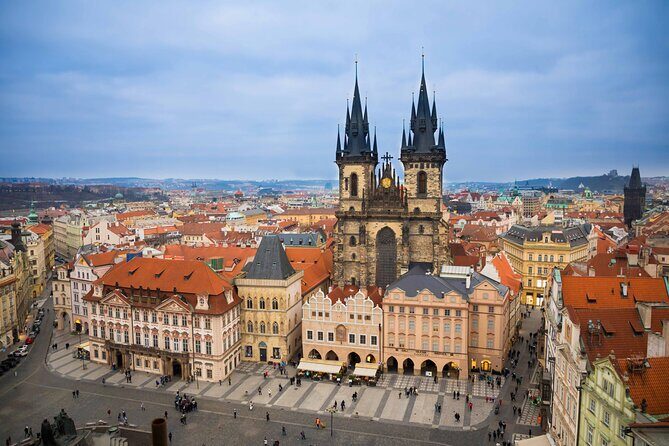
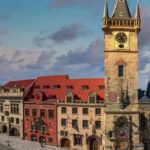
Then you hit Old Town Square (Staroměstské náměstí), with the Astronomical Clock as the headline. Even if you’ve seen the clock in photos, standing there changes things. The square is ringed by colorful buildings, and the whole space feels built for watching and waiting.
What a good guide does here is manage the crowd rhythm. You’ll spend time in the right places, and you’ll get explanations that help the clock feel less like a gimmick and more like a historical statement about time, knowledge, and public life.
Charles Bridge: The View Is Great, the Crowd Is Real
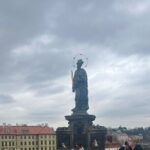
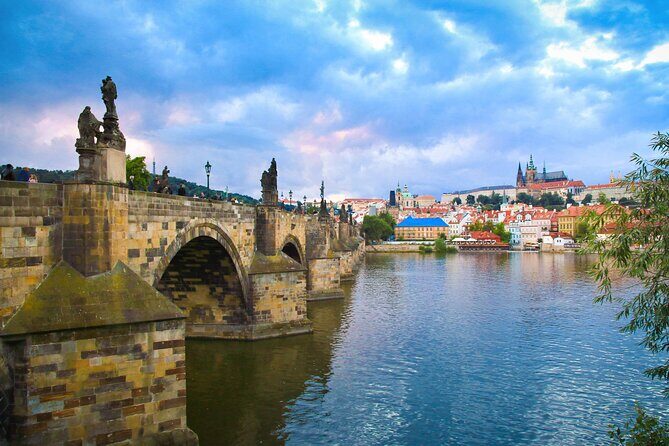
From Old Town, you go to Charles Bridge (Karlův most), the iconic 14th-century bridge lined with statues and straddling the Vltava River. The views are the obvious reason to go. The river angle plus the bridge statues makes Prague look like it’s been staged for centuries.
The other reason to include Charles Bridge in a guided route: timing and order. You’ll want to know where to stand for good sightlines and how to move when it gets crowded. You can’t control the crowds, but you can avoid wasting time backtracking.
If you’re sensitive to crowds, consider this practical move: spend a few minutes longer than you think at the start of your bridge walk, not in the middle where it bottlenecks. The guide flow generally helps you do that, and it makes the experience feel calmer.
And yes, you’ll get that classic Prague water-and-stone feeling—especially if the light is right. Even on cloudy days, the contrast between the river and the statues can be striking.
Beyond the Postcards: National Theatre and the Dancing House
Next up is National Theatre (Národní divadlo), a historic theatre known for opera, ballet, and drama. It’s one of those Prague buildings that feels more meaningful when you understand what it represents: a major cultural institution, not just a pretty façade.
If you like theatre culture, you’ll appreciate the way this stop gives the city personality beyond architecture. Prague isn’t only old buildings and bridges. It also has performance energy, and the National Theatre is one of the big markers of that.
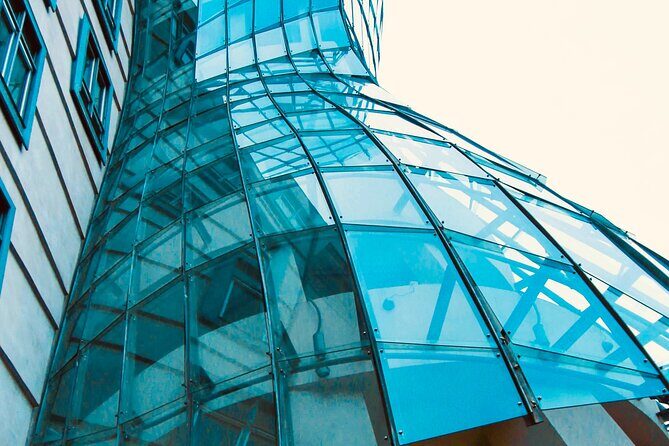
Then you reach the Dancing House (Tančící dům), also known as the Fred and Ginger Building. This is where the tour proves it has range. The building is modern and playful in design compared to the older stone around it.
You may also have a chance to visit the rooftop bar for panoramic views of the city. Drinks are not included, and the cost starts from 5 EUR. Even if you skip the bar, the Dancing House area is a great “pause and look” moment because it gives you that modern-Prague contrast in one step.
A small practical note: if you’re doing this in colder weather, rooftop time can be brief. If you want the view but not the chill, go for a short stop and let the guide keep the pacing.




Nové Město Squares: Karlovo náměstí and Václavské náměstí
After the river-and-theatre stretch, the tour continues into Nové Město, which is central and busy with both locals and visitors. This part helps you see how Prague works as a living city, not only a historic museum.
Two important squares follow:
Charles Square (Karlovo náměstí): This is the largest square in the New Town and is surrounded by architectural gems and key institutions. On a guided walk, you’ll notice how the square functions as a gathering point, not just a photo spot.
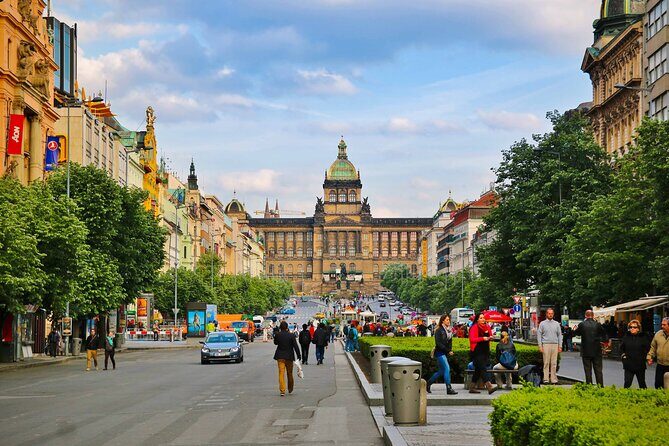
Wenceslas Square (Václavské náměstí): Think shopping, dining, and cultural attractions along a long boulevard. The guide framing matters here. On your own, it can feel like a street with stores. With context, it becomes a story about Prague’s public life and energy across eras.
If you’re the type who likes to connect architecture and daily life, these stops deliver. If you prefer quieter streets, don’t worry—you still get calm later with the garden.
National Museum and the Street That Feels Like Two Cities
Next is the National Museum (Národní muzeum), a grand Neo-Renaissance building with an extensive collection of art and historical artifacts. The exterior alone is enough to register as a big cultural signal, even if your time today is focused more on walking than museum time.
From there, you’ll shift to the street-level feeling of central Prague with Na Příkopě, a street that blends Prague’s historic character with a more cosmopolitan vibe. It’s the kind of place where you can imagine everyday city life: people moving, shops running, and locals popping in and out.
This stop also acts like a buffer. It breaks up the intensity of major landmarks so the later quieter moment feels earned, not rushed.
Franciscan Garden: Your Reset Button in the Middle of the City
Not every Prague tour includes a peaceful break. Here, you get the Franciscan Garden, described as a hidden-yet-accessible retreat in the heart of Prague. It’s a calmer pocket with a beautiful backdrop for leisurely strolling, picnics, or just quiet contemplation.
This is a smart design choice for a 3 to 6 hour walk. You burn time on open squares and bridges, and then the garden lets your brain reset. You also get different photos: green, stone textures, and softer angles compared to the crowded panorama zones.
If you’re traveling with kids or you have anyone in the group who gets restless, this garden stop is often the difference between a tour that feels fun and one that feels like work. Use it. Slow down. Let the guide’s pace rest you.
The Optional 5-Hour Prague Castle Version
If you select the 5-hour tour, the itinerary expands to Prague Castle and includes major sites. You’ll move through:
- Strahov Monastery
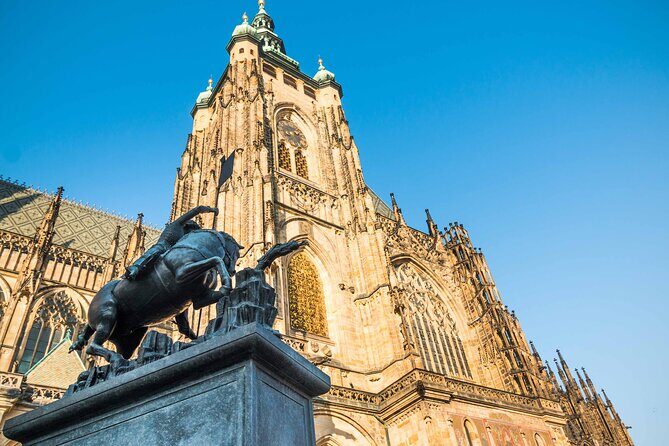
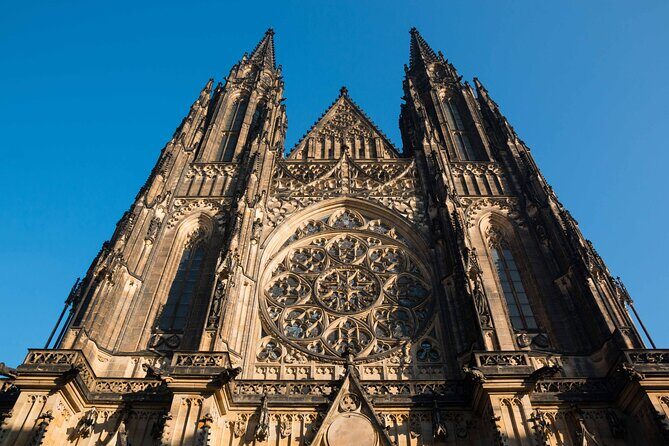
- St. Vitus Cathedral
- Old Royal Palace
- Golden Lane
- Royal Gardens
The time is clearly stated as 3 hours for the castle segment, and importantly, admission tickets are not included. That matters for your budget and your planning. If you’re going to choose this option, budget for entry costs and plan for a bit more time even within the walking structure.
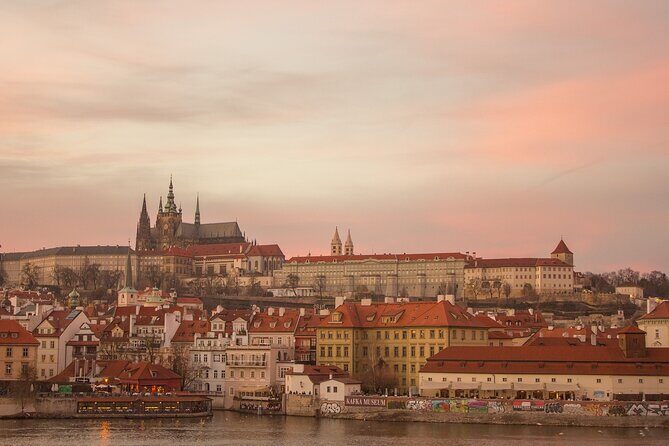
Prague Castle is its own world—big, hilly, and full of details. A guided route here can help a lot, because you’ll need help deciding what’s worth your attention inside such a large complex.
One caution: this is not the best option if you want a short and easy afternoon. The 5-hour version works best when you’re ready for a full day orbit through Prague’s most famous heights.
Price and What You’re Really Buying
The price is $72.01 per person, with a duration of roughly 3 to 6 hours. On paper, that might look like a lot compared to a DIY walk. In practice, the value comes from three things you can’t easily replicate on your own:
First, you’re paying for story + structure. A funny local guide doesn’t just point. The best part of this kind of tour is understanding why a building exists, what a square meant, and why certain routes became key.
Second, you’re covering a lot of distance across multiple neighborhoods. That’s time saved. Even if you’re a strong walker, moving efficiently through Prague takes effort, especially with crowds.
Third, you’re getting a modern touch. Rooftop views at the Dancing House and time at Na Příkopě add variety beyond the usual old-city photo loop.
What’s not included: food and drinks, and any admission tickets tied to the Prague Castle version. If you want drinks at the rooftop bar, they start from 5 EUR. If you want local food, your guide can point you in useful directions, but you should still plan on paying for meals yourself.
Practical tip for value: if you’re doing Prague for the first time, this tour helps you prioritize. You’ll get enough context to decide what to return to afterward on your own.
Who Should Book This Tour (And Who Might Skip It)
This tour fits best if you want:
- A first-time Prague orientation that still feels fun
- A guide-led route mixing famous landmarks with architectural surprises
- A walking tour where humor is part of the pacing
- A balance of major sights and a calmer reset at Franciscan Garden
You might consider skipping or switching if:
- You prefer long museum time over walking
- You hate crowds and want mostly quiet streets
- You expect food or drinks to be included automatically
If you’re traveling with a small group, the private format is a real advantage. You can move at a pace that works for you, and the guide can adjust while keeping the route logical.
Final Thought: Should You Book?
Yes, I’d book this if you want an organized, entertaining way to see the core of Prague without turning it into a frantic checklist. The strongest reason is the combination of comedy-style city storytelling and a route that connects Old Town landmarks with the New Town energy, plus a breather at Franciscan Garden.
Do it especially if you’re the kind of traveler who wants the city to make sense, not just look good in photos. And if you’re considering the 5-hour Prague Castle option, check your ticket budget for St. Vitus Cathedral and the rest of the castle-area admissions, since those aren’t included.
FAQ
How long is the Highlights of Prague tour?
It runs for about 3 to 6 hours, depending on which version you choose.
Where does the tour start and end?
It starts at Náměstí Republiky in Nové Město and ends back at the same meeting point.
Is pickup available?
Pickup is offered if you stay central, or you can meet near the Powder Tower at Náměstí Republiky 5.
What sights are included in the main route?
The route includes Powder Tower, Municipal House, Black Madonna House, Old Town Square (with the Astronomical Clock), Charles Bridge, National Theatre, Dancing House, Nové Město highlights like Charles Square and Wenceslas Square, plus National Museum, Franciscan Garden, and Na Příkopě.
Is Prague Castle included?
Prague Castle is included only on the 5-hour version, with Strahov Monastery, St. Vitus Cathedral, Old Royal Palace, Golden Lane, and Royal Gardens listed for that option. Admission tickets are not included.
What’s included in the tour price?
The tour includes guide service and is offered with a mobile ticket.
Are food and drinks included?
Food and drinks are not included. Drinks at the Dancing House rooftop bar cost from 5 EUR, and you should budget for any meals separately.