Prague’s Josefov neighborhood is easy to wander past or miss entirely. With a Jewish Quarter walking tour, you get the names, dates, and turning points that explain what you’re seeing, from medieval origins to the synagogue buildings you’ll encounter today. I especially like how the walk is built around real places instead of generic overviews, and how guides can translate the maze-like streets into a clear route you can follow without stress.
The main drawback is that timing and pacing can vary. Some tours run multilingual, some feel rushed, and a few entry stops may require extra tickets—so you’ll want to go in knowing what’s included and what isn’t.
In This Review
- Key Highlights That Matter on the Ground
- Josefov Is the Part of Prague You Feel More Than You Can Explain
- Meeting at Náměstí Republiky: How to Avoid the Start-of-Tour Chaos
- Jewish Museum in Prague: The Stop That Gives You the Context First
- Old Jewish Cemetery: Where the Names and the Legends Collide
- Synagogues and Maiselova Street: The Part You’ll Remember Long After Photos
- Kafka at Old Town Square: Why This Ending Works
- Guide Quality and Multilingual Group Issues: What to Watch For
- Price and Value: Is $50.04 Really Worth It?
- Who This Jewish Prague Walking Tour Suits (and Who Might Prefer DIY)
- Should You Book the Jewish Prague Walking Tour?
- FAQ
- How long is the Jewish Prague Walking Tour?
- Where is the meeting point?
- What time does the tour start?
- What’s included in the ticket price?
- Are museum and synagogue tickets included?
- How big is the group?
- Is the tour offered in English only?
- Is food or drink included?
- Can I cancel for a full refund?
- FAQ
- Does the tour end back at the meeting point?
- Is the meeting point near public transportation?
Key Highlights That Matter on the Ground
- Intimate small group (max 15) keeps the walk manageable and questions possible
- Old Jewish Cemetery: used from the 1400s to the 1700s, with about 12,000 visible graves
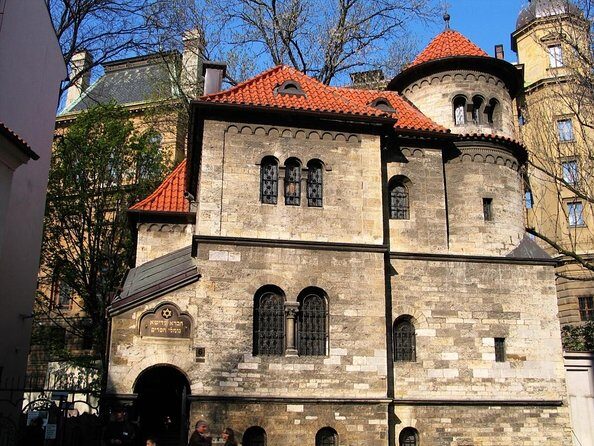
- Synagogue context beyond photos, including stops visitors often call out like the Spanish Synagogue
- Kafka connection at his birthplace area with a short exhibition-style stop
- Maiselova Street: a 19th-century street lined with townhouses that helps you orient inside Josefov
Josefov Is the Part of Prague You Feel More Than You Can Explain
Josefov is Prague’s Jewish Quarter, and it’s one of those districts where the street plan can confuse you fast. The good news: walking with a guide helps you read the neighborhood like a story. You’ll hear how the area’s origins stretch back more than 1,000 years, and you’ll understand why this compact space became one of Europe’s major centers of Jewish life.
I like that the tour doesn’t treat Josefov as a collection of postcard stops. Instead, it threads people, traditions, and local geography together—so when you reach a cemetery wall or step into a synagogue, you know what you’re looking at and why it matters. And because the tour ends back near where you started, you’re not left figuring out the way out while the day’s momentum carries you forward.
One more practical point: you’ll be standing and walking for long stretches. The tour lists moderate physical fitness as the expectation, which matches how it plays in real life—lots of short moves, plus time spent inside museums and at sacred sites.
You can also read our reviews of more walking tours in Prague



Meeting at Náměstí Republiky: How to Avoid the Start-of-Tour Chaos
Most visitors don’t arrive at Josefov already knowing where they’re going. That’s why the meeting point matters. You start at Náměstí Republiky 1037/3 in Prague 1, and the tour begins at 10:30 am. It’s near public transportation, which helps a lot—Prague is built for hopping between districts.
But here’s the thing: a few people have described trouble finding the exact spot at the start. My advice is simple: arrive early enough to settle your nerves. Give yourself at least 10–15 minutes, and use your phone’s map system offline if the signal gets spotty around busy stations.
Also note the tour length expectations. The experience is described as about 2 hours (approx.), but the route includes multiple museum and synagogue-style stops and is sometimes experienced closer to a longer walk. I’d plan for roughly 2 to 3 hours in practice, especially if the group moves at a cautious pace.
Jewish Museum in Prague: The Stop That Gives You the Context First
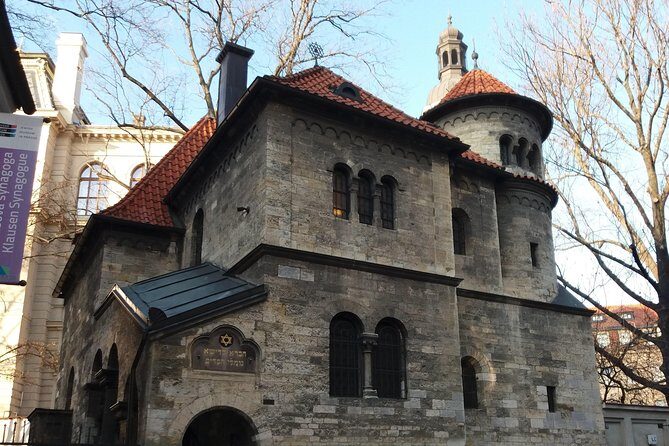
Your first major indoor stop is the Jewish Museum in Prague, a site founded in 1906 and often cited as one of the oldest and continuously existing Jewish museums in the world. The practical value of starting here is huge. You’re not just walking from building to building—you’re building a mental framework before your eyes start collecting details.
Inside, you’re set up to see collections that focus on how Jewish life was documented and how the Jewish community in the Czech lands changed over time. The tour description highlights maps, artifacts, and documents, which is exactly what you want if you’re trying to understand the neighborhood beyond architecture.
A key catch: museum entry is not included in the tour price. That’s common for major attractions, but it does affect value. If you’re the type who loves reading labels and looking slowly, budget extra time and consider going in with the mindset that you’ll pay the entry fee separately.
Old Jewish Cemetery: Where the Names and the Legends Collide
Then you move into the Old Jewish Cemetery, used from the 1400s to the 1700s. This is not a quick photo stop. The tour time shown is about 30 minutes, but the emotional impact can stretch that out—because you’re essentially walking through a dense record of lives.
One of the distinctive facts here is scale: around 12,000 visible graves. That number turns the cemetery from a single landmark into an entire landscape of memory. You’ll also hear about major figures buried there, including the 15th-century poet and scholar Avigdor Karo.
And yes, the golem story comes up for many groups. The tour materials connect the cemetery area to Rabbi Judah Loew ben Bezalel, known as Rabbi Löw, whose legend is associated with the golem. Whether you view the golem as folklore, spiritual metaphor, or both, it gives you a way to connect the neighborhood’s history to the kind of storytelling Prague is famous for.
Admission isn’t included for the cemetery either, so again: factor in ticket costs when you’re judging value.
Synagogues and Maiselova Street: The Part You’ll Remember Long After Photos
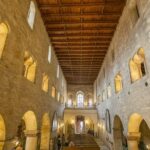
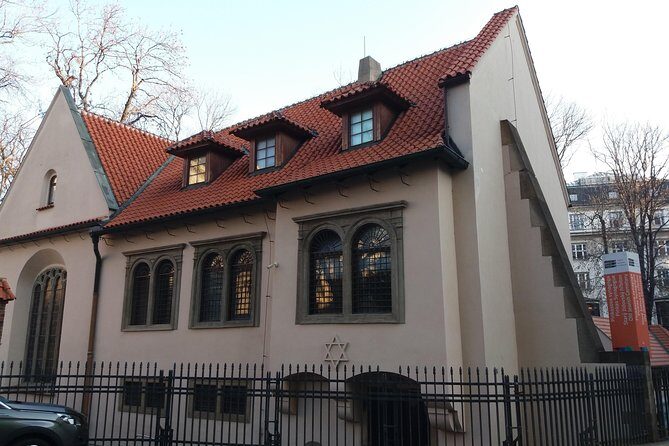
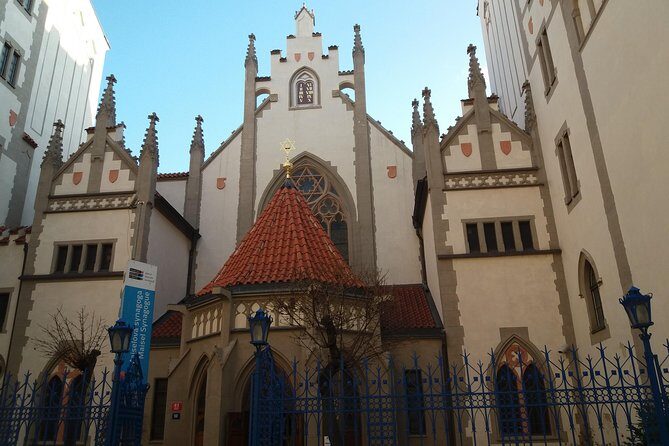
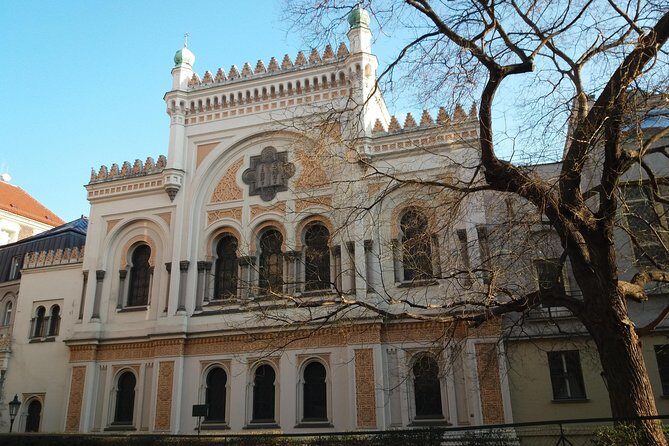
Josefov is famous for its synagogues, and this tour is structured around visiting some of the area’s six synagogues. In plain terms, that matters because synagogues are not all the same. Each one reflects a different slice of community life—its style, its priorities, and its symbolism.
From the experiences I’m working with here, people often call out the Spanish Synagogue as a highlight. Other stops may include a synagogue associated with the memorial of deaths, including accounts of the one that displays 180,000 names. That kind of stop can feel heavy, but it’s also where the tour stops being about buildings and becomes about people.
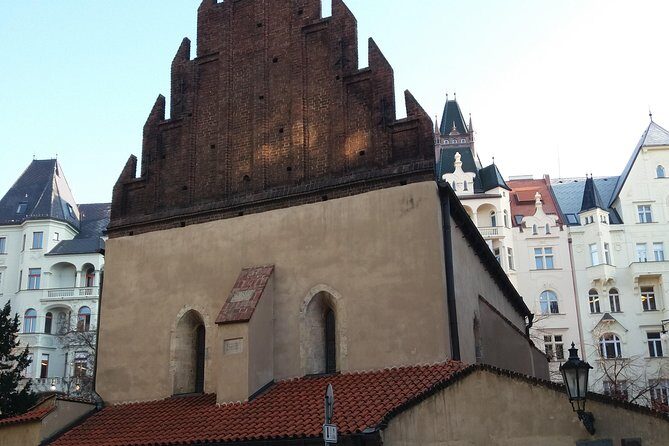
You should also know the tour may not include every major synagogue you might have in mind. Some people have said the Old-New Synagogue was not part of their group’s route, and others mentioned that the Jerusalem Synagogue is not included. If any specific synagogue is a must for your trip, check that in advance and plan a self-guided visit if needed.
Between synagogue stops, you’ll walk down Maiselova Street, one of Josefov’s two main thoroughfares, lined with 19th-century townhouses. I like this stretch because it helps you orient yourself. You can feel the transition from modern Prague street life into the older, more enclosed rhythm of the Jewish Quarter.




Kafka at Old Town Square: Why This Ending Works
The tour’s final set of stops loops you back to the broader Prague core. You’ll stop at the birthplace of Franz Kafka, with a small exhibition-style look at his short life and works. Kafka is a natural connector here. Even if you don’t know much about his writing going in, you’ll leave with a stronger sense of why Prague’s Jewish story echoes into literature and memory.
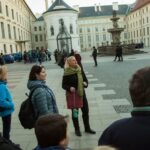
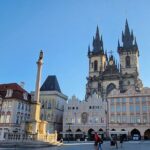
Then you arrive at Old Town Square, a place founded in the 12th century and packed with historic layers. You’ll get a chance to admire major landmarks around the square, including Týn Church, St. Nicholas Church, and the Astronomical clock.
The practical win: you finish near a major tourist hub. If you want to keep exploring after the tour, you’re in a place where options are plentiful and easy to reach.
Guide Quality and Multilingual Group Issues: What to Watch For
This kind of tour lives or dies on the guide. The overall format is strong—small group, focused route, real sites—but the details can shift based on how the group is run.
From the information you have here, the best version tends to be guided by someone with energy and good pacing. Multiple named guides appear in positive experiences, including Sophie, Sarah, Jana, Camilla, and Ludmilla. The common thread in those good sessions is not just facts—it’s the ability to keep the group moving while still answering questions and giving you human-scale context.
The weak version is more predictable: multilingual or mixed-language commentary can slow everything down. Several people described tours where English was interwoven with other languages, cutting into time and forcing the English-speaking portion of the group to wait. There are also mentions of rushed pacing and skipping details when the guide was late or handling logistics.
My advice before you book is to decide what you want most:
- If you want structure and a curated route, this can work very well.
- If you hate waiting or you’re sensitive to time, consider that bilingual/multilingual pacing can happen on the ground even if the tour is marketed as English.
If you’re picky about storytelling, ask yourself one question: do you want facts and location context, or do you want a slow, reflective pace? This tour can deliver either—depending on the day.
Price and Value: Is $50.04 Really Worth It?
$50.04 per person sounds straightforward until you look at what’s included. You do get a professional guide, and you get a route that prevents you from wandering in circles through streets you might find confusing. In a neighborhood like Josefov, that alone can be worth real money—especially when you’re trying to connect the cemeteries and synagogues to a coherent storyline.
But tickets are not included for key stops. The tour specifically lists no included admission for:
- the Jewish Museum
- the Old Jewish Cemetery
And synagogue entry can involve additional ticketing depending on what your group actually visits.
So the value equation becomes personal:
- If you were going to buy museum and cemetery tickets anyway, a guided route can be a bargain.
- If you mainly wanted a quick hit of exterior views, you might feel like the money doesn’t stretch far.
Also, your own patience matters. A few people described the tour as rushed or delayed at the start, and others said some stops felt brief. That can reduce perceived value fast. On the other hand, visitors who liked their guide often describe it as one of the best tours in Prague because the guide made the sites click.
Who This Jewish Prague Walking Tour Suits (and Who Might Prefer DIY)
This tour fits best if you:
- enjoy learning while walking and hate trying to piece together Josefov alone
- want a guided explanation of why each site exists and what it represents
- like structured group outings with a cap of 15 travelers, so the walk doesn’t feel chaotic
It may be less satisfying if you:
- want an English-only experience with zero waiting (multilingual group realities can affect pacing)
- have a strict must-see list of specific synagogues that you don’t want compromised
- dislike ticketed attractions because multiple sites aren’t included
If your priority is total freedom, you can absolutely DIY Josefov. But the value of this tour is that it turns an area that can feel confusing into a sequence you understand.
Should You Book the Jewish Prague Walking Tour?
Book it if you want a focused Josefov route, you’re okay paying separate site admissions, and you like learning from a guide rather than reading everything solo. The small group size and the mix of cemetery, museum context, and synagogue stops are a strong combo—especially if you get a guide who keeps the pace human and answers questions well.
Skip or rethink it if you’re extremely time-sensitive, hate multilingual pacing, or only care about one or two very specific synagogues. In those cases, you may be happier planning your own route and booking separate timed entries where you have full control.
If you do book, go in prepared: arrive early for the meeting spot, wear comfortable shoes, and bring your patience for a route that may feel longer than the headline duration.
FAQ
How long is the Jewish Prague Walking Tour?
It runs for about 2 hours (approx.). The walking route includes multiple indoor stops, so plan for a session closer to a longer walk on the ground.
Where is the meeting point?
The tour meets at Náměstí Republiky 1037/3, 110 00 Praha 1-Nové Město.
What time does the tour start?
The start time is 10:30 am.
What’s included in the ticket price?
A professional guide is included.
Are museum and synagogue tickets included?
No. Jewish Museum admission and Old Jewish Cemetery admission are listed as not included, and synagogue visits may involve additional ticketing depending on what’s included in your group’s route.
How big is the group?
The tour has a maximum of 15 travelers.
Is the tour offered in English only?
It’s offered in English, but some group experiences include more than one language during the tour, which can affect pacing.
Is food or drink included?
No. Food and drinks are not included.
Can I cancel for a full refund?
Yes. You can cancel up to 24 hours in advance for a full refund.
FAQ
Does the tour end back at the meeting point?
Yes. The activity ends back at the meeting point.
Is the meeting point near public transportation?
Yes, it’s described as near public transportation.