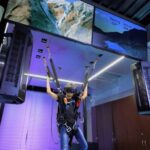
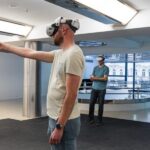
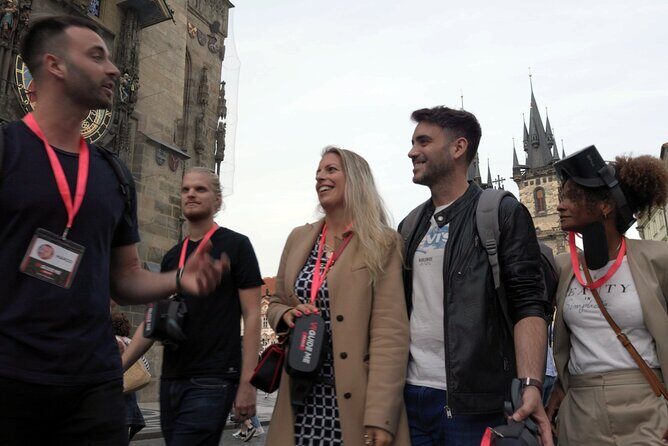
This Prague VR city tour uses virtual reality glasses to show what the Old Square looked like in 1900, plus you’ll get VR moments tied to big local stories. I also like the small-group setup (max 15 people), which means you’re not stuck listening from the back row—you have time to ask Marco questions and keep things moving at a human pace.
One heads-up: the tour depends on good weather, so if conditions are rough, plans can shift or be refunded.
In This Review
- A tight route that still feels like a journey
- Key things to know before you go
- The value: what you pay for (and why it feels worth it)
- Start at Panská and get oriented fast
- Old Square in 1900: VR that makes the stones make sense
- The astronomical clock story you’ll actually remember
- National Museum views and the Prague Spring moment
- Gothic and Baroque church: height, beauty, and an easy focus
- Kafka’s Head and modern art right in the middle of Old Town
- Old Town Hall: the surprise you’re meant to notice
- The butcher of Prague question: paratroopers hiding nearby
- Castle views and the Dancing House finish
- What Marco’s guide style likely means for you
- Languages and audio support: how communication is handled
- How much walking you should expect
- Who should book this VR city tour
- Should you book? My practical take
- FAQ
- How long is the Prague City Tour with Virtual Reality?
- What time does the tour start, and where does it finish?
- Where do we meet the guide?
- Is the tour offered in English?
- Can I use the VR glasses if I wear prescription lenses?
- Is there free cancellation?
A tight route that still feels like a journey
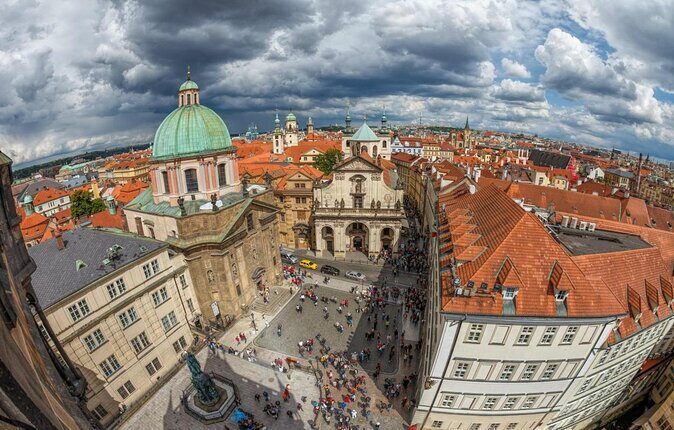
You start near Panská and the Old Town area, then wind through famous sights like the astronomical clock and Kafka’s Head, with a final finish at the Dancing House. It’s a smart way to walk, learn, and still keep your day schedule from turning into a full half-day grind.
Key things to know before you go
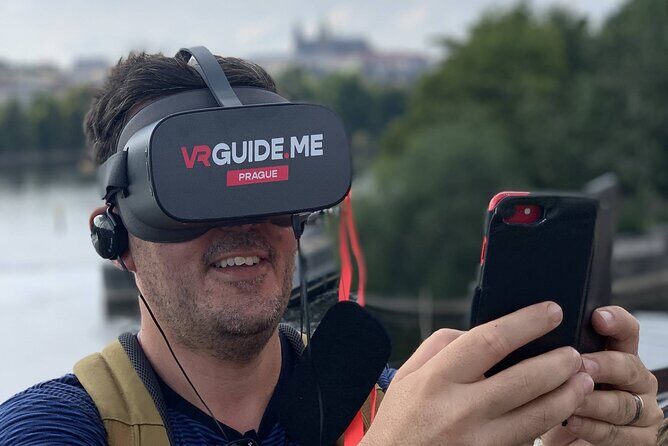
- Virtual reality at multiple stops: you’ll use VR glasses more than once, not just at one photo-op moment
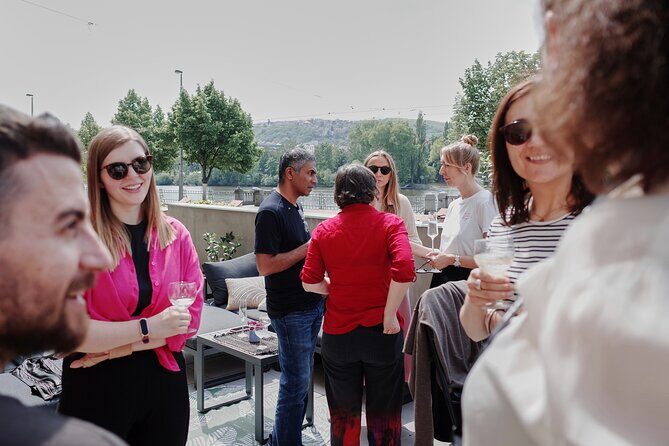
- Small group size: up to 15 travelers, so questions and pacing feel natural
- A guided story, not a script: expect explanations that connect landmarks to what happened in different periods
- English-led tour with audio support: the experience is offered in English, and audio guides exist in multiple European languages
- Old Town to modern Prague: you end at the Dancing House after mixing Gothic, Baroque, and modern art stops
- Weather matters: this one needs decent conditions to run as planned
You can also read our reviews of more city tours in Prague

The value: what you pay for (and why it feels worth it)
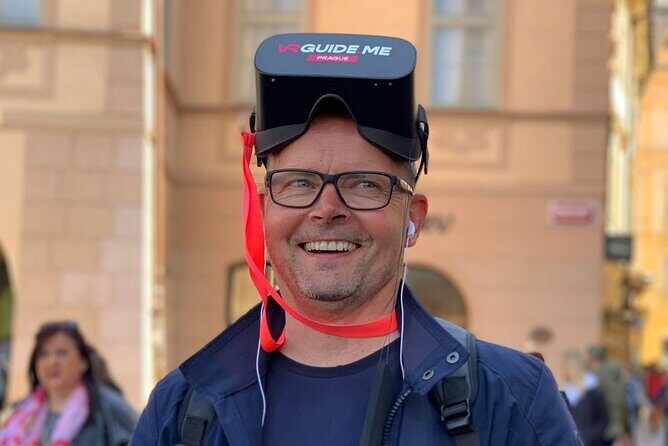
At $43.14 per person for about 2 hours, you’re not just buying a walk and a few sentences at each stop. You’re paying for two things that are hard to replicate on your own: guided context and virtual reality glasses timed to specific places.
Prague can feel like it’s all monuments piled on top of each other. This tour gives you a structure, so you’re not wandering through crowds trying to connect a clock tower to Prague Spring or to the city’s later 20th-century stories. With a small group, the guide can slow down when you’re curious.
And the ending matters. Finishing at the Dancing House means you get a modern punctuation mark at the end, rather than turning around and walking back through the same streets.
Start at Panská and get oriented fast
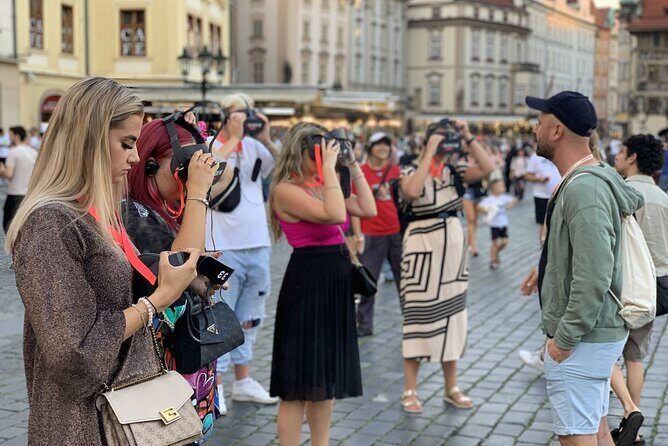
The meeting point is Rafidein s.r.o.1, Panská 892 in Prague 1, near public transportation. The location puts you in the right part of town to start with the Old Square and build toward the center and then onward.
If you’re trying to plan your first Prague day, this kind of “walk + guided context” format helps you get bearings fast. You learn where major landmarks are relative to each other, and you do it without spending the entire time staring at your phone screen.
Old Square in 1900: VR that makes the stones make sense
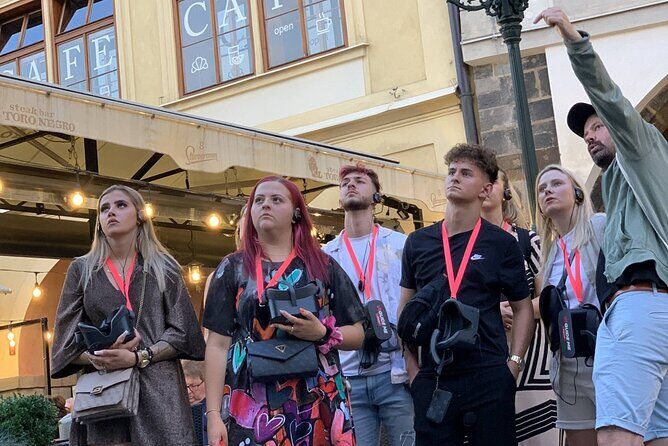
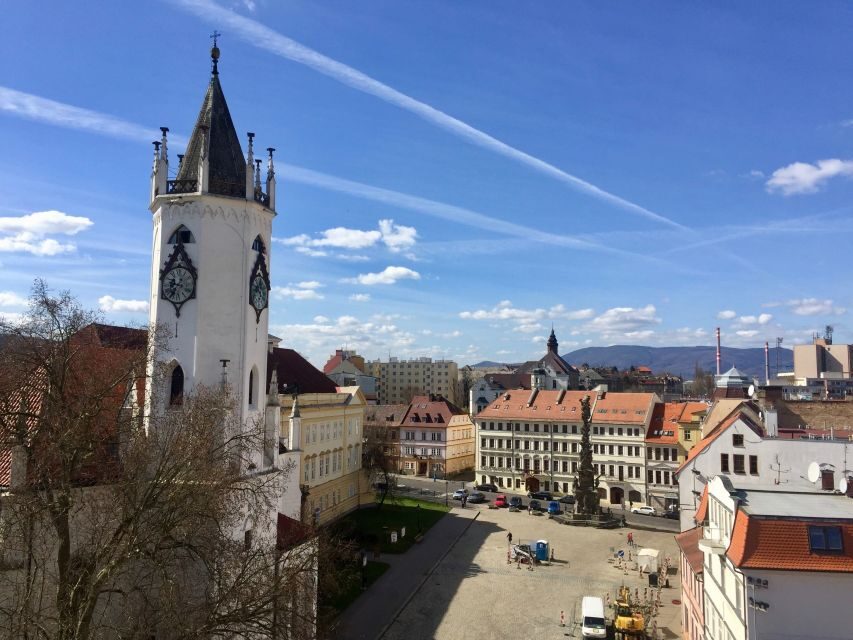
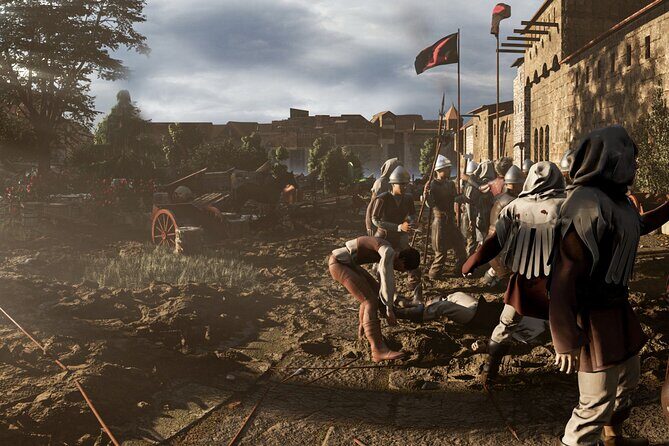
Your first stop is Prague’s Old Square, where you’ll see history up close and use virtual reality glasses to understand how the square looked in 1900.
This is one of those rare moments where VR doesn’t feel like a gimmick. Instead of replacing reality, it helps you interpret it. Old Prague is full of layers—different centuries left their marks, but from street level, it can be hard to “see” what changed. Watching a 1900 version of the square while you stand in the present gives your brain a reference point.
If you wear glasses, you’ll be glad to know it’s possible to do the VR with lenses. That’s a big practical point, because a lot of VR travel experiences assume everyone can go without prescription eyewear.
The astronomical clock story you’ll actually remember
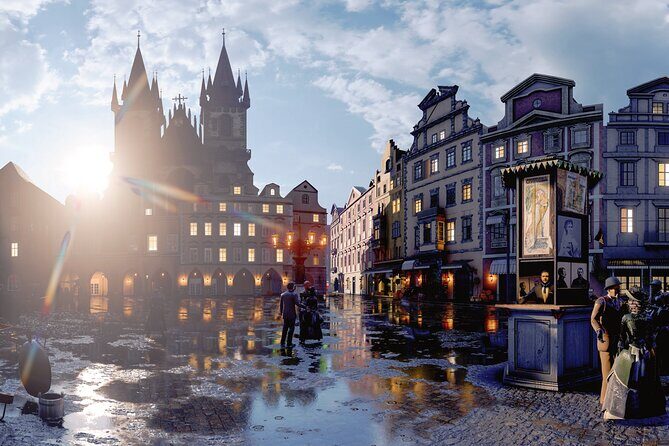
Next up is the famous Prague astronomical clock story. This tour doesn’t treat the clock as just a picture backdrop. It explains the famous narrative tied to it, giving you a reason to look closely when you’re in front of it.
Here’s the trick: when you understand what the clock symbolizes or why people historically cared, the details start to pop. You stop seeing it as a single “big thing” and start noticing how it fits into the city’s identity and daily rhythm.




National Museum views and the Prague Spring moment
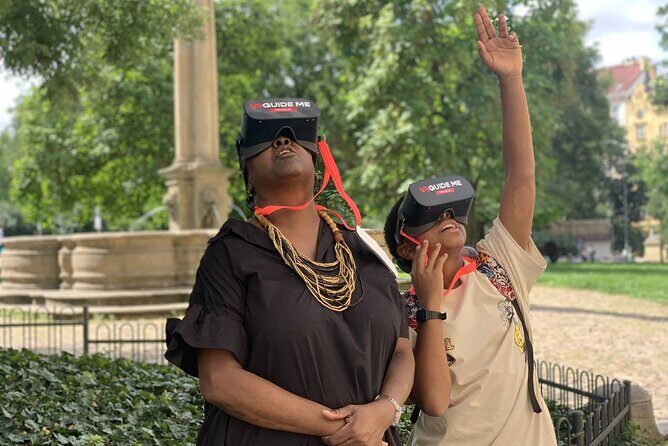
Then you head to the main square area with views of the National Museum, and you’ll use the VR glasses to understand what happened during the Prague Spring.
This stop is valuable because Prague Spring can sound like a textbook phrase when you first hear it. Seeing it tied to a specific place makes the story feel less abstract. Even if you don’t know much about Czech history, the guide’s explanations bring you up to speed in plain language.
One practical benefit: you’re learning while the sights are literally in front of you. You’re not forced to choose between history and sightseeing—you get both in the same walking loop.
Gothic and Baroque church: height, beauty, and an easy focus
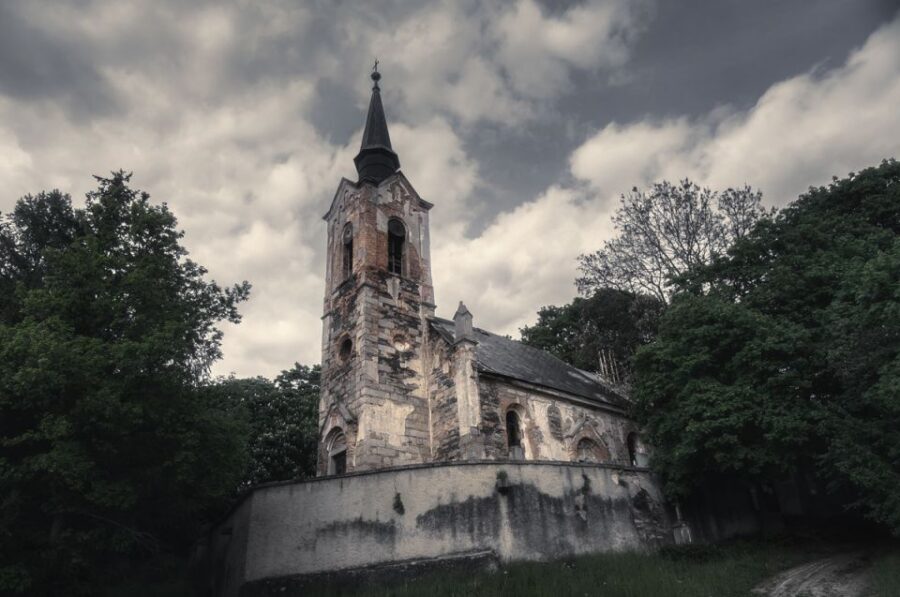
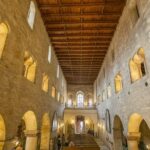
The tour then takes you into a church with Gothic and Baroque features. You’ll be amazed by the beauty and height, and that word “height” matters here.
In old European churches, ceilings and vertical space are part of the storytelling. When a guide points you toward what to notice—form, scale, and details—you can actually experience the space instead of just snapping a couple quick photos and moving on.
The possible drawback with any church stop: it may slow your pacing a bit, especially if you’re sensitive to crowds or you’re visiting during busy periods. But this is one of the places where taking a short pause is worth it.
Kafka’s Head and modern art right in the middle of Old Town
After the church, you visit Kafka’s Head, which is focused on modern art. This is a smart contrast stop. You’ve been living in centuries-old architecture, and now you shift to a contemporary expression tied to a figure the city is famous for.
If you like your tours to keep variety, this part does it well. It also helps you avoid the “all one mood” feeling that some landmark-only walks create. Prague isn’t only medieval streets and towers—it also has a modern creative pulse.
Old Town Hall: the surprise you’re meant to notice
Next you arrive at the old town hall, where you’re surprised by what happened there. The point of this stop is not just to say the building exists. The guide connects the location to events, so you leave with a clearer picture of why people cared about that civic space.
This kind of storytelling is exactly where VR-guided structure shines. Prague’s major buildings can look similar if you rush. With context, each stop becomes a specific moment in the city’s timeline.
The butcher of Prague question: paratroopers hiding nearby
One stop asks, Have you heard of the butcher of Prague? It also explains where paratroopers hid and how that links to an intense historical moment for the city.
I like this stop because it doesn’t stay in the “pretty” category. It leans into the darker, more dramatic side of Prague’s story—handled in a way that feels connected to a real place you’re standing near, not a random fact pulled from a history book.
Just keep expectations realistic: you won’t get a movie-length lecture in 2 hours. You’ll get the key idea and the emotional reason the story matters, then you move on.
Castle views and the Dancing House finish
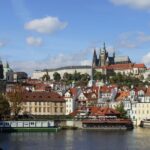
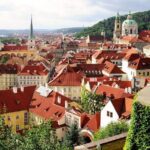
The tour ends with views of Prague Castle and the Dancing House, which is also described as the city’s most modern and emblematic building. Ending here works for two reasons.
First, you see a wide view that ties together the walking loop you just did. Second, the Dancing House is an immediate contrast: after Gothic height, Baroque details, and historic squares, this modern structure gives your eyes something new to process.
If you’re the kind of traveler who likes to see the city evolve as you move through it, this finale is a strong closer. It also makes it easy to continue your day without needing to retrace your steps all the way back.
What Marco’s guide style likely means for you
The guide name Marco comes up in the experience: he’s described as kind, professional, and patient, especially with translating and working with a multi-language group.
That matters, because VR tours can feel awkward if the group has mixed comfort levels or if everyone wants to hear the explanation clearly. A patient guide helps keep the pace fair for everyone while still giving you room to ask questions.
If you prefer tours where you can interact—rather than just watch and follow along—this small-group setup is the difference-maker.
Languages and audio support: how communication is handled
The tour is offered in English, and audio guides are available in several European languages. That mix is useful if you’re traveling with friends who don’t share the same language comfort level.
Even if you’re not fluent, you’ll still get value from the guide’s spoken explanations plus the audio option. Prague attracts international visitors, and this setup is designed for that reality.
How much walking you should expect
The tour runs about 2 hours and includes multiple stops with at least one indoor church segment plus outdoor squares. You’ll be on your feet, but it’s not an all-day trek.
For most people, it should be doable as a single “morning activity” or a flexible slot in your itinerary. The biggest limitation is more about comfort and weather than fitness level—especially because this experience requires good weather.
Who should book this VR city tour
This is a great match if you want:
- A guided walk through the center of Prague with real context, not just landmarks
- VR moments that help you understand places in different time periods
- A small group so you can ask questions instead of feeling rushed
- A mix of classic sights and a modern art stop, ending with the Dancing House
I’d think twice if you’re hoping for a long, deep lecture. At about 2 hours, the tour packs a lot in, but it keeps things moving.
Should you book? My practical take
Yes, I think this is a book-worthy option if you like learning while you walk and you want Prague to feel less like a checklist. The standout value is the combination of guided storytelling plus virtual reality glasses used at meaningful stops, from the Old Square in 1900 to the Prague Spring moment and then out to modern Prague with the Dancing House.
Book it if you’re visiting for the first time and want to get your bearings fast without sacrificing context. Skip it only if weather is uncertain during your planned dates or if you strongly prefer tours that don’t involve VR headsets at all.
FAQ
How long is the Prague City Tour with Virtual Reality?
It’s about 2 hours.
What time does the tour start, and where does it finish?
The tour starts at 10:30 am. It ends at the Dancing House on Jiráskovo nám. 1981/6, Praha 2-Nové Město.
Where do we meet the guide?
You meet at Rafidein s.r.o.1, Panská 892, 110 00 Praha-Praha 1, Czechia.
Is the tour offered in English?
Yes. The tour is offered in English.
Can I use the VR glasses if I wear prescription lenses?
Yes, it’s possible to do it with lenses.
Is there free cancellation?
Yes. You can cancel for a full refund up to 24 hours before the experience’s start time.