REVIEW · PRAGUE
Prague: Electric Trike Viewpoints Tour
Book on GetYourGuide →Operated by Prague On Segway · Bookable on GetYourGuide
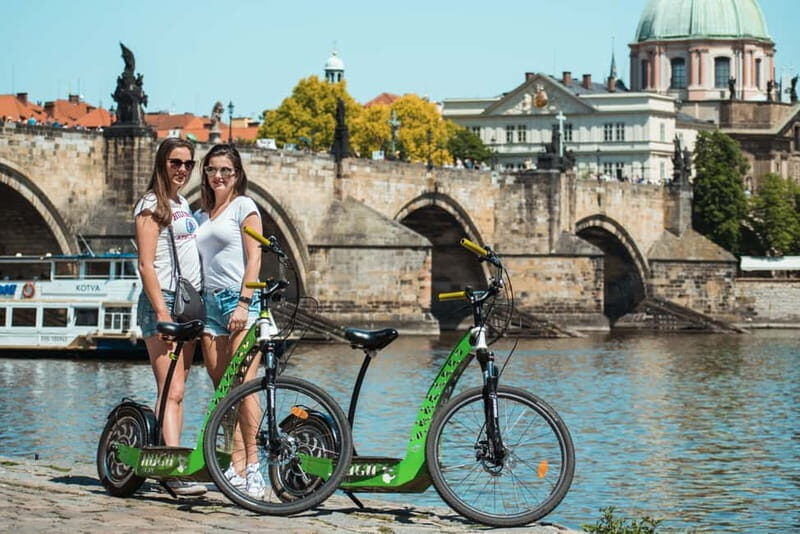
Prague on an electric trike sounds like a shortcut to wonder. This tour uses easy-to-drive trikes to whisk you between top viewpoints, with real story stops like John Lennon Wall and the Jewish Quarter. Two things I love right away are the fact that you don’t need a driver’s license and that the trip is built around photo moments instead of long, tiring walking. One drawback to consider: cobblestones and weather can make the ride feel a bit bumpy, even if the speed is capped for safety.
You get a quick start-up with helmets and a supervised test-drive, so you’re not thrown into traffic blind. After that, the itinerary keeps moving in smart lines—river views, hilltop panoramas, then back through Old Town and toward Josefov.
If you’re traveling with any limitations on balance or grip, read the restrictions carefully. The trike driver has to be in a specific age range, and the tour isn’t suitable for people who are pregnant or who have epilepsy or tremor-related issues.
In This Review
- Key highlights you’ll actually use
- Electric trike basics: no license, helmets, and a 24 km/h limit
- Meeting by the Embassy of Japan: what your first minutes look like
- John Lennon Wall to Charles Bridge: Prague icons at trike speed
- Kafka Museum, the peeing boy, and Old Town Square’s quick context
- Letná Park viewpoint and the Prague Giant Metronome: Prague’s best angles
- Rudolfinum, Old Town Square, and Josefov’s Old-New Sinagogue stops
- Driving comfort over cobblestones: safety training, traffic, and winter notes
- Time and value: choosing 5 minutes to 2 hours wisely
- Should you book the Prague Electric Trike Viewpoints Tour?
- FAQ
- Do I need a driver’s license for the electric trike tour?
- How fast do the trikes go?
- What’s included in the price?
- Where is the meeting point and where do we end?
- How long is the tour?
- Is the tour wheelchair accessible?
- What ages can drive the trike?
- Can very young children join?
- What languages do guides speak?
- What if it rains?
Key highlights you’ll actually use
- No license required: you’re guided through a test-drive first, then ride at a legal max speed.
- Photo service is included: you can focus on the views instead of juggling your phone.
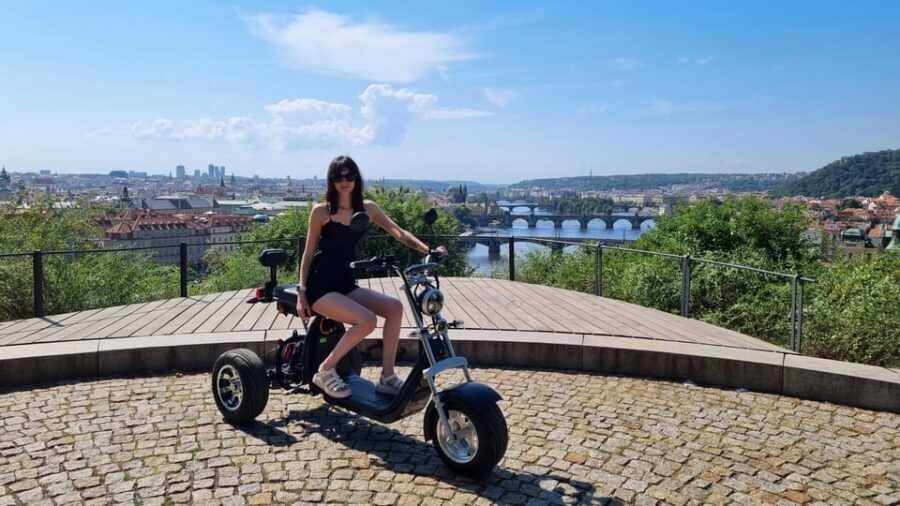
- Letná Park viewpoint time: you get the hilltop angle that turns Old Town into a postcard.
- Josefov in a single route: cemetery and the Old-New Sinagogue show up without you plotting streets.
- Guides handle the stories and timing: you stop, learn, and move before you get worn out.
- It’s built for small groups: private or small-group options mean less waiting and more riding time.
Electric trike basics: no license, helmets, and a 24 km/h limit
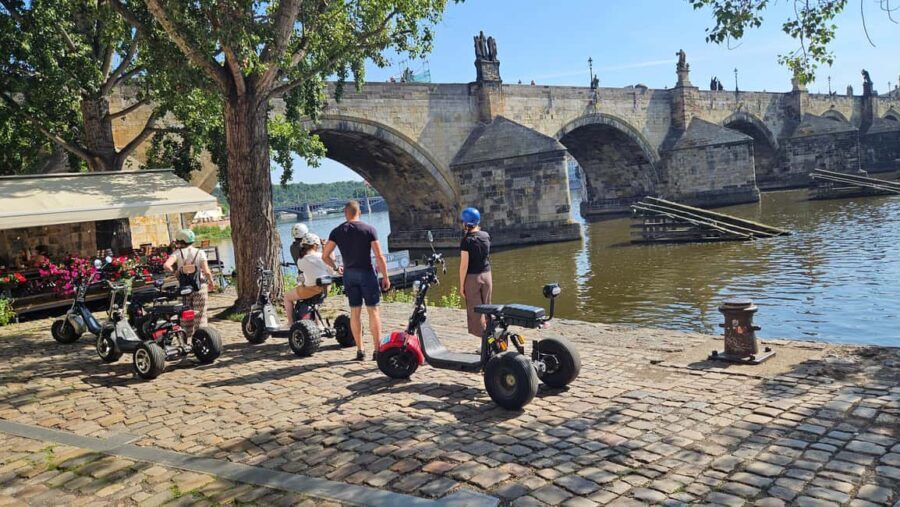
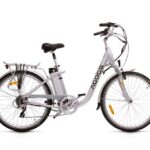
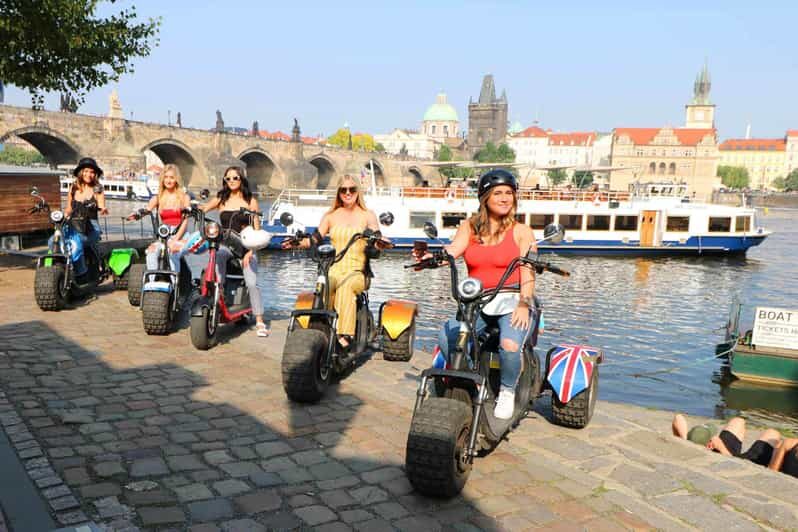
This is the kind of tour that works because it removes two common barriers: you don’t need a driving license, and the trikes are powered to a strict legal maximum (24 km/h). That speed cap matters. You still feel motion and fun, but it keeps the ride calm enough to enjoy the sights instead of bracing for adrenaline.
Before you move on, you’ll do safety training with a supervised test-drive and you must wear a helmet. Helmets come in multiple sizes, and they’re mandatory—so plan to use what they provide rather than trying to bring your own. If you’re riding in colder months, gloves are included; if it rains, raincoats are provided.
One more practical detail: you’re not locked into the trike. The operator can arrange alternatives for people who can’t ride the trike (for example, eBikes or 2-wheeled e-scooters). That flexibility helps make the tour workable for mixed groups.
Finally, there are real rider requirements. Trike drivers must be 18–69, and intoxication isn’t allowed. The tour also lists medical and ability limits, including that it’s not suitable for pregnant people, people with epilepsy, and people with tremor or autism, plus anyone who can’t operate both brakes properly. If any of those apply, check before you book so the day stays stress-free.
You can also read our reviews of more tours and experiences in Prague.



Meeting by the Embassy of Japan: what your first minutes look like
You start and end back at the same place: the next door to the Embassy of Japan. That makes it easier to plan your day because you’re not constantly recalculating how to get back.
At the meeting point, you’ll have time for the basics. Expect unlimited beverages—water, coffee, and tea—which is a small touch that makes a difference if you’re starting early. There’s also a gift postcard for your collection, which is one of those old-school keepsakes that’s actually nice to have after the ride.
Then comes the part that makes this tour feel smooth: the supervised setup. Helmets go on, training happens, and you’ll get a test-drive so you’re confident with steering and braking. The operator is also photo-ready from the start, because your stops include multiple picture moments.
Because the route stays within central Prague, your group won’t spend the whole time waiting in lines. You’ll move with the flow, stopping briefly where it matters—views, bridges, and historic squares—then rolling onward.
John Lennon Wall to Charles Bridge: Prague icons at trike speed
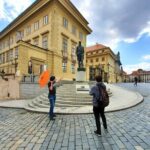
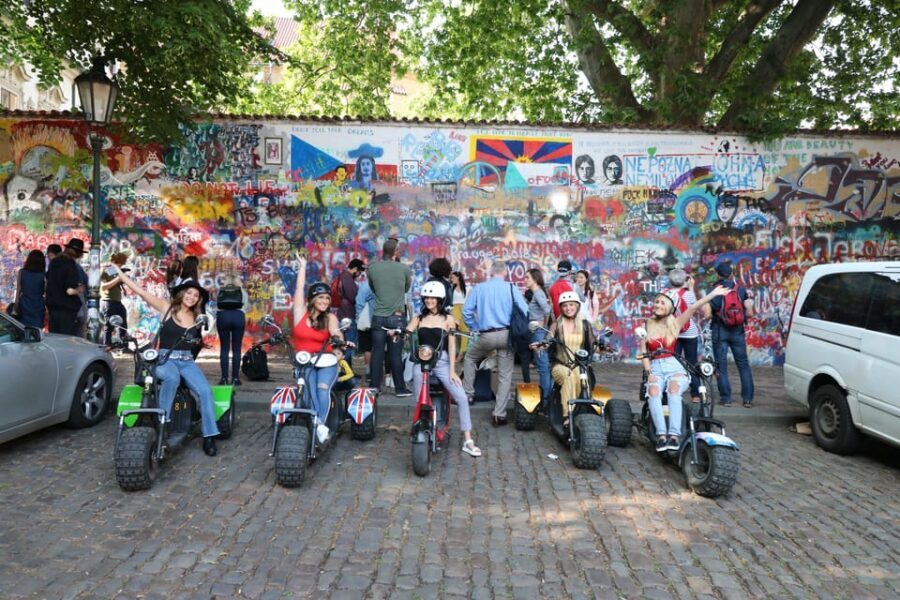
Your first major culture stop is the John Lennon Wall. You’ll do a photo stop here, and you can sign your name on the wall too. That’s a quick but meaningful activity, because it turns you from a spectator into part of the place’s modern story.
Right around this area, the tour also builds in a classic photo moment: a picture of the original Bridge of Love. Even if you’ve seen it online, getting there with a guide who knows the best angles saves time, especially when foot traffic is heavy.
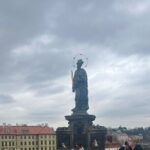
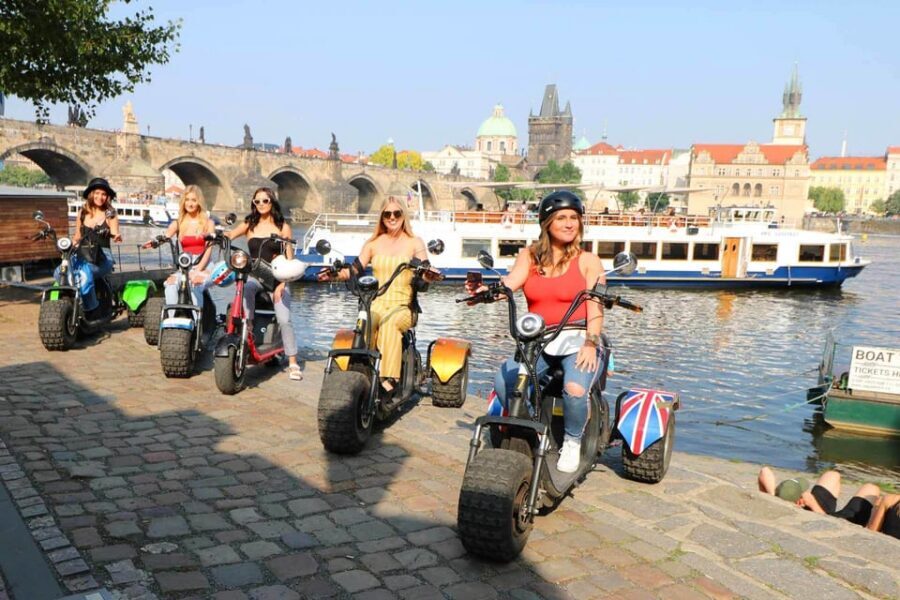
After John Lennon Wall, you head toward Charles Bridge. This is where the trike format really shines. Charles Bridge is famous for a reason, but walking the approach and trying to coordinate photos in crowds can eat your energy. On the trike, you can arrive, pause for pictures, and still cover more ground than a pure walking tour.
You’ll get a guided moment here, plus a scenic drive segment. That drive time matters because you’re not just moving—you’re getting guided context while Prague’s river and architecture slide past.
One small consideration: you’ll still be on cobbled streets at times, and that can feel less smooth than you might expect. It’s usually manageable, but it’s not a “quiet glide on perfect pavement” kind of day.
Kafka Museum, the peeing boy, and Old Town Square’s quick context
Next up is the Franz Kafka Museum area, with a photo stop and time to visit. You’ll also get a stop connected to the famous peeing boy statue. If you’ve ever looked at Prague photos and wondered where that statue sits, this tour saves you the hunt.
After that, you cross the Vltava River direction to Old Town. You’ll get a “welcome” stop by the Rudolfinum building on the other side. In practice, this is a helpful visual checkpoint: it anchors you on the right side of the city so Old Town feels more navigable once you start exploring.
Then you stop at Old Town Square for a brief introduction to Bohemia’s history. This is a smart pacing choice. You’re not getting a lecture—just enough background to make the buildings and square feel connected instead of random. It’s the sort of orientation that helps you look up at the right details later, on your own.
Old Town Square is also where the day’s energy can rise. The trike keeps you from getting stuck only in the most crowded spots. You can see the key sights without losing your entire afternoon to foot traffic.
If you’re planning what to do after the tour, this is a good moment to pay attention. The guide’s framing of Old Town can help you decide where you’ll want to linger afterward—especially around the squares and river approaches.
Letná Park viewpoint and the Prague Giant Metronome: Prague’s best angles
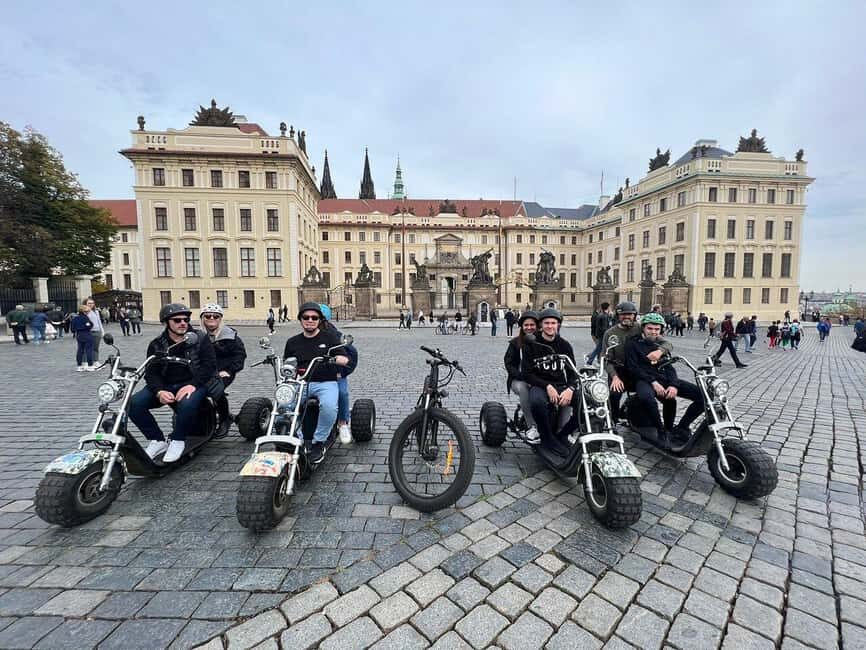
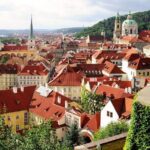
Letná Park is one of the big reasons to choose this tour. You’ll get a photo stop and visit time here, and this is where the city opens up. From a hilltop perspective, Old Town isn’t just one famous skyline—it’s the whole spread: rooftops, bridges, and the river line that ties it together.
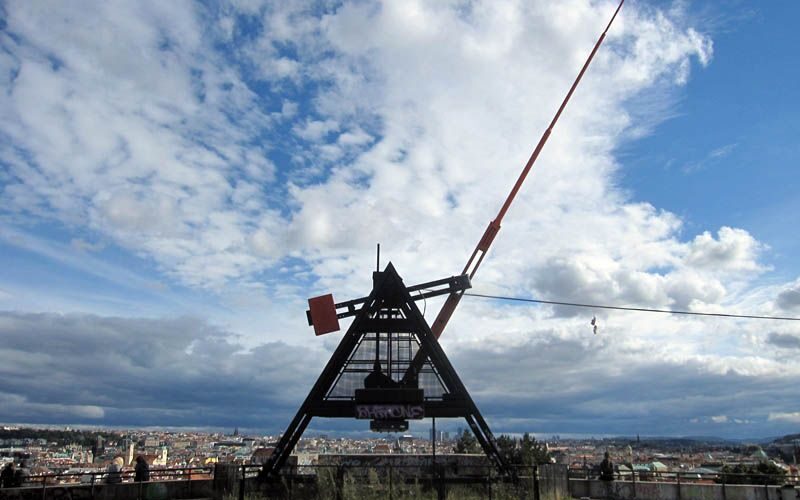
The tour also includes the Prague Giant Metronome stop. It’s a playful landmark, but it also functions as a viewpoint anchor. Even if you’re not obsessed with architecture or music symbolism, it’s a strong “place marker” during the ride—another spot where you can pause, regroup, and take photos that look different from the river-level shots.
You’ll do scenic driving between stops, so you’re not spending every minute climbing. The trike route is designed to keep you moving while still giving you real view time when you arrive.
If you want the best photo conditions, consider timing your day well. One of the smart tips from real-world experience with this kind of tour is to do it in the morning when roads can feel quieter. You’ll still see the same sights, but with less crowd pressure around picture spots.




Rudolfinum, Old Town Square, and Josefov’s Old-New Sinagogue stops
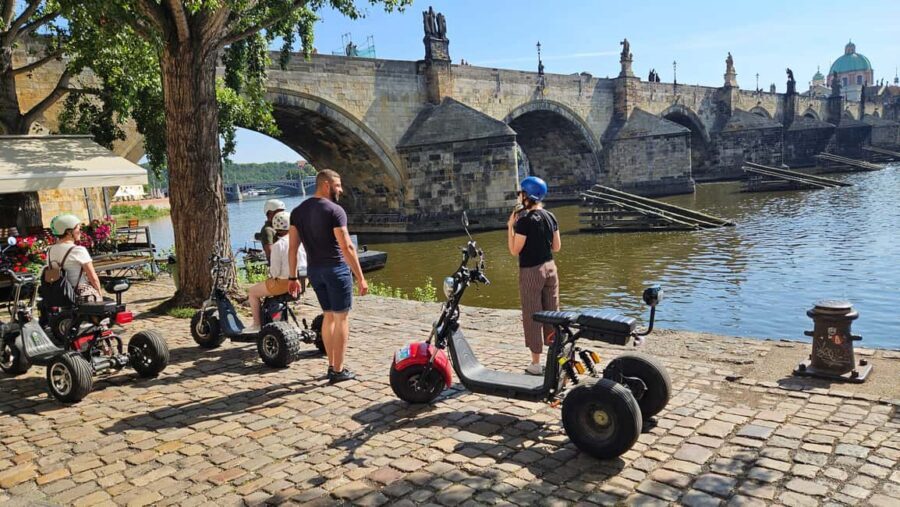
After the river and Old Town orientation, the route shifts toward one of Prague’s most important historical areas: Josefov, the Jewish Quarter.
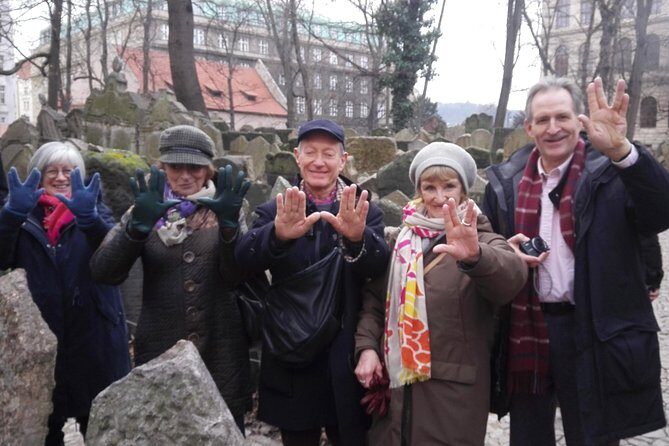
Here you’ll get photo stops and guided sightseeing that includes the Jewish cemetery and the Old-New Sinagogue, which is listed as the oldest synagogue in Europe. This is the part of the tour that feels more grounded. You’re not only chasing views—you’re seeing a place tied to centuries of community life.
The stop sequence also supports a common sightseeing problem: people try to cover Prague’s religious and historic sites on their own and end up walking in loops. With the trike, you roll between districts and key sites, then stop only when you’re at an actual destination.
You’ll also be moving toward the Lesser Town neighborhood afterward. That shift helps you understand Prague as a set of connected areas rather than isolated landmarks.
One more detail I appreciate: you get structured picture opportunities throughout the route, not just at the “big names.” That means you’re more likely to come home with photos you actually like—river angles, hilltop viewpoints, and street-level historic corners.
Driving comfort over cobblestones: safety training, traffic, and winter notes
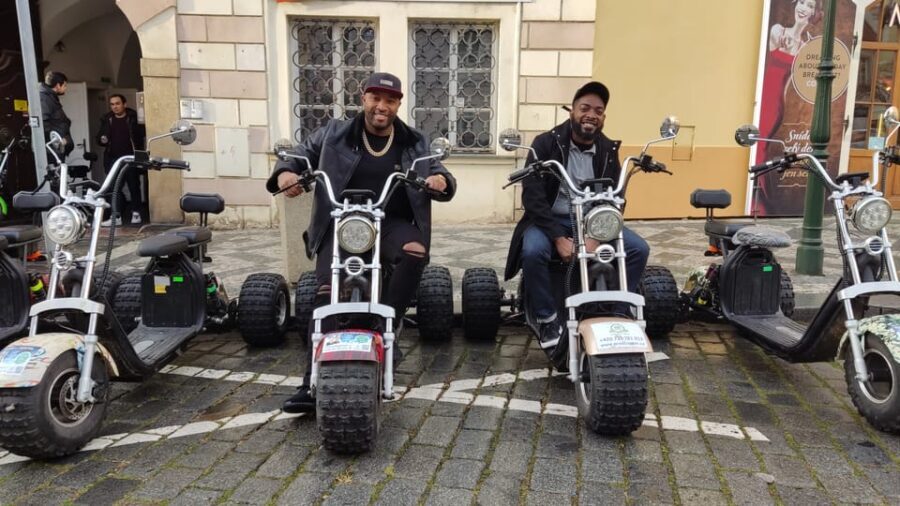
Let’s be honest: Prague’s center has plenty of cobblestones. Electric trikes help, but they don’t magically erase the feel of rough pavement. You may feel it most when you’re moving through narrower streets or older sections where the stones are uneven.
Even so, the ride is designed to be easy to operate. You’re not expected to concentrate on complicated controls. Braking and steering are straightforward, and the supervised test-drive is there so you don’t start the tour with a learning curve.
Traffic and intersections can still make you pay attention, but the trikes stay capped at 24 km/h. That limit, plus a guide who’s watching your timing, tends to make the experience feel like sightseeing—not a stressful commute.
If you’re visiting in winter, watch for the added slipperiness. Raincoats exist for rainy days, and gloves help in cold weather, but snow and ice can make any vehicle ride feel more tense. Plan for slower comfort and dress warmly.
Also keep in mind the rider eligibility rules. If you’re not in the driver age range, you can still join as a passenger on the rear seat (for children under 18 or for people 69–75, where options include rear seat or alternative bikes/scooters). If you’re over 70, the tour notes you should not assume participation—double-check based on their stated suitability rules.
Time and value: choosing 5 minutes to 2 hours wisely
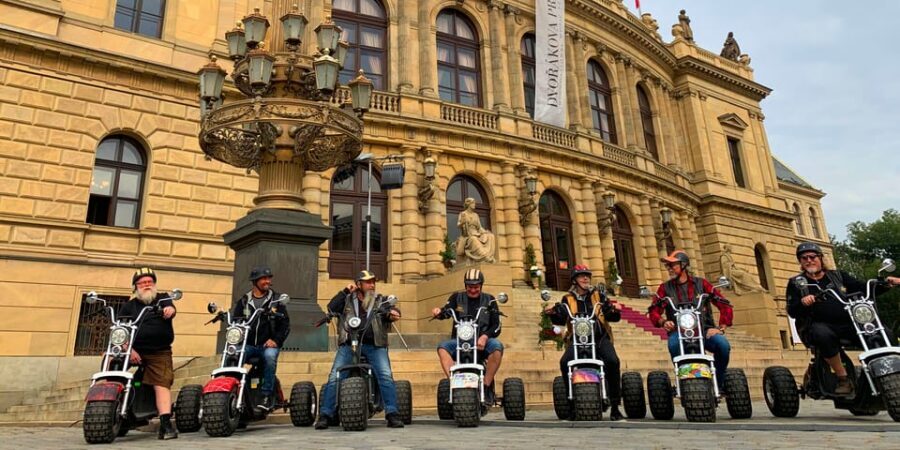
The tour duration is flexible in the sense that it can run from short sessions up to around two hours, depending on what you select. If you have limited time, even a shorter version can be enough to hit the biggest picture stops and get that “I’m oriented now” feeling.
But if you can swing the full stretch, two hours is where the route becomes satisfying. You cover the core highlights without turning Prague day into an all-day walking plan. The trike format gives you distance quickly, and the guide keeps the stops meaningful instead of random.
Value-wise, the deal is the bundle. Your ticket includes a live guide, helmets, and supervised training, plus photo service and unlimited water/coffee/tea at the meeting point. Raincoats and winter gloves are included when needed. You’re also getting a gift postcard, which doesn’t change the math, but it signals this is a staffed experience rather than a DIY rental.
If you compare this to paying for separate transport and a walking guide for the same time window, the economics start to make sense fast. The trike is doing the “get there” work while the guide handles the “know what you’re looking at” part.
So I’d book this when:
- You want a lot of sights without burning your feet
- You care about viewpoints and photo timing
- You’re staying a short time and want the highlights clustered
Should you book the Prague Electric Trike Viewpoints Tour?
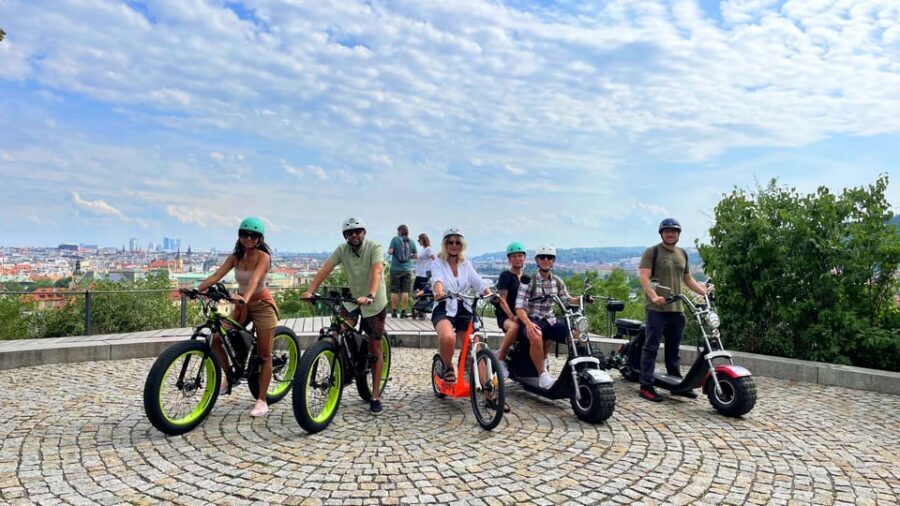
Yes—if your priority is an efficient, guided hit of Prague’s famous sights plus viewpoint time, this is a very workable choice. I’d especially recommend it if you want a break from heavy walking, or if you like photo stops that are planned rather than improvised.
Skip it (or ask questions first) if you’re in any of the “not suitable” categories listed, if you’re pregnant, or if cobblestones and bumpy street segments would likely make you uncomfortable. Also check how your group fits the rider age and role rules, because the ability to drive affects what options are available for kids and older adults.
If you match the rider requirements, plan for helmet + training, and show up with comfortable shoes, this tour is a fun way to get your bearings in Prague and leave with better photos than you’d get from a random wander.
FAQ
Do I need a driver’s license for the electric trike tour?
No. The tour states that a driver’s license is not required. You’ll receive safety training and a supervised test-drive before riding.
How fast do the trikes go?
The trikes are limited by local law to a maximum speed of 24 km/h.
What’s included in the price?
Included are a live guide, helmets (all sizes), raincoats if needed, gloves in the winter season, safety training with a supervised test-drive, photo service, unlimited beverages (water/coffee/tea) at the meeting point, and a gift postcard.
Where is the meeting point and where do we end?
The meeting point is next door to the Embassy of Japan, and the tour ends back at the same meeting point.
How long is the tour?
The duration can range from 5 minutes to 2 hours. Starting times vary, so check availability for the exact length you can book.
Is the tour wheelchair accessible?
Yes. The tour is listed as wheelchair accessible.
What ages can drive the trike?
The driver must be 18–69 years old. Children under 18 can ride on the rear seat or use an eBike or 2-wheeled e-scooter.
Can very young children join?
For children aged 1–6 years, the tour offers a classic electric bike with a child seat (EU certified). The child’s maximum weight is 22 kg, and you must mention it in the special requirements. The maximum number of such kids in a group is 2.
What languages do guides speak?
Guides are listed in German, English, Spanish, Russian, Slovak, French, Hebrew, Dutch, Urdu, Hindi, Pashto, and Pushto.
What if it rains?
Raincoats are provided if needed. In extreme weather, the tour may be rescheduled for safety.