REVIEW · PRAGUE
Prague: Old Town and Jewish Quarter Small-Group Tour
Book on Viator →Operated by Heart of Europe · Bookable on Viator
Start your Prague right here with stories. This small-group tour stitches together the big-name landmarks of Old Town and the layered Jewish Quarter in one smooth, walkable loop. You get the kind of context that turns famous buildings into real history—without turning it into a lecture.
I like the tight format: about 2.5 to 3 hours, capped at 10 travelers, so questions don’t get lost in a crowd. I also appreciate the guide quality—if you’re lucky enough to get Ian, you’ll see why people rave about his English and his personable, humorous style, plus lots of sharp anecdotes.
The only real consideration is the pace and the weather. You’ll cover several major sights in short segments, and the tour requires good weather, so plan for some outdoor walking on uneven cobblestones.
In This Review
- Key points before you go
- Prague in one walk: Old Town Square plus Josefov
- Where you meet and how the tour moves through the city
- Staroměstské náměstí: Týn Church, Jan Hus, and the Marian Column
- Old Town Hall and the Astronomical Clock: why it’s not boring
- Theatre des Etats: an old stage with Mozart in the orbit
- Prasná brána: a gothic city gate you can feel
- Václavské náměstí: the big square where history happened
- Josefov: the Jewish Quarter’s past and Kafka’s hometown connection
- Finishing at Rudolfinum with views toward Prague Castle
- Price and value: what you’re really paying for
- Who should book this tour (and who might skip it)
- Should you book the Prague Old Town and Jewish Quarter Small-Group Tour?
- FAQ
- How long is the Prague Old Town and Jewish Quarter Small-Group Tour?
- Where does the tour start and where does it end?
- Is hotel pickup included?
- How many people are in the group?
- What’s included in the tour price?
- Are there admission fees at the main stops?
- Is this tour suitable for most travelers?
- Are service animals allowed?
- What is the cancellation policy?
- Does the tour require good weather?
Key points before you go
- Small group size (max 10) keeps the tour personal and interactive
- Old Town Square to Josefov gives you both “first look” and deeper context
- Major landmarks with free entries at listed stops means fewer surprise costs
- English-speaking certified guide makes the history click fast
- Guides often share favorite food and beer tips for what to do after the tour
- Weather-dependent outdoor walk means dress for the day you get
Prague in one walk: Old Town Square plus Josefov
If you’re trying to get your bearings fast, this is the kind of tour that helps you stop guessing. Prague can feel like you’re constantly looking at post cards, but once someone points out what you’re seeing—why it’s there, who used to walk these same streets, what changed over time—the city starts making sense.
This one combines two neighborhoods that shape the city’s identity. You start in the core of Staroměstské náměstí, Prague’s Old Town Square, where you’ll see the monuments and architecture people line up for. Then you cross into Josefov, the historic Jewish Quarter, where the stories run deeper than the postcard versions.
The tour is also practical. It’s built for real visitors: a short total duration, a limited group size, and a route that ends near a landmark that’s easy to orient from afterward.
You can also read our reviews of more tours and experiences in Prague.


Where you meet and how the tour moves through the city
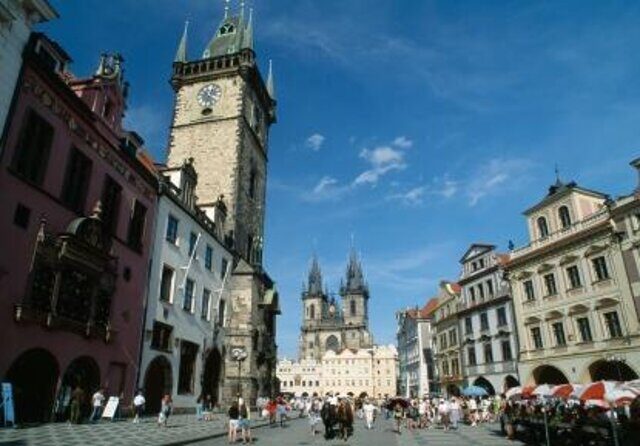
The tour starts at Kavárna Obecní dům (right by Obecní dům and Náměstí Republiky). You finish at nám. J. Palacha 79/1, in the Old Town area, next to Rudolfinum.
That start-and-finish layout matters. It helps you avoid the trap of “one tour, one dead end.” You’ll end near a music hall with a view toward Prague Castle, which is a great setup for whatever you do next—dinner plans, a self-guided stroll, or heading toward the Castle district.
Expect a guided walk with several short stops. Each sight is given enough time for key context, but the schedule doesn’t linger. That can be a plus if you like variety, and a mismatch if you want long time inside museums or slow photo sessions.
Staroměstské náměstí: Týn Church, Jan Hus, and the Marian Column
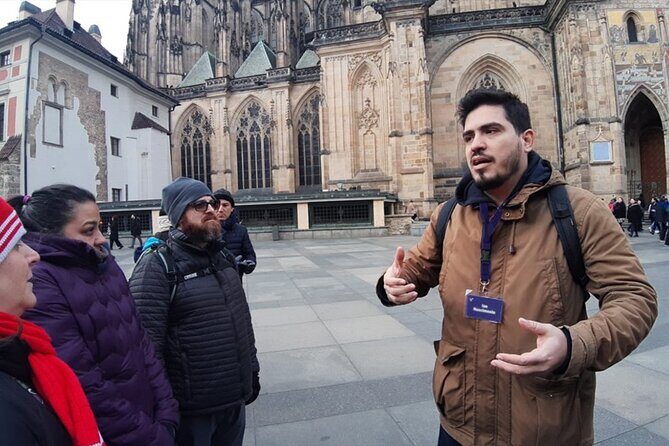
Old Town Square is the kind of place where your brain says, I’ve seen this before. Your guide’s job is to make you see it differently.
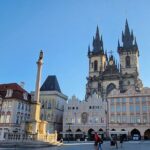
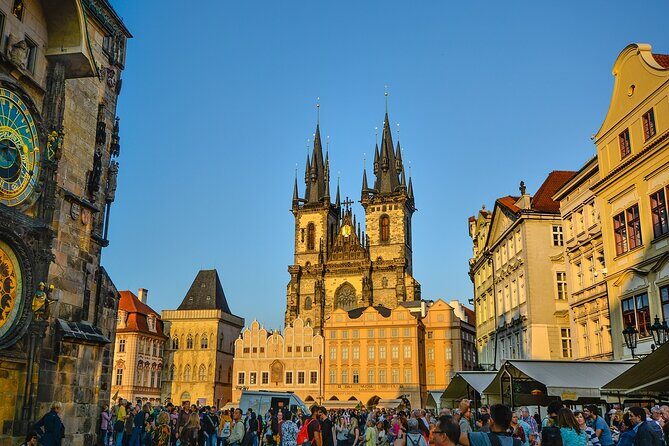
You’ll take in the main landmarks clustered around the square, including the Týn Church, the Jan Hus monument, and the Marian Column. These aren’t random pieces of stone. They’re signals of power, belief, and local identity—built in eras when Prague’s streets were political stages.
Týn Church is a visual anchor. Even if you don’t know much about Prague yet, it’s the sort of structure you can’t ignore, and your guide will connect it to the city’s story rather than treating it like scenery.
You’ll also hear what’s behind the Jan Hus connection. Hus is one of those names that keeps popping up in Czech history, and it’s easier to understand when you’re standing near the monument instead of reading about him later.
The Marian Column rounds out the square’s mix of religion and civic life. It’s a good reminder that Old Town Square isn’t just about views—it’s about meaning.
Possible drawback here: it’s an open square with lots of people moving through. You won’t have a private “quiet courtyard” moment. The tradeoff is the atmosphere and the central location.
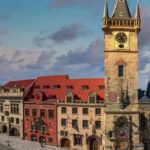
Old Town Hall and the Astronomical Clock: why it’s not boring
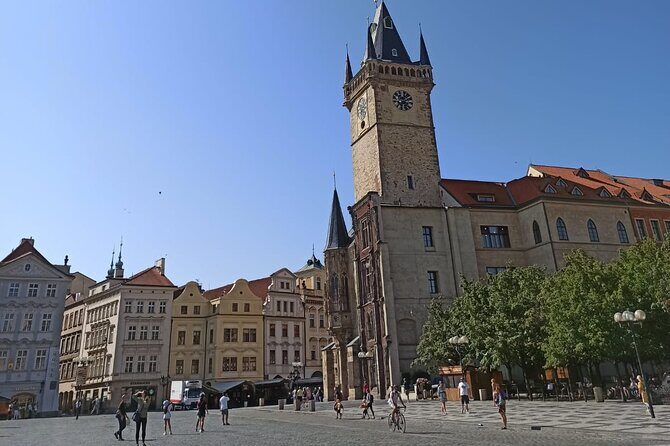
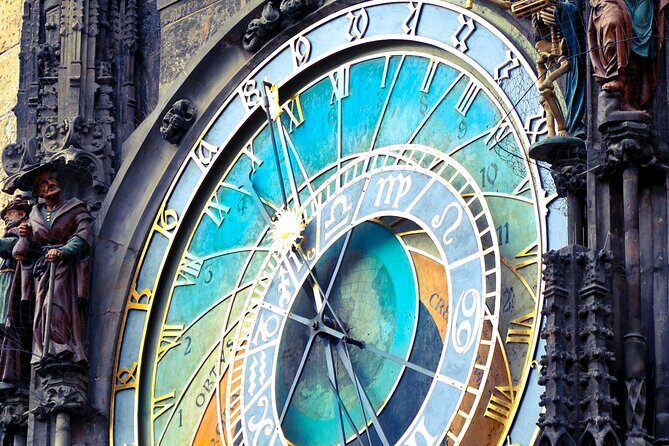
The Astronomical Clock is one of those sights people love to complain about. The trick is that it only becomes boring when you don’t know what you’re looking at.
Your guide explains how the clock works and what you’re seeing in a way that makes it feel like a mechanism with personality. The Old Town Hall area is also useful for orientation because it’s tied to the square’s civic history.
The time here is short—think around ten minutes—but it’s exactly long enough to get the basic story and then watch the clock with fresh eyes. You’re not waiting through a “dry lecture,” and you’re not leaving with zero context.
If you tend to skip technical explanations on tours, don’t worry. The point isn’t math. It’s understanding why the clock mattered to the people who used the public square.
Theatre des Etats: an old stage with Mozart in the orbit
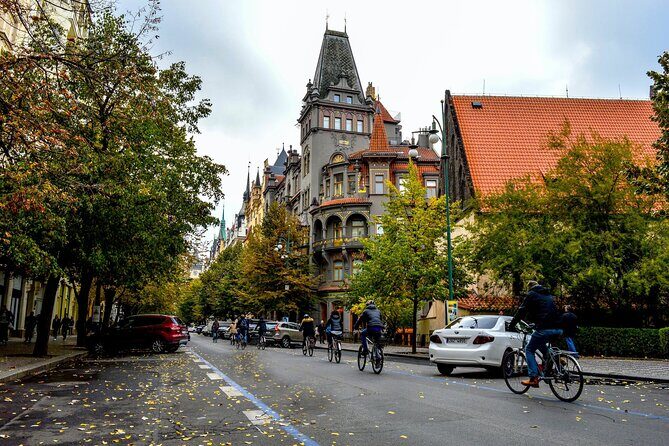
Next up is Theatre des Etats, described as the oldest still active theater in Prague. Mozart is tied to this stop, and that matters because it gives the building a cultural pull beyond architecture.
This is a quick stop, but it’s a smart one for first-timers. Prague has tons of stone, and theaters add a different flavor. They remind you the city has always been about more than ruling and religion. It’s been about art, performance, and audiences.
A plus: you don’t need to buy tickets or hunt for another place to visit. You just get a compact “why this matters” moment.
A small note: since this is a stop on a walking route, don’t expect extended interior time unless the tour schedule allows it. The value is the context you get on the street.




Prasná brána: a gothic city gate you can feel
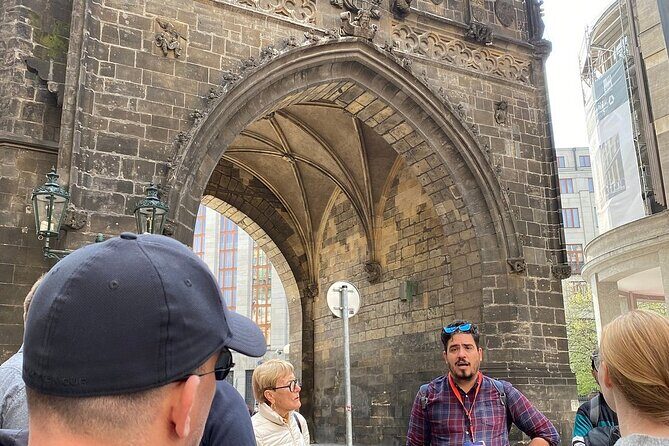
Prasná brána is one of only two still-standing gates into the Old Town, and it’s a true gothic masterpiece. That description is doing work: gates aren’t just decoration. They mark how cities controlled entry and movement.
Standing near a historic gate changes your sense of scale. You realize the Old Town isn’t only a cluster of buildings. It used to be defended, organized, and controlled like a living system.
You’ll get a clear explanation of its role and why it became part of the Old Town’s identity. The tour doesn’t linger long, but it gives you enough to recognize the structure as a historic threshold, not just a pretty backdrop.
If you love medieval and gothic details, this stop is the kind that rewards you with visual notes you can carry into your own walking later.
Václavské náměstí: the big square where history happened
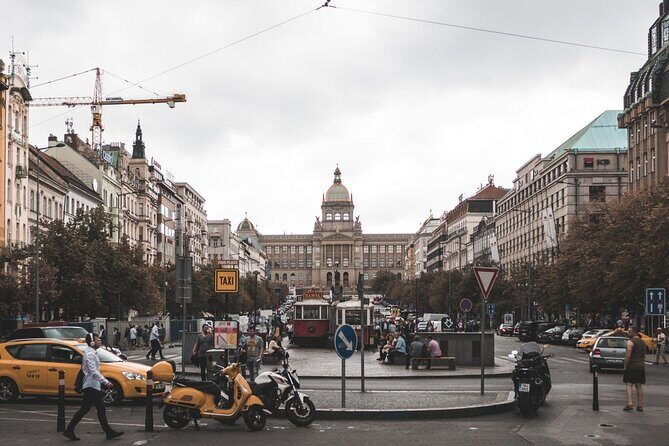
Václavské náměstí is Prague’s largest square, and it’s tied to many historical events. It’s also a useful “breather” in the tour.
Even if you’re not a history scholar, big squares help you map the city in your head. You start connecting street lines, distances, and directions. After the Old Town Square and gate stops, the scale of Václavské náměstí can feel like a reset.
Your guide uses the context of the square to connect everyday geography with bigger events. Think of it as learning the city’s punctuation—how the streets and spaces were used for crowds, gatherings, and turning points.
Time here is brief. If you want deep museum-level history, you’ll do that elsewhere. But for orientation and understanding, this stop works.
Josefov: the Jewish Quarter’s past and Kafka’s hometown connection
This is the emotional center of the tour. Josefov was formerly a ghetto and is tied to the birthplace of Kafka. Standing in the neighborhood, the history stops being abstract.
A guided walk through Josefov is valuable because the area has layers: places where communities lived, where policies restricted people, and where memory still sits in the streets. You get more than dates—you get how the neighborhood fits into Prague’s larger story.
The Kafka connection is especially effective for many visitors. It’s a hook that turns a famous writer into a person rooted in a specific place. It helps you remember that literature doesn’t float in space; it grows out of neighborhoods, families, and languages.
One practical note: Josefov includes streets that can feel narrower and more enclosed than the open squares. That can make the walking feel more focused and less like sightseeing-through-a-crowd.
Finishing at Rudolfinum with views toward Prague Castle
The tour ends next to Rudolfinum, the concert hall where the Czech Philharmonic plays. Finishing here is a smart move. It gives you a recognizable landmark right when you’re wrapping up, plus a view toward Prague Castle.
That matters because Prague Castle is the next magnet for many itineraries. Ending near Rudolfinum helps you decide what to do next without getting lost. You can angle toward Castle-area viewpoints or use the surrounding streets for dinner and a relaxed wander.
The stop timing is short, but it lands you in a location that feels like a natural “chapter break.” From here, Prague looks more three-dimensional: you see how neighborhoods stack up and how the Castle area dominates the skyline.
Price and value: what you’re really paying for
At $103.03 per person, this tour isn’t the cheapest way to see Prague. The value comes from a few specific factors that add up.
First, you’re getting an English-speaking certified guide for roughly 2.5 to 3 hours. That’s the core product. Guides can make Old Town Square and Josefov feel understandable rather than just impressive.
Second, the route hits major landmarks with stops listed as free entry. That doesn’t mean every detail is free in the wider city, but it does reduce extra ticket friction during the walk. You’re paying for interpretation and timing, not just permission to enter buildings.
Third, you’re paying for a small group experience with up to 10 travelers. In cities like Prague, that’s where the difference shows. Smaller groups mean your questions land, and your guide can shift explanations based on what you seem to care about.
One more perk is the practical side your guide brings in—food, beer, and fun tips, plus favorites and hidden spots. You don’t want only history. You want a plan for later that night.
Also, this tour is commonly booked about 22 days in advance. If you’re visiting during peak season or on a weekend, booking earlier is a safe move.
Who should book this tour (and who might skip it)
This works best for first-time Prague visitors who want a fast orientation that goes beyond surface sightseeing. If you like walking routes, and you’d rather understand what you’re looking at than just collect photos, you’ll get good mileage.
It also suits couples and small groups who want a manageable pace and a guide-driven day. The max group size helps.
You might want to skip or complement it if you’re a hardcore clock expert, a deep museum person, or someone who needs long quiet time at each stop. The tour is built to cover many sites with a mix of highlights, so it’s not a slow, “camp out and read everything” kind of experience.
Should you book the Prague Old Town and Jewish Quarter Small-Group Tour?
If you only do one guided walk in Prague early in your trip, this is a strong candidate. You cover Old Town Square, the Astronomical Clock, the gothic gate at Prasná brána, major public-space history at Václavské náměstí, and the meaning-heavy neighborhood of Josefov—all in a format that’s designed to help you navigate the rest of the city with confidence.
I’d book it if you want context and direction, and if you appreciate a guide who mixes facts with stories. The chance to get Ian is a real draw—his English is excellent, and his humor plus anecdotal history style is exactly what makes a first-time tour feel worth it.
Quick decision tip: if you have at least one good-weather morning and you’re okay with a brisk pace between stops, book it. If your trip is likely to include rain or you hate walking on cobbles, you may prefer a slower plan and save Josefov for a different day.
FAQ
How long is the Prague Old Town and Jewish Quarter Small-Group Tour?
It’s about 2 hours 30 minutes to 3 hours.
Where does the tour start and where does it end?
It starts at Kavárna Obecní dům (Obecní dům, Náměstí Republiky 1090, Staré Město) and ends at nám. J. Palacha 79/1, Staré Město, near Rudolfinum.
Is hotel pickup included?
No, hotel pickup isn’t included.
How many people are in the group?
The tour has a maximum of 10 travelers.
What’s included in the tour price?
An English-speaking certified guide is included.
Are there admission fees at the main stops?
The listed stops are marked as free admission tickets.
Is this tour suitable for most travelers?
Yes—most travelers can participate.
Are service animals allowed?
Yes, service animals are allowed.
What is the cancellation policy?
You can cancel for a full refund up to 24 hours before the experience start time. If you cancel within 24 hours, it isn’t refunded. If it’s canceled due to poor weather, you’ll be offered a different date or a full refund.
Does the tour require good weather?
Yes. It requires good weather, and the operator may reschedule or refund if weather conditions are poor.