REVIEW · PRAGUE
Prague: Private Prague Art Nouveau and Cubism Tour
Book on GetYourGuide →Operated by Prague Articulate · Bookable on GetYourGuide
One street at a time, Prague gets stranger and better. This private tour tracks how Art Nouveau evolved into Cubism, and then explains why World War I changed the whole style game. Starting at Prague’s main rail station, you’ll move through the New Town and finish in the Vyšehrad area for the sharp, angular architecture that most visitors skip.
I love the way the guide turns buildings into a story you can follow. You’ll look at facades and details while learning the “why” behind the design—how Art Nouveau broke from 19th-century taste, and how Cubism started as a kind of pushback. I also like the pacing: lots of short stops, enough time at each place to notice what you’d normally walk past.
One thing to consider: this is a 1-day route with plenty of walking and detours. Comfortable shoes matter, and it’s not ideal for kids under 12.
In This Review
- Key Things That Make This Tour Worth Your Time
- Meeting at Prague Central Station: How the 1909 Start Sets the Tone
- New Town on Foot: Art Nouveau Details You’ll Start Spotting Everywhere
- Wenceslas Square and Side Streets: Where the Day Turns From Showy to Personal
- Public Transit to Vyšehrad: The Cubism Shift Gets Real Fast
- The 20th-Century Context: Why the Story Matters More Than the Labels
- Price and Logistics: What You’re Really Paying For at $84
- Who Should Book This Tour, and Who Might Feel It’s Not for Them
- Should You Book? My Simple Recommendation
- FAQ
- Where does the tour meet?
- What’s the duration and price?
- What languages are the guides?
- Is public transportation included?
- Is this tour private?
- Is the tour wheelchair accessible?
- What should I bring?
- Who is it not suitable for?
Key Things That Make This Tour Worth Your Time
- Central Train Station (1909 reconstruction) as the launch point for a modern Prague story
- Art Nouveau-to-Cubism narrative that makes details feel meaningful, not random
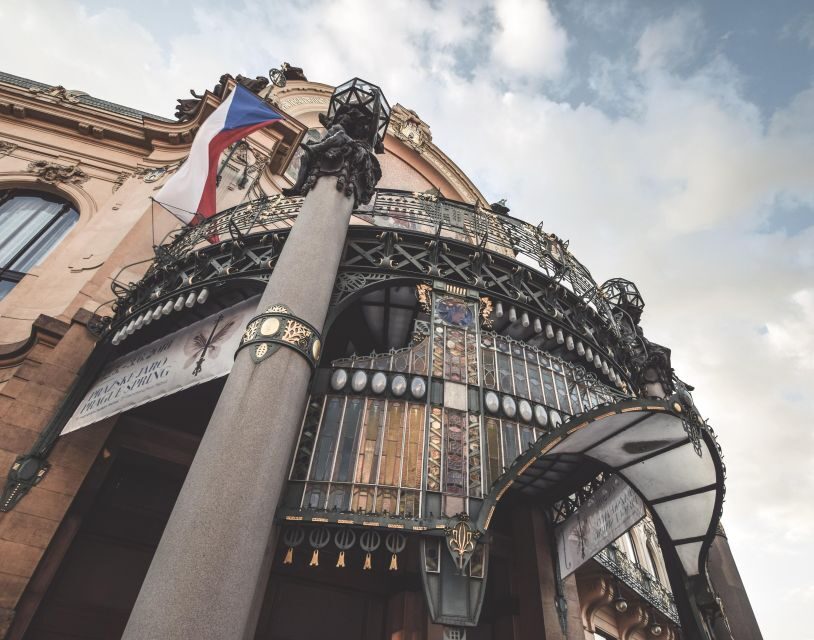
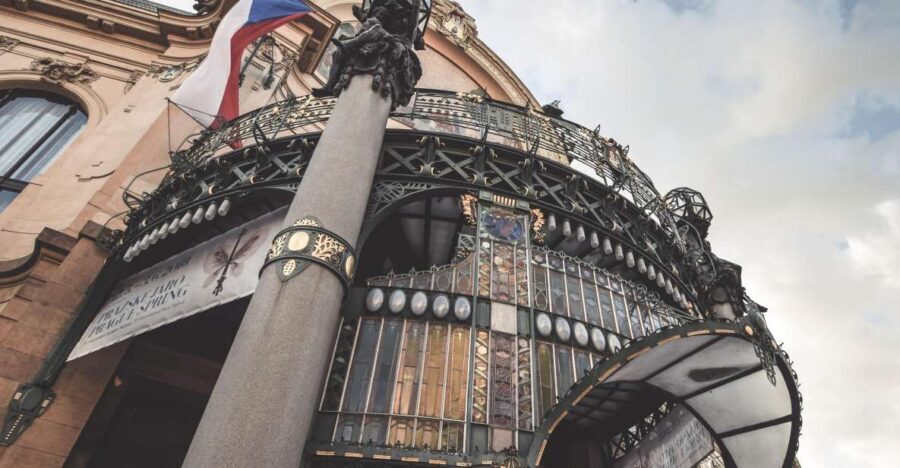
- Municipal House and House of the Black Madonna stops where you can actually see the style shifts
- Included public transit and tram rides to save time and keep the day smooth
- Vyšehrad-side Cubist architecture in a quieter zone under the fortress
- Private group format with time for questions in English or German
Meeting at Prague Central Station: How the 1909 Start Sets the Tone
The tour meets on Prague’s Central Train Station grounds, in the middle of Platform No. 1. The practical way to find the guide is that they’re holding a red folder, and the “starting location” is near a UniCredit Bank cash machine (bankomat UniCredit Bank). It’s a solid meeting point because it’s easy to orient yourself fast—plus it fits the theme.
From there, you get a short guided introduction around the station area (about 15 minutes). This matters more than it sounds. Prague is often sold as “old city postcard,” but the station reconstruction from 1909 anchors the day in a time when the city was modernizing in a serious way. That first briefing helps you look at the later buildings with better context.
You’re also meant to see Prague like locals do: less checklist, more pattern-finding. The guide’s job isn’t just to point at pretty stonework. It’s to connect the architectural style to the culture that made it happen—so you’re not collecting photos, you’re building understanding as you walk.
You can also read our reviews of more private tours in Prague



New Town on Foot: Art Nouveau Details You’ll Start Spotting Everywhere
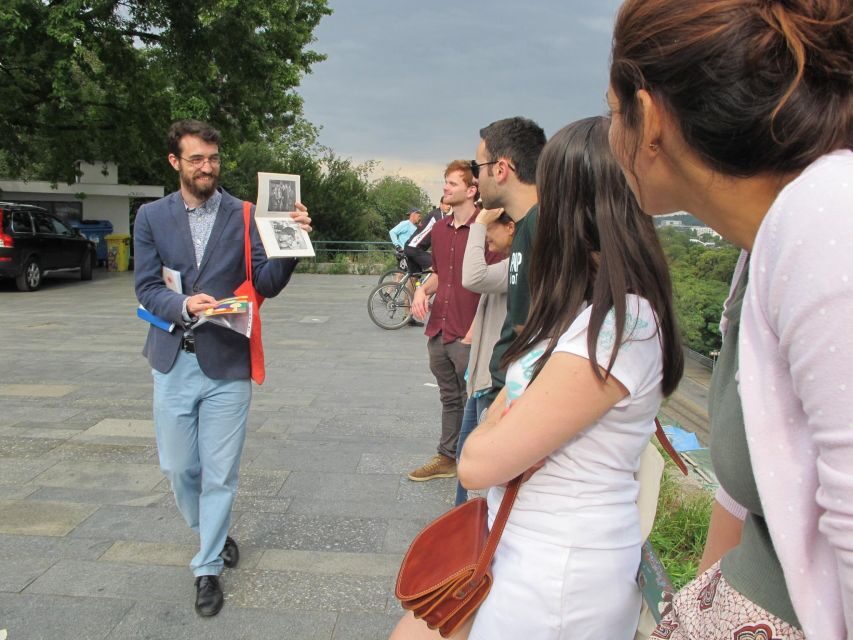
After the station, you move into the New Town on foot, with quick stops designed to keep your eyes awake. One early highlight is the Jubilee Synagogue. Even if you’ve seen other synagogues in Prague, this one works well on a style-focused route because it shows how the era’s design language could feel expressive and modern, not stiff.
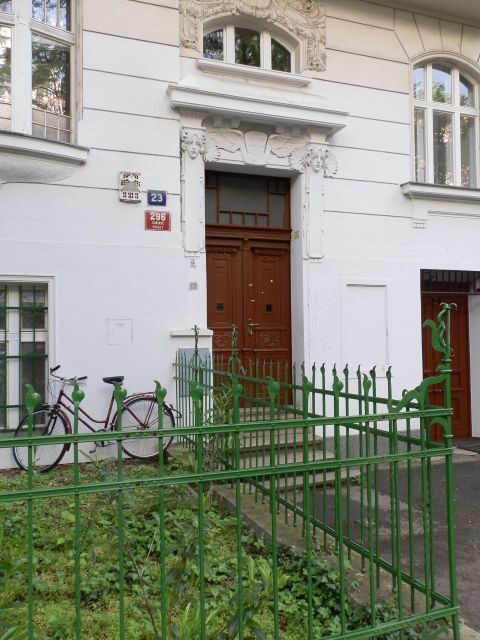
From there, the tour keeps bouncing between short walks and brief exterior viewing moments. Some stops are named and some are more “pause and look” moments—places you likely would miss on your own because they’re not built to be the loudest stop on a tourist route. That’s exactly the point. Art Nouveau rewards close looking: curling lines, decorative rhythm, and the sense that the building is trying to feel alive.
Then you reach two anchors that fit perfectly into the story:
- Municipal House (Obecní dům), where you get time to absorb the Belle Epoque energy and the way the city showed off its taste.
- House of the Black Madonna, which is especially useful when you’re learning the timeline—because it helps you see how different strands of style show up in the same city fabric.
At each stop, the guide isn’t just describing style labels. They’re explaining how Art Nouveau grew out of 19th-century design habits, why it felt revolutionary at the time, and why people connected it to a new way of thinking about aesthetics and everyday modern life. I like that framing because it makes the ornament feel like a message, not decoration.
Quick practical tip: if you tend to rush through big interiors elsewhere in Prague, slow down here. These exterior moments are short by design, so you have to train your attention in bite-sized bursts.
Wenceslas Square and Side Streets: Where the Day Turns From Showy to Personal
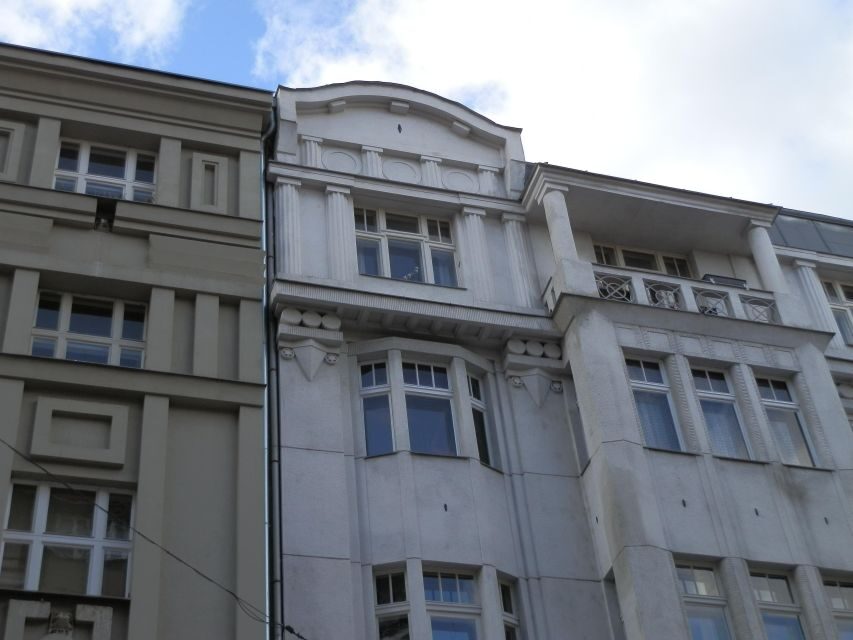
The route includes time at Wenceslas Square (about 20 minutes). This is where the tour balances the big recognizable space with what’s less obvious around it. Square time can be hit-or-miss on walking tours, but here it’s used like a compass point—an area you can compare with the quieter, more experimental zones you visited earlier.
Around the square, you’ll also encounter those in-between stops: short views and quick “look closer” moments. They’re built for people who already know the classic Prague highlights and want more signal than noise. If you’re spending a week in Prague, this approach is a smart use of one day because you’ll likely stop thinking in terms of landmarks and start thinking in terms of style changes across neighborhoods.
The tour also includes those brief pauses where you can ask questions. If your guide happens to be Max, for example, the style of explanation tends to be clear and tightly connected to both art and history, with answers that go beyond a quick soundbite. If you get Eva, the approach is similarly structured—just with a strong emphasis on architectural style differences and how they show up across the city. You don’t need to know art history first. The guide builds the story step by step.
By the time you leave the core downtown area, you’re not just seeing buildings. You’re following a timeline.
Public Transit to Vyšehrad: The Cubism Shift Gets Real Fast
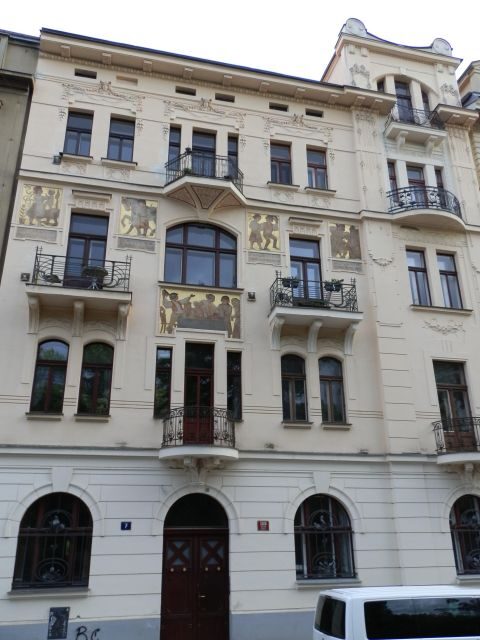
After you’ve covered a lot of the downtown zone, the tour takes public transportation for a short ride to a more remote area under Vyšehrad fortress. This shift is important. Cubist architecture can feel abstract on a picture. On the street, it’s sharper—more about angles, structure, and the feeling that the building is refusing to behave.
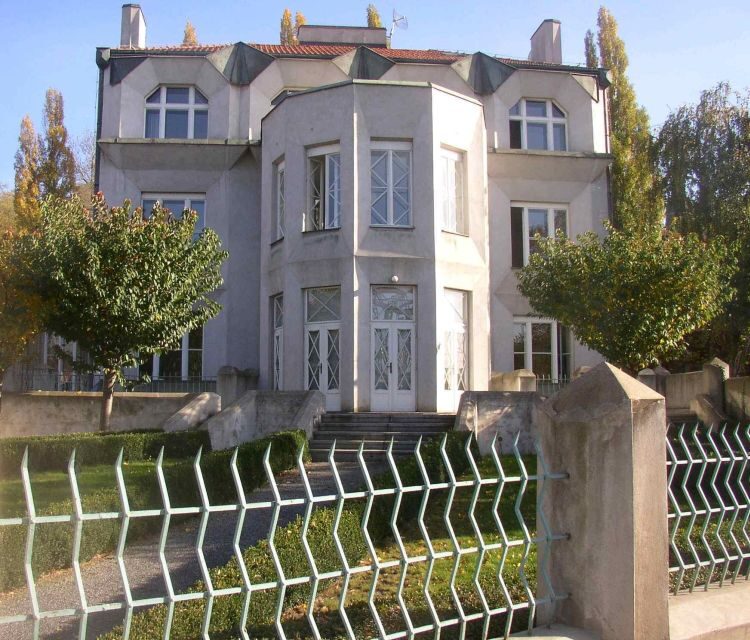
You’ll spend time around several Cubist stops. The named highlights include:
- Three Cubist Houses
- Kovařovicova vila
- Cubist house Vyšehrad č. p. 98
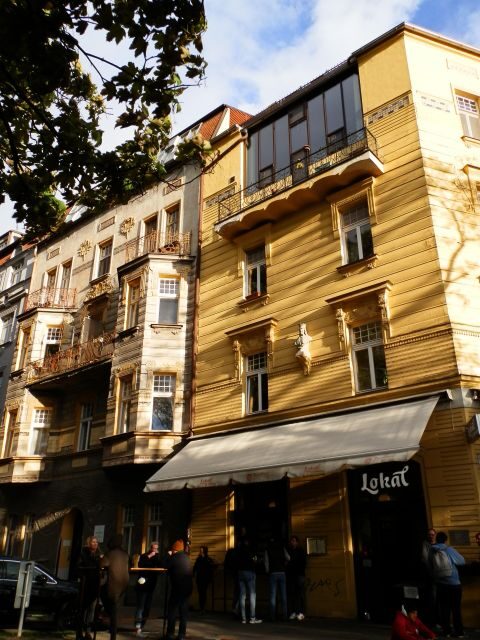
All of these are short viewing moments, but they’re placed well. The guide’s narrative sets up the relationship between Art Nouveau and Cubism: Cubism is described as starting as a revolt against Art Nouveau’s popularity. And then the story adds the reality check—both styles didn’t survive unchanged through the heavy shifts that came with World War I.
That context helps you read the architecture with less confusion. Instead of asking, “Why does it look like that?” you can ask, “What was the style reacting to?” and “What did people want the city to feel like?” Cubism often feels more intellectual and less decorative, and that’s easier to understand when the tour gives you the cultural trigger.
At the end, there’s a tram stop conveniently nearby for getting back to the downtown area. Tram tickets for the ride back are included in the tour price, so you don’t have to figure out transit mid-decision. It’s a small thing, but it keeps the day from turning into logistics.
The 20th-Century Context: Why the Story Matters More Than the Labels
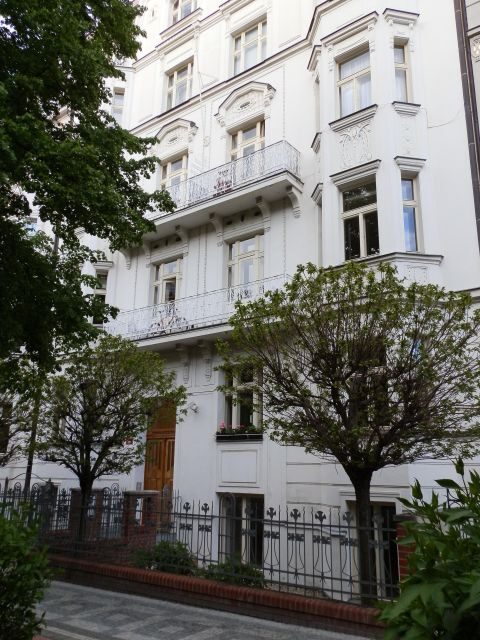
This tour is built around a clear idea: architecture doesn’t evolve in a vacuum. The guide explains how Art Nouveau rose out of older 19th-century styles, why it was considered revolutionary, and how it shaped modern aesthetics and architecture. Then the tour moves into Cubism as a counter-movement, before circling back to show how the whole trend was disrupted by World War I.
I like this method because it helps you connect Prague’s buildings to time itself. You’re not simply learning terms like Art Nouveau and Cubism. You’re learning how people in the early 1900s used buildings to argue about modern life.
The tour also points out something practical for repeat visitors: it’s not just about “old Prague vs new Prague.” It’s about how modern architects later worked to preserve what mattered in the older city. That thread—preservation and legacy—makes sense of why Prague still feels layered instead of erased and rebuilt.
If you’ve already done the big monuments, this approach gives you a fresh angle on the city without needing a second full week.



Price and Logistics: What You’re Really Paying For at $84
At $84 per person for a 1-day private tour, you’re paying for three things: a dedicated guide, a route that uses transit smartly, and enough time at each stop to understand what you’re looking at.
The value gets better because transportation is included. Public transportation tickets and the tram ride back are part of the price, which saves you time and avoids the common “we’ll take a quick tram, good luck buying tickets” problem. For a one-day architecture-focused plan, that kind of friction matters.
You’re also not stuck in a big group shuffle. Private group format means the guide can respond to your questions, and the pacing can be adjusted to your comfort. That’s a big deal on walking tours where you either love the details or start tuning out by the halfway mark.
The languages listed are English and German, and that’s useful if you want the guide to fully explain the design story rather than just translate landmark names.
Bottom line: if you care about architectural style and you’d like a guided, narrative-based route (not a self-guided “read signs and guess” version), the price is reasonable for Prague.
Who Should Book This Tour, and Who Might Feel It’s Not for Them
This tour is a great fit if:
- You’ve already visited the classic Prague sights and want something different.
- You’re in Prague for a week and want one focused day on the modernist side of the city.
- You like architecture that you can actually read after someone explains the context.
It’s also a good choice if you enjoy seeing how designers reacted to change—because the Art Nouveau to Cubism storyline gives you a reason to keep looking.
It’s not for everyone. It’s listed as not suitable for children under 12. And it’s physically a walking day, so plan for that with comfortable shoes. If you’re hoping for a mostly sitting tour with minimal walking, this is likely too active.
Should You Book? My Simple Recommendation
I’d book this tour if you want Prague that goes past postcard beauty and into the early-20th-century arguments people were having about what modern life should look like. The best part is the guide-led narrative: it helps your brain connect style changes across neighborhoods, so the buildings stop feeling random.
I’d skip it if you want a slow, relaxed tour with lots of interiors and minimal walking. This one is built around exterior architecture, short viewing moments, and walking between them, with the payoff being the Art Nouveau-to-Cubism timeline—especially once you reach the Vyšehrad area.
If you’re a repeat Prague visitor, this is one of the smarter “one-day special interest” ways to feel like you discovered something new without sprinting through the entire city.
FAQ
Where does the tour meet?
It meets on Prague’s Central Train Station, in the middle of Platform No. 1. The guide is carrying a red folder.
What’s the duration and price?
The tour lasts 1 day and costs $84 per person.
What languages are the guides?
The live tour guide is available in English and German.
Is public transportation included?
Yes. Public transportation tickets are included, and the tram ride back to the downtown area is also included.
Is this tour private?
Yes, it’s a private group tour.
Is the tour wheelchair accessible?
Yes, it’s listed as wheelchair accessible.
What should I bring?
Wear comfortable shoes, since you’ll be walking throughout the day.
Who is it not suitable for?
It’s not suitable for children under 12 years.