REVIEW · PRAGUE
Private Prague Art Nouveau and Cubism Walking Tour
Book on Viator →Operated by Prague Articulate · Bookable on Viator
If you think Prague is only Gothic, think again. This private walk sets your eyes on Art Nouveau curves and Cubism angles across the city, led by Max Hutar so you learn to read the buildings like a story.
I really like how the tour pairs big landmarks with smaller street details, so it feels like you’re getting inside the subject rather than just taking photos. I also like the way the guide’s explanations help you leave knowing what to look for on your own, even in neighborhoods you didn’t visit.
One heads-up: there’s real walking, plus short rides between areas, so it can run a bit longer than the advertised 2.5 hours.
You’ll meet at Prague Main Station and end at the Albertov tram stop, and you use the same ticket for the last hop back toward the center. I like the practicality here: a mobile ticket, an English guide, and a route built for moving efficiently through Prague without turning the day into a transit puzzle.
The biggest consideration is your comfort level with a walking-first route. If you’re hoping for a mostly-stationary museum-style experience, this one will feel more active than you expect.
In This Review
- Key things I’d plan around
- Why Prague’s Art Nouveau and Cubism feel like a time machine
- Price and group size: what you’re really paying for
- Praha hlavní nádraží, Jerusalem Synagogue, and the Art Nouveau opening act
- Hybernska 10 and Obecni dum: Art Nouveau at full volume
- Na Prikope, Vaclavske NamEsti, and Vodičkova: the city center as your classroom
- Cubism arrives: House of the Black Madonna and the street’s geometric logic
- Three Cubist Houses, Villa Kovarikovic, and Neklanova: the finale by geometry
- How you’ll spot Art Nouveau vs Cubism after this walk
- Timing, transit, and what to wear on a 2.5-hour route
- Should you book this Art Nouveau and Cubism walking tour?
- FAQ
- How long is the Prague Art Nouveau and Cubism walking tour?
- What does the tour cost?
- Is the tour in English?
- Is it a private tour?
- Do I need to pay for admission at the stops?
- Where do we meet and where does the tour end?
- Do you use public transportation during the tour?
- Can I cancel and get a full refund?
Key things I’d plan around
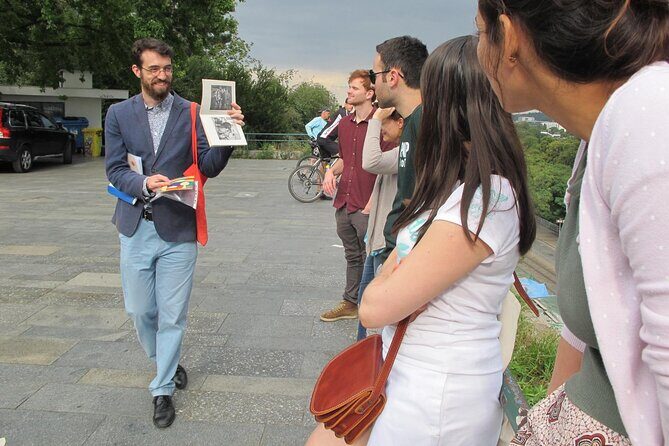
- Max Hutar leads the route in English, with plenty of on-the-street context for why these styles appeared when they did
- Start at Praha hlavní nadrazi (1909) and see how reconstruction still preserves architectural drama
- You get a true street-level “Aha” moment: Art Nouveau ornament shifts into Cubist geometry building by building
- Several stops are view-only (admission not included), so you’ll spend time outdoors admiring facades and details
- Expect short walks plus quick transit links, so total time can stretch past 2.5 hours
Why Prague’s Art Nouveau and Cubism feel like a time machine
Prague in the early 1900s was experimenting. The city swung from decorative optimism toward sharper, more modern shapes. That shift is exactly what you’ll see on this tour: first the flowing, nature-ish styling of Art Nouveau, then the fractured, puzzle-piece logic of Cubism.
What makes the experience work is that it’s not just about naming styles. You’ll learn how these buildings reflect the city’s ambition, its cultural cross-currents, and the willingness of architects to risk something new on busy streets.
And because the route is concentrated, you get your eyes trained quickly. After a couple of stops, you start spotting motifs before the guide even points them out.
You can also read our reviews of more walking tours in Prague


Price and group size: what you’re really paying for
The tour costs $94.93 per group (up to 15 people) for about 2 hours 30 minutes. In practice, that group pricing is where the value comes from: the smaller your group, the more affordable it gets per person. At the maximum group size, you’re looking at roughly $6.33 per person, assuming the full cap is used.
You’re also paying for something hard to DIY: a guided “reading” of architecture. Anyone can walk past a decorative building, but it takes context to understand what you’re seeing and why it’s different from the place two blocks away.
One more value point: the tour is private, meaning you get the attention of the guide for your group only. That matters when questions pop up mid-walk, or when you want to slow down at a particularly good facade.
Praha hlavní nádraží, Jerusalem Synagogue, and the Art Nouveau opening act
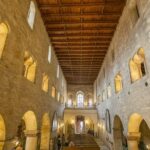
You start at Prague Main Station, Praha hlavní nadrazi, a landmark that opened in 1909. This isn’t a quick glance either. After recent reconstruction, the station’s halls and corridors are a dramatic, ornate introduction to Prague’s modern-building era.
From there, you shift toward a different kind of style story at the Jerusalem Synagogue. It uses a traditional Moorish look typical for synagogues, built in 1906, but it also incorporates Art Nouveau elements that were popular around the same time. This stop is typically view-based since admission isn’t included, so you’ll focus on how the exterior blends influences.
Next comes Senovazne Namesti, one of the New Town squares, where you can take in three luxurious apartment buildings in the Art Nouveau era. The benefit here is speed: you get a concentrated block of “how it looks when the style is fully expressed” without needing museum tickets or long lines.
Hybernska 10 and Obecni dum: Art Nouveau at full volume
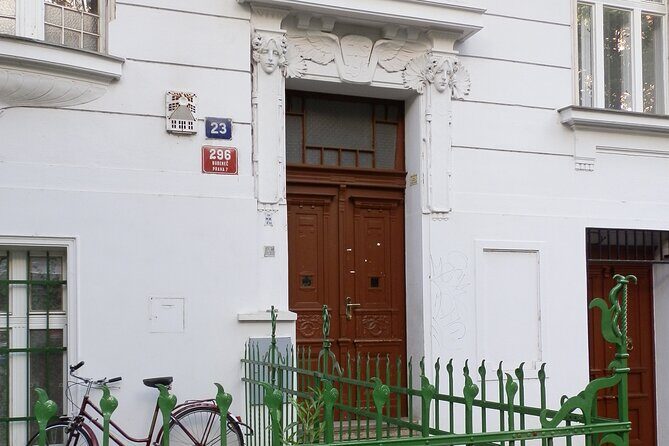
Hybernska 10, the Hotel Central Palac (from 1899), is one of Prague’s early Art Nouveau statements. The idea is simple: you’ll start noticing what early Art Nouveau looked like before Prague’s later, more confident modernism took over the conversation.
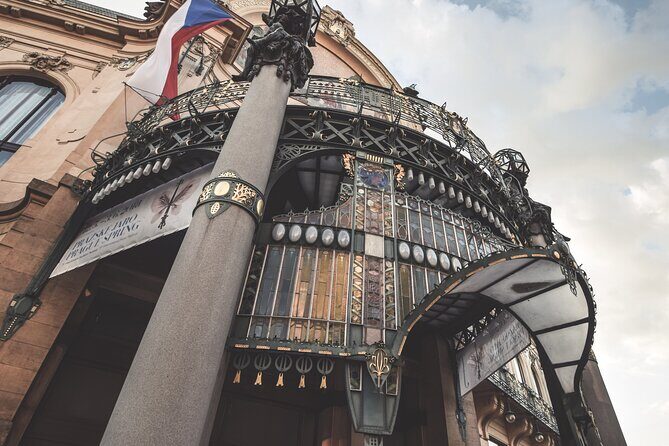
Then you move to Obecni dum, the Municipal House of Prague, projected in 1905. It still functions as a house of culture and representation, so you’re not just seeing a relic. This is one of Prague’s biggest and most important Art Nouveau pieces of architecture, which makes it a “pay attention” stop, even if your visit is mostly from the outside since admission isn’t included.
Here’s a practical way to enjoy these stops: look for the rhythm of the facade first (how the building is broken up), then look for the details second (ornament, relief, and how curves and edges are used). When you do it in that order, the style stops feeling random.
Na Prikope, Vaclavske NamEsti, and Vodičkova: the city center as your classroom
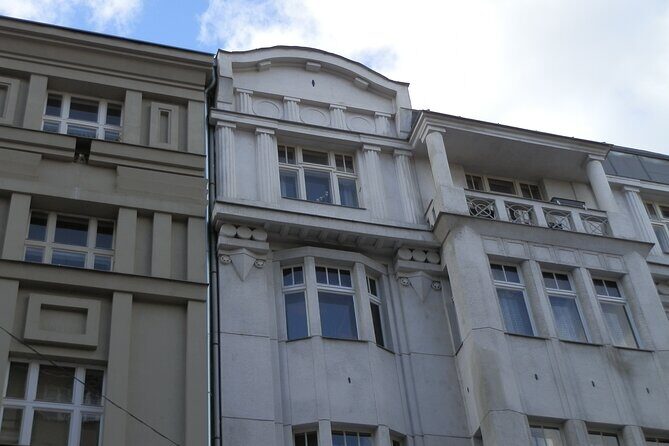
The route then threads into the Old Town and New Town edge along Na PrikopE, a borderline boulevard lined with bank and other buildings dressed in breathtaking Art Nouveau style. Even without going inside, you can understand why this area became a stage for architectural fashion.
You’ll spend time near Vaclavske NamEsti (Wenceslas Square), where you’ll spot Art Nouveau hotels and department stores among the busy downtown mix. This is one of those stops where you can compare “architecture for prestige” versus “architecture for commerce.” Same styles, different purpose.
Then comes Vodičkova Street, packed with Art Nouveau and Cubist buildings in a tight stretch. This is where your eyes really start to connect the dots. You’ll see multiple modern styles close together, which helps you understand how architects competed visually in real urban space.
You can also read our reviews of more private tours in Prague


Cubism arrives: House of the Black Madonna and the street’s geometric logic
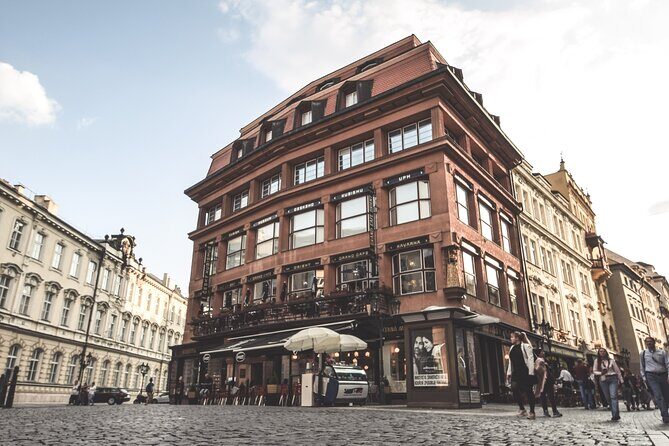
The Cubism shift is unmistakable once you hit the House of the Black Madonna. Dating from 1912, it’s often described as the flagship of Prague Cubist architecture. The key point for you is not just that it’s Cubist, but that it shows Cubism as something applied to everyday streetscapes, not only theoretical art.
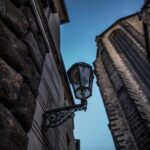
Nearby, Emil Kralicek’s Cubist Lamppost gives you a rare bonus: Cubism as street furniture. Street-level design doesn’t usually get this kind of radical treatment, but this lamppost is a reminder that avant-garde ideas can show up in the most ordinary places.
At this stage in the walk, I like to suggest a small challenge to yourself: pick one facade and try to describe it in plain geometry. Are the windows stacked? Are planes broken and reassembled? Does the building look stable or fractured? That mental game makes Cubism far easier to recognize.
Three Cubist Houses, Villa Kovarikovic, and Neklanova: the finale by geometry
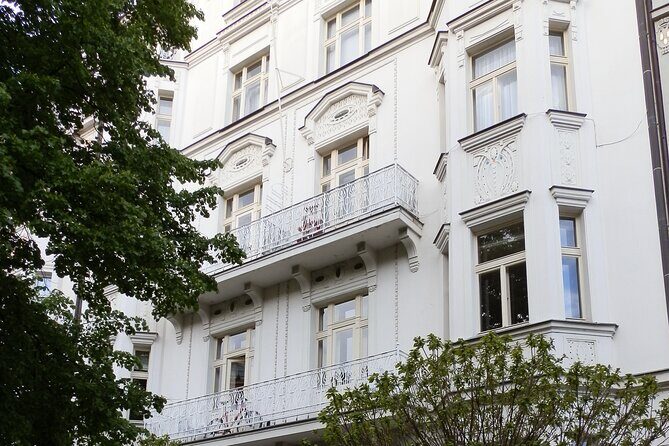
The tour continues with some of the most iconic Cubist constructions around Prague.
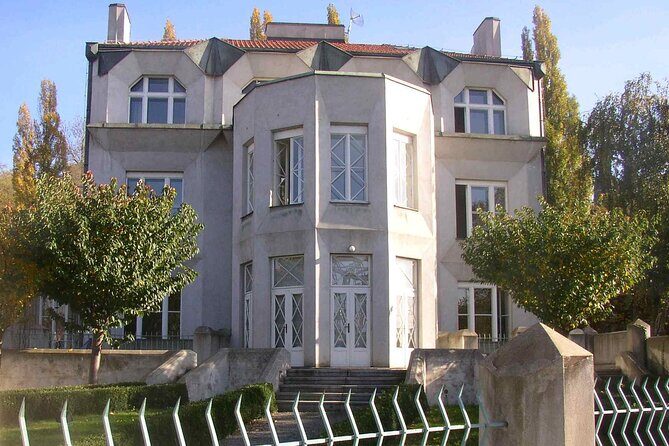
Three Cubist Houses appear near the rock of the Vyšehrad fortress. This triplet is one of the most famous Cubist ensembles in the city, and the standout here is the sheer clarity of the style. Even if you don’t know the formal vocabulary of Cubism, you’ll feel the structure as a composition of angled parts.
Next is Villa Kovarovic, built in 1912 by the Vltava river banks. What’s interesting is the mix of influences: it’s inspired by Gothic and baroque architecture, then shaped into a Cubist masterpiece. This is exactly the kind of blend Prague does well—new geometry over older forms.
The walk finishes on Neklanova, a street with an impressive Cubist apartment building from 1913. By the end, your pattern-recognition is better. You stop seeing only a facade and start seeing the design logic.
If you’ve got energy left, take a last look from a slightly different angle. Cubist buildings often reward you for moving a few steps, because planes and window arrangements can look completely different.
How you’ll spot Art Nouveau vs Cubism after this walk
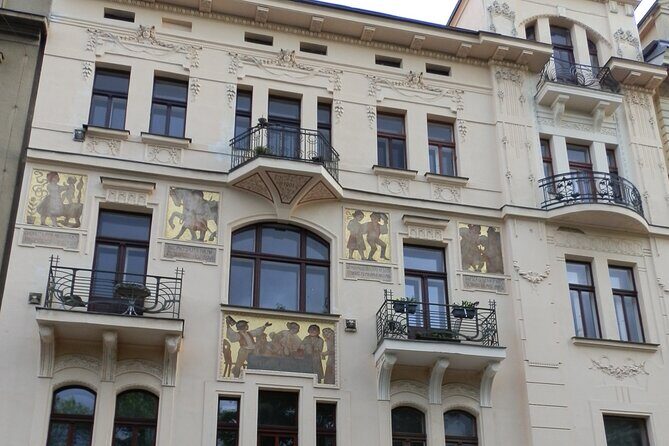
You won’t memorize every building name, and you won’t need to. The real win is building an eye for two visual systems.
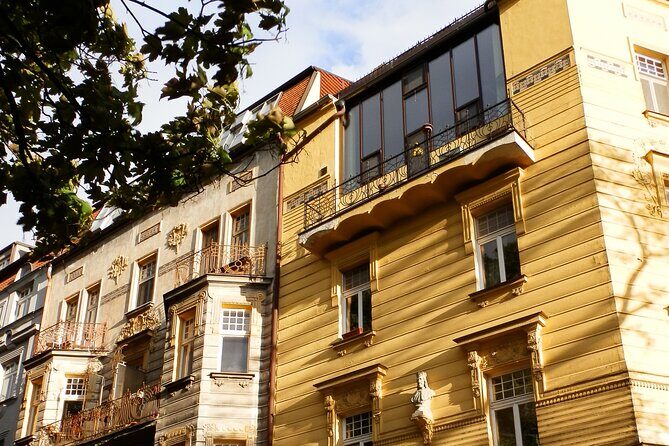
For Art Nouveau, you’ll typically notice more flowing curves, decorative detail, and ornamental thinking that wraps around the architecture. It often feels like the building is doing more than holding space; it’s also expressing mood.
For Cubism, you’ll look for fractured planes, angular logic, and a composition that feels like a solved puzzle. It’s not about decoration first. It’s about how the facade is assembled.
A simple method that helps: when you see a facade, first categorize it as “rounded/decorative” or “sharp/assembled.” Then look for window patterns. Art Nouveau windows often feel like part of a unified flourish; Cubism windows more often feel like components in a grid that’s been disrupted.
Timing, transit, and what to wear on a 2.5-hour route
The advertised stop times won’t add up to the full duration because you’ll also walk between locations and use public transportation at a certain point. That’s normal for Prague, and it’s actually useful: it keeps the tour from turning into one long shuffle from one far corner to the next.
Wear comfortable shoes. You don’t need hiking boots, but you do need something that won’t punish you after repeated short walks.
Bring a camera, but also bring patience. Some of the best details in Art Nouveau and Cubism aren’t huge. They’re in the curves, the relief work, or the way geometry shifts at street level.
Should you book this Art Nouveau and Cubism walking tour?
Book it if you want a guided way to train your architectural eye in a compact route, without committing to museums and long lines. This works especially well for design lovers, photographers, and anyone who likes learning a city’s identity through its buildings instead of only its history sites.
Skip it if you want a mostly indoor, sit-down tour, or if walking-plus-transit feels too active for you. Also consider it carefully if admission inside specific stops matters to you, since some entries aren’t included and you’ll likely be viewing key areas from the outside.
If your goal is to leave Prague seeing shapes where you used to see only streets, this is a smart way to do it.
FAQ
How long is the Prague Art Nouveau and Cubism walking tour?
It’s about 2 hours 30 minutes.
What does the tour cost?
It costs $94.93 per group, up to 15 people.
Is the tour in English?
Yes, it’s offered in English.
Is it a private tour?
Yes. It’s a private tour/activity, and only your group participates.
Do I need to pay for admission at the stops?
Some stops are free to view, while others are not included and may require separate admission. For example, admission isn’t included at the Jerusalem Synagogue and several major buildings later on the route.
Where do we meet and where does the tour end?
You start at Prague Main Station (Wilsonova 300/8) and end at Na Slupi 2102/2b. The tour concludes at the Albertov tram stop.
Do you use public transportation during the tour?
Yes. The tour includes short transit at a certain point, and the same ticket used for public transportation is valid long enough for you to get back toward the center.
Can I cancel and get a full refund?
Yes. You can cancel up to 24 hours in advance for a full refund. If you cancel less than 24 hours before the start time, the amount paid is not refunded.